

Commercial Catering Equipment NZ: Setting Up For Success
Opening a new kitchen or upgrading an existing one usually starts with a simple question. What equipment is worth buying first? For most operators looking at commercial catering equipment NZ, the answer isn't about buying the biggest range of gear. It's about choosing equipment that supports service every day, fits the menu, and won't create avoidable problems once the kitchen gets busy.
Setting Up for Success
A new venue owner often starts by comparing brands, sizes, and prices. The better starting point is daily operation. If the kitchen can't hold temperature properly, prep efficiently, or keep up during a rush, even a strong menu becomes harder to execute.
In day-to-day hospitality supply, the three categories requested most often are commercial refrigeration, deep fryers, and consumables. That's not surprising. Refrigeration protects food safety and prep flow, deep fryers are among the hardest-working pieces of equipment in many kitchens, and consumables never stop being necessary for service, prep, storage, and takeaway.
Many catering operators find these categories form the backbone of the operation because they touch almost every shift:
- Commercial refrigeration supports safe storage, mise en place, drinks service, and back-up capacity during busy periods.
- Deep fryers help kitchens produce high-volume menu items quickly and consistently.
- Consumables keep service moving, especially where takeaway, delivery, or event work is part of the model.
Practical rule: Purchase decisions should solve an operational problem first. Price comes after that.
A common issue seen in new fit-outs is buying equipment in isolation. A freezer might be chosen because the footprint looks right, but it may not suit the menu or the service pattern. A fryer might be added because it's a popular item, but without enough bench space, landing area, or extraction, it creates a bottleneck.
Operators who are still shaping their opening plan may also find it useful to compare equipment decisions against a broader practical guide for restaurant owners, especially when staffing, layout, and service style are still being worked through.
For a more kitchen-focused view, the Simply Hospitality article on building for success in the hospitality business is a useful companion when planning the basics of fit-out and equipment selection.
Planning Your Kitchen for Workflow and Growth
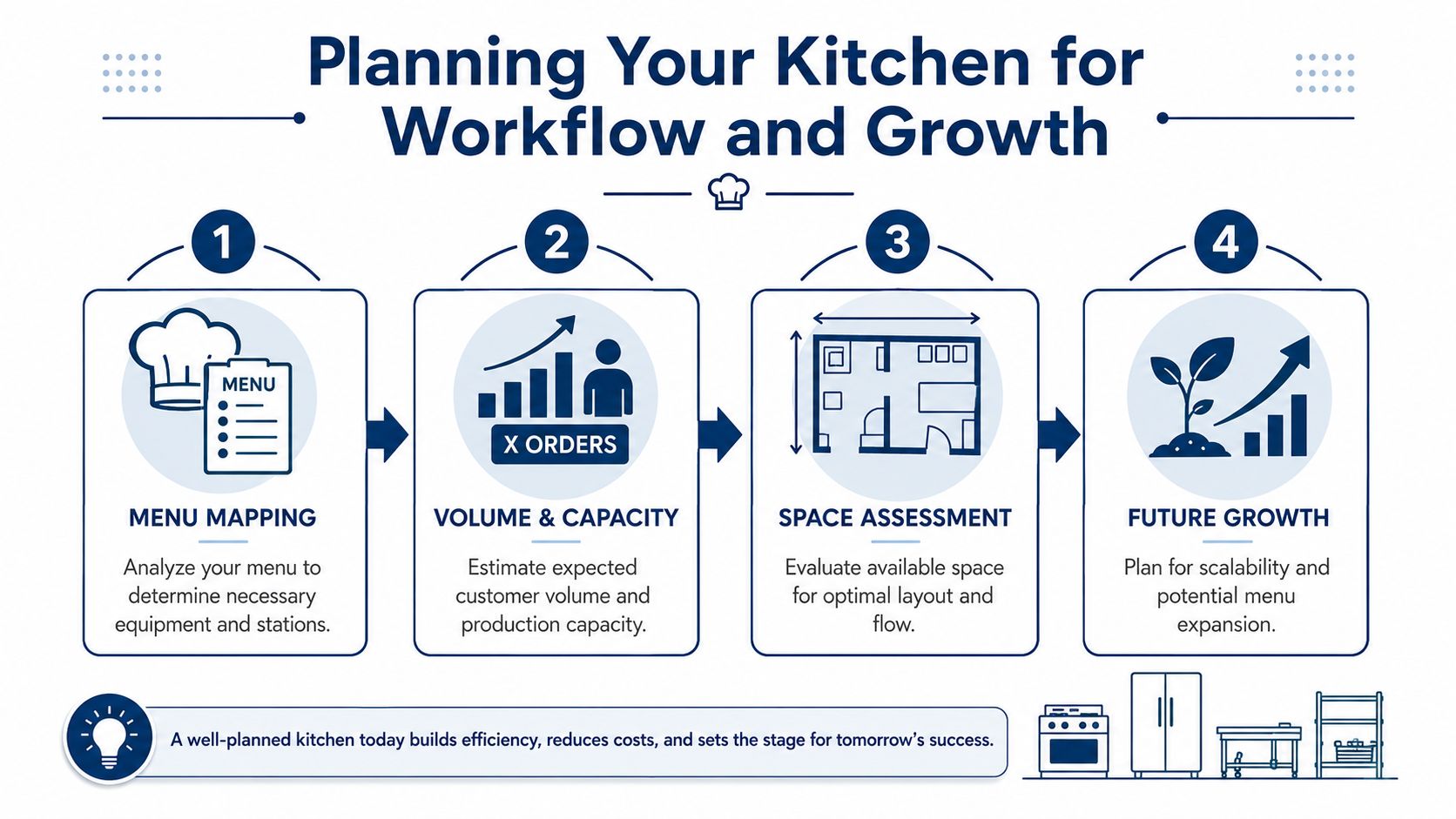
The biggest planning mistake isn't usually buying the wrong machine. It's building a kitchen around equipment placement instead of staff movement. A kitchen is a working system. Food comes in, gets stored, prepped, cooked, plated, served, and cleaned up. If that chain breaks, service slows down.
Start with the menu and service pattern
A compact café kitchen and a catering production space may use some of the same equipment categories, but the layout logic is different. A breakfast café needs fast access to refrigerated prep, coffee support, underbench storage, and efficient pass flow. A caterer may need more bulk cold storage, packing space, and transport-friendly prep zones.
The right solution depends on questions like these:
-
What food leaves the kitchen most often
High-frequency menu items should sit in the easiest workflow path. -
Where do delays usually happen
Prep, cookline handoff, plating, and dish return are the common pressure points. -
What does busy service look like
The equipment should suit the peak, not the quiet hour.
A common consideration is future menu expansion. If a venue may add frozen components, banquet prep, or larger event work later, it's often worth allowing for that in the initial layout rather than treating growth as a separate project.
Check infrastructure before committing
One of the most expensive mistakes happens after the equipment arrives. A 2025 review of NZ venue fit-outs found that 55% required post-installation electrical or plumbing modifications because the infrastructure couldn't support the new equipment, which is exactly the sort of cost that better planning can avoid. That finding should push operators to confirm power, drainage, water, extraction, and floor space before any order is finalised.
A kitchen that looks efficient on paper can still fail in service if staff need to cross paths constantly or work around poorly placed equipment.
For operators reviewing layout options, the article on how to design a kitchen that saves time on every service is worth reading before equipment selection gets locked in.
Size for now, but leave room to move
Overbuying creates wasted space and unnecessary operating burden. Underbuying causes workflow stress almost immediately. The stronger approach is to size equipment for current demand with a realistic allowance for growth.
For example, an underbench freezer can make sense when floor space is tight and line access matters. The SKOPE ProSpec 2 Bay Solid Door Underbench Freezer GN 1/1 is built for busy commercial kitchens with two solid swing doors, four GN 1/1 wire shelves, stainless steel construction, and temperature control from -26°C to -12°C through SKOPE-connect™. In practical terms, that kind of unit suits kitchens that need frozen storage close to the work area without giving up too much footprint.
The Core Equipment Categories for NZ Caterers
The equipment list for a catering business can get long quickly. In practice, a handful of categories do most of the heavy lifting. For many NZ operators, the foundations are refrigeration, fryers, prep equipment, and the consumables that keep service moving.
Commercial refrigeration
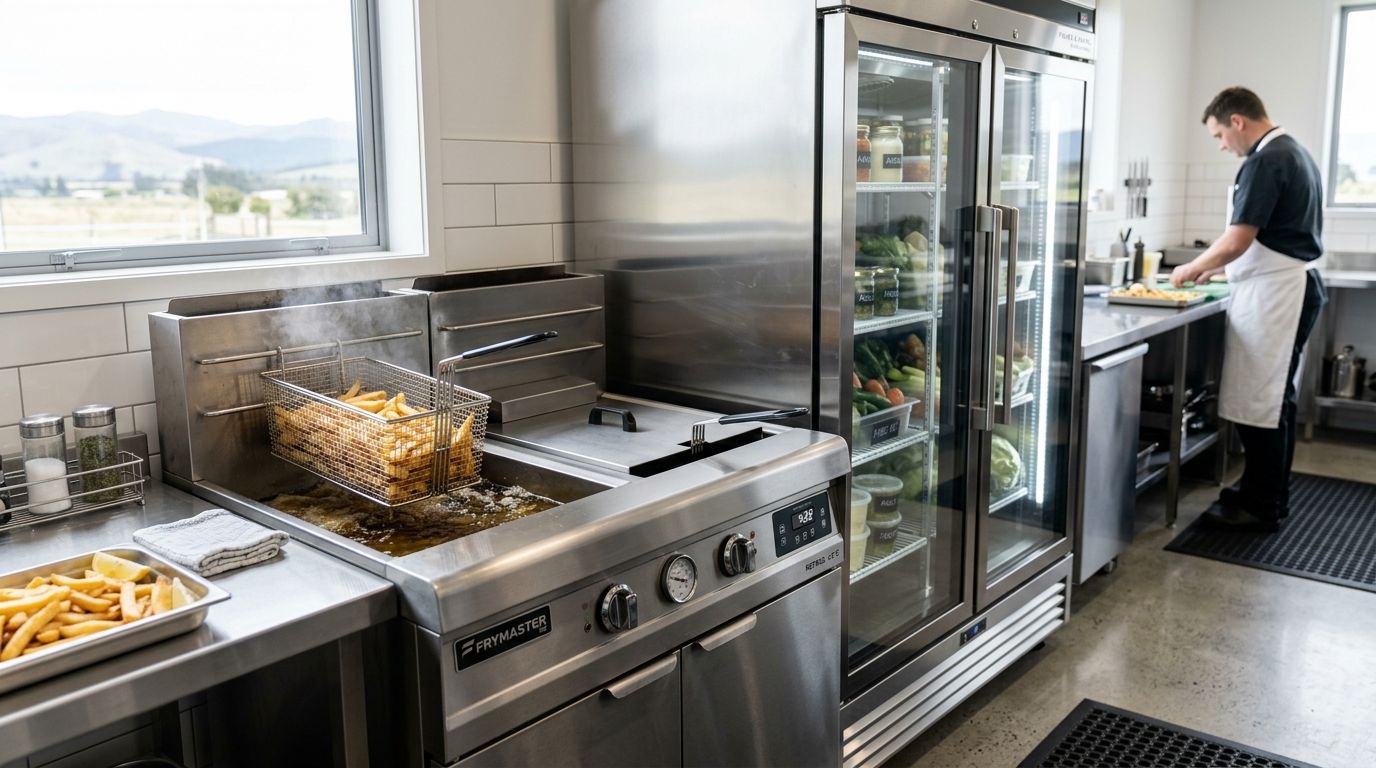
Refrigeration usually deserves more planning time than it gets. It affects food safety, prep organisation, stockholding, beverage service, and recovery during busy periods. Many operators focus on litres or door count first, but day-to-day usability matters just as much. Shelf format, door swing, bench integration, and how often staff open the unit all affect performance.
A good local example came from a North Canterbury wedding venue that needed a better way to keep drinks cold during hot summer events. Instead of relying on ice buckets, the venue moved to a large underbench commercial refrigerator. That change improved service because beverages stayed at a consistent serving temperature, staff no longer had to keep managing ice, and drinks remained accessible during peak demand.
That example matters because the return wasn't really about selling more drinks. It was about less labour disruption, steadier service, and more reliable presentation.
For operators comparing options, this overview of commercial fridge choices in New Zealand kitchens is a practical place to start.
Deep fryers and hot-side workhorses
Deep fryers remain one of the most requested categories because they support speed. In many venues, they handle menu items that need to go out fast and consistently, especially when the kitchen is balancing dine-in, takeaway, and event demand.
One factor often discussed with customers is whether the fryer belongs at the centre of the menu or just supports a few side items. That affects recovery expectations, oil handling, cleaning routines, and the amount of landing space needed beside the unit. A fryer that's technically big enough can still be wrong for the operation if the surrounding workflow hasn't been considered.
Food preparation and consumables
Prep equipment often gets left until late in the buying process, even though it has a direct effect on labour and consistency. Benches, processors, knives, storage systems, trays, and holding containers can have more effect on a shift than another large machine.
Consumables matter for the same reason. They aren't glamorous, but they affect the cleanliness, packing speed, food handling, and reliability of daily service. Catering operators working events or off-site service usually feel this more sharply because one missing consumable category can create immediate disruption.
Why build quality matters
In New Zealand, NSF-certified equipment must use materials like 304-grade stainless steel and have smooth, radiused welds, which helps reduce cross-contamination risk by making surfaces non-porous and easier to sanitise (NSF food equipment standards in New Zealand). That's more than a specification sheet detail. It affects cleaning time, hygiene confidence, and long-term durability in commercial use.
Better equipment doesn't automatically mean more complex equipment. In many kitchens, it means gear that's easier to clean, easier to access, and easier to rely on during service.
Sourcing and Financing Your Equipment
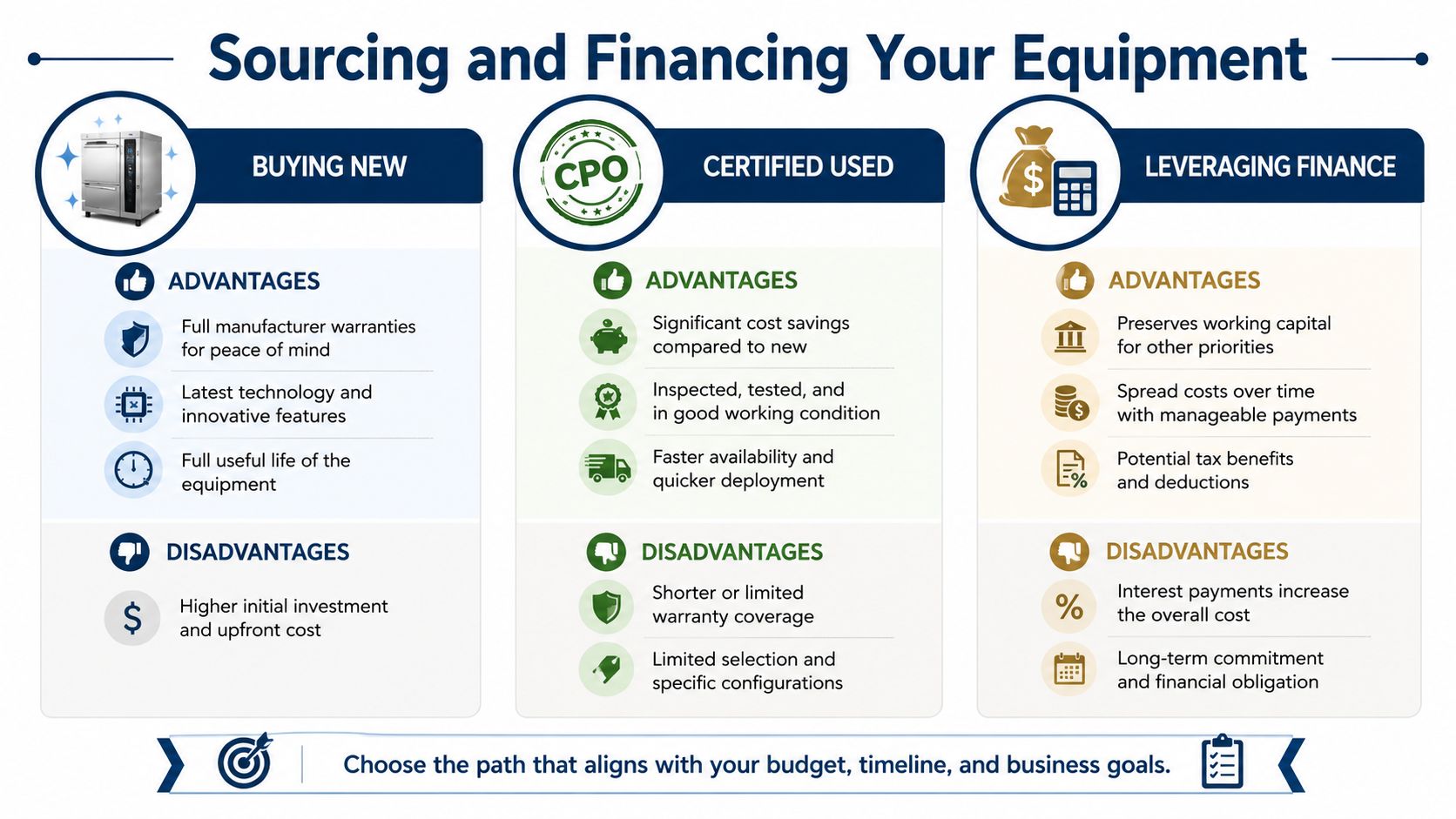
Once the equipment list is clear, the next question is how to acquire it. Most operators weigh three paths. Buy new, buy certified used, or use finance to spread the cost. Each can work, but the trade-offs are different.
Buying new versus buying used
New equipment usually gives the cleanest starting point. There's warranty support, full service life ahead of it, and fewer unknowns around wear. That can make a big difference in categories where failure causes immediate disruption, especially refrigeration.
Used equipment can still be reasonable in some situations, but only when the service history is clear and support is realistic. A significant 42% of used refrigeration units in NZ lack traceable maintenance records, leading to a 3.5x higher risk of critical failure within the first year compared to new units. That's the core reason used gear can become a false economy if the paperwork and after-sales support aren't there.
A practical way to compare the two is to ask:
-
What happens if this unit fails mid-service
For refrigeration and dishwashing, downtime can affect the whole venue. -
Is the maintenance history verified
“Tested” is not the same as traceable servicing. -
Will parts and support be straightforward
An older bargain can become a slow problem.
Where finance fits
Finance can make sense when a venue needs reliable equipment now but wants to protect working capital for staffing, fit-out, or stock. Many operators choose finance because it lets them buy equipment that suits the operation instead of settling for the cheapest option available at the time.
That only works if the financed equipment is properly matched to the business. Financing the wrong machine spreads the pain over time. Financing the right one can support smoother service and fewer interruptions.
For operators exploring that path, SilverChef finance options for hospitality equipment are one practical route to compare alongside outright purchase.
The cheapest purchase price and the lowest operating risk are often not the same thing.
NZ Compliance Energy and Regional Needs
Buying commercial catering equipment in NZ isn't only about what fits the menu. It also needs to fit the compliance framework, the site infrastructure, and the realities of the local market the venue serves.
Food Act requirements and kitchen setup
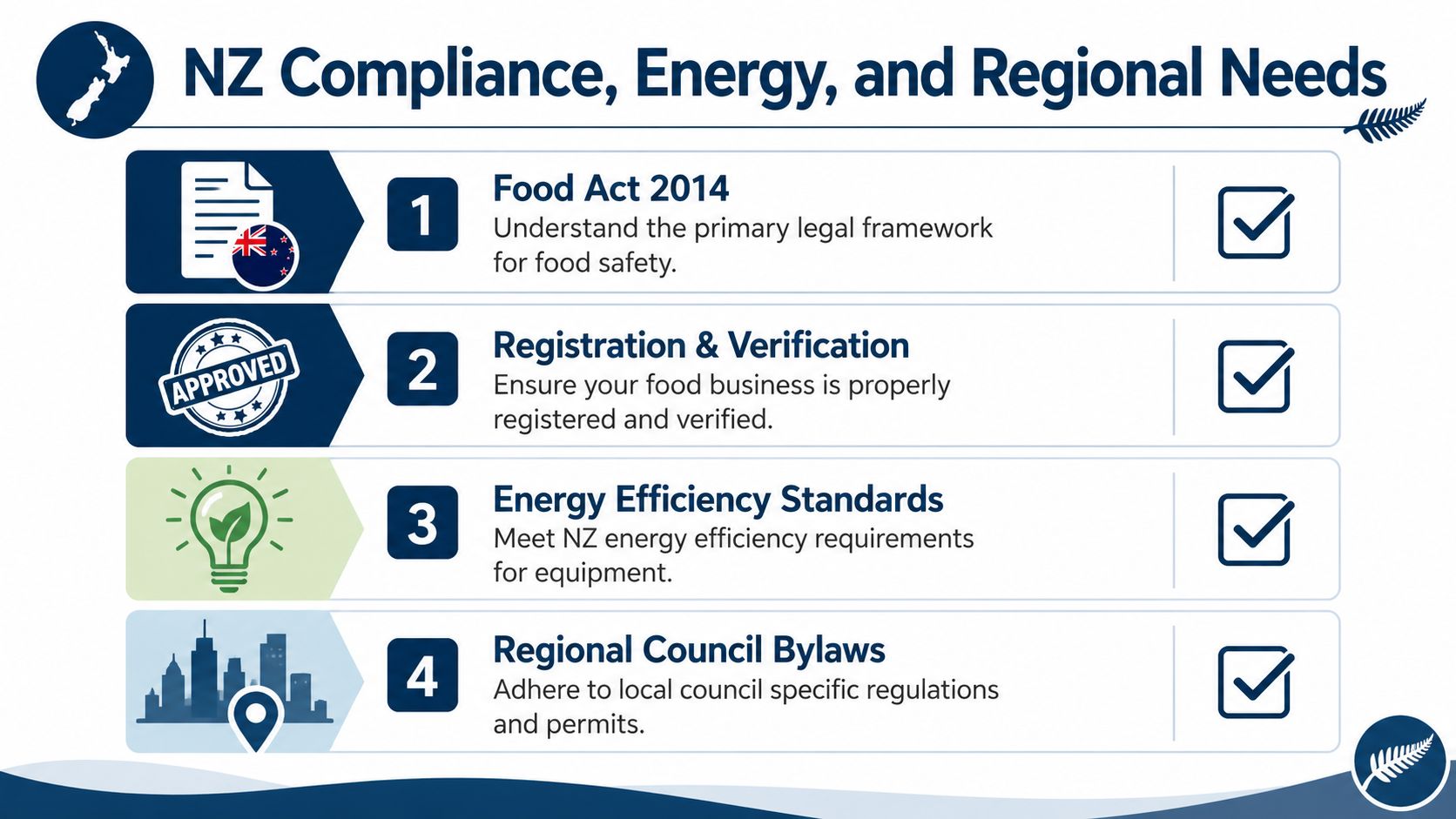
Under New Zealand's Food Act 2014, most food businesses must be registered with their local council or MPI and have their food safety plan regularly checked by a verifier to ensure safe and suitable food is produced (MPI guidance for starting a food business). Equipment choices affect that directly. Surfaces, cleanability, temperature control, and layout all influence whether the kitchen works well under a food control process or national programme.
Blast chilling can also become important where cook-chill production or high-risk food handling is part of the model. In NZ commercial kitchens, blast chillers must meet specific cooling performance requirements to comply with food safety expectations around safe cooling of high-risk foods. For businesses producing in batches, that's an operational and compliance issue, not just a convenience feature.
Another practical point often missed is ventilation. In NZ commercial kitchens, equipment rated above 8kW in energy output legally requires exhaust ventilation to meet safety and air quality standards. That can affect oven, dishwasher, and hot-line planning earlier than many operators expect.
Energy and infrastructure decisions
Energy efficiency matters, but it's best looked at as part of total operational fit. A lower-consumption unit still creates problems if the venue doesn't have the right supply, drainage, extraction, or chemical compatibility. One common issue seen in fit-outs is that dishwashers and combi ovens are chosen before the site is checked properly, which can force late changes to power or plumbing.
The article on energy-efficient appliances for hospitality businesses is useful when reviewing these choices through a longer-term operating lens.
Auckland and regional New Zealand don't buy the same way
Auckland tends to generate the widest spread of equipment requests because the hospitality mix is broader. Specialist café setups, production kitchens, modern quick-service concepts, and international cuisines all create demand for more specialised equipment combinations.
Regional operators are often more focused. They usually want practical, versatile, durable equipment that can cover more than one service need and suit a local customer base without unnecessary complexity. That doesn't mean regional kitchens are simpler. It means every purchase usually has to work harder.
Many catering operators find this distinction helps when prioritising spend:
- Auckland venues often need specialist capability because the menu and concept are more specific.
- Regional businesses often favour flexible equipment that can support different service styles across the week.
- Event and tourism-led operators need reliability under seasonal peaks, not just average trade.
Installation Warranties and Long-Term Service
The purchase order is only the start. A lot of equipment problems that get blamed on the machine are really installation, servicing, or maintenance problems. Poor placement, incorrect power assumptions, weak commissioning, and skipped maintenance all shorten useful life.
Installation should match the way the kitchen works
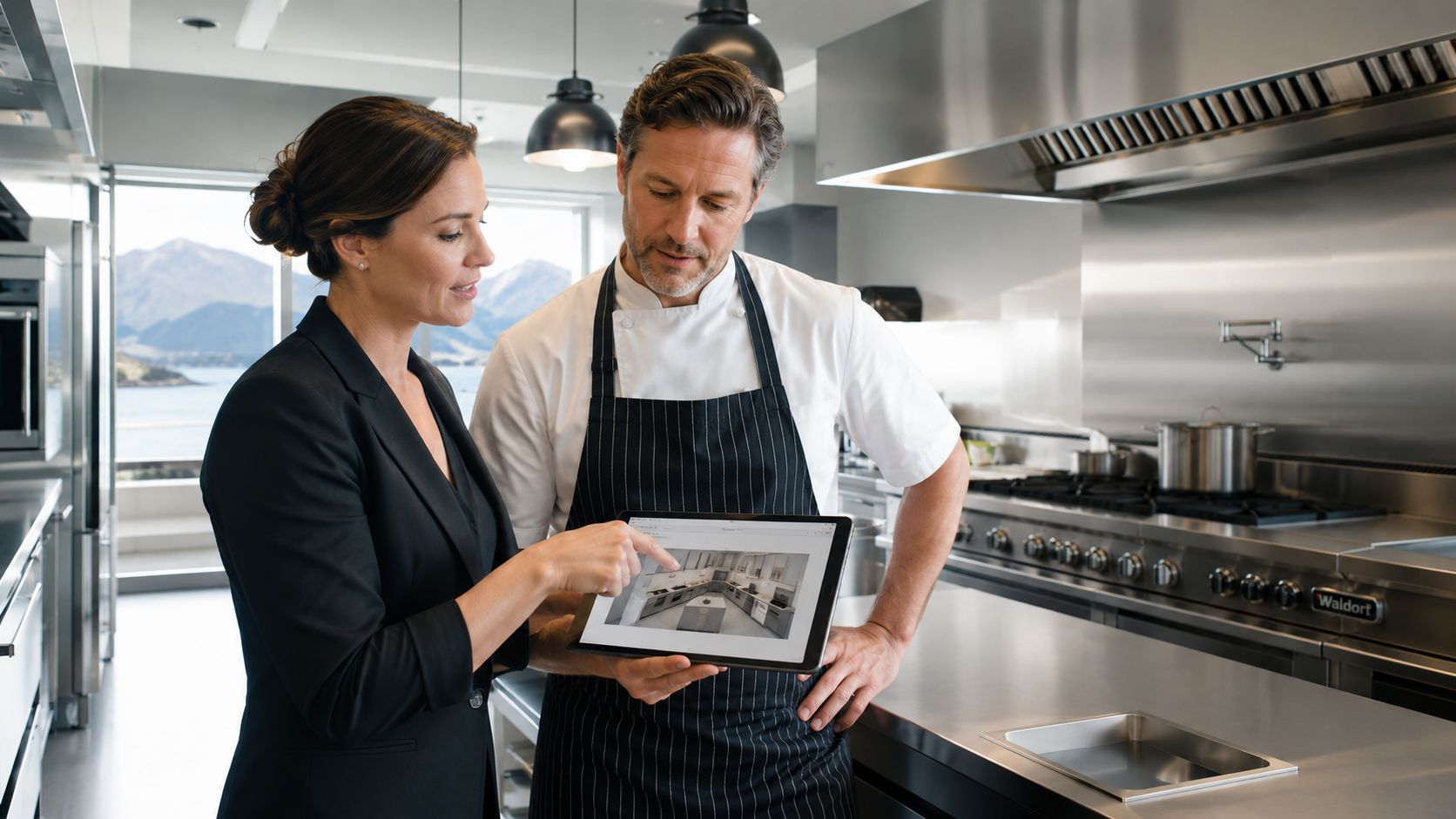
A well-installed unit does more than switch on safely. It should be accessible for cleaning, usable by staff without awkward movement, and positioned to support the service sequence. Refrigeration should open without blocking main paths. Prep equipment should sit near storage and wash-up support. Fryers and ovens need enough surrounding working room to be safe and efficient.
One factor often discussed with customers is hidden utility demand. New dishwashers and combi ovens can trigger expensive remedial work if supply requirements weren't checked early. That's why installation planning should sit alongside menu planning, not after it.
What to check in a warranty and service arrangement
A warranty only helps if the operator understands what it covers and what it doesn't. Before signing off, it's worth confirming:
-
Labour and parts scope
Check whether both are covered and for how long. -
Commercial use conditions
Some issues arise when cleaning, servicing, or installation requirements haven't been followed. -
Response expectations
Fast service access matters more for some categories than others. -
Preventative maintenance needs
Some equipment performs best when routine servicing is scheduled rather than delayed until something breaks.
Reliable ownership usually comes from three things working together. Correct specification, correct installation, and regular maintenance.
Professional kitchen design support can also help reduce these issues before the equipment is on site. Simply Hospitality offers equipment supply and planning support as one option for operators working through layout, category choice, and fit-out decisions.
Preventative maintenance protects service
A common issue seen in hospitality businesses is that maintenance only happens once performance drops. By then, the problem often affects service, food quality, or staff time. Regular checks on seals, drains, temperatures, filters, oil handling, and calibration can prevent small faults from turning into kitchen interruptions.
Long-term reliability isn't created by a brand name alone. It comes from buying equipment that fits the job and then looking after it properly.
Practical Equipment Checklists for Your Venue
A high-level checklist helps narrow the field before product comparisons begin. Different venues need different priorities, even when they share core categories like refrigeration, cooking, prep, and cleaning.
Catering Equipment Needs by Venue Type
| Venue Type | Key Equipment Focus |
|---|---|
| Restaurant or café | Commercial refrigeration near prep and service areas, deep fryers if fried items are central to the menu, cookline equipment matched to peak periods, dishwashing support, front-of-house consumables, food storage and prep tools |
| Mobile or event caterer | Portable and versatile prep equipment, transport-friendly storage, refrigerated holding, efficient beverage chilling, compact cooking equipment, consumables for off-site service, packing and organisation systems |
| Hotel kitchen | A mix of bulk production equipment and service-line flexibility, strong cold storage, hot holding, prep zones for breakfast and functions, dishwashing capacity, banquet support equipment |
| School, hospital, aged care, or other institutional kitchen | Reliable high-volume refrigeration, practical prep systems, easy-clean equipment, safe food holding, durable consumables, layout decisions that support routine, compliance, and repeatable output |
How to use the checklist properly
The list works best when it's treated as a starting point, not a shopping list. Many operators choose equipment too early without ranking what matters most for their venue. That can lead to overbuying in one area and under-supporting another.
A useful approach is to separate equipment into three groups:
-
Must-have from day one
Core refrigeration, key cookline equipment, essential prep tools, and daily consumables. -
Needed when volume grows
Extra refrigerated capacity, more specialised hot-side equipment, secondary storage, added display or holding. -
Only needed if the menu requires it
Niche bakery, pizza, specialist cuisine, or production equipment.
A smaller list that matches the actual operation is better than a long list copied from another venue type.
One simple tip is to review consumables with the same care given to equipment. Packaging, gloves, wraps, chemicals, and washroom or service supplies affect workflow more than many new operators expect. For businesses comparing warewashing choices, this dishwasher detergent performance review is a helpful reference when thinking about cleaning processes and compatibility.
Questions worth answering before ordering
- Does the equipment suit the busiest service period, not just average trade
- Can staff clean around and behind it properly
- Will it still suit the venue if the menu expands
- Does it create a smoother workflow or just fill a gap on paper
Those questions usually lead to better decisions than comparing price tags alone.
Choosing the Right Partner for Your Business
Choosing commercial catering equipment in NZ is really about choosing how the venue will operate under pressure. The strongest setups usually come from matching equipment to menu, staffing, compliance, and the way service flows. That's why refrigeration, deep fryers, consumables, prep tools, and installation details all need to be assessed together rather than as separate purchases.
In practical terms, the right solution depends on the venue type, local conditions, infrastructure, and growth plans. Auckland businesses often need a broader mix of specialist equipment. Regional operators often get better results from dependable, versatile setups that can cover more than one need well.
A careful buying process saves frustration later. It also gives the business a better chance of staying efficient, consistent, and easier to manage as trade grows.
If your venue is planning a fit-out, replacing key equipment, or reviewing what's no longer working in service, Simply Hospitality can help with practical advice specific to your menu, workflow, and budget.