

Soft Serve vs Gelato vs Frozen Yoghurt vs Açaí
Choosing between soft serve, gelato, frozen yoghurt and açaí is not really a flavour decision. It's a service design decision, and the wrong one usually starts when a venue buys equipment first and tries to build a menu around it. The stronger approach is simpler, start with the customer experience you want to own, then choose the machinery that supports it.
That matters because each frozen dessert creates a different expectation. Soft serve signals speed and familiarity, gelato signals richness and presentation, frozen yoghurt sits between indulgence and customisation, and açaí leans into a fruit-led, health-forward format. In hospitality, those differences affect queue flow, staff training, cleaning, serving style, and even how much product is sold in one serve.
In our experience working with New Zealand cafés, kiosks and restaurants, the venues that do this well don't chase every trend. They ask a better question first, what product do we want to become known for? Once that answer is clear, the equipment choice becomes a lot more straightforward.
Start With the Customer Experience Not the Machine
A common mistake is treating frozen dessert equipment like a generic add-on. A machine can produce a product, but it can't create a concept on its own. The concept comes from what the customer expects when they walk up to the counter, whether that's a quick cone after the beach, a plated dessert after dinner, or a bowl they can customise with fruit and toppings.
That's why the equipment should support the menu, not define it. A beach kiosk with fast foot traffic needs a different service rhythm from a premium restaurant or a health-focused café. If the venue wants a product that feels nostalgic and fast, soft serve is a natural fit. If the venue wants a more curated, spoonable dessert with visual theatre, gelato usually makes more sense.
Practical rule: choose the product first, because the product determines the service model, and the service model determines the equipment.
The best operators think in customer segments rather than appliance categories. Families often want speed, simple ordering and a clear price point. Tourists respond well to something they recognise instantly. Health-focused customers often want a product that feels lighter or more customisable. Each of those expectations points to a different frozen dessert strategy.
A display cabinet can also shape buying behaviour in ways many operators overlook, especially when presentation is part of the menu. That's why some venues spend as much time planning the frontage as they do the freezer. The relationship between product visibility and purchase behaviour is discussed well in Simply Hospitality's article on whether a better display cabinet can increase food sales, and the same logic applies here.
How Each Frozen Dessert Differs Operationally
The differences here are operational, not just culinary. Soft serve is typically served at around −4 to −6 °C with roughly 30–50% overrun, which is why it feels lighter and airier at the point of service. Gelato is usually held around −12 °C with about 20–35% overrun, giving it a denser mouthfeel and stronger flavour release per spoonful, according to the gelato vs soft serve guidance.
Soft Serve and gelato behave very differently
Soft serve is commonly formulated in the 3–6% milkfat range, and some purveyors push it higher, up to 10–12% in certain formulations, which influences mouthfeel and machine behaviour (HeraldNet). Gelato is typically described as a lower-air frozen dessert with about 6–9% milk fat, 18–22% sugar, and roughly 25–35% air, while a 100 g serving is often cited at about 128–200 calories depending on formulation (Free Gelato Balancing). That density is part of the appeal, but it also changes how portion size is read at the counter.
Frozen yoghurt usually comes in lighter, at under 4% milk fat, 22–26% sugar, and 30–60% air. It's also tied to a specific category history, first commercially made in the 1970s and broadly popular in the 1980s as it moved from scoop format to soft-serve service (Simple Simon and Co). A typical serving may start near 130 calories, but toppings can add another 150–250 calories, so the final bowl can change quickly once the customer starts customising.
Açaí is different again. It's not a dairy emulsion, it's a fruit-pulp base, so texture depends on pulp solids, sweetener, stabilisers and cold-chain handling rather than milkfat structure (Culinary Depot). That is why it behaves more like a frozen fruit system than a dairy dessert, and why it often needs a different service mindset altogether.
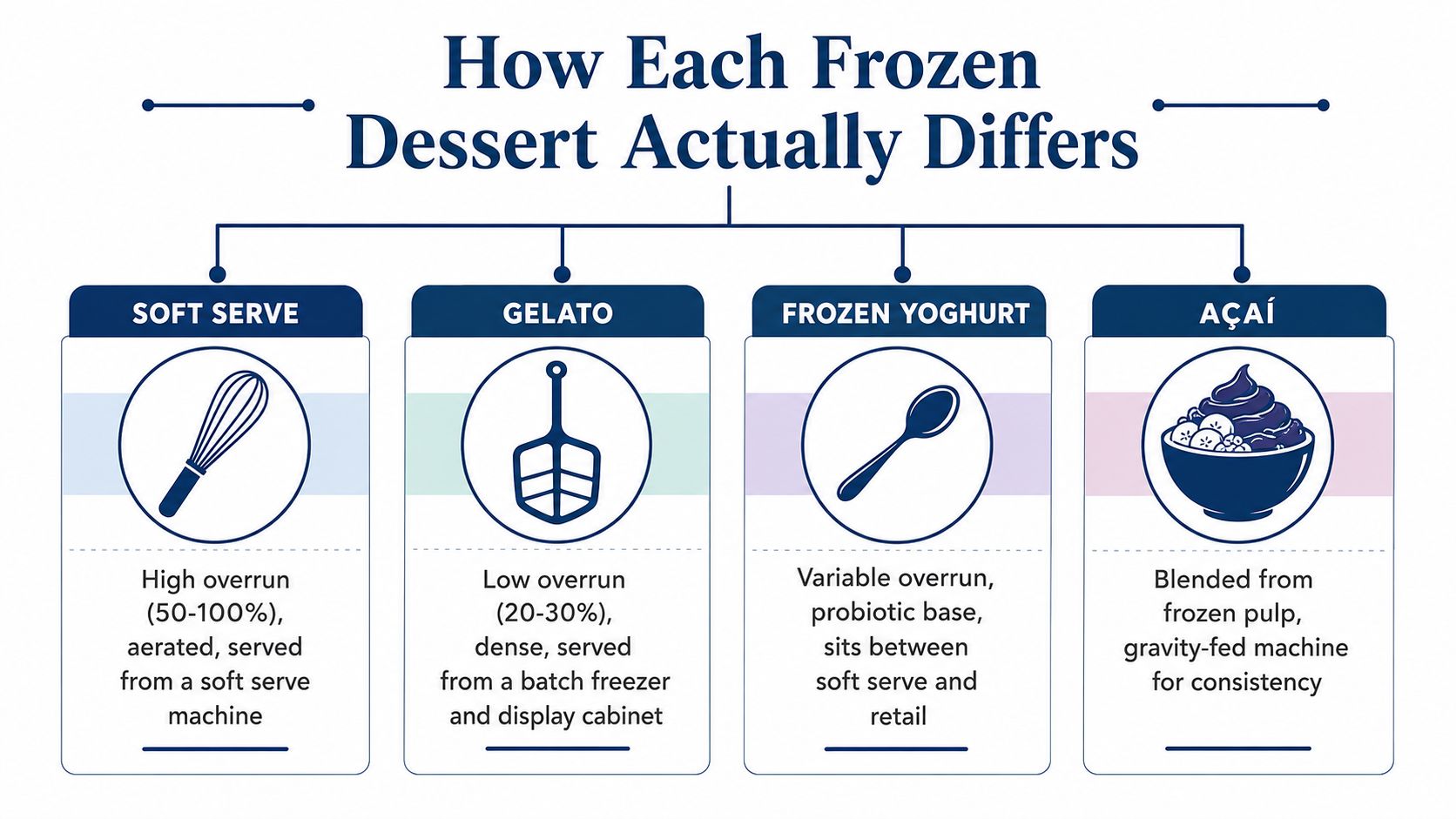
A common operational detail gets missed here. Higher air, warmer service and lighter texture usually make a product feel bigger than it is, while denser products deliver more flavour intensity in a smaller portion. That affects yield planning, portion control and how customers perceive value at the counter.
For operators comparing production methods as well as menu fit, Simply Hospitality's Nemox guide for artisan gelato and ice cream is useful because it shows how batch production changes the service rhythm compared with push-button dispensing.
Equipment and Operational Requirements for Each Concept
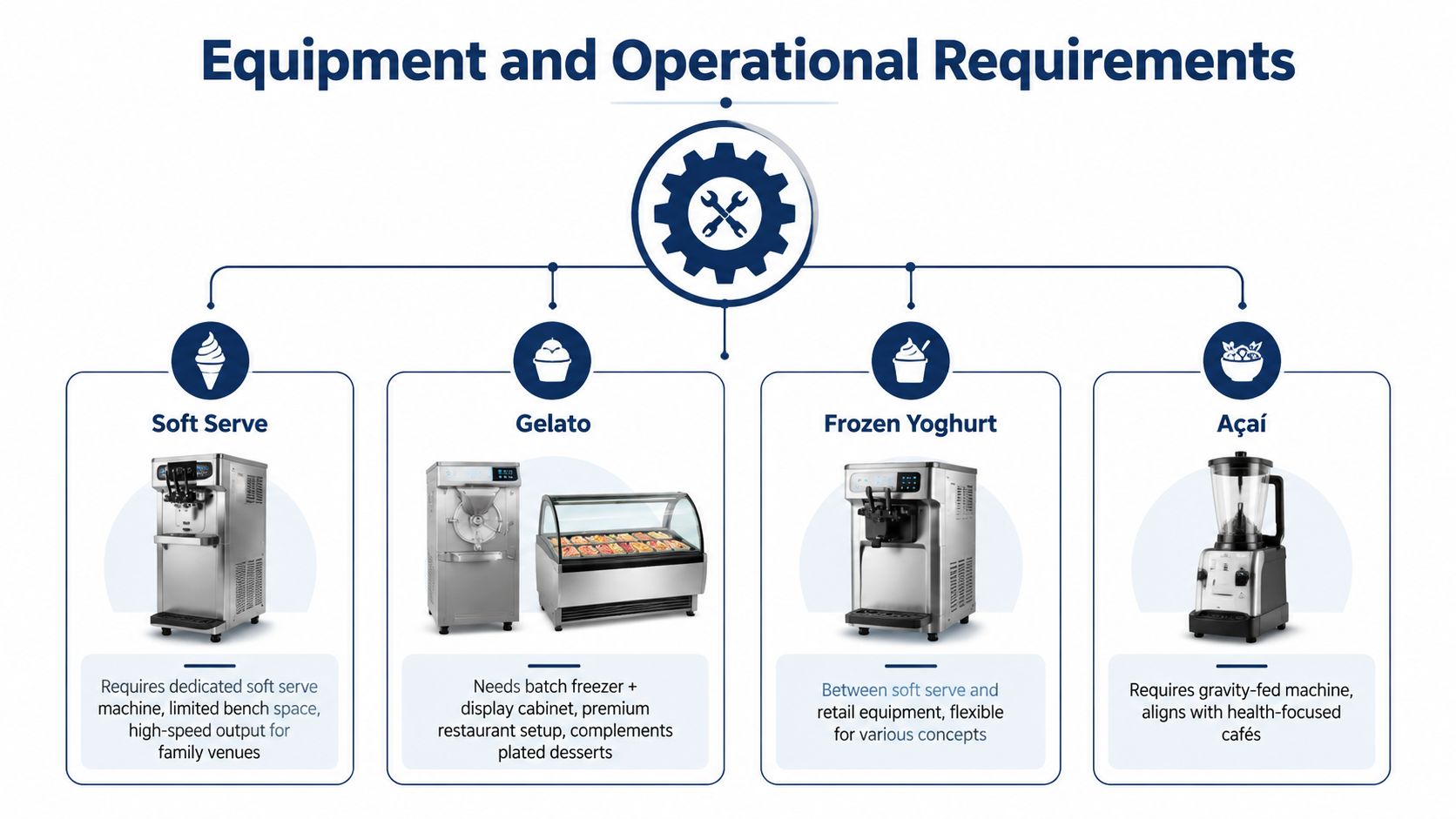
The machinery should follow the concept, not the other way around. Soft serve needs a dedicated machine with continuous refrigeration and careful mix-flow control, because it's built for steady dispensing and high-speed service. That makes it suitable where queue times matter and staff need to move quickly without much assembly.
What each system demands in practice
Gelato usually sits in a batch-freeze-and-display model. That means a batch freezer for production, then a display cabinet with strong cold retention to protect structure during service peaks. The workflow is more deliberate, and that suits venues that want presentation to do part of the selling.
Frozen yoghurt often uses equipment closer to soft serve, but the mix still needs balancing because the cultured dairy base changes how sweetness, tang and stabilisers behave. Operators sometimes assume it will behave exactly like soft serve, then find the texture and topping load create different training and consistency requirements.
Açaí usually works better with a gravity-fed machine or a high-powered blender setup, plus strict cold-chain discipline so it doesn't turn icy or loose. That makes it a better fit for concepts where customers expect bowl assembly, toppings and a more visible prep process.
A common issue we see is operators trying to stretch one machine across products it wasn't designed for. That usually creates frustration in service, not flexibility.
Space and workflow matter as much as the product itself. Soft serve systems need continuous operation and mix management. Gelato needs production space plus display space. Frozen yoghurt needs a layout that supports speed and topping flow. Açaí depends on prep discipline, storage discipline and fast turnaround before texture slips.
For product and machine pairing, Simply Hospitality's article on why Brullen soft serve machines are a game changer, especially for açaí is a useful example of how equipment choice follows service format, not trend chasing. In practical terms, the right system is the one your team can clean, learn and repeat consistently during a busy service window.
Operators also need to think about cleaning load. A heavy-duty degreaser such as Matthews Heavy Duty Powder Degreaser is designed for stubborn grease and grime in industrial kitchens, which is the kind of deep cleaning some dessert operations eventually need around equipment zones, benches and back-of-house surfaces. The product choice matters less than the habit, because neglected cleaning routines create avoidable service friction.
Matching the Dessert Concept to Your Venue Type
The right frozen dessert depends on who walks through the door and why they're there. Beach kiosks and family entertainment venues often suit soft serve because it's fast, familiar and easy to serve under pressure. Premium restaurants usually lean toward gelato, because it complements plated desserts and gives the menu a more polished finish.
Health-focused cafés often find açaí aligns more naturally with their brand. That's not because it's automatically “better”, it's because the fruit-led format and bowl build fit the way those customers already order. Motels, casual dining venues and some schools may find frozen yoghurt useful when they need a customisable dessert with broad appeal.
The location matters too. A tourist frontage with short dwell times rewards speed and visual simplicity. A dinner service with a slower pace can support a dessert that feels more curated. A family venue usually wants consistency under volume. A café with a smaller team often needs a concept that doesn't overload the pass.
Frozen Dessert Concept Comparison for Hospitality Venues
| Product | Typical Customer | Speed of Service | Equipment | Operational Complexity |
|---|---|---|---|---|
| Soft Serve | Families, beach crowds, tourists | Fast | Soft serve machine | Lower to moderate |
| Gelato | Diners, premium guests, dessert buyers | Moderate | Batch freezer and display cabinet | Moderate to higher |
| Frozen Yoghurt | Casual diners, schools, motels | Fast to moderate | Soft-serve style setup or equivalent | Moderate |
| Açaí | Health-focused customers, café regulars | Moderate | Gravity-fed machine or blender system | Moderate to higher |
A useful way to think about the category is to compare it with service rhythm. Soft serve wins on speed, gelato wins on presentation, frozen yoghurt wins on customisation, and açaí wins when the brand already supports a fresh, wellness-led message. The wrong fit usually shows up as slower service, awkward menu positioning or staff having to explain the product too often.
For operators thinking about payback and throughput, Hospitality's piece on how many ice creams a soft serve machine needs to sell to pay for itself is useful reading, but the decision still comes back to concept fit. If the product doesn't match the venue, the numbers rarely rescue it.
Understanding True Operating Costs
Initial purchase price tells only part of the story. The total cost sits across ingredients, labour, cleaning, waste, consistency, and the speed at which the team can serve. A cheap system can still be expensive to run if it slows service or creates avoidable waste.
Compare cost drivers, not just equipment tags
Soft serve can stretch mix volume because of its higher air content, but that does not automatically make it the better business choice if the venue's customers expect a richer or more premium product. Gelato can be served in smaller portions with a denser mouthfeel, yet it usually asks more of the team in production discipline, display handling, and temperature control.
Frozen yoghurt can look simple from the outside, but toppings can change the economics quickly. The base may seem lighter, yet the serving cost often rises when customers build large bowls. Açaí depends heavily on ingredient quality and cold-chain discipline, so waste control and handling consistency sit right at the centre of the operating model.
Practical rule: the less predictable the serving format, the more important training, prep discipline, and portion controls become.
A few cost questions usually tell the story faster than a sales pitch:
- Ingredient flow: does the product depend on high-volume mix, frozen pulp, or a crafted batch process?
- Labour pressure: can the team serve it quickly during a rush, or does every order need assembly?
- Cleaning load: how many parts, surfaces, and steps does the team need to reset between services?
- Waste risk: does the product hold well, or does it deteriorate quickly during busy periods?
- Customer price fit: does the concept match what the venue's audience expects to pay for dessert?
The broader planning mindset matters here. Hospitality's article on equipment saving money long-term reflects the same logic operators should apply to frozen dessert systems. The right question is not what costs least today, it is what fits the menu and still works six months into trading.
Common Mistakes When Choosing a Frozen Dessert Concept
The biggest mistake is trying to make one machine do a job it wasn't built for. A soft serve unit won't magically become a gelato programme, and a standard batch freezer won't turn into an açaí line just because the menu board says it should. That mismatch usually shows up in texture complaints, slower service and staff improvising around the equipment.
Another common error is ignoring space, power and training. Frozen dessert systems look compact on paper until the operator has to fit them beside a point of sale, a prep bench, a display cabinet and a cleaning station. If staff can't comfortably access, clean and refill the system, the concept becomes harder to run than it looked in the showroom.
A good planning checklist keeps the decision honest:
- Who are the customers? Families, tourists, health-conscious regulars and dinner guests all expect different things.
- What experience is being created? Fast and familiar, premium and plated, or custom and interactive.
- How quickly does service need to move? Throughput matters more in some venues than others.
- How much training is realistic? A complicated system can be fine if the team has time, but not if turnover is high.
- How much bench space is available? Equipment has to fit the room, not just the brochure.
The product should also match the brand story. A health-focused café that sells a compact, fruit-led menu may find açaí naturally fits the offer. A family venue that wants fast service and broad appeal may do better with soft serve. A restaurant that wants a more refined dessert finish usually needs something different again.
The smart move is to treat frozen dessert as part of the menu architecture, not a novelty bolt-on. Once the team knows the customer, the service pace and the level of complexity it can support, the equipment decision gets much clearer.
Planning Your Next Steps and Getting the Right Advice
The decision starts with one question, what product do we want to become known for? After that comes the practical layer, service speed, labour flow, cleaning, bench space, power, display and total operating cost. Only then does the equipment choice make sense.
Soft Serve vs Gelato vs Frozen Yoghurt vs Açaí is really a comparison of business models. One concept suits speed and familiarity, another suits premium presentation, another suits customisation, and another suits a fresh, fruit-led brand. The strongest operators choose the one that fits their customers, then build the workflow around it.
Choosing the right concept is often more important than choosing the brand. The equipment should follow the product strategy, not define it. When that sequence is clear, purchasing becomes simpler and service usually runs smoother too.
If your venue is weighing up frozen dessert options, Hospitality can help with equipment selection, layout planning and the practical details that affect day-to-day service. Visit Simply Hospitality to talk through the right setup for your café, kiosk, restaurant or venue.