

Choosing the Right Bucket with Lid for Commercial Kitchens
A busy kitchen rarely needs another loose container. It needs a bucket with lid that can move soup from prep to cool room, hold marinated chicken without leaking across a shelf, and keep sauces, dry goods, or waste streams organised enough that staff can find the right thing fast. In hospitality, the lid matters as much as the bucket, because a secure system cuts spills, contamination risk, wasted product, and pointless cleaning.
The oldest idea behind covered containers is simple, protect the contents and keep the work area under control. That logic still holds in modern New Zealand kitchens, where a bucket with lid is part of food safety, batch prep, transport, and FIFO stock rotation rather than just a storage tub. For operators comparing how ingredients move through a kitchen, a practical read such as the luxury refrigerator guide can be a useful reminder that cold storage and container choice work together.
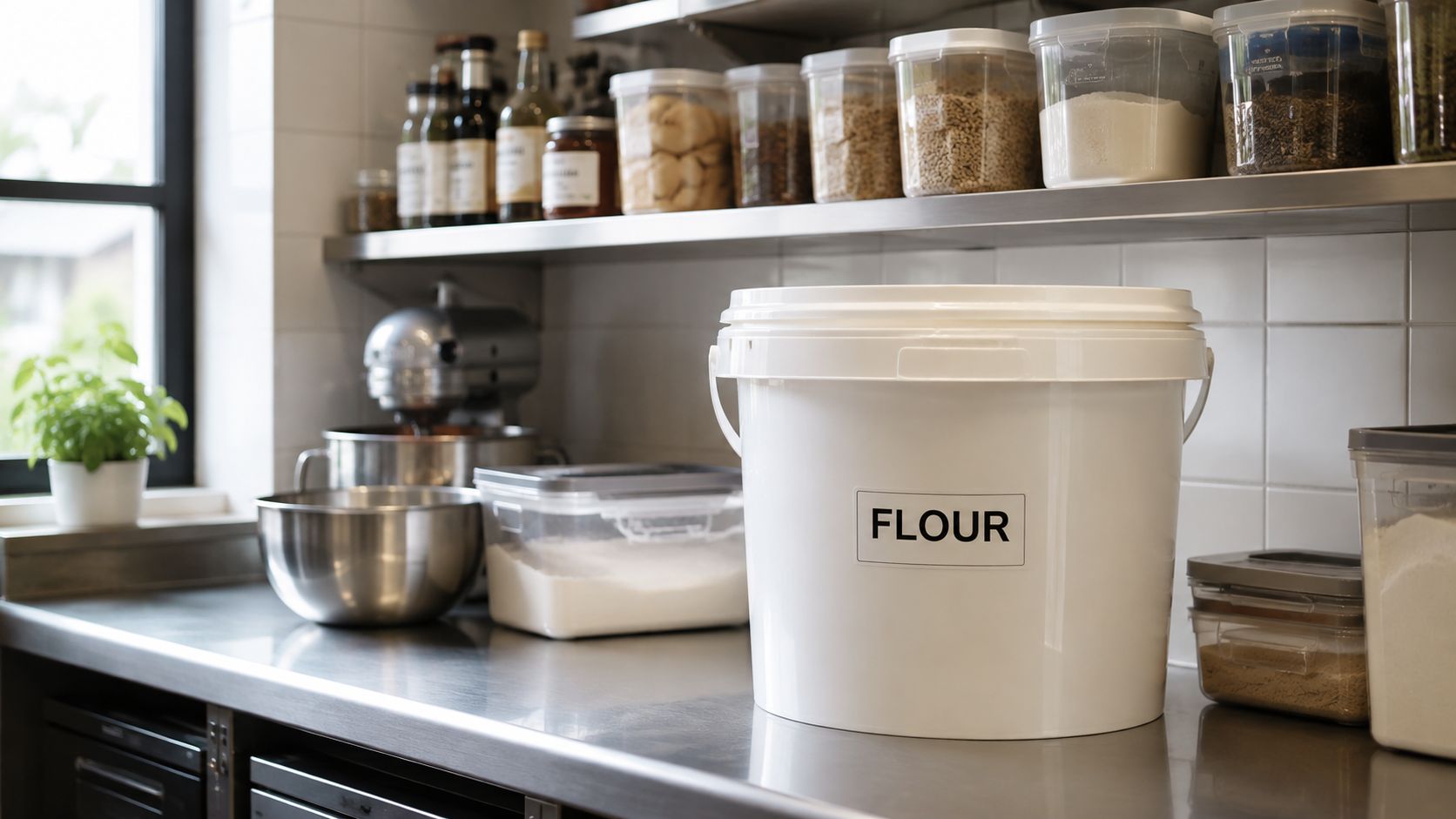
One simple truth is worth keeping in mind, the right lid protects more than the food, it protects the kitchen from unnecessary mess. Standardising the same bucket sizes and lid styles across a site is one of the biggest organisational improvements a venue can make. It reduces clutter, makes labels easier to read, and helps staff move between prep, refrigeration, and service without second-guessing what belongs where. For a broader buying mindset, buying cheap vs buying once when equipment actually saves money is a useful companion read.
Why a Bucket with Lid Is More Than Just a Container
A bucket with lid earns its place in a kitchen because it controls movement, not just storage. A chef can carry soup from the stove to the cool room, hold marinating proteins away from ready-to-eat items, or keep prepared sauce sealed until service without opening and closing a stack of smaller tubs. That is workflow control, and it matters every time staff are moving between benches under pressure.
Value lies in containment
Practical rule: if a container is going to leave one zone and enter another, the lid has to be part of the system, not an afterthought.
That point becomes clear in mixed-use back-of-house spaces. A lid helps reduce spills during transport, keeps ingredients away from contamination from splashes or airborne debris, and cuts down the bench wiping and floor cleaning that follows a mistake. It also makes it easier to store the same product in a cool room, a dry store, or on a prep trolley without changing vessels halfway through production.
The historical logic backs that up. Covered containers have been used for a long time, and that matters because good hospitality equipment often succeeds by being simple, not flashy. A bucket with lid is one of those quiet tools that supports order across prep, storage, and service.
For café and hotel operators, that order matters more than the bucket itself. Staff can see what is where, move it safely, and get on with service. That's why a bucket with lid should be treated as part of an organised storage system, not just another plastic or steel container.
Organisation starts with good storage
A venue that standardises its storage shapes the whole day around fewer decisions. Teams spend less time hunting for matching lids, less time improvising with cling film, and less time guessing which container is safe for which product. That kind of structure is especially useful in kitchens where space is tight and staff turnover is high.
The same idea also fits well with refrigeration planning. Where cold storage is already under pressure, containers that stack cleanly and seal properly help the cool room work like a system rather than a jumble. A bucket with lid is small equipment, but it plays a large role in how controlled the kitchen feels during service.
For operators weighing purchase decisions, buying cheap vs buying once when equipment saves money is a useful reminder that the lowest upfront cost is rarely the best fit if the container warps, leaks, or slows staff down.
Materials and Construction Choices for Commercial Use
Food-grade plastic and stainless steel are the two material families most operators end up comparing. Each has a clear place in hospitality, but they behave differently under heat, chemicals, stacking pressure, and repeated washdown. The wrong choice usually shows up as a lid that warps, a rim that loses shape, or a container that becomes harder to clean than it should be.
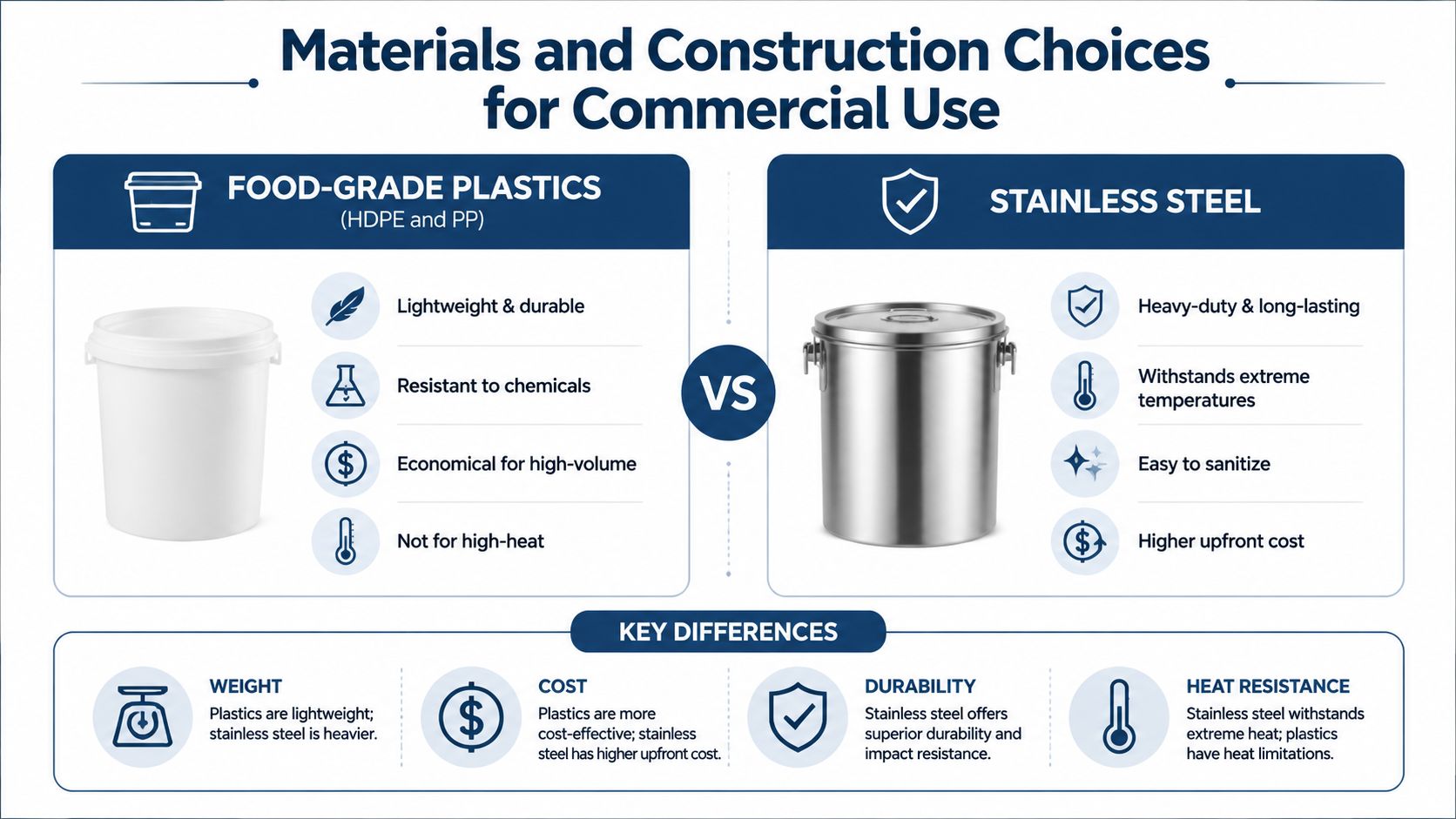
Plastic buckets suit high-turnover kitchen use
Food-grade HDPE and PP buckets are common for a reason, they're light, practical, and easy to move in volume. The UNICEF procurement specification for the region points to HDPE/PP food-grade construction with a tight-fitting lid, a reinforced top rim, a curved bucket-to-base transition, and UV-resistant plastic for durability in bright conditions, because those details help reduce dirt accumulation and cleaning effort while improving handling and stacking stability (UNICEF procurement specification).
That construction detail matters more than many buyers realise. A reinforced rim helps the bucket keep its shape when it's stacked or carried full, while a smoother interior and curved transition make residue less likely to cling in corners. In a busy kitchen, that saves time at the sink and lowers the chance of old product lingering in hard-to-see edges.
Stainless steel suits harsher handling
Stainless steel has a different role. It's the better fit where a venue wants a more rigid, hard-wearing container that can handle rougher use, sanitising, and temperature changes without the same flex that plastic can show. It's not automatically the right choice for every prep task, though, because weight and cost can make it less convenient for routine bulk movement.
A good practical example is the Chef Inox Utility Ice Bucket Stainless Steel 4.0L Satin, which is listed as a stainless steel bucket in the ice bucket category and is a different style of product from a general-purpose food storage pail. That distinction matters, because hospitality buyers sometimes need a container for presentation, not just storage, and the intended use should shape the purchase.
Buying tip: choose the material that matches how often the container will be washed, stacked, carried, and exposed to heat. If the workflow is aggressive, construction quality matters more than appearance.
A final weight note is important. A filled bucket behaves very differently depending on what's inside, so operators should think about handling comfort, staff safety, and where the container will be lifted from. That is especially true when a bucket is moved between prep benches, sinks, and cool rooms all shift long.
For operators comparing food storage products more broadly, plastic containers for food is a useful reference point for how material choice affects day-to-day use.
Lid Styles and What They Mean for Your Kitchen
The lid is where bucket selection either works smoothly or becomes a nuisance. A container can be the right size and the right material, but if the lid is fiddly, loose, or not suited to the job, the whole system suffers. In a commercial kitchen, lid style affects how quickly staff can access product, how safely it can be moved, and how well it stays closed when the pace picks up.
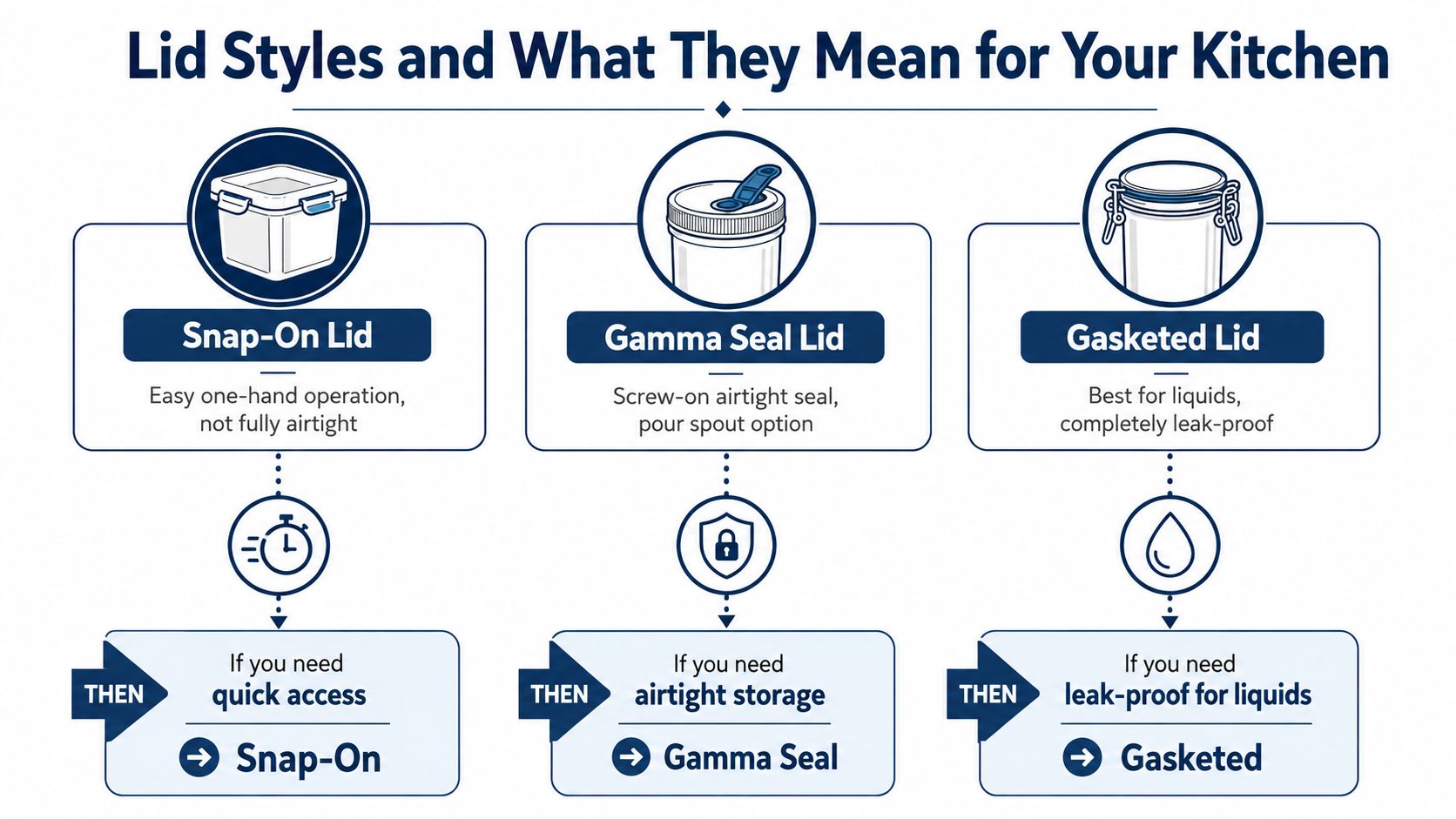
Snap-on, gamma seal, and gasketed lids all solve different problems
A snap-on lid suits fast access. Staff can open and close it quickly, which makes sense for ingredients that are used repeatedly through service. The trade-off is that it isn't the same as a fully sealed storage solution, so it's better for routine handling than for leak-prone transport.
A gamma seal lid gives a screw-on style closure that's better for tighter storage. It's a practical choice when product needs to stay protected for longer, or when a venue wants more confidence that the container won't open accidentally during movement. Some versions include a pour spout option, which helps where liquids are decanted regularly.
A gasketed lid is the strongest option where liquids or spill control matter most. The tighter seal makes it more suitable for leak-prone contents, but that usually comes with a bit more handling effort. For a kitchen that moves soup, sauces, or wash chemicals around repeatedly, that trade-off can be worth it.
Evaluate the lid against the actual workflow
The cleanest way to judge a lid is to ask four questions.
- Does it fit securely? If it lifts, rocks, or leaves gaps, it won't protect the contents properly during transport.
- Can buckets stack safely? If the lid deforms under load, the storage system becomes unstable.
- Is it easy to clean? A lid that traps residue creates more work and more risk.
- Can staff identify contents quickly? If the lid type makes labelling hard to see, the system slows down.
WorkSafe NZ guidance on hazardous substances also makes closed containers relevant for more than food. In mixed-use kitchens, chemicals and wash products need secure closure and clear labelling, which is why lid reliability becomes a compliance issue as well as a convenience issue. For operators wanting a deeper look at storage choices, storage containers kitchen is a practical next step.
A useful reminder is this, the best lid is the one staff will close properly every time. If it's awkward, people stop trusting it. If they stop trusting it, the whole container system starts to fall apart.
Common Hospitality Use Cases and Practical Applications
Lidded buckets show their value in the tasks that fill a real shift. Brining proteins, marinating meat, preparing sauces, bulk ingredient storage, dough fermentation, transport between prep areas, and food waste collection all benefit from a container that can be sealed, stacked, and labelled properly. The common thread is control, not just capacity.
A bucket with lid also helps when food has to move through more than one zone. A kitchen might prep in one area, chill in another, and serve from a third. That movement creates risk unless the container protects the product all the way through.
The daily tasks that benefit most
Brining and marinating are obvious examples because they rely on contact time and containment. A lid keeps odours in, reduces contamination risk, and helps staff carry the product without splashing liquid across benches or floor mats.
Sauce prep and bulk ingredient storage are slightly different. Here, the lid helps preserve order and makes it easier to hold batch-made food until service or the next production stage. For dough fermentation, a lid supports a controlled environment and stops the surface from drying out too quickly.
Food waste collection is another practical use where appropriate. A secure lid helps contain smell and keeps back-of-house areas cleaner between disposals, which matters in busy hospitality environments where bins are never far from prep benches.
A properly fitting lid won't fix a messy process, but it will stop a clean one from getting messy.
An illustrative workflow
Consider a kitchen moving 15 litres of soup, marinating chicken, and holding prepared sauce between the prep bench and the cool room several times each day. If the bucket seals properly, the team reduces spill risk, contamination risk, and the need to clean the same trolley or shelf over and over. If the lid doesn't fit well, every trip becomes a small problem that slows service.
That's why the container choice should follow the task. A bulk dry ingredient bucket, a fermentation bucket, and a transport bucket do not all need the same lid behaviour. Operators often save time by separating those roles instead of trying to make one container do everything.
The best kitchens treat lidded buckets as production tools. They support batch preparation, not just storage, and they make it easier for staff to work at pace without losing control of the food in front of them.
Building a Standardised Storage System
One of the biggest organisational improvements a kitchen can make is to standardise its buckets and lids. Once the same sizes, lid styles, and labelling habits are repeated across the site, storage stops being improvised and starts being readable. That helps the whole team work faster without increasing confusion.
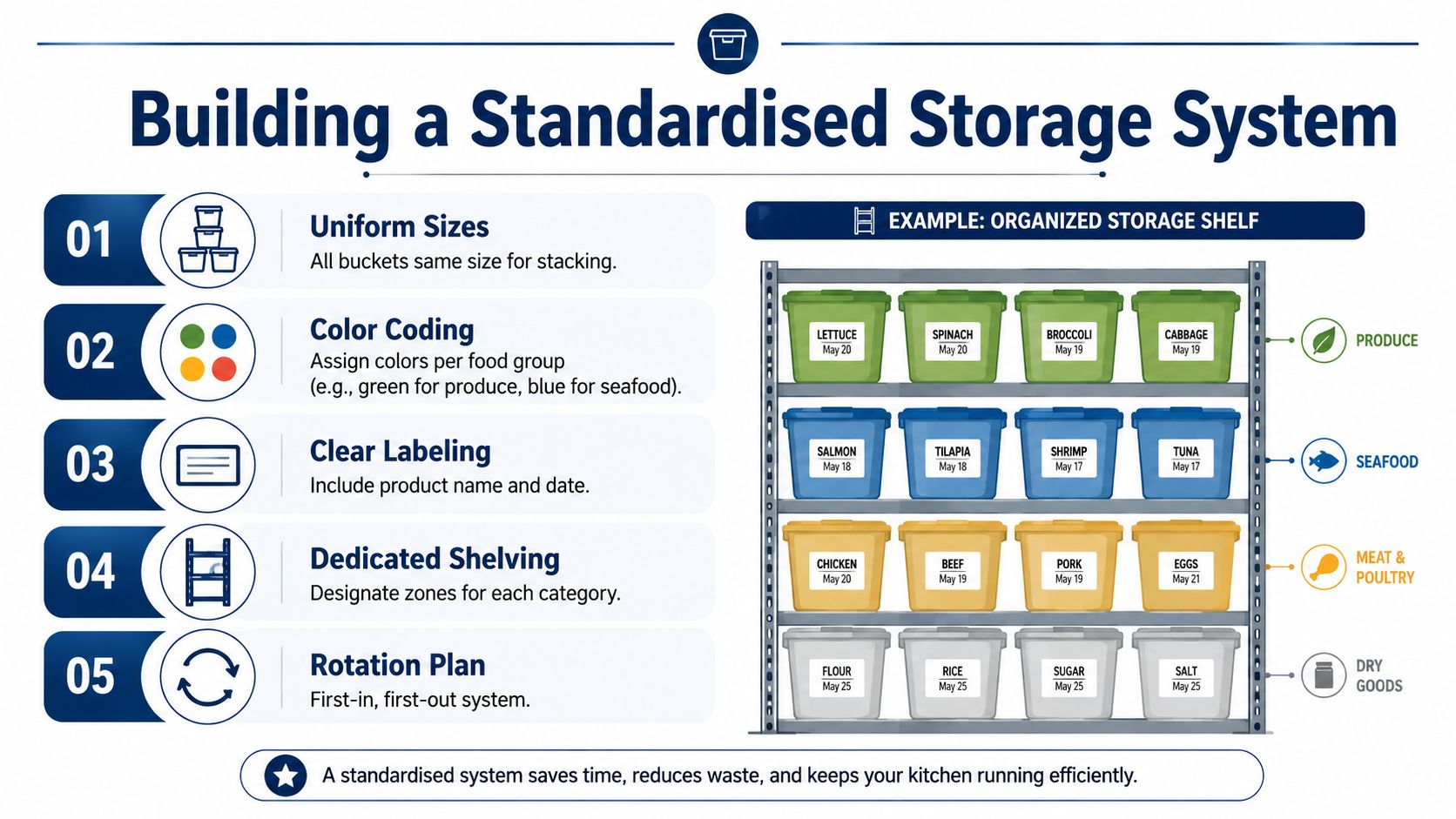
A consistent system does more than tidy shelves
Uniform containers reduce clutter because everything stacks more predictably. They also improve stock visibility, which matters when staff need to see what's in cool storage without opening every lid or moving everything around. That simple visibility saves time and cuts down on unnecessary handling.
Labelling becomes more effective too. If every bucket uses a similar format, staff are less likely to miss a date or misread a product name. FIFO stock rotation is easier to maintain when the containers themselves are regular and easy to sort by shelf position.
For operators who manage high-throughput food storage, that organisation has direct kitchen value. It supports food safety, reduces cross-use between raw and ready-to-eat foods, and makes cleaning easier because the storage area is calmer and less cluttered. For a fridge-specific angle, how to store food in a restaurant fridge fits neatly alongside this approach.
Build the system around staff habits
A storage system works when staff can use it without thinking too hard. That means choosing buckets that are easy to identify, easy to stack, and easy to return to the same place every time. It also means assigning zones so seafood, produce, sauces, chemicals, and waste don't end up sharing the same logic.
The most reliable setups are boring in the best way. Nothing is a surprise, nothing is temporary, and nobody has to guess which lid belongs on which bucket.
Short rule: if staff need to ask where a container belongs, the storage system is too loose.
Standardisation also makes cleaning simpler because the same shapes and sizes are easier to wash, dry, and store. Organisation starts with good storage, and good storage depends on consistency more than on having a lot of different container types.
Cleaning, Sanitising, and Maintenance Procedures
A bucket with lid only stays useful if the cleaning routine is tight. Good food storage depends as much on procedure as on the container itself, and in hospitality that means every bucket needs a washing, drying, inspection, and rotation habit that staff can repeat without shortcuts. If the routine slips, the container becomes part of the problem.
Keep the routine simple and repeatable
Wash buckets thoroughly after use, then let them dry completely before storage. A wet bucket stacked too soon can trap moisture, make the storage area smell stale, and create avoidable hygiene issues.
Label contents and preparation dates every time. If the container is going back into use, FIFO stock rotation should be obvious enough that staff don't have to ask what needs to be used first. That is especially useful in kitchens with fast turnover and multiple prep teams.
Inspect lids regularly for damage. A lid that no longer closes cleanly, has warped edges, or has visible wear shouldn't be trusted for spill-sensitive work. Reuse is sensible when the seal still works, but continued use after the fit has gone can cost more in leaks and contamination than replacement would.
Keep raw and ready-to-eat uses separate
Cross-use between raw and ready-to-eat foods needs careful control. A bucket used for raw protein shouldn't be rinsed and put straight back into finished-product storage without proper cleaning and sanitising. That principle matters just as much for sauce, dough, and washdown chemicals.
For chemical segregation, the same logic applies with even more force. Containers should stay clearly labelled and securely closed, especially where hazardous substances are involved. Cleaning chemicals NZ is a helpful reminder that the storage container is part of the control system, not separate from it.
When a seal starts degrading, the question isn't sentimental, it's operational. If the lid no longer protects the contents, it's no longer doing its job. In a commercial kitchen, that's enough reason to replace it.
Specification Checklist for Ordering the Right Products
Good ordering starts with the end use, not the catalogue photo. A bucket with lid for dry ingredients, a fermenting mix, a sauce workflow, and a chemical store all need slightly different priorities, even if they look similar on screen. The safest purchase is the one that matches the way the kitchen works.
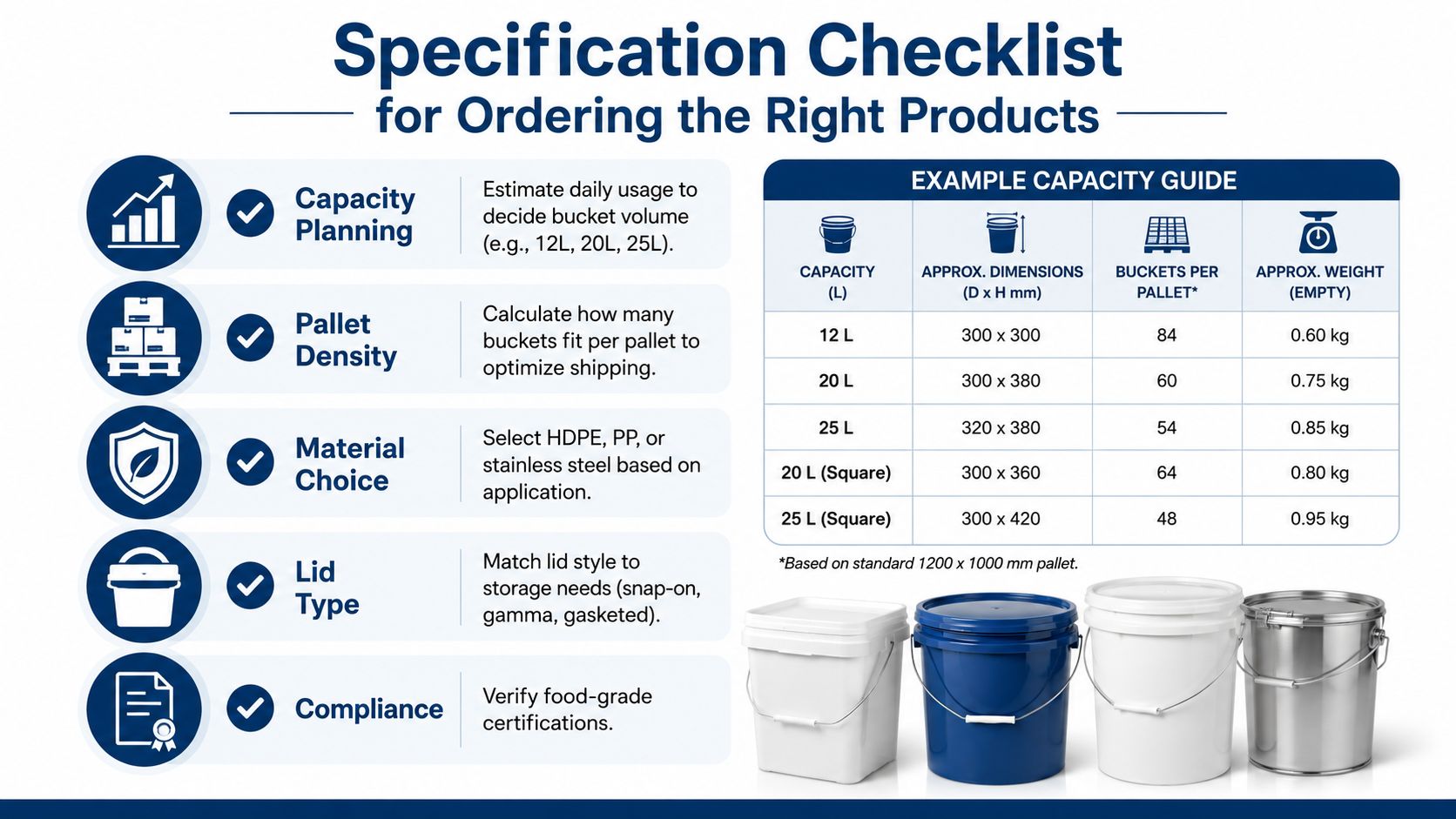
Check the practical details before ordering
- Capacity Planning: Estimate daily usage before choosing volume. A venue might need smaller buckets for prep and larger ones for batch storage, but oversizing can make handling awkward.
- Pallet Density: Larger buckets change freight efficiency, so the packing pattern matters for ordering and storage.
- Material Choice: Match HDPE, PP, or stainless steel to the task, not to habit.
- Lid Type: Pair snap-on, gamma seal, or gasketed lids with the way the contents are moved and stored.
- Compliance: Verify food-grade suitability where food is stored, then keep the labelling and cleaning process consistent.
A common mistake is buying buckets and lids separately without checking compatibility. Another is using general-purpose storage products for food applications and assuming they'll behave the same way under commercial pressure. Hot-fill workflows need extra caution too, because temperature limits affect how a bucket can be stacked and handled after filling.
There's also a point where daily use matters more than technical claims. Operators should evaluate what happens in the kitchen, how the lid feels after repeated cleaning, how easily the bucket stacks, and whether staff can identify the contents at a glance. That is where a container proves its value.
Where a venue wants a simple, practical supply option, Simply Hospitality can help match the right storage container to the right workflow, whether the need is food storage, transport, cleaning separation, or a more standardised back-of-house system.
If a venue needs help choosing the right bucket with lid for food storage, prep, or cleaning separation, Hospitality can help narrow the options based on actual workflow rather than guesswork. Visit Simply Hospitality to compare practical commercial storage solutions and talk through what will work best in the kitchen.