


Commercial Refrigeration Auckland: A Buyer's Guide
Auckland venues rarely have the luxury of a slow, spacious kitchen. Breakfast prep starts in a hurry, lunch stock turns over fast, and the fridge door gets opened far more often than anyone planned for when the fit-out was signed off. That's why commercial refrigeration Auckland buyers get better results when they choose around workflow, heat load, and service support, not just the biggest cabinet that fits the wall.
In practice, the right setup depends on what's being stored, where the unit sits, and how the kitchen moves during peak service. A fridge beside a hot line, a freezer in a cramped storeroom, or a display unit in front of house all do different jobs, and they need different specifications. Auckland's local market also has real depth in support, with 537 geographic units in the air conditioning and heating services industry recorded in Auckland, far more than Northland's 33 and Waikato's 102 in Figure.NZ's February 2024 business counts, which matters when uptime is on the line. The rest of the decision comes down to matching format, climate tolerance, maintenance access, and whole-of-life cost to the way the venue operates.
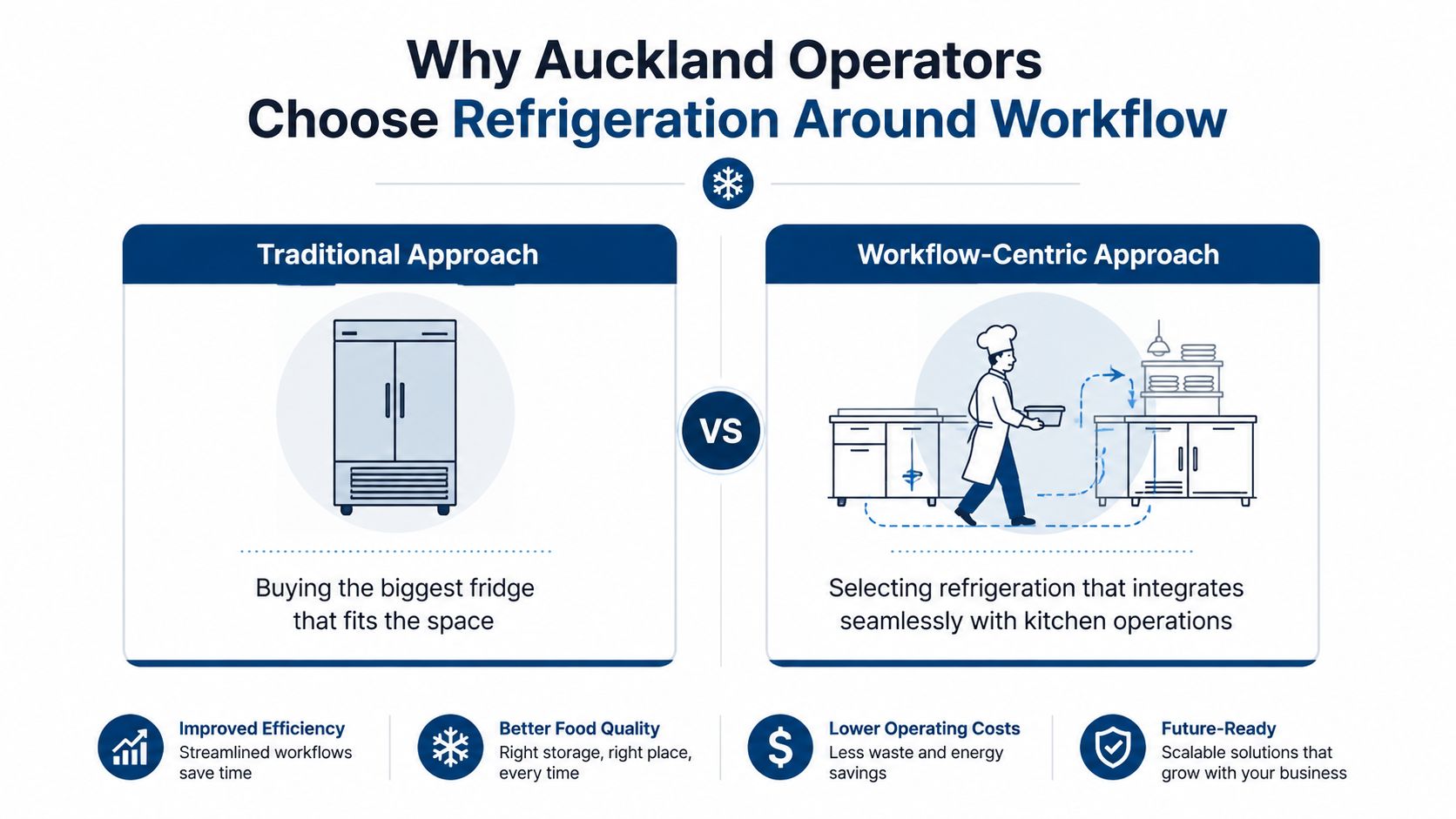
Why Auckland Operators Choose Refrigeration Around Workflow
A busy brunch venue in central Auckland can't afford a fridge that looks great on paper but slows the pass down in service. If staff keep walking across the kitchen for cream, garnishes, or prepped ingredients, the fridge layout is working against the team. The more efficient decision is usually the one that shortens movement, keeps temperatures stable, and makes stock easier to rotate.
Match the cabinet to the task
A single oversized cabinet often creates a false sense of security. It may hold more stock, but if the busiest ingredients are still stored too far from prep, the team loses time every service. A better setup usually mixes upright refrigeration, underbench units, prep counters, and, where needed, display refrigeration so each unit supports one clear role.
Practical rule: if a cabinet does not reduce steps, reduce door openings, or protect a key temperature-sensitive item, it's probably in the wrong place.
That thinking matters even more in Auckland because many kitchens run warm once ovens, dishwashers, and cooklines are operating. The microclimate inside the kitchen is often more demanding than the general weather outside, so the “best fit” is rarely just the largest box that can be installed. A well-placed underbench unit can improve the pace of service far more than a larger storeroom fridge that's awkward to reach.
Keep the operational purpose clear
Commercial refrigeration works best when the purpose is obvious. Bulk stock belongs where staff can load it efficiently. High-use ingredients belong close to the point of use. Front-of-house cabinets need to balance visibility with holding temperature, especially when they're opened repeatedly during service.
| Format | Typical role | Best positioned where |
|---|---|---|
| Upright fridge or freezer | Bulk storage | Storerooms and back-of-house |
| Underbench fridge | Fast access at prep or service points | Beside prep benches and cooklines |
| Prep counter | High-use ingredients within arm's reach | Salad, sandwich, or assembly stations |
| Display refrigeration | Customer-facing product holding and merchandising | Front of house or servery |
| Cool room | Higher-volume storage for larger operations | Back-of-house spaces with planned access |
The useful takeaway is simple. Choose refrigeration around movement, stock turnover, and peak demand, not only around floor area. That's the difference between a cabinet that merely fits and a cabinet that helps the kitchen run.
Commercial Fridge Formats and Their Roles
Commercial refrigeration isn't one product category, it's a set of tools with different jobs. A storeroom upright is built for a different rhythm from a prep counter, and a customer-facing display fridge has its own demands again. The more clearly the role is defined, the easier it is to avoid overspending on the wrong format.
Back-of-house cabinets do different work
Upright refrigerators and freezers suit bulk stock, longer holding, and less frequent access. They're the practical choice where staff need volume more than speed. Underbench fridges sit closer to the action and make sense when chefs or kitchenhands need ingredients right next to prep benches or cooklines.
Display refrigeration is a separate decision. It needs to present product clearly while still maintaining temperature under repeated opening, so airflow, shelving, and visibility all matter. For operators who want to read more before choosing that style, Hospitality has a useful article on commercial display fridge options in New Zealand."
Commercial means built for service, not household use
Domestic units are not made for the same job. Commercial cabinets are designed for frequent door openings, faster temperature recovery, and harder working environments. That matters in Auckland kitchens where staff move quickly and the unit may be sitting close to heat sources or in a tight, busy corner.
A layered setup usually works better than a single central cabinet. Uprights can handle bulk storage, underbench units can keep service moving, and prep counters can hold high-use ingredients within easy reach. Larger operations may also need a cool room, but that only makes sense when stock volume and access patterns justify it.
One of the products sometimes used in related back-of-house planning is the GreenPan Bistro Slow Cooker 3.7L PFAS Free - Stainless Steel, which is designed for straightforward everyday cooking and easier clean-up after use. It's not refrigeration, of course, but it reflects the same operational principle, equipment should fit the pace and routine of the kitchen.
Auckland operators usually get the best result when they specify by function first, then by brand and finish. Brands such as SKOPE, Blue Seal, Atosa, and Turbofan are commonly considered where genuine commercial-grade equipment is needed, because reliability, serviceability, and parts access matter more than a glossy finish. The right unit depends on whether the venue needs volume, speed, display, or a mix of all three.
Auckland Climate and Your Kitchen Microclimate
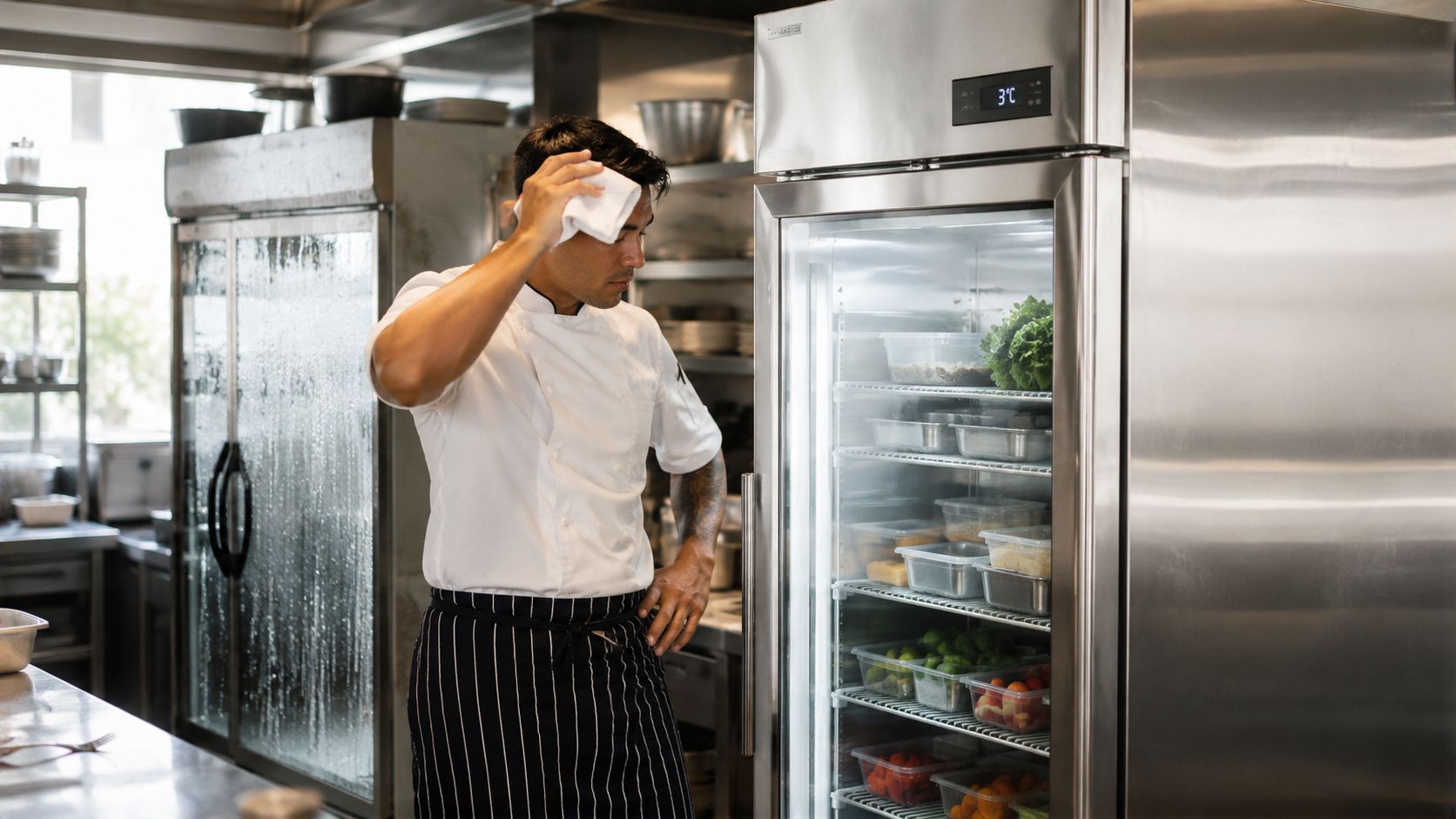
Auckland's warmer, more humid summer conditions make commercial refrigeration work harder than many operators expect, but the bigger issue is often the kitchen itself. A fridge sitting beside ovens, a combi oven, a dishwasher, or a hot plate isn't dealing with “average Auckland weather”, it's dealing with the local heat pocket created by the room layout. That's where poor spec choices show up first.
Spec for the room, not the postcode
The sensible approach is to look at the climate class rating, ventilation clearances, door seal quality, defrost behaviour, and how quickly the cabinet recovers after repeated openings. If the cabinet is undersized for the load, or starved of airflow, it'll work harder and service calls tend to follow. That's especially relevant in tight Auckland kitchens where refrigeration is often installed close to the action.
Refrigeration performs best when it has space to breathe. A cabinet jammed into a hot corner can behave like a much smaller unit than the model number suggests.
The local support network also matters. Figure.NZ's February 2024 counts show 537 geographic units in Auckland in the air conditioning and heating services industry, which gives the region a dense field-service base compared with surrounding areas. For operators, that usually means faster access to commissioning, breakdown response, and maintenance work when a cabinet is business-critical.
Capacity headroom is part of climate control
A unit that looks “big enough” on paper can still struggle if it's installed in the wrong microclimate. Warm service areas, poor ventilation, and frequent door openings all reduce useful capacity. That's why genuine commercial refrigeration is specified for real hospitality conditions, not just the room dimensions on a plan.
The most practical question is whether the unit can hold temperature steadily during service, not just after a rest period. If the answer depends on a cold, quiet room that doesn't exist in the venue, the specification needs another look. In Auckland, the room setup often matters more than the season outside.
Seven Questions to Ask Before You Buy
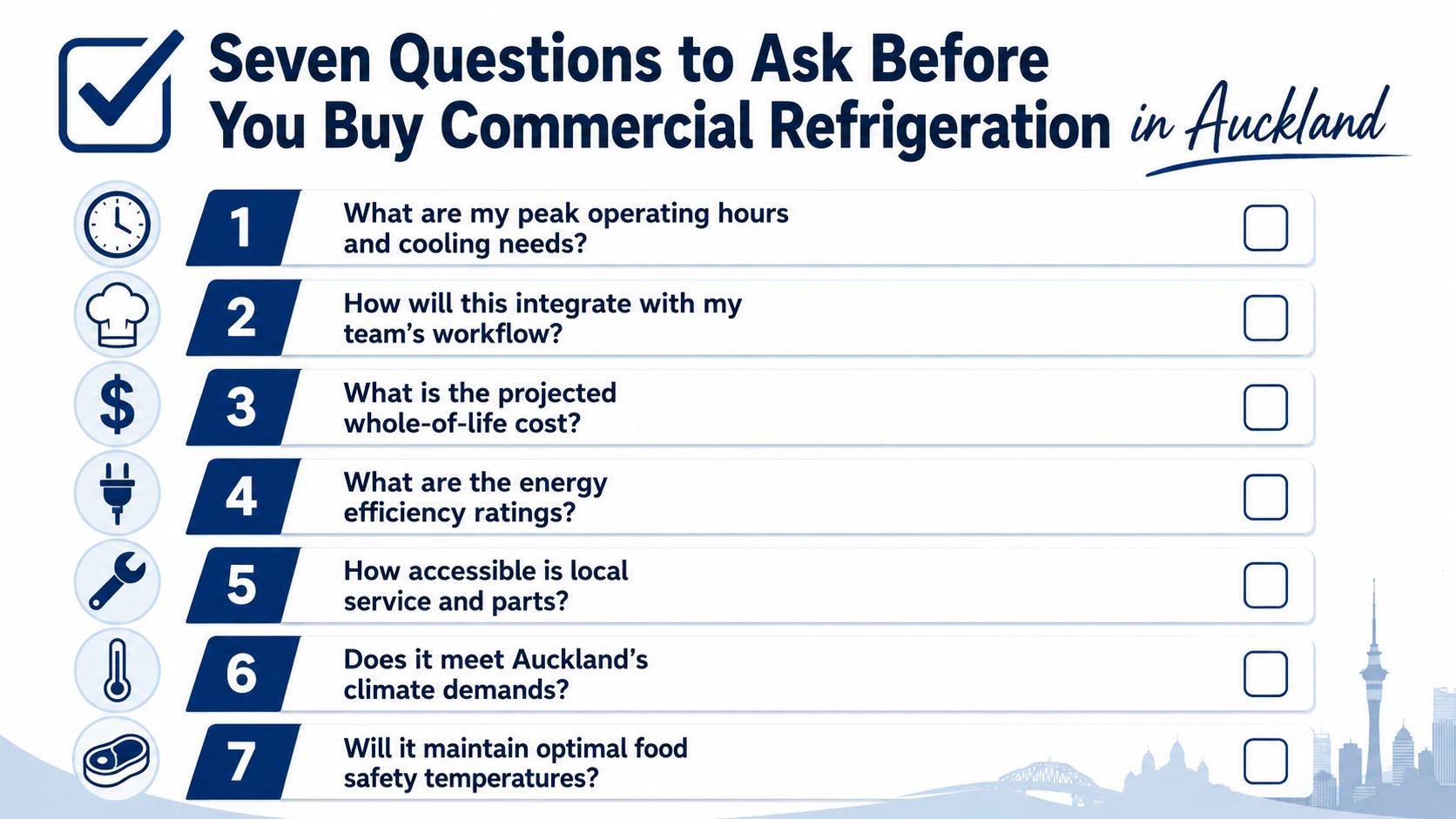
A good refrigeration brief starts with seven direct questions. The answers narrow the choice fast and usually prevent the most common mistake, which is buying around cabinet size instead of buying around use.
The brief that saves time later
- What are we storing? Dairy, meat, prep ingredients, frozen stock, and display goods all create different capacity and temperature needs. A unit that suits bulk storage may be wrong for high-turnover prep.
- How often will the doors open? Frequent access changes the game. A cabinet used every few minutes needs stronger temperature recovery than one opened a few times a shift.
- Where will it sit? Underbench, upright, front-of-house, and storeroom installations all have different airflow, access, and cleaning requirements.
- What are the ambient conditions? The cabinet has to cope with the kitchen it lives in, including nearby heat sources and limited ventilation.
- Would underbench refrigeration improve workflow? If ingredients are used at the prep bench, moving the fridge closer often saves more time than a bigger cabinet elsewhere.
- What local service support is available? NZ spare parts, technician access, and warranty support should be part of the decision from day one.
- What will it cost to operate over its life? Purchase price is only one part of the picture, and refrigeration runs all day, every day.
Build the kitchen around movement
One consideration often missed is stock movement during peak service. A venue with a separate storeroom and prep line may do better with multiple smaller units than one large central cabinet. That approach keeps ingredients near where they're used and reduces unnecessary carrying across the kitchen.
Auckland operators also need to think about the customer-facing side when refrigeration is part of the front of house. Display units can support sales, but they still need to fit the service rhythm and not create bottlenecks. For a useful related read, Hospitality has a guide to choosing refrigeration based on your business stage, which helps narrow the shortlist before a quote is requested.
The strongest brief is short, specific, and operational. What is being stored, how is it accessed, and where does it sit in the workflow? Once those answers are clear, the right cabinet is much easier to identify.
Whole-of-Life Cost and Energy Efficiency
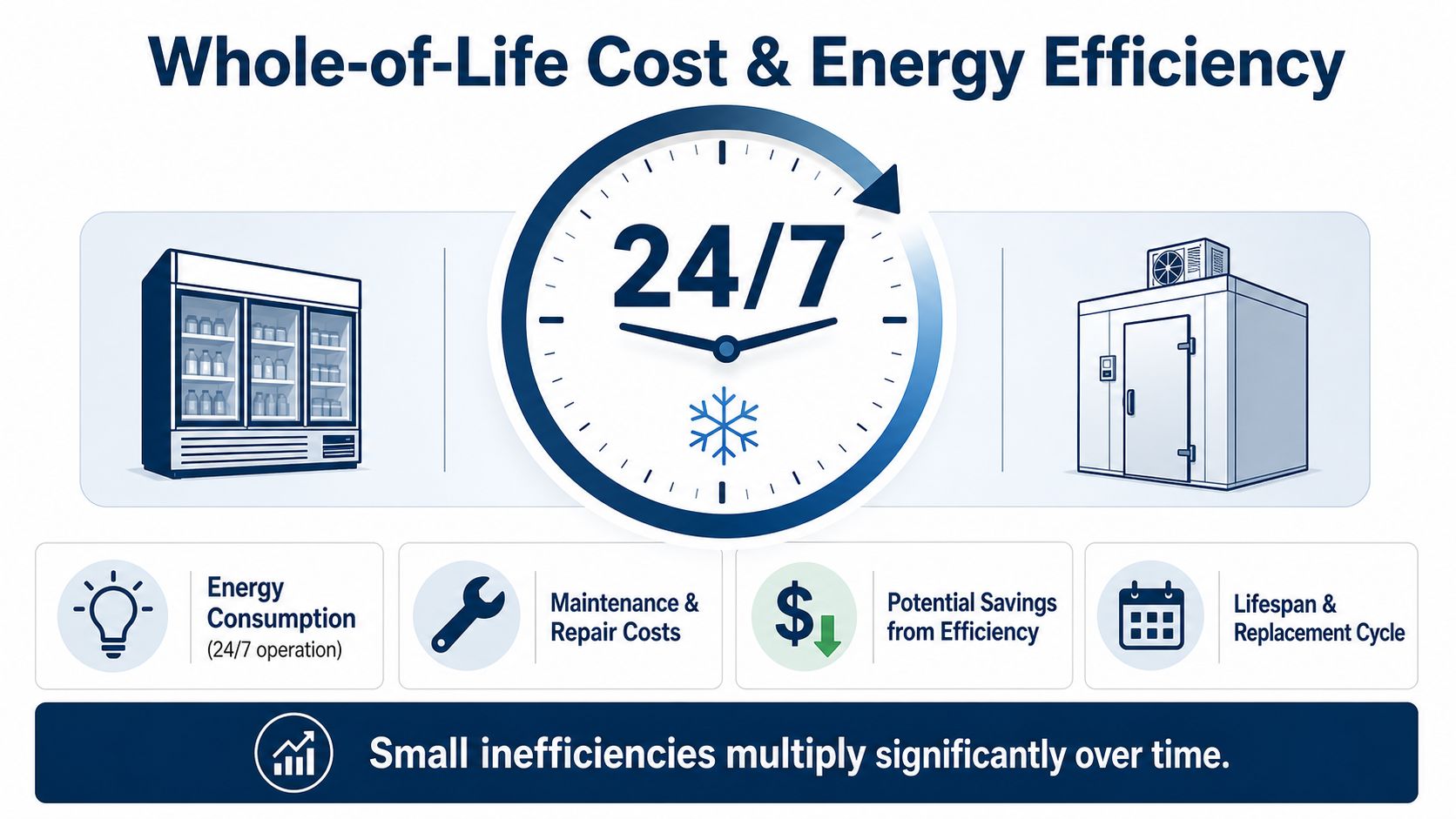
Commercial refrigeration is a 24-hour asset, so the cheaper purchase price is not always the cheaper outcome. Even small differences in daily energy use become meaningful when the cabinet runs every day of the year and the venue has several units on site. That's why energy efficiency deserves proper attention before the order is placed.
Look beyond the sticker price
Operators should compare manufacturer energy-consumption information where it's available, then weigh that against purchase price, maintenance, and expected replacement timing. A cabinet that seems slightly more expensive upfront may be easier to live with across the life of the unit if it's better suited to the environment and service pattern.
Useful way to judge it: if a unit runs all day, every day, even modest inefficiency gets repeated endlessly.
The refrigerant choice also deserves attention. Recent New Zealand market reporting shows around 22% of the estimated 1,077 supermarkets already use transcritical CO₂ refrigeration, which shows lower-global-warming-potential systems are no longer fringe in NZ. That doesn't mean every café or bar needs the same technology, but it does mean refrigerant planning is now part of sensible long-term specification.
Efficiency is tied to system design
Energy performance isn't only about the compressor label. Airflow, cabinet loading, door seals, defrost strategy, and installation clearances all influence how hard the unit has to work. A well-specified cabinet in a badly planned spot can waste the advantage the model was supposed to deliver.
For broader reading, Hospitality has a piece on energy-efficient appliances that reinforces the same basic rule, running cost should be part of the buying conversation from the start. That logic is even more important in refrigeration because the cabinet never really switches off.
Auckland buyers who take a whole-of-life view tend to make calmer choices. The focus shifts from the cheapest box to the unit that will still suit the kitchen, the service pattern, and the support network years later.
Maintenance, Cleaning and Food Safety Routines
A refrigerator that's cleaned and checked properly tends to stay reliable for longer, and the work is usually straightforward. Staff don't need to be technicians to catch early warning signs. They do need a routine, a checklist, and a clear idea of what “normal” looks like on the floor.
What staff should check every day
- Temperature reading: Confirm chilled potentially hazardous food is held at 5°C or below and frozen stock stays below -18°C. The danger zone is 5°C to 60°C, so anything drifting into that range needs attention.
- Door seals and gaskets: Look for gaps, damage, grime, or sticky residue that stops the door closing properly.
- Airflow inside the cabinet: Don't overpack shelves or block vents, because restricted airflow affects recovery and temperature consistency.
- Spills and packaging: Wipe up leaks quickly and remove damaged stock before it causes odours or hygiene issues.
- Condenser coils and exterior surfaces: Keep them clear of dust and grease so the unit can breathe and the kitchen stays cleaner.
Food held less than 2 hours in the danger zone can be returned to refrigeration, 2 to 4 hours means it must be used immediately, and beyond 4 hours it should be discarded. That makes regular temperature checks a food-safety task, not just a maintenance task.
Build habits into close-down and opening
A simple daily walk-through catches many issues before they become breakdowns. Staff can check seals, verify the temperature display, look for standing water, and make sure the cabinet isn't being used as a storage shelf for unrelated items. Those habits are especially useful in Auckland venues where the pace of service can hide small problems for too long.
For cleaning around refrigeration and other high-touch equipment, the safer commercial facilities tips are a useful reminder that routine hygiene beats emergency cleaning every time. If a cabinet is cleaning up badly, or temperature drift is becoming a pattern, that's the point to escalate.
Hospitality also has a practical commercial refrigeration maintenance article that fits well alongside a venue's own checklist. The aim is clear. Keep the cabinet clean, keep the seals sound, and catch drift before it turns into spoiled stock.
Retrofit, Repair or Replace and Why Local Service Matters
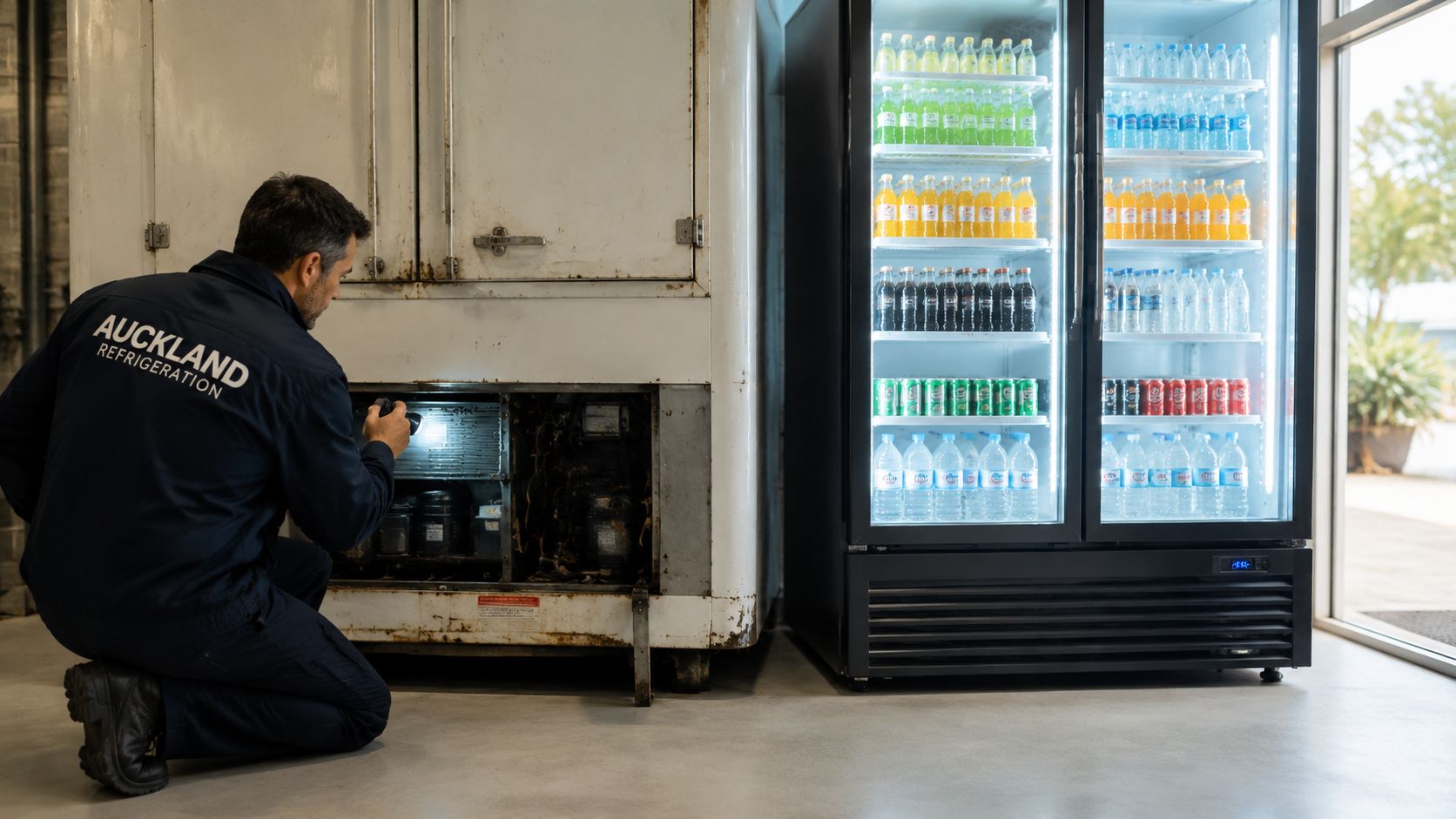
Auckland operators often keep refrigeration going longer than they should because the cabinet still “sort of works”. That is a risky position when the unit is protecting stock, service pace, and food safety at the same time. The better question is which option, repair, retrofit, or replacement, creates the least disruption over the life of the venue.
Start with the load, not the fault
New Zealand guidance for industrial and commercial refrigeration starts by asking whether refrigeration is needed at all, what needs cooling, and how much cooling is required. That is a useful lens when a venue is deciding whether to repair an existing setup or replace it with something that fits the current menu and workflow better. If the old cabinet no longer suits the task, fixing the symptom does not solve the design problem.
The load matters because a cabinet that is technically repairable may still be the wrong unit for the job. A deep cabinet in the wrong place, a model that struggles in a hot prep area, or a layout that forces staff to keep opening the door can cost more over time than replacing it with a unit that matches daily use. That is where whole-of-life cost comes into the decision, not just the next invoice.
When a technician is needed, local access matters. NZ spare-parts availability, established commercial brands, local service networks, and warranty support all affect how quickly a breakdown can be resolved. That is especially important for venues that cannot afford long downtime during service hours, or that need a repair crew who understands Auckland kitchens, their pressure points, and the realities of on-call service.
If a cabinet is failing repeatedly, a useful external reference on repair decisions is Lighthouse Energy Services cooler repair, which reflects the same basic principle, diagnosis should come before guesswork. Deciding when to make that call can be difficult, and it helps to know when it is time to replace commercial fridges based on age, performance, and repair costs. For Auckland operators, the practical question is whether the current unit can still be supported reliably, or whether the downtime risk has already made replacement the safer call.
Compliance still has to line up
A few local rules also shape the decision. AS/NZS 1677 is the common design framework for refrigeration systems in New Zealand, and WorkSafe's licensing rules apply to technicians working on commercial systems using flammable, toxic, or very high operating pressure refrigerants. EECA's E3 programme also requires importers and manufacturers of regulated refrigerated cabinets to register products before sale and provide annual sales data.
Those rules do not mean every operator needs to become a compliance expert. They do mean refrigeration should be bought and serviced through channels that understand the New Zealand market. That is where local support protects the venue, not just the cabinet.
Getting the Right Setup for Your Auckland Venue
The best refrigeration choice usually looks calm on service day. Ingredients are close to where they're used, stock is easier to rotate, and staff aren't crossing the kitchen to reach things that should have been within arm's reach from the start. That's the difference between buying a fridge and designing a refrigeration setup.
A layered arrangement often makes the most sense. Upright refrigeration handles bulk storage, underbench units support prep stations, prep counters keep high-use ingredients accessible, and display refrigeration works when the cabinet needs to face customers as well as hold temperature. The aim is always the same, reduce unnecessary movement and give each unit a clear job.
For hospitality teams wanting a broader picture of layout and service flow, the article on what defines a chef's kitchen is a useful companion read, because refrigeration only works well when it fits the wider kitchen design. That same thinking applies whether the venue is replacing one cabinet or planning a larger fit-out.
Hospitality works with Auckland hospitality businesses on individual refrigeration replacements and on refrigeration specification as part of larger commercial kitchen projects, with access to established commercial brands and local support pathways. If the next step is choosing between formats, clarifying service support, or planning a kitchen that runs properly under pressure, the most useful move is to talk it through with a supplier that understands Auckland venues.
Hospitality can help Auckland operators choose commercial refrigeration that fits the kitchen, the service rhythm, and the support network behind it. If you're comparing upright fridges, underbench units, prep counters, or display refrigeration, visit Simply Hospitality to discuss the right setup for your venue and the local support available behind it.