

Common Mistakes When Choosing a Soft Serve Machine
The biggest mistake is choosing the wrong machine type for the product, not the wrong brand. If the menu is açaí, a gravity-fed machine usually suits the dense texture customers expect, while traditional soft serve is what an air pump machine is built to handle.
Most operators get pulled into comparing badges, bench footprint, and headline output. That's the wrong order. The right machine starts with the product, then the texture, then the busiest hour, because the machine has to suit what's being sold and when it's being sold.
Why the Wrong Machine Type Is the Most Expensive Mistake
Choosing the wrong machine type is where the pain starts. Many buyers focus on brand names and forget that the machine is not a generic dispenser. It's a tool built for a specific product behavior, and if that behavior doesn't match the menu, the purchase is already compromised.
The clearest example is açaí. Traditional air pump soft serve machines are designed to introduce air into the mix, which creates a lighter product. Açaí generally needs a denser finish, so a gravity-fed machine is usually the more appropriate fit. That's why the first question should never be “Which brand?”, it should be “What are we serving?”
A second mistake is assuming every frozen dessert behaves the same way. It doesn't. A machine that handles one mix beautifully can be the wrong tool for another, and hospitality businesses often discover that after installation, when the texture is off and the workflow slows down.
Practical rule: the best machine is the one designed for the product you're selling, not the one with the loudest brochure.
For operators comparing frozen dessert options more broadly, it can help to look at how specialist equipment is matched to a product format. Hospitality's article on why Nemox is a favourite for artisan gelato and ice cream is useful for thinking about product fit rather than just brand names. The logic is the same whether the venue is serving gelato, soft serve, or açaí bowls.
Gravity-Fed vs Air Pump and Why It Changes the Product
The gravity-fed versus air pump decision isn't a technical footnote. It changes the finished product, and in a food service setting that changes what customers think they're buying. If the texture is wrong, the machine is wrong.
How the two designs behave
A gravity-fed machine relies on the mix feeding into the freezing cylinder under gravity. That setup suits denser products where a thick, rich finish matters more than a light, aerated one. An air pump machine works differently, incorporating air into the mix to create a lighter result, which is why it fits traditional soft serve so well.
That distinction matters because customers do not judge the machine. They judge the cup. If they expect a dense açaí serve and get something airy, the mismatch shows immediately.
The machine doesn't need to be clever. It needs to make the right product consistently.
For soft serve, the practical question is simple. If the menu is built around classic soft serve, frozen yoghurt, or a twist format, an air pump setup can be the right call. If the venue is serving a denser product, gravity-fed is the safer choice. The better system is the one that matches the product on the menu.
Start from texture, not equipment. A light, aerated product wants one kind of machine. A thick, dense product wants another. That is why one-size-fits-all advice causes trouble in practical applications.
The Brüllen i26 PRO Twin System Soft Serve Acai is a premium two-flavour plus twist countertop soft serve machine with optional pasteurisation and an air pump system, and it's designed for high output with up to 700 serves per hour. That kind of specification only matters if the product and service model match it. For operators building around açaí, the logic in this Brullen soft serve guide for açaí-focused venues makes the same point from a practical buying angle.
Sizing for Peak Demand Instead of Average Sales
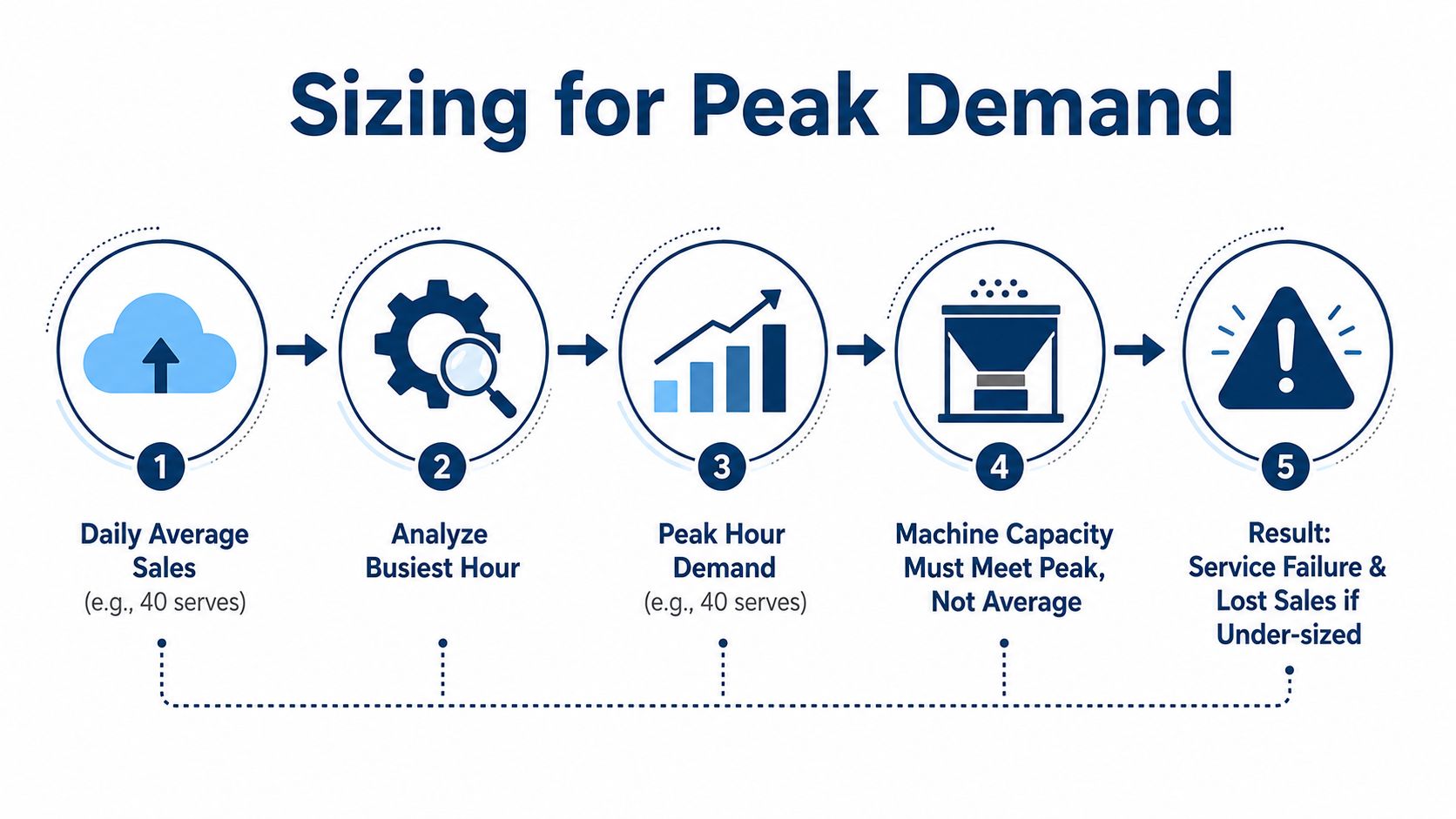
Buy for the rush, not the spreadsheet average. A machine that looks fine on quiet weekdays can collapse the moment service stacks up, and soft serve shows that mistake fast. The key question is how the product behaves when the queue is live, because the wrong capacity turns into slower service, wasted labour, and lost sales.
A business may only sell 40 serves per day, but if those serves hit during one busy summer hour, that is the figure that matters. Average sales hide the pressure point. Peak demand is what decides whether the machine keeps moving or becomes the bottleneck.
Why the busiest hour wins
Commercial soft serve machines typically produce about 100 to 420 100 ml servings per hour, and sizing should follow the busiest hour because that is where bottlenecks and missed sales show up. The same guide notes that once peak-hour demand rises above 200 servings, operators should start looking at floor models, while under 150 servings a countertop machine is usually enough.
That split matters because it forces a choice based on service rhythm. A countertop unit suits a calmer venue with a lighter burst. A floor model makes sense when the rush is sustained and staff need more output without constantly babysitting the machine.
What actually limits performance
The limiting factors are the machine's hopper size, freezing cylinder, and recovery time. If the cylinder cannot recover quickly after a run of serves, the queue grows and the team starts working around the machine instead of serving customers.
Product choice changes the pressure too. A light, aerated mix behaves differently from a denser product, so output claims on paper can be misleading if they are not matched to what is being dispensed. That is why gravity-fed and air-pump systems cannot be treated as interchangeable, especially in venues that serve different products with different textures. The machine has to suit the product first, then the demand profile.
For seasonal New Zealand operations, the risk is sharper again. Summer trade and holiday traffic can blow past average-demand planning fast, so some spare capacity is a sensible buffer, not a luxury. Operators who want a reality check on payback should use this guide on how many ice creams a soft serve machine needs to sell to cover its cost before they commit.
Working Backwards From Your Menu Before You Buy
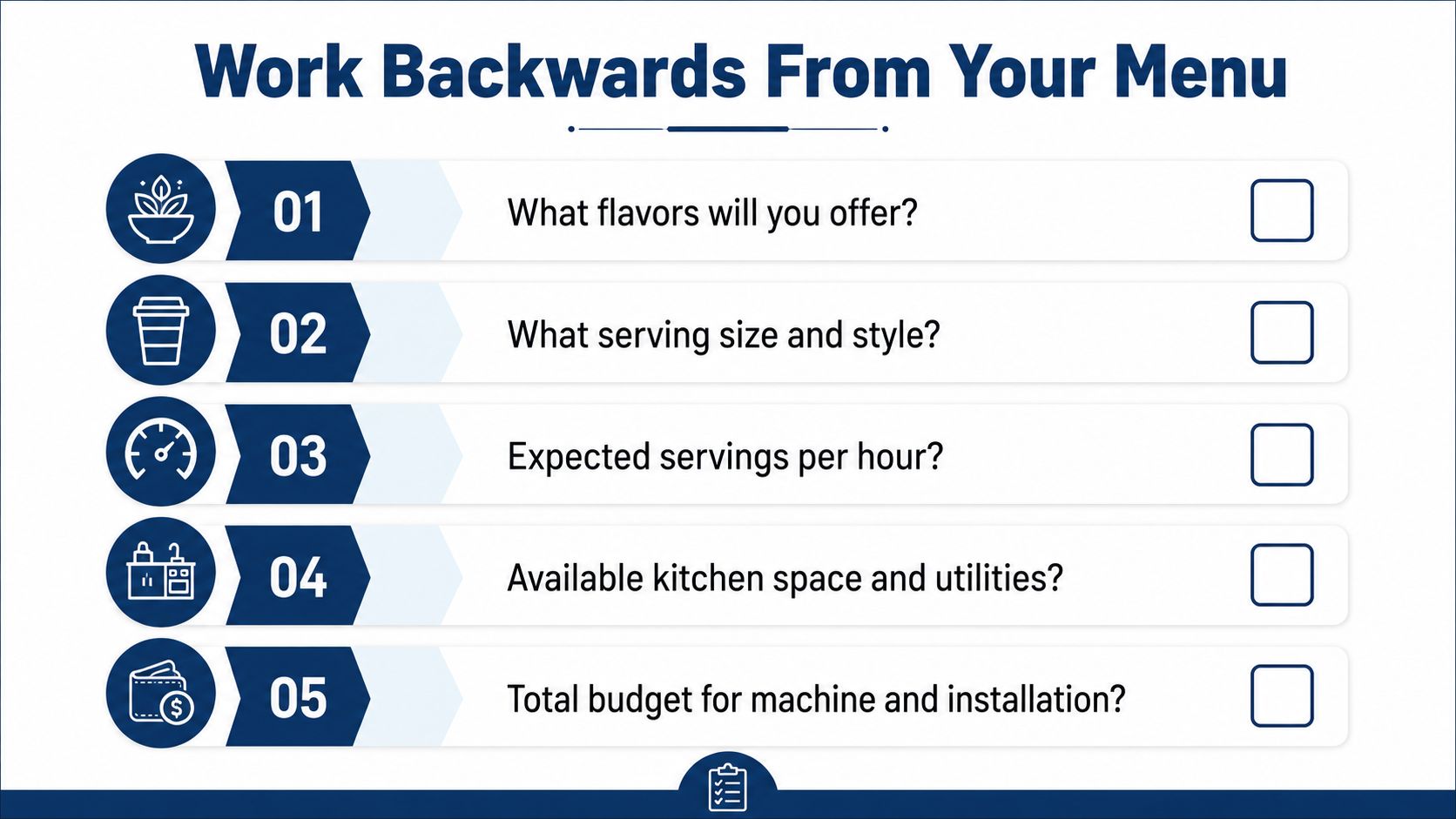
The cleanest buying process starts with the menu, not the catalogue. Operators who work backwards from what they're selling avoid most of the regret that comes from choosing a machine by guesswork. It also makes supplier conversations shorter, sharper, and far less vulnerable to a hard sell.
The five questions that matter
Before any purchase, the operator should be able to answer these clearly:
- What product are we serving? Soft serve, açaí, frozen yoghurt, or something else.
- What texture do customers expect? Light and aerated, or dense and spoonable.
- What will demand look like on our busiest day? Not the average day, the busiest hour.
- Could the menu expand? A machine that leaves room for future flavours or formats can save an early replacement.
- Is this machine designed for our product? If not, it's the wrong unit, no matter how polished the sales pitch sounds.
These questions sound basic because they are basic. That's the point. Too many operators jump straight to output claims and forget that the machine has to fit the menu first.
A simple rule helps here. If the product is açaí, the selection logic is different from traditional soft serve. If the product is classic soft serve, the texture target is different from a dense fruit base. The machine should follow that decision, not lead it.
For operators weighing whether a larger machine is worth it, Hospitality's article on how many ice creams a soft serve machine needs to sell to pay for itself is a useful way to think about volume versus capability without getting lost in brand chatter.
A slightly larger investment in the correct machine usually beats trying to force the wrong machine into service. The customer experience is cleaner, the team works faster, and the business isn't constantly fighting a compromise.
Hygiene, Cleaning, Site Utilities and Total Cost of Ownership
Buyers get fixated on sticker price and then wonder why the machine becomes expensive later. In hospitality, the bill includes cleaning time, labour, utilities, installation readiness, and management attention. If the site setup is wrong or the wash-down routine is a pain, the machine keeps charging you after the invoice is paid.
Cleaning and hygiene design are not optional
Soft serve equipment needs routine cleaning because product residue, poor handling, and skipped maintenance create food safety risk. A unit that is hard to strip down or awkward to reach will be cleaned less reliably, and that turns into an operating problem fast.
Pay attention to operator access, removable parts, and the way the machine fits into close-down. If staff hate cleaning it, the machine is mismatched to the site. That is a buying error, not a training issue.
Utilities can make or break installation
A commercial soft serve machine guide notes that many units require 208 to 230V power, with either single-phase or three-phase connection depending on the model, and operators should confirm electrical capacity with an electrician before purchase. It also highlights the choice between air-cooled and water-cooled systems, which depends on ventilation space or water-line access.
That matters in New Zealand because many hospitality sites are compact or retrofitted. A machine that looks fine on paper can become a problem if the electrical supply, ventilation, or plumbing is not ready. Oversized floor models can also waste energy and money in small cafés.
Practical rule: if the site cannot support the machine properly, the machine is the wrong size, even if the price looks attractive.
For buyers comparing up-front spend with long-term value, Simply Hospitality's article on buying cheap versus buying once when equipment ultimately saves money is a sensible read. The lesson carries straight across. Sticker price never tells the full story.
Think in total cost of ownership, not acquisition cost. Maintenance, cleaning labour, utility use, installation readiness, and downtime all contribute to the overall number. The cheapest machine can become the most expensive one very quickly if it does not suit the site.
Questions to Ask Any Supplier Before You Commit
A supplier conversation should feel like a technical check, not a perfume counter. If the answers stay vague, the buyer is probably being sold a machine that suits the brochure better than the venue. The right questions expose that quickly.
Ask about the support, not just the machine
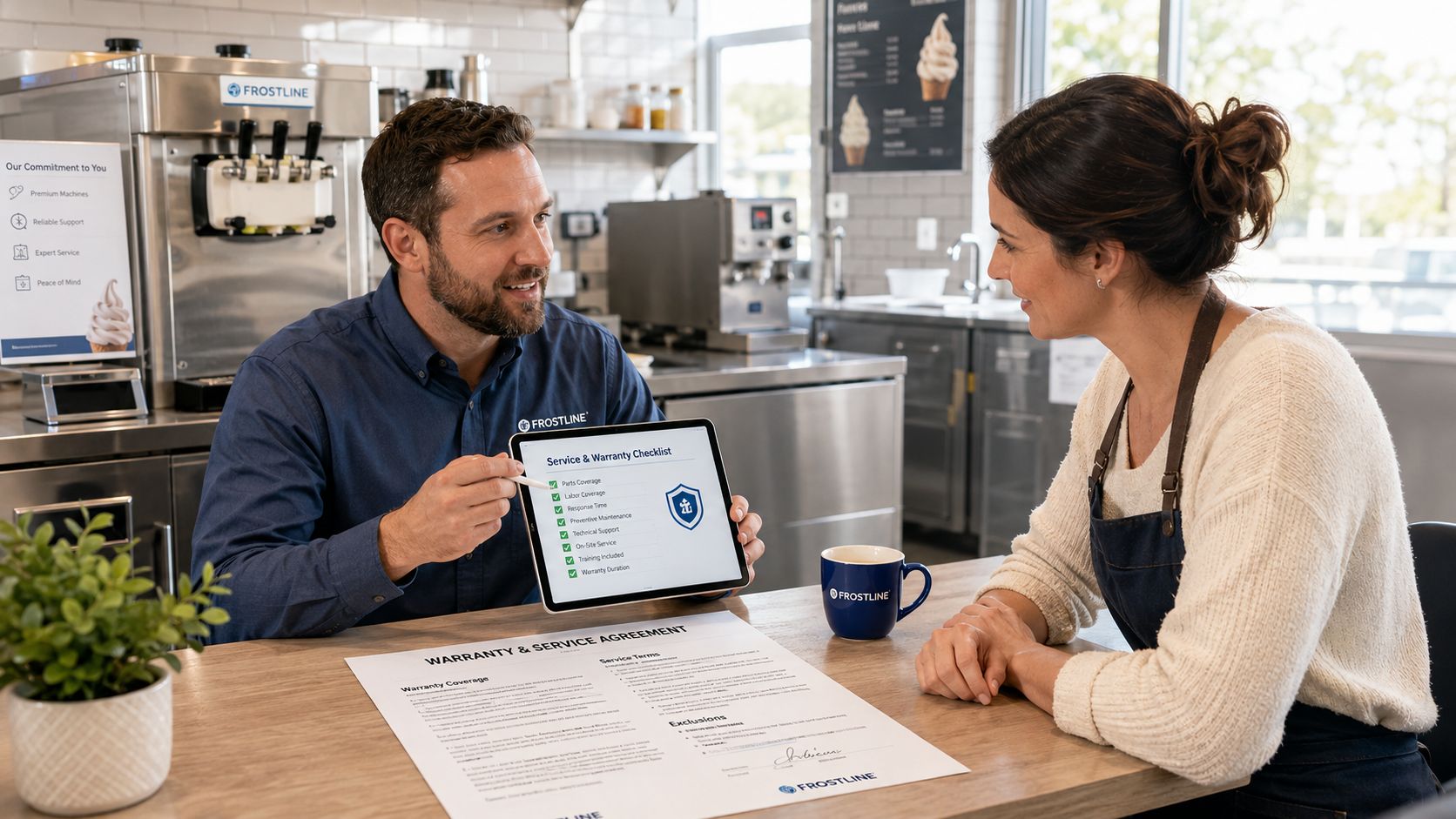
- What warranty terms apply, and what do they cover?
- How are service calls handled, and what response process applies?
- Are parts readily available for this model?
- What training is included for daily cleaning and operation?
- Will the machine work with the mixes and serving style planned for the venue?
- Can the supplier point to a similar concept or venue setup?
Those questions matter because post-sale support often decides whether a machine is easy to own or a constant interruption. Training is just as important as horsepower. A powerful machine still causes trouble if staff don't know how to run and clean it properly.
The wrong sales tactic is to focus on output claims without checking whether the product and venue can use that output. A machine that looks impressive on a specification sheet can be a poor fit if the mix, service pattern, or cleaning routine doesn't match.
A useful follow-up is to ask for a venue using the same product type. A machine that suits traditional soft serve might not be the right answer for açaí, and the supplier should be able to explain that clearly. If they can't, that's a warning sign.
Hospitality's article on what we've learned from helping hospitality businesses choose equipment is worth reading alongside any supplier pitch, because the same principles apply across categories, ask better questions, and the wrong fit becomes easier to spot.
Choosing the Right Machine for Your Venue
The right machine begins with the product. Then comes the busiest hour, then the site setup, then the support behind it. That order saves more regret than any brand comparison ever will.
For açaí, the question is whether the machine can deliver the denser consistency customers expect. For traditional soft serve, the question is whether an air pump unit fits the texture and volume. For every venue, the final check is simple, does the machine suit the product being sold and the way the team trades?
The best purchase is rarely the flashiest one. It's the one that holds up through service, cleans down without drama, and doesn't fall apart when summer trade hits.
Hospitality helps New Zealand hospitality businesses choose equipment that fits the product, the site, and the workload. If a venue is weighing soft serve, açaí, or another frozen dessert setup, Simply Hospitality can help narrow the options and avoid the usual buying mistakes.