


Cooktop Stove Electric
A Wellington restaurant owner can order a smart-looking four-zone induction suite, schedule delivery, and only then discover the kitchen's existing single-phase supply can't run more than two zones at full draw alongside the combi oven. That isn't an equipment failure. It's a procurement failure. The right cooktop stove electric choice starts with the building's electrical capacity, then works backwards to cooking technology, zone layout, cookware, service demands and compliance.
New Zealand operators already work in a market where electric cooking is familiar. EECA's 2024 consumer research found that 64% of New Zealanders have an electric cooktop, while 73% of surveyed homeowners said their main cooktop is powered by electricity rather than gas or another fuel source (EECA's consumer research). Commercial kitchens still need a more demanding assessment than domestic buyers do. A hospitality cooktop has to handle peak service, repeated cleaning, suitable cookware, planned servicing and the electrical load created by the rest of the kitchen.
Why the Switchboard Matters Before the Stove
The restaurant owner in Wellington had a clear operational reason for moving from gas to induction. Removing open flames would simplify the cooking line, a flatter surface would make cleaning easier, and less unwanted heat around the pans would help the team through warm service periods. The problem appeared when the electrician reviewed the site. The existing supply had limited spare capacity, and the combi oven was already drawing heavily when the proposed induction suite was expected to operate at full output.
The order stalled because the kitchen had chosen the appliance before confirming whether the premises could supply it. That sequence is backwards. A cooktop stove electric purchase should be treated as part of the site's electrical design, not as a standalone replacement for a gas appliance.
Three procurement questions come first
Before comparing finishes, controls or brands, the operator and electrician need clear answers to three questions:
- What power is available? Confirm the supply phase, switchboard rating, spare capacity and existing dedicated circuits.
- What will run at the same time? Peak service may involve the cooktop, combi oven, dishwasher, refrigeration, extraction and other fixed appliances operating together.
- What upgrade work could follow? The installation may require new cabling, protection, isolation equipment, switchboard changes or a supply upgrade.
A brochure's maximum connected load doesn't automatically equal the load used every second of service. It does, however, determine what the electrical design must be able to manage safely. An electrician needs the complete equipment schedule, not just the cooktop name and width.
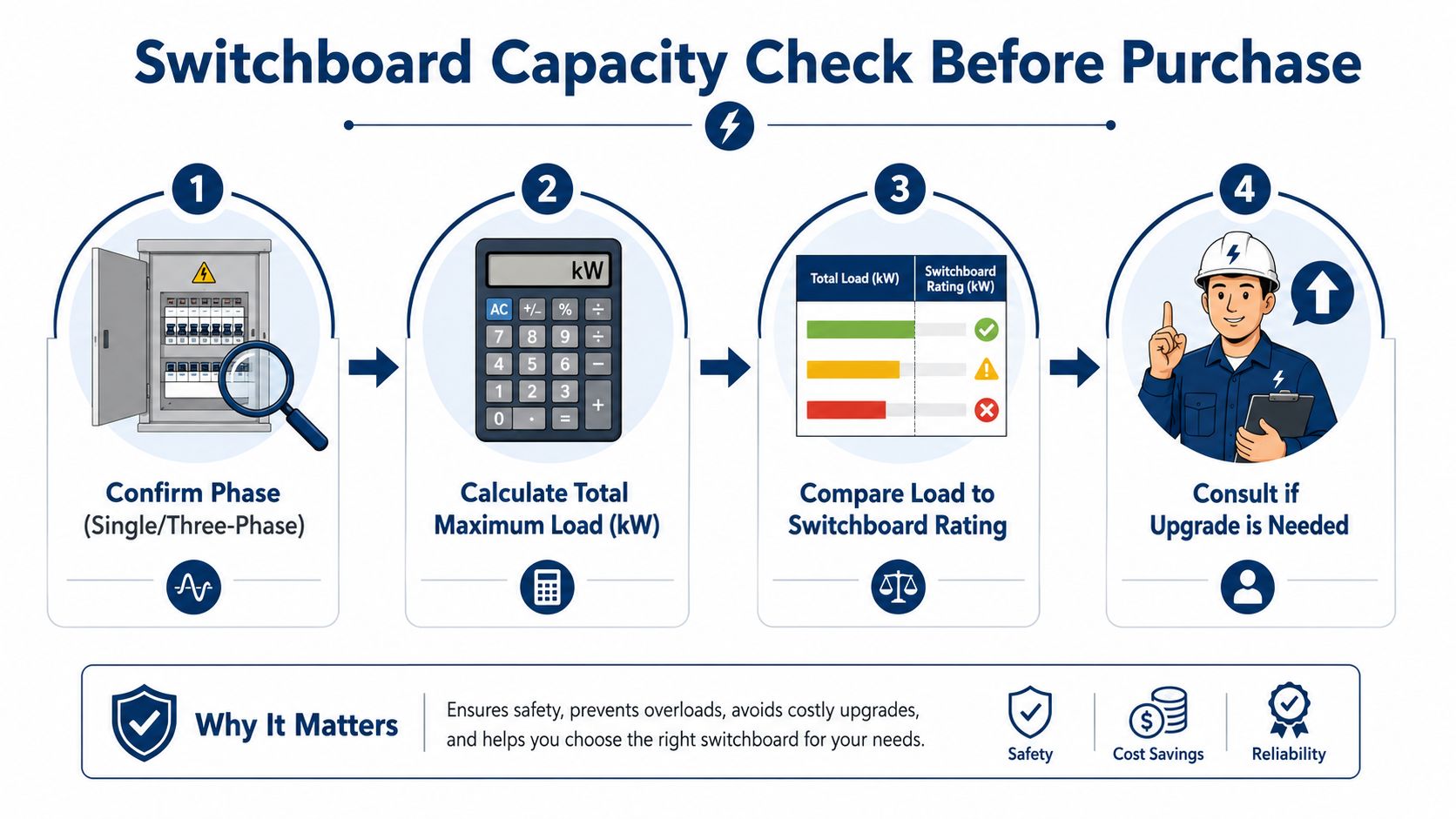
Operators planning a wider refit should also bring the cooking equipment into the early layout discussion covered in commercial kitchen installation planning. A stunning induction line-up is useless if the infrastructure can't feed it, and a lower-powered alternative may be the more practical choice if an electrical upgrade doesn't fit the project.
Practical rule: Get the electrician's capacity assessment before the equipment order is placed, not after delivery day.
The Main Electric Cooking Technologies Explained
Electric cooking isn't one uniform category. Solid elements, radiant or ceramic surfaces, induction and electric ranges all behave differently when a kitchen is busy.
Solid elements and radiant ceramic
Solid-element cooktops use exposed or enclosed electric heating elements that transfer heat into the pan. They're straightforward to operate and familiar to staff who have used conventional electric stoves. They can suit general commercial applications where the menu relies on steady boiling, simmering and pan work rather than rapid changes between tasks.
Their weakness is response. The element stays hot after the control is reduced, so a cook has to anticipate changes and move or remove the pan when a dish needs immediate control. Coiled elements also create more awkward cleaning points than a flat surface.
Radiant or ceramic cooktops place the heating element beneath a glass-ceramic surface. The flat deck is easier to wipe during a busy shift, but the surface and pan retain heat after the setting is lowered. A spill can bake onto the glass, and impact from a heavy stockpot can damage the surface, so cleaning technique and handling matter.
Induction and electric ranges
Induction creates a magnetic field that heats compatible cookware directly. That gives the cook rapid response, precise adjustment and a cooking surface that produces less unwanted heat around the pan. The trade-off is firm: cookware must have an induction-compatible magnetic base, and the electrical design must match the equipment's connected load.
Electric ranges combine a cooktop with an oven in one floor-standing station. That arrangement works well where a venue needs a complete cooking module within one footprint, rather than a separate hob and oven. It also concentrates a substantial electrical demand in one piece of equipment, so the range must be assessed with the rest of the cookline.
| Technology | How It Heats | Typical Response Time | Typical NZ Use |
|---|---|---|---|
| Solid element | An electric element heats the pan through direct contact | Gradual, with residual heat after adjustment | General commercial cooking and steady simmering |
| Radiant or ceramic | An element beneath glass-ceramic heats the pan | Gradual to moderate, with retained surface heat | Kitchens prioritising a flat, wipe-clean deck |
| Induction | A magnetic field heats compatible cookware directly | Rapid, with responsive control changes | Busy cooklines, open-flame-free kitchens and heat-sensitive work areas |
| Electric range | Electric elements provide hob and oven heat in one unit | Depends on the hob and oven configuration | Venues needing an integrated cooking station |
For a deeper technology comparison, operators can read the Induction Cooktop NZ article. The useful question isn't which technology wins in every kitchen. It's which behaviour matches the menu, staff workflow, cookware and available supply.
Power Supply, Phasing and Electrical Capacity
Electrical infrastructure is where many otherwise sound equipment plans fail. In New Zealand commercial premises, an electrician may be working with single-phase or three-phase supply, and the available capacity depends on the site rather than the operator's preferred appliance. A high-demand cookline often needs a carefully managed three-phase design, while a single-phase site may impose a hard limit on how much equipment can operate together.
The nameplate kW figure is important, but it isn't the whole operating picture. Total connected load, the load likely to be used simultaneously, and the diversity-adjusted load are different calculations. A higher-rated appliance isn't automatically more expensive to operate if it completes the required cooking task more quickly or transfers energy more effectively. The commercial question is not only “how many kilowatts does it use?” It's “how much energy does it require to complete the cooking this kitchen does?”
EECA models electric coil and ceramic cooktops at about 71% efficiency, induction at about 78%, and gas at 30% (EECA's induction cooktop guidance). EECA also explains that induction heats cookware directly, reducing waste heat and improving responsiveness. Those figures help explain why headline kW comparisons can mislead, but they don't replace a site-specific electrical assessment.
Installation details that affect the order
The electrician should confirm:
- Phase and supply: Whether the appliance suits the available single-phase or three-phase supply.
- Cable and circuit design: Cable sizing, circuit protection and the equipment's installation requirements.
- Isolation: The appropriate isolating switch location and accessibility.
- Protection: RCD requirements and the environmental conditions around sinks, splash zones and cleaning.
- Layout: Clearances, ventilation, service access and the route for fixed wiring.
BRANZ guidance states that a free-standing range needs a dedicated power outlet and an isolating switch within 2 metres, accessible without reaching across the cooking surface. It also states that a wall or underbench electric oven must be hard wired with an isolating switch within 2 metres, while an electric or induction hob typically uses 2.5 mm² or 4 mm² two-core plus earth TPS cable for a four-element hob (BRANZ electrical design guidance). The exact installation still needs confirmation for the selected appliance and site.
For larger fit-outs, a structured electrical take-off can help organise the equipment schedule and circuit assumptions. An Exayard electrical estimating software resource may be useful during planning, provided the final design is checked by a qualified electrical professional.
The portable induction cooktop information is relevant for temporary or supplementary work, but portable equipment still needs a safe supply and suitable placement. Commercial operators also need to account for the combi oven, dishwasher, refrigeration and extraction before committing to a high-output cooktop.
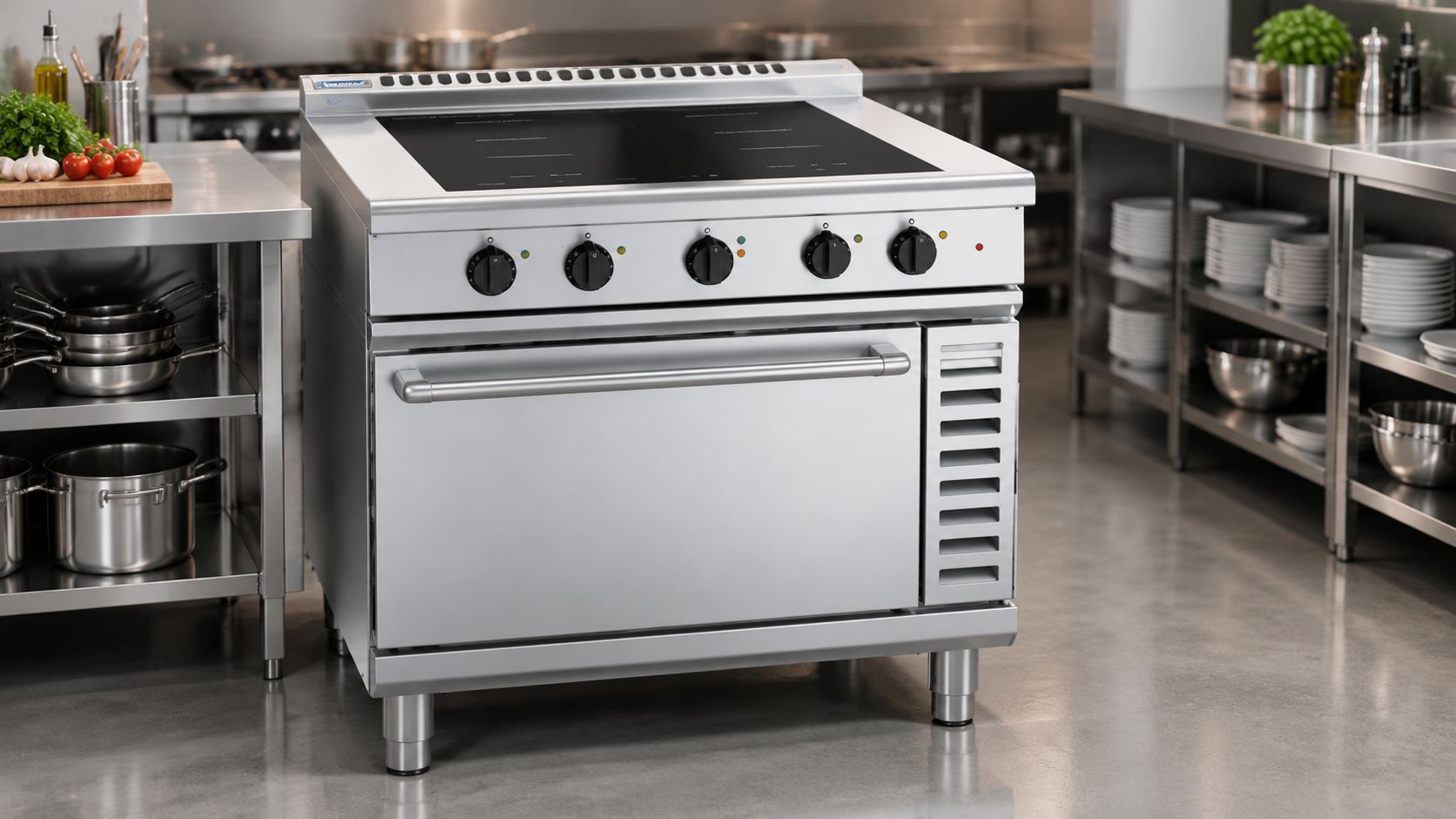
A relevant integrated option is the Waldorf 800 Series INL8410ECF - 900mm Induction Range Convection Oven Low Back Version. It has four full-area induction zones rated at 5.0 kW each, plus a 2/1 GN convection oven with 6.1 kW heating elements, automatic pan detection, a 50 to 320°C thermostatic control, five rack positions and a low-back floor-model format. Those figures make the electrical assessment essential, particularly where the cooktop and oven may operate together.
New Zealand's compliance timetable also belongs in the purchase file. The Electricity (Safety) Amendment Regulations 2025 and related gas-safety amendments come into force on 13 November 2025, according to MBIE's regulatory release. The New Zealand Electricity Safety Regulations require commercial electric cooking ranges, ovens, hobs and hob elements to comply with Standard A together with IEC 60335-2-36 Ed 7.0 (2021), with Standard B allowed only during the transition until 4 May 2027. Standards New Zealand describes IEC 60335-2-36:2021 as covering electrically operated commercial cooking and baking ranges, ovens, hobs and hob elements, with rated voltage limits of 250 V for certain single-phase appliances and 480 V for other appliances.
Comparing Induction, Radiant and Solid-Element at Service
A kitchen team notices cooking technology through small moments. A pan is dropped onto a hot zone, a sauce needs to stop reducing immediately, a stockpot comes off the heat, or a spill lands beside the control. Those moments expose the practical differences more clearly than a brochure photograph.
Induction responds quickly because it heats the compatible pan directly. When the pan is removed, automatic pan detection on some commercial equipment can switch the zone off. The surface stays comparatively easy to wipe because there's no exposed coil, but staff must use suitable cookware and avoid dragging rough or damaged pan bases across the glass.
Radiant or ceramic gives operators a flat working surface and familiar pan compatibility. It still transfers heat through a hot element beneath the glass, so the zone and cookware retain heat after the control is reduced. That can be useful for gentle holding, but it demands more anticipation when a cook needs an immediate stop.
Solid-element equipment is uncomplicated and can tolerate the rough rhythm of many general cooking tasks. It's less forgiving during rapid menu changes because the element remains hot, and the exposed or recessed construction creates more places for residue to collect. The cookline may also feel warmer than an induction line because more heat remains around the surface and cookware.
| Criterion | Induction | Radiant / Ceramic | Solid-Element |
|---|---|---|---|
| Heat response | Rapid adjustment at the pan | Slower change with retained heat | Gradual change with significant residual heat |
| Recovery between pans | Strong response when cookware is compatible | Depends on element and pan mass | Depends on element and pan mass |
| Heat around the cookline | Less unwanted heat released around the cooking area | More surface and pan heat remains | More residual heat around the element and pan |
| Cleaning | Flat surface, but glass needs careful handling | Flat surface, with baked-on spill risk | More detailed cleaning around elements |
| Cookware | Induction-compatible magnetic base required | Broad cookware compatibility | Broad cookware compatibility |
| Workflow fit | Fast, controlled pan work | General cooking where flat cleaning matters | Familiar, steady cooking tasks |
At service: A technology that suits the menu reduces work for the cook. A technology that fights the menu turns every temperature change into a timing problem.
The venue also needs to consider the whole shift, not just the first pan. A radiant surface can continue releasing heat after the food has moved, while induction's direct transfer can help reduce unwanted warmth around the cooking area. That can affect staff comfort and the extraction strategy, although the right ventilation design still depends on the complete kitchen.
Cookware replacement is another practical cost. Existing aluminium or non-magnetic stainless pans may work on radiant or solid-element equipment but not on induction. A magnet test on the pan base can identify likely compatibility, but the appliance and cookware specifications should be checked before a commercial order.
Matching the Cooktop to Your Venue and Menu
The best equipment choice depends on what the kitchen produces during its busiest period. A venue that mainly simmers sauces needs a different response profile from one that sends constant sauté pans, boiling pots and finishing work across the line.
Full-service restaurants
A mixed à la carte restaurant generally benefits from flexible zones that can handle sautéing, searing, simmering and pan finishing. Induction is a strong consideration where rapid adjustment and reduced unwanted heat matter, but cookware compatibility and supply capacity must be confirmed first. The electrician's priority question should be: Can the proposed zones run alongside the oven and extraction during peak service?
High-volume cafés
Cafés often need repeatable work rather than elaborate pan manoeuvres. A cooktop can support sauces, eggs, poaching and batch preparation, but the layout should prevent small pans competing for oversized zones. The key electrical question is: What equipment will operate at the same time as the cooktop during the busiest breakfast period?
Hotels and accommodation kitchens
Hotel kitchens may cover breakfast production, function work, room service and staff meals. An electric range can make sense where an integrated oven and hob provide a complete station, while separate induction or radiant units may give a larger production kitchen more layout flexibility. The electrician should confirm: Does the selected range fit the planned circuit and service access without compromising other kitchen equipment?
Schools and tertiary institutions
Institutional kitchens need clear controls, strong cleaning routines and a layout that supports organised batch production. Zone count should follow the number of pans that need active heat at once, not an assumed maximum. The question to hand to the electrician is: Can the supply manage the cooking line alongside dishwashing and food-holding equipment?
Aged-care facilities
Aged-care kitchens often place a high value on controlled simmering, predictable operation and safe cleaning. Induction may offer a useful combination of responsive control and no open flame, but staff must have compatible cookware and a clear operating procedure. The electrical question is: What protection, isolation and control arrangements suit the equipment and the people using it?
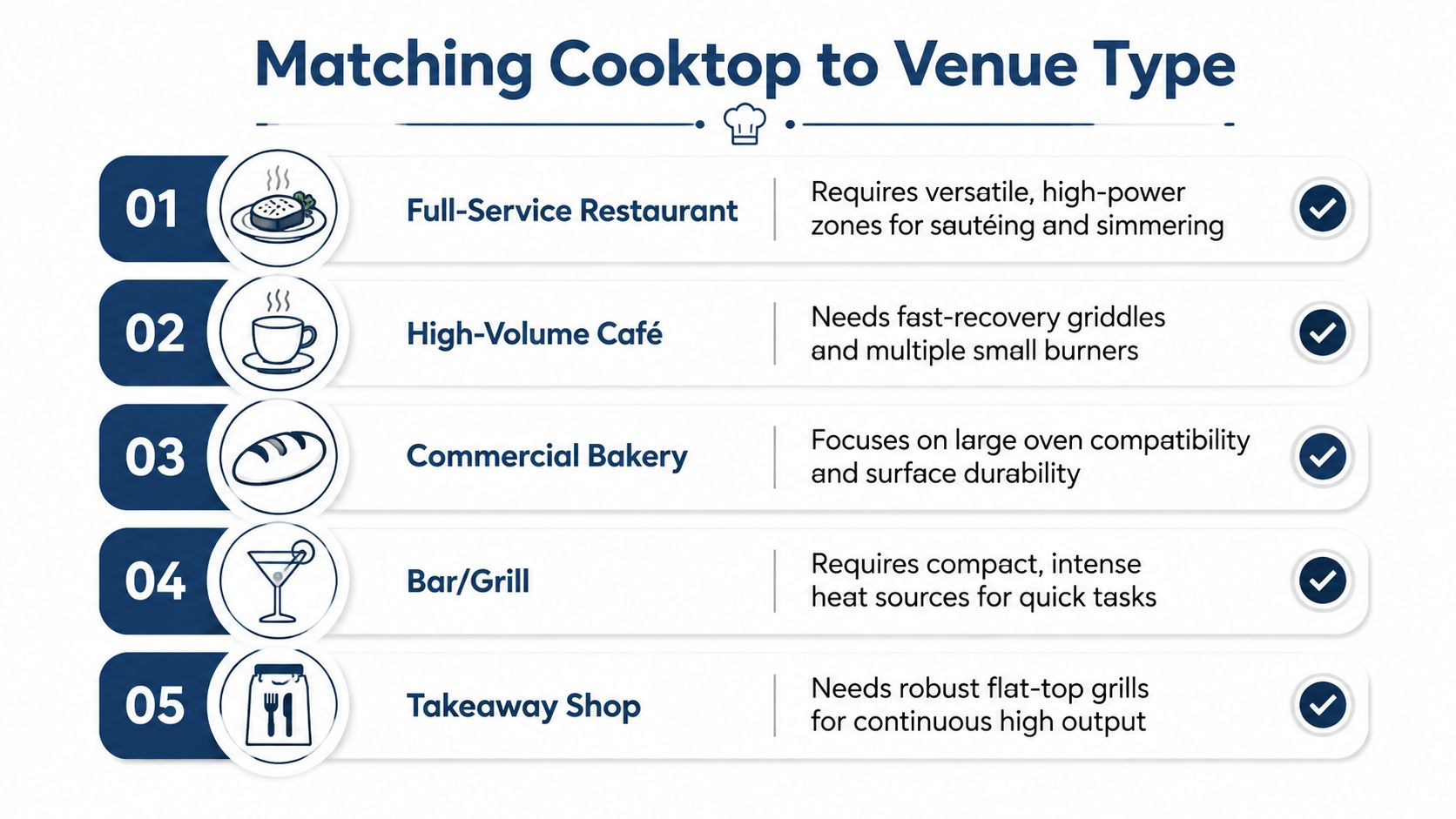
Zone count should be based on peak simultaneous tasks. A four-zone cooktop isn't automatically the right answer if the menu only needs two pans at once, and it may be inadequate if the service requires several active pans plus a separate boiling task. The restaurant equipment planning guidance helps place the cooktop decision within the wider workflow, rather than treating it as an isolated appliance purchase.
Durability, Cleaning and Lifetime Ownership
The purchase price tells only part of the ownership story. A commercial cooktop also affects daily cleaning time, staff handling, spare parts, service access, ventilation demand and downtime when a component fails. Operators should assess the equipment over its expected working life rather than choosing solely from the lowest initial figure.
Glass-top induction and radiant equipment need disciplined handling. Heavy pans shouldn't be dropped, rough bases shouldn't be dragged, and cleaning chemicals should match the manufacturer's instructions. A cracked or badly scratched cooking surface can disrupt the line and may be more difficult to service than a replaceable solid element.
Solid-element units are mechanically straightforward, but the elements, controls and wiring still need inspection and maintenance. Operators should ask whether replacement parts are available in New Zealand, whether a service agent can reach the site outside the main centres and whether the equipment can be isolated without taking the whole cooking line out of action.
What the service conversation should cover
Before ordering, the buyer should ask:
- Construction: Is the appliance designed for the expected workload, pan weight and cleaning routine?
- Access: Can a technician reach controls, elements, fans, seals and electrical connections without dismantling surrounding equipment?
- Parts: Are commercial-grade spare parts supported through New Zealand channels?
- Warranty: What does the warranty cover, and what installation or maintenance conditions apply?
- Downtime: Can the venue continue production if one zone or the oven cavity is unavailable?
- Heat management: Will the cooking method affect extraction, staff comfort and cleaning around the line?
An electric range adds more potential service points because it combines a hob and oven. Door seals, controls, thermostats and heating components all deserve attention during the selection conversation. A separate cooktop and oven may offer more replacement flexibility, while an integrated range can use space efficiently and simplify the station layout.
EECA's historical material shows that electric cooking has been established in New Zealand for generations. Te Ara records electric stoves replacing coal ranges from the 1920s, and the EECA technical report on electric homes records electric ranges in 30% of New Zealand dwellings in the 1945 Census and 87% by the 1971 Census, while coal, coke or wood ranges had fallen to 5%. That history doesn't prove which commercial technology will last longest, but it does underline that servicing and parts familiarity matter in a mature electric-cooking environment.
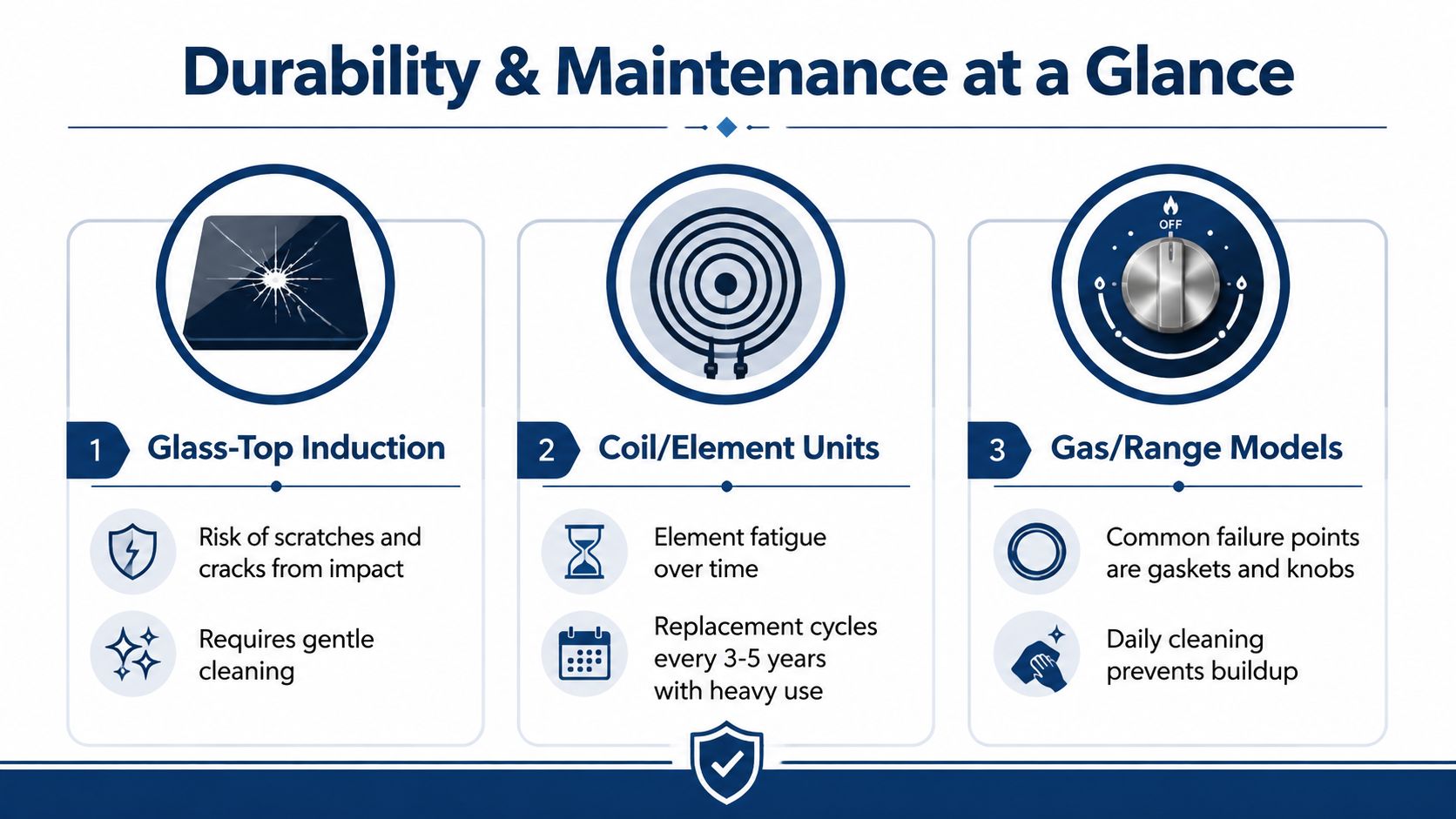
The ownership calculation should include electricity use, possible ventilation changes, cleaning effort, service coverage, downtime and eventual replacement. A cheaper unit can become the wrong choice if its construction doesn't match the workload or if a fault leaves the venue without a workable cooking station.
Selection Checklist and Getting the Right Advice
A practical selection meeting should include the chef, owner, kitchen designer, equipment supplier and electrician. The chef defines the cooking work. The electrician confirms whether the site can support it. The supplier checks that the proposed equipment, cookware and service expectations align.
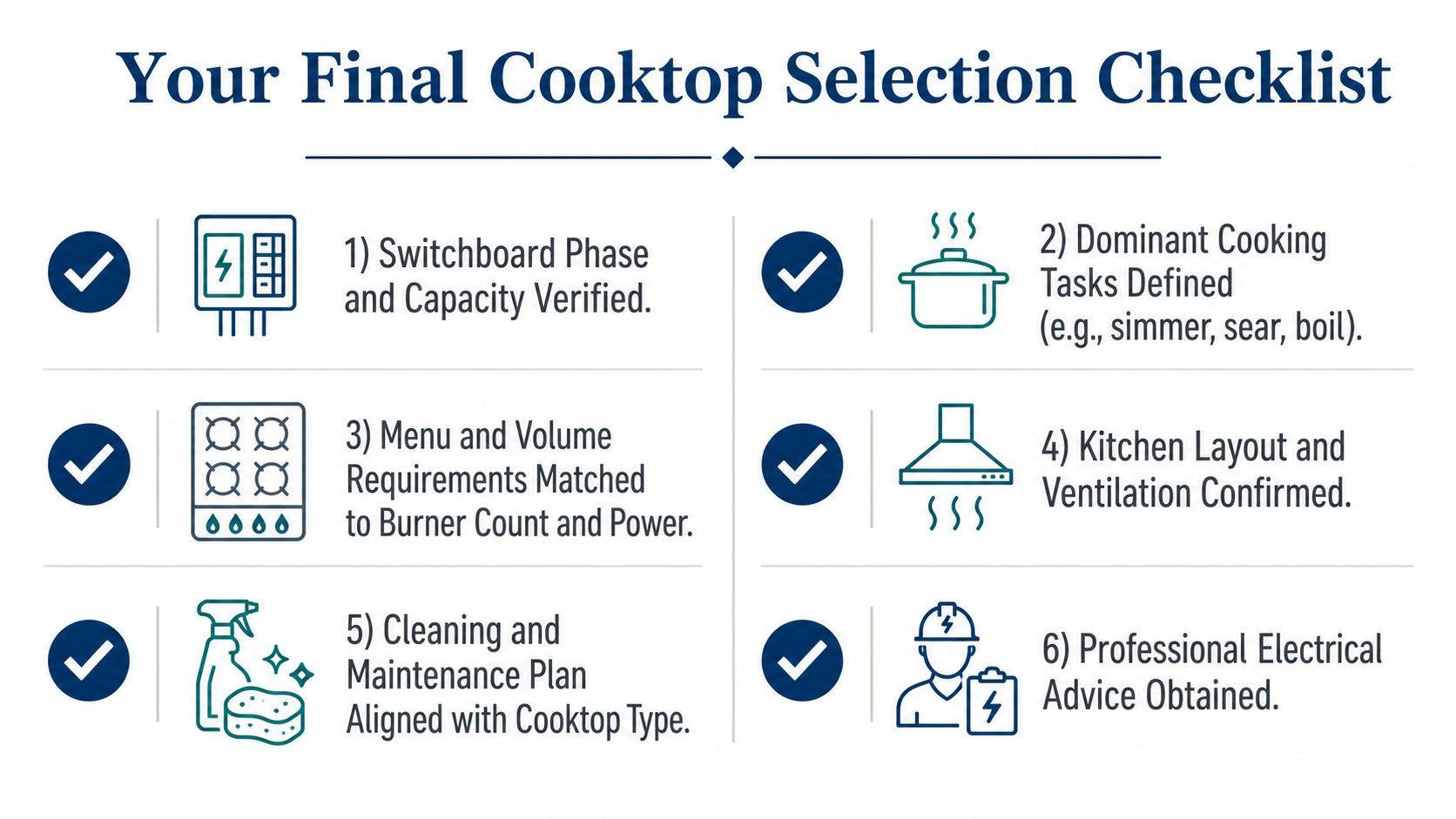
The pre-order checklist
- Verify the switchboard. Confirm phase, spare capacity, existing circuit demand and whether an upgrade is needed.
- Define the dominant cooking tasks. Separate simmering, searing, boiling, holding and oven work. The control behaviour should match the menu.
- Count active zones. Base the number and size of zones on peak simultaneous pans, not the maximum that looks impressive on a specification sheet.
- Check cookware. For induction, verify the magnetic base and pan dimensions before the order is finalised.
- Confirm layout and ventilation. Allow for clearances, extraction, cleaning access, service access and safe movement around the cookline.
- Review installation and compliance. Confirm isolation, protection, wiring, applicable standards and commissioning responsibilities.
- Assess ownership. Ask about parts, local servicing, warranty terms, cleaning requirements and how the kitchen will operate if one cooking zone is unavailable.
WorkSafe guidance says fixed wired and free-standing cooking appliances generally need an easily reachable switch within 2 metres, while noting that the rule doesn't apply in the same way to permanently connected appliances or electric ranges, ovens and hobs (WorkSafe's electrical code of practice). The exact appliance type and wiring method should therefore be confirmed rather than assumed. The electrician should also check the installation environment, particularly near sinks and areas exposed to regular washdown.
Operators comparing options can review the commercial induction range collection, the electric cooktop category, and the detailed induction article linked earlier. The practical lessons gathered from helping hospitality businesses choose equipment are also set out in this equipment selection article.
The central decision is simple. The cooking technology and the building supplying the power both need to suit the kitchen. Operators who confirm electrical capacity, menu demands, cookware, compliance and service support before ordering are far less likely to end up with an impressive cooktop that can't perform the work required.
Hospitality supplies commercial cooking equipment and can help operators compare electric cooktops, induction ranges and complete kitchen equipment requirements against the realities of their site. Visit Simply Hospitality with the menu, equipment schedule and electrician's capacity assessment ready, and the team can help narrow the choice to a workable commercial solution.