

Craster Buffetware NZ: Layout and Service Flow Guide
A Saturday breakfast buffet in a Queenstown hotel can look calm from the guest side while the team behind it works continuously. Guests need to see the food, understand the order of service and reach each item without crowding. Staff need to replenish pans, clear used crockery, clean spills and reset the line without interrupting that movement. Craster buffetware NZ is best assessed in that dual context, as a complete service system rather than a collection of attractive stands and platters.
Craster's Flow and Tilt ranges are designed for modular buffet presentation, with gastronorm-based layouts, varied heights and adaptable materials. That makes them relevant to hotels, resorts, executive lounges, banqueting rooms, premium caterers and other design-led venues where food presentation has to support a demanding commercial routine. The company has also published a case study showing Flow and Tilt pieces supplied for Hotel Indigo Auckland, confirming direct use in the New Zealand hospitality market Hotel Indigo Auckland case study.
Why a Buffet Is Really a Service System
During a busy breakfast, the buffet has to satisfy two people at once: guests moving through the line and staff keeping it ready. The surface presents food, guides movement, supports hygiene routines and sets the venue's visual tone. If the layout serves only one of those needs, the other side pays for it.
Guests should understand the sequence without asking. Where does service begin? Which dish follows? Can they reach it without leaning across another plate or riser? Are the serving utensils obvious? A pause to search for the next item slows the queue and creates crowding.
Staff need a workable service edge. Replenishment should be possible from a practical position, used items need a clear route away from clean service areas, and spills or empty trays must be handled without dismantling the display. A riser can improve visibility while blocking a refill. A deep platter can look generous yet become difficult to lift when full.
Practical rule: Check every display decision from both sides of the buffet before approving it.
This matters across New Zealand's hospitality sector, not only in luxury hotels. The Restaurant Association reported 20,040 hospitality outlets nationwide for the year ended February 2024, with 146,000 people employed at that time Restaurant Association hospitality report. Hotels, caterers, conference venues and institutions all put equipment through repeated setup, service, clearing and cleaning.
The buying decision should therefore start with the operating routine. Assess how quickly staff can replenish, how easily the line can be reset, and whether guests can read the offer at a comfortable height. This practical approach to planning equipment for consistent meal service keeps appearance and labour requirements in the same discussion.
Craster's Flow and Tilt ranges fit that assessment because their components can be judged by the service changes they create, not just their catalogue appearance. Height, access, modular arrangement and replenishment space all affect whether a premium buffet works under pressure.
Understanding Craster Flow and Tilt as Modular Systems
Craster Flow and Tilt share a modular, gastronorm-based design intent, but they solve presentation in different ways. Flow is described as a flexible buffet display system built around a gastronorm footprint, with configurations for ambient, hot and cold service. Tilt is intended for flexible presentation using varied angles, heights and materials Craster food and beverage collection.
Flow suits operators who want a consistent grid across several service formats. A breakfast line can use the same underlying footprint for bakery, fruit, yoghurt or hot dishes, then be rearranged for a conference lunch or evening function. Tilt introduces more directional presentation. Angled trays and varied elevations can expose the contents more clearly, particularly where the buffet has a long sightline or where a flat arrangement would appear visually compressed.
What modularity changes operationally
Modularity is useful only when it reduces practical friction. Operators should look for:
- Interchangeable components: Inserts and vessels can support different menus without requiring an entirely new display arrangement.
- A consistent base: A smaller number of frames or stands can support several service configurations.
- Replaceable parts: A damaged insert or presentation piece can be assessed separately from the rest of the run.
- Mixed service capability: Flow is positioned for ambient, hot and cold arrangements, while the wider buffet collection also includes cake stands and drinks service Craster buffet collection.
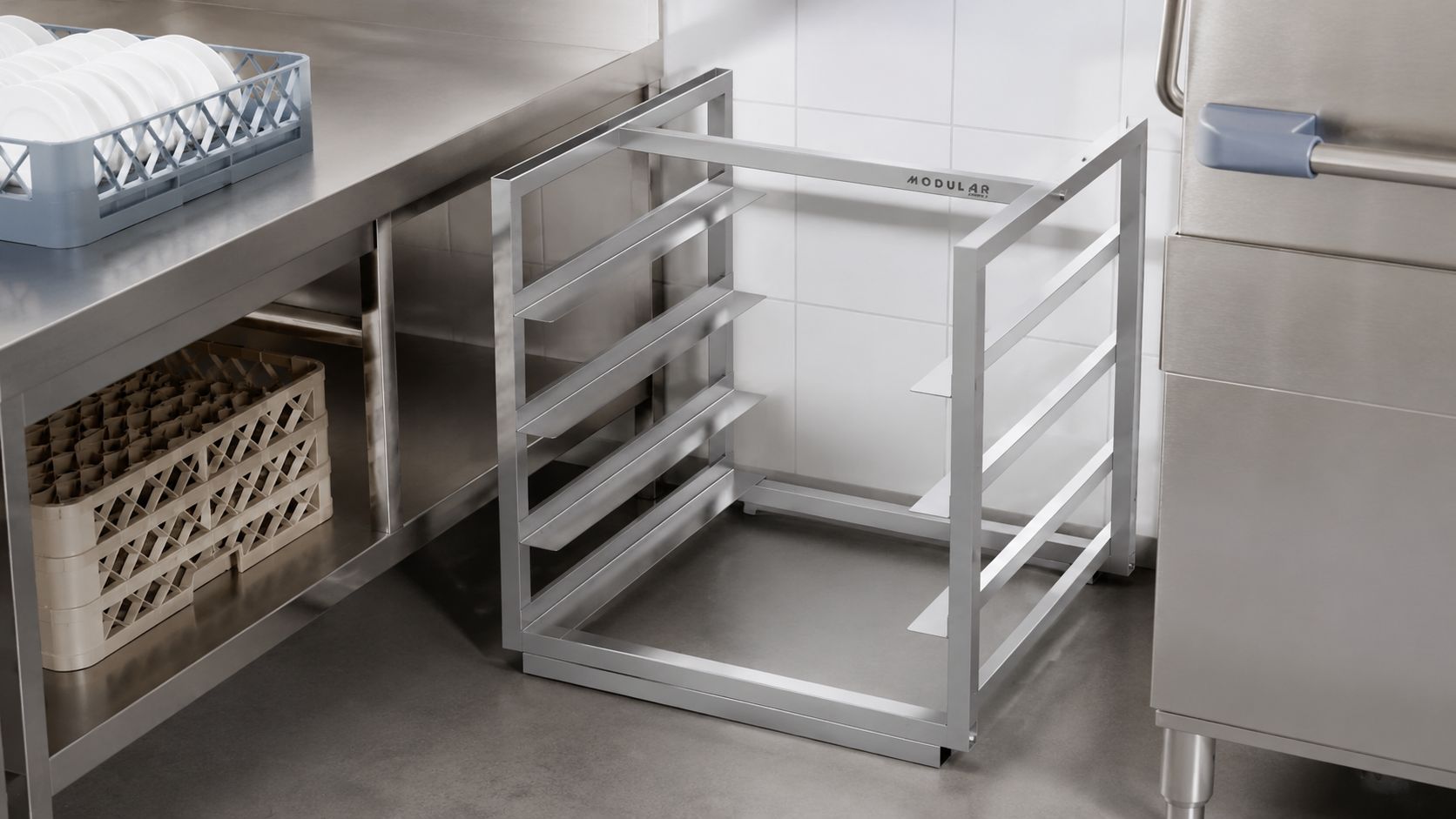
The same principle applies to the wash-up station. A Modular Stainless Dishwasher Basket Cassette provides a defined home for spare or sorted commercial dishwasher baskets close to the machine, helping keep the bench and floor clear.
| Feature | Craster Flow | Craster Tilt |
|---|---|---|
| Primary layout idea | A flexible, gastronorm-based display grid | Angled and varied-height presentation |
| Useful for | Reconfigurable breakfast, hot, cold and function service | Stronger product visibility and directional merchandising |
| Presentation style | Structured and consistent | More varied, layered and visually dynamic |
| Buying question | How often will the service configuration change? | Which dishes need greater angle or elevation? |
New Zealand operators should also confirm how specialist configurations are supplied. Custom or bespoke requirements may depend on manufacturing capability, quantities and lead times, so a written specification is more useful than assuming every pictured arrangement is a standard stocked package.
Designing the Guest Side of the Buffet Line
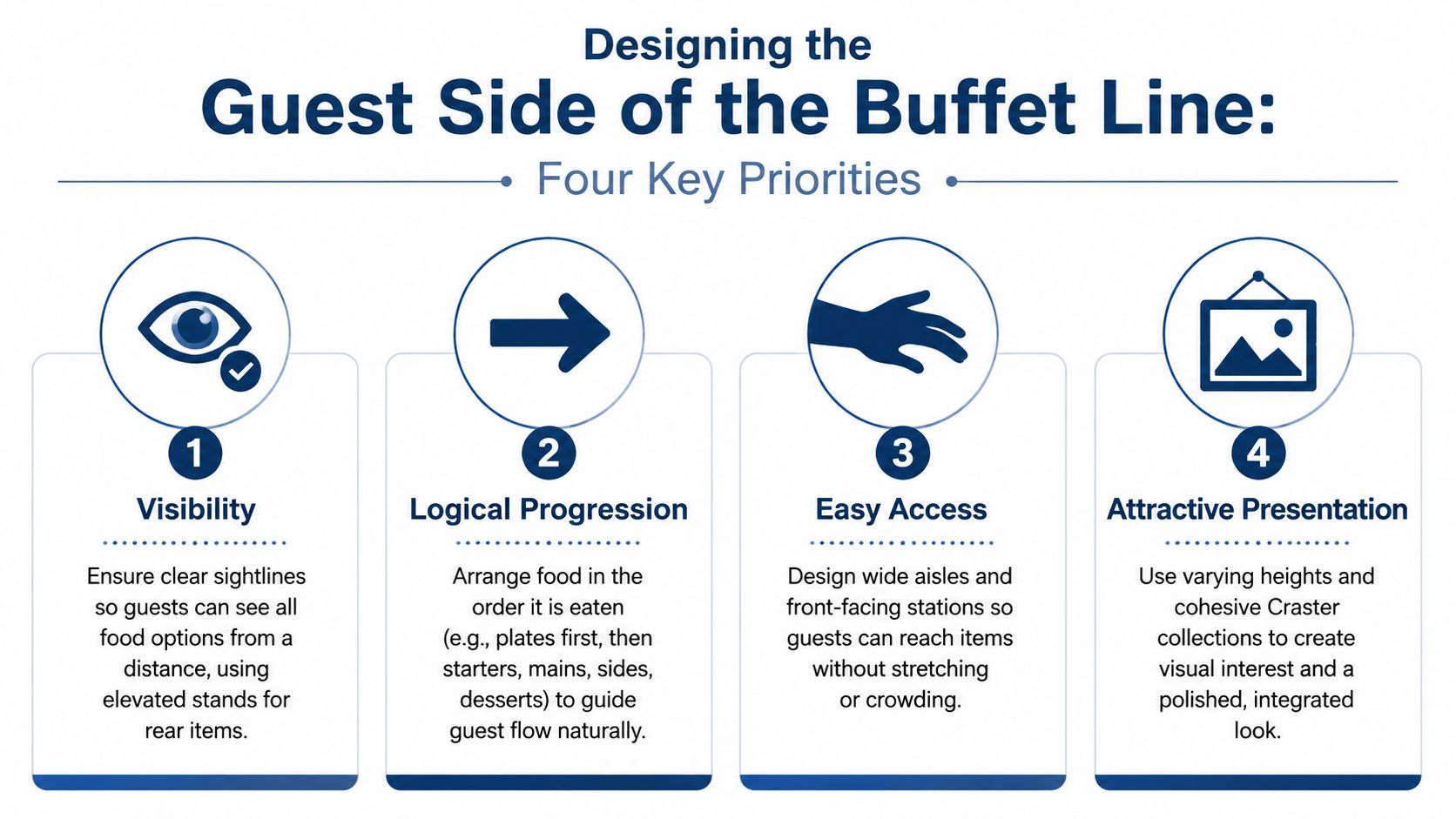
Guests judge a buffet quickly. They need to see what is available, move in a logical order, reach the food comfortably and feel that the presentation has been deliberately arranged. Those priorities can conflict, especially when a venue tries to create height without making the line difficult to use.
Visibility
Rear items can be raised so guests see them from the queue, while lower dishes sit towards the front. The display shouldn't become a wall. Tall stands that block labels, serving utensils or neighbouring dishes may create visual drama but reduce choice clarity.
Flow's structured format can help establish a clean visual grid. Tilt is useful where an angled presentation makes the contents of a tray easier to identify without forcing guests to lean forward. The right height depends on the counter, the vessel and the distance between the guest and the food.
Logical progression
The line should follow the way guests build a plate. Plates and cutlery normally come before the food, with cold breakfast items, hot dishes, breads, condiments and drinks placed according to the venue's service pattern. A resort breakfast may need separate paths for cooked food and bakery items, while a conference buffet may benefit from a short, clearly defined run.
Rear elevation should support recognition, not just decoration. A guest should be able to identify the next station without stopping the queue.
Easy access
Reach depth matters as much as width. Yoghurt, fruit, sauces and small bowls need to sit where guests can serve themselves without stretching across a raised platter. Serving utensils should have a stable resting position and shouldn't slide into adjacent dishes.
Leave enough working space between modules for hands, plates and labels. A crowded arrangement may use the available surface efficiently but still perform badly during the busiest part of breakfast.
Attractive presentation
Presentation works best when the food remains the subject. Craster's stainless steel pieces are positioned for both food-safe service and visual finish in the interior Craster stainless steel buffetware. Clean lines, restrained finishes and coordinated vessels can frame the food without competing with it.
A useful layout typically combines one or two key focal points with lower dishes and clear gaps. Too many levels make replenishment harder and can leave the buffet looking busy rather than abundant.
Designing the Staff Side of the Line
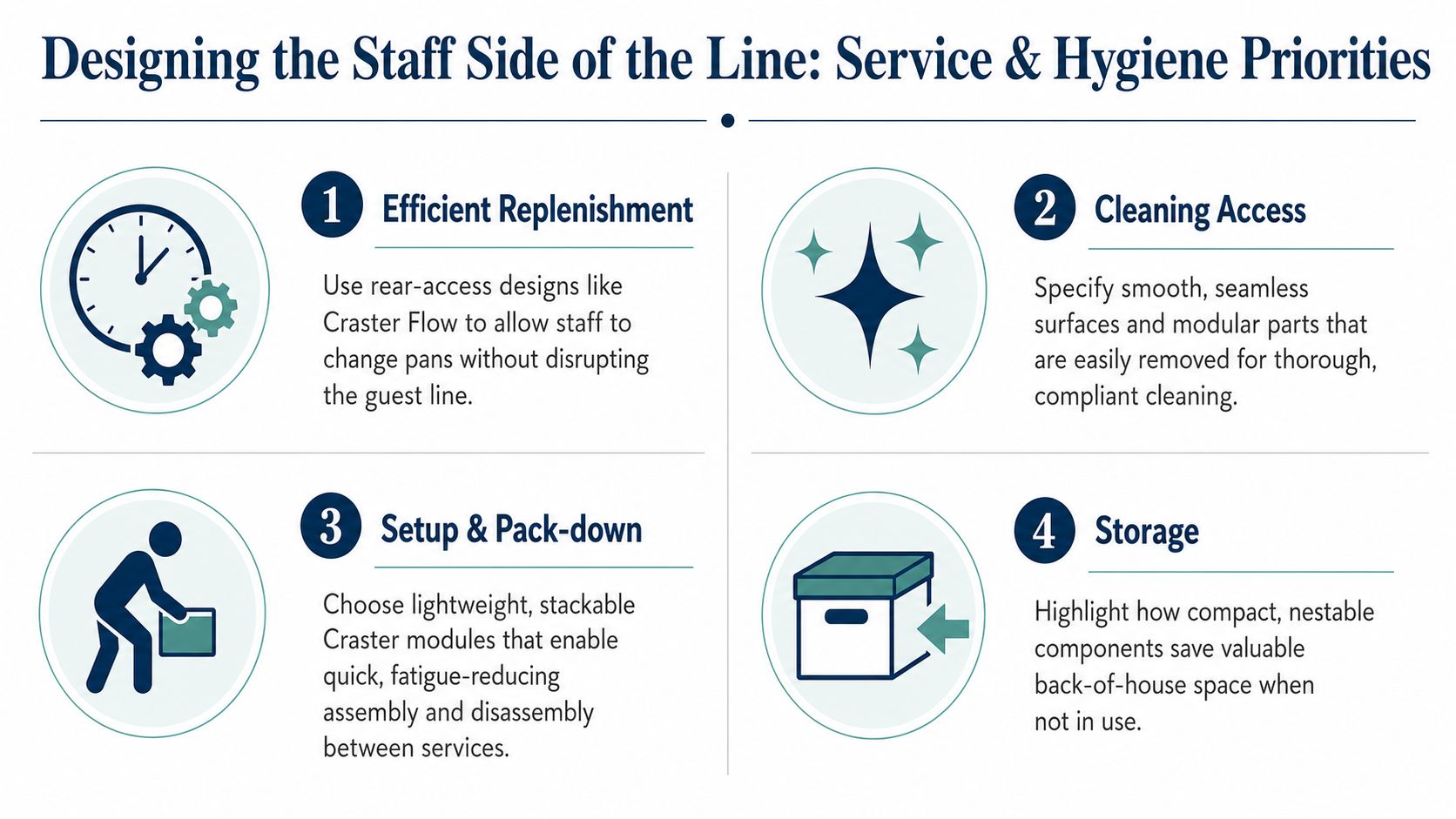
The back of the buffet determines how easily the team can keep the front looking composed. Staff need clear access to holding equipment, clean replacement vessels and the surfaces most likely to collect crumbs, drips and fingerprints. If every refill requires a full reach across the display, the layout will slow down as service continues.
Replenishment should follow a repeatable route
Flow's gastronorm orientation is relevant where staff replace standard-sized pans or inserts through a consistent system. Tilt can support clear presentation, but the team still needs to know how each tray lifts, where the replacement sits and which items can be changed without disturbing adjacent pieces.
A practical service plan separates the clean replacement route from used crockery return. It also identifies which dishes need frequent attention, placing them where staff can reach them without crossing the guest path.
Cleaning access is part of the specification
Smooth working surfaces and removable components matter because buffetware is handled repeatedly during a shift. Staff should be able to lift, wipe and wash the relevant parts without tools or complicated disassembly. Product-specific food-contact and cleaning instructions still need to be checked before a purchase is finalised.
NZQA treats buffet service as a defined hospitality skill. Unit standard 27942, “Provide buffet service in a hospitality establishment,” is a Level 3 unit worth 15 credits, and includes equipment preparation, buffet setup, maintenance during service and clearing NZQA unit standard 27942. That reinforces a practical point. The display should support the trained workflow rather than force staff to improvise around decorative hardware.
Pack-down and storage
Breakfast may be followed by a conference service in the same room. Components should have a clear storage location, stack safely where the manufacturer allows it and move through the venue without awkward handling. The team should know which pieces belong together before the next setup begins.
A buffet system that looks excellent when assembled but consumes disorganised storage space can create daily friction. Storage footprint, trolley access and the time required to reset the line belong in the original buying conversation.
The queue at the front often reflects a handling problem at the back.
Materials Finishes and Whole-of-Life Appearance
Material selection affects more than colour. It influences cleaning routines, visible wear, handling, storage and whether the buffet still looks intentional after repeated commercial use. Craster's buffet pieces can include stainless steel, powder-coated finishes, timber, porcelain and glass, but the performance of each material depends on the individual product specification and the venue's service conditions.
| Finish | Best For | Watch-outs |
|---|---|---|
| Stainless steel | Hygiene-conscious service, durable frames and a clean commercial finish | Fingerprints and water marks may show without regular wiping |
| Powder-coated finish | Strong colour definition and a more architectural appearance | Impact points and unsuitable cleaning products can damage the coating |
| Timber boards | Bread, bakery and presentation areas needing warmth | Requires correct cleaning, drying and care appropriate to the product |
| Porcelain | Food presentation where a refined vessel finish is required | Chips and cracks must be removed from service immediately |
| Glass | Clear product visibility and lighter visual presentation | Breakage risk and frequent marking require disciplined handling |
Stainless steel has a strong place in busy hospitality environments because it can support hygienic service and a polished interior finish. The stainless steel benchtop guidance is also relevant to the wider cleaning conversation, particularly where operators are comparing durable commercial surfaces.
Coated frames can make fingerprints less prominent and give a buffet a defined colour scheme. They still need protection at corners, edges and loading points, where impacts from trays or storage handling can become visible. Timber adds warmth, but it shouldn't be treated as maintenance-free. Staff need a clear process for cleaning, drying and storing boards according to the manufacturer's instructions.
Whole-of-life appearance is the useful test. A premium buffet should still look coordinated after regular setup, clearing and wash-up cycles. Operators should inspect samples under the venue's lighting, check how labels and spills read against the finish, and confirm which parts can enter a commercial dishwashing process before committing to a complete collection.
Temperature Control and Food Safety on Display
Buffetware can look excellent and still be unsuitable if it doesn't support safe holding. New Zealand guidance places the food danger zone between 5°C and 60°C, and local serving guidance states that hot food should be kept above 65°C, while cold perishable food should be below 4°C or discarded after two hours on display serving and displaying food guidance.
That makes the service configuration a purchasing decision, not an afterthought. Ambient presentation can suit bread, pastries, whole fruit and some condiments. Hot dishes need compatible heated holding, while cold perishables require a suitable chilled method and active monitoring.
Match the vessel to the holding method
Craster describes Flow as suitable for ambient, hot and cold configurations. The operator still needs to verify the specific insert, induction base, heat source, refrigerated well or ice-based arrangement before ordering. A display frame alone doesn't provide temperature control.
Open presentation can improve visibility and access, but it can also expose food to faster temperature change and guest handling. Shorter runs, smaller replacement vessels and more frequent checks may be appropriate where food is moving quickly or the holding environment is difficult to stabilise.
Cross-contamination also needs a layout response. Keep raw ingredients, ready-to-eat food and used utensils separated, and use dividers or distinct modules where the service design allows it. A commercial display fridge can form part of a wider cold-service plan, but its suitability depends on capacity, temperature performance and the food being held, as discussed in commercial display fridge guidance.
Staff should record and manage temperatures under the venue's food control procedures. The visual arrangement supports safe service, but it doesn't replace monitoring, cleaning or correct food handling.
Specifying Buffetware as a Cohesive Collection
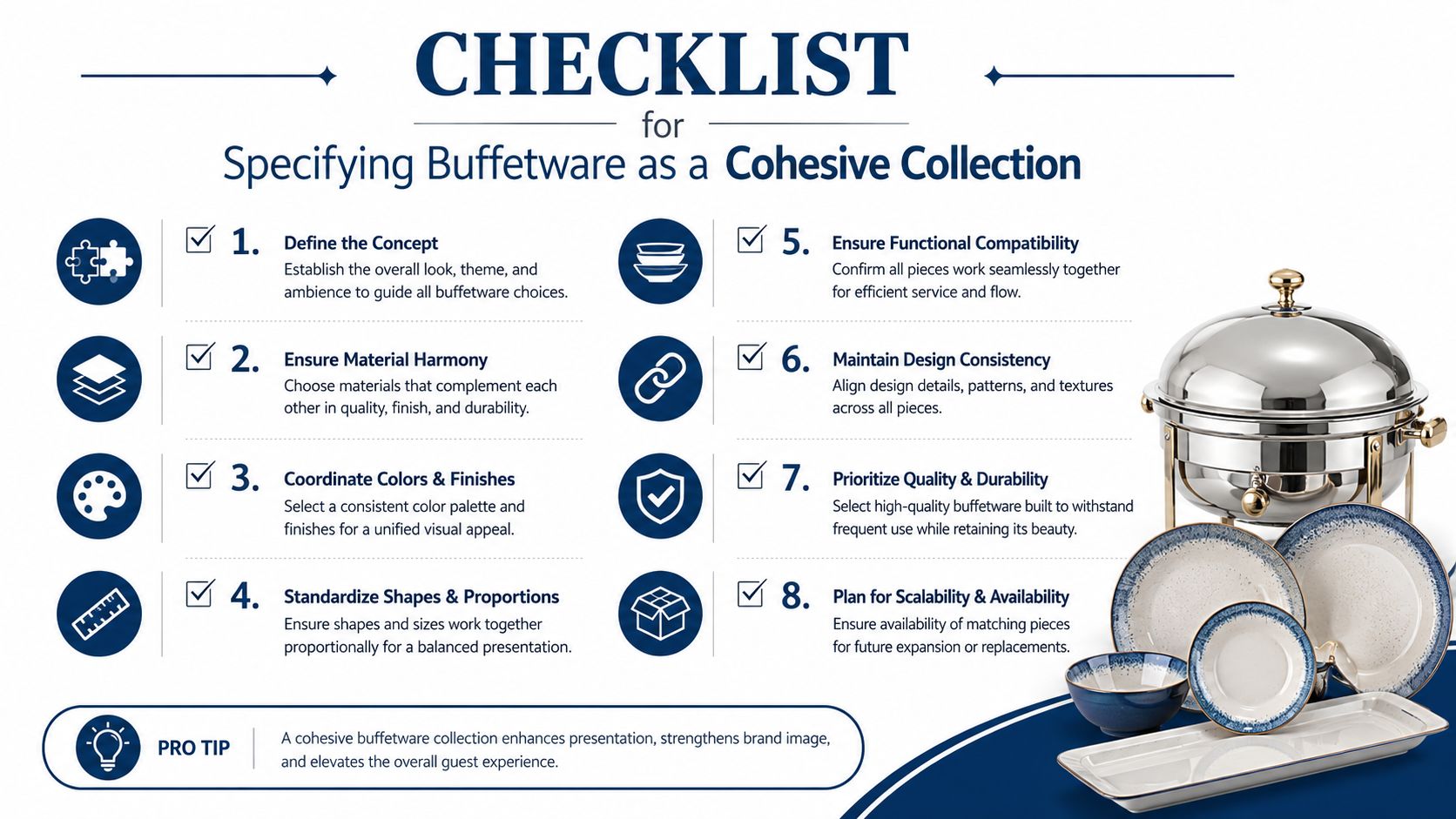
Guests usually see one buffet, not a list of purchased components. If the frames, boards, trays and serving vessels appear unrelated, the line can look accumulated rather than designed. A cohesive Craster collection helps the venue establish a consistent visual language across breakfast, conference catering and evening functions.
The most reliable approach starts with service moments rather than individual hero pieces. Map the dishes, vessels and holding requirements for the busiest formats, then identify which base frames, risers and inserts can work across them. That protects flexibility without filling the order with pieces that have no clear operational role.
Build around the busiest service moments
A practical specification should answer:
- Breakfast: Which items need chilled, ambient or heated presentation, and where do plates and beverages sit?
- Conference service: Can the team reset the line quickly for a different menu and guest movement pattern?
- Banqueting: Which pieces create a strong focal display without obstructing replenishment?
- Premium catering: What travels securely, stores efficiently and still looks coherent at the destination venue?
Over-specification is a common trap. A high-end timber presentation board may be unnecessary in a staff-only prep area, while a full hot-service configuration may add complexity when the venue has only one heated station. Premium pieces should earn their place through visibility, access, flexibility or brand fit.
Keep the visual language consistent
Lock the key decisions early:
- Frame finish and colour.
- Board and platter materials.
- Vessel shapes and proportions.
- Riser heights and spacing.
- Hot, cold and ambient zones.
- Storage and transport method.
Smaller bowls, inserts and seasonal presentation pieces can refresh the display without mixing incompatible base systems. That is usually more controlled than adding unrelated stands whenever a new menu or event arrives.
For context on how the brand fits within a wider premium accommodation offer, see the related Craster luxury hotel products in New Zealand. The buffet line should still be specified on its own service requirements, not copied from a hotel-room or guest-amenity concept.
Craster's direct Auckland reference is useful because it demonstrates local hospitality deployment, but it doesn't establish universal suitability for every venue. A smaller café, retirement facility or community caterer may need a more utility-first system, while a resort or executive lounge may place greater value on integrated presentation.
Key Decisions Before You Buy in NZ
A purchase order should follow a service assessment, not a catalogue browse. Start with the venue's actual operating pattern. A hotel breakfast, conference lunch and plated event may share a room, yet each needs different access, holding and reset arrangements. The right Craster Buffetware NZ specification must support guests and staff at the same time.
Confirm the physical and service constraints
Measure the servery length, counter depth, guest corridor and overhead or sightline restrictions. Mark where staff stand, where replacement food arrives and where used crockery leaves the line. Then test whether the proposed Flow or Tilt arrangement leaves enough room for guest movement and staff access.
Check the equipment interface before confirming the order. The selected vessels must suit the venue's induction, hotplate, refrigeration and dishwashing arrangements. Review product-specific material and cleaning instructions, especially when stainless steel, coated frames, timber, porcelain and glass share one service cycle.
Ask questions that expose ownership issues
- Service frequency: Which pieces will be handled at every service, and which are reserved for functions?
- Replenishment: Can staff replace the busiest dishes without reaching across the guest side?
- Cleaning: Can components be removed, washed and dried through the venue's actual process?
- Storage: Where will the collection live between services, and can staff identify each module quickly?
- Customisation: Are the requested dimensions, finishes or configurations supported by Craster's current manufacturing capabilities?
- Supply terms: What are the confirmed lead time, freight, GST treatment, minimum order requirements and warranty conditions?
New Zealand's hospitality market includes hotels, caterers, cafés, institutions and event venues. Its scale reinforces the need to match the specification to the venue's service model, rather than treating an upscale finish as the automatic choice. Premium buffetware only earns its place when it improves presentation, access, flexibility or day-to-day operation.
Request a written quote that separates equipment, freight, GST and spares. A sample arrangement or staged purchase lets the team assess access, stability, cleaning and storage under working conditions before expanding the collection. Bespoke requests should be checked against actual quantities and production requirements, not treated as guaranteed options.
The strongest specification balances the guest and staff sides of the line. Guests need clear visibility and easy progression. Staff need efficient replenishment, cleaning access and practical storage. The system must also support safe hot and cold holding and remain visually coherent after repeated use.
Hospitality businesses can compare Craster buffet configurations with the venue's surrounding equipment, tableware and wash-up requirements by visiting Simply Hospitality to discuss a suitable buffet system for a hotel, resort, event space, caterer or other New Zealand hospitality operation.