

Best Food Vacuum Sealer Guide for NZ Venues 2026
Most advice about a food vacuum sealer starts in the wrong place. It talks about freshness first, when the value for a kitchen is usually production control, batch prep, and cleaner stock rotation. Vacuum packaging is a form of reduced oxygen packaging, it removes air before sealing to slow oxidation and limit aerobic spoilage, but it still depends on refrigeration or freezing to do the preservation work, as USDA guidance makes clear (USDA reduced oxygen packaging guidance).
That difference matters in hospitality. A sealer that helps staff portion, label, chill, and move food through the prep room more predictably can be more useful than one that only looks impressive on a spec sheet. Vacuum sealing also sits on a long commercial timeline, from Denis Papin's 17th-century experiments, to the first vacuum-packed meat in the United States in 1920, and industrial food vacuum sealers used at scale in the 1940s (Alimentarium history of vacuum preservation).
In practical terms, that means the machine belongs in the same conversation as portioning benches, label printers, and prep scheduling. A well-run kitchen uses it to prepare when labour is available, not only when service is already under pressure. That is why this topic is better judged through workflow, not packaging theatre.
Why a Food Vacuum Sealer Is Really a Production Tool
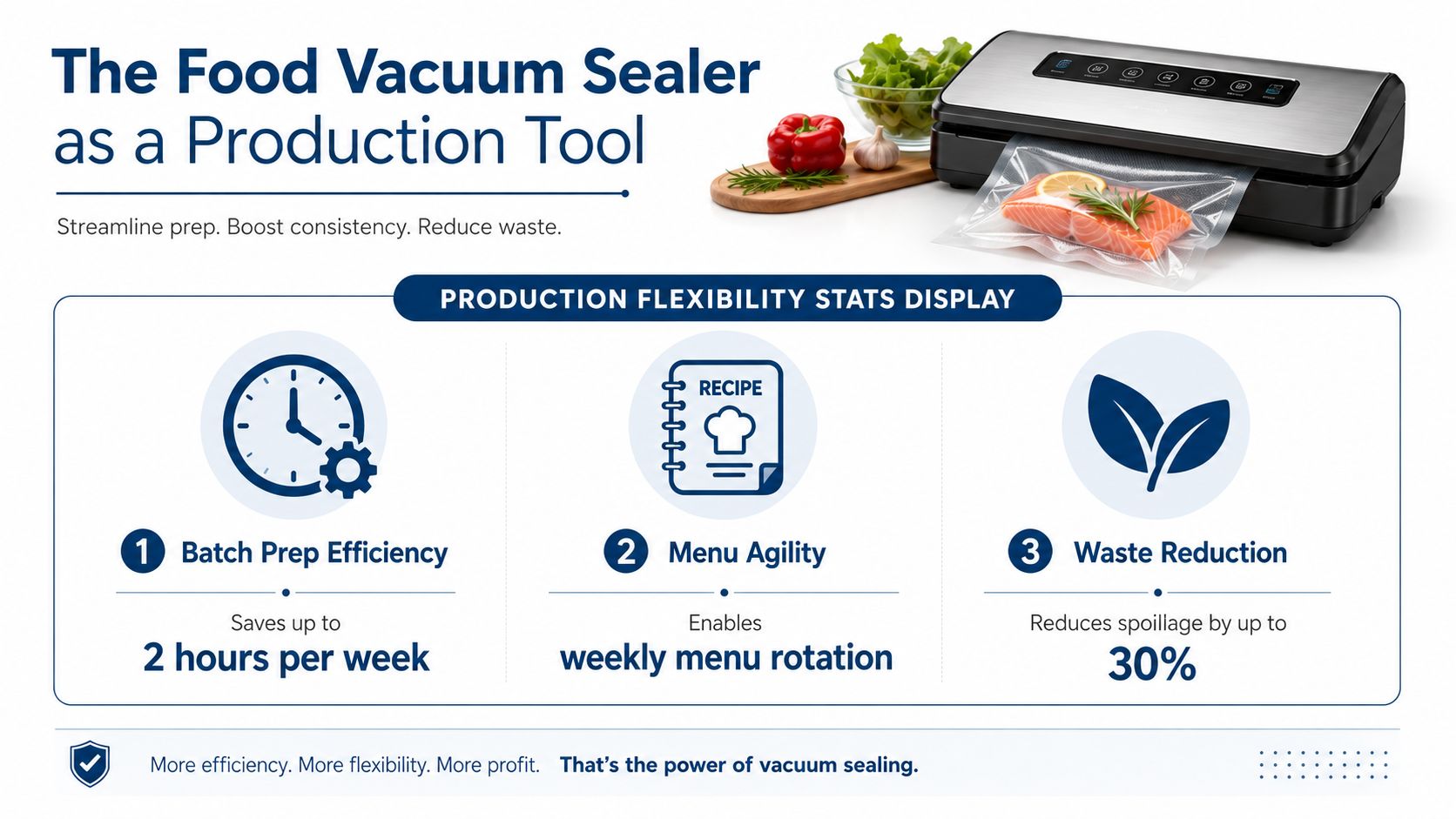
Vacuum sealing gets sold as a freshness fix, but that misses the main operational value. In a commercial kitchen, the bigger payoff is production flexibility, because staff can portion proteins, prep garnishes, and build service packs during quiet hours instead of fighting the rush. That shift helps kitchens smooth labour peaks, keep product more consistent, and cut the re-handling that leads to mistakes.
Practical rule: if a piece of equipment does not save time in prep, it still has to earn its place somewhere else, and a vacuum sealer often earns it through workflow control.
That is why this tool belongs in the same decision set as batch ovens and prep systems, not just food storage gear. A kitchen that can portion, seal, chill, and rotate food in a cleaner sequence gets more predictable mise en place. The machine becomes part of production management, not a side appliance.
The waste side matters just as much, especially when the machine is used to portion ahead of service. An illustrative commercial example helps. If a kitchen currently discards 5 kg of prepared food each week, and better portioning, vacuum packing, and stock management reduce that waste by 20%, the kitchen recovers 1 kg each week and 52 kg annually. Using New Zealand hospitality research that estimates avoidable food waste at approximately NZ$3.90 per kilogram in our guide on how much food waste vacuum packing can eliminate, that works out to about NZ$200 of food recovered each year. Those figures are illustrative commercial calculations, not measured customer savings, and the machine is only one part of a wider waste-reduction system.
A useful internal read on the topic is our own discussion of how much food waste vacuum packing can eliminate. The point is not that every kitchen will get the same result, because it will not. The point is that a sealer can turn small amounts of preventable prep loss into usable food, while also giving the kitchen more control over when work happens.
For operators, that is the key question. Not whether the machine can remove air, but whether it helps the team prep better, waste less, and keep service steadier.
How a Commercial Food Vacuum Sealer Actually Works
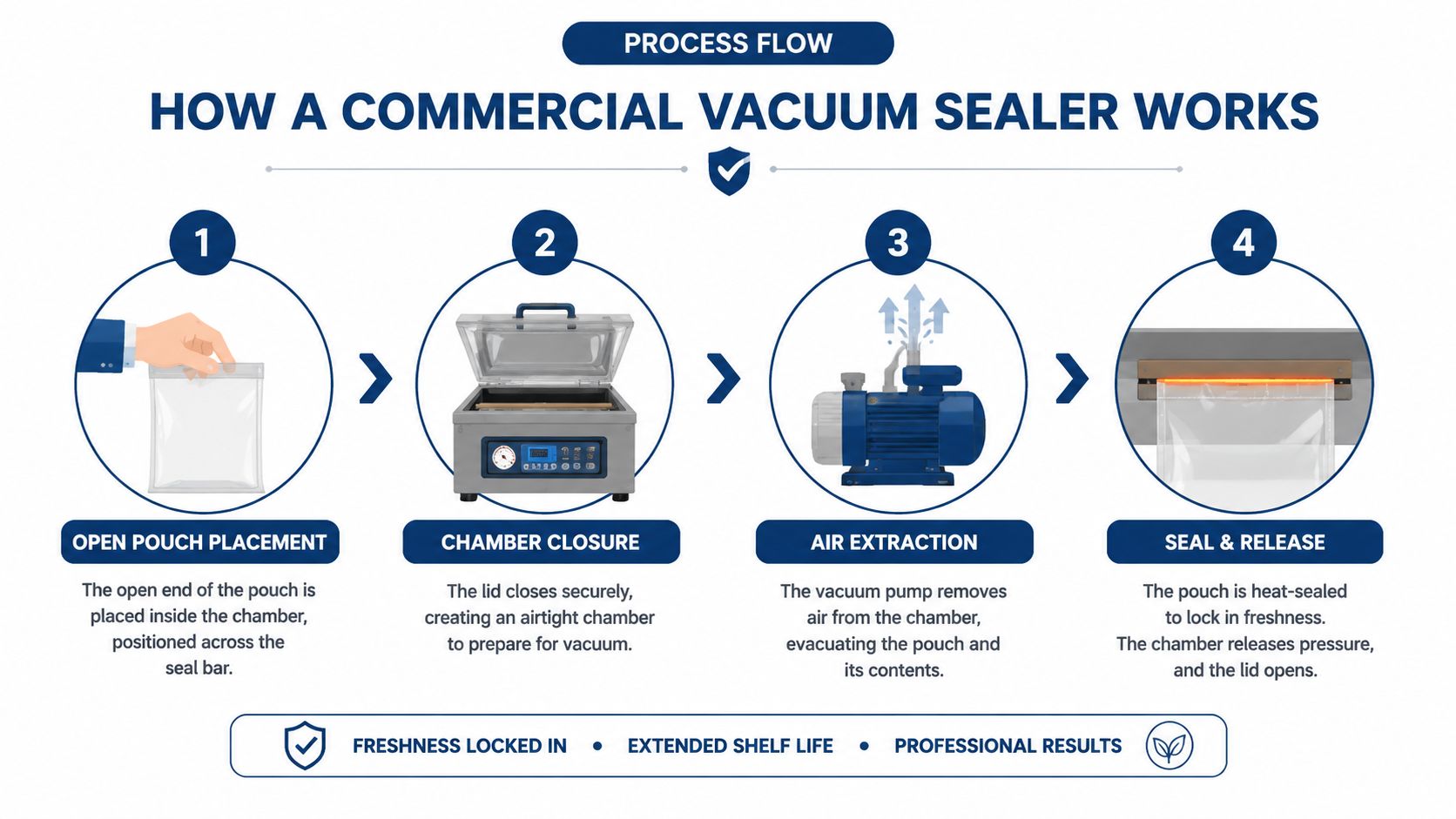
A commercial chamber sealer works by putting the pouch inside a closed chamber, drawing air out of the chamber, and then heat-sealing the bag before air returns. Because the pressure drops around the whole pouch, the food inside sees a more even vacuum than it usually gets from a simple external clamp-style unit. That's why chamber machines are the default choice when a kitchen needs more reliable seal quality and better handling of liquids.
The vocabulary in the spec sheet matters. For NZ sites, modern commercial units commonly specify 230 V, 50 Hz mains compatibility, at least 2 mm seal width, around −65 kPa vacuum, and 2.5–3.5 L/min pump capacity as operating benchmarks for NZ-compatible installations. Those numbers help buyers compare machines on real operating capability, not branding language.
What those numbers mean in the kitchen
- 230 V, 50 Hz: the machine should suit local power without awkward workarounds.
- 2 mm seal width or more: a wider seal improves pouch integrity and reduces seal failure risk.
- Around −65 kPa: a stronger vacuum reduces residual headspace.
- 2.5–3.5 L/min pump capacity: a useful starting range for judging how quickly the unit can cycle.
One practical consideration is chamber size. If pouches are too large for the chamber, the machine becomes a bottleneck no matter how good the seal looks on paper. That matters in prep rooms that portion tray packs, seafood, or larger protein cuts.
The Moretti Forni TT98 1 Chamber Conveyor Oven sits in a different equipment category altogether, but it's a useful reminder of how production equipment should be matched to throughput. High-volume kitchens rarely buy on appliance type alone, they buy on the volume and consistency the line needs to hold.
For deeper prep planning around sous vide, Hospitality also publishes sous-vide equipment notes, which is where many operators start connecting sealing performance to cooking workflow.
Chamber vs External Food Vacuum Sealers Compared
Commercial buyers usually end up choosing between two formats. The first is a chamber sealer, which is the better fit for serious batch work and liquid-heavy prep. The second is an external sealer, which can suit lower-volume kitchens that seal smaller runs and don't need to process liquid-rich items often.
A useful way to compare them is by what the kitchen does each day, not by sticker price. A café portioning a few items for service has very different needs from a caterer packing sauces, marinades, or prepped proteins in volume.
| Criterion | Chamber Sealer | External Sealer |
|---|---|---|
| Liquid handling | Handles moist items and marinades more reliably | Better for dry or pre-frozen items |
| Vacuum consistency | Generally more even because the whole pouch sits in the chamber | More dependent on bag position and product shape |
| Daily cycle fit | Suited to many sealing cycles a day | Better for occasional or light use |
| Pouch size range | Better for larger pouches if chamber dimensions allow it | Limited by outside dimensions and clamp layout |
| Workflow use | Well suited to batch prep and production runs | Works for smaller, simpler portioning tasks |
| Cleaning tolerance | More parts to keep clean, but often designed for production use | Simpler unit, usually lighter duty |
| Growth headroom | Better for kitchens expecting higher throughput | Fine when future volume is unlikely to rise much |
One consideration we regularly discuss with customers is daily cycle count. A machine that seems fine on paper can become a poor fit once the kitchen starts sealing every day for service packs, events, or sous-vide prep. That's why chamber sealers often make more sense for hotels, caterers, institutional kitchens, and larger venues.
External units still have a place. They suit small cafés, office kitchens, and venues sealing occasional portions where the machine won't be under constant pressure. But if the operation expects more batching next year than it does today, undersizing is a common mistake.
For bag selection and compatibility, the right next step is vacuum seal bags in NZ, because the machine and the pouch need to work as a pair.
Workflow Gains From a Food Vacuum Sealer in Real Kitchens
A food vacuum sealer earns its place in a kitchen by reducing friction at service time. In a hotel breakfast kitchen, the benefit shows up before the first guest reaches the buffet. Pre-portioned fruit, proteins, and breakfast components can be sealed in advance, so the morning shift starts with fewer loose containers and less decision-making under pressure. That does more than tidy the bench, it makes service more repeatable.
Batch prep when labour is available
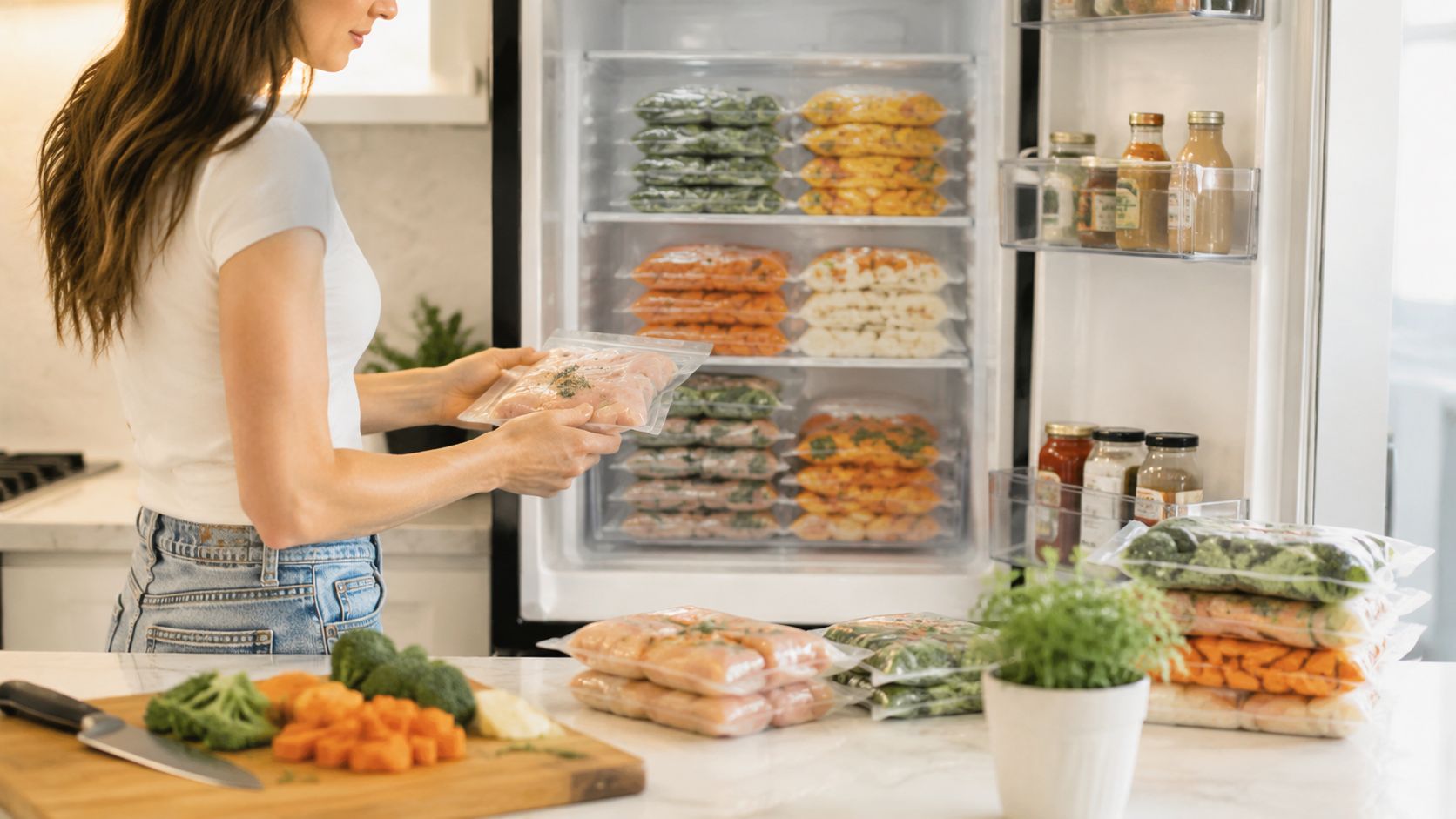
A caterer sees the same effect in a different way. Sauce components, proteins, and plated-event elements can be sealed when staff are on hand, then stored as defined production packs for later assembly. That gives the kitchen tighter control over who does what, and when. It also reduces the amount of time spent repacking products during a busy run, which matters when the prep list keeps changing.
A restaurant uses the same logic to steady a hectic prep week. On a quiet Tuesday, the team can portion, seal, label, and chill items that would otherwise need to be finished in a rush on Friday. The line notices the difference because ingredients arrive in the format the chef expected, with less scrambling to make each order fit the moment.
For operators thinking about what sous vide cooking is, the connection is practical rather than theoretical. A vacuum sealer supports that workflow, but only if the kitchen already manages chilling, labelling, and rotation properly. Without those habits, the machine just creates more neatly packed food.
Stock rotation becomes simpler
Vacuum sealing also improves stock rotation because every pack can be labelled cleanly and stored in a standard shape. That matters when prep drawers, fridges, and freezers are already crowded. Loose containers invite guesswork, while sealed portions make it easier to see what is first in, first out. The format helps staff keep the cold room organised without adding another layer of sorting.
In a New Zealand kitchen, the payback often shows up through waste recovery rather than packaging theatre. A hospitality operator might have trimmings from a butchery delivery, surplus dessert portions after a function, or over-portioned breakfast items that would normally be discarded. Sealing those items into controlled packs turns them into usable stock for staff meals, specials, or a later service run. The machine does not create value by itself. It helps the kitchen convert ingredients that would have been written off into something that still has a job to do.
Sealing food is only part of the job. The gain comes when the pack format matches the way the kitchen stores, cooks, and serves.
That is why the phrase “vacuum sealing doesn't just preserve food, it preserves production time” fits real kitchen work. It gives staff a way to bank prep labour when the pace is manageable, instead of paying for that work in the middle of service pressure.
Choosing the Right Food Vacuum Sealer for Your Venue
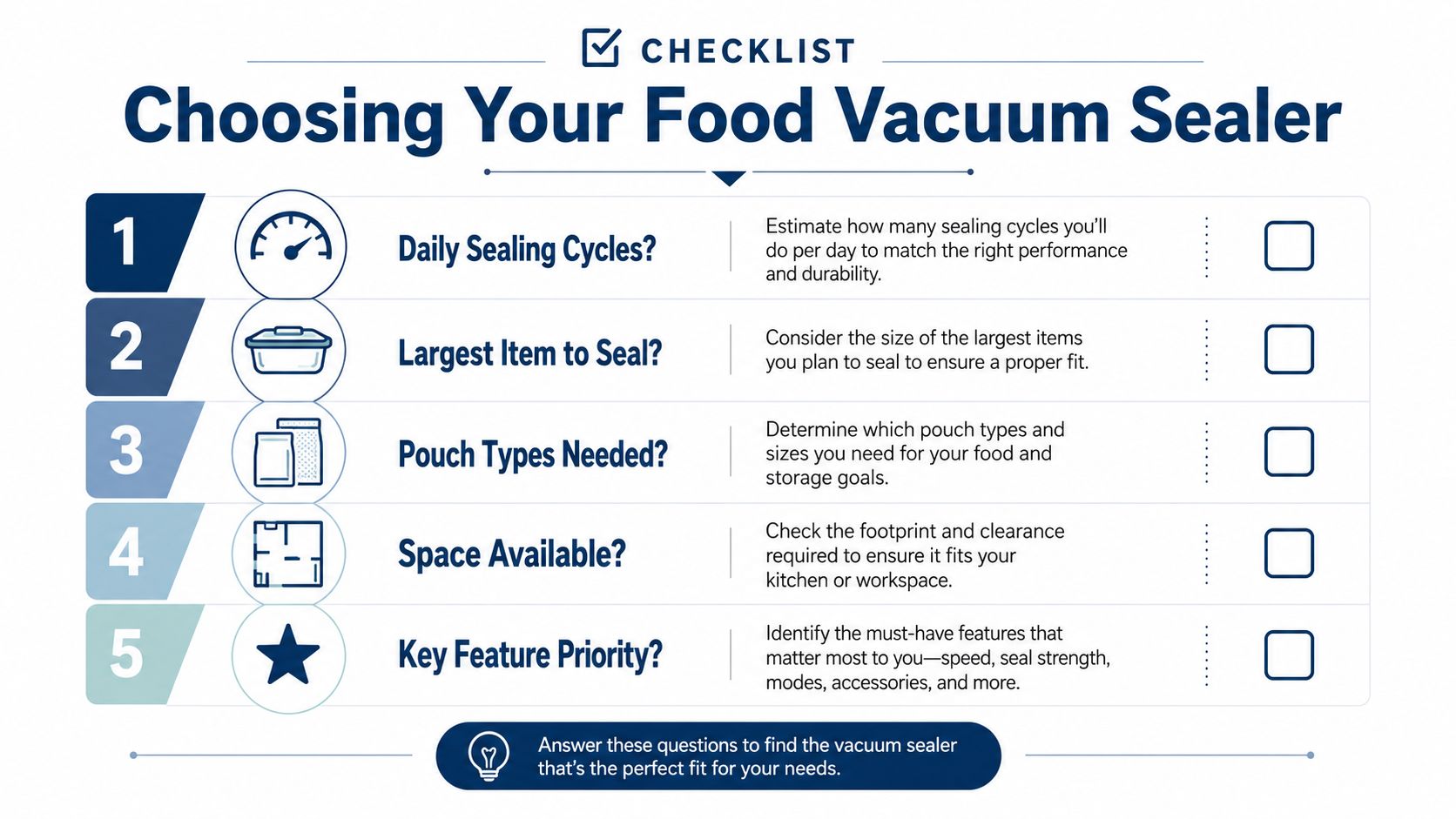
The right machine starts with five questions, and none of them are about packaging theatre. First, how many sealing cycles does the kitchen complete on a normal day? Second, what is the largest pouch or product the team needs to pack? Third, does the operation handle liquids, marinades, or moist foods often enough to need a chamber unit? Fourth, is production likely to grow in the next year or two? Fifth, how easy is the machine to clean after a service run?
Match the machine to the venue type
- Small cafés and office kitchens: often suit lighter-duty sealing if the volume is occasional and the products are simple.
- Restaurants and busy bistros: usually need more room for batch prep, tighter workflow, and steadier cycle use.
- Hotels and breakfast services: often benefit from chamber capacity because prep packs need to be consistent and fast to rotate.
- Caterers and event venues: usually need more flexible pouch handling and better support for large batch production.
- Institutional kitchens: tend to value durability, cleaning access, and repeatable throughput more than a low upfront ticket.
The most common mistake is buying for today's quietest week, not next season's busiest one. That creates friction later, when the kitchen begins to batch more aggressively or add menu items that need larger pouches. Buy the vacuum sealer you'll need next year, not just today.
Safety still sits above convenience
Vacuum packaging can create a food-safety issue when it's used on moist, low-acid foods without proper cold storage, because reduced-oxygen conditions can support botulism risk if time and temperature controls are poor. FDA guidance for vacuum-packed refrigerated fish requires it to be held at 3°C or below (vacuum-packed refrigerated fish temperature guidance). That is a clear reminder that the machine supports safe process control, but doesn't replace it.
A shortlist should always consider chamber size, pump capacity, maximum pouch size, and cleaning access together. One of those on its own won't decide the right model. The mix will.
Food Safety and Maintenance Practices That Protect the Investment
Vacuum sealing changes the storage environment, so the kitchen has to tighten discipline around chilling and labelling. It doesn't replace refrigeration, freezing, or hygiene. It works only when those controls are already in place, which is why the seal itself should never be treated as a safety net.
The frozen-storage benefit is real, but it needs the right setup. Oregon State University notes that vacuum sealers create a tight seal that is ideal for preserving food by freezing, with the main benefit being longer storage life plus better texture and flavour retention in frozen foods (Oregon State University vacuum sealer guidance). That supports the common kitchen habit of sealing portions for freezer use, where the payoff is quality retention as much as storage convenience.
Daily habits that protect seals
- Keep the sealing bar clean: residue can compromise the heat seal.
- Inspect sealing strips and chamber gaskets: wear shows up there first.
- Check bags before freezing: holes and weak seals are easiest to catch early.
- Follow the service schedule: pump care protects uptime.
Preventative maintenance matters because downtime never shows up at a convenient time. A machine that seals beautifully in the morning but struggles after residue builds up won't hold up in a real prep room. That's why simple, regular cleaning is part of the purchase decision, not an afterthought.
The safest operators also label tightly. Product name, date packed, storage temperature, and use-by practice all need to be visible and consistent, especially for chilled items. The tighter the reduced-oxygen environment, the more important those records become.
Maintenance note: if the machine is being used every day, the cleaning routine should be written into the prep close-down, not left to memory.
Total Cost of Ownership and Getting the Right Support
The ticket price is only the starting point. Total cost of ownership includes chamber size, pump capacity, pouch consumables, cleaning time, service access, and how long the machine is likely to stay productive in a busy kitchen. That's why cheap equipment can end up being expensive if it slows prep or fails under load, a point that fits with Simply Hospitality's own advice on buying cheap versus buying once.
A practical buying conversation should also cover finance and support. Some operators want a straightforward quote, some need trade account terms, and others prefer certified used equipment or finance partners such as SilverChef to match the machine to cashflow and growth. The right choice depends on how quickly the kitchen expects production to expand and how much servicing access matters locally.
Hospitality supplies commercial vacuum sealing solutions alongside other kitchen equipment, so it can help compare chamber size, sealing format, and operational fit against the way a venue works. That matters more than picking the loudest spec on paper.
Hospitality can help compare vacuum sealers against your kitchen's real workload, storage needs, and future production plans. If you want a practical recommendation rather than a generic appliance pitch, visit Simply Hospitality and talk through the machine that fits your venue.