
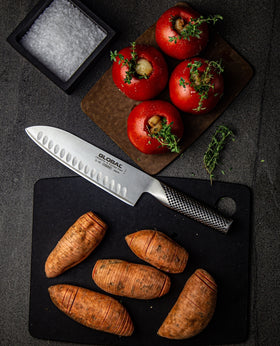

Choosing the Right Fridge with Drawers for Your Kitchen
Service slows down at the exact moment a cook has to cross the line for garnish, a prep bowl, or a tray of sliced ingredients. That's where a fridge with drawers earns its place, not because it looks neat, but because it keeps frequently used chilled food where the work is happening. For restaurants, cafés, bars, and compact kitchens, the question is simple: where should ingredients live so staff don't have to keep moving for them?
A drawer unit is not just another fridge in a different shape. In the right spot, it reduces bending, tightens mise en place, and makes the kitchen run in a cleaner line. In the wrong spot, it becomes an expensive way to store food awkwardly, which is why this format deserves its own buying decision.
Why Drawer Refrigeration Deserves Its Own Buying Decision
A busy kitchen doesn't fail because the fridge is too small. It fails because staff waste movement reaching for the same ingredients over and over while service is already under pressure. If the garnish, sauce, cheese, or protein trim sits directly under the prep point, the cook works faster and the station stays tidier.
Workflow should lead capacity
That's the first test for a fridge with drawers. The format makes sense when the ingredients are used often, kept in working quantities, and accessed from above rather than from the side. It makes less sense when the storage is bulky, low-frequency, or full of mixed containers that need flexible shelving.
Practical rule: buy drawers for access, not for novelty.
That sounds blunt, but it's the right approach. A drawer fridge is a workflow tool first and a storage cabinet second. If the cabinet doesn't sit in the actual cooking or prep run, the benefit shrinks quickly.
Read the kitchen, not the brochure
The best kitchens use refrigeration to shape movement. Burger stations, pizza benches, salad lines, and sandwich assembly points all benefit when chilled ingredients are placed right where hands already work. When the cabinet location matches the station layout, the chain is obvious, ingredient location, staff movement, preparation time, service efficiency.
That logic is stronger than any glossy spec sheet. A door fridge might still be the better choice for bulk containers, occasional access, or mixed-use storage. Drawers only win when the kitchen uses them hard enough to justify the format.
What a Commercial Fridge With Drawers Actually Is
A commercial fridge with drawers is a refrigerated cabinet built around pull-out storage sections instead of, or alongside, conventional doors. That sounds obvious, but it matters because many buyers confuse commercial drawer refrigeration with domestic drawer fridges, which are designed for home use and different duty patterns. In hospitality, the unit has to cope with repeated opening, heavy loading, and a food-safety environment that's far less forgiving.
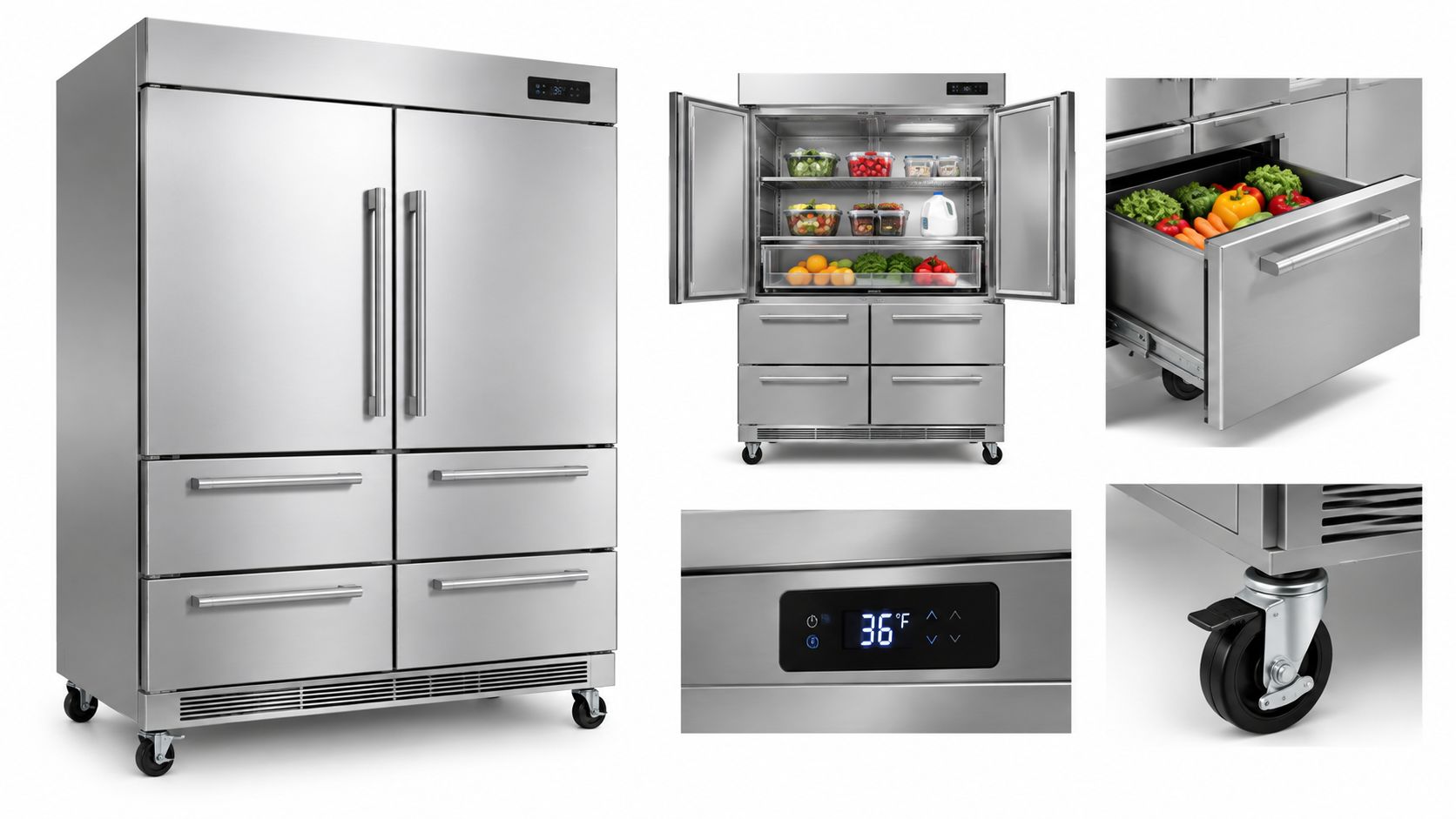
Common commercial configurations
The main formats are straightforward:
- Single-drawer refrigeration, often used where space is tight or a single chilled compartment is all that's needed.
- Two-drawer and three-drawer units, which suit ingredient separation at a prep bench.
- Multi-drawer refrigerated bases, which spread storage across several working zones.
- Underbench refrigerated drawers, which sit beneath a counter or prep surface.
- Refrigerated chef bases, which are built to support compatible cooking equipment above them when the manufacturer approves that use.
A product like the SKOPE ReFlex 1 Bay 2 Drawer ChefBase GN 1/1 Fridge sits in this wider commercial category, but it should be assessed as a working unit, not as a decorative storage upgrade.
Don't confuse drawers with ordinary storage drawers
A refrigerated drawer isn't an empty cavity with a cold plate. It's a temperature-controlled compartment with drawer seals, internal airflow design, and loading limits that affect performance. That distinction matters because ordinary storage drawers can hold tools or dry goods, but they don't control food temperature or support chilled product handling.
Hospitals, hotels, cafés, and line kitchens all use different configurations for different reasons. A small prep station may only need one or two drawers. A chef-led line may need a deeper base unit or a configured multi-drawer system that matches the bench height and the station layout.
When Drawers Beat Doors in a Working Kitchen
A drawer fridge earns its place at stations where the same hands keep reaching for the same ingredients. At a two-cook burger station, a drawer under the bench cuts a string of cross-kitchen trips during service, and that matters more than nominal capacity. Put the right items in the right drawer, and the station stays tight and fast.
Where they earn their keep
Burger stations are the clearest fit. Cheese, sliced tomato, lettuce, pickles, and sauces can sit in separate compartments, often in shallow pans such as 1/6 GN inserts, so cooks pull exactly what they need without digging through a shared cold cabinet. Pizza prep works the same way when toppings need to stay sorted and close at hand. Sandwich and salad lines also benefit, because the ingredients stay divided by station instead of being mixed into one deep space.
Drawer layout also suits compact commercial kitchens where every move has to earn its place. Staff do not want to bend into a deep undercounter space for the same items throughout service, and they do not want a door left open while they work. A drawer that sits directly in the run keeps the station cleaner and the motion simpler.
A drawer fridge pays for itself only when the menu and the station match.
Where doors still make more sense
Doors still win in plenty of kitchens. Bulky containers, mixed tray sizes, and lower-use items are easier to manage behind shelving. A door cabinet also gives more tolerance when menus change or the venue stores a wider spread of container shapes.
That is why drawers should be chosen for the job in front of them, not treated as a default upgrade. They are strong for fast access and clear separation. They are weaker when the kitchen needs open, flexible bulk storage.
Drawer Fridges Compared With Underbench Door Fridges
A fridge with drawers and an underbench fridge with doors solve related problems, but they don't behave the same in service. The right choice comes down to access pattern, container shape, and how the station runs during peak trade.
| Consideration | Refrigerated Drawers | Underbench Fridge With Doors |
|---|---|---|
| Access | Pull-out compartments | Shelves behind doors |
| Organisation | Separate drawer sections | Flexible shelving |
| Storage | Depends on drawer depth and layout | Often suits varied containers |
| Workflow | Useful for frequent point-of-use access | Useful for general chilled storage |
| Cost | Compare current models | Compare current models |
Choose by service pattern, not by habit
Underbench fridges with doors suit venues that need mixed storage and want shelving that can shift around quickly. That's often the better answer for bars, back-of-house holding, or kitchens where container sizes change regularly. Drawers are stronger when the storage needs are repeatable and the ingredients belong at a single station.
For a broader look at underbench formats, the under-bench fridge guide gives useful context on how these cabinets work in real hospitality layouts. The point is not to crown one format as superior. It's to match the cabinet to the task.
Where the decision becomes obvious
If staff keep opening the same chilled section dozens of times a service, drawers usually make more sense. If the venue needs one cabinet to do a bit of everything, doors are usually more practical. That's why a good spec conversation starts with menu and workflow, not litres.
A strong underbench fridge range, including the kinds of commercial categories available through Hospitality, should be compared on layout, access, and fit, not on a single headline number.
Chef Bases and Cooking-Line Integration
A refrigerated chef base is not just a drawer cabinet with a stronger top. It's a separate engineering decision, because the cabinet may need to support hot-line equipment above it while still keeping food safe and stable inside. That means the key questions are heat, airflow, compatibility, and load.
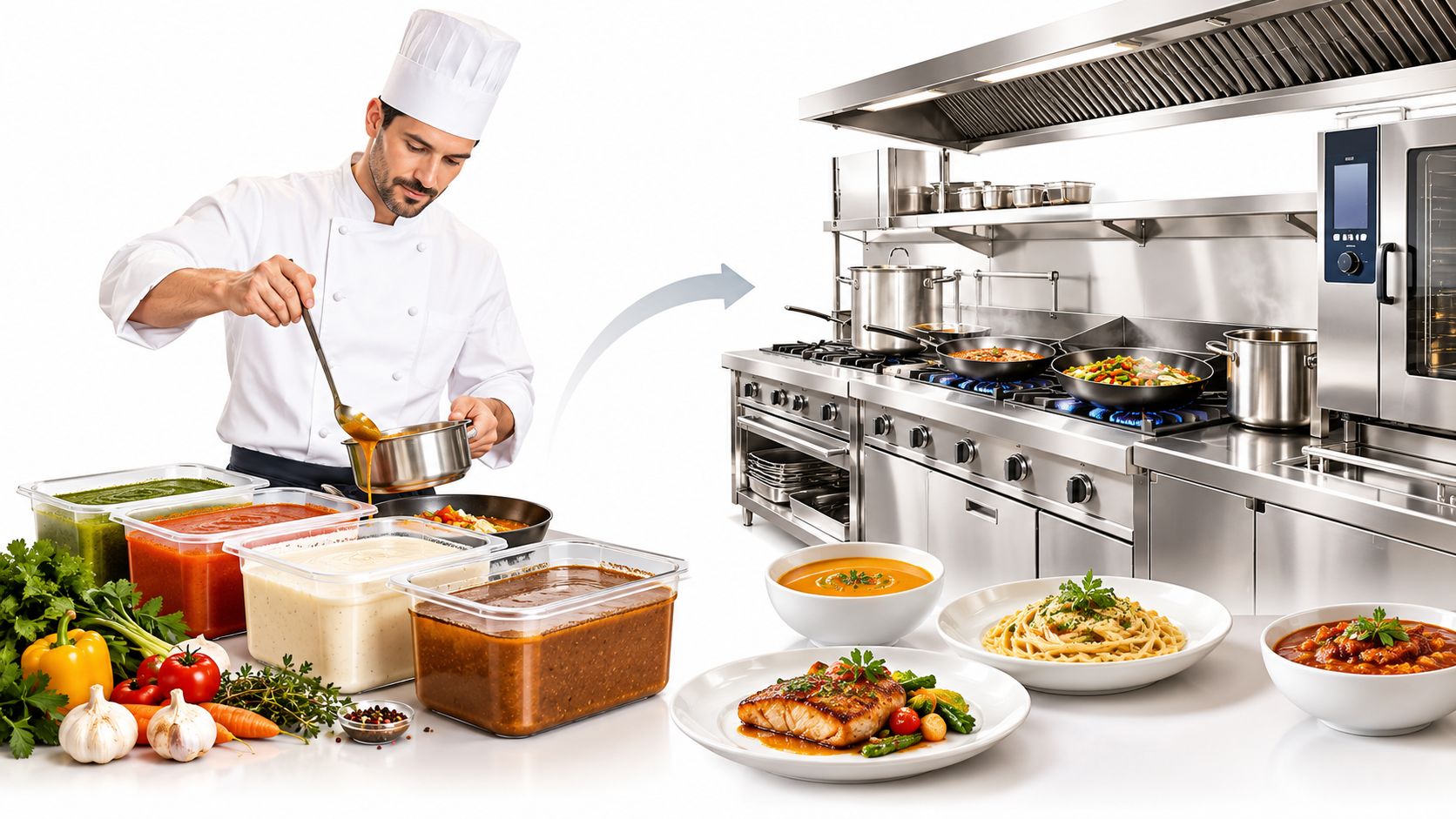
The top matters as much as the drawers
Some chef bases are built to sit under specified cooking equipment, but only within the manufacturer's requirements. A fryer, griddle, or chargrill cannot just be placed on top of any refrigerated drawer unit and assumed to be fine. The installation has to be approved for that combination, full stop.
One useful way to think about it is to compare it with other kitchen equipment decisions, including the question of what makes cookware restaurant quality. The logic is similar, the gear has to suit the way it's used, the heat it sees, and the pace of service it's expected to handle.
What needs checking before anything goes on top
- Heat management: hot equipment above the unit changes the cooling load and can affect stability.
- Ventilation clearances: the cabinet needs room to breathe, not just room to fit.
- Load capacity: the top must be designed for the actual equipment weight.
- Equipment compatibility: only manufacturer-approved pairings should be considered.
- Working height: the line has to stay comfortable for the people using it.
- Cleaning access: service crews still need access to surfaces and components.
For operators planning a tight line, the restaurant kitchen layout ideas resource is a useful reference point. It helps frame the chef base as part of a full run, not a stand-alone cabinet.
Waldorf's Continuum cooking-suite approach is relevant here because it treats refrigerated bases as part of a matched line, not as an afterthought. That's the right mindset. Build the line for the equipment, then make the refrigeration fit the work.
Capacity, Temperature and What the Spec Sheet Doesn't Tell You
Advertised litres only tell part of the story with drawer refrigeration. A cabinet can look generous on paper and still fail in service if the drawers do not suit the pans, the product sits too high, or the layout does not match the way the station is run.
Check the actual usable space
The questions that matter are practical:
- Internal drawer dimensions: do the drawers take the pans or tubs used on site?
- Usable drawer depth: can the product sit safely without blocking the drawer's function?
- GN compatibility: where specified, does the unit suit the gastronorm sizes the kitchen already uses?
- Container height: do the lids and inserts still fit once the drawer closes?
- Drawer extension: does the drawer open far enough for easy access?
- Number of compartments: is separation possible without overfilling each section?
A drawer can have plenty of nominal capacity and still be a poor fit for the venue's ingredients. That is why container compatibility matters more than a headline internal volume.
Temperature has to be judged in use
MPI guidance requires chilled food to be kept at 5°C or lower (MPI food safety guidance), and the danger zone sits between 5°C and 60°C where harmful bacteria can grow quickly. For drawer refrigeration, that means the cabinet has to hold temperature in real service conditions, not just while sitting empty in a showroom.
Practical rule: a low air reading does not prove the food is safe. Product temperature is the check that matters.
A drawer unit pulled open 40 times during service beside a chargrill will struggle harder to hold 5°C at the product surface, even if the air reading looks fine. Ambient rating, opening frequency, product loading, and proximity to heat-producing equipment all affect performance. A unit beside an oven or squeezed into a hot line works harder than one placed in a cooler, better-ventilated position.
Read supplier data in that context. The cold-chain management guide is a useful reminder that refrigeration only works when it fits the kitchen's actual food-handling routine.
Cleaning, Maintenance and Whole-of-Life Running Costs
A drawer cabinet that is awkward to clean becomes a service problem quickly. Spills collect in corners, seals trap grime, and dusty condenser surfaces drag down reliability when the unit is already under pressure during service. In a commercial kitchen, easy access for cleaning is part of the buying decision.
Keep the maintenance path simple
Choose drawer units that staff can clean without stripping the station apart. Look for removable drawer inserts where they are available, check that drawer seals can be replaced without drama, and inspect the internal corners to make sure they can be wiped out properly. Condenser access matters as well, because grease and dust build-up will hurt performance over time.
The commercial refrigeration maintenance guide is a practical companion to any purchase decision. A cabinet only stays useful if the team can keep it hygienic and the service crew can reach the parts that need attention.
Energy cost is part of the buying decision
Commercial refrigeration is one of the largest continuous loads in a kitchen, so running cost is not a side issue. Buyers should look at verified annual energy consumption, ambient rating, and the installation environment, then judge the unit in the context of the actual kitchen. A cabinet that looks efficient on paper can still waste power if it sits beside heat, lacks airflow, or is used harder than expected.
That is why whole-of-life value needs to include purchase price plus energy consumption plus maintenance plus workflow benefit plus expected workload. A cheaper cabinet that slows the line, runs hot beside cooking equipment, or is difficult to service can cost more over time than a better-built unit with lower friction in daily use.
For hospitality operators, the right choice is the unit the team can use every day, clean properly, and keep stable under load.
Choosing the Right Fridge With Drawers for Your Venue
The right fridge with drawers usually becomes obvious once the station is mapped clearly. A premium drawer configuration such as a SKOPE ProSpec 9-drawer underbench fridge makes sense in chef-led workflows where ingredients need to live at hand and the station is built around repeated access, not bulk storage. That kind of layout can be very effective, but only when the kitchen is designed to use it properly.
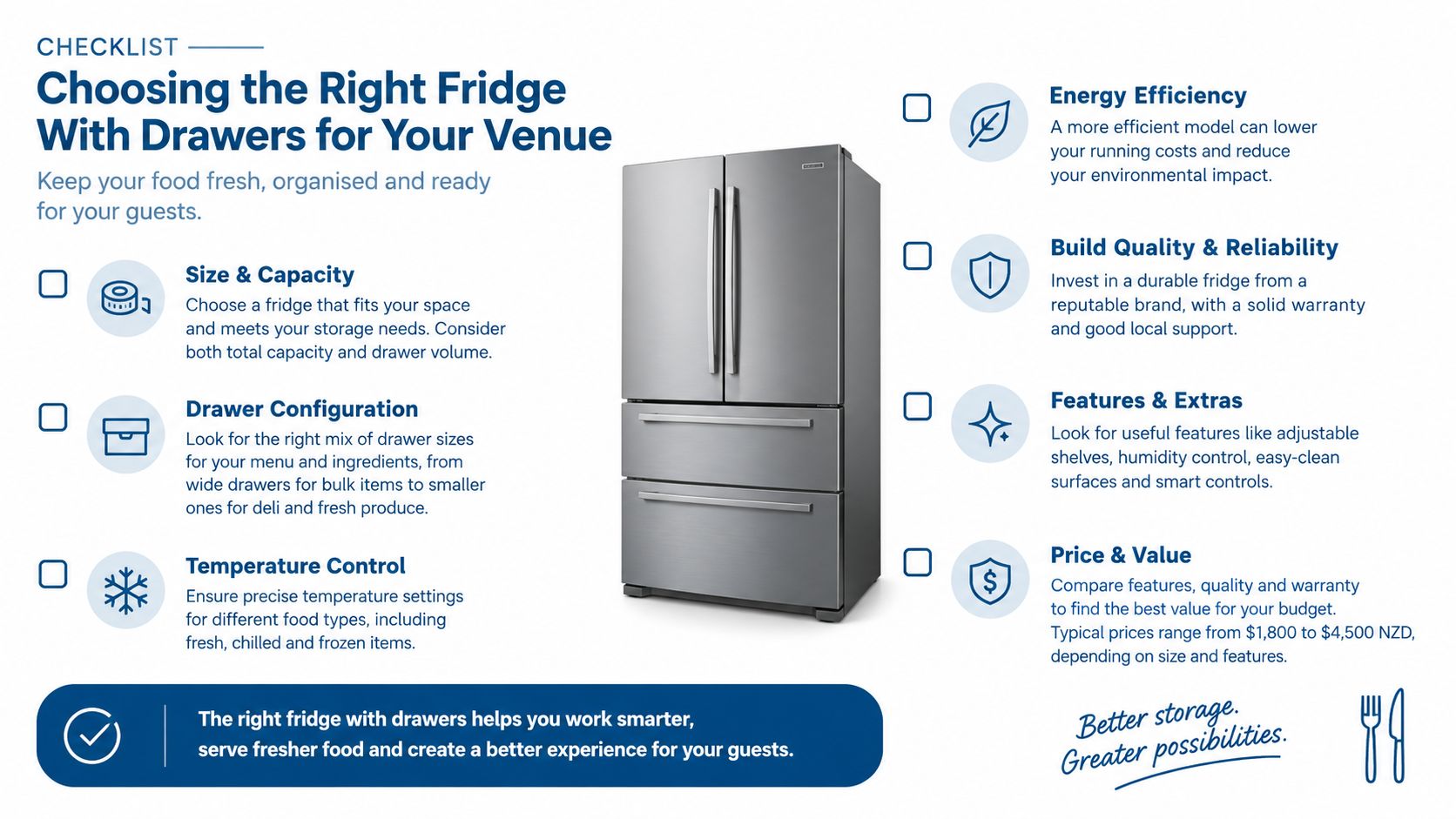
Use this checklist before buying
- What ingredients will be stored? Frequent-use prep items suit drawers better than mixed bulk stock.
- How often will staff access them? High-frequency access favours drawers.
- What containers must fit? Measure the actual tubs and pans, not the dream layout.
- How much usable storage is required? Check drawer dimensions, not just headline litres.
- Will the drawers open without blocking staff? A narrow aisle can turn a good idea into a daily nuisance.
- Is the unit suitable for the ambient environment? Heat, airflow, and service load all matter.
- Will cooking equipment sit above it? Only manufacturer-approved combinations should be considered.
- Are installation and ventilation requirements achievable? Clearance, levelling, and service access are essential.
- Is a conventional underbench fridge more practical? If storage is varied and access is less frequent, doors may win.
A drawer cabinet should be chosen because it improves the run, not because it looks smarter than a door fridge. The right answer depends on ingredients, movement, and layout.
Simply Hospitality helps hospitality businesses choose commercial refrigeration that fits the menu, the station, and the way the kitchen really works. Visit Simply Hospitality to compare drawer refrigeration, underbench fridges, and chef-base options with practical advice for your venue.