

Choosing the Right Frozen Drink Maker for Your Venue
The usual advice is to buy a frozen drink maker around average daily sales. That sounds tidy, but it's the wrong way to size equipment in a real venue. A machine has to cope with the rush, not the quiet hours, and the first question should always be, “When will customers buy the frozen drinks?”
For a beach kiosk, the afternoon surge drives the decision. For a Friday-night bar, the machine has to hold texture when orders land together. For a café, the pressure may sit in a short lunch or after-school window. Peak-hour demand determines machine size, and that's where too many purchases go wrong.
Why Peak-Hour Demand Determines Machine Size
A frozen drink maker gets judged in the busiest spell, not on a spreadsheet. If a venue sells 80 frozen drinks across a day, but 50 of them leave in a two-hour afternoon window, average daily volume tells you almost nothing useful. That machine has to deliver fast enough when the queue forms, and still recover when staff keep pouring.
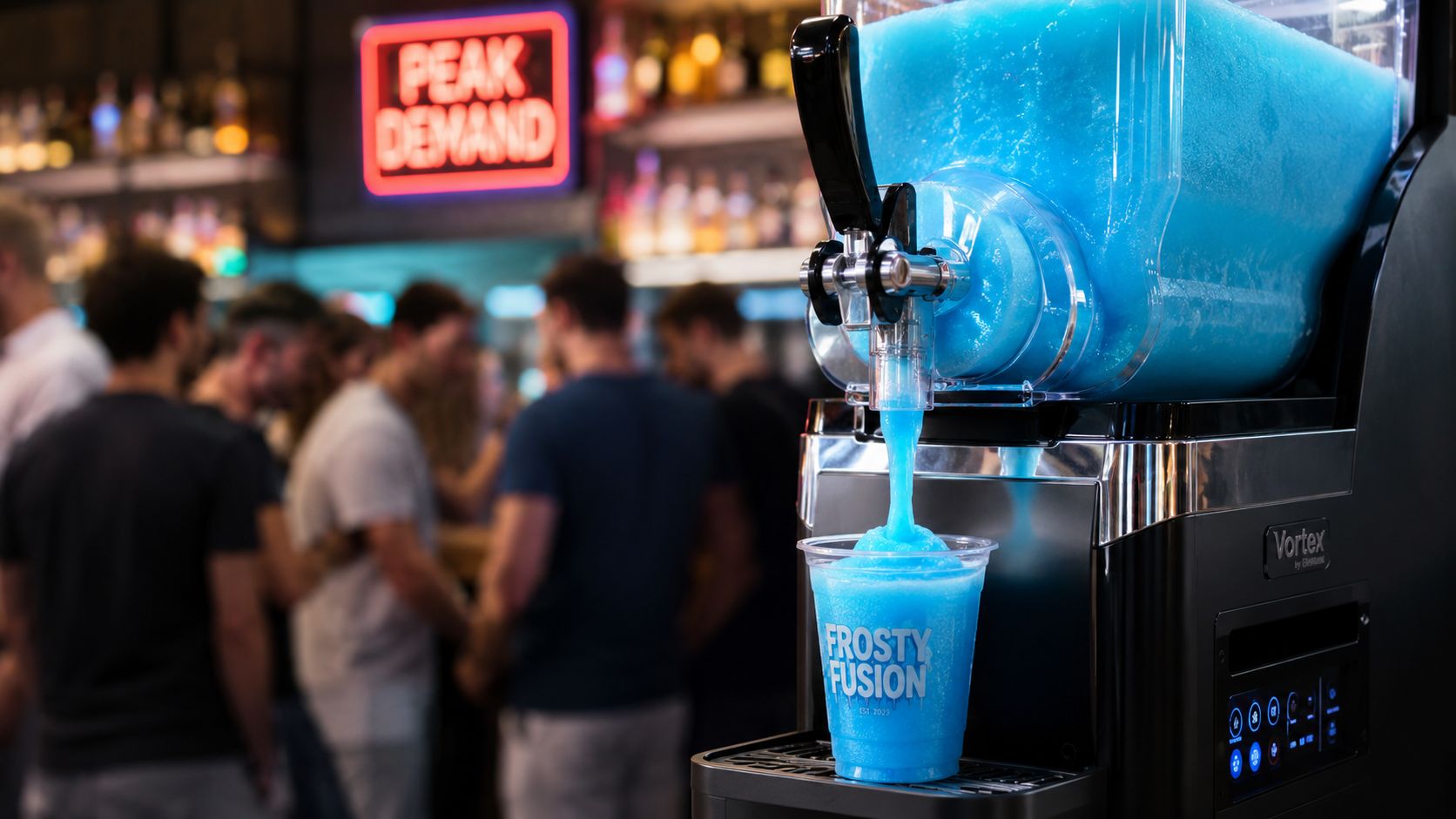
The right question is not “How many drinks per day?” It's “How many drinks per hour, at the worst moment?” That's why a beach kiosk, a small cocktail bar, and a restaurant with a once-a-week frozen special all need different equipment profiles. A machine that looks generous on paper can still choke if the venue asks it to do too much in too little time.
Practical rule: choose the machine around the busiest hour, not the quietest day.
A useful way to think about it is straightforward. The staff can only sell as fast as the machine can recover, and frozen drinks don't wait politely for the next batch to settle. How reliable equipment protects your busiest trading days fits that same reality, because the loss usually happens when service slows down at the worst possible moment.
When buyers focus only on average sales, they often under-specify the machine. That leads to long waits, inconsistent texture, and frustrated staff trying to push a unit beyond what it was built to do. Frozen drink machines don't fail because they're too small, they fail because they're too busy.
Understanding How Frozen Drink Makers Work
A proper frozen drink maker is built to control freezing, not just to smash ice harder. The difference shows up in labour, texture, yield, and how reliably the drink holds together during service. That matters in bars and cafés where staff need the same result every time, not a different finish depending on who is on shift.
The machine's internal job
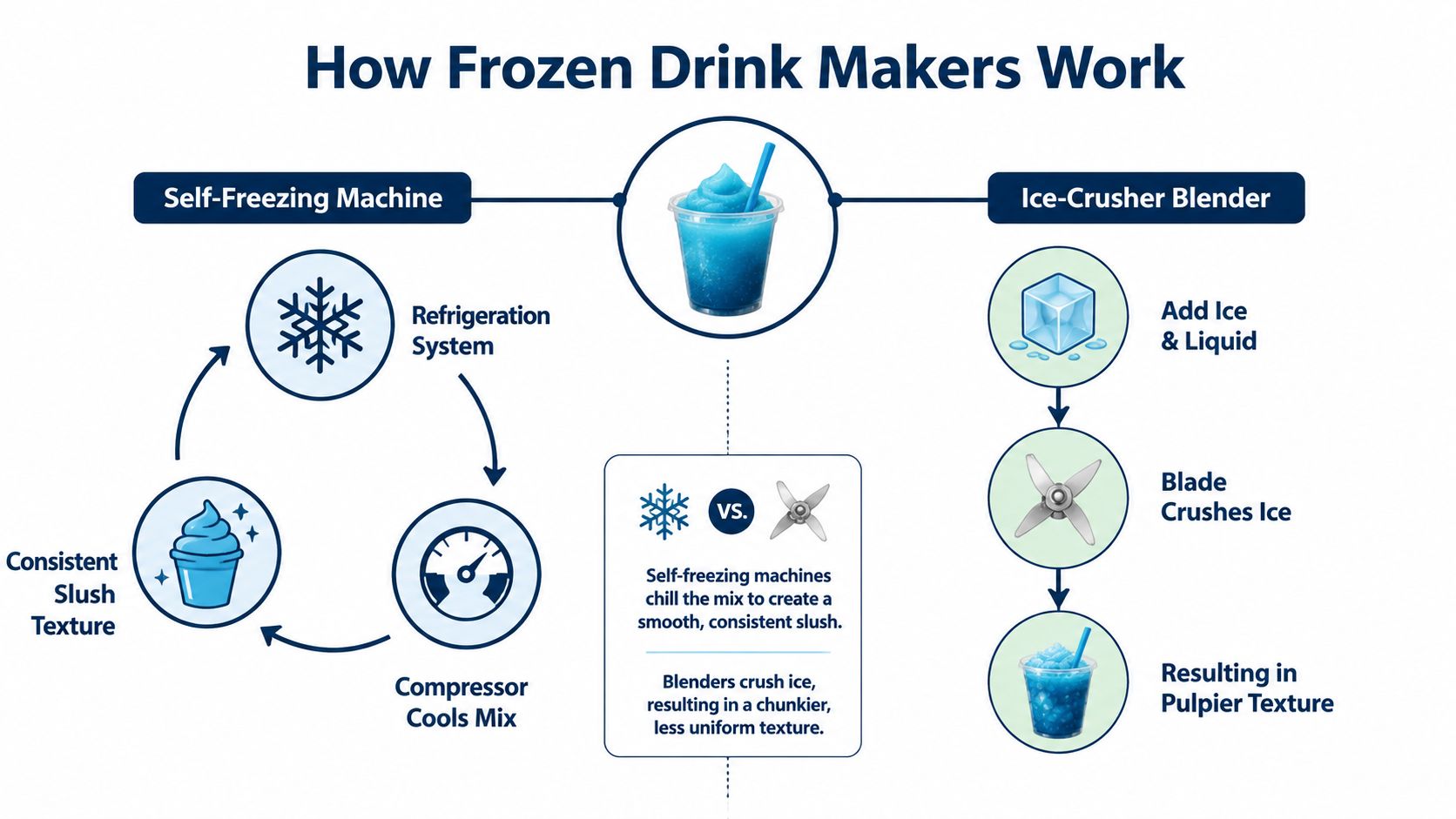
Industry guidance describes three basic parts: a freezing cylinder, a mixing paddle, and a refrigeration system. The mix freezes inside the cylinder while the paddle keeps it moving, which stops the product from freezing solid and keeps the drink in a slushy state. That constant motion is why proper equipment gives a more even result than a machine that just chops ice and hopes the texture lands right.
A self-freezing unit also gives better control when a venue needs the same drink to come out the same way across shifts. Ice-crusher style appliances depend more on how staff load the ingredients and how hard the blades work on a given day. A frozen drink maker with its own freezing system is usually easier to standardise in a busy venue, and that same logic is why operators comparing drink equipment often read guides like milkshake maker NZ buying advice before choosing a format.
Commercial roots matter here. The modern frozen soft-drink machine traces back to Omar Knedlik's late-1950s prototype, developed after an automobile air conditioner was used to create a slushy drink when a soda fountain failed. 7-Eleven licensed ICEE machine technology in 1965, and the Slurpee debuted in 1966 in two flavours, Coca-Cola and cherry, showing how established the format became in high-throughput retail service. The frozen margarita machine followed in Dallas on 11 May 1971, when Mariano Martinez adapted a soft-serve ice cream machine to produce a consistent frozen cocktail, and the Smithsonian notes that this created a mass-produced and consistent beverage.
That history matters for New Zealand buyers because this is not a novelty appliance. It is mature dispensing technology with a long commercial track record, and that is also why the label alone is not enough. The primary question is whether the unit is a true self-freezing machine, a compressor slush machine, a margarita machine, a granita unit, or an ice-crushing appliance sold under the same broad name.
A venue that values control in espresso service looks closely at equipment like the Faema E71E Commercial Espresso Machine because it is built for precise barista control and strong consistency. Frozen drinks need the same discipline, just in a different format, because the machine has to support the service standard instead of forcing staff to work around it.
Sizing Your Machine Around the Busiest Hour
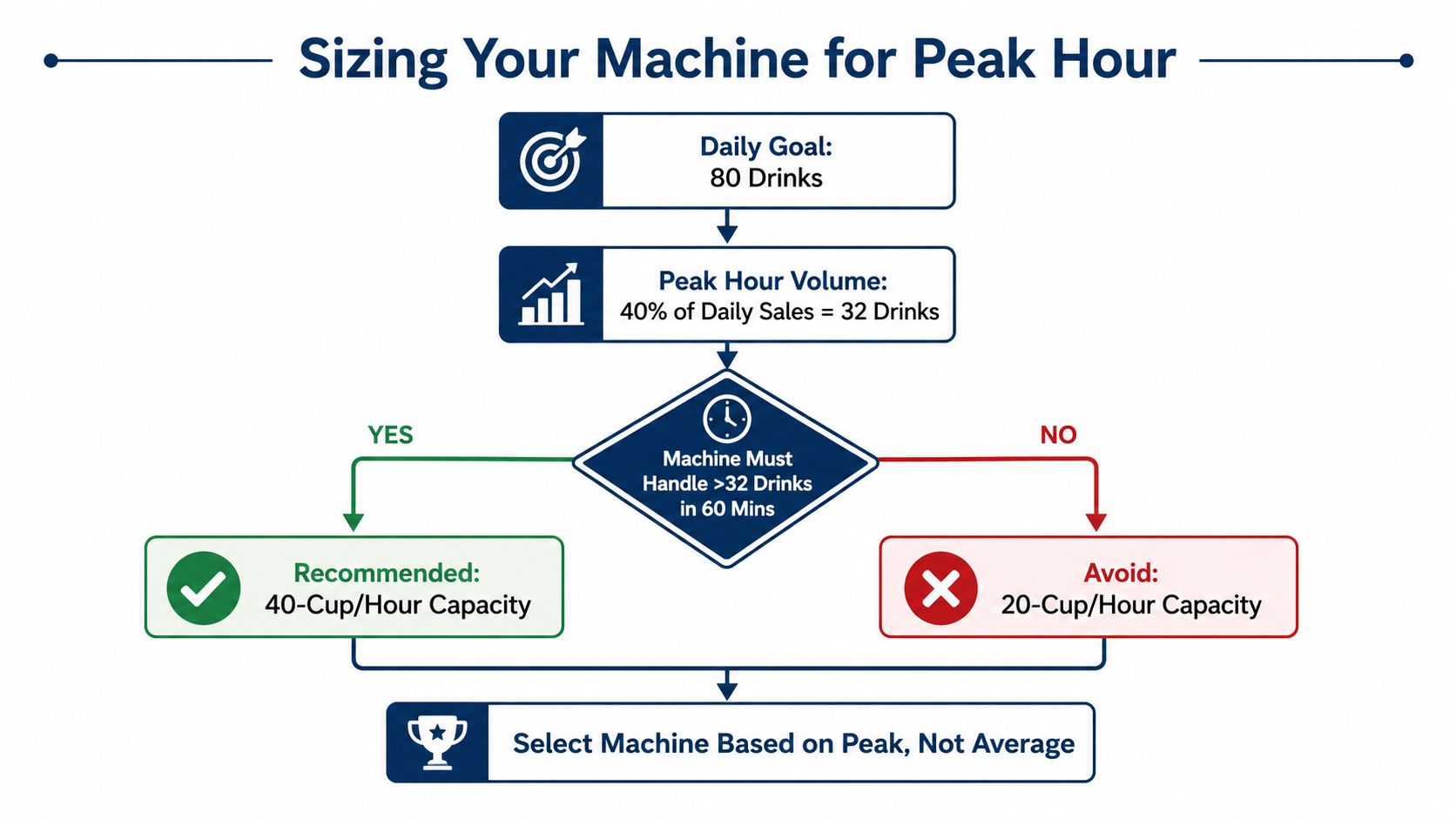
A venue can sell plenty of frozen drinks and still buy the wrong machine. The usual mistake is sizing around daily sales instead of peak throughput. If 80 drinks leave the bar over a whole day, but 50 of them land inside a two-hour rush, the machine has to survive that rush first.
A simple trading example
A beach kiosk may sell steadily all afternoon, so the machine needs steady output and quick recovery between pours. A bar might sell fewer drinks overall, but most of them hit during the same Friday-night surge, so the unit has to handle bursts without slowing service. A café with frozen specials may only run one flavour, yet it still needs to keep up when the lunch crowd arrives together.
When staff keep dispensing without enough recovery time, consistency slips first.
That recovery window matters more than many buyers expect. Manufacturer specifications for many commercial units note that a full batch may take 45 to 90 minutes to reach the right texture, so the machine is not just a tank that instantly refills with finished product. For self-freezing units, equipment manufacturers also note that drinks can turn into slush in about 15 to 60 minutes, depending on the ingredients, volume, and starting temperature, so batch timing has to match the service pattern rather than hope for it.
What to evaluate before choosing size
The buying conversation usually starts with these questions:
- When are drinks sold? Peak windows decide whether the machine needs to move quickly or just sit ready.
- How many flavours are needed? More flavours usually mean more hoppers, more separation, and more cleaning.
- How quickly must the machine recover? A unit that looks fine at 2 pm may struggle at 8 pm.
- Can staff clean it easily? If cleaning is awkward, maintenance slips and performance usually follows.
- Is the machine sized for the busiest period? That question filters out most under-specced purchases immediately.
Alcohol-heavy recipes and low-sugar mixes need extra caution. A manufacturer guide for smoothie and juice operations explains that mixes can fail to freeze when alcohol is too high or sugar is too low, and that is why syrup should always be mixed to the recommended ratio, as outlined in Choosing equipment for smoothie and juice operations. Altering the balance can affect freeze consistency, product quality, and machine performance.
The same logic applies across frozen beverage service. Matching the machine to the workflow beats chasing a headline capacity figure that does not fit the menu.
Key Specifications and Features to Evaluate
The right frozen drink maker is judged by how it behaves in service, not by the badge on the front. Capacity matters, but so do the number of tanks, the electrical load, how well flavours stay separated, and whether the unit fits the way the bar or café works. In New Zealand, the first check is straightforward, the machine should be specified for 230V/50Hz operation because that matches standard mains supply.
| Configuration | Typical Power Draw | Tank Capacity | Best Suited For |
|---|---|---|---|
| Single-tank countertop | 500 W | 12 L | Smaller venues, limited menu, lighter service |
| Double-tank unit | 1050 W | Multiple flavours | Bars and cafés needing more throughput |
| Triple-tank unit | 1120 W | Multiple flavours | Higher-volume service and flavour separation |
Those ratings are consistent with the kinds of commercial units buyers see in the market, and the power scaling matters because extra tanks increase compressor and agitation load. That affects circuit planning, inrush allowance, and continuous draw when several tanks are running at once. Bench space matters too, because a larger unit can solve service pressure but still create a layout problem if staff cannot move around it cleanly.
Match configuration to the menu
Frozen systems are used for slushies, margaritas, frozen lemonade, coffee, granita, and sorbet-style products, so the right machine depends on what the venue plans to sell, not just the drink name on the menu. More flavours usually mean more hoppers, and more hoppers usually mean more cleaning, more refill work, and more chances for staff to slow down during a rush.
Price follows the same trade-off. Single-hopper countertop frozen drink machines can start around $500 to $1,000, based on current market pricing from commercial equipment suppliers, while larger multi-hopper floor models with advanced features can cost $5,000+, depending on configuration and brand. That spread reflects output, flavour separation, and the ability to keep serving through peak periods without constant refilling.
Commercial blender options sit in a different part of the workflow, but the comparison still helps. A blender suits some beverage programmes, yet it does not replace a self-freezing system when the venue needs stable texture and repeatable service.
Installation Requirements and Daily Maintenance
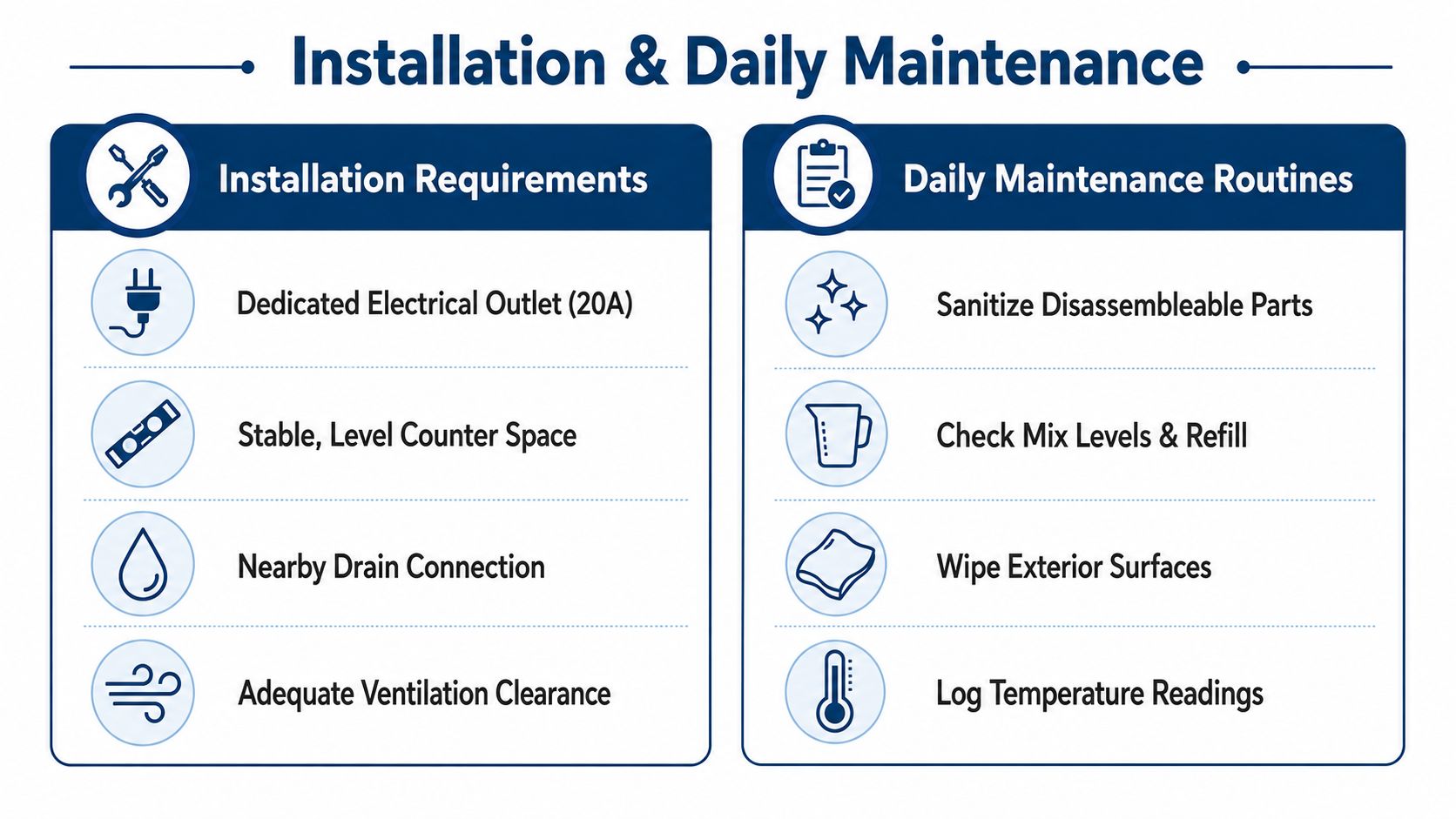
A frozen drink maker needs more than a power point and a clear bench. It needs the right electrical setup, enough space for ventilation, and a routine that stops sugar build-up turning into a service problem. If the installation is rushed, the cleaning gets harder, and the machine usually ends up performing below its rating.
Site setup that avoids trouble later
Electrical sizing matters because higher tank-count units pull more load and need room for inrush as well as steady operation. Bench space has to be stable and level, and the machine needs ventilation clearance so the refrigeration system can do its job properly. If the unit sits too tightly against other equipment, heat management suffers and recovery slows.
One consideration we regularly discuss with customers is how product mix affects freezing performance. The syrup should always be mixed according to the manufacturer's guidance, because sugar concentration directly affects consistency. If staff drift from the recommended ratio, the machine may struggle to hold the right texture, especially in busy service.
The cleaning routine that protects performance
Good cleaning protects good performance, and the daily routine does not need to be complicated:
- Empty product where required. Don't leave mix sitting in the tank longer than the operation allows.
- Clean dispensing nozzles. Sticky residue builds up fast and affects service.
- Wash removable components. Parts that come out should be cleaned properly, not just wiped.
- Sanitise food-contact surfaces. This helps keep drinks consistent and safe for customers.
Scheduled maintenance should also include checking seals, moving parts, and refrigeration performance in line with the manufacturer's recommendations. That matters because clean machines generally produce more consistent drinks while reducing unnecessary service calls.
Ice machine upkeep and service planning follows the same logic, even though the equipment is different. The habit that keeps one cold-beverage machine healthy usually helps another one too.
Cost Considerations and Total Ownership
The purchase price gets attention first, but it is only one part of the decision. A frozen drink maker can look affordable at the counter and still turn expensive if it needs constant attention, spills product during peak service, or slows staff down with repeated refills and cleaning. Total cost of ownership tells the fuller story, and that matters more than the sticker price alone.
Undersizing creates hidden costs. A small unit may suit a light menu, but once the queue builds at the busiest hour, the loss shows up in slower service, missed sales, and drinks that do not hold their texture. A machine that is pushed beyond what it was built for also tends to create more callouts and more frustration for the team on shift.
What sits behind the purchase price
The ownership picture usually includes:
- Energy use. Larger units draw more power, so the venue should plan for that from the start.
- Cleaning supplies. Sticky mix needs proper cleaning, not shortcuts that leave residue behind.
- Replacement parts. Seals, moving parts, and wear components all add to the long-term bill.
- Scheduled servicing. Regular maintenance keeps the unit working properly.
- Labour impact. A machine that is awkward to clean takes more staff time and pushes up operating cost.
Operators planning events often use the same mindset they apply to holding equipment and service flow. A practical reference such as event catering food warmers shows the same issue in a different category, equipment should support service instead of becoming the thing staff have to work around.
The right solution also has to suit the menu, not box it in. A venue serving frozen cocktails on weekends and frozen lemonade in summer needs equipment that can stay practical across those uses. Hospitality's frozen drink maker range can be matched to the service profile, tank count, and output demands of the venue, which is a better fit than forcing a one-size-fits-all purchase.
Buying bagged ice vs owning an ice machine makes the same point. Ownership decisions work best when daily workflow is part of the calculation, not just the initial spend. The cheaper machine is not cheaper if it cannot keep up when the venue needs it most, and the same logic applies to frozen drinks.
Your Frozen Drink Maker Decision Checklist
A frozen drink maker purchase should start with service reality, not product fantasy. A bar owner, café manager, or venue buyer needs to ask how the drinks are sold, what the machine must handle at the busiest point, and who will clean it at the end of the shift. That keeps the decision tied to daily operations instead of brochure language.
A practical final check looks like this:
- Assess peak-hour demand first. Daily volume helps, but the busiest hour decides the machine size.
- Compare self-freezing vs. ice-crusher models. The freezing method changes labour and drink consistency.
- Calculate required cups-per-hour capacity. The rush period should fit without pushing the unit too hard.
- Verify electrical and plumbing needs. The machine has to suit the actual service point, not the plan on paper.
- Plan for space and ventilation. Tight installs make cleaning and servicing harder.
- Understand cleaning frequency. Good cleaning protects performance and reduces avoidable breakdowns.
- Review common buying mistakes before signing off. A short check against the biggest equipment buying mistakes we see helps buyers avoid choosing for average trade and then finding the machine short during rush service.
Peak-hour fit matters more than a tidy sales forecast. A venue can look comfortable on paper and still struggle when a lunch rush, weekend bar trade, or function crowd lands at once. That is usually where a machine shows its limits, because staff need fast output, steady texture, and enough recovery time between rounds.
Consistency keeps customers coming back, but consistency only happens when the machine suits the menu, the staff, and the trading pattern. Operators who ask the hard questions up front usually end up with equipment that fits the venue instead of limiting it. The right frozen drink machine supports the menu rather than limiting it.
If the venue needs help matching a frozen drink maker to peak-hour demand, flavour count, bench space, and cleaning workflow, Hospitality can help narrow the options. Visit Simply Hospitality frozen drink maker range to talk through the setup with a team that works with hospitality businesses every day and can help choose equipment around the way the venue trades.