

Glass Tumblers NZ: How to Choose the Right Style
Most advice about glass tumblers NZ starts with shape and style. That's the wrong order for hospitality buyers. In a working bar, café, hotel, catering setup, or event service, the essential question is whether the tumbler suits the drink, the pour, the glasswasher, the storage system, and the speed of service, because a glass that looks good empty can become awkward the moment it's full.
That operational view matters in New Zealand because venues here often need glassware that can handle fast service, repeated washing, limited storage, and a wide mix of drinks. The right tumbler should feel easy to use during a busy shift, fit the venue's most common pours, and stay consistent across the shelf, the table, and the dishwasher. For hospitality buyers, the practical message is simple, choose for use, not just appearance.
Why Tumblers Are an Operational Decision, Not Just a Style Choice
A tumbler has to do more than sit neatly on a shelf. It needs to hold the right pour, accept the right amount of ice, survive commercial washing, and still look consistent when the team is moving quickly. In busy venues, that's why the glass decision belongs alongside menu engineering and back-of-house workflow, not just table styling.
What the glass has to do in service
The common mistake is buying a tumbler because it photographs well empty. What matters is how it looks full, with liquid, ice, garnish, and condensation in play. A broad, heavy glass can feel premium for whisky or short drinks, while a lighter format can be better for fast-moving water or soft-drink service where staff need easy handling and quick turnaround.
Practical rule: choose the tumbler by the drink list first, then by the way the glass will move through the venue.
That applies across bars, restaurants, cafés, hotels, casual dining, events, and catering. A premium cocktail bar may want a more refined profile, while a banquet or breakfast room often needs something durable, stackable, and easy to replace. In practical terms, the best choice is rarely the fanciest glass on the shelf.
New Zealand buyers often also get distracted by product labels that sound similar. Tumblers, water glasses, rocks glasses, and old fashioned glasses can all sit in the same family, but they don't do the same job. A tumbler is a service tool first, and a style object second.
For broader buying context, Hospitality has published practical observations on how hospitality businesses choose equipment, which is worth reading alongside any glassware review: what we've learned from helping hospitality businesses choose equipment.
The Main Tumbler Formats and the Drinks They Serve
The easiest way to sort glass tumblers NZ stock is by the drinks they serve. Tumblers are flat-bottomed, multipurpose glasses widely used in NZ venues for cocktails, soft drinks and water, and the format is chosen for stability, volume and everyday beverage service rather than aroma concentration.
Rocks and old fashioned tumblers
Rocks glasses are the short, broad option. They suit spirits, drinks over ice, and short cocktails that need to feel grounded and substantial in the hand. That wide base helps on a busy bar top, where staff are setting drinks down quickly and clearing them just as fast.
Old fashioned glasses sit in the same practical space. They work for whisky on the rocks, spirit-forward cocktails, and drinks that do not need height. They are less useful for longer mixed serves, because ice and mixer space disappear quickly.
Highball tumblers
Highballs are the taller answer. They suit longer mixed drinks, soft drinks, and cocktails built around ice and a larger volume of liquid. For many venues, this is the workhorse tumbler format because it covers a large share of standard beverage service without requiring specialist glassware.
That makes them a good fit for service patterns where speed matters, especially in bars and clubs that also need glassware to line up with the realities of beer glasses New Zealand venues buy for high-turnover drinks service. The overlap is practical, not aesthetic.
Water tumblers and larger beverage formats
Water tumblers are usually chosen for table service, casual dining, and minibar-style use where the venue wants a versatile everyday glass. Larger beverage tumblers are useful for iced coffees, sparkling water, and cocktails where ice displacement needs more room, and they are also common where presentation matters as much as capacity.
A useful retail comparison comes from the way NZ ranges are positioned. Commercial tumbler selections often sit around 200 mL stackable formats, 210 to 260 mL service glasses, and larger 355 mL or 390 to 444 mL options for cold drinks and mixed service. The point is not to chase variety, it is to map the drink menu to the smallest set of formats that still works cleanly.
A separate product example also shows how function can matter more than category labels. The Pyrex Easy Grab Pie Plate 24cm is not a tumbler, but it shows the same hospitality principle at work. Its clear glass, visible browning, and oversized integral handles are about handling and performance, not decoration for its own sake.
Capacity, Shape, Rim and Base What Matters
A tumbler's capacity is not a decorative detail, it is a service decision. NZ listings commonly show 200 mL stackable tumblers, 210 to 260 mL commercial glasses, 355 mL custom formats, and larger 390 to 444 mL styles for iced drinks and longer serves. Smaller glasses support tighter pour control and less waste, while larger glasses suit ice-heavy drinks, soft drinks, and cocktails that need room for dilution and modifiers.
Shape changes how the drink presents
Wide mouths are good for access and easy cleaning, but they do not help aroma concentration. That is why tumblers suit mixed drinks and casual service better than premium spirits service, where a narrower glass can do more for nosing and aroma focus. A NZ whisky guide makes that distinction clearly, tumblers work well for whisky on the rocks and cocktails, but they are less suitable for subtle aroma work than narrower glassware.
Rim and base influence the feel
Rim thickness changes the drinking experience. Fine rims feel more refined, especially for premium cocktails and spirits, while thicker rims usually feel more rugged and forgiving in casual service. Base weight matters too. A heavier base can give a tumbler more presence and help it sit securely on the table, which is useful for whisky and short drinks.
Premium presentation does not come from decoration alone. It comes from the way the glass feels in the hand, supports the pour, and frames the drink when it is full.
Tempered and borosilicate choices
Some venues need thermal performance, others need impact resistance. NZ-listed borosilicate double-wall tumblers are described as 400 mL, lighter, and shatter-resistant, with the double-wall construction helping heat retention and keeping the exterior cooler to hold. NZ-listed tempered tumblers are marketed differently, with claims that tempered glass is at least 2.5× stronger than non-tempered glass and can withstand temperatures up to 130°C. Those are not interchangeable claims, and they should not be treated as the same product type.
For hospitality buyers, the practical split is straightforward. Double-wall borosilicate works better where hot-cold presentation and hand comfort matter. Tempered single-wall glass makes more sense where impact resistance, stacking, and high-turnover service matter more. A similar operational mindset is useful when selecting Stölzle tumblers, Ocean ranges, Pasabahçe, Luigi Bormioli, or Zwiesel pieces, because the right choice depends on service style, not brand name alone.
Simplifying Your Glassware Inventory
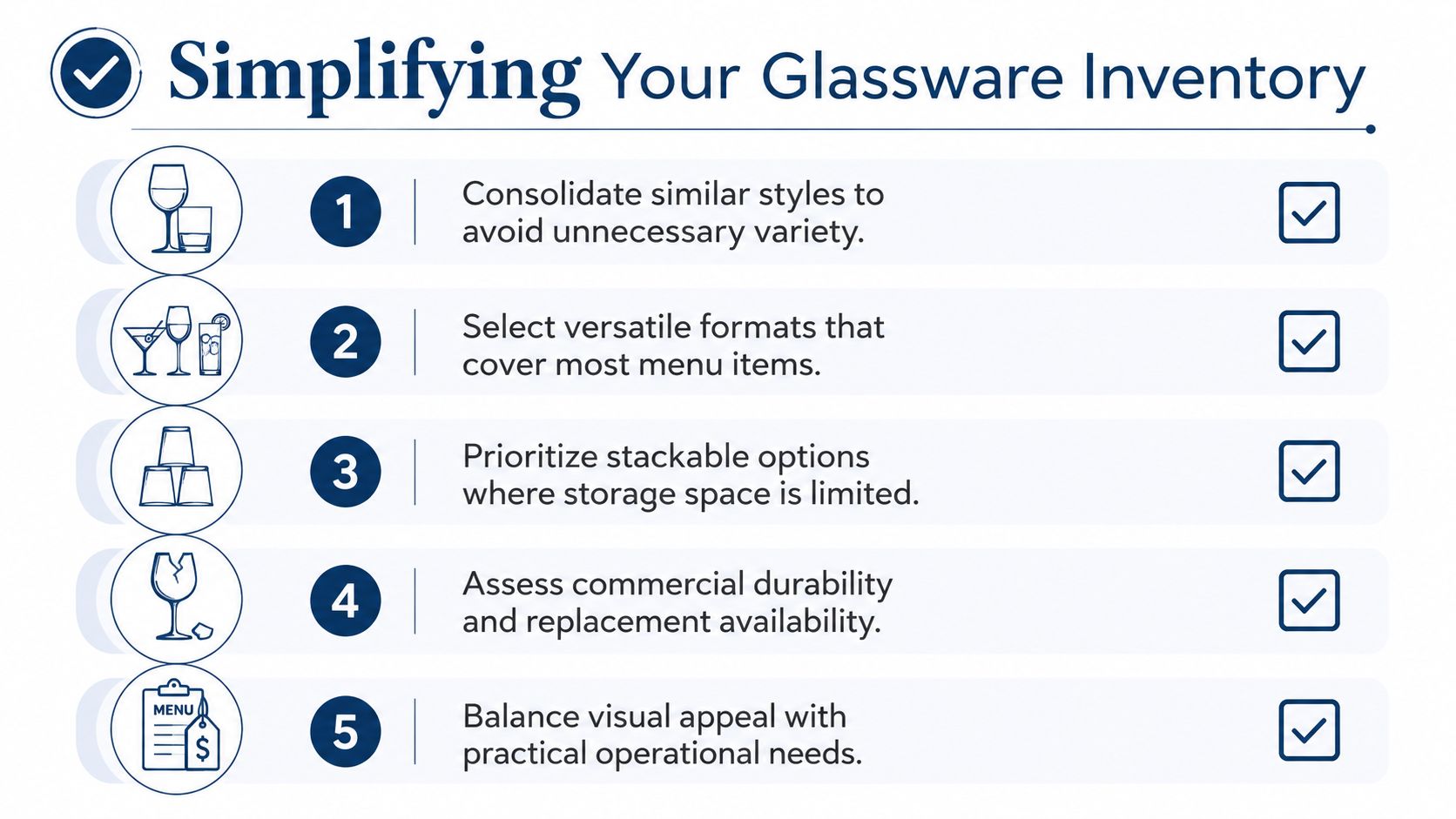
Many venues end up with too many tumblers because replacement orders happen in pieces. A broken glass gets replaced with something similar, then a new style is added for a function, and before long the cupboard holds a dozen glasses that all do nearly the same job. That creates friction at service speed, especially for new staff trying to find the right glass quickly.
A smaller set usually works better
The cleanest approach is to define a core group of tumblers and let them cover most of the menu. A short tumbler can handle spirits, water, and some short pours. A highball can take care of long mixed drinks and soft drinks. A larger beverage tumbler can cover iced coffees, sparkling water, and longer casual serves. That gives the bar team fewer decisions to make and makes reordering much simpler.
What to cut first
The easiest glassware to remove is the style that only serves one narrow function and rarely leaves the shelf. Decorative shapes are often the first to go. They look different, but they do not improve workflow, and they can complicate stacking and replacement matching.
A practical way to audit the cupboard is to ask which glasses are being reached for every day. If two tumblers overlap heavily in capacity and shape, one of them is probably carrying unnecessary stock. That matters in cafés, hotel bars, events, and catering where storage space is tight and service speed matters more than variety.
A venue does not need twelve tumbler styles for a ten-item drinks list. It needs a small, reliable set that serves the list cleanly.
Replacement availability also belongs in the decision. If a shape is hard to reorder, it becomes a risk every time one gets chipped. That is the practical filter used in commercial glassware NZ buying decisions, where the question is not just what looks right, but what can be kept in service without constant exception handling.
Glasswasher Compatibility, Stacking and Storage
A beautiful tumbler that misses the glasswasher rack becomes a daily problem. The service team notices it first, usually when glasses need hand sorting or when the wrong size rack slows turnaround. Rack height, compartment width, and how the glass sits in the rack all affect throughput, which is why hospitality buyers should check those details before they commit.
A service scenario worth testing
A breakfast hotel team might run one tumbler in the restaurant, another in the bar, and a third in conference service. If those glasses don't share compatible rack dimensions, staff spend more time sorting, loading, and re-stacking than serving. The same issue shows up in events, where glassware cycles through the washer repeatedly and quickly.
The practical rack detail matters. A 25-compartment glass rack sized at 500 mm square is designed to keep glasses secure during washing, with a maximum glass height of 80 mm and support for glasses up to 93 mm wide. That sort of sizing should be checked against the tumbler before an order goes in, not after delivery. A rack like that can be a helpful match for cocktail glasses and shorter tumblers, but taller styles may need an extender or a different handling plan.
Stackability also changes storage efficiency. Tempered tumblers are often easier to work with where stacking is part of the storage plan, but the shape still needs to support it. Glasses that nest badly create chip risk, especially around the rim.
Store tumblers so the rims aren't grinding against each other. Most of the avoidable damage happens in storage, not on the table.
For washing and spotting issues, the practical signs are worth reading early. NZ operators looking at recurring marks, residue, or rinse problems should review the causes of spotty glassware and the dishwasher process rather than blaming the glass itself: what causes spotty glassware.
In high-wash environments, durable branded options matter. Stölzle lead-free crystal tumblers such as the Experience DOF and New York Bar Water are dishwasher safe and certified to retain quality through at least 1,000 wash cycles, which makes them realistic for venues that wash glassware many times a day. That doesn't make them the answer for every venue, but it does make them worth considering where repeat washing is part of the operating rhythm. Stölzle Kyoto Whiskey 316 mL set Cleaning, Care and Long-Term Ownership
Commercial tumbler ownership starts after the purchase order is signed. A glass that's dishwasher safe in a home kitchen isn't automatically suited to a hospitality dishwasher, high-temperature cycles, or harsh chemical use. Decorative or hand-wash-only tumblers can work in special service areas, but they slow throughput and raise labour demand in busy venues.
Treat chips and cracks as a service issue
Chipped rims and hairline cracks are more than an appearance problem. They become a safety risk for staff and guests, and they often spread once a glass is put back into circulation. The quickest fix is to remove damaged stock from service immediately and sort replacement before the gap starts affecting the front-of-house team.
Think in lifetime cost, not purchase price
The cheapest tumbler isn't always the cheapest to own. If a glass breaks often, doesn't fit the washer properly, or needs hand washing, it can end up costing more over time than a better-specified commercial glass. That's especially true in bars, aged care, hotels, and events, where the same glass may be handled many times a day by different staff members.
The same logic applies to replacement availability. One-off decorative glasses can be awkward to match later, while standard commercial formats are easier to reorder in the same shape and size. That reduces the chance of mixed cupboards and saves time when top-ups are needed.
The maintenance habit matters too. Regular dishwasher checks, basket inspection, and chemical dosing control all support glass life. A hospitality team that keeps those basics tight will usually get more consistent results than a team that treats glassware as a low-value consumable.
For operators who want a broader maintenance lens, the practical approach to dishwashers is covered in commercial dishwasher maintenance. If a venue also uses reusable presentation pieces, the same ownership mindset is visible in products such as The Candledust reusable jars, where durability and repeat use matter more than a one-time purchase decision.
A Practical Decision Checklist for NZ Venues
The quickest way to choose the right tumbler is to work back from service, not the catalogue. Start with the drinks list, then check how much ice needs to fit, how the glass will sit in the hand, and how often it will go through a washer. Those practical checks remove a lot of options straight away, because a tumbler that suits a whisky neat serve may be a poor fit for a long soft drink or iced coffee.
Use the menu, not the catalogue, as the starting point
A premium cocktail bar usually pays close attention to rim quality, clarity, and the feel of the glass in the hand. A casual venue often cares more about stackability, durability, and easy replacement. Hotels and accommodation usually need a middle ground, especially where the same glass might appear in the restaurant, minibar, and function spaces.
Events and catering call for another layer of judgement. Glasses are cleared quickly, loaded repeatedly into washers, moved in racks, and handled by multiple staff. In that setting, a plainer tumbler that copes with repeated commercial handling can make more sense than a finely detailed glass that needs extra care.
Positioning still to be a consideration, but it must be balanced with service demands. A tumbler should complement a venue's aesthetic, yet it also needs to withstand the fast-paced environment. A high-end bar might accommodate more delicate glassware, while a high-volume café or banquet operation often cannot.
For operators focused on premium spirits service, the shape choice matters as well. A tumbler's wide mouth is not ideal for nosing subtle aromas, which is why specialist glasses remain the better fit for that style of serve even where tumblers are the everyday default.
A useful reminder from the café side is that glass selection sits alongside the rest of the front-of-house kit, not apart from it. Operators reviewing cafe supplies often make the same call, choose tools that suit the pace of service and the menu, not just the look of the shelf.
Getting the Right Quote for Your Venue
Once the tumbler list is narrowed down, the next step is to price the right mix, not a generic box of glasses. That's where a trade quote helps, because the order can be set around the venue's actual drink formats, storage space, and replacement needs. For larger fit-outs, flexible finance through SilverChef may also be worth considering where it helps spread the initial cost.
Hospitality can support that process with product selection across tumbler ranges, barware, and related front-of-house lines, including options that suit different service levels rather than forcing one glass across every setting. A trade account also makes ongoing replenishment easier once the right format has been locked in.
A sensible quote request should include the drinks being served, the capacity range needed, washer and storage constraints, and whether the venue wants one standard tumbler or a small family of matched formats. If the team is still weighing premium presentation against hard-wearing service, that's the right time to ask for advice rather than guessing.
If the next glassware order needs to work in service, not just on paper, Hospitality can help narrow the options to the formats that suit the drinks list, the washer, and the pace of the venue. Visit Simply Hospitality to compare tumbler options, ask for a quote, or get practical advice on choosing glassware that fits the way the business runs.