


Is Commercial Equipment Worth It for Churches and Community Halls?
Commercial equipment is justified when a hall is used often enough, or works hard enough during events, to make reliability and throughput valuable. A kitchen doesn't need daily use to benefit from commercial capability, but it also doesn't automatically need a restaurant-level specification.
The popular advice is usually too blunt. One camp says community venues should buy domestic appliances to protect a tight budget. The other treats commercial equipment as an investment that will somehow pay for itself. Neither position is useful without looking at how the kitchen operates.
A church or hall should assess frequency of use multiplied by peak demand. A venue hosting occasional shared meals may need only targeted upgrades. A facility serving large gatherings, external hire groups, fundraisers, funerals, youth programmes and community dinners may need commercial refrigeration, warewashing or cooking equipment even when the kitchen sits idle between events.
A 2024 Otago district feasibility study describes St David's Church as having a hall that seats 90 people at tables and includes a commercial-style kitchen available for community booking and use. That example shows why the question involves more than convenience. A kitchen can determine whether a venue supports larger groups, safe bulk food preparation and hire activity. The feasibility study for the multi-purpose community hub provides useful context for the scale that shared community facilities may need to support.
When Commercial Equipment Makes Sense
Commercial equipment isn't automatically excessive for a community venue, and it isn't automatically a sound investment either. The correct question is whether the equipment protects an activity the organisation already undertakes, or enables a realistic use that the facility is actively planning to support.
Domestic appliances can appear cheaper, but they may become a liability during batch cooking, prolonged holding, heavy refrigeration use or concentrated washing after a large function. Volunteers then spend more time working around slow equipment, food safety controls become harder to manage, and the venue risks avoidable failure at the point of highest demand.
The opposite mistake is just as common. A hall that hosts a few shared suppers each year probably doesn't need a complete restaurant kitchen, a high-output cooking line or equipment chosen for continuous daily service. Extra capacity can occupy valuable space, increase installation complexity and leave the committee paying for capability that rarely gets used.
Practical rule: Buy commercial where failure, hygiene or throughput would disrupt an important event. Choose simpler equipment where the consequence of slower output is manageable.
The decision should be made category by category:
- Refrigeration deserves attention where perishable food is stored in bulk or caterers need dependable cold holding.
- Warewashing becomes important when volunteers face a concentrated pile of crockery, cups and utensils after service.
- Cooking equipment should match the number of meals produced and the way food is prepared.
- Stainless benches and sinks can improve clean separation between preparation, washing and storage.
- Storage and holding matter where food is prepared in stages rather than served immediately.
Committees considering a broader community-use plan can also review appliance considerations for sports clubs and community organisations alongside see ABC Hire's catering guide for a practical view of what event kitchens may require.
Commercial equipment is a tool, not a status symbol. The right purchase removes a real bottleneck without turning an occasional-use kitchen into an unnecessarily expensive fit-out.
Using Frequency and Peak Demand to Decide
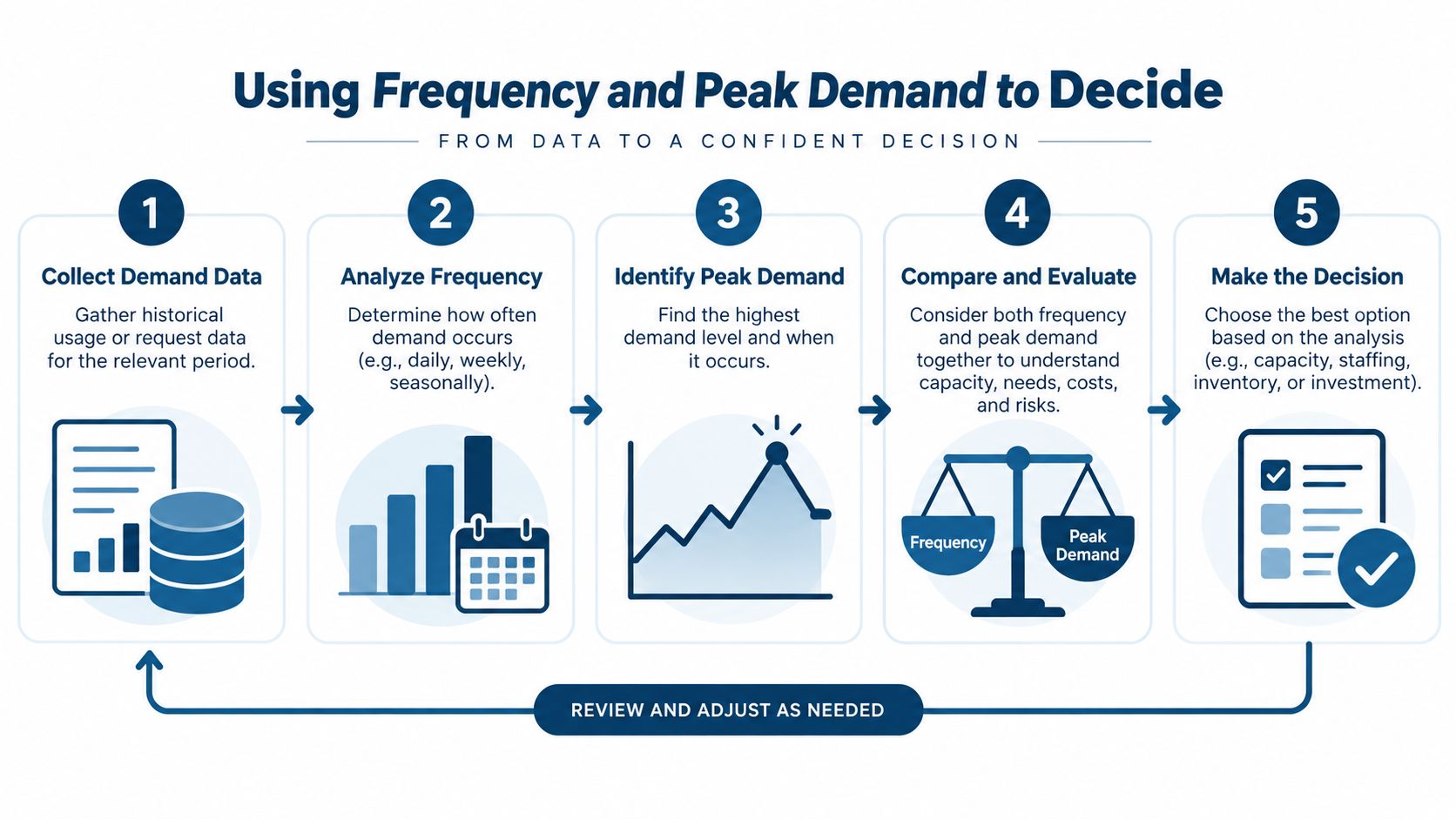
The committee's first job is to record actual use rather than describe the venue as “busy” or “occasional”. Those labels mean different things to different people. A hall may be quiet for most of the year but face demanding service conditions during its largest gatherings.
Start with the event calendar
Useful measures include:
- Events per year: Separate regular programmes from occasional functions.
- Typical attendees: Record the normal group size, not just the room's maximum.
- Maximum attendees: Identify the largest gathering the kitchen must support.
- Meals produced: Count plated meals, buffet portions, baking output or beverage service.
- Dish volumes: Estimate plates, bowls, cups, cutlery, cookware and serving pieces returning for washing.
- Operating hours: Record how long refrigeration, ovens, hot holding and dishwashers run during an event.
A hall used for six large sit-down dinners each year faces a different problem from a facility hosting weekly coffee groups and monthly community meals. The first may need equipment that handles a sharp production peak. The second may gain more from dependable refrigeration, organised storage and a wash-up setup that supports repeated smaller sessions.
Peak demand changes the answer
Frequency alone can mislead. A kitchen doesn't need to run every day for domestic equipment to become unsuitable. If a single event creates heavy cooking, holding and cleaning demands within a short window, the equipment must cope with that concentrated workload.
A busy Sunday morning may justify commercial warewashing even when weekday use is minimal. If the kitchen must clear a large volume of cups and plates before another activity begins, the limiting factor is not annual use. It's the short turnaround period and the number of people relying on volunteers to complete it.
The same logic applies to cold storage. A venue may not need a large refrigeration system for every booking, but it may need reliable capacity when external caterers, funeral functions or community dinners bring in bulk ingredients and prepared food.
Log before spending
A simple event log should be kept before a major purchase. It should record what delayed service, what failed, which appliances were hired, how many volunteers were required and whether food had to be prepared off-site.
That evidence is more useful than a generic payback promise. Guidance on assessing whether equipment earns its keep can be found in how many ice creams a soft serve machine needs to sell to pay for itself, but committees should apply the same discipline to their own event records.
The unrelated Soehnle Bathroom Scales Style Sense Compact 300 Slate illustrates why specifications need to be matched to the task. Its stated function is everyday weighing, with a 180 kg maximum capacity, 100 g increments and a safety-glass platform. That kind of clear specification is useful as a purchasing habit, even though a bathroom scale has no place in a commercial kitchen equipment decision.
Matching Equipment to Operational Bottlenecks
A committee shouldn't begin with a brand list or a catalogue category. It should begin with the point where the event slows down.
If food arrives warm because there isn't dependable cold storage, refrigeration comes first. If volunteers spend the entire post-event period washing by hand, warewashing deserves priority. If meals leave the kitchen late because an oven loses consistency under a full load, cooking reliability matters more than adding another preparation bench.
| Equipment Category | Operational Bottleneck Solved | Typical Trigger |
|---|---|---|
| Commercial refrigeration | Unreliable cold holding, limited bulk storage or difficult food separation | Catered events require more chilled storage than domestic equipment can manage |
| Dishwashers and warewashing systems | Slow cleaning, volunteer fatigue and delayed room turnaround | Large volumes of plates, cups, utensils and cookware return together |
| Cooking equipment | Insufficient batch capacity or inconsistent cooking | Trays, pots or menu items must be produced in parallel |
| Ovens | Uneven output or loss of temperature under load | A domestic oven struggles with repeated batches or full trays |
| Stainless benches | Poor preparation flow and hard-to-clean work surfaces | Food preparation, plating and washing overlap in one cramped area |
| Sinks | Inadequate separation of handwashing, food preparation and utensil cleaning | The existing sink layout creates hygiene or workflow conflicts |
| Hot holding | Food cools while service is staged or delayed | Meals are cooked in advance for buffet or staggered service |
| Serving counters and displays | Queues, poor replenishment flow or unclear customer movement | Self-service or buffet service creates congestion |
| Storage and shelving | Ingredients and equipment are left on floors or mixed together | Multiple groups share the kitchen and need organised access |
Refrigeration and food safety
Refrigeration is often the first place where a domestic solution shows its limits. Commercial fridges and freezers are designed around frequent access, organised shelving and the practical demands of food service. The exact specification still needs to reflect the menu, available space and expected loading.
New Zealand food and beverage guidance recommends monthly monitoring of electricity, gas and water, along with an asset register recording make, model, installation year, power rating and efficiency. It also recommends keeping fridge and freezer doors shut, replacing door seals and tuning refrigeration annually. Those practices matter even more in low-utilisation venues, where equipment may lose efficiency through poor sealing, standby operation or limited maintenance. EECA's food and beverage service sector pathway sets out that operational approach.
Cooking, preparation and holding
A domestic oven that cannot maintain 220°C under continuous load is not automatically defective. It may be the wrong tool for a service requiring repeated full trays. A hall producing occasional baking may accept slower batches, while a venue catering a large funeral or community dinner may need more dependable recovery and holding.
Preparation benches and sinks have a quieter but important role. Stainless surfaces are easier to clean and can create a clearer division between raw preparation, plating and wash-up. The layout still has to work for the people using it, not just satisfy a specification sheet.
A display such as the Festive Baker Ambient Floor Standing Cabinet is designed for self-service presentation of products that don't require temperature control. Its tray race, bag and tong holders, sliding doors and adjustable shelving address customer movement and replenishment. That may suit a café-style community programme, but it would be unnecessary for a hall that only serves plated meals.
Warewashing deserves special attention
Warewashing often delivers the clearest operational benefit because the bottleneck appears after the food has already been served. A commercial dishwasher can help a venue process concentrated returns without relying on a long volunteer hand-washing chain, but the machine must be paired with correct racks, pre-rinse practice, drainage, chemical dosing and landing space.
A hall doesn't necessarily need a pass-through machine. It may need a practical underbench system, an organised wash-up bench or a dedicated basket arrangement. The right choice depends on the volume, available utilities and required turnaround. A commercial dishwasher that is poorly installed or badly loaded won't solve the underlying problem.
Comparing Occasional and Busy Hall Scenarios
Consider a rural hall that hosts a community dinner about once a month. The event serves around 80 covers, and the volunteers prepare several tray-based dishes. One domestic oven struggles when three tray roasts need to cook at the same time, then the same volunteers hand-wash crockery in shifts after service.
That hall may justify a targeted commercial purchase, but not necessarily a full restaurant kitchen. A reliable oven or practical commercial dishwasher could remove the most disruptive bottleneck. Large-scale refrigeration, specialist cooking equipment and high-capacity holding may still be unnecessary if the menu remains straightforward and outside catering isn't part of the plan.
A multi-purpose venue faces a different pattern. Over one weekend, it may support a funeral, a wedding reception and a food-bank collection. The issue isn't only how many bookings occur. Refrigeration has to hold food safely, cooked items may need staged service, serving areas must keep people moving and the wash-up area may have to recover quickly between activities.
| Factor | Occasional-Use Hall | Busy Multi-Purpose Hall |
|---|---|---|
| Event pattern | Infrequent shared meals or fundraisers | Regular programmes, external hire and several event types |
| Peak pressure | Concentrated on a limited number of meal occasions | Repeated peaks across cooking, holding, storage and cleaning |
| Priority purchase | One or two proven bottleneck solutions | Coordinated refrigeration, cooking, holding and warewashing |
| Volunteer impact | Slower work may be acceptable for occasional events | Delays can affect several groups and create rapid fatigue |
| Specification risk | Overspending on unused capacity | Underspecifying equipment that must support varied functions |
| Hire appeal | Basic kitchen access may be sufficient | Dependable capability can make the venue more useful to external groups |
A commercial kitchen can make a community hall more attractive to caterers, wedding groups or community organisations, but equipment doesn't automatically create bookings. The venue still needs suitable access, clear hire conditions, reliable utilities and a kitchen policy that external users can understand.
Assessing Whole-of-Life Value
Purchase price is only the first line in the decision. New Zealand public-sector procurement guidance defines total cost of ownership as purchase price plus installation, operating, maintenance and end-of-life disposal costs. It also recommends asking suppliers to present TCO in proposals, which is a sensible discipline for committees comparing equipment on limited funds. New Zealand procurement guidance on total cost of ownership explains why the initial invoice can understate the commitment.
A useful committee worksheet should separate known figures from assumptions:
- Purchase and installation: Record the equipment price, delivery, plumbing, electrical work, extraction and commissioning.
- Utilisation: Use the venue's event log rather than an optimistic booking forecast.
- Labour saved: Estimate volunteer or staff time released by faster washing, cooking or preparation. Treat this as an operational value, not guaranteed cash savings.
- Avoided hire: Record equipment hired for previous events and identify whether the purchase would replace that hire.
- Capability: Note whether the equipment supports larger groups, new menus, external caterers or more reliable room turnaround.
- Service life: Consider expected working life, parts support and whether the equipment will remain suitable as the venue changes.
- Maintenance reserve: Allow for cleaning, servicing, consumables and eventual replacement.
Use the right definition of useful life
Treasury's whole-of-life framework treats useful life as the shorter of operational, supportable or physical life. A machine may still power on but no longer have dependable parts support, suitable controls or adequate capacity for the events the venue now hosts.
Inland Revenue's depreciation schedule lists many kitchen appliances with write-down periods ranging from 6.66 to 12.5 years. That provides a practical planning reference, not a promise that every appliance will last for the same period. Committees should compare the schedule with supplier support, maintenance requirements and actual operating conditions. The discussion of ageing equipment and ownership costs can help frame that review.
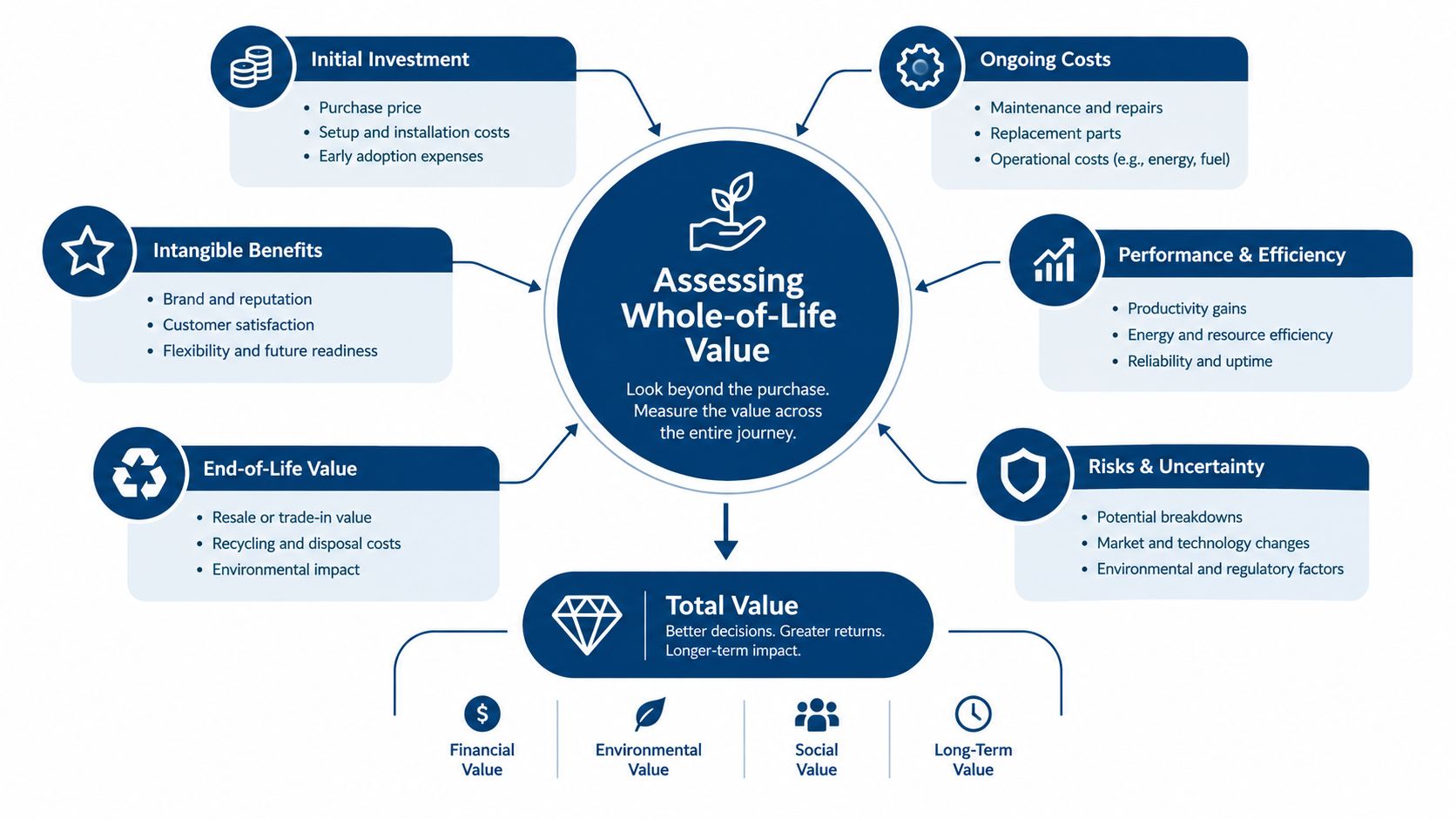
A lightly used appliance can remain physically serviceable while failing to justify the space, utilities and committee attention it consumes. Conversely, a modestly used dishwasher may be valuable if it removes the same post-event bottleneck every time the venue hosts a large gathering.
The calculation should stay local. A hall with limited events needs conservative assumptions. A busy facility can reasonably place more weight on reliability, throughput and reduced dependence on hired equipment, provided those benefits are recorded rather than assumed.
Choosing Between Purchase Finance Hire and Used Equipment
There are four practical procurement paths, and each shifts risk in a different direction.
| Pathway | Cash Flow Impact | Reliability & Suitability | Key Checks |
|---|---|---|---|
| Outright purchase | Highest immediate commitment | Straightforward ownership and full control | Installation, warranty, service support and utility compatibility |
| Finance or lease | Spreads payments over time | Can preserve cash for priority equipment | Total repayment cost, contract terms and end-of-term obligations |
| Short-term hire | Cost follows the specific event | Useful for rare peaks or one-off functions | Delivery, setup, operator responsibility and availability |
| Certified used or ex-hire | Lower entry cost may be possible | Suitable where condition and support are verified | Service history, certification, warranty, parts and machine age |
Outright purchase makes sense where the equipment solves a recurring problem and the organisation can fund ownership responsibly. Finance or leasing can protect cash flow, but the committee should compare total obligations rather than focusing only on the periodic payment. Lease versus buy considerations for commercial kitchen equipment in New Zealand provides a useful framework for that discussion.
Hire suits a hall that needs temporary capacity for an unusual event. It avoids storing specialist equipment that may sit idle, but the organisation must account for delivery access, setup time, cleaning and operator capability.
Used or ex-hire equipment can be sensible when a reputable dealer verifies its condition. The committee should request records, confirm that the machine matches the site's power, gas, water and drainage arrangements, and establish what support remains.
For church and community committees reviewing borrowing capacity, a borrowing budget tool for CEFs can support an internal affordability discussion. It shouldn't replace supplier quotations, governance approval or a whole-of-life comparison.
Budget constraints don't require every category to be cheap. Spend where failure would damage service, food safety or event continuity, then choose simpler solutions for low-consequence tasks.
Planning Installation Maintenance and Compliance
A good machine can perform badly if the site isn't ready. Before ordering, the committee should confirm electrical capacity, gas supply, water pressure, drainage, ventilation clearances, floor loading, access routes and bench space. Older halls often hide the actual project cost in extraction, plumbing or electrical upgrades rather than in the equipment itself.
Commercial refrigeration and combi ovens may need dedicated circuits or ventilation changes. Dishwashers require suitable water, drainage, chemical storage and landing space. Accessible kitchens and laundries should provide a clear floor area of 1500 mm by 1500 mm under NZS 4121:2001, which can affect equipment placement and movement through the room. The NZS 4121 accessibility document gives the relevant layout requirement.
| Equipment Category | Typical Utility Needs | Routine Maintenance | Compliance/Inspection |
|---|---|---|---|
| Refrigeration | Electrical supply, ventilation clearance and level floor | Clean condenser areas, inspect door seals and keep temperature records | Food safety procedures and electrical checks |
| Dishwasher | Water supply, drainage, power and chemical dosing | Clean filters, check spray arms, descale and verify dosing | Installation, chemical handling and electrical safety |
| Cooking equipment | Gas or electrical supply, ventilation and heat clearance | Clean burners, filters, seals and cooking chambers | Gas certification where applicable and electrical inspection |
| Hot holding | Electrical supply and suitable placement | Clean surfaces, inspect controls and confirm holding performance | Food safety controls and electrical safety |
| Sinks and benches | Water, drainage and hygienic layout | Clean, inspect joins and maintain seals | Layout, handwashing and food-preparation requirements |
| Portable appliances | Suitable sockets and safe storage | Inspect leads, plugs and general condition | Test-and-tag requirements in the operating environment |
Food Act obligations depend on the activity rather than the room. A church or hall is generally exempt when volunteers prepare and sell food for fundraising, charity or a cultural or community event up to 20 times in a calendar year, or at a single one-off event held once a year. The exemption applies to the activity and the people, not the room. A paid caterer or regular food business operating from the kitchen must register under the Food Act. This explanation of the church and community hall kitchen exemption should be checked alongside local council advice.
WorkSafe New Zealand lists household-type portable electrical cooking or warming appliances as high-risk products. Portable equipment in commercial kitchens is commonly tested at six- to twelve-month intervals, depending on the environment. WorkSafe's high and medium-risk product list and practical test-and-tag guidance help committees identify responsibilities.
Operators can handle routine filter cleaning, gasket checks, descaling and surface care. Technicians should manage specialist servicing, refrigerant work, gas systems and electrical faults. A simple service log should record faults, dates, parts, cleaning and warranty contacts. Facilities teams can also use Docs for Facilities Manager as a prompt for organising site information. For broader fit-out planning, commercial kitchen installation guidance is a useful reference.
Applying the Buy-or-Wait Checklist
A committee can reach a defensible decision by answering these questions in one meeting:
- What is the actual event frequency? Record the recent calendar and the largest genuine peak.
- What bottleneck must the purchase remove? Name the delay, failure or hygiene problem.
- What capacity is required? Use attendees, meals, dish volumes and operating hours.
- Can the site support it? Confirm power, gas, water, drainage, ventilation and access.
- Who will clean and maintain it? Assign responsibility before approval.
- Does the purchase trigger compliance work? Check Food Act, electrical, gas and accessibility implications.
- Would hire or certified used equipment solve the rare peak? Compare that option directly.
- What happens if the purchase waits? Record the operational consequence, not just the budget preference.
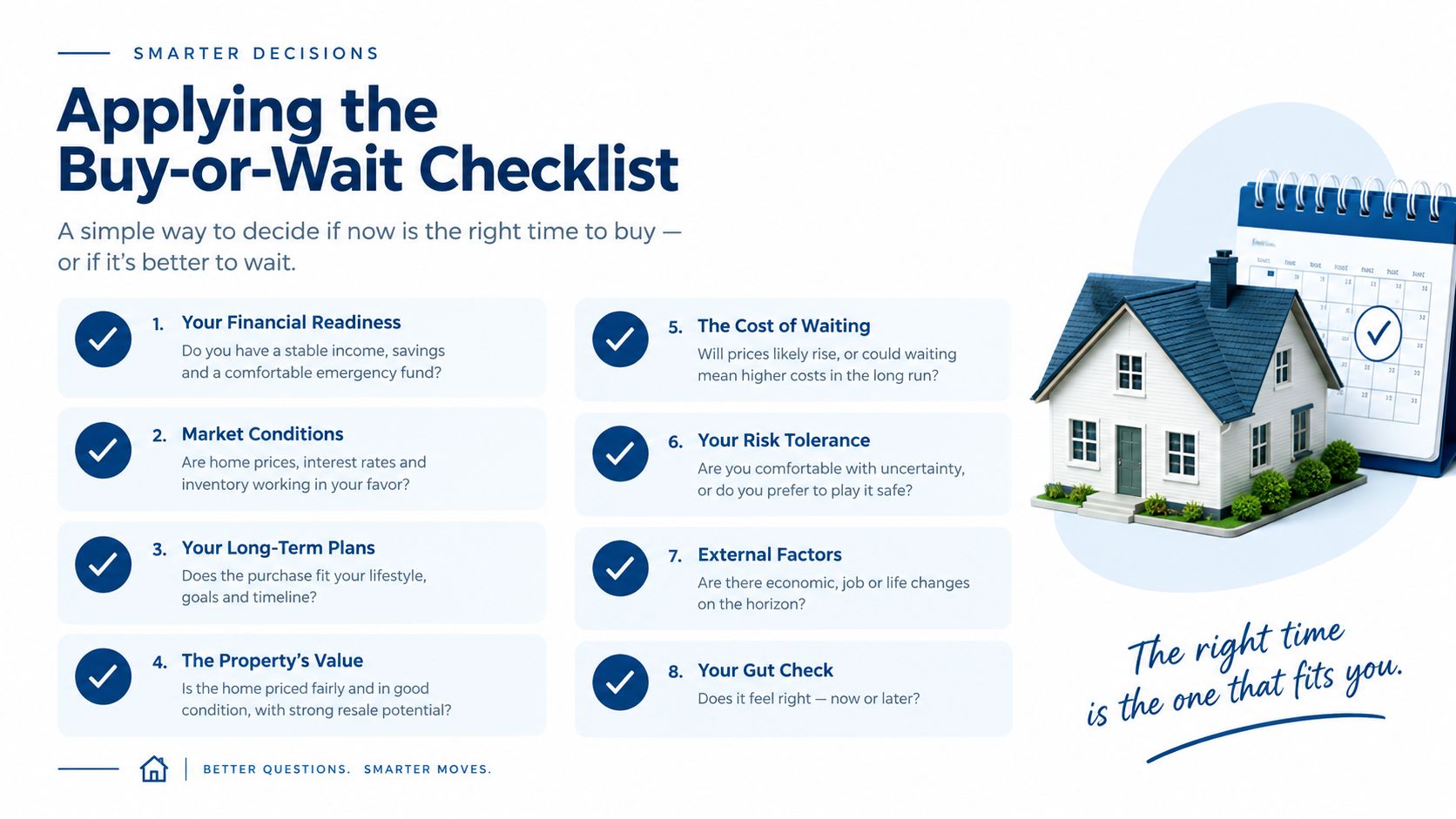
A “yes” should lead to a specific action, quotation or site check. A “no” should be documented so future committees understand why the purchase was deferred. Revisit the checklist annually and whenever the venue adds a major programme, hire arrangement or event type.
Hospitality supplies commercial refrigeration, cooking, warewashing, stainless fabrication, storage and hospitality essentials for New Zealand venues. Visit Simply Hospitality to discuss the bottleneck, site requirements and purchase, hire or used-equipment options before the committee commits its budget.