

Melamine Plates NZ: Essential Guide for Hospitality Venues
Saturday lunch is running hot, the dishwash area is backing up, and another ceramic side plate has gone to the bin with a fresh chip on the rim. That's usually the point where operators stop asking whether tableware looks elegant and start asking what survives service, stacking, transport, and clearing without creating more work for staff. For melamine plates NZ buyers, that's the decision, not whether melamine can replace ceramic everywhere, but where melamine earns its place because durability matters more than weight and feel.
New Zealand operators are also buying into a category that isn't going away. The local plastic tableware and kitchenware market reached a record-high value in 2013 before settling into a lower consumption pattern from 2014 to 2024, and production peaked in 2016 before losing momentum through 2024. That broader trade pattern shows why melamine sits inside a long-running utility category, not a fad, and why supply, replacement, and compliance all matter for hospitality purchasing. The practical question is simple, where does melamine solve a problem, and where does ceramic still do a better job?
Where Melamine Plates Fit in a Busy Venue
A busy café doesn't need a tableware philosophy, it needs plates that keep moving without creating breakage noise in the dish pit. The same is true in restaurants, hotels, buffets, schools, aged care, and event venues, where plates are constantly carried, stacked, cleared, and restacked. In those settings, melamine earns its place because it lowers handling stress and reduces the awkward pause that comes with broken ceramic.
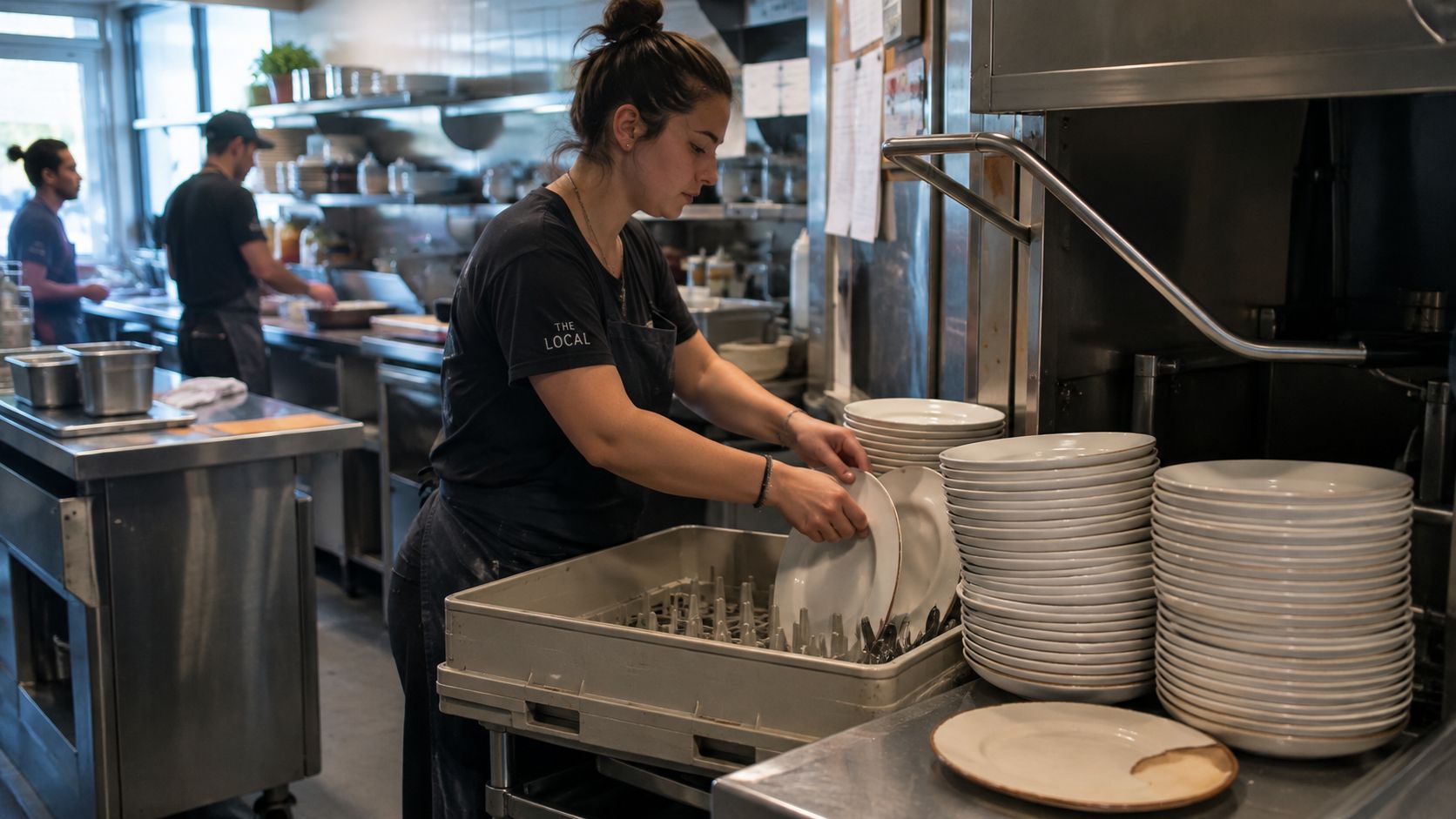
The best way to think about melamine is as a targeted operational tool. It suits outdoor dining, buffet lines, poolside service, catering runs, school canteens, and food courts because those environments punish fragile tableware. A ceramic plate might look right at the pass, but if the same plate is repeatedly stacked, transported, and dropped, the back-of-house cost becomes obvious very quickly. That cost isn't only replacement, it's staff time spent cleaning up, sorting, and reshuffling stock.
Practical rule: choose melamine where the plate spends more time in staff hands than in the customer's hands.
That's why a mixed tableware strategy often works better than an all-or-nothing swap. Premium ceramic still belongs in formal dining and tasting-led venues, but melamine makes more sense where speed, safety, and repeat handling dominate. If kitchen flow is already tight, this Simply Hospitality article on improving kitchen efficiency during peak service is worth reading alongside your tableware plan.
What Commercial Melamine Actually Is
Commercial melamine is a resin-based material moulded into rigid tableware, built for repeated hospitality use. The useful distinction for buyers is direct, good commercial melamine feels dense, balanced, and purpose-made, while cheaper domestic product tends to feel lighter, thinner, and less convincing under daily service pressure. The difference shows up in handling, edge finish, and how well a piece withstands repeated dishwashing.
How to recognise a serious commercial piece
A quality melamine plate usually has a controlled weight in the hand, clean finishing around the rim, and a shape that stacks properly without wobble. That matters in service because a plate that nests badly slows down clearing and storage. It also matters in dishwashing, where repeated loading and unloading exposes weak edges and poor moulding fast.
Commercial buyers in NZ also need to separate reusable melamine tableware from banned single-use plastic items. New Zealand banned the manufacture, sale, and distribution of single-use plastic plates, bowls, and cutlery from 1 July 2023 under the Waste Minimisation regulations, while reusable melamine remains a different product category altogether. The buying rule is straightforward. Choose an item that is clearly reusable and fit for hospitality use, not a plastic-lined disposable dressed up as durable tableware.
The material choice also shows up in the rest of the table setting. A matching cutlery piece, such as the Wiltshire Baguette Dinner Knife 4 Piece Stainless Steel, is the kind of everyday coordinated item that keeps service looking consistent without forcing a full replacement of the place setting. That same logic applies to melamine ranges, consistency matters more than chasing one-off mismatched pieces, and operators who are still weighing tableware options should also review this guide to crockery in NZ before deciding where melamine fits.
Buy for the hand, not just the catalogue photo. If the plate feels awkward when stacked, carried, or cleared, it will be awkward in service too.

Why Hospitality Operators Choose Melamine
A busy venue does not buy melamine plates to make a design statement. It buys them because ceramic keeps breaking in the places where staff are moving fast, clearing hard, and carrying too much at once. Melamine earns its place as a practical service material in the zones where replacement costs, handling, and cleaning pressure matter more than the feel of a heavy plate.
The operational wins that actually matter
- Less breakage during movement: This matters in outdoor dining, catering, aged care, schools, and food courts, where plates are handled constantly and dropped surfaces are part of the job.
- Lighter lifting for staff: Repeated carrying adds up over a shift. Lighter tableware is easier on staff who are already moving trays, clearing tables, and loading racks.
- Better stacking and storage: Melamine generally stacks neatly, which helps when storage is tight and the dishwash area is already crowded.
- Strong presentation options: Modern ranges come in many shapes, colours, and finishes, so venues can still look polished without leaning entirely on ceramic.
- Good fit for high-volume service: Buffet lines, casual dining, and institutional kitchens need tableware that keeps pace with turnover, not tableware that needs constant babying.
The commercial reality is simple. Broken ceramic is never just a plate expense. It turns into repeat purchasing, staff time spent clearing breakages, and the operational drag that comes when service stops for a mess on the floor or in the wash-up area. That is why many venues put melamine in the high-risk parts of service and keep ceramic where the table setting has to carry the look of the room. This trade-off between upfront cost and long-term value is a common theme in hospitality purchasing, as explored in our guide on buying cheap vs. buying once.
Supplier range matters too. The global melamine tableware market has stayed broad, with analysts at Persistence Market Research projecting continued growth in the category. For operators, that does not mean every venue should switch wholesale. It means there is enough choice in shapes, finishes, and price points to match melamine to the job instead of forcing ceramic to do work it handles badly.
New Zealand's tableware market has also been shaped by long-term utility rather than short-term novelty, which suits a material chosen for service life and ease of handling. The local reality is straightforward, melamine is a sensible way to cut avoidable breakage in the parts of a venue that are hardest on crockery, while ceramic still earns its keep in the dining areas where weight, feel, and presentation matter most. IndexBox New Zealand market analysis reflects that practical, steady demand pattern.
Operational Boundaries for Melamine Use
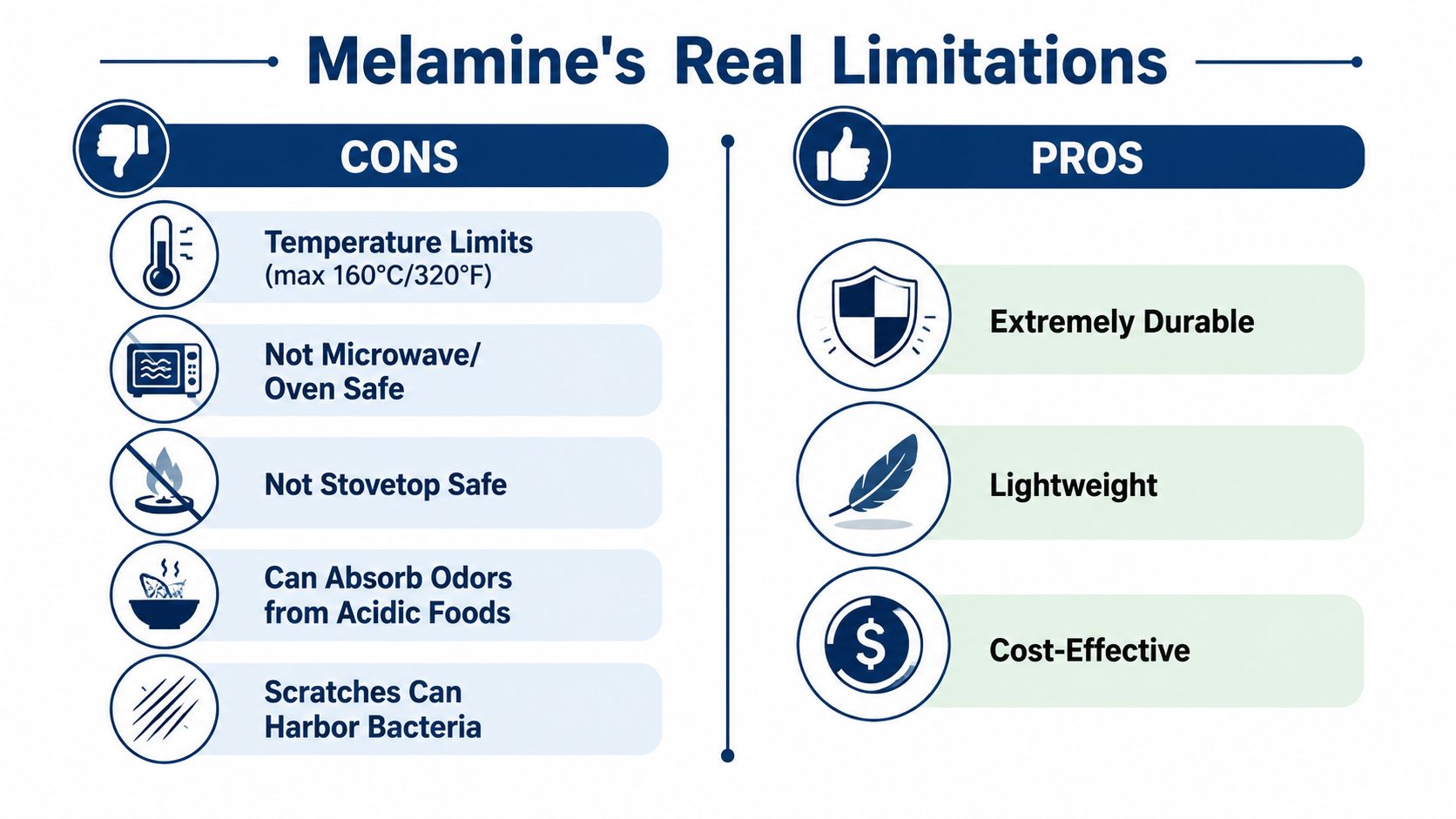
The most important rule for melamine is avoiding high heat. It is not built for microwaves, ovens, or holding extremely hot, oily food for long periods. Keep it in the serving role it was made for, and it performs well within that lane.
Melamine suits cold service, ambient service, and warm food that does not push the material into risky territory. The moment a menu leans into reheats, baked items, deep-fried food, or acidic dishes held hot for service, the plate choice needs to change. Operators in hospitals, schools, aged care kitchens, and motels should be strict here because those settings often run tomato sauces, citrus desserts, and quick reheats through the same service system.
Food Standards Australia New Zealand says melamine can migrate into food, with higher migration expected when items are used with hot foods, acidic foods, or when they are scratched, cracked, or repeatedly washed in harsh conditions. The FDA says foods and drinks should not be heated on melamine dinnerware in microwave ovens, and Hong Kong's Centre for Food Safety warns against using melamine ware for cooking or heating, hot oil, deep-fried foods, or storing highly acidic foods. That is the rule set venues should follow, not the look of the plate or the pressure to make one product do every job.
Dishwashing and wear need monitoring
Harsh dishwashing conditions can shorten the useful life of any tableware, but melamine needs closer attention once surfaces start to wear. Scratching and cracking are not just appearance issues, they are the point where the item should leave service. A sensible kitchen process checks melamine before it goes back onto the shelf, not after a front-of-house complaint.
For operators running busy wash cycles, this article on commercial dishwasher maintenance matters because tableware care and dish machine care affect each other. A cleaner wash process helps melamine stay visually consistent and makes damage easier to spot before it becomes a food-contact problem.
Melamine vs Ceramic and Where to Run Both
Ceramic and melamine solve different problems, and the best venues usually use both. Ceramic still wins on classic feel, premium weight, and the kind of presentation that suits tasting menus, formal dining, and higher-margin rooms where the guest experience is built around a more traditional table setting. Melamine wins where plates are handled hard, stacked often, and exposed to the chaos of transport or outdoor service.
A practical comparison
| Factor | Melamine | Ceramic |
|---|---|---|
| Breakage risk | Lower in handling-heavy service | Higher when dropped or knocked |
| Weight | Lighter for staff | Heavier, more substantial in hand |
| Handling speed | Easier to carry and stack | Can be slower in busy clears |
| Storage footprint | Often easier to stack neatly | Depends on range, but usually less forgiving |
| Replacement cycle | Better suited to rougher environments | More likely to need frequent topping up in high-risk areas |
| Presentation | Modern, varied, flexible | Stronger premium and traditional feel |
The trade-off is not complicated. If the venue is front-of-house focused and wants the tableware to feel like part of the dining theatre, ceramic still earns its place. If the venue is moving plates constantly, running outdoor service, or trying to reduce the cost and frustration of breakage, melamine is the better tool. That is especially true in buffets, schools, aged care, food courts, catering, and casual dining where staff movement is relentless.
Good operators don't choose sides, they choose zones. Ceramic can hold the dining room. Melamine can carry the rough parts of service.
A combination usually ends up being the most practical answer. Premium ceramic in the main room, melamine for outdoor tables, buffet drops, and any area where the risk of breakage is high. That approach protects presentation where it matters and protects workflow where the service is hardest on gear.
Choosing Plates, Bowls and Finishes for the Job
Plate selection should start with the food, then the service environment. Standard dinner-sized plates suit main meals, smaller plates handle sides and desserts, and bowls are still the smarter choice for shared dining, soups, and dishes with sauce. There's no single plate size that dominates every venue, because the right choice depends on what gets served and how often the plate gets moved.
Shape, rim, and finish all change the result
Rim style matters more than many buyers realise. Wider rims create separation between food and the edge of the plate, which helps with presentation and reduces the feeling of crowding. Coupe-style plates maximise usable plating area, which is useful when the kitchen wants clean lines and a modern look.
Finish is a presentation choice, not just a style one. Matte finishes suit colourful food and contemporary concepts because they let the ingredients stay centre stage. Gloss finishes give a more traditional, polished look and sit comfortably beside classic ceramic ranges. The plate is the frame around the food, so the finish should support the venue identity, not fight it.
Stackability and colour need to be planned together
Colour consistency helps replacements blend in over time. If a range is likely to be topped up later, a strong colour strategy keeps the table setting coherent instead of looking patched together. Stackability matters just as much in the store room, because a plate that nests properly saves time every day.
Hospitality stocks tableware across multiple categories, so the practical move is to compare melamine against the rest of the venue's crockery mix rather than buying on looks alone. A separate regional buying note on crockery selection is available in the Hospitality article on crockery in New Zealand. For venues building a set from scratch, matching the plate shape to the menu and the cleaning workflow will matter more than chasing one style across the whole house.
Cost, Ordering and Working With a Hospitality Supplier
The sticker price on a plate tells you very little on its own. The calculation includes replacement costs, the labour lost to breakage, and the disruption of running short when service is already under pressure. In a busy venue, that hidden cost is exactly why melamine keeps coming back into the conversation.
Buy in bulk if the venue needs a consistent range on hand, but do not treat volume as the only decision. A supplier that understands hospitality can match the plate style to the dining room, buffet, outdoor area, or institutional setting without pushing one material into every role. Trade supply matters here because reordering the same shape and finish later is often more important than saving a little on the first order.
A supplier with hospitality fit-out experience also looks at tableware alongside kitchen workflow and front-of-house demands. Hospitality's article on what they've learned from helping hospitality businesses choose equipment sits in that practical space. When the tableware decision matches how the venue runs, the result is cleaner, simpler, and easier to maintain.
The better buying move is to choose for the way the venue works now, while keeping replacement practical later. That usually means picking a melamine range that stacks well, keeps a consistent look, and can be reordered without forcing a full reset of the table setting.
A venue that is replacing broken ceramic should also know where melamine belongs and where it does not. Do not buy it to imitate fine dining everywhere. Use it where breakage, outdoor service, buffets, and fast turnover make ceramic a poor fit, then keep ceramic in the rooms or service styles where weight, feel, and presentation still matter more.
Deciding between melamine and ceramic comes down to the pressure points in your own operation, not a blanket rule for every plate in the building. At Simply Hospitality, we help NZ operators build practical, durable tableware collections that fit the way their venue works and protect their budget without chasing unnecessary churn. Explore our full range of commercial melamine plates online, or contact our team for a personalised quote to find the right mix for your business.