

How to Choose Non Slip Shoes for Your Hospitality Team
A busy service puts pressure on every part of a venue. Floors get wet around the dish area, oil finds its way near the fry station, drinks spill at the bar, and staff keep moving because the work doesn't stop for a mop bucket. For a new café owner, non slip shoes can look like a small uniform detail. In practice, they affect safety, comfort, fatigue, and how well a team gets through a shift.
Many operators think about footwear purely from a safety perspective. In reality, the right shoes can also reduce fatigue, improve comfort and make long shifts more manageable for kitchen staff. A common issue seen across hospitality businesses is that shoes get chosen too late, too cheaply, or with too much focus on tread alone. The better approach is to treat footwear as part of the operating system of the venue, alongside flooring, cleaning procedures, anti-slip matting, and staff awareness.
More Than Safety It's a System
During a lunch rush, nobody walks through a kitchen at a gentle pace. Chefs pivot between benches and cooklines, kitchen hands move trays through wet areas, and front-of-house staff cross thresholds carrying hot plates and glassware. Spills are normal. The question isn't whether slippery moments happen. The question is whether the venue has built enough protection around them.
That's why non slip shoes matter, but not as a standalone fix. They sit alongside sensible floor cleaning, quick spill response, suitable floor finishes, and layout decisions that reduce unnecessary crossing and congestion. Hospitality businesses often find that footwear works best when it's part of a broader safety plan, not a late add-on after an incident or complaint.
Research has shown that slip-resistant footwear reduced slip-related incidents in hospitality and healthcare settings by 37%, with a 49% reduction in falls resulting from a slip in the study reported through the National Library of Medicine article on slip-resistant footwear. That's useful evidence, but it still doesn't remove the need for good housekeeping and sensible kitchen design.
Practical rule: The safest shoe in the building won't compensate for poor floor cleaning, cluttered walkways, or a badly organised pass.
Many operators also miss the wellbeing side. Hard floors, long standing periods, heat, and fast movement all wear people down. When staff finish each shift with sore feet, tired legs, and lower back strain, standards often slip elsewhere too. People move more carefully, react more slowly, and become less willing to wear the footwear they've been issued if it feels heavy or uncomfortable.
In day-to-day hospitality, the best safety measures are usually the ones staff don't fight. Shoes that feel stable, supportive, and easy to clean are far more likely to be worn consistently. That's one reason layout and workflow planning matter as much as the shoes themselves. A venue that reduces unnecessary steps and awkward movement gives footwear a better chance to do its job. The article on kitchen design that saves time on every service is worth reading alongside any footwear decision.
Understanding Non Slip Technology for Kitchens
A shoe can look rugged and still be wrong for a commercial kitchen. Deep tread alone doesn't tell much. What matters is how the outsole material, tread pattern, and tested rating work together on wet and oily floors.
What actually creates grip
Tread design is key. Effective patterns don't just add texture. They help move water, grease, and other residue away from the contact point so the sole can keep better contact with the floor. In practical terms, operators should look for tread that remains defined, channels liquid, and doesn't become useless once a bit of food debris gets into it.
A simple visual reminder helps when comparing options:
Reading ratings without getting lost in jargon
Kitchen staff working around grease, dish areas, and wash-down zones usually need the strongest anti-slip performance available within appropriate tested footwear.
Good non slip shoes should be chosen the same way operators choose kitchen flooring. By tested suitability for the environment, not by what looks toughest on a shelf.
Many hospitality operators also benefit from treating flooring and footwear as a matched pair. Shoes help, but so do safer surfaces in fixed work zones. Where staff stand for long periods near prep benches, sinks, or dish stations, anti-slip matting for hospitality areas can support the overall system.
The visual side of a venue matters too. A polished presentation plate like the Chef Inox Utility Coney Black Plate Rim 230mm may suit a professional kitchen and upscale dining establishment, but presentation pieces sit at the end of service. Footwear supports the people doing the work all shift long.
Must Have Features for All Day Comfort and Durability
A common buying mistake is choosing the shoe with the most aggressive tread and assuming the job's done. In hospitality, that often backfires. If the shoe feels hard underfoot, runs hot, rubs at the heel, or feels clumsy during a double shift, staff won't want to wear it. Comfort isn't separate from safety. It drives whether the footwear gets used properly every day.
For many teams, the problem isn't the first hour of wear. It's hour six, hour eight, and the final close-down tasks when fatigue is already building. Footwear that supports the foot well and reduces strain over a long shift has a direct effect on morale and day-to-day consistency.
Features that matter once service gets busy
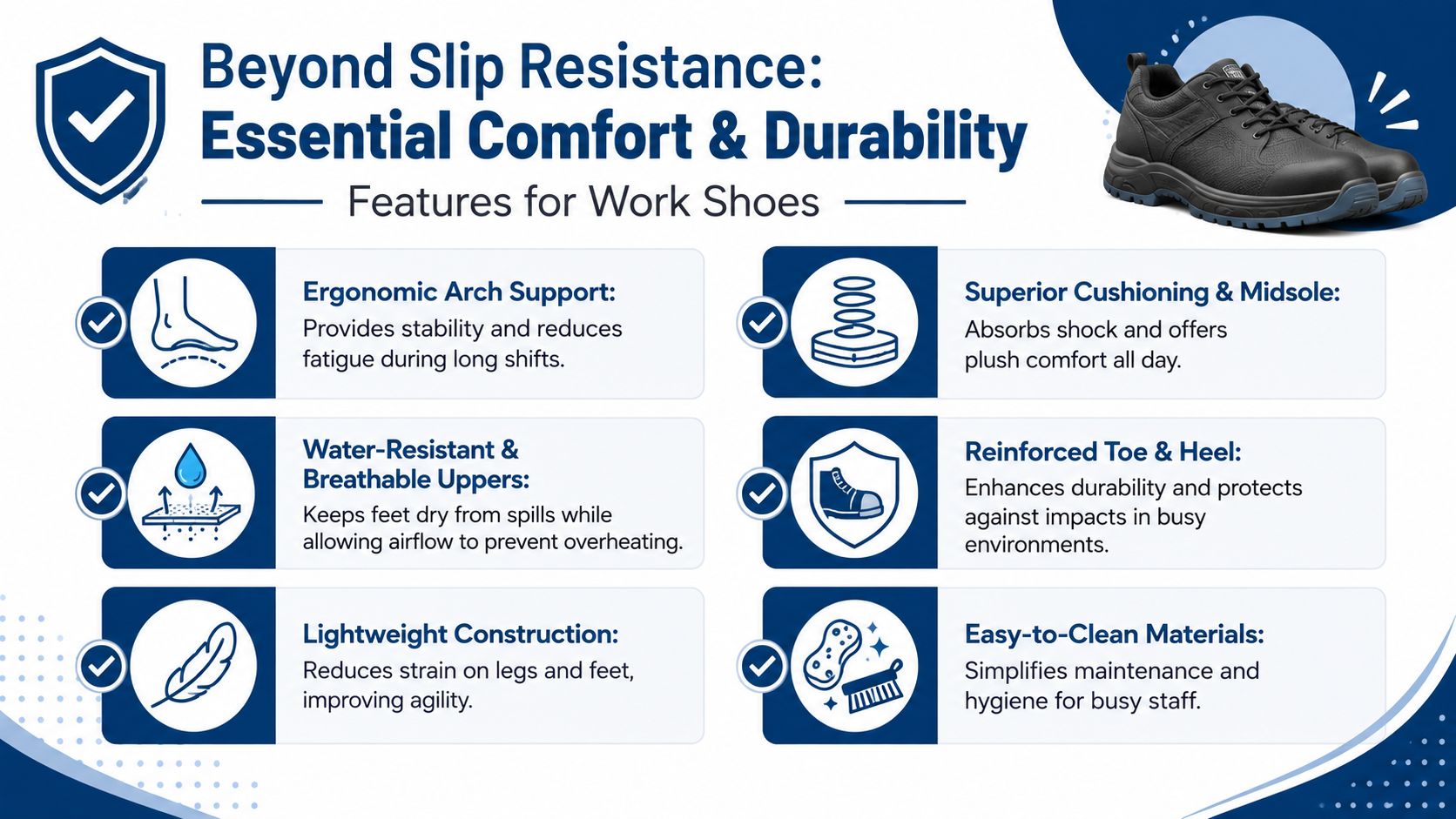
When operators compare options, these features usually make the biggest difference:
- Cushioning underfoot helps absorb repeated impact on hard tile and concrete floors. This matters for chefs, dish staff, and anyone doing long periods of standing.
- Arch support improves stability and makes all-day wear more manageable. Staff who move constantly between stations usually notice this quickly.
- Lightweight construction reduces the dragging, heavy feeling that builds through a long shift.
- Water-resistant or wipe-clean uppers are easier to live with in spill-prone areas.
- Reinforced heel and toe areas usually last better in venues where shoes are knocked, scuffed, and exposed to regular abrasion.
Many hospitality operators find that the most wearable shoe is rarely the one with the harshest feel. It's usually the one that balances traction with support, secure fit, and manageable weight. Some useful outside perspective can also be found in these expert tips, especially around comfort considerations for long hours on foot.
Durability matters because replacement failure is common
Cheap footwear can become expensive in operation. Soles wear smooth, uppers crack, lining breaks down, and suddenly staff are back in unsuitable shoes because replacements weren't planned. A common consideration is the total ownership picture, not just purchase cost.
Look closely at:
- Upper material finish. Smooth materials are generally easier to wipe down than porous fabrics.
- How the sole joins the upper. Weak joins often show up early in wet, high-use kitchens.
- Cleaning practicality. If a shoe is hard to clean, it often stays dirty, smells worse, and gets neglected.
- Shift suitability. A shoe that feels acceptable for short service may fail badly in businesses with longer rosters.
Staff usually keep wearing shoes that feel good by the end of the week, not just on the day they're issued.
Where teams stand in one place for long periods, footwear also works better when the floor setup supports it. Anti-fatigue mats in commercial work zones can reduce strain in fixed stations like prep areas, coffee sections, and wash-up zones. The right solution depends on the role, the floor, and how much movement the job involves.
Selecting Footwear for Different Hospitality Roles
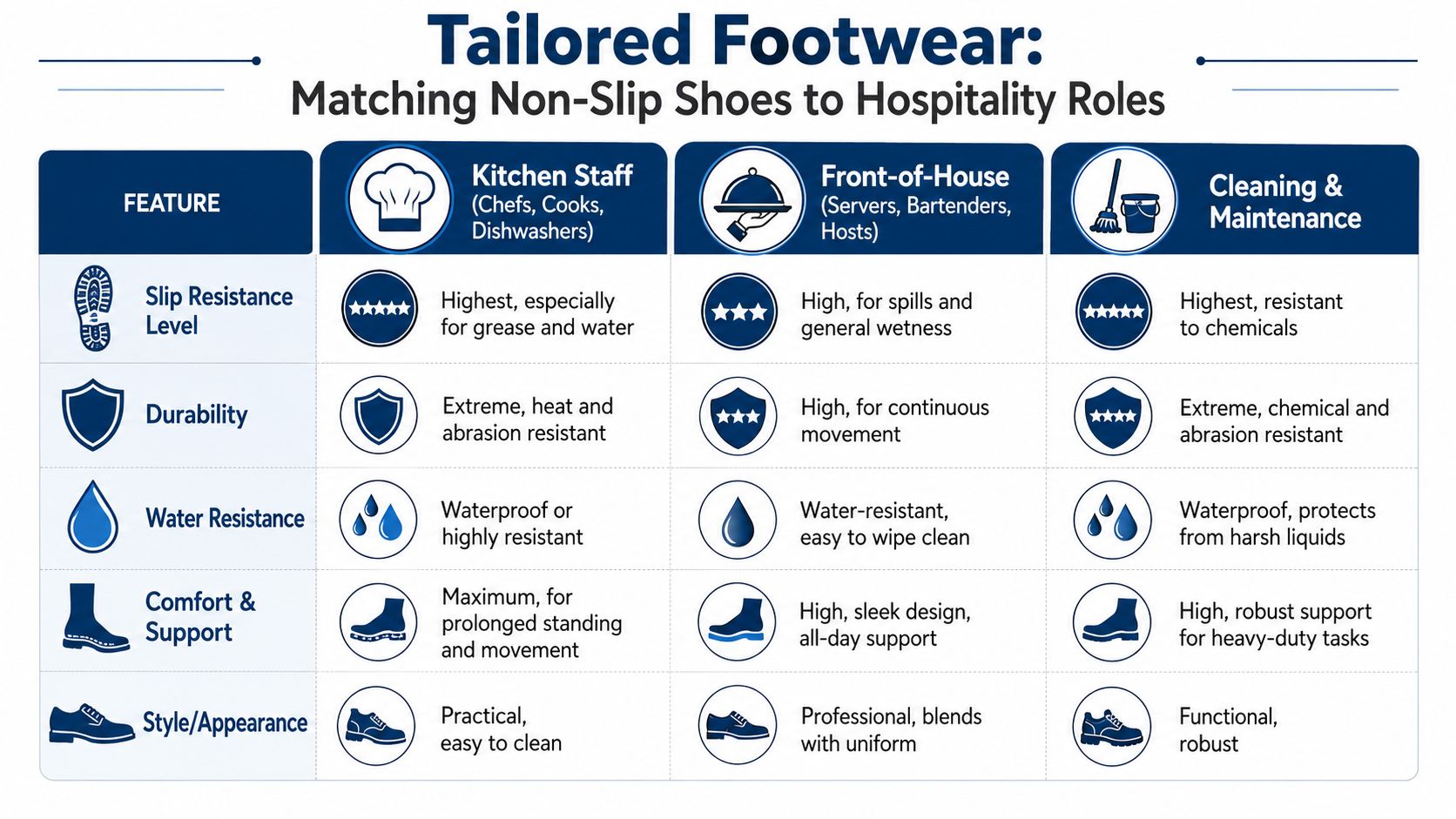
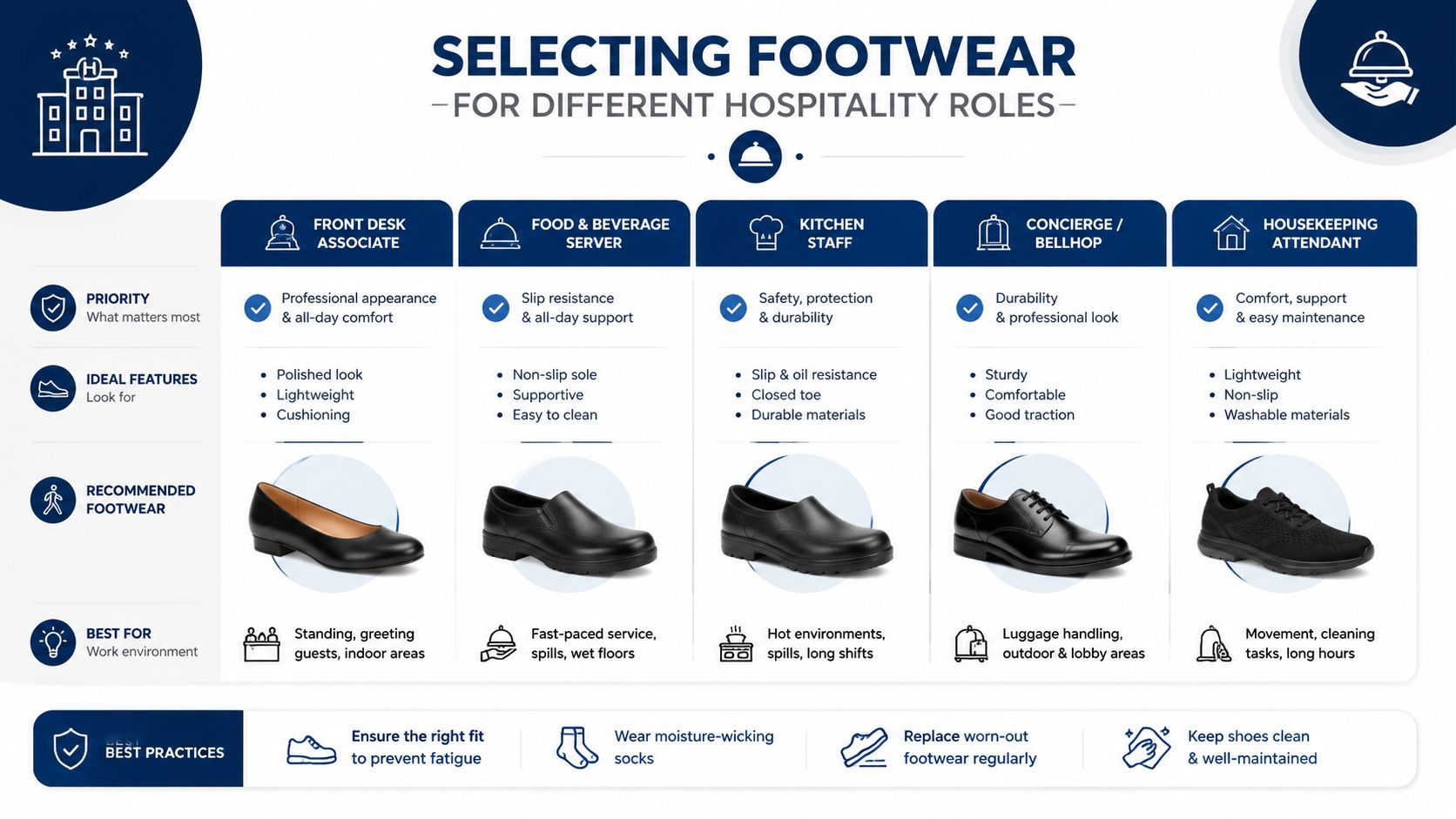
A venue can't assume one shoe style suits everyone. The hazards are different, the movement patterns are different, and what feels practical in the kitchen may feel clumsy on the floor or in accommodation areas.
Kitchen and back-of-house roles
Chefs, cooks, and dishwashers usually need the most effective combination of grip, spill protection, and easy cleaning. Closed designs make sense here. The environment includes grease, water, dropped utensils, fast turns, and regular exposure to mess that needs to be wiped off quickly.
For these roles, operators often prioritise:
- Higher anti-slip performance for oily and wet zones
- Smooth uppers that can be cleaned fast
- Secure fit that stays stable during quick movement
Front-of-house and bar roles
Front-of-house teams still need reliable slip resistance, but the trade-off changes. These staff move across dining floors, service stations, entries, and bar areas. They often need footwear that looks tidy with uniform standards while still coping with drink spills and polished floor surfaces.
A common mistake is issuing dress-style shoes with poor grip because they look more formal. In practice, that usually creates avoidable problems.
Housekeeping and cleaning roles
Accommodation, cleaning, and maintenance staff often cover a lot of distance in a shift. Their footwear needs dependable grip, but weight and cushioning become even more important because they spend so much time walking. Wet bathroom floors, cleaning chemicals, and repeated room-to-room movement call for practical, supportive footwear rather than heavily built styles that feel tiring by midday.
One factor often discussed with customers is matching footwear to uniform and role expectations. The article on chef uniforms in New Zealand is useful here because footwear should fit into the broader conversation about what staff wear, how it performs, and whether it supports the work being done.
Getting the Fit Right to Ensure Staff Wear Them
The safest shoe is the one staff keep on for the whole shift. That sounds obvious, but poor fit is one of the most common reasons a footwear policy fails in its execution.
Shoes that are too tight create pressure points, rubbing, and general resentment. Shoes that are too loose let the foot move around inside the shoe, which can make people feel less stable and more tired. Neither outcome helps compliance. Many hospitality operators find that if staff dislike the fit, they revert to old footwear as soon as supervision drops.
Practical fit habits that work
A sensible process usually includes a few simple steps:
- Try shoes at the right time of day because feet often feel different after several hours of standing and moving.
- Test with work socks rather than everyday socks, especially if uniforms or shoe policies specify a certain style.
- Walk on realistic surfaces so staff can judge heel hold, forefoot space, and general stability.
- Allow a short break-in period before judging a style too quickly, unless there's immediate rubbing or pressure.
One simple tip is to trial a small number of suitable options with key team members before rolling out a full order.
Staff consultation matters more than some operators expect. When a team feels heard on comfort and fit, the footwear policy usually lands better. The right solution depends on role, foot shape, shift length, and the type of floor a person works on most often. A shoe that feels excellent for a barista may not suit a kitchen hand doing wash-up and stock movement all day.
Managing Procurement and Compliance for Your Team
Once a venue knows what type of footwear suits each role, the next step is managing it properly. That means procurement, policy, maintenance, and legal responsibility need to line up. Otherwise, even a well-intended shoe programme can become inconsistent very quickly.

Set a clear approval standard
It helps to define what counts as acceptable footwear for each role. That standard might include the required anti-slip rating, closed design, wipe-clean upper, and condition expectations. Many operators choose to keep a short approved list rather than leaving the decision too open-ended.
This is also the point where a supplier relationship can be useful. Simply Hospitality supplies hospitality businesses across New Zealand with uniforms, kitchen supplies, and related operational categories, so footwear decisions often sit alongside broader purchasing and fit-out planning rather than in isolation.
For operators building policy documents or reviewing broader venue obligations, this guide for Irish restaurateurs is a useful example of how compliance topics can be organised into practical checklists, even though local legal requirements in New Zealand are different.
Know the legal responsibility
Under the Health and Safety at Work (General Risk and Workplace Management) Regulations 2016, PCBUs in New Zealand must provide non-slip protective clothing that is suitable for the nature of the work, reasonably comfortable, maintained, and the cost cannot be passed on to workers, as outlined by WorkSafe New Zealand guidance on protective clothing.
That requirement matters for two reasons. First, the footwear must be suitable for the actual work being done. Second, comfort isn't optional. If the shoe is so uncomfortable that staff avoid wearing it, the venue hasn't solved the underlying problem.
Build maintenance into the routine
Non slip shoes don't stay effective forever. Soles wear down, tread fills with residue, and uppers break down. A footwear plan should include regular checks, especially in high-risk areas.
Good practice usually includes:
- Daily wipe-downs so grease and residue don't build up on the upper and sole
- Routine tread inspection to spot smoothing, cracking, or clogged channels
- Replacement triggers so supervisors know when a shoe is no longer acceptable
- Staff reporting that makes it easy to raise comfort or wear issues early
A broader purchasing checklist also helps keep footwear connected to other operating needs such as mats, cleaning chemicals, storage, and uniforms. The article on commercial kitchen supplies in New Zealand can help operators think about footwear as one line item within a larger safety and operations system.
If your team needs help choosing non slip shoes that suit your kitchen, café, bar, or accommodation operation, Simply Hospitality can help you weigh up the practical trade-offs around grip, comfort, durability, and day-to-day use so you can choose footwear that fits the work as well as the people doing it.