

Non Stick Fry Pans NZ: Expert Guide for Hospitality Kitchens
The most useful advice about non stick fry pans NZ kitchens is also the advice most often ignored: don't make one pan do every job. Non-stick earns its place with eggs, pancakes, fish and other delicate foods, but repeated high-temperature searing, deglazing and heavy reduction belong in cookware built for those tasks. Hospitality operators who match the pan to the food, specify commercial construction, train staff properly and judge value by cost per use will usually make better purchasing decisions than operators who buy the most heavily marketed coating.
Why Your Non Stick Pan Wears Out Faster Than You Think
A non-stick fry pan often fails because the kitchen uses it as a general-purpose sauté pan. High heat, empty preheating, metal utensils, abrasive cleaning and tight stacking can damage the cooking surface, but the larger mistake comes earlier. The pan gets assigned to hard searing, sticky reductions and jobs that need a strong fond, even though easy release is the main reason to buy non-stick in the first place.
That matters in restaurants, cafés, hotels and institutional kitchens because a pan's workload is rarely gentle. Breakfast service can demand repeated egg cookery, while another station may be trying to colour meat, reduce sauce and scrape browned residue from the base. Those are different cooking jobs. They shouldn't share the same fry pan just because the diameter looks suitable.
Practical rule: Use non-stick where release matters. Use stainless steel, carbon steel or another suitable commercial material where high heat, crust and fond matter more.
The coating is only part of the purchase
Operators often focus on whether a coating is described as premium, reinforced or commercial. That information can help, but it doesn't replace task matching. Pan thickness, heat distribution, handle design, cooktop compatibility and staff behaviour all affect ownership in a busy kitchen.
Cleaning also matters. Water quality and chemical choice influence how commercial dishwashing affects equipment, so cookware decisions should sit alongside the kitchen's wider dishwasher performance planning. A good pan can still be mistreated by an unsuitable wash process or a rushed scouring routine.
The questions that prevent a poor order
Before adding another carton of fry pans, the purchasing team should identify:
- The actual menu task: Eggs and fish need a different surface from steak searing.
- The station workload: A pan used continually needs different construction from one reserved for occasional garnish work.
- The heat source: Gas, electric and induction place different demands on pan bases.
- The handling routine: Utensils, cleaning and storage can protect or destroy the coating.
- The replacement logic: Purchase price alone says little about total cost.
The strongest way to extend service life isn't always to buy a more expensive coating. Often, it's to remove unsuitable work from the pan's schedule.
Where Non Stick Delivers
Non-stick pans last longer when they stop doing work that does not need non-stick. Use them for controlled release, gentle handling and lower-fat cooking, then move high-heat and scraping jobs to cookware built for those demands. That task split protects the coating and improves equipment choice and food quality.
Eggs are the clearest fit. Fried eggs, omelettes and scrambled eggs can catch on stainless steel when temperature, fat or timing varies during service. A coated surface gives breakfast cooks more control and helps delicate portions hold their shape.
Pancakes need reliable release. A smooth surface lets staff turn them without tearing the edges or adding excess oil between portions. Even heating still matters. A coating cannot correct a hot spot that browns one area before the batter sets elsewhere.
Fish rewards gentle handling. Snapper, terakihi and other delicate fillets can break when they stick during turning. Non-stick suits a clean release and intact presentation. It is the wrong choice when the priority is a hard sear from aggressive heat.
Tender proteins also benefit from repeatability. Soft fish, tender chicken portions and similar foods need to lift cleanly from the pan. The surface supports a consistent workflow, but cooks must control heat and handle the pan as a specialist tool, not an indestructible one.
Assign tougher work elsewhere
Repeated high-temperature searing, hard crust formation, deglazing, acidic sauces, sugar work and heavy reduction belong in stainless steel, carbon steel or another pan selected for that workload. These jobs involve stronger thermal demand, scraping and contact that can shorten a coated pan's useful life.
Use this rule at the pass:
- Easy release and minimal oil: Choose non-stick.
- Crust, fond and repeated high heat: Choose another commercial pan.
- Sauce reduction or deglazing: Use cookware suited to scraping and liquid work.
- Mixed station duties: Keep separate pans available instead of forcing one pan to cover every task.
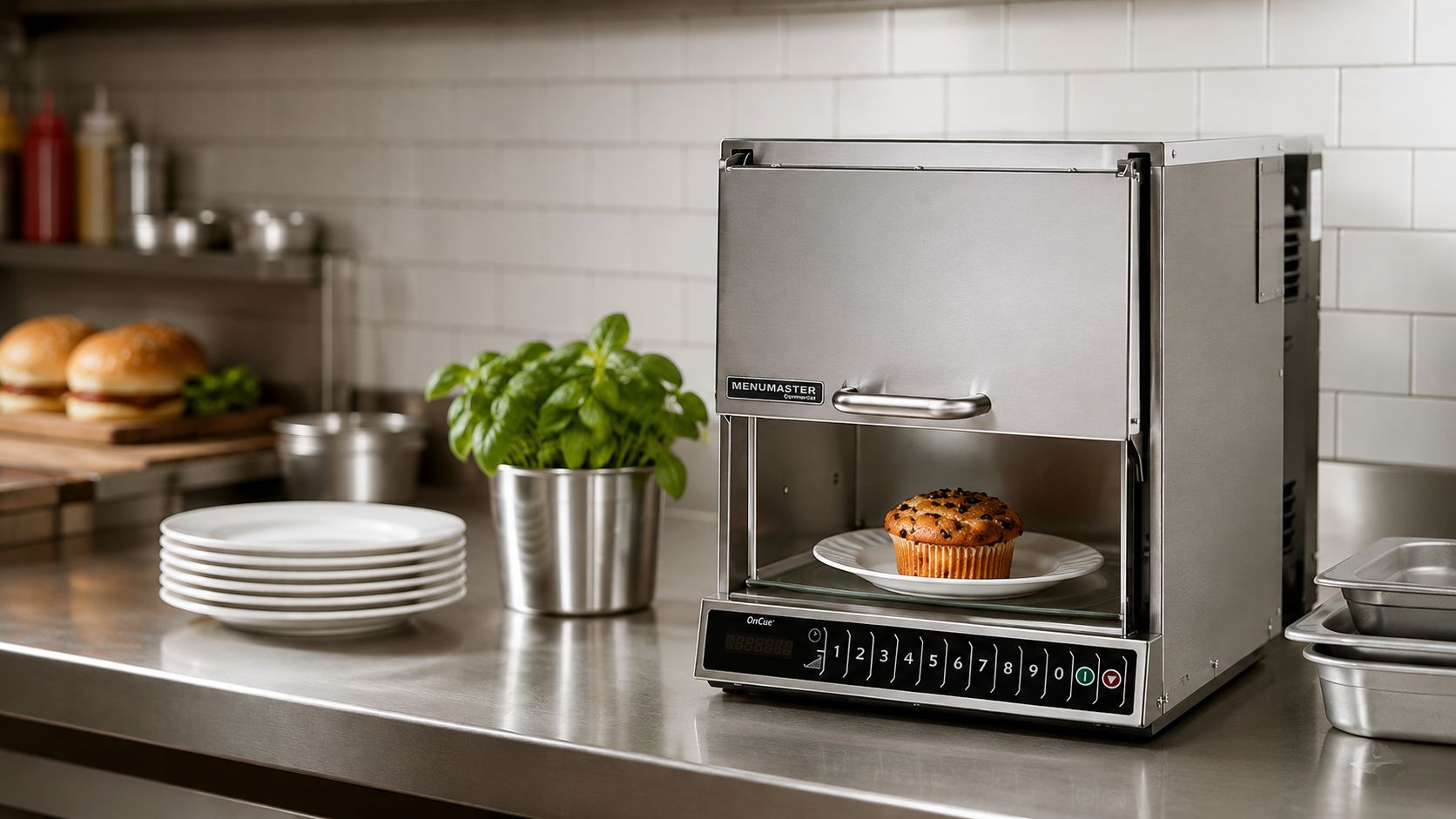
The same discipline applies to other equipment. A Menumaster MOC5241 2400W Heavy-Duty Microwave suits quick-service work such as single-portion regeneration, burger finishing, bun warming and rapid sauce or side-dish heating. Its 9-litre cavity and 2400W output matter, but the workload and available footprint decide whether it fits the station.
PTFE, Ceramic and Hard Anodised Compared
The coating label tells only part of the story. NZ buyers are increasingly comparing PTFE-based coatings, ceramic coatings and hard-anodised construction, but each option needs to be assessed against the menu, heat management and compliance environment.
PTFE-based non-stick
PTFE has traditionally been the easy-release workhorse in non-stick cookware. It can suit eggs, pancakes and delicate proteins, provided staff follow the manufacturer's instructions and avoid overheating, scratching and unsuitable cleaning.
PFOA and PFOS are not interchangeable with PTFE, so operators need to read product documentation carefully rather than treating every fluoropolymer term as identical. New Zealand's authoritative PFAS guidance states that PFAS are used in non-stick cookware, that PFOS has been effectively banned in Aotearoa New Zealand since 2011, and that PFOA use is restricted. The same briefing records no consistent evidence of harmful health effects from the low-level environmental exposure discussed in its 2018 advice, while noting that accumulation remained a concern. New Zealand's PFAS guidance is useful background for buyers assessing chemical controls and supplier documentation.
Consumer NZ notes that new frypans are PFOA-free, while warning that related chemicals may still be used and that their health impacts aren't fully known. Consumer NZ's non-stick cookware coverage also records visible scratches on one pan by 500 scrubs and coating thinning by the end of its test. Those findings reinforce a practical procurement point: a PFOA-free statement isn't a substitute for checking the broader coating specification or care requirements.
Ceramic coatings
Ceramic non-stick is commonly positioned as a PFAS-free alternative. A NZ supplier describes its Thermolon ceramic coating as inorganic and silicon-based, containing no PTFE, and states that it can be heated safely to 450°C without emitting toxic fumes when overheated. The supplier's ceramic coating information still emphasises the need for sensible heat management, because repeated thermal shock and abrasive wear can reduce useful life.
Ceramic can be attractive for operators seeking a different chemical profile, but the label doesn't remove the need to assess base construction, heat spread and staff handling. New Zealand's policy direction is also relevant. An independent NZ analysis notes EPA bans on PFAS-containing firefighting foams by December 2025 and PFAS in cosmetic products by 31 December 2026, while a University of Auckland report says an EPA study tested 131 groundwater wells in 2022 and found very little PFAS contamination. The NZ PFAS policy discussion shows why scrutiny can increase even where local exposure is relatively low.
Hard anodised construction
Hard-anodised aluminium is a construction approach rather than a complete answer to the coating question. It can provide a firm, heat-responsive body and may be paired with a non-stick cooking layer. Buyers should check whether the specific pan is induction compatible, whether the base is suitable for the cooktop, and whether the manufacturer permits oven use.
For induction kitchens, the pan base must be verified before ordering. The Waldorf 800 Series INL8400R5F-CB 900mm Electric Induction Cooktop Low Back Version Cabinet Base has four cooking zones, a 6mm ceramic glass cooking surface and automatic pan detection. That cookline requires pans with compatible bases, so purchasing should include an on-site cookware check rather than relying on appearance.
New Zealand Food Safety says monitoring found no evidence that diet is a measurable source of human PFAS exposure and no consistent evidence that the exposure levels discussed are harmful to health. Its PFAS food safety guidance supports a measured buying decision. Operators should still request clear specifications, select the right material for the job and replace damaged cookware responsibly.
Sizing Pans for Your Service
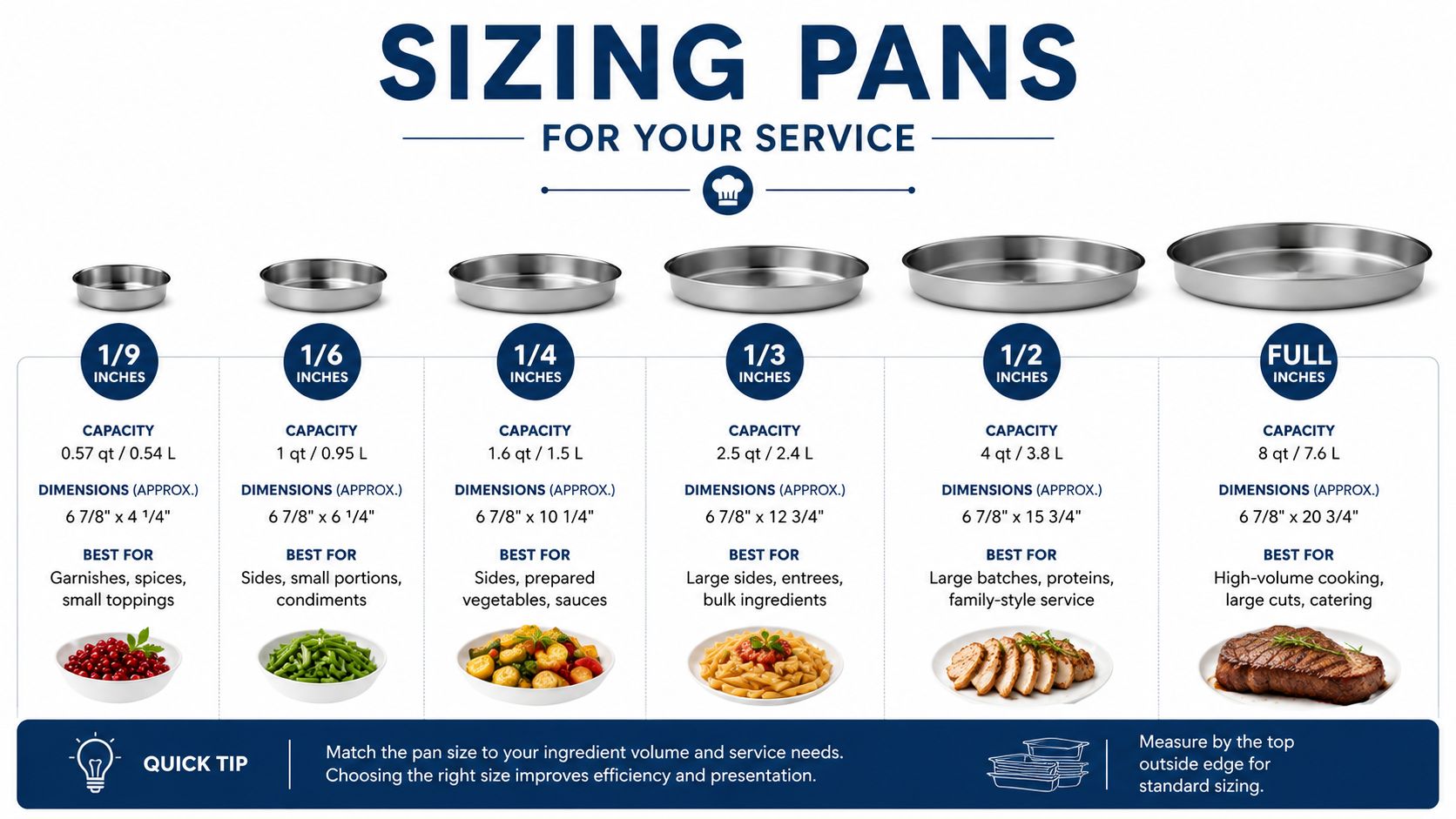
A 24cm, 26cm or 28cm fry pan can all be useful in hospitality. There isn't one universally correct size, and 24cm to 28cm pans are particularly versatile for everyday commercial cooking. The right diameter depends on portion size, station space, storage, burner area and how many pans need to operate at once.
How each diameter fits a station
A 24cm pan suits single-portion eggs, smaller breakfast plates and compact stations. It's easier to manoeuvre when several cooks share limited bench space, but it may feel cramped for larger portions or foods that need room to turn without crowding.
A 26cm pan is usually the most adaptable middle option. It can handle general café sauté work, standard breakfast portions and modest quantities without taking as much space as a larger pan. Operators choosing a first commercial non-stick size often find this diameter easier to deploy across several stations, provided the menu matches.
A 28cm pan gives more working area for larger portions, share plates and short-order breakfast service. More space can improve workflow when cooks need to keep food separated, but the pan also needs suitable burner coverage, storage and handling. A larger diameter isn't automatically better if the cooktop heats only the centre or the station lacks room to place hot cookware safely.
Construction matters as much as diameter
A pan's base should spread heat evenly and resist distortion under normal commercial use. One NZ market example uses a 5.5mm fully encapsulated aluminium thermic base with a Teflon coating. The Simply Hospitality cookware collection explains why a thicker encapsulated base can reduce hot spots and support more consistent browning on gas or induction.
Look for:
- Base design: A substantial, well-encapsulated base supports even heat distribution.
- Handle attachment: Secure attachment matters during repeated lifting and turning.
- Grip and balance: The handle should feel comfortable and keep the pan stable when loaded.
- Induction compatibility: Confirm the base works with the exact cooktop.
- Oven suitability: Check the complete pan, handle and coating specification, not just the body.
- Storage footprint: Ensure the chosen diameter fits shelving, drawers and service stations.
Handling equipment also affects the wider station layout. Operators planning food service handling solutions can use the same exercise to review how pans move between storage, cooking and wash-up. Better flow reduces unnecessary carrying and makes correct storage easier to enforce.
Pan sizing should support the service rather than dictate it. A venue with tight breakfast stations may need a mix of 24cm and 26cm pans, while a larger short-order operation may allocate 28cm pans to high-volume positions. The kitchen efficiency guidance is relevant because cookware size affects movement, bench congestion and peak-service rhythm.
The Real Cost of a Fry Pan
A low purchase price can be misleading in a commercial kitchen. The useful comparison is cost per use, not the number printed on the invoice.
Consider a simple example without assuming a product lifespan. If a $70 pan lasts twice as many services as a $45 pan, the higher-priced pan may represent better value because the kitchen buys fewer replacements. That calculation still needs to include the actual service count, replacement frequency, downtime, staff disruption and whether the pan continued to release food consistently during its working life.
What total cost includes
A practical cost-per-use review should consider:
- Purchase price: The initial amount paid for each pan.
- Replacement frequency: How often the kitchen removes pans from service.
- Operational disruption: Time spent finding a substitute or changing station routines.
- Food handling: Poor release can damage delicate portions and slow service.
- Staff behaviour: Incorrect utensils and cleaning can shorten the useful life of any coating.
- Task allocation: Using non-stick for unsuitable work creates avoidable wear.
Chef Inox and Force are examples of commercial cookware ranges available for hospitality applications. They should be assessed on coating quality, pan construction, heat distribution, handle design, commercial suitability and replacement cost. No supplier should claim one range has better release performance without verified independent testing.
The cheapest pan is only cheap if it completes the work the kitchen needs.
The biggest cost control is still task separation. A non-stick pan reserved for eggs and fish may remain useful longer than a more expensive pan assigned to searing, deglazing and aggressive scraping. A stainless steel or carbon steel pan may be a better purchase for those heavier jobs, while non-stick remains available for the foods that need it.
That is the same buying principle behind choosing between cheap equipment and buying once. Price matters, but the kitchen should compare the work completed, not just the initial transaction.
Cleaning, Utensils and Storage Habits That Protect the Coating
Staff behaviour can outweigh the difference between two commercial cookware ranges. One employee using a metal spatula or overheating an empty pan can undo the benefit of buying higher-grade cookware, especially when that action is repeated across a busy service.
The care routine should be short enough to follow during real work. It should also be written into station training rather than left as informal advice passed between cooks.
A practical pan-care routine
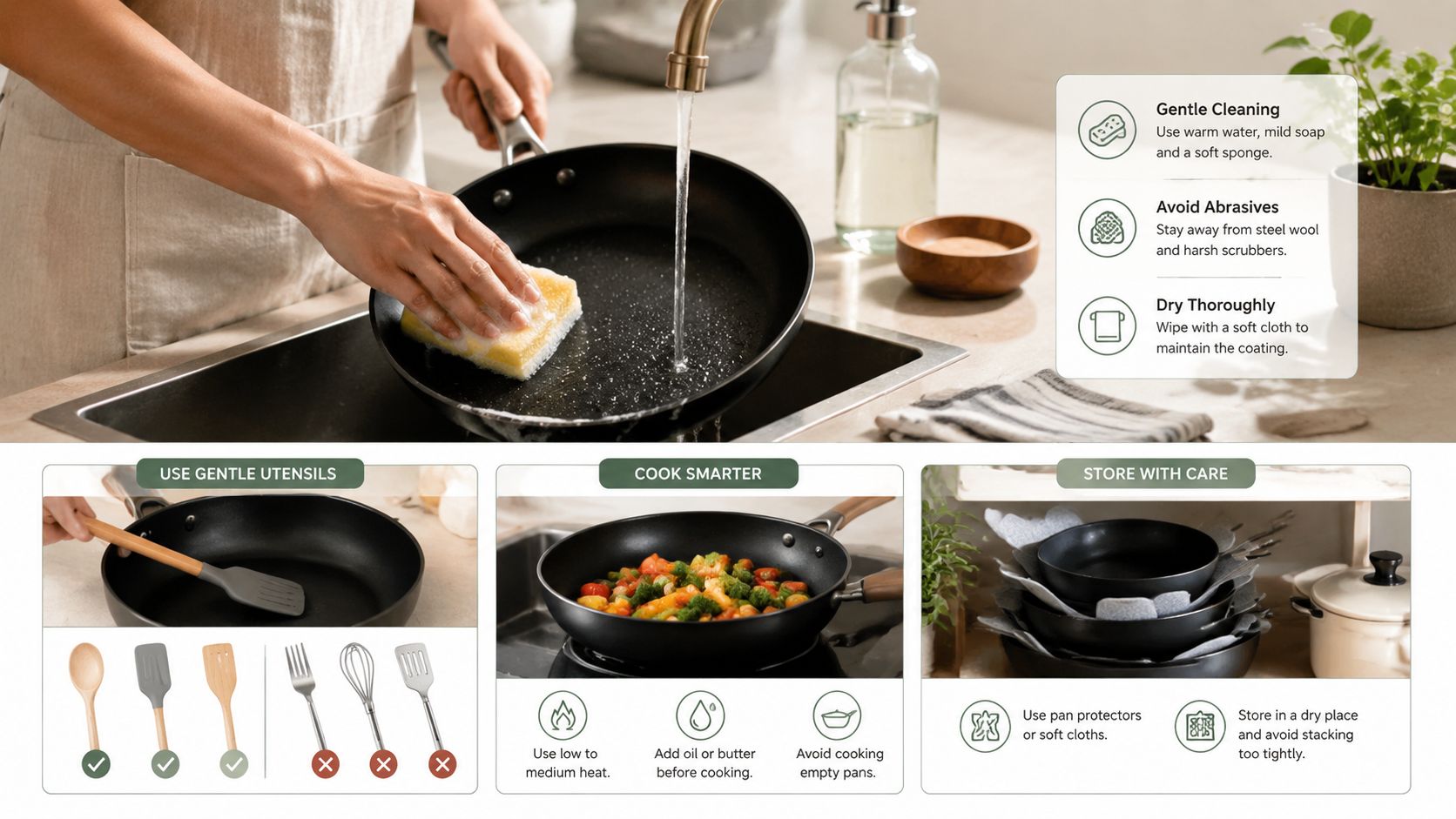
Use suitable utensils. Silicone, wood or other utensils approved by the manufacturer reduce the risk of scratching. Metal utensils should be avoided unless the specific pan documentation permits them.
Control heat from the start. Staff shouldn't leave an empty pan heating unnecessarily. The NZ Herald report citing NZ food safety advice states that toxic fumes can be produced when Teflon or similar cookware reaches about 500°C, with a recommended maximum use temperature of 260°C. That New Zealand safety coverage supports a straightforward rule, don't use non-stick cookware as a high-heat searing substitute.
Follow the cleaning instructions. Use the manufacturer's approved method and avoid abrasive scourers. A pan that needs aggressive scraping to become clean may be assigned to the wrong food or may already need replacement.
Store surfaces apart. Stack pans with protectors or separate them so the cooking surfaces don't scrape against one another. Handles should be arranged so staff can lift the required pan without dragging others across the shelf.
Remove damaged pans from service. Don't wait for severe flaking before acting. Significant coating damage, persistent sticking or a distorted base should trigger a review and replacement decision.
Make the routine visible
A short sign at the wash-up area can reinforce the essentials:
- Use approved utensils.
- Avoid unnecessary overheating.
- Clean without abrasive tools.
- Separate stacked cooking surfaces.
- Report damaged pans.
The kitchen should also review its cleaning chemicals and wash process. Guidance on cleaning chemicals used in NZ kitchens can help operators align cookware care with the broader hygiene system rather than treating pans as an isolated item.
Good care protects cost per use, but it can't turn an unsuitable pan into the right tool. The strongest maintenance strategy remains selective deployment. A non-stick pan used only for foods that need release has a better chance of delivering the value the kitchen paid for.
What to Ask Before You Buy
A fry-pan order should start with the menu and station, not a coating claim. The following questions give purchasing teams a practical filter:
- What are staff cooking in the pan? Identify eggs, pancakes, fish, delicate proteins, searing, reductions and sauce work separately.
- Does the task require non-stick? If release isn't the main requirement, another material may be more appropriate.
- How frequently will the pan be used? Match construction and replacement planning to the workload.
- Which diameter fits the portion? Compare 24cm, 26cm and 28cm against the station, burner and storage.
- Is the pan compatible with the cooktop? Confirm induction suitability where applicable.
- Can it go into the oven if required? Check the complete pan specification, including handle and coating.
- Are staff using appropriate utensils and cleaning methods? A written routine protects the purchase.
- Is the business evaluating purchase price or cost per use? A higher initial price can make sense when the pan completes more services, but only if the kitchen assigns it to the right work.
Operators should also review how pans are stacked, whether stations have enough cookware for simultaneous service and when damaged items leave circulation. The best way to make a non-stick pan last longer is often to stop using it for jobs that don't need non-stick.
Hospitality supplies commercial cookware and related kitchen equipment for hospitality businesses, so operators can discuss pan selection around their service style, cooktop, menu and workload rather than choosing by label alone.
Hospitality can help restaurants, cafés, hotels and commercial kitchens match non-stick fry pans with the right cooking tasks, sizes, cooktops and care requirements. Visit Simply Hospitality to review commercial cookware options or contact the team for practical help planning a more durable pan mix.