

Plastic Wine Glasses NZ: A Buyer's Guide for Hospitality
Plastic wine glasses in New Zealand get pitched as a cheaper stand-in for glass, but that's the wrong test. The question is whether glass is safe and practical in the service environment, because pools, outdoor functions, festivals, stadiums, marae, aged-care settings and busy event spaces all carry different breakage and handling risks. For operators choosing drinkware for those spaces, plastic wine glasses NZ buyers should treat them as an operational tool, not a fallback. For wider context on packaging decisions in the drinks space, Wine Labs' wine market data insights is a useful place to compare service trends with what's happening on the ground.
New Zealand's disposables and recycling environment makes that distinction even more important. The Ministry for the Environment estimates New Zealanders dispose of 159 grams of plastic waste per person per day, and the Packaging Forum estimates 295 million hot and cold disposable cups every year in the wider beverageware market. Against that backdrop, the right drinkware choice isn't about image alone, it's about matching material, format and venue to the job. For a practical discussion of buying decisions that save more than they cost, see buying cheap vs buying once.
When Plastic Wine Glasses Are the Smarter Hospitality Choice
Traditional glassware still has its place, but some service environments create more risk and more labour than they are worth. Pools, outdoor functions, stadiums, festivals and other high-traffic settings turn broken glass into a safety issue, a cleanup job and often an immediate interruption to service. In those spaces, the drinkware decision should be driven by what the venue needs to keep operating.
Safety and workflow matter more than price
Operators often choose plastic wine glasses for areas where breakage creates wider consequences than the loss of a single glass. A safer drinkware choice can protect feet, reduce cleanup time and cut down the need for staff to police glass constantly when guests are moving, dancing or carrying plates. In marae, aged-care facilities and catered events, the decision is usually about keeping service steady and manageable, not about prestige.
Practical rule: if a dropped glass creates a hazard that slows service or stops an area from operating, the drinkware choice has already moved beyond purchase price.
Cheap glass is the wrong comparison. The environment decides the right product, not the unit cost. On a covered terrace or at a poolside bar, a sturdy plastic stemless wine glass can be the better operational choice because it removes a problem the venue cannot afford to have.
The other factor is service fit. Operators need to decide whether the venue requires traditional wine presentation or a resilient vessel that keeps the area open and moving. Plastic wine glasses can do that job well when they are matched to the setting, and they should be assessed on fit for purpose, not on whether they look like a compromise. For a useful lens on buying decisions that save more than they cost, see buying cheap vs buying once. For wider context on drinks service trends, Wine Labs' wine market data insights is a useful place to compare what buyers say with what happens in real venues.
New Zealand's disposables and recycling rules make that call even more specific. The Ministry for the Environment points to the scale of plastic waste entering the system, and the Packaging Forum has highlighted the volume of disposable cups in the wider beverageware market. Against that backdrop, the right drinkware choice is about matching material, format and venue to the job, while also understanding what can and cannot be recycled in local systems.
Reusable Plastic Stemware Versus Single-Use Disposable Glasses
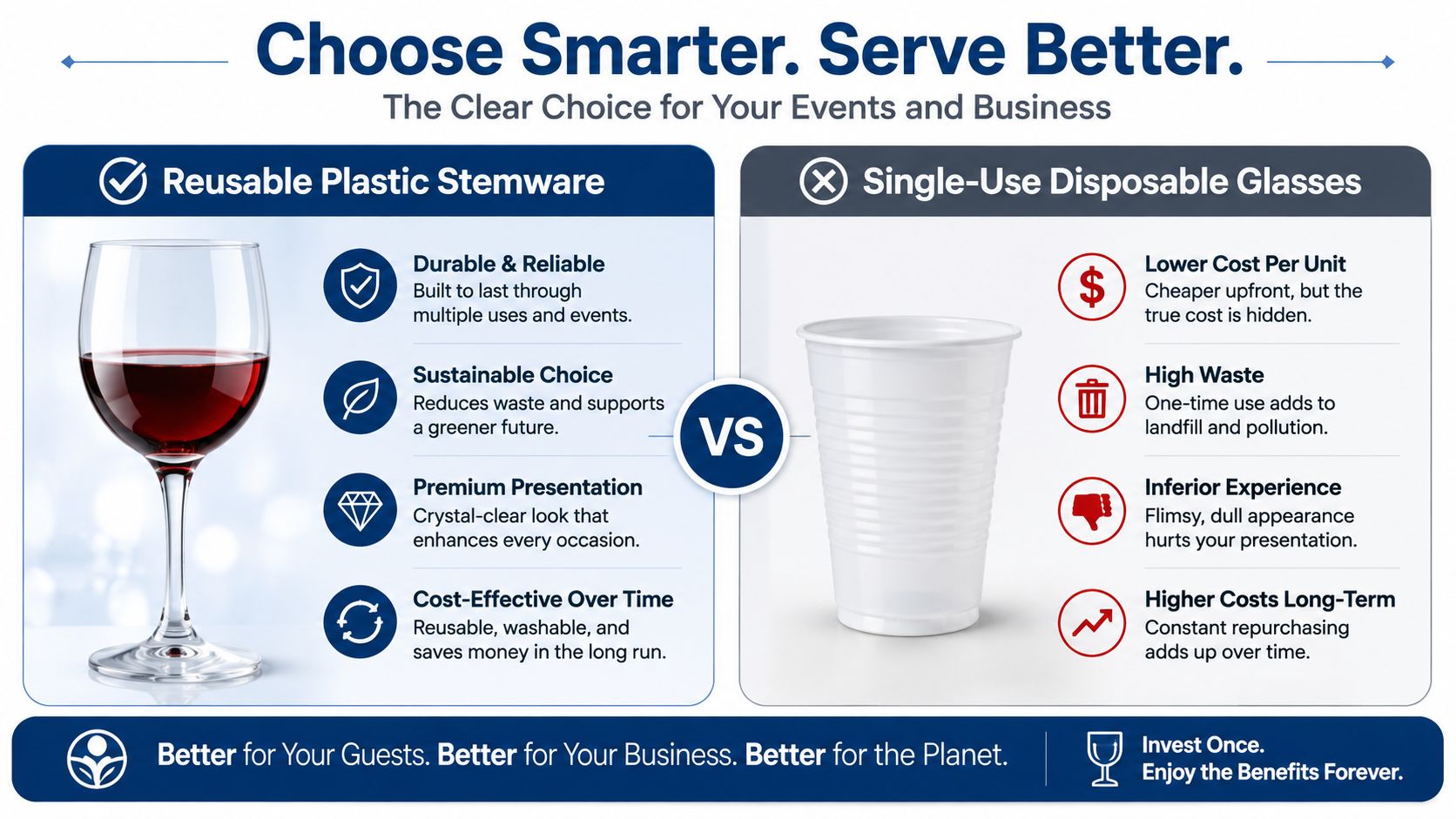
Reusable plastic stemware and single-use plastic glasses are not the same category, and treating them that way leads to poor buying decisions. Reusable options are built for repeated service, commercial washing and longer operational life. Single-use products belong in a completely different waste, compliance and labour conversation.
The compliance line is not blurry
From 1 July 2023, New Zealand banned the sale or manufacture of single-use plastic tableware and cutlery, including items made wholly or predominantly of plastic, even when they're recyclable, compostable or biodegradable, if they're designed to be used once or only a limited number of times. That makes disposable wine-service items a much more sensitive purchasing decision than many operators realise. It also means a product that looks premium on the shelf can still sit on the wrong side of the rule if it's really a limited-use item.
A reusable glass made for hospitality service should be selected on its actual build, not on marketing language. A product like the Bormioli Rocco Set 4 Premium Wine 385ml shows the opposite end of the spectrum, with wine-specific bowl shape, a thin laser-cut rim and stem protection designed around repeated service rather than one-off use.
Ask what the product is really for
When buying, operators should separate these questions:
- Is it reusable or single-use? That decides the cleaning, storage and waste path.
- Will it be commercially washed? That affects material choice and rim durability.
- Is it for service or for a single event? Those are different products, even if they look similar.
- Does it comply with current plastic tableware rules? The answer matters before stock is ordered.
For operators mapping disposable food and drinkware together, our disposable food containers NZ discussion is a useful companion piece because the same thinking applies, product design and intended use need to match the compliance category.
Reusable plastic stemware earns its place when a venue needs a wash-and-reuse solution with better presentation than a cup and far less risk than glass. Single-use plastic glasses, by contrast, need to be justified separately and carefully, because they bring a very different operational footprint.
Stemmed Versus Stemless Plastic Wine Glasses
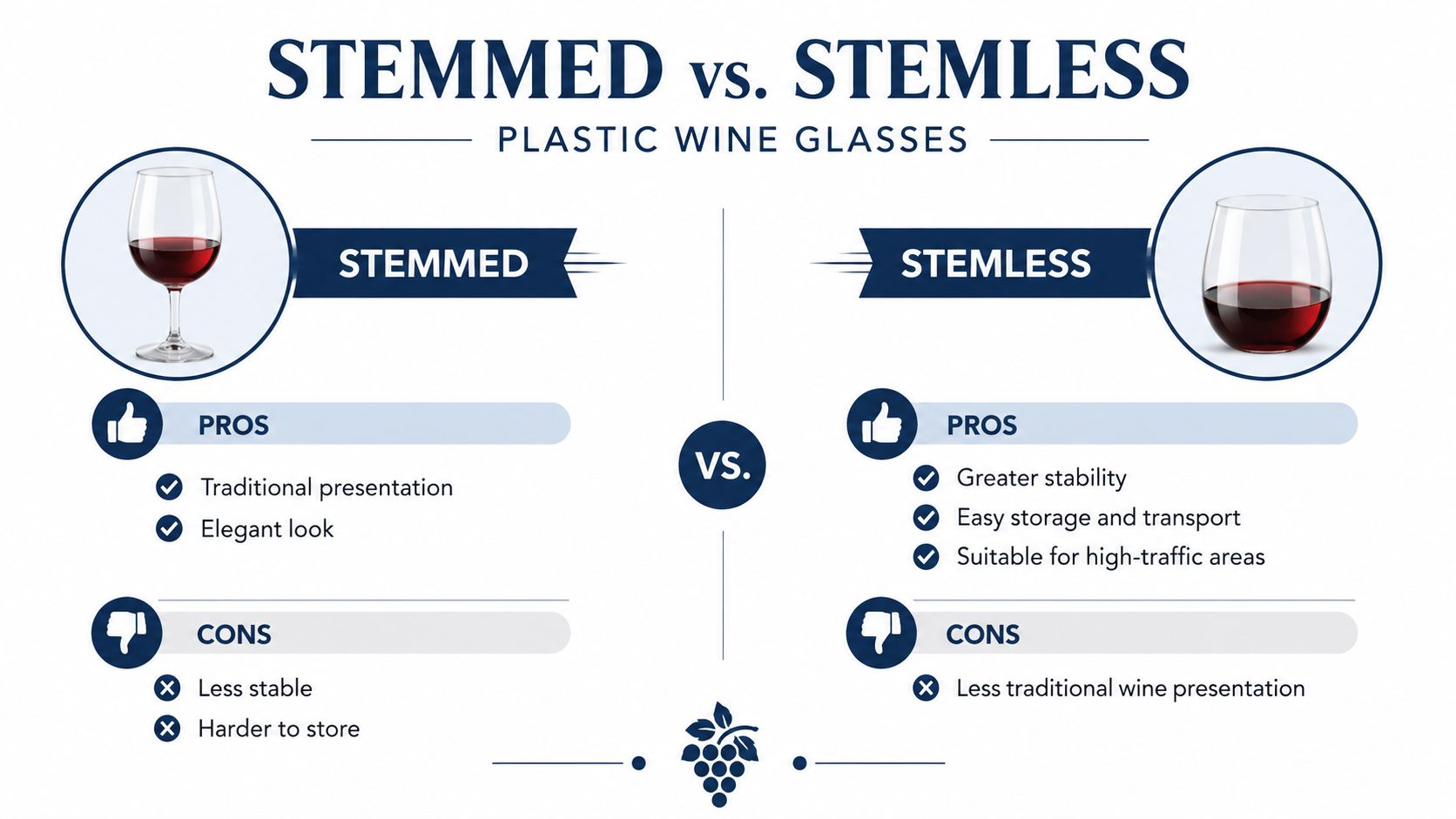
Stemmed and stemless plastic wine glasses solve different problems. Stemmed designs preserve the traditional wine-service look, while stemless designs trade some of that presentation for stability and handling advantages. The right choice usually comes down to whether the venue values presentation or practicality more in that specific service area.
Where stemmed works best
Stemmed plastic wine glasses suit weddings, catered events and premium outdoor functions where guests expect a more traditional wine appearance. A stem helps the glass feel closer to conventional table service, which matters when the venue is trying to preserve a polished front-of-house look. That's especially relevant in hotel functions or marquee events where wine is part of the occasion, not just a drink on the table.
Where stemless wins on the floor
Stemless designs make more sense in poolside areas, festivals, high-traffic functions and casual hospitality venues. The lower centre of gravity gives them more stability, so they're less likely to get knocked over when guests are standing, moving or carrying food. They're also simpler to stack, store and transport, which matters when staff are moving stock between a function room, a service vehicle and a temporary bar.
A useful way to think about it is that stemmed glassware gives the better visual cue, while stemless glassware gives the better working margin. That trade-off is not abstract, it affects breakage, speed of reset and how much space a venue needs for backup stock.
For venues refining front-of-house standards, the same principle applies to drinkware choices discussed in our restaurant glassware NZ article, the shape should support the service style, not fight it.
A stemless glass is not less professional by default. In the right room, it's the more sensible piece of kit.
A coordinated cookline can be planned with the same logic. A heavy-duty module like the Waldorf 800 Series INL8400R5F-CB is chosen because the working environment demands a specific performance and layout outcome. Plastic wine glasses should be selected the same way, by use case, not by habit.
Evaluating Clarity, Rim Quality and Drinking Experience
A plastic wine glass should never be assessed on break resistance alone. If the venue serves wine seriously, the glass has to feel right in the hand and acceptable at the rim. Guests notice those details quickly, even when they don't comment on them.

Start with the shape, not the label
Standards New Zealand's ISO 3591 notes that a wine-tasting glass should have a cup with a narrower opening than its convex body to concentrate bouquet, with a smooth, regular rim specified for reproducible sensory service. That matters for plastic too. If the bowl is too open or the rim feels heavy, the wine experience changes before the first sip is even finished.
The safest buying habit is to hold the sample up, look through it and then drink from it. Clear plastic should be clear, not cloudy or dull. Weight should feel balanced rather than top-heavy, and the bowl should sit comfortably without making the glass feel awkward in the hand.
What to inspect in a sample
A good check list is simple:
- Clarity: Can the wine be seen cleanly through the bowl?
- Rim quality: Does the lip feel smooth and refined, or thick and blunt?
- Balance: Does the glass sit naturally when full?
- Bowl shape: Does it narrow enough to support aroma?
- Overall feel: Does it still read as hospitality glassware, not a disposable cup?
A strong sensory shape matters even more for tasting settings and sparkling service, because the glass can influence how the drink presents at the table. For operators wanting cleaner service outcomes, our what causes spotty glassware article is a reminder that appearance issues aren't always about the drink, they're often about the ware and the wash cycle.
The main point is simple. Premium reusable plastic glassware shouldn't be treated as a cheap substitute. In the right room, with the right rim and shape, it's a deliberate hospitality choice.
Materials, Food Safety and Commercial Dishwashing
Material choice is where many plastic wine glass purchases go wrong. A glass that looks fine on day one can still be the wrong material for repeated washing, hot service or a venue's actual turnover pattern. The right plastic depends on whether the venue needs short-term tasting formats or long-life reusable drinkware.
Match the resin to the job
Locally sold options range from 60 ml mini tasting cups to 250 ml to 450 ml reusable SAN, Tritan and polycarbonate versions, with polystyrene documented for short-term food contact and SAN or Tritan positioned for repeated wash cycles and higher operational durability. That split matters because not all plastics are intended to live the same life. A tasting cup and a reusable banquet glass may both be clear, but they are not built for the same workflow.
For dishwashing planning, operators should read the product's material first and the marketing copy second. The same venue that can manage a short tasting service may need a more durable material for busy functions, repeated glass rack cycles and stack-heavy storage. For washroom planning and cycle compatibility, the commercial dishwasher NZ guidance is a useful reference point.
Common Plastic Wine Glass Materials Compared
| Material | Typical Use | Commercial Washing | Best Suited For |
|---|---|---|---|
| Polystyrene | Short-term tasting or limited service | Limited suitability | Sampling, one-off pours, light-duty use |
| SAN | Reusable service | Better suited to repeated washing | Hotels, functions, mobile bars |
| Tritan | Reusable service | Better suited to repeated washing | Premium events, repeated service, front-of-house use |
| Polycarbonate | Reusable impact-resistant service | Generally used for repeated service | High-traffic venues, outdoor service, safer glass-replacement scenarios |
Keep the compliance and waste path clear
The waste path still needs checking before ordering. Resin code, collection route and local handling rules can change whether a product stays in service, gets recovered, or goes straight to landfill after use. For full recycling compliance details, see the sustainability section below.
The operational question is straightforward. If the glass will be washed repeatedly, transport should be safe and the finish must hold up. If it's a one-off tasting item, over-specifying the material just adds cost without improving service.
Sustainability, Recycling and New Zealand Compliance
Sustainability claims around drinkware get messy quickly because the biggest decision is usually the service model, not the material alone. A reusable plastic wine glass, a single-use plastic cup, and a traditional glass stem all move through different waste and handling systems. Treat them as the same product and the result is usually poor purchasing decisions and vague green claims.
New Zealand's recycling reality is specific
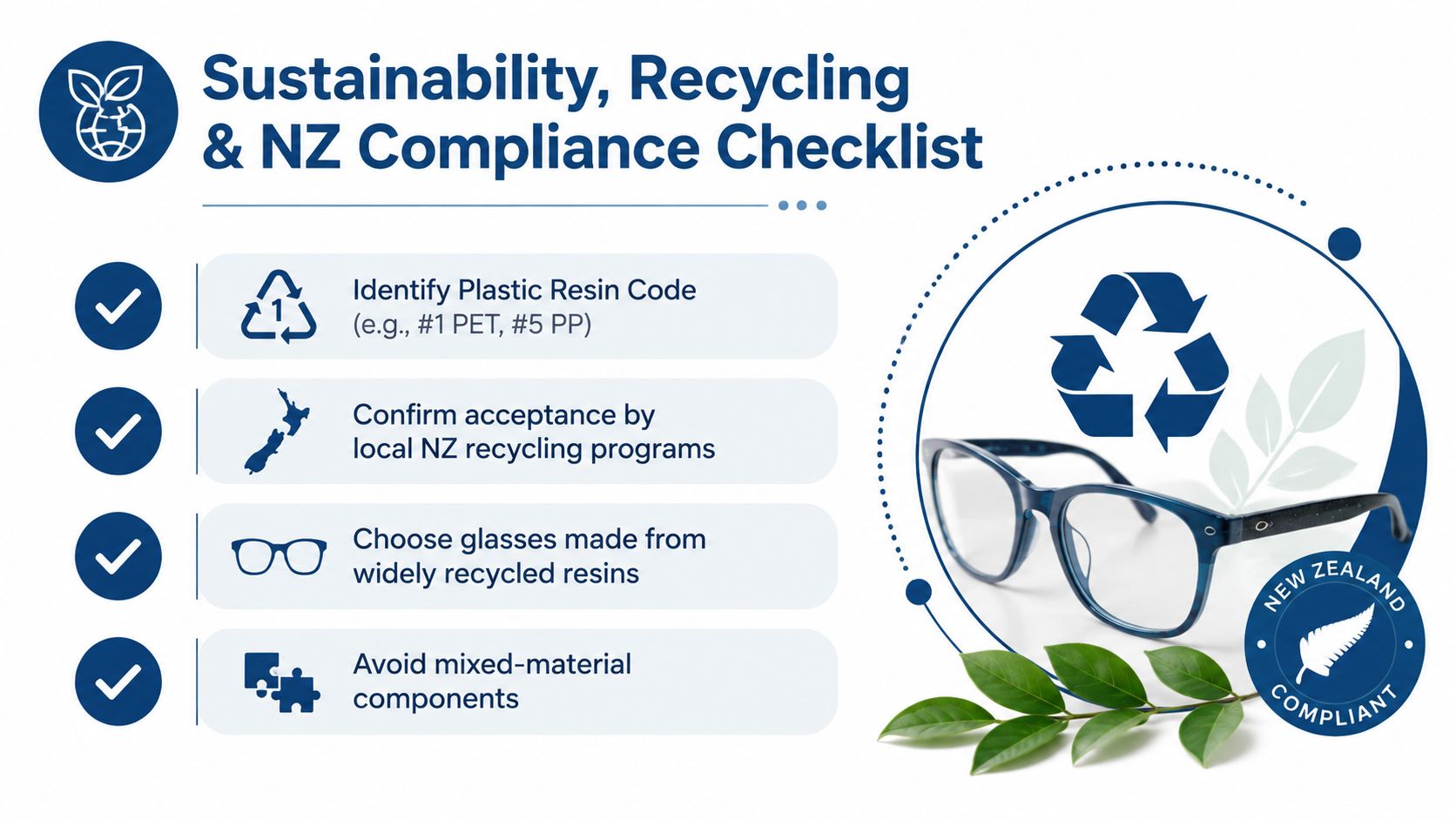
New Zealand kerbside programs typically accept only resin codes 1, 2 and 5. Resin codes 3, 4, 6 and 7 are usually excluded and should go to landfill unless a council-run takeaway scheme or local recovery option says otherwise. That means an apparently clear plastic wine glass is not automatically recyclable. The resin code decides the route, not the look of the cup.
Glass needs the same caution. New Zealand recycling guidance generally keeps drinking glasses and wine glasses out of standard bottle and jar recycling because they are made from a different glass composition. In practice, broken service glass does not belong in the bottle bank, even if it still looks like glass to staff on a busy shift.
Think in service cycles, not slogans
Refillable systems make sense where breakage is manageable and the venue can wash, stack and return the ware without creating extra handling problems. In high-risk service environments, reusable plastic can cut breakage and reduce the clean-up burden without pushing the venue into single-use waste. Single-use plastic sits in a different compliance bucket again, so it should be assessed on its own disposal path rather than folded into the same sustainability claim.
A practical checklist keeps the decision grounded:
- Check the resin code on the actual product.
- Confirm local recovery acceptance before assuming recyclability.
- Separate reusable and single-use products in purchasing decisions.
- Avoid mixed-material components where recovery gets complicated.
- Treat broken service glass as general waste unless a local programme says otherwise.
That is the part many buyers miss. Plastic wine glasses are not automatically the greener choice, and glass is not automatically the cleaner answer. The venue, the wash cycle, the breakage risk and the disposal route all matter.
Total Cost of Ownership and Ordering Considerations
Unit price is only one part of the cost. For plastic wine glasses, the cost includes breakage risk, washing, replacement frequency, storage footprint and how much staff time is spent managing the ware on event day. In high-risk areas, a slightly dearer reusable product can be the more economical operational choice because it avoids the hidden costs around damage and service disruption.
Work out the full service cost
Operators should compare drinkware on a full-cycle basis:
- Purchase price of the product.
- Breakage replacement if the venue uses glass.
- Commercial washing time and rack handling.
- Storage and transport space.
- End-of-life disposal or recovery.
- Guest experience if the presentation is part of the venue's brand.
That framework matters most where glass losses aren't random, they're predictable. Pools, festivals, weddings, stadiums and mobile bars all create conditions where handling risk is part of normal trading, not an exception. In those settings, the cheapest glass on paper often costs more once replacements and cleaning are included.
Order for the service pattern, not the cupboard space
Ordering should follow venue type and turn rate. A caterer needs different stock logic from a hotel terrace. A wedding venue may need a stemmed look for the first pour and a more stable option for outdoor service later in the night. A poolside operator may value stackability and transport more than a traditional silhouette.
One practical detail often overlooked is how the glasses will move through the building. If they're going to be run through a commercial wash cycle, the venue needs the right racks and enough drying space. The Dishwasher Rack - Glass Rack 25 Compartments 500mm is a good example of how safe handling starts with the washing workflow, not the front-of-house display.
For most operators, the purchasing question is not “what's cheapest today?” It's “what keeps the service running cleanly for the least friction across the whole cycle?”
Choosing the Right Plastic Wine Glass for Your Venue
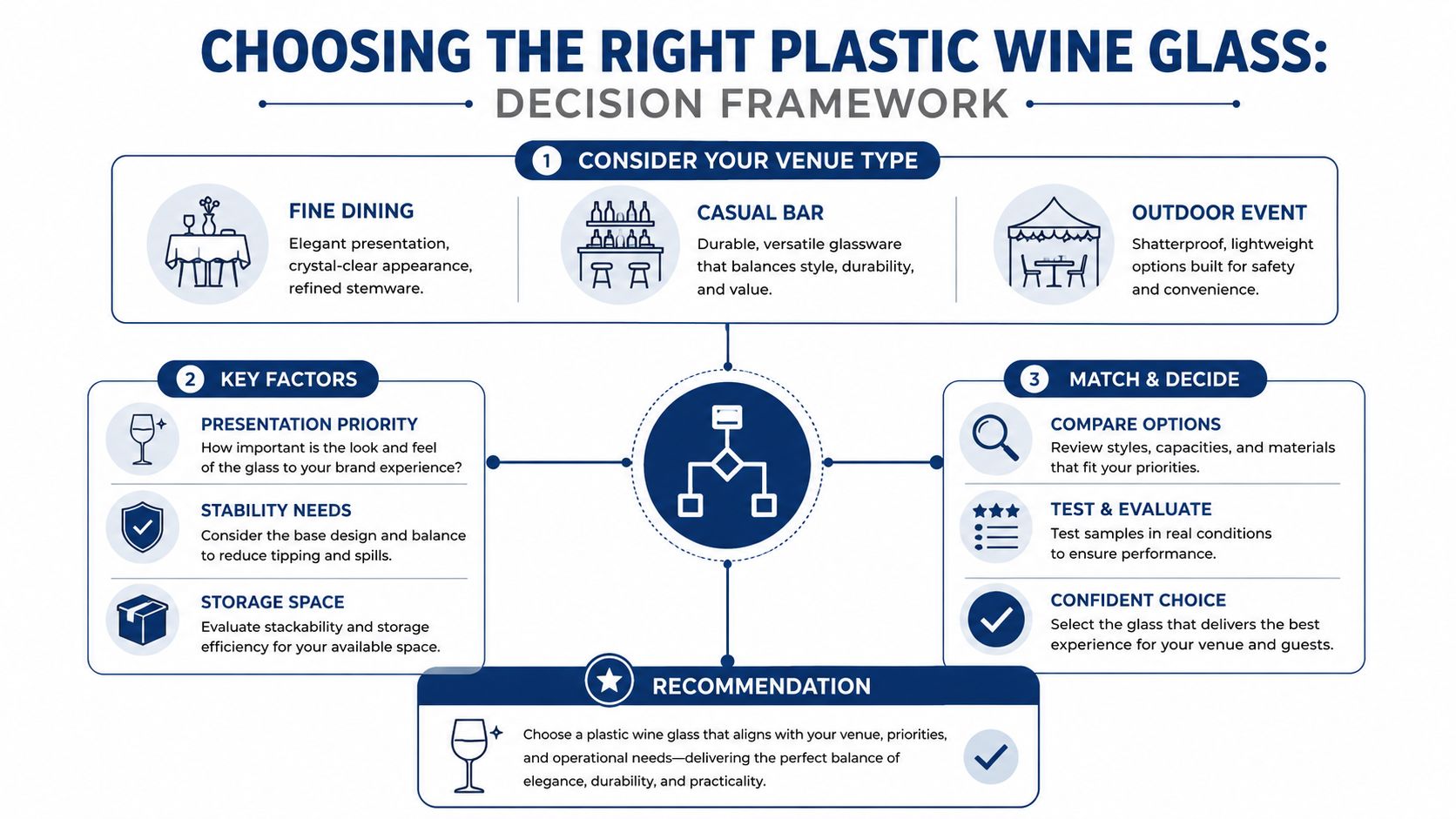
The best choice depends on how the venue operates. A wine glass for a wedding marquee should not be judged by the same standard as one used beside a pool or in a stadium suite. Safety, presentation, washing and transport all pull in different directions, and the right answer usually sits where those demands overlap.
Use the venue to make the call
For premium outdoor functions and weddings, stemmed plastic wine glasses often fit better because they preserve the wine-service look guests expect. For festivals, poolside bars and high-traffic functions, stemless styles usually hold up better because they're more stable and easier to manage in busy service lanes. Hotels and aged-care settings often end up deciding on a room-by-room basis, not a one-size-fits-all solution.
The right questions are direct:
- Is traditional glass safe here?
- Will the glass be commercially washed?
- Does presentation matter more than stability?
- How will stock be stored and transported?
- Is the venue expecting reusable or single-use ware?
- Does the rim feel right for wine service?
If the answer points toward reliability and reduced breakage, reusable plastic can be the right hospitality product. If the answer points toward high-end presentation and low-risk service, glass may still be the better fit. The point is to choose the tool that suits the room.
For operators weighing that decision now, Hospitality can help specify drinkware that fits the venue, the wash process and the service style. Visit Simply Hospitality to explore the range and talk through the right plastic wine glass option for your business.