

Restaurant Equipment NZ: A Practical Buyer's Guide
A new operator can have the keys to a Queen Street site, a signed fit-out plan and a menu ready for launch, then discover that the combi oven ordered months earlier can't keep pace with the busiest service. Replacing it before opening affects more than the appliance. Power, extraction, clearances, delivery access, bench layout and staff workflow may all need to change.
That is why restaurant equipment in NZ should be specified as one connected operating system, not as a collection of impressive individual appliances. The right package follows the menu and the busiest realistic service, from chilled storage and preparation through cooking, holding, service, clearing and warewashing. This guide sets out the practical decisions that prevent expensive surprises.
Why Restaurant Equipment NZ Decisions Deserve More Thought
New Zealand hospitality is a substantial operating environment, not a small fit-out niche. The sector directly employed 193,000 people in the year ended March 2025, supported 221,440 jobs including supplier roles, and generated $21.4 billion in revenue, reported as 5% of national GDP in the sector profile (New Zealand hospitality sector data). That installed base includes restaurants, cafés, bars, hotels and institutional kitchens using refrigeration, cooking equipment, warewashing systems, stainless fabrication and smallwares every day.
The customer base remains broad. Industry analysis estimated 9,548 cafés and restaurants in 2026, up 3.2% from 2025, with projected industry revenue of $8.9 billion (IBISWorld cafes and restaurants industry analysis). Those figures don't tell an operator which oven to buy, but they do explain why equipment decisions affect a large, varied and competitive operating environment.
The appliance is only one part of the cost
A failed specification rarely ends with exchanging one machine. A different combi may need another electrical supply, a larger canopy, altered drainage, a revised bench run or a wider delivery route. A replacement fridge can disrupt prep sequencing, food storage separation and service access. A dishwasher selected without checking water treatment and drainage can become a bottleneck from the first shift.
The most expensive decisions are often made under pressure, when a failed appliance, delayed opening or late menu change leaves little room to compare alternatives. The biggest equipment buying mistakes seen in hospitality usually begin earlier, with incomplete information rather than a lack of product choice.
Practical rule: Choose the kitchen around the busiest realistic service, then check whether the same equipment remains sensible during quieter periods.
A 140-cover Friday service, a compact café breakfast rush and a hotel banqueting operation may all need ovens, refrigeration and warewashing, but they won't need the same capacities or layout. The right answer depends on menu mix, production method, available services, staff movement and local support.
The Kitchen Workflow That Drives Equipment Choices
The strongest restaurant equipment NZ specifications begin at the receiving door and finish at waste handling. A kitchen that looks efficient on a plan can still fail if ingredients, dirty ware and finished dishes cross the same narrow path.
Start with storage and preparation
Delivery access determines whether large refrigeration and cooking units can reach the site without dismantling doors, negotiating stairs or relying on an untested lifting plan. Once inside, dry goods need organised shelving, while chilled and frozen products require reach-in or walk-in refrigeration, freezers and, where the menu demands it, dedicated preparation fridges.
Preparation benches should sit close to the relevant cold storage and cooking stations. A food processor such as a Robot Coupe may reduce repetitive knife work for suitable menus, while a mixer supports doughs, batters and other batch preparation. Stainless benches and sinks provide the working surface, cleaning points and separation required by the kitchen plan.
The restaurant kitchen layout guidance from Simply Hospitality is useful when mapping those relationships before equipment dimensions become fixed.
Build the cookline around the dishes
Cooking equipment should follow production methods, not catalogue categories. Commercial ranges, fryers, griddles and chargrills suit different menu requirements. Convection ovens provide a different workflow from combi ovens, while speed ovens can suit rapid finishing or compact service where the menu supports that approach.
For intensive pan work, the Waldorf 800 Series RN8110G 900mm Gas Target Top Static Oven Range combines a 900mm integrated floor module, a 45MJ/hr dual-ring cast-iron burner and a 2/1 GN gas static oven. Its concentrated centre-to-edge heat suits pan work where graduated heat matters, but the target top, splashback and gas services must fit the wider cookline.
Holding equipment, salamanders, hot cupboards and pass shelves then need to support the gap between cooking and collection. A pass designed without considering plate flow can slow service even when the cookline has adequate output.
Finish with clearing and washing
Clearing routes should lead dirty plates, cutlery and glassware towards warewashing without cutting across food preparation. Commercial dishwashers, passthrough dishwashers and glasswashers each suit different volumes and layouts. Waste handling also needs a defined place, or bins will occupy the access space staff need during service.
Operators comparing hospitality workflows and customer-facing systems may also find Clepher for food service useful for broader operational context. The equipment decision itself remains site-specific. A combi oven chosen before cold storage is confirmed can leave prep short on space, while a pass that ignores the wash-up route creates an avoidable end-of-service queue.
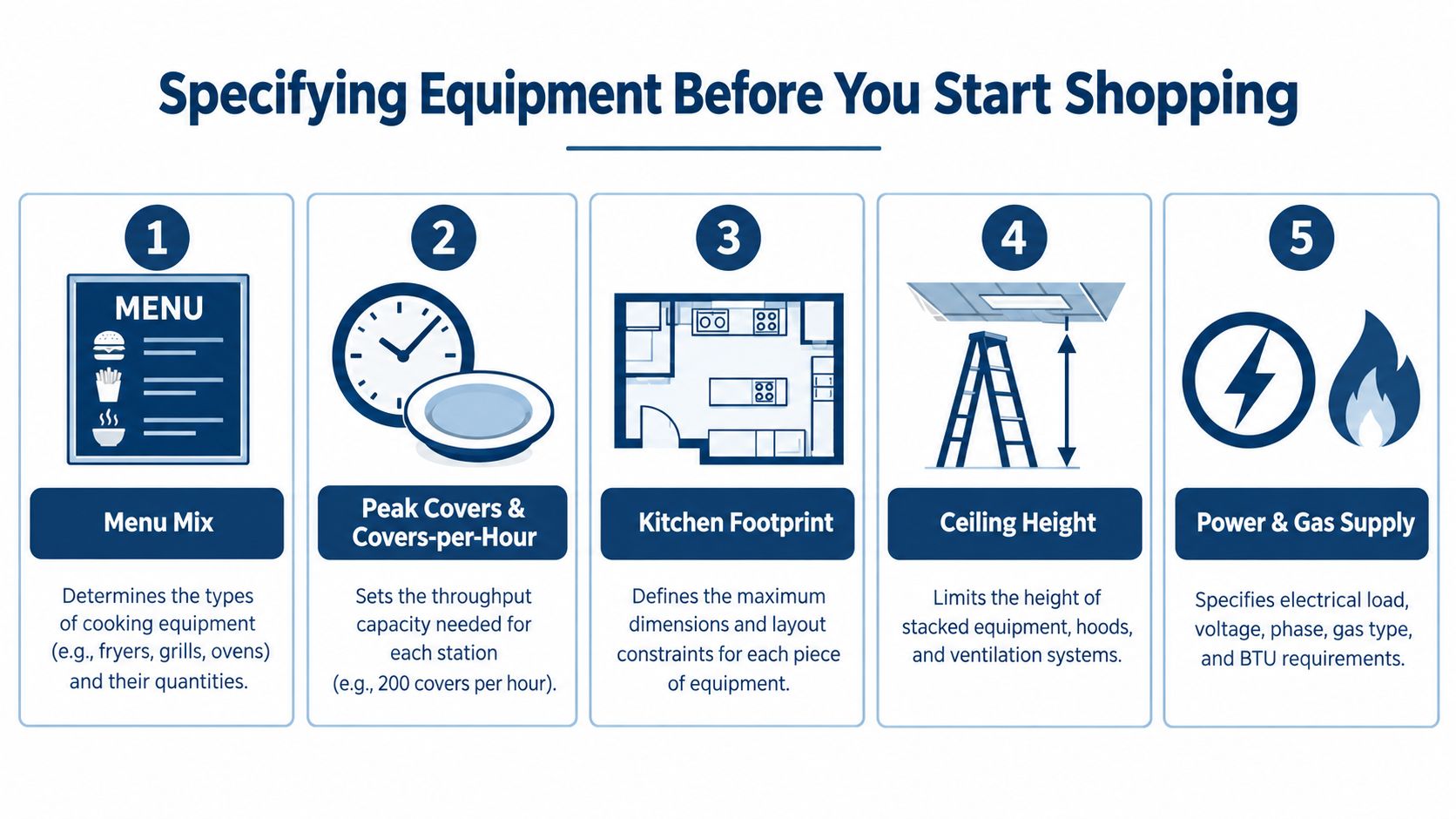
Specifying Equipment Before You Start Shopping
A supplier can compare models properly only after the operating constraints are known. Before requesting a quote, the operator, designer and relevant trades should record the following.
The information that controls the shortlist
- Menu mix: Identify which dishes rely on frying, grilling, pan work, baking, steaming, regeneration or rapid finishing. The menu determines whether the kitchen needs a range, fryer, griddle, chargrill, convection oven, combi oven, speed oven or a combination.
- Peak production: Record the busiest realistic service and the required output at each station. Average trade hides bottlenecks, especially where one oven or fryer serves several menu sections.
- Kitchen footprint: Measure walls, bench runs, doorways, ceiling height and the space needed for cleaning and maintenance. A compact underbench fridge may outperform a larger cabinet if access and workflow are tight.
- Power supply: Confirm voltage, phase and available load before selecting induction, electric ovens, refrigeration or warewashing. Three-phase availability can change which models are practical.
- Gas supply: Confirm gas type, line capacity and appliance requirements. Gas cooking also affects extraction and make-up air planning.
- Water and drainage: Check pressure, hot-water capacity, floor wastes and drainage positions. Dishwashers, combis, ice machines and sinks can all impose different service requirements.
- Ventilation and extraction: Commercial kitchen extract ventilation is addressed through AS 1668.2 Section 5 in New Zealand Building Code ventilation guidance (Building Code ventilation guidance).
- Delivery access: Measure the route from the vehicle to the final position. A 600mm doorway, tight stairwell or restricted loading area can rule out equipment that otherwise fits the floor plan.
- Local servicing and parts: Ask who handles warranty work, where common parts are held and whether the equipment can be repaired locally. A technically strong appliance is a poor choice if downtime cannot be managed.
- Budget and ownership cost: Separate purchase price from installation, commissioning, service, consumables, energy and likely replacement parts. The lowest invoice isn't always the lowest operating cost.
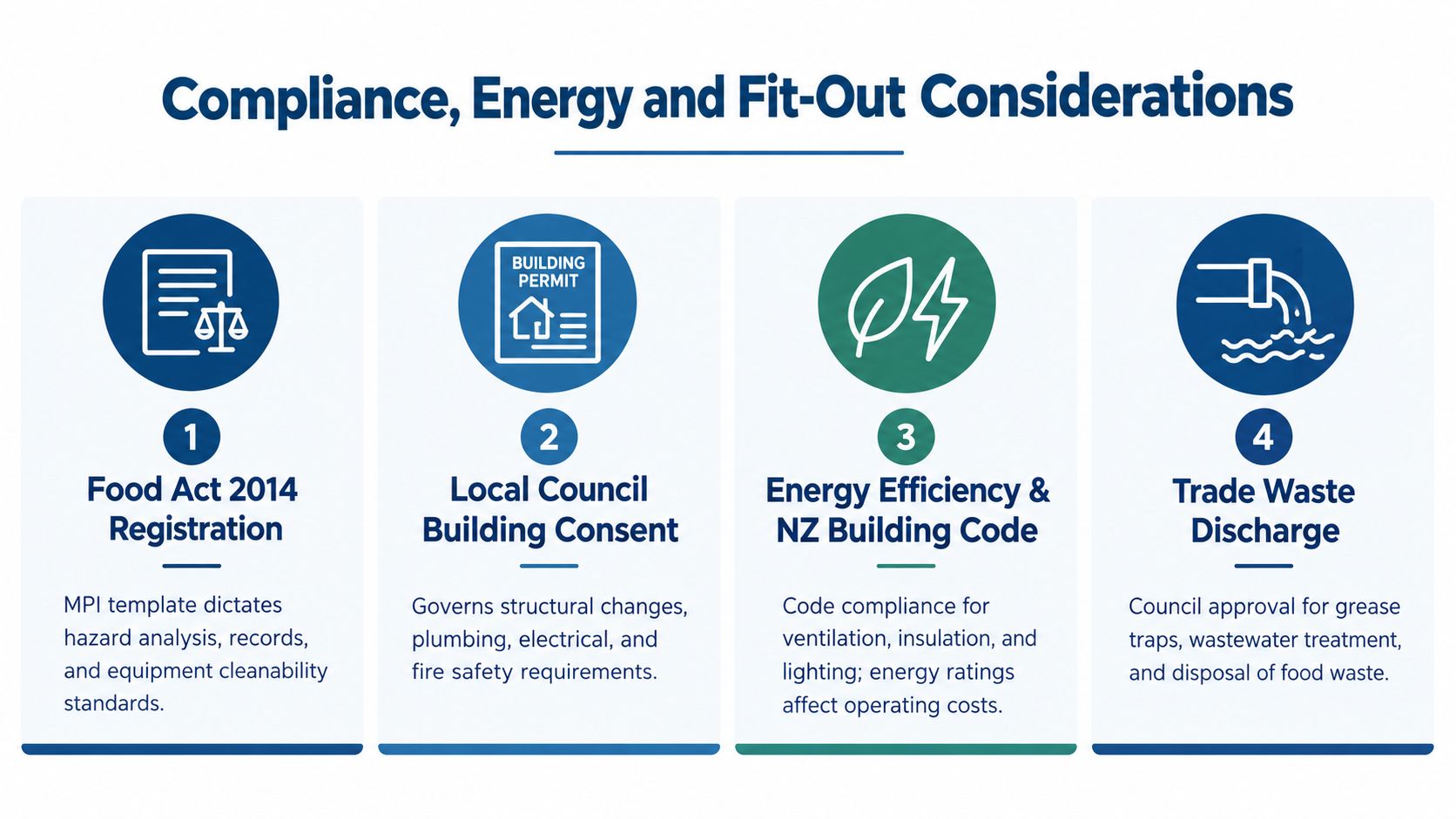
Food businesses should also confirm their registration pathway before finalising the fit-out. MPI states that businesses making or selling food may need to register before trading, with the route depending on the applicable national programme, template food control plan or custom food control plan (MPI Food Act 2014 guidance).
The equipment planning advice for consistent meal service is especially relevant where several stations must produce the same result under pressure. Skipping one input usually moves the problem into installation, commissioning or opening week, when changing services becomes far more disruptive.
Local Brands vs Imported Equipment in New Zealand
Country of manufacture is a poor substitute for proper specification. A locally supported appliance with accessible parts may be a more practical purchase than an imported model with an attractive feature list but uncertain service arrangements.
SKOPE is a relevant refrigeration name for operators who value established New Zealand support. Moffat, Blue Seal and Waldorf cover broad commercial cooking requirements and are familiar choices where range depth and serviceability matter. Imported brands such as Convotherm, Robot Coupe and Winterhalter can suit operators looking for particular cooking, preparation or warewashing capabilities, provided the New Zealand support pathway is clear.
Atosa can be considered where an imported refrigeration option fits the budget and application, but warranty coverage, compressor support and parts arrangements need to be checked before purchase. Washtech is a recognised New Zealand warewashing brand, although the correct choice still depends on the machine type, wash-up layout, water treatment and service expectations.
| Brand tier | NZ service network | Parts availability | Typical lead time | TCO outlook |
|---|---|---|---|---|
| NZ-supported refrigeration and cooking brands | Usually easier to identify before purchase | Confirm common parts and controllers | Depends on local stock and model | Often favourable where downtime matters |
| Imported premium equipment | Support may run through a specialised distributor | Confirm importer-held parts and service coverage | Can be longer for specialised models | Can suit demanding applications if support is strong |
| Imported value equipment | Varies significantly by brand and importer | Confirm warranty scope and compressor parts | Stock-dependent | Purchase price may not reflect ownership risk |
| Used or refurbished equipment | Depends on seller and remaining warranty | Condition and model age require careful checking | Often available sooner | Can reduce capital outlay, with greater condition risk |
The useful question is practical: who can diagnose the fault, supply the part and return the appliance to service? Operators should request warranty terms in writing, including whether labour is covered and which party manages the callout.
Hospitality supplies a broad range of these categories, including refrigeration, cooking, food preparation, ovens and warewashing, so buyers can compare equipment by application rather than origin alone. Brand collections such as SKOPE refrigeration and Blue Seal and Waldorf cooking equipment can help organise that comparison without treating one brand as suitable for every venue.
Compliance, Energy and Fit-Out Considerations
Confirm regulatory and infrastructure requirements before ordering equipment. Food businesses operating under a national programme must register with the appropriate authority, and MPI registration guidance explains when registration sits with a local council or MPI.
Registration affects the kitchen plan. Storage, cleaning, handwashing, separation and temperature control must work together, rather than being solved appliance by appliance. Local-government guidance states that food businesses generally need registration under the Food Act 2014 and that trading without registration can be illegal (local-government Food Act guidance). Hospitality suppliers can advise on equipment, but they do not provide regulatory certification. Bring the designer, relevant trades and regulatory specialists into the project early.
Ventilation and refrigeration are design constraints
Cooking equipment sets the extraction brief. Fryers, chargrills, ranges and combi ovens can change canopy size, ducting, airflow and grease-management requirements. The applicable Building Code guidance directs commercial kitchen extract ventilation to AS 1668.2 Section 5 (commercial kitchen ventilation guidance).
Refrigeration needs the same level of planning. ISO 22041:2019 covers performance verification and energy-consumption testing for refrigerated cabinets and counters used in commercial kitchens and related foodservice settings (Standards New Zealand ISO 22041:2019). Mechanical refrigerators used for food storage must maintain required food temperatures and have a fixed thermometer or equivalent measuring device. Select cabinets for opening frequency, storage profile, cleaning access and service clearance, not internal volume alone.
Energy belongs in the shortlist
EECA reports that, in 2022, accommodation and food services attributed 22% of energy use to refrigeration systems and 15% to commercial ovens and cooking elements (EECA food and beverage service sector pathway). Those categories deserve close attention during whole-of-life comparisons. A guide to energy-efficient appliances can help structure that review.
Induction heats cookware directly and can reduce wasted heat, while modern electric cooking may improve working conditions and safety in suitable applications (New Zealand commercial cooking guidance). The choice depends on electrical capacity, menu demands and extraction design. EECA also notes that equipment energy-efficiency rules were updated in 2026, tightening MEPS and labelling requirements across more product classes (EECA equipment energy-efficiency rules).
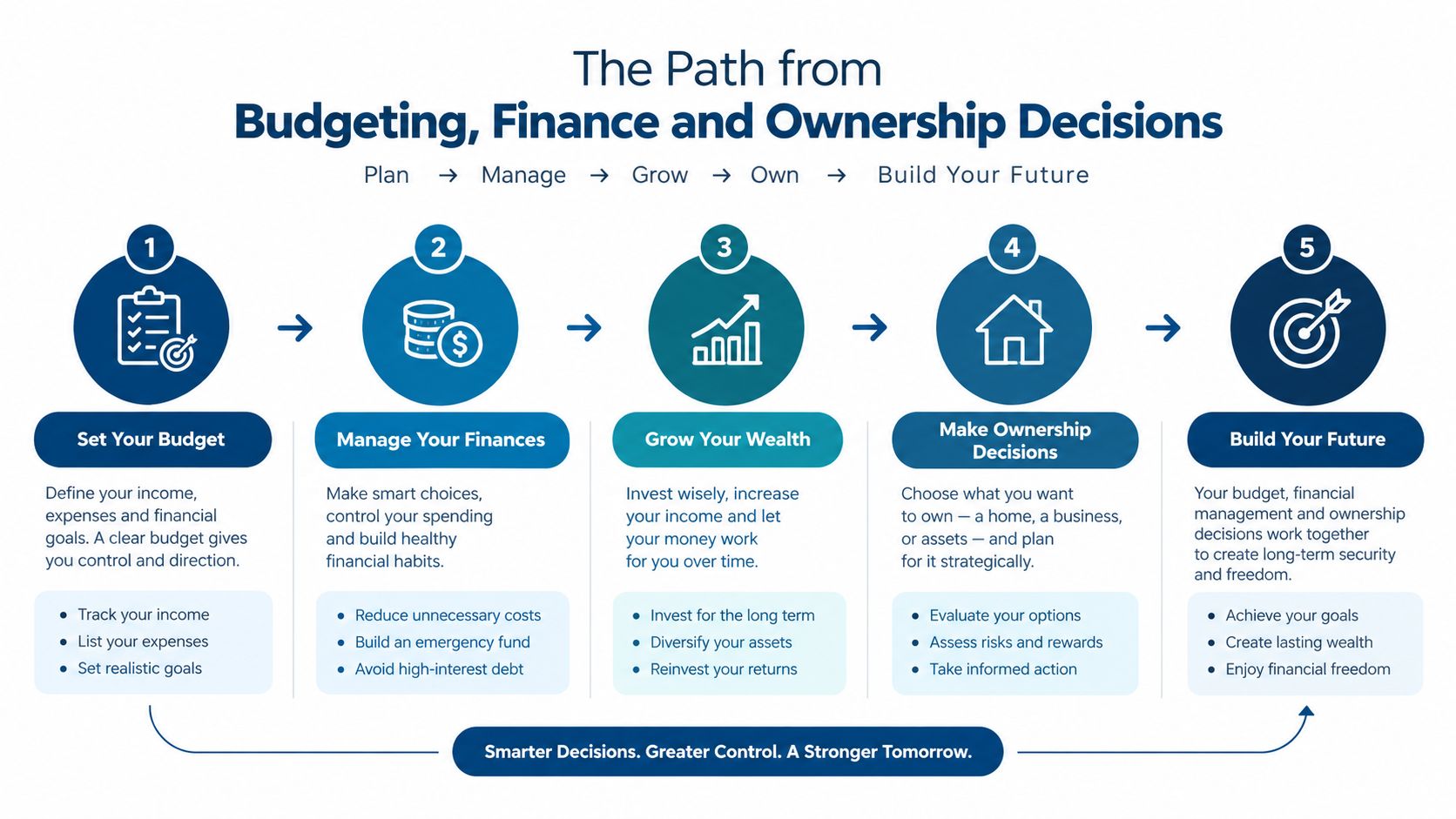
Budgeting, Finance and Ownership Decisions
Equipment budgeting works better when refrigeration, cooking, prep and warewashing are treated as one ownership plan. A low-priced oven may require expensive electrical work, while an affordable dishwasher may need water treatment, drainage changes and ongoing chemical support that weren't included in the original allowance.
Rental-style finance through providers such as SilverChef can help a new operator preserve cash for other opening costs, but the agreement needs careful reading. Monthly payments, upgrade conditions, end-of-term options and any residual or balloon amount should be understood before signing. A lease can improve short-term cash flow without automatically reducing the total cost of ownership.
Compare new, used and financed equipment honestly
Outright purchase gives the operator ownership and may allow package discussions across several categories. Used or ex-lease equipment can make sense for durable items, particularly where the model is well supported, but condition checks are essential.
Before buying used refrigeration, cooking or warewashing equipment, check:
- Operating condition: Inspect compressor behaviour, door gaskets, hinges, controllers, elements and pumps.
- Documentation: Photograph serial plates and request service history where available.
- Compatibility: Confirm power, gas, water, drainage, ventilation and dimensions before committing.
- Warranty: Establish exactly what remains covered, including labour, parts and callout arrangements.
- Commissioning: Budget for testing, calibration and installation rather than assuming the unit is ready to run.
The lease versus buy guidance for commercial kitchen equipment in NZ can help operators frame the decision around cash flow, control and risk. A useful worksheet should track purchase cost, installation, service, water treatment, energy, consumables and the operational cost of downtime by category.
Ownership test: If the appliance fails during service, the relevant cost is not only the repair invoice. It also includes lost capacity, staff disruption and the time required to source a replacement.
Warranty terms vary by brand and distributor, so buyers should avoid assuming that all commercial equipment includes the same parts and labour protection. The package should be approved only after the finance structure, service plan and installation requirements are understood together.
Selection and Maintenance Tips That Pay Off Long Term
Equipment life is shaped by installation, cleaning and staff habits as much as by the badge on the front. A carefully specified appliance can still underperform if condenser airflow is blocked, door seals are damaged or operators use the wrong chemical concentration.
Check the equipment before commissioning
On delivery, inspect stainless surfaces, panels, doors and welds before packaging is discarded. Confirm that gaskets sit flush, shelves and runners are complete, controls operate correctly and the serial plate is photographed for warranty records.
During commissioning, record baseline temperatures, operating sounds and electrical readings where the installer provides them. Those records give the operator something objective to compare if refrigeration recovery, oven performance or dishwasher operation changes later.
Give each shift a simple maintenance routine
- Daily: Clean food-contact surfaces, inspect door seals, clear filters and confirm temperature records are completed.
- Weekly: Check condenser coils, hinges, gaskets, spray arms, wash filters and extraction filters.
- Monthly: Review refrigeration probes and controllers, inspect water treatment and check recurring faults.
- Quarterly: Examine hinges, seals, shelving supports, drain paths and serviceable wear components.
Cleaning chemistry matters. Chlorinated or excessively aggressive products can shorten the life of gaskets and metal surfaces, while inadequate contact time can leave food residue behind. Staff need training on the correct chemical, dilution and contact process, not only a list of cleaning frequencies.
Water quality deserves early attention for combi ovens, ice machines and warewashers. Filters and treatment systems should be replaced or serviced according to the equipment and local water conditions. Dishwasher performance also depends on correct chemical dosing, rack loading and regular cleaning of wash arms and filters.
Operators should keep a fault log with the date, symptom, action taken and response time. That record helps identify recurring failures and gives useful evidence when reviewing service arrangements. For businesses connecting equipment planning with ordering and front-of-house systems, a practical EPOS comparison from Splash Access provides additional context around technology choices that affect service flow.
Maintenance protects more than appearance. Accurate temperature control supports food safety, clean condensers help equipment operate as designed, and clear extraction filters preserve airflow. The operator who makes these checks part of every shift is less likely to discover a preventable failure during the busiest service.
Putting the Right Equipment Package Together
A workable restaurant equipment NZ package starts with the menu, not the product catalogue. The operator should map receiving, dry storage, chilled storage, prep, cooking, holding, pass, service, clearing, washing and waste as one route, then test each stage against the busiest realistic service.
That workflow determines the categories required:
- Storage: Reach-in refrigeration, freezers, underbench units, preparation fridges, shelving and dry-store organisation.
- Preparation: Stainless benches and sinks, food processors, mixers, knives, cookware and smallwares.
- Cooking: Ranges, fryers, griddles, chargrills, induction, convection ovens, combi ovens and speed ovens.
- Holding and service: Hot holding, pass equipment, crockery, glassware, barware and service utensils.
- Clearing and warewashing: Commercial dishwashers, passthrough dishwashers, glasswashers, sinks, racks and waste handling.
The specification then needs to be checked against power, gas, water, drainage, extraction, ceiling height, delivery access, parts availability and local service. Brand selection should follow those filters. SKOPE, Moffat, Blue Seal, Waldorf, Atosa, Convotherm, Robot Coupe, Winterhalter, Starline, Classeq and other brands may each suit different applications, but no brand removes the need for proper sizing.
Lead time belongs in the same decision. If a preferred model isn't available when a failed appliance must be replaced, a locally stocked equivalent or different brand may deliver more commercial value than waiting for one exact unit. Planned fit-outs should identify specialised or long-lead equipment early, while urgent replacements should begin with what can be supplied and supported.
The best package isn't a showroom of individual winners. It's a coordinated group of correctly sized, serviceable pieces that let staff move ingredients, dishes and dirty ware without fighting the layout.
Hospitality supplies commercial refrigeration, cooking equipment, ovens, food preparation systems, warewashing, stainless fabrication and smallwares for New Zealand hospitality businesses. Visit Simply Hospitality to compare suitable categories and contact the team for help specifying a package around the venue's menu, services, space and timing.