


Signage for Wet Floor: A Practical Guide for Venues
Most advice on signage for wet floor starts with the sign itself. That's the wrong place to begin. A wet-floor sign placed on top of the spill, or beside the patch after someone has already stepped into it, has already missed its most important job. In busy venues, the actual task is to warn people before they reach the hazard, because signage only works when it changes what someone does next.
That matters in New Zealand workplaces because slips, trips and falls remain a major source of harm, and WorkSafe has repeatedly identified them as among the most common causes of workplace injury. New Zealand workplaces also recorded 31,180 non-fatal claims for slip, trip, or fall injuries in 2023/24, making this the single largest cause of serious physical injuries by claim type in the country, according to the placement guidance cited in the brief. That context is why wet-floor signage has to sit inside a wider control system, not act as a decorative warning after the fact. 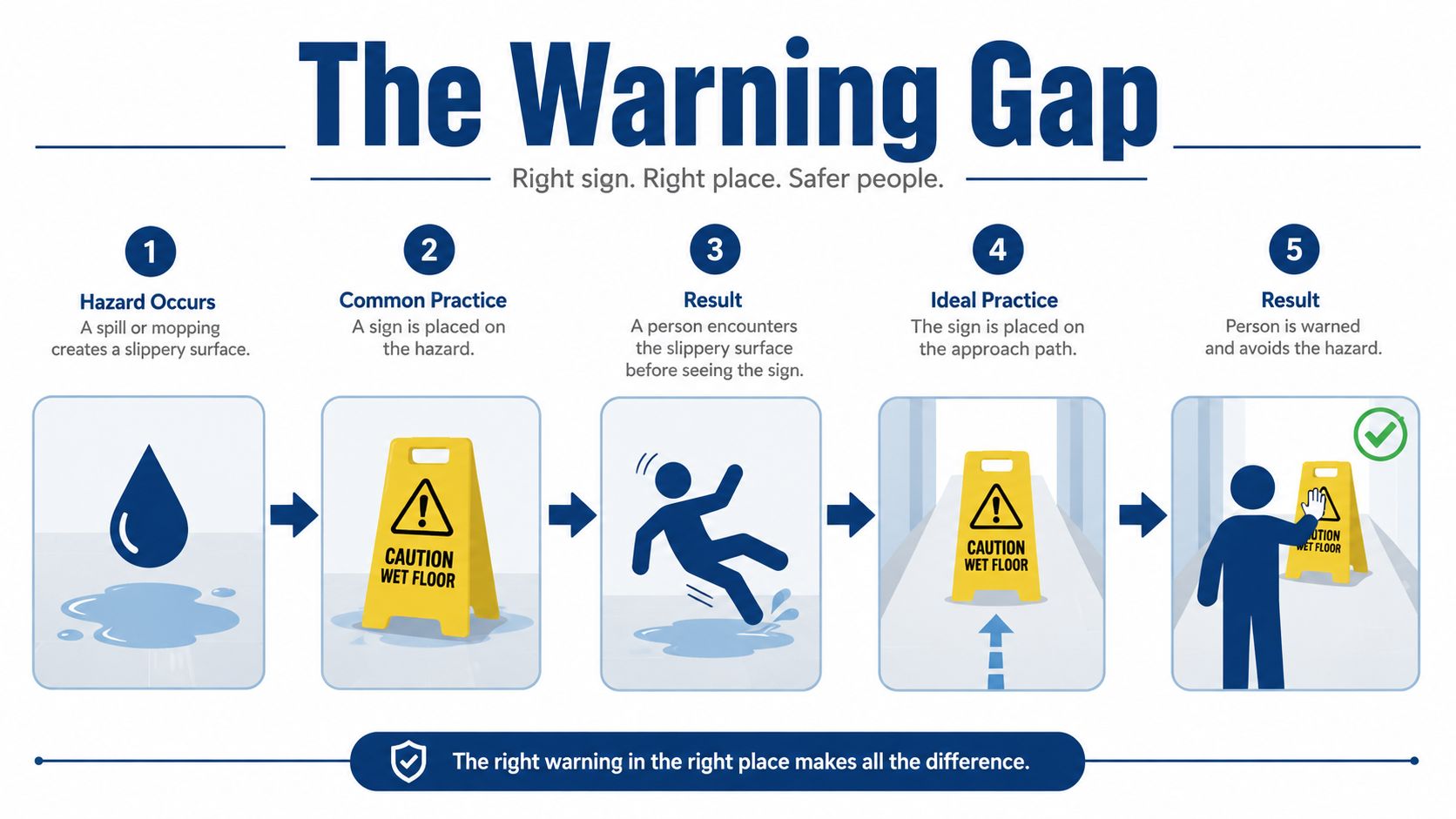
Why Most Wet-Floor Signs Are Already Too Late
A lot of venues place the sign where staff can see the wet patch clearly. That feels sensible in the moment, but it often arrives after the decision point for customers, students, residents, or visitors who are already walking toward the area. A sign can identify the hazard and still fail to warn early enough to change behaviour.
The warning needs to come first
The practical rule is straightforward. If someone does not see the sign until they are already at the wet surface, the sign has missed its job. Wet floors are temporary hazards, so the warning needs to go out immediately and come down only when the area is fully safe again. That aligns with WorkSafe wet-floor sign procedure, which treats prompt cleanup, restricted access, and clear warning as part of the same response.
Practical rule: a sign sitting directly on the hazard has identified the problem, but it has not meaningfully warned the next person.
That is why the better question is not “Do we have a wet-floor sign?” It is “Can someone approaching the area see it soon enough to slow down, turn aside, or wait?” In hospitality, that distinction matters in dining rooms, kitchen entries, bathrooms, corridors, and loading points where people move fast and often carry trays, bags, or equipment.
A sign placed too late becomes a marker, not a control. The job is to get the warning into the path before feet reach the risk, not after the spill has already drawn attention.
For recurring wet areas, the floor finish itself can become part of the control setup. Surfaces that are easier to keep dry, or that pair well with anti-slip matting guidance, can reduce how often staff are forced into a last-second sign placement. That does not remove the need for signage. It just means the sign is working alongside the surface, not carrying the whole risk on its own.
The Main Types of Wet-Floor Signage
Temporary hazards call for temporary controls, and the fold-up A-frame remains the most practical option for most hospitality teams. It's easy to deploy, simple to move as cleaning progresses, and folds away without taking much room. That makes it well suited to cafés, pubs, kitchens, and accommodation properties where wet patches appear, shift, and disappear throughout the day.
Matching the sign to the space
A freestanding rigid sign suits high-traffic areas where people or trolleys may brush past the warning. Heavier bases help the sign stay upright in dining rooms, lobbies, and service areas that see constant movement. Wall-mounted signage, by contrast, works better for permanent warnings or fixed instructions, not for a floor that changes from dry to wet and back again.
High-visibility yellow signage with dark lettering is widely recognised because it stands out against most commercial flooring and communicates caution quickly. Product specifications from industrial suppliers also show common temporary signs are usually compact enough for transport, though the exact size matters less than legibility, stability, and whether the sign remains readable after repeated cleaning and handling.
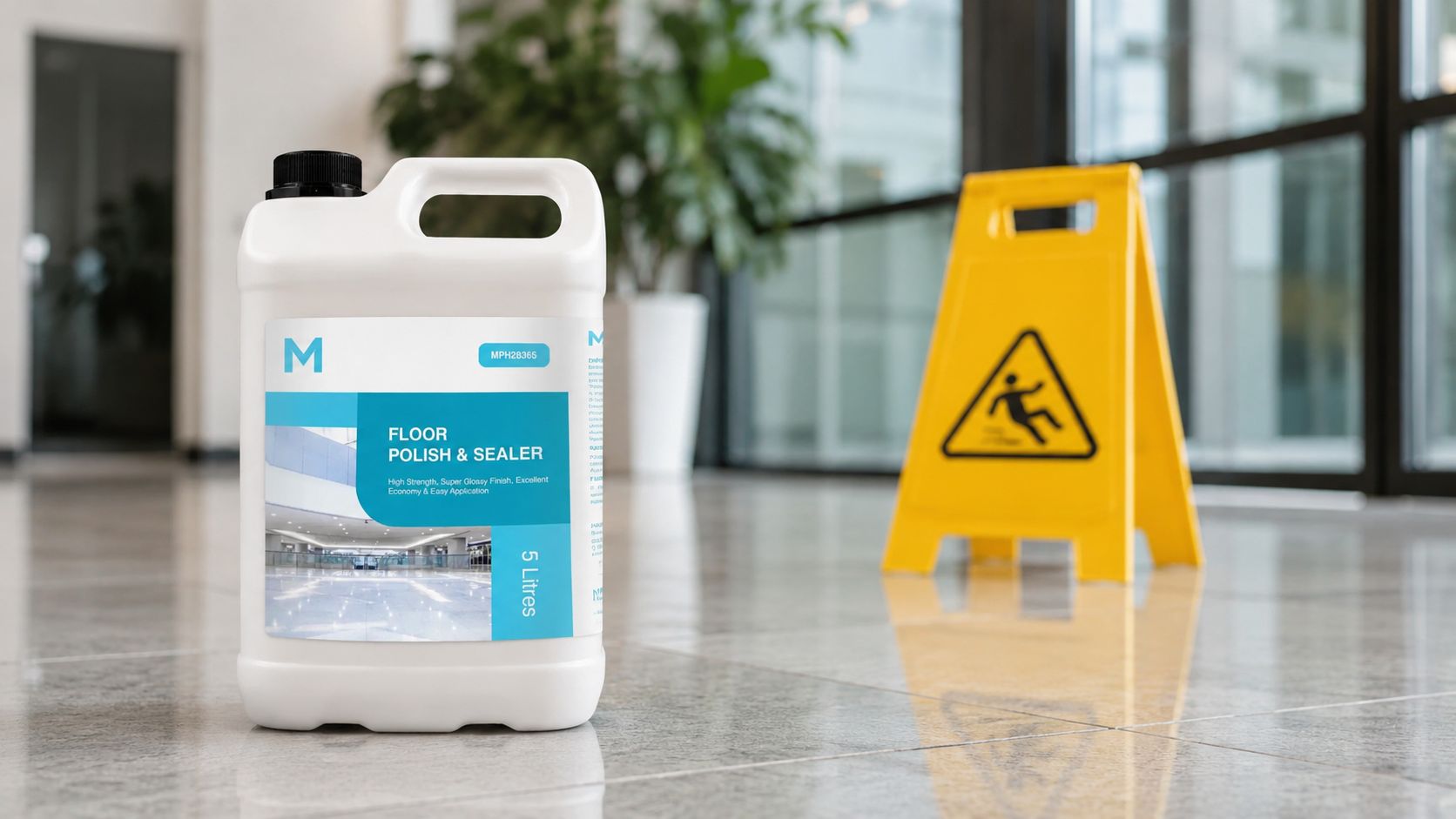
For recurring wet areas, another consideration is whether the floor itself is part of the control system. That's where products such as Matthews Floor Polish & Sealer can sit alongside cleaning and warning procedures, because polished and sealed flooring still needs clear signage whenever it's wet or being cleaned. For spaces where surface conditions, maintenance routines, and slip-risk controls are being reviewed together, this anti-slip matting discussion is a useful companion read.
Hospitals, marae, schools, and mixed-use venues often need different signage choices from a single-purpose café. A narrow corridor may need a sign that folds flat and stores easily, while a larger hall may need a broader, more visible warning presence at the room entry. The right type depends on how people move through the space.
Placement That Warns People Early Enough
A wet-floor sign belongs before the wet area, not in it. That sounds obvious, yet it is one of the most common mistakes in busy venues because staff are focused on the spill, not the route a customer will take into it. Placement should be judged from the perspective of someone arriving from a doorway, corridor, corner, or service route.
Map every approach path
One sign is often not enough when people can approach from several directions. Dining rooms with multiple entries, kitchen pass-throughs, bathrooms, back-of-house corridors, and exterior doors all create separate approach lines. In those settings, the warning zone needs to cover each entry path, or the safest sign in the world can still be missed.
Practical guidance for temporary hazard signs points the same way. Place them before the wet area, then add more signs at access points or along longer hazard runs. In some layouts, a corridor-style approach needs signs that warn from both directions, because people do not move in one neat line. The same thinking applies to hospitality premises layouts, where traffic flows can be tight and indirect, as discussed in Simply Hospitality's restaurant kitchen layout ideas.
Visibility matters more than proximity. A sign closer to the spill is not necessarily a better sign if nobody sees it in time.
The other risk is creating a new trip hazard. In narrow kitchens, older buildings, and tight service corridors, a poorly placed sign can become part of the obstruction instead of the warning. That matters where bins, trolleys, or cleaning gear already compress the available path.
A practical example is a slimline waste station such as the Jantex Slim Bin 80L Black, which is designed for narrow commercial spaces. In a corridor like that, signage has to be positioned so it warns without narrowing the route further. Placement also needs to sit within the wider cleaning plan, because signs are only useful if they are set before people reach the hazard. For anyone wanting a broader reference on where water-related hazards need immediate attention, this resource on signs you need water extraction helps underline the same point, early action beats after-the-fact cleanup.
Choosing Materials That Survive Commercial Cleaning
Wet-floor signs get used hard. They're deployed, moved, wiped down, knocked over, stacked, and stored in a rush. That's why the cheapest sign is rarely the cheapest choice over time, especially in hospitality where cleaning happens constantly and the sign has to look respectable in front of customers.
Durable enough to be used properly
Lightweight plastic fold-up signs are popular because staff can grab them fast and put them where they're needed. Heavier rigid signs stay upright better, but they're less convenient if the hazard moves from one end of a room to another during service. The answer depends on the venue's rhythm, not just on product price.
A good commercial sign should have water-resistant surfaces, easy-clean finishes, and a stable base that won't skate across smooth flooring. Reusable signs make more sense than disposable cardboard or flimsy vinyl in venues that mop daily, because repeated sanitising will quickly expose weak print, soft edges, and unstable feet. Product specifications from industrial suppliers also show that some variants are designed to tolerate repeated cleaning and higher temperatures, which matters where signs are washed down or stored near warm plant areas.
A wet-floor sign should be easy to deploy and difficult to miss. If staff hesitate to use it, the design has already failed operationally.
The cleaning side matters too. Signs that trap grime around hinges, labels, or feet tend to look tired very quickly, and a tired-looking safety sign is more likely to be ignored. In front-of-house spaces, that can undercut the professionalism of the whole venue, even when the hazard response itself is correct.
For cleaning teams comparing products and consumables, Simply Hospitality's commercial cleaning products NZ overview is a practical starting point for thinking about how safety gear fits alongside day-to-day maintenance routines. The main takeaway is straightforward, choose a sign that can survive the same treatment as the rest of the cleaning kit.
Wording, Pictograms and Multi-Language Considerations
A temporary warning has to be understood almost instantly. That's why short wording, strong pictograms, and high-contrast colour outperform long explanations every time. People don't stop to read a paragraph on a wet floor sign, they glance, process, and keep moving.
Keep the message immediate
The standard caution symbol works because it is recognised quickly, even by people who don't share the same first language. Yellow backgrounds with dark lettering are widely understood in workplaces and hospitality settings because they stand out and signal caution without needing translation. If the message is too wordy, it slows recognition, and that's a problem when the warning needs to work in seconds.
That's particularly important in venues serving tourists, students, aged care residents, marae visitors, and mixed staff teams. A clear pictogram reaches more people than small print ever will. Consistency helps too, because people begin to recognise the sign before they consciously read it.
If a venue uses several sign styles across the site, staff should still recognise them as the same warning category. Consistent visuals matter more than clever wording. A floor sign is not the place for creative copy, it's the place for immediate recognition.
Connecting Signage to Cleaning Protocols and Incident Logs
Wet-floor signage only works when it is built into the cleaning routine, not added at the end as an afterthought. A sign on its own does nothing if staff put it out after people have already walked through the wet area. The key is to warn people before they reach the hazard, then keep that warning in place until the surface is truly safe again.
Use the sign as part of the response
The order has to stay simple. Contain or clean the spill, place signage immediately on the approach, move the sign if the wet area spreads, then remove it only when the floor is dry and access is clear. That sequence matches how venues operate, especially when one cleaner is working around guests and another is handling the mop bay or the service corridor.
Training matters because the sign is only as useful as the person deploying it. Staff need to know where the signs are stored, which areas need early warning, and how to position them without blocking circulation or creating a new trip point. In a busy venue, a good sign still fails if it is left behind the cart, tucked against a wall, or placed too close to the hazard to be seen in time.
Incident logs matter for the same reason. Near-misses show where the routine is weak, even if nobody fell. If the same entrance keeps getting wet, or a corridor keeps being missed during opening checks, that pattern should show up in the log and feed back into the cleaning schedule.
If the cleaning kit needs a refresh, a mop bucket with mop sits in the same practical conversation. Good signage is easier to use when the cleaning setup is organised, stored in a known place, and ready to go without staff hunting for missing gear.
Storage, Maintenance and What To Buy
A wet-floor sign only gets used when staff can find it fast. That means storage has to be boring and obvious, near the mop bay, behind the service counter, or at another known access point where the cleaning team starts work. If people have to search for it, they'll either skip it or place it too late.
A simple buying checklist
Reusable signs should be checked regularly for legibility, stability, and cleanliness. If the print is faded, the base is warped, or the surface looks grimy, the sign no longer supports the venue's safety standard. Keeping a spare on hand is sensible in high-traffic sites, because damaged signage tends to disappear into a cupboard and never get replaced on time.
The selection choice usually comes down to where the sign will live and how often it will move. A compact fold-up unit suits mobile cleaning teams, while a heavier freestanding sign suits broader public areas. Signs should be easy to wipe, easy to stack, and sturdy enough that bags, trolleys, or passing elbows don't knock them over.
| Wet-Floor Sign Selection at a Glance | ||
|---|---|---|
| Sign Type | Best Suited To | Key Trade-Off |
| Fold-up A-frame | Temporary spills, fast-moving cleaning teams | Very portable, but can be too light in busy traffic |
| Freestanding rigid sign | Dining rooms, lobbies, wide circulation spaces | More stable, but less flexible to reposition |
| Wall-mounted sign | Permanent or recurring warnings | Always visible, but not ideal for changing hazards |
For venues comparing storage options and how gear is kept between shifts, this storage containers kitchen article is a useful companion, because the logic is the same, if storage is awkward, the item gets used badly or not at all.
A Simple Mental Model for Effective Wet-Floor Signage
The best test is plain enough to run in a few seconds. Can people see the sign before they reach the wet area, can the hazard be approached from multiple directions, is the warning immediately understandable, can staff deploy the sign quickly, is it easy to clean and store, and do staff know when signage should be used?
Use the check every time
If any answer is no, the warning system needs work. A wet-floor sign should be easy to deploy and difficult to miss, because the point is not to decorate the hazard but to protect the next person walking towards it. Safety signage supports good procedures, it doesn't replace them.
WorkSafe New Zealand has repeatedly identified slips, trips and falls as among the most common causes of workplace injury, which is why wet-floor signage sits inside a broader control system rather than standing alone (WorkSafe context on slips and falls). That framing is the right one for restaurants, cafés, hotels, schools, aged care settings, and commercial kitchens alike.
For hospitality operators wanting a practical setup that fits the way their site works, Hospitality can help compare sign types, cleaning gear, and storage options for different venues. Visit Simply Hospitality and get advice on choosing signage that warns people early, suits your layout, and fits your day-to-day cleaning routine.