

Commercial Kitchen Supplies NZ | Hospitality Insights
Opening a new café, refitting a restaurant kitchen, or tightening up a catering operation usually starts the same way. A spreadsheet gets built, the wish list grows fast, and before long the big questions hit. What has to be bought now, what can wait, and what looks cheap today but turns into a headache during service?
This is the core challenge with commercial kitchen supplies in NZ. It isn't only about ovens, fridges, and dishwashers. It's also packaging, gloves, food storage, crockery, glassware, paper consumables, cleaning chemicals, prep tools, and all the unglamorous items staff touch every shift. When those choices are made well, service runs smoothly. When they're made badly, operators feel it every day in delays, waste, stockouts, and inconsistent presentation.
Many hospitality businesses start by comparing prices line by line. That's understandable, but it rarely gives the full picture. A better buying approach looks at workflow, compliance, reorder frequency, durability, serviceability, and how each product fits the venue's actual pace of trade.
Setting Up Your Kiwi Kitchen for Success
A common situation looks like this. A new venue signs the lease, the fit-out timeline is tight, and the owner starts pricing everything from refrigeration to takeaway cups in one burst. The early focus often lands on visible items and major equipment, while the smaller daily-use lines get left until late. That's usually where problems begin.
Hospitality businesses that plan procurement properly tend to make calmer decisions. They map equipment around menu and workflow first, then layer in the repeat-purchase essentials. That means thinking about prep benches, food storage, smallwares, hygiene products, napkins, disposables, and cleaning supplies at the same time as ovens and fridges, not after the first service has already exposed the gaps.
Practical rule: Buy for the service you'll actually run, not the version of the business you hope to become in two years.
For a café, that might mean prioritising underbench refrigeration, reliable bar and prep tools, takeaway packaging, cups, lids, gloves, and paper goods before adding niche equipment. For a hotel kitchen, it often means stronger attention on holding, batch prep, warewashing, and backup stock of core consumables. Caterers usually need mobility, stackable storage, transport-friendly packaging, and disciplined purchasing because event demand can shift quickly.
A common issue seen across new openings is buying products from too many places. It creates more admin, more freight variables, more invoice lines, and less consistency in reordering. Many operators find it easier to stay organised when categories are grouped by function:
- Core production such as cooking, refrigeration, dishwashing, and food prep
- Daily operations such as chemicals, gloves, cloths, bin liners, and paper products
- Service presentation such as crockery, cutlery, glassware, trays, and serving utensils
- Takeaway and delivery such as cups, lids, containers, bags, napkins, and packaging
Layout decisions matter just as much as product choice. A poorly positioned sink, awkward storage, or undersized prep zone can slow every shift. The planning work done at the start pays back every day, especially when linked to service flow, cleaning access, and staff movement. Operators refining that side of the fit-out can get useful ideas from how to design a kitchen that saves time on every service.
Beyond the Price Tag Choosing Equipment for the Long Haul
The fastest way to overspend on a kitchen is to buy major equipment on upfront price alone. Cheap refrigeration that struggles in summer, an oven that cooks unevenly, or a dishwasher that's hard to clean won't stay cheap for long. The true cost shows up later in downtime, callouts, wasted product, and staff working around equipment instead of with it.

What long-haul value actually means
A better buying lens is total cost of ownership. That includes energy use, expected maintenance, ease of cleaning, spare-parts access, and how disruptive a failure would be during service. For most venues, refrigeration, cooking equipment, and warewashing sit at the top of that list because the whole operation leans on them.
Trusted commercial brands such as SKOPE, Blue Seal, Cobra, Cookrite, and Turbofan are often chosen for exactly that reason. The appeal isn't only brand recognition. It's that the equipment is designed for repeated commercial use, practical cleaning, and consistent performance under pressure. Many operators also want service support and parts access that make sense in New Zealand, especially outside the main centres.
Compliance is part of the buying decision
Equipment choice also has to meet food safety expectations, not just production targets. In New Zealand, commercial kitchen equipment must be “adequate, fit for use, easy to clean, and installed to avoid contaminating food”, according to the Food Premises and Equipment standard guidance. In practice, that means operators should pay attention to joins, seals, drain points, splash areas, and whether staff can clean around and behind the unit properly.
What doesn't work well is choosing equipment with awkward corners, fragile handles, difficult-to-access condenser areas, or layouts that force staff to carry hot or raw product across clean zones. The specification sheet may look fine, but the daily cleaning routine tells the truth.
Equipment that's hard to clean usually becomes equipment that's hard to keep compliant.
Many operators benefit from reading buying cheap vs buying once when equipment actually saves money before locking in major purchases, because the wrong call at this stage tends to stay expensive.
Refrigeration and ovens deserve extra scrutiny
Refrigeration is one of the clearest examples. A unit might look similar on the outside, but shelf format, door behaviour, temperature control, cabinet build, and energy use all affect how it performs in a live kitchen. The SKOPE ProSpec 1 Door Upright GN 2/1 Fridge is engineered for high-performance refrigeration in busy commercial kitchens, with a self-closing, lockable solid swing door, a stay-open position at over 90°, five GN 2/1 stainless steel shelves, SKOPE-connect™ temperature control, a 1°C to 4°C operating range, and energy consumption of 2.20 kWh/24h. Those details matter because they affect organisation, temperature consistency, and how easily staff can load and unload during prep.
Cooking equipment needs the same discipline. A combi oven can suit venues that need flexibility across breakfast, lunch, baking, and reheating. Induction can make sense where heat load and control matter. Gas still suits some operations, but operators planning refits increasingly look at electrification, ventilation implications, and staged upgrades rather than replacing like for like without review.
A practical shortlist for major equipment should always include:
- Serviceability with realistic access to repairs and parts
- Cleanability based on actual kitchen routines, not brochure photos
- Operational fit for menu, batch size, and service rhythm
- Energy and utility demands that match the site
- Downtime risk if that unit fails during a busy period
The Engine Room Essential Smallwares and Cookware
Heavy equipment gets the budget meetings. Smallwares shape the shift.
Knives, tongs, bowls, gastronorm pans, chopping boards, spatulas, measuring jugs, mixing tools, storage containers, and bench utensils are used constantly. If they're poorly chosen, staff lose time in tiny increments all day. That's how a kitchen becomes slower without anyone immediately seeing why.
Buy once for the items staff touch every shift
Commercial-grade smallwares are different from domestic equivalents for a reason. They're built for repeated washing, rougher handling, stackability, and faster workflow. Food storage is a good example. Cambro containers are widely used because operators want lids that fit properly, clear labelling systems, and containers that hold up in busy prep and storage environments. A mismatched collection of tubs and lids usually turns into frustration, clutter, and poor stock rotation.
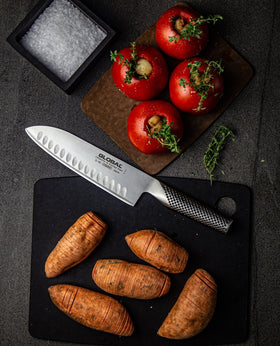
Knives are another area where false economy shows up quickly. A proper chef's knife from Global or Wusthof generally gives better balance, edge retention, and control than a bargain option that blunts fast and feels uncomfortable after a full prep session. The same logic applies to peelers, whisks, ladles, fish slices, and bench scrapers. Cheap versions often bend, loosen, stain, or go missing because no one values them.
Standardisation helps more than people expect
Many customers find that standardising prep tools improves more than tidiness. It simplifies training, replacement, and food safety routines. Colour-coded boards and matching utensils help staff separate tasks clearly, especially in multi-shift teams or mixed-skill kitchens.
A simple way to buy this category well is to break it into three groups:
-
High-contact essentials
Knives, tongs, spatulas, chopping boards, storage containers, and measuring tools should be chosen for durability and comfort first. -
Service support tools
Trays, ladles, turners, portion tools, plating spoons, and bench utensils should suit the menu and the pace of service. -
Back-up duplicates
The items that disappear mid-service need planned backups. Tongs, jugs, small bowls, probes, and prep knives often sit in this group.
For example, the Chef Inox Elite Salad Tong 240mm is a 240 mm serving tong made from 18/10 stainless steel. That kind of detail matters in front-of-house service and buffet settings where finish, feel, and durability all count.
One simple tip is to involve the head chef or kitchen lead early. Tools that suit one team's workflow can annoy another team every single day.
Storage and prep systems also deserve attention. Matching gastronorm pans, shelving formats, labels, and container footprints make the coolroom and dry store easier to manage. Operators looking at that side of the setup can browse must-have prep equipment for commercial kitchens when building a more coherent prep line.
Front of House Excellence Crockery Cutlery and Glassware
Customers notice tableware before they notice many of the details operators obsess over. A chipped plate, cloudy glass, or flimsy-feeling fork changes how the meal is perceived, even when the food is strong. Front-of-house supply choices need to support the brand, but they also need to survive constant use, stacking, washing, and occasional breakage.
Match the ware to the venue, not just the moodboard
A relaxed café, neighbourhood bistro, hotel dining room, and high-volume bar don't need the same plate weight, glass profile, or cutlery finish. Hospitality businesses often make better decisions when they start with service style and turnover speed rather than appearance alone.
A few examples make that clear:
- Busy cafés often choose durable crockery that handles frequent turnover and tight stacking space.
- Bars usually benefit from practical glassware ranges that are easy to replace and don't complicate service.
- Hotels and event venues often need tableware that presents well across breakfast, buffet, function, and à la carte service.
Duralex is a familiar example in hospitality because operators value glassware that feels commercial rather than delicate. The right choice isn't always the most decorative one. It's the one that still looks sharp after repeated use.
Quantity planning matters as much as style
A common mistake is ordering just enough to cover a normal service. That leaves no breathing room for washing cycles, breakage, or private functions. The result is last-minute substitutions, rushed dishwashing, or service teams hoarding whatever's left clean.
This is one area where practical stock planning helps:
| Category | What to think about |
|---|---|
| Plates and bowls | Stackability, chip resistance, replacement ease |
| Cutlery | Weight in hand, finish durability, how it suits the menu |
| Glassware | Breakage risk, wash performance, storage footprint |
| Serving pieces | Whether staff can carry and reset them efficiently |
Many operators also benefit from choosing ranges that can be replenished without redesigning the whole table setting later. Consistency matters. If replacements always look slightly different, the venue starts to feel patched together.
Front-of-house ware should support service speed just as much as brand presentation.
When reviewing shapes, sizes, and materials, it helps to compare options through a commercial lens rather than a homeware lens. Operators wanting a practical starting point can look through crockery options for NZ hospitality venues to narrow down ranges that balance appearance and day-to-day durability.
Managing the Flow Consumables Disposables and Packaging
Packaging, paper goods, gloves, chemicals, napkins, cups, lids, takeaway containers, bin liners, and hygiene products don't usually get the same attention as equipment. They should. These are some of the highest-frequency purchase lines in hospitality, and they have a direct effect on service continuity, stockholding, and cash flow.

What gets reordered most often
In day-to-day hospitality operations, reorder frequency is usually highest in categories such as:
- Packaging and takeaway lines including containers, cups, lids, bags, and napkins
- Hygiene products such as gloves, hand soap, sanitiser, paper towels, and toilet tissue
- Cleaning supplies including chemicals, cloths, scourers, mops, and bin liners
- Operational support items such as labels, wrap, foil, baking paper, and selected smallwares
Products sourced through channels such as Matthews Packaging & Hygiene are common in this part of the market because these lines are core operational items, not occasional extras. The buying challenge isn't just price. It's making sure stock arrives in the right pack sizes, at the right frequency, without clogging storage space.
Better stock control keeps cash moving
One of the simplest ways to avoid tying up cash is to start lean and review usage closely. New venues often over-order because they're trying to avoid running out. That's understandable, but it can leave shelves full of slow-moving cartons while money is tight elsewhere.
A more practical approach is:
- Start with realistic minimums based on opening hours, menu style, and expected trade
- Review weekly at first so ordering reflects real usage rather than assumptions
- Separate fast and slow movers because they shouldn't be purchased the same way
- Use clear par levels for gloves, cups, chemicals, paper products, and takeaway packaging
Many hospitality businesses find smaller, more frequent orders easier in the first few months. Once demand patterns settle, ordering can become more efficient without overcommitting stock.
If a product is cheap per carton but sits untouched for months, it's still expensive stock.
Supplier consolidation reduces friction
Buying consumables from multiple sources often creates hidden admin. Different order cut-offs, fragmented invoices, repeated freight charges, and inconsistent product specs all add friction. Supplier consolidation can simplify that.
That doesn't mean every item has to come from one place, but it often makes sense to group the high-frequency categories together. Simply Hospitality supplies hospitality businesses with categories including disposables, cleaning chemicals, hygiene products, tableware, kitchen essentials, and equipment, which can make ordering more organised for venues trying to reduce purchasing complexity.
A common issue seen with fragmented purchasing is inconsistency. One month the venue uses one glove fit, the next month another. Cup lids don't match cups. Cleaning products change without staff retraining. Over time, those small changes create confusion and service errors.
Operators exploring packaging options can review disposable food containers used by NZ hospitality venues when comparing practical formats and category needs.
Sustainability still has to work in service
Many operators are moving toward environmentally conscious packaging, including lines from brands such as BioPak. That decision usually works best when it's judged on operational fit, customer expectations, product performance, and the venue's broader sustainability goals.
What doesn't work is switching purely on appearance or label language without testing the pack in real conditions. Lids need to fit. Containers need to handle heat, moisture, grease, or transit time. Cups need to suit the beverage program. Compostable or paper-based options may suit one venue well and frustrate another if the service model doesn't match.
A sensible review usually asks:
| Question | Why it matters |
|---|---|
| Does it perform during delivery or takeaway hold time? | Poor performance damages food quality and customer experience |
| Does it fit existing service processes? | Packaging should support speed, not slow staff down |
| Can staff order and store it easily? | Odd pack sizes and bulky cartons create operational drag |
| Does it align with the venue's positioning? | Sustainability should feel genuine, not bolted on |
Sourcing and Budgeting Your Kitchen Supplies
Good purchasing decisions aren't only about what to buy. They're also about how to buy it without putting the venue under unnecessary pressure. Equipment, tableware, smallwares, and consumables all affect cash flow differently, so they shouldn't be budgeted the same way.
A useful starting point is this. Buy mission-critical equipment with the longest view. Buy repeat-use consumables with tight control. Stage non-essential extras until the venue proves the need.

New, certified used, or financed
Each sourcing route has a place, depending on the category and the operator's cash position.
| Option | Often suits | Main watch-out |
|---|---|---|
| New equipment | Core equipment with heavy daily use | Higher upfront spend |
| Certified used | Durable categories where condition and support are clear | Need to verify history, warranty, and suitability |
| Finance or lease-style arrangements | New venues preserving working capital | Ongoing payment commitments |
New equipment usually makes the most sense for refrigeration, cooking, and warewashing where reliability, warranty cover, and support are central to the operation. Certified used can be sensible in the right category, particularly when the unit is well suited to the job and backed appropriately. It tends to be less attractive when the equipment is complex, highly service-dependent, or hard to assess properly before purchase.
Budget by priority, not by catalogue page
A common mistake is treating every line item as equally urgent. They're not. Some items must be right on day one. Others can be phased in once trade patterns are clear.
Many operators find it helpful to split purchasing into:
-
Open-the-door essentials
Refrigeration, cooking, dishwashing, core prep tools, cleaning chemicals, packaging, food storage, and key front-of-house ware. -
Operational stabilisers
Backup smallwares, extra shelving, spare glassware, additional storage containers, and duplicate utensils for busy periods. -
Later-stage upgrades
Niche equipment, secondary serviceware ranges, expanded buffet or function stock, and products tied to future menu growth.
This approach protects cash flow and reduces the risk of buying too much before the venue understands its real service patterns.
Lifecycle cost should sit in every buying decision
A key underserved angle for New Zealand operators is focusing on lifecycle cost, not just purchase price. Labour shortages and rising operating costs make durable, energy-efficient, and low-maintenance equipment more valuable than the cheapest upfront option.
That same thinking applies beyond equipment. A slightly better container that stacks properly, a glove that fits staff consistently, or a crockery range that's easier to top up later can be the better long-term buy even if the carton price is higher.
The cheapest line on the quote isn't always the lowest-cost decision for the business.
For venues that need to preserve capital, financing can be useful when it allows stronger equipment choices without exhausting setup cash. For others, direct purchase is cleaner and simpler. The right answer depends on how much working capital the business needs for wages, stock, marketing, and the inevitable surprises that come with opening or expanding.
Putting It All Together A Checklist for Your Venue
When the supply list starts getting unwieldy, a venue-specific checklist helps bring it back to earth. The practical way to do it is to separate must-have from nice-to-have, then build around menu, service style, and storage space.

A simple starting checklist by venue type
For cafés and casual eateries
- Coffee and service flow with cups, lids, napkins, bar tools, glassware, and takeaway packaging
- Core prep and storage including containers, chopping boards, knives, shelving, and refrigeration
- Daily cleaning and hygiene such as chemicals, gloves, paper consumables, and bin liners
For restaurants and bars
- Cooking line essentials matched to menu and peak service
- Front-of-house ware with enough depth for reset speed and breakage cover
- Smallwares and backup tools so service doesn't stall when key items are in wash-up
For caterers, hotels, and institutions
- Batch prep and holding with transport-friendly storage and serving support
- Disposable and packaging supply that can handle functions, delivery, or large-scale service
- Compliance and sanitation items including sinks, cleaning systems, gloves, paper, and clear food-safe workflows
Keep the list practical
A common issue is building a perfect theoretical list that doesn't fit the actual site. Door widths, storage rooms, prep zones, wash-up flow, and delivery access all matter. So does staff capability. If a system is too complicated to maintain during a busy week, it won't stay organised for long.
Many hospitality businesses do better with a shorter, tighter supply plan that can be reviewed after the first few months. That approach keeps cash free, reduces clutter, and makes it easier to see what the venue needs next.
If a venue is weighing up equipment, packaging, smallwares, crockery, hygiene products, or day-to-day operational essentials, Simply Hospitality can help match the supply plan to the business, the menu, and the way the team works.