


Which Commercial Kitchen Upgrade Delivers the Fastest Return on Investment?
The commercial kitchen upgrade with the fastest return on investment isn't automatically the newest oven, the largest fryer, or the most energy-efficient appliance. It's the change that removes the bottleneck currently costing a venue the most money, capacity, or staff time, most often. That may be a Robot Coupe food processor replacing repetitive preparation, a correctly sized commercial dishwasher reducing rewashing, refrigeration positioned closer to prep, or a layout change that allows existing equipment to work properly.
A practical answer to which commercial kitchen upgrade delivers the fastest return on investment starts with one question: what expensive problem happens most frequently? The answer should be measured using incremental gross profit or genuine cost savings, not sales revenue alone. A $5,000 increase in monthly sales doesn't mean the equipment generated $5,000 of financial return if ingredients, wages, delivery costs, and other variable expenses absorb much of it.
Why There Is No Single Fastest ROI Upgrade
The popular approach is to compare equipment categories and search for a universal winner. That sounds useful, but it ignores how different kitchens make money. A café with staff manually preparing large volumes of vegetables has a different investment opportunity from a hotel kitchen waiting for an oven, a pub losing time in warewashing, or a caterer struggling to cool batch production safely and efficiently.
Hospitality doesn't claim that one category consistently pays for itself within six months because there isn't verified customer payback data to support that promise. The relevant question is more specific: which constraint is preventing this venue from producing, serving, storing, or cleaning efficiently?
A slicer and a blast chiller also shouldn't be compared through a single ROI percentage. A slicer may create value through labour savings, consistent portions, and more predictable preparation. A blast chiller may create value through batch production, cooling capacity, food quality, workflow control, and reduced waste where the operation has that problem. Neither category is the better investment.
Practical rule: The quickest payback usually comes from the most frequent costly task, not the most expensive appliance.
Start with the job, not the machine
The useful unit of analysis is the job the equipment performs. Operators should identify where staff wait, repeat work, walk unnecessarily, hold up service, discard product, or run equipment outside its useful capacity.
A simple audit can record:
- The task: What work is causing delay or waste?
- The frequency: How often does it happen during a normal day or week?
- The consequence: Does it consume labour, reduce output, increase waste, or limit sales?
- The constraint: Is the issue missing equipment, inadequate capacity, poor placement, or an unsuitable process?
- The alternative: Could a modest workflow or stainless fabrication change solve it?
This bottleneck-first approach is also consistent with the practical decision principles discussed in what Simply Hospitality has learned from helping hospitality businesses choose equipment. Equipment only produces a return when the venue uses its capability often enough to remove a real constraint.
Why frequency changes the answer
Saving two minutes on a task performed once a week is relatively unimportant. Saving two minutes on a task performed 100 times every day can become valuable, particularly when the saving reduces paid labour, prevents service delays, or allows the same team to complete more profitable work.
That's why a modest food processor, additional bench space, or a better warewashing flow can outperform a major capital purchase. The investment should match the pattern of loss, rather than the prestige of the equipment.
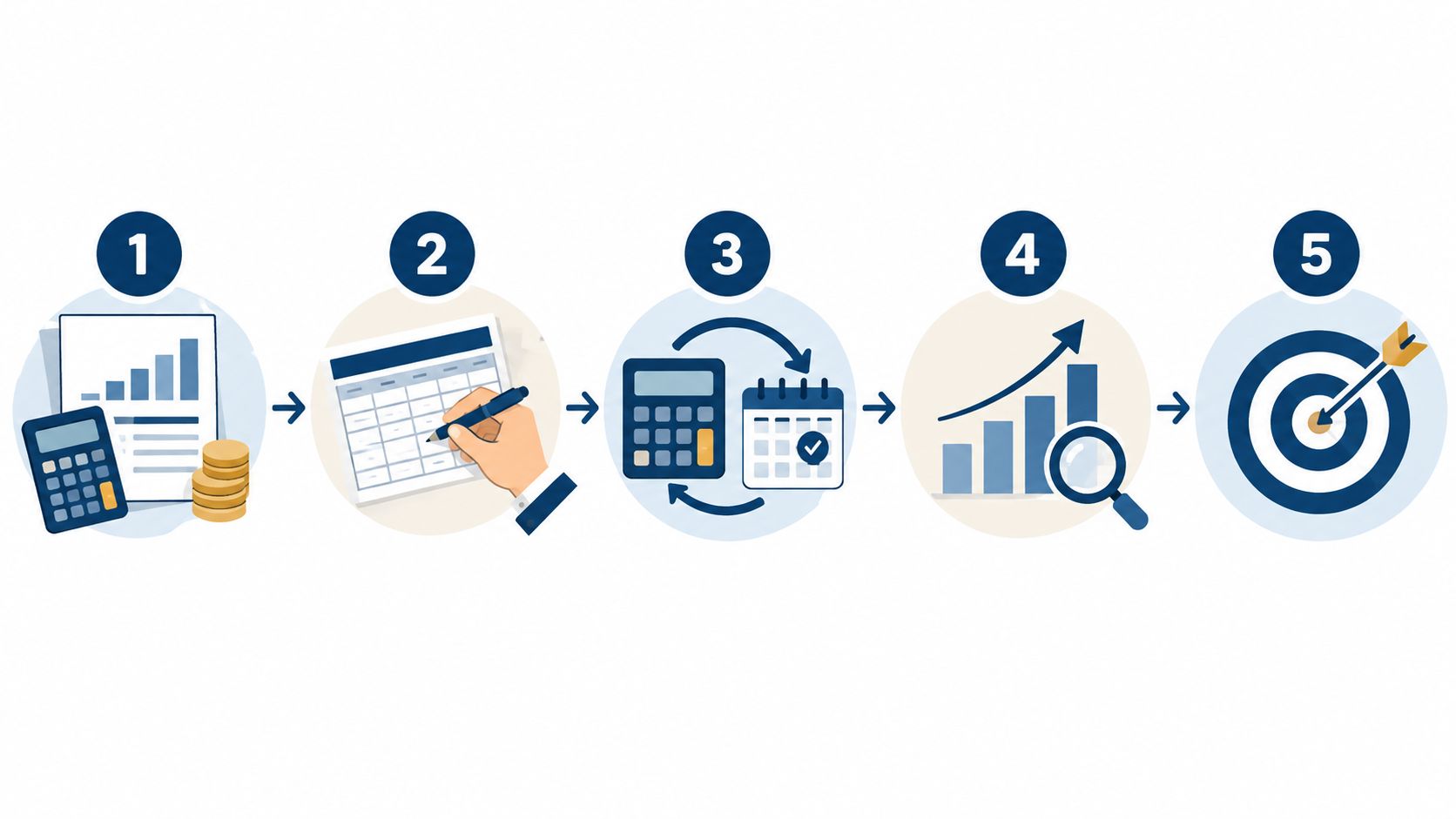
How to Calculate True Payback Without Guessing
A simple payback calculation is:
Upgrade cost ÷ monthly incremental gross profit or monthly cost saving = approximate payback period in months
The formula is deliberately straightforward. The difficult part is estimating the monthly benefit without treating every improvement as revenue.
If new cooking equipment allows a venue to sell more meals, the calculation should use the additional gross profit from those meals. That means allowing for the direct costs required to produce them, such as food, packaging, transaction charges, and extra labour where applicable. If a dishwasher saves labour or reduces rewashing, the estimate should reflect the cost avoided rather than an assumption about every minute saved becoming a payroll reduction.
Build the estimate from observed work
Operators can create a more reliable estimate by measuring the current process before selecting equipment.
- Record the task frequency. Count batches, racks, loads, pans, orders, or preparation cycles over representative service periods.
- Measure the current time. Separate active staff work from waiting time and equipment cycle time.
- Identify the financial effect. Decide whether the improvement reduces labour, increases sellable output, protects product, or lowers an operating cost.
- Subtract new costs. Include energy, water, chemicals, maintenance, installation, extraction changes, and any additional staffing required.
- Use a conservative monthly benefit. A range is more useful than a confident figure based on an untested assumption.
The key relationship is:
Saving per occurrence × frequency = the scale of the opportunity
A food processor may be worthwhile because it changes a repetitive preparation task performed throughout the week. The value doesn't come from owning a branded appliance. It comes from how often that appliance replaces manual work and whether the released labour can be used productively. The same reasoning is explored in whether a Robot Coupe pays for itself through restaurant kitchen labour savings.
Test whether the equipment fits the whole cookline
A small upgrade can still fail if it doesn't match the rest of the kitchen. For example, the Waldorf 800 Series RN8200G-B, 300mm Gas Cooktop Bench Model provides a two-burner cooktop bench model with two 28MJ/hr open burners, flame failure protection, removable cast iron burners, vitreous enamel pot stands, adjustable feet, and two additional rollers. Its return depends on whether the pan count, selected base, fuel supply, pot sizes, oven arrangement, and extraction all suit the service pattern.
A cooktop that adds useful pan capacity can remove a bottleneck. The same unit can create little value if the actual limitation is refrigeration access, bench space, extraction, or staff movement. Payback calculations should therefore include installation and workflow consequences, not just the purchase price.
The Four Ways a Kitchen Upgrade Pays You Back
Most kitchen investments produce value through one or more of four channels. Separating them prevents operators from claiming the same benefit twice, such as counting both labour saved and the full value of extra sales when the same staff time is responsible for both.
| ROI source | Typical upgrade examples | What to measure |
|---|---|---|
| Labour savings | Food processors, mixers, slicers, dishwashers, better workflow | Active preparation time, loading and unloading time, rewashing, walking, and batch handling |
| Increased production capacity | Combi ovens, convection ovens, fryers, cooktops, preparation equipment | Orders delayed, batches missed, cookline queueing, available production time, and realistic additional gross profit |
| Reduced operating and waste costs | Refrigeration, controls, insulation, dishwashing systems, oil management | Electricity, gas, water, chemicals, discarded food, oil use, and avoidable rework |
| Increased revenue capacity | Bottleneck-removing equipment, additional usable seating, layout improvements | Additional sellable output or usable covers, realistic utilisation, gross profit, and service limitations |
Labour savings
A Robot Coupe food processor, mixer, or slicer can reduce repetitive manual preparation, but the time only has financial value if it changes staffing requirements or allows employees to complete other productive work. A faster task doesn't automatically mean fewer paid hours. It may instead create more preparation capacity, improve consistency, or reduce pressure before service.
Warewashing deserves the same discipline. A commercial dishwasher may reduce scraping, loading, unloading, and rewashing, but the calculation should include the venue's actual workflow and the cost of water, chemicals, power, and servicing.
Increased production capacity
Ovens, fryers, and cooking equipment can pay back when the current equipment prevents the kitchen from meeting demand. The operator should measure the orders that wait, the batches that get split, and the work that gets moved to another service period.
Extra capacity isn't automatically profitable. If demand doesn't exist, the equipment may sit underused while adding energy, cleaning, extraction, and maintenance requirements.
Reduced operating and waste costs
Refrigeration is often a strong first category to investigate in New Zealand because it carries a major operating load. EECA identifies refrigeration as one of the biggest energy users in commercial buildings, and refrigeration accounts for 22% of energy consumption in the NZ accommodation and food services sector, compared with 15% for commercial ovens and cooking elements EECA's efficient refrigeration guidance.
EECA also recommends features such as good insulation, automatic doors, variable-speed fan drives, low-GWP refrigerants, and waste-heat recovery. The relevant question is whether the upgrade reduces an existing load, protects stock, or removes a workflow problem.
Increased revenue capacity
Removing a production bottleneck can create room for profitable orders, but revenue must be converted into gross profit before it enters the payback model. Furniture needs a separate approach because attributing extra sales directly to a chair is difficult.
If a furniture project increases usable covers, operators can model potential value using:
Additional covers × realistic table turns × average spend × utilisation
The resulting revenue still needs to be converted into incremental gross profit and tested against kitchen, service, and seating constraints.
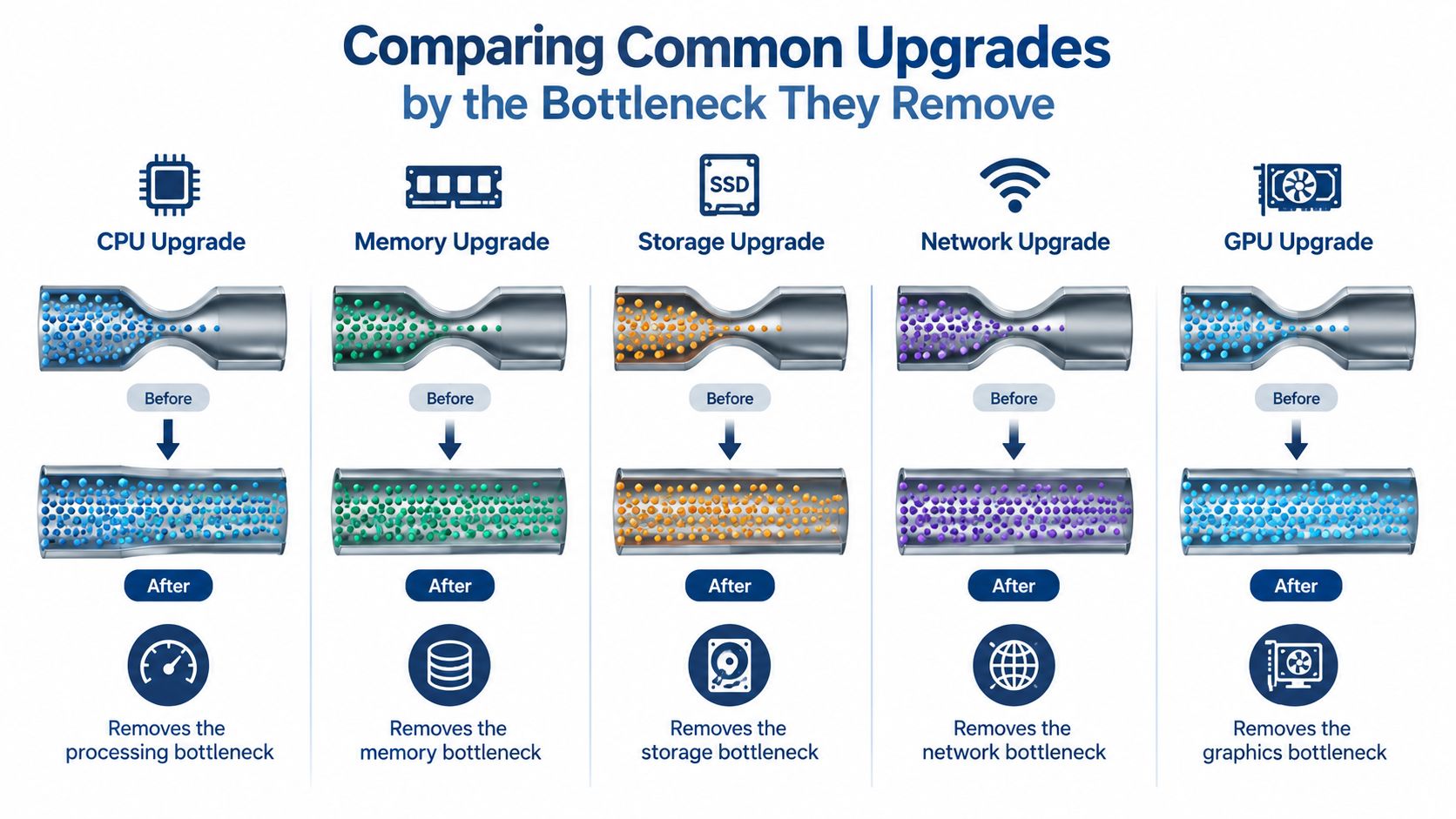
Comparing Common Upgrades by the Bottleneck They Remove
Equipment categories make more sense when matched to the job causing the delay. The right choice depends on venue type, menu, production volume, available utilities, cleaning routines, and the staff movement around the appliance.
Food processors, mixers, and slicers
Robot Coupe food processors suit kitchens repeating chopping, slicing, grating, emulsifying, or batch preparation. They're most relevant where staff still complete the same knife work repeatedly and the resulting labour can be redeployed. Cleaning, blade handling, storage, recipe suitability, and batch size should be assessed before purchase.
Mixers can remove a different constraint. An undersized mixer may force too many batches, create inconsistent production, or occupy staff during a period when they need to prepare other items. A larger mixer isn't automatically better if the venue's recipes, bowl loads, lifting arrangements, and cleaning process don't support it.
Slicers can improve portion consistency and preparation speed for suitable menus, but they need disciplined cleaning and safe operation. Their return is strongest where slicing occurs frequently and consistency matters to food cost or service flow.
Dishwashers and warewashing
A commercial dishwasher can be a high-value upgrade for restaurants, cafés, hotels, and venues with concentrated peak periods. The bottleneck may be machine cycle time, insufficient rack capacity, poor separation between dirty and clean areas, or repeated washing caused by loading and chemical problems.
The machine itself won't solve a badly arranged wash-up area. Operators should review scraping, pre-rinsing, rack storage, drainage, ventilation, staff access, and the location of clean ware. Food safety depends on a controlled dirty-to-clean flow and consistent cleaning procedures, not just the appliance category.
Refrigeration
Refrigeration upgrades can target energy, reliability, storage capacity, or access during preparation. EECA says simple measures can deliver fast paybacks. Maintaining door seals can save 1–5% of refrigeration costs, with repairs often paying back in under one year; cleaning coils can save 2–3% for every 1°C reduction in condenser temperature, with savings usually covering costs in a few months EECA's refrigeration case study.
More advanced controls can save 5–15% of energy and often pay back in less than a year, while lowering head pressure can save up to 30% of refrigeration costs with a payback period of a few months, according to the same EECA material. These measures don't remove every workflow constraint, but they show why maintenance and controls should be checked before replacing an entire cabinet.
New Zealand's commercial refrigeration policy analysis found total monetised benefits of NZ$111.10 million against costs of NZ$23.65 million, including NZ$108.13 million from avoided electricity demand and NZ$2.97 million from avoided greenhouse gas emissions MBIE's commercial refrigeration impact summary. The national analysis estimated 1,986 gigawatt hours of avoided electricity and 256 kilotonnes of cumulative CO2-e emissions. Cabinet replacement should still be based on the specific unit's condition, duty, access, and lifecycle cost.
Ovens and fryers
Combi and convection ovens can remove production bottlenecks when the kitchen is queueing behind limited cooking capacity, inconsistent results, or excessive batch handling. UNOX and Turbofan equipment may suit different production patterns, but selection should follow menu requirements, tray capacity, cooking programmes, extraction, ventilation, water treatment where relevant, and cleaning access.
A faster oven only creates value if the rest of the kitchen can receive, finish, hold, and dispatch the output. The operational question is whether the oven removes a genuine service constraint, as discussed in whether a faster pizza oven can increase restaurant revenue.
Fryers can have a similar effect for venues with a strong fried menu. Additional oil capacity or frying space may reduce queueing, but it can also increase oil management, cleaning, extraction, and energy demands. The venue should measure the lost or delayed production before treating extra fryer capacity as a guaranteed sales opportunity.
Blast chillers and stainless workflow
Blast chillers are valuable where batch cooking, cooling capacity, food quality, production planning, or waste control is the constraint. They're less likely to be the quickest investment for a venue that rarely batch-produces or has no clear use for the capacity. Cleaning, loading space, storage after chilling, and food safety procedures must be planned as one process.
Stainless benches, shelving, pass areas, mobile stands, and storage can remove a surprisingly expensive bottleneck. A shortfall in productive bench space may force staff to move ingredients repeatedly, stage work on unsuitable surfaces, or wait for another employee to finish. The best solution may be a fabrication or storage change rather than another appliance.
Commercial ice makers also deserve a targeted assessment. EECA's regulatory impact statement estimates that proposed minimum efficiency standards would raise average purchase price by about 12% while cutting average annual electricity costs by NZD 452, giving a simple payback of just over one year; the typical service life is 7–10 years EECA's commercial ice maker regulatory impact statement. That result matters most for venues with dependable ice demand and suitable maintenance access.
When Layout Delivers Faster ROI Than New Equipment
Some kitchens don't need another appliance. They need the current appliances, benches, refrigeration, storage, and wash-up areas arranged so staff can move through the work without unnecessary travel or cross-traffic.
SACH Design can help investigate layout-driven constraints such as refrigeration positioned too far from preparation, insufficient productive bench space, poor warewashing flow, or an undersized mixer forcing extra batches. A layout review should include service peaks, delivery access, cleaning paths, food safety separation, extraction, drainage, power, gas, and equipment maintenance access.

Find the movement that shouldn't exist
A practical observation exercise can reveal more than a product brochure. During preparation and peak service, operators should watch where staff walk, where pans accumulate, where clean ware crosses dirty ware, and where employees wait for access to a bench, fridge, oven, fryer, or sink.
Small changes can matter when they affect a repeated action:
- Refrigeration access: Move frequently used ingredients closer to the preparation point where the layout allows.
- Bench continuity: Add stainless work surface between the equipment stages that already belong together.
- Wash-up flow: Separate scraping, loading, clean-rack storage, and dispatch to reduce handling and rewashing.
- Storage placement: Keep pans, utensils, and containers beside the station where staff use them.
- Batch production: Position mixers, processors, benches, and refrigeration so preparation doesn't depend on repeated carrying.
A modest change that removes several minutes of wasted labour from a process repeated every day may outperform a $30,000 appliance. That isn't a universal price comparison or a promised result. It's a reminder that the value comes from frequency and consequence.
The relationship between design and equipment is explored further in whether better kitchen design can deliver a bigger ROI than better equipment. Related discussions of kitchen downtime, peak-service waiting, and stainless bench space also point to the same operational principle. The bottleneck may sit between appliances, not inside one of them.
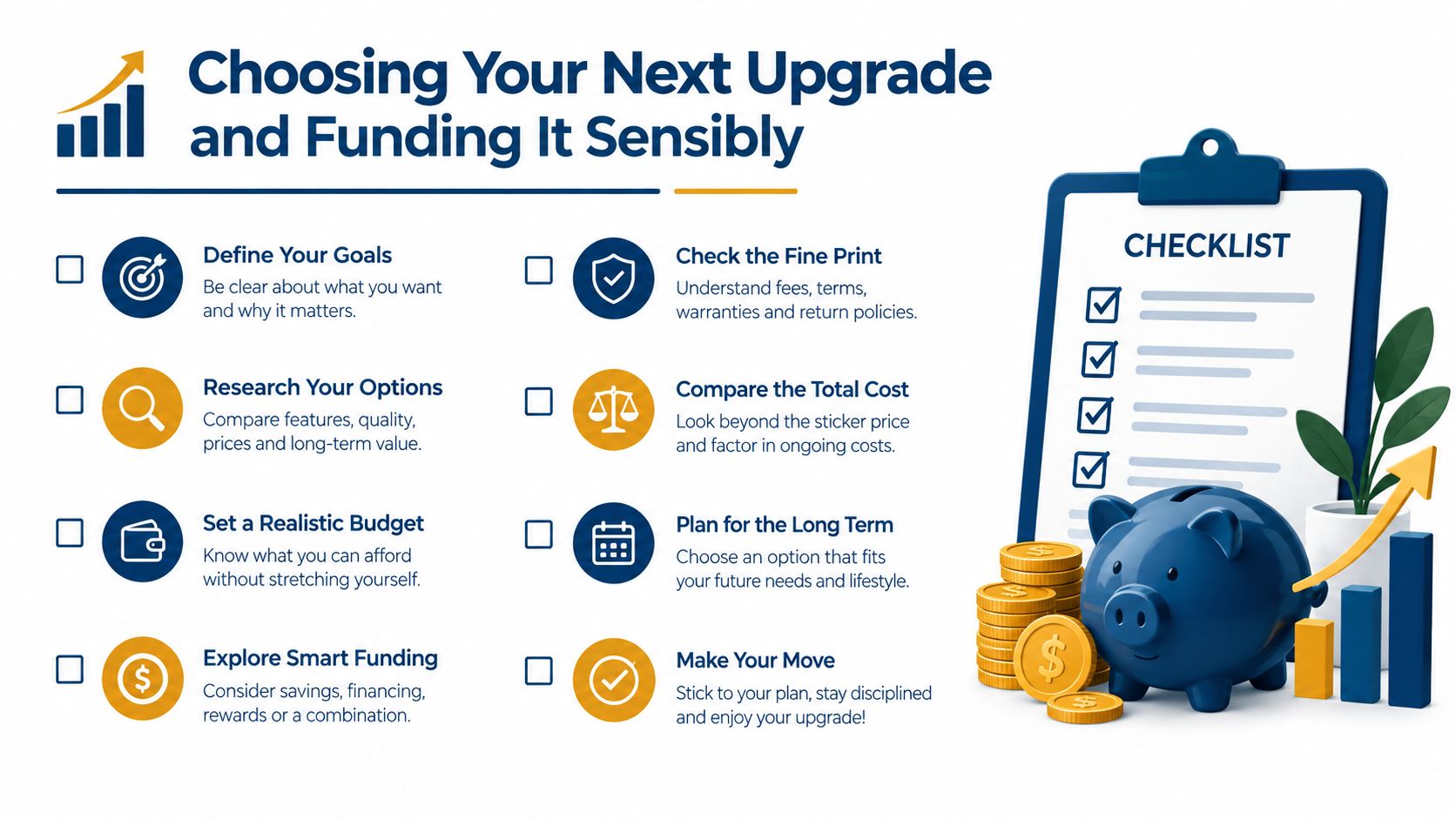
Choosing Your Next Upgrade and Funding It Sensibly
A sound investment decision starts with an audit, not a catalogue. Operators should write down the task causing the loss, count its frequency, estimate the financial consequence, and identify whether the cause is capacity, labour, energy, waste, placement, or process design.
The next step is to compare options using total cost of ownership. EECA advises food businesses to track electricity, gas, and water monthly, compare year-on-year data, and build an asset replacement strategy around lifecycle savings rather than purchase price alone EECA's food and beverage energy efficiency checklist.
Use a practical decision screen
A short list should answer these questions:
- Frequency: How often does the bottleneck occur?
- Financial value: What monthly gross profit or cost saving is realistic?
- Utilisation: Will the equipment be used across ordinary trading periods, not only exceptional peaks?
- Installation: Does it require new extraction, drainage, power, gas, ventilation, water treatment, or structural work?
- Maintenance: Can staff clean it properly, and can service access be maintained?
- Food safety: Does the change improve or complicate separation, temperature control, storage, and cleaning?
- Capacity match: Will the upstream and downstream stages handle the added output?
A kitchen upgrade and a seating project should not be modelled identically. Kitchen equipment can often be assessed through labour saved, additional production, or reduced operating costs. Furniture may improve space utilisation or customer experience, but its value is harder to attribute unless it increases usable covers. In that case, the model is additional covers multiplied by realistic table turns, average spend, and utilisation, then converted to gross profit.
Consider funding and policy timing
Funding can protect cash flow, but it doesn't fix a weak investment case. Leasing or other finance arrangements should be compared by total repayment, ownership terms, residual obligations, service coverage, and the equipment's expected working life. Operators considering those trade-offs can review leasing versus buying commercial kitchen equipment in New Zealand and assess whether SilverChef finance fits the project.
Tax treatment can also affect timing. The Restaurant Association notes that New Zealand's 20% Investment Boost deduction applies to eligible new assets first used from 22 May 2025, with no cap on value or quantity, and may materially shorten payback for equipment such as commercial ovens, dishwashers, and coffee machines the Restaurant Association's Investment Boost explanation. Eligibility and accounting treatment should be confirmed with a qualified adviser before an operator relies on it in a purchase decision.
Finding the Upgrade That Pays Back Fastest for Your Venue
The fastest-returning upgrade is the one that removes the constraint costing the venue the most money most often. For one operation, that may be a Robot Coupe food processor or mixer that reduces repetitive preparation. For another, it may be a Winterhalter dishwasher that reduces warewashing pressure, SKOPE refrigeration that improves access and operating performance, a Convotherm or UNOX combi oven that removes a production queue, or a workflow improvement that allows existing equipment to work together.
The calculation should stay grounded:
Upgrade cost ÷ monthly incremental gross profit or cost saving = approximate payback period
Frequency matters just as much as the size of each saving. So do installation, energy, water, ventilation, cleaning, maintenance, food safety, and the useful life of the asset. A smaller change with high daily utilisation can be financially stronger than a larger machine used occasionally.
Hospitality supplies commercial kitchen equipment, refrigeration, dishwashing systems, cooking equipment, food preparation tools, stainless fabrication, and related hospitality products, while SACH Design supports professional kitchen planning and SilverChef can help operators consider equipment finance. Operators can bring the measured bottleneck, current workflow, and proposed service demand to the team for a more useful comparison than a generic equipment ranking.
Hospitality operators can identify whether the priority is a processor, dishwasher, refrigeration system, cooking appliance, stainless solution, or layout change. Visit Simply Hospitality to review suitable equipment categories and contact the team for practical advice based on the venue's workflow, capacity, and payback requirements.