

Why One Açaí Business Upgraded Twice Before Finding the Right Soft Serve Machine
The first machine did the job until the queues lengthened. Then the operator upgraded again, and still wasn't done. That's the lesson behind why one açaí business upgraded twice before finding the right soft serve machine, and it's why growth planning matters more than buying to solve today's rush.
Why This Açaí Upgrade Story Matters for Hospitality Operators
The business started with a lower-cost machine that made sense as a launch point. It got the concept moving, kept the menu visible, and reduced the pressure of a big first purchase. But as trading picked up, the machine's limits showed up in the places that matter most in hospitality, during the busiest parts of the day and in front of waiting customers.
In our experience, that pattern is common. Operators often buy for the version of the business they can see today, then discover that açaí service grows into something more demanding, especially once it becomes a core offer rather than a side item. The local upgrade story is useful because it shows how a venue can end up with two replacement cycles before it lands on equipment that supports the business properly.
The wider point is simple. A machine that is acceptable at launch can still become the wrong fit when demand, workflow, and menu scope expand. The right solution depends on where the business is heading, not just how many serves it needs this week, which is why planning equipment upgrades before they become urgent is worth doing early, not after service has become messy. Planning equipment upgrades before they become urgent
A common consideration is whether the machine will still perform reliably when staff are under pressure, the queue has formed, and the product has to stay consistent across the whole trading day. That's where a cheap first choice can become expensive later, not because it failed immediately, but because it delayed the key decision.
What Makes Açaí Different for Soft Serve Equipment
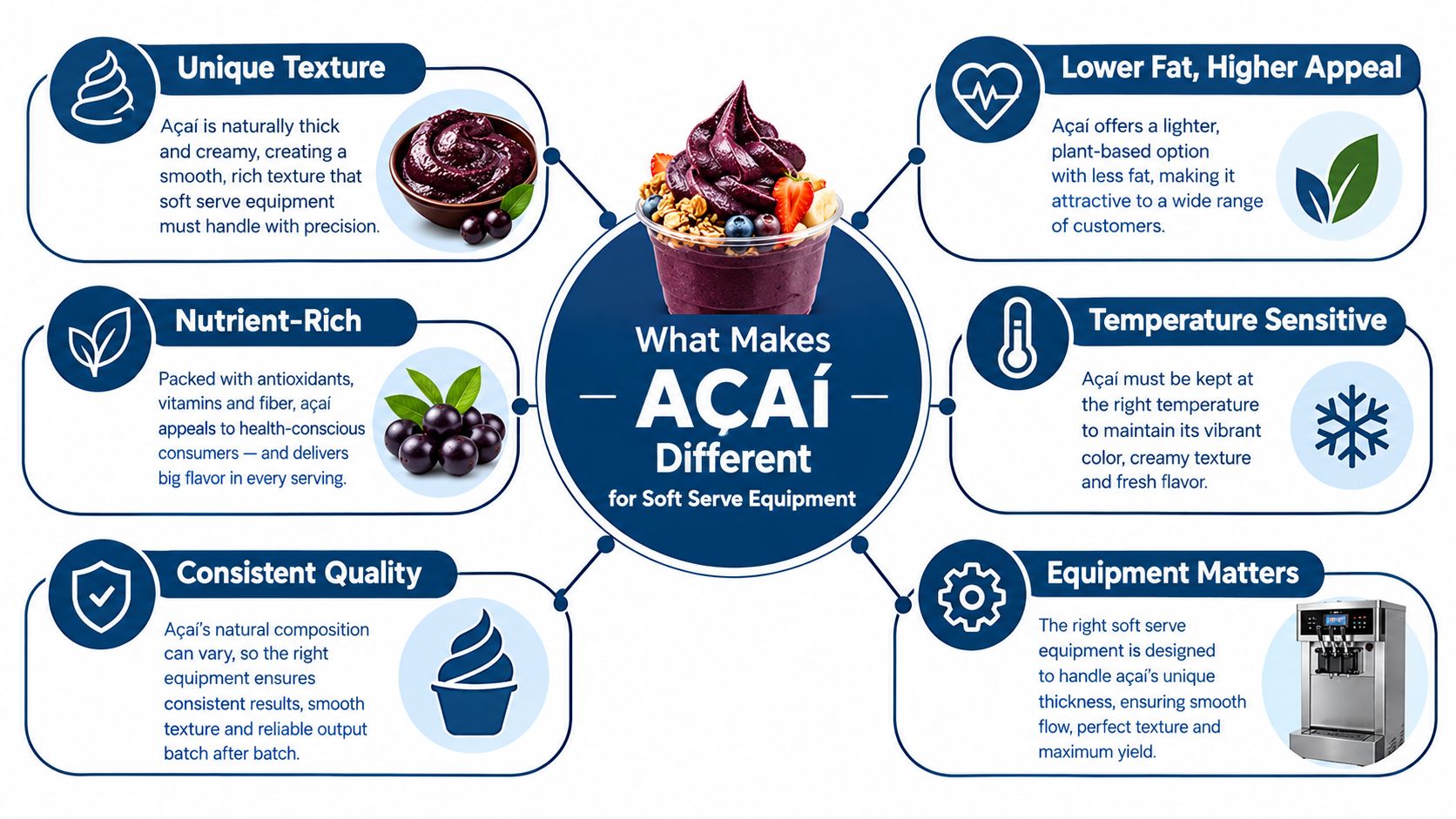
Açaí changes the equipment brief because it isn't just frozen dessert, it's a frozen pulp product that has to stay smooth, stable, and appealing while service keeps moving. That puts more weight on texture control, recovery, and consistency than many operators expect when they first compare machines. Independent NZ supplier material describes commercial açaí machines as turning frozen açaí pulp into a smooth, scoopable soft-serve or sorbet-style base, and that wording matters because the end result is about mouthfeel as much as output. Why Brüllen soft serve machines are a game-changer, especially for açaí
Texture and throughput need to work together
A machine can technically freeze product and still be the wrong fit for açaí service. If the texture drifts during service, staff end up adjusting, pausing, or remaking product, and that slows everything else down. For açaí venues, that's where consistency becomes an operational requirement, not a nice extra.
The service model matters too. Suppliers in New Zealand distinguish between single-flavour, twin-flavour, and twist configurations, and those choices affect how flexibly a venue can manage menu changes or day-part demand. Pressurised air-pump systems are typically used where peak-hour serving counts matter because they create higher overrun and a lighter product, while gravity-fed models suit simpler low to medium volume operations.
Practical rule: if the product must hold together through a rush, the machine choice should be judged on the busiest part of the day, not the quietest.
For some venues, the menu itself is the clue. NZ equipment guidance shows frozen-dessert setups being positioned for a wider mix of service styles, and that can include açaí, soft serve, frozen yoghurt, gelato, and slush. A multi-use frozen-dessert offer puts more demand on the machine, because it has to support variation without compromising the core product.
The Faema E71E Commercial Espresso Machine sits in a different category entirely, but it's a useful reminder that serious hospitality equipment is often defined by control, workflow, and repeatability rather than by one headline feature. The same thinking applies here, açaí operators need a machine that can keep product quality steady under real service pressure, not just one that looks suitable on paper.
The First Machine and Why Peak Demand Exposed Its Limits
The first machine made sense as a starting point because it lowered the barrier to entry. It was a countertop unit, it could produce product, and it let the business test its concept without committing to a larger floor-standing system too early. That's often how dessert businesses begin, with a cautious first buy and a hope that demand will grow gradually.
Where the first limit showed up
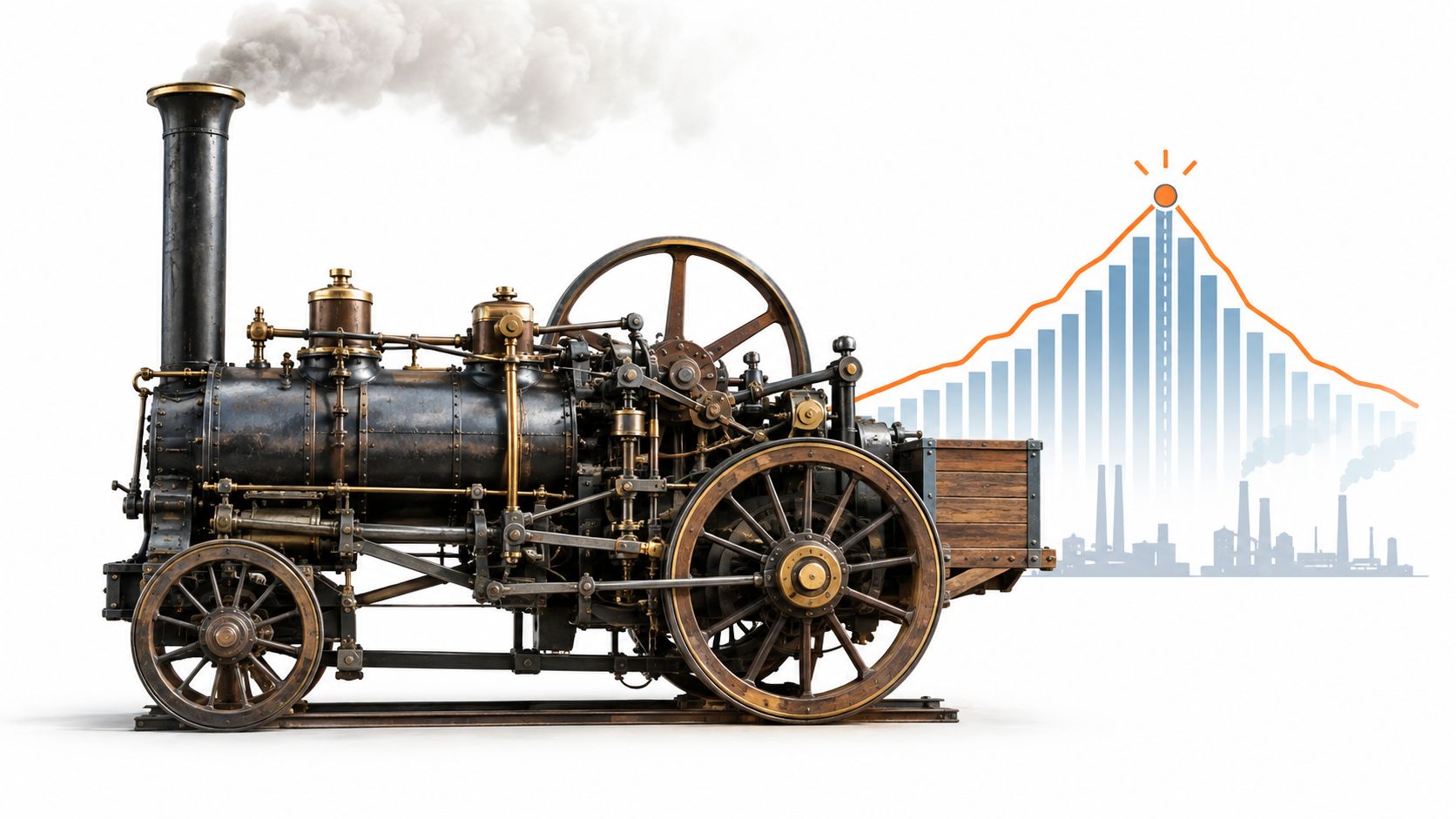
The issue wasn't that the machine couldn't make a serve. It was that it couldn't keep the same texture and pace when the busiest 30 to 60 minutes arrived. That's the part many operators underestimate, because average sales can make a machine look adequate while the actual trading window tells a different story. NZ supplier guidance specifically warns operators to size for the busiest 30 to 60 minutes, not average sales, because a machine that looks fine on paper can still underperform at peak. Signs your kitchen has outgrown your equipment
When that happens, the whole front counter feels it. Staff slow down, the rhythm of service gets uneven, and the customer experience becomes harder to keep consistent. Even if the machine is technically still working, it's no longer supporting the business the way it should.
A machine that is good enough on a quiet Tuesday can still be wrong for a Saturday rush.
That first upgrade lesson is simple. Capacity is not just about how much product a unit can make in a day, it's about whether it can recover quickly enough, keep texture stable, and let the team serve without hesitation. A busy dessert counter needs equipment that fits the pace of the room, not the average of the week.
A useful operational comparison is something like the Modular Stainless Dishwasher Basket Cassette, which exists to give spare baskets a defined place close to the machine and keep the work area clear. The principle is the same with soft serve, if the workflow isn't organised around speed and recovery, the team spends more time managing limitations than serving customers.
The Second Upgrade and Why Consistency Still Mattered
The second machine solved part of the problem. Output improved, the business could handle more demand, and the pressure at peak trading eased. But that didn't mean the journey was finished, because the operator still had to think about long-term reliability and whether the product stayed consistent across the full service day.
Better output doesn't always mean the right fit
A lot of operators stop at the point where the machine is “better”. That's understandable, because a step up in capacity can feel like the answer. But if the product quality still shifts, or if staff don't fully trust the machine during a rush, the venue is still carrying operational friction.
That's why the second upgrade became a bridge rather than a final solution. It improved the day-to-day experience, but it didn't remove the need to think ahead. One lesson learned from this sort of journey is that buying purely for current demand can leave the business facing another upgrade sooner than expected. The machine may be adequate for today, while still being too tight for the next phase of growth.
The logic mirrors broader hospitality planning, where consistency matters as much as capacity. There's a reason many operators focus on repeatable prep and repeatable service, because customers notice when product quality changes from one part of the day to another. Why consistent prep creates consistent profits
The supplier side of the market reinforces that point. NZ listings show 240V single-phase equipment on 10A, 15A, and 20A circuits, with footprints and machine weights varying sharply across the category. That means a second upgrade isn't always a luxury decision, it can be driven by infrastructure, space, and the practical demands of a busier operation.
What the second machine still couldn't fix
The remaining gap was subtle but important. The business still needed a machine that felt dependable over a longer service window, not just one that produced more product at the start of the day. That is often where the third-stage decision gets made, because operators realise that staff confidence, uptime, and repeatable texture all matter when the line is steady and the room is full.
A short list of the remaining pressure points usually looks like this:
- Texture drift during service, which makes the team work harder to keep product looking and eating the same.
- Confidence under rush conditions, because staff need equipment that won't make them hesitate.
- Operational durability, since repeated small frustrations become a bigger cost over time.
- Space and power fit, because the machine has to suit the venue, not just the menu.
That's the difference between a temporary improvement and a proper fit. The second upgrade moved the business forward, but it also clarified what the final machine had to solve.
How the Final Choice Aligned Capacity Consistency and Growth Plans
The final decision wasn't about choosing the fanciest machine. It was about aligning three things at once, production capacity, consistent output, and the venue's growth plan. Brüllen ended up being the final solution because it matched the operator's long-term direction rather than only the current trading level, and that's the standard worth using for any açaí business facing the same choice. How many ice creams does a soft serve machine need to sell to pay for itself
What had to line up
The machine had to cope with demand, but it also had to support reliable service across the day. That means hopper size, cylinder volume, and electrical load all matter, because they affect how the machine behaves in real use. NZ market guidance shows that low, medium, and very high-volume systems are separated by those practical measures, not by price alone, which is a better way to think about machine selection.
The local infrastructure picture also matters. Several NZ countertop listings show 240V single-phase equipment on 10A, 15A, and 20A circuits, with machine footprints ranging from roughly 440 mm wide to 646 mm wide and weights from about 70 kg to 333 kg. Those differences aren't small details, they change whether the machine is easy to install, easy to place, and easy to live with every day. Matching machine class to açaí service needs.
Gravity-fed machines suit simpler low to medium volume operations, but pump or twin-barrel systems provide more resilience when demand spikes or the business needs steadier throughput. That is why many operators who start cautiously end up moving up the ladder in stages. The earlier purchase solves the launch problem, while the later purchase solves the business problem.
Matching machine class to açaí service needs
| Service Profile | Key Consideration | Machine Class to Discuss With Supplier |
|---|---|---|
| Low-volume add-on | Simple menu, limited peak pressure | Gravity-fed countertop machine |
| Growing açaí offer | Consistency and faster recovery | Mid-capacity machine with stronger output |
| Busy dessert counter | Peak resilience and staff confidence | Pump-assisted or twin-barrel system |
| Multi-use frozen dessert menu | Flexibility across day-parts | Higher-capacity system with menu headroom |
The practical choice is rarely “cheapest” versus “most expensive”. It's whether the machine supports the way the business expects to trade in the coming years, not just the way it trades this month. That's where total cost of ownership starts to matter, because multiple upgrades, staff retraining, and service disruption can cost more than choosing the right class once.
Practical Checklist for Choosing and Running a Soft Serve Machine for Açaí
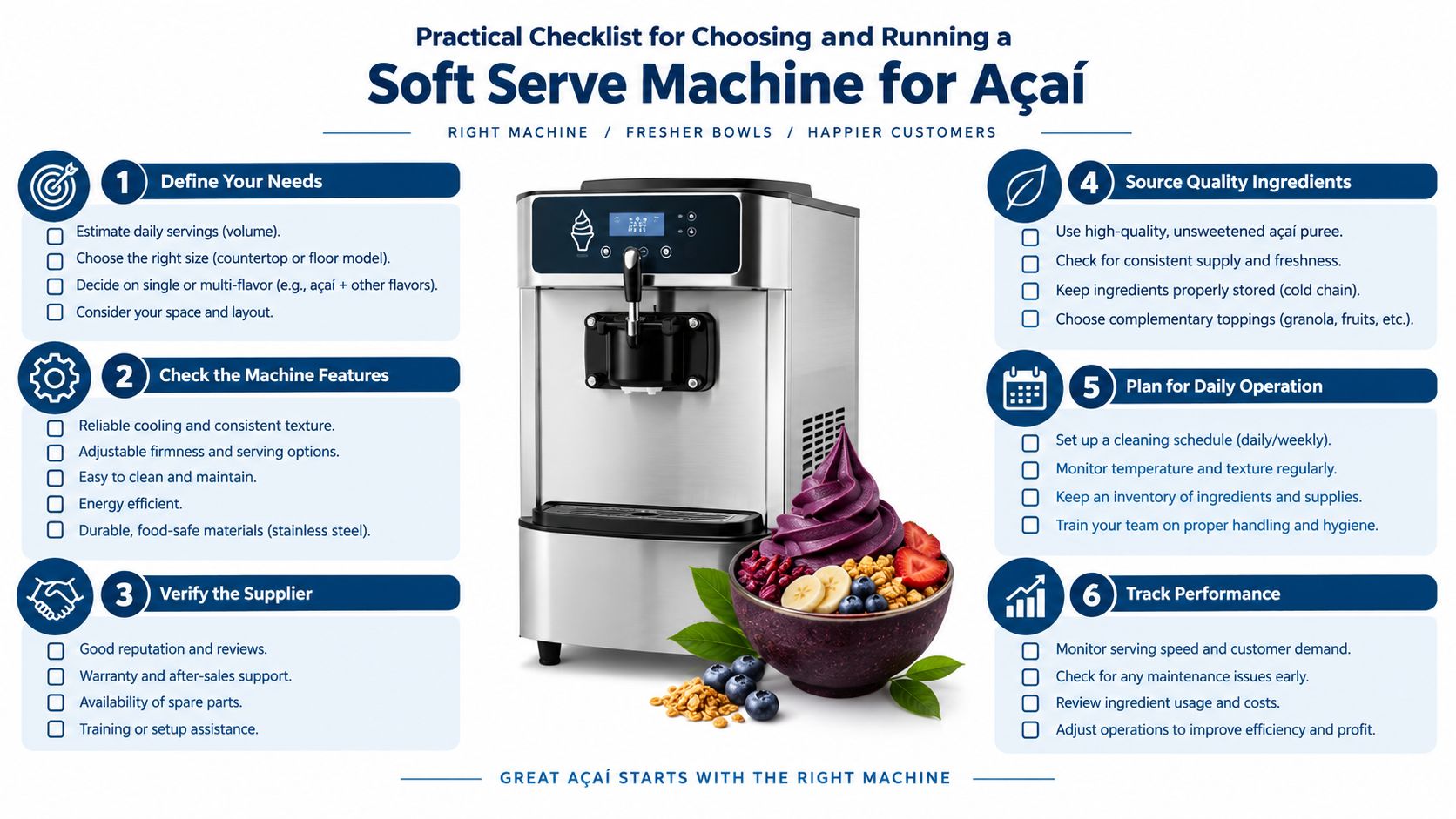
In our experience, the best buying conversations start with operations, not branding. Suppliers should be able to answer how the machine performs at peak, how it handles consistency, what cleaning routine it needs, and how local service support works in New Zealand. If those answers are vague, the machine probably hasn't been matched properly to the venue.
Questions worth asking before purchase
- How does it perform during the busiest part of service? Ask for the output profile that matters to the business, not just a brochure claim.
- What does cleaning involve? The right answer should cover daily wash-downs, access to parts, and whether staff can keep up with the routine.
- How much space and power does it need? Check ventilation, drainage, bench strength, and whether the venue's outlet matches the machine class.
- Can it hold texture consistently? This matters more for açaí than for many secondary dessert items.
- What support is available locally? Parts and service access are part of the purchase, not an afterthought.
One simple tip is to map the machine against the staff roster, not just the menu. If fewer people are on at peak, the equipment has to be easy to operate, easy to clean, and easy to reset without slowing the room down.
Daily operation also needs discipline
Food safety and consistency go hand in hand. Machines that aren't cleaned properly become harder to trust, and machines that aren't maintained properly become harder to keep in service. That's why pasteurisation options, cleaning routines, and maintenance access all matter when the goal is reliable açaí service, not just a good first impression.
This is also where Hospitality's own product range can be useful as a planning reference, because the catalogue gives operators a way to compare equipment categories and think through workflow alongside the machine itself. The goal isn't to buy blind and hope the setup works later, it's to make sure installation, service, and operation all fit the venue from day one.
Choosing Once for Where Your Business Is Heading
The story behind why one açaí business upgraded twice before finding the right soft serve machine comes down to one point: the first machine solved the launch problem, but the final machine solved the growth problem. That difference matters because a business can outgrow a machine through volume, texture demands, infrastructure limits, or the need for more predictable service.
The safest buying mindset is to choose for where the venue is going, not only where it is now. Consistency, reliability, and capacity headroom usually save more disruption than chasing the lowest upfront price. The final Brüllen solution worked because it matched the operator's long-term direction, but the right solution always depends on the menu, footprint, and trading pattern of the venue in front of it.
When operators plan that way, they avoid the most common trap in frozen dessert equipment, buying twice because the first machine was only ever a temporary fit. The better question is not whether a machine can make açaí, but whether it can keep making it well when the business is busy, growing, and under pressure.
For expert advice on açaí and soft serve equipment, Hospitality can help compare machine classes, installation requirements, and workflow fit for your venue. Visit Simply Hospitality to discuss the right setup for your menu, space, and growth plans.