

Find Out Why Some Businesses Outgrow Their Refrigeration Faster Than Expected
A lot of hospitality operators realise they need more refrigeration at the exact moment the kitchen starts feeling harder to run. Service is busier, prep lists are longer, takeaway has grown, and suddenly the cool room, upright fridge, and underbench units are all full before lunch prep is finished. Nothing has technically “broken”, but the operation has started to choke on cold storage.
That's usually why some businesses outgrow their refrigeration faster than expected. The issue isn't always a failed compressor or an old cabinet. More often, the business has changed faster than the original refrigeration plan. A venue that was sized for opening day can struggle once menu lines expand, stock holding increases, and production shifts in-house.
The Good Problem That Catches Businesses Out
A common situation in Kiwi kitchens goes like this. A café starts with a tight menu, modest prep, and a sensible fridge setup. Six months later, cabinet food is selling well, the team adds more sauces and desserts, cold drinks take off, and weekend trade picks up. Before long, staff are stacking containers wherever they fit and opening multiple doors just to complete one prep task.
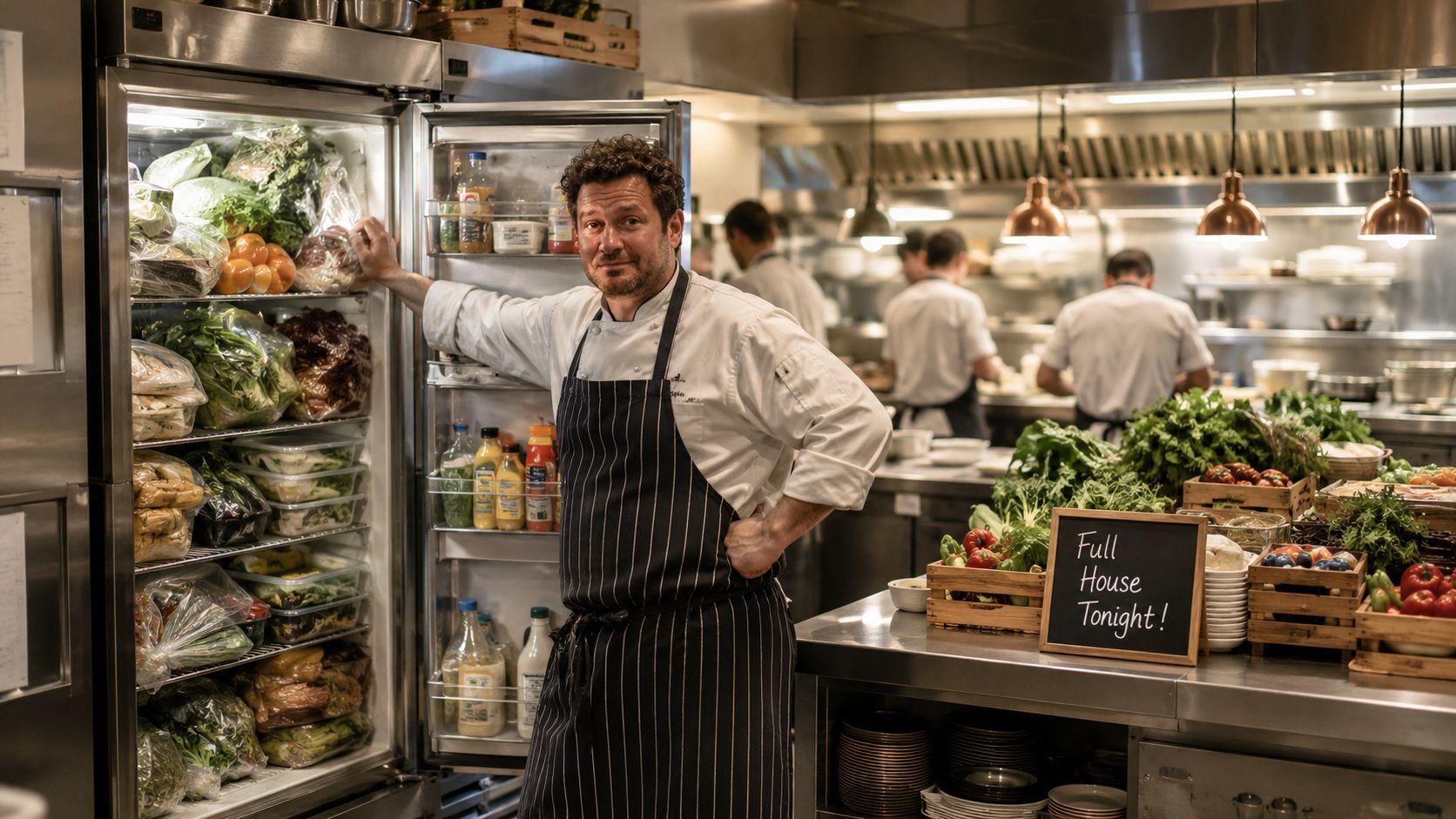
That's a good problem in one sense. The business is busier. Demand is there. The venue is evolving. But refrigeration often becomes the first hidden bottleneck because it sits behind so many daily tasks. Prep, service, food safety, stock rotation, deliveries, and cleaning all rely on having the right cold storage in the right place.
In practice, refrigeration is often outgrown because a business evolves rather than because the equipment fails. A café may expand its menu, begin preparing more food in-house, increase catering or takeaway sales, or become busier than originally expected. One factor many operators miss is that refrigeration is planned around opening day, not around where the business might be in two or three years.
Operational reality: Refrigeration pressure usually builds gradually. Operators first notice it in workflow, then in food handling, then in equipment strain.
There's also a tendency to treat this as a mechanical problem only. It isn't. It's an operational capacity issue. A restaurant in Dunedin may be replacing “cheap stuff” that keeps breaking down, but the deeper problem is often that the original setup was never designed for the volume, menu complexity, or service pattern the kitchen now has to support.
Many hospitality businesses find it helpful to look at refrigeration the same way they look at cookline capacity or dishwashing throughput. It's part of the production system. The kitchen can only move as efficiently as its cold storage allows. The same pattern comes up in broader equipment planning discussions, including the lessons shared in what Simply Hospitality has learned from helping hospitality businesses choose equipment.
Common Reasons Your Refrigeration Is Under Pressure
Friday lunch is running hot, prep is stacked in every spare corner, and the team starts using a display unit to hold stock that should never have gone there. The fridge has not suddenly become smaller. The business has changed, and the cold storage setup has not kept pace.
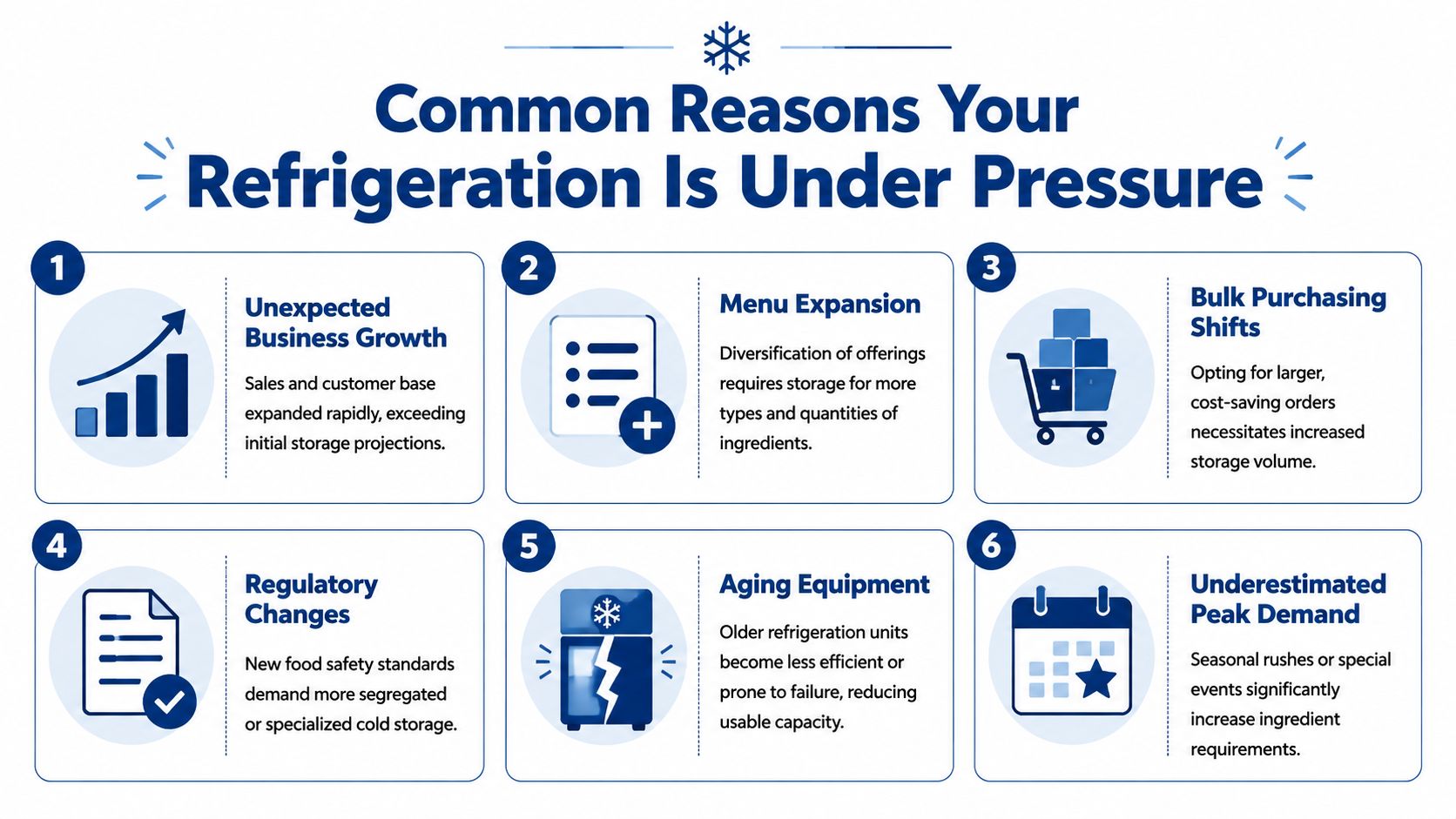
Menu expansion changes the storage job
A simple menu puts less strain on refrigeration because there are fewer ingredients, fewer prep containers, and fewer service demands. Once that menu broadens, the same cabinets have to hold more SKUs, more opened packs, more partially prepped items, and more grab-and-go stock for service.
This catches operators out because they often count dishes, while the kitchen lives with components. Adding three new menu items can mean another dozen containers that all need chilled space, clear labelling, and easy access during prep.
In-house production creates a double load
A kitchen that starts making more in-house usually needs more refrigeration before and after prep.
Bought-in products arrive portioned and ready to store. In-house production brings in raw ingredients in greater volume, then turns them into sauces, fillings, batters, desserts, and portioned proteins that also need chilled holding. The same workflow now needs room for bulk stock, work-in-progress, and finished prep.
That is an operational capacity issue as much as a storage one. If the only available space is at the other end of the kitchen, staff lose time every shift walking, opening doors, and shifting trays around each other.
Service channels expand faster than the cold room
Many New Zealand venues start with dine-in trade in mind, then add cabinet food, takeaway, delivery, catering, or retail lines. Each channel asks refrigeration to do a different job.
A dine-in service might need fast access to mise en place. Catering needs holding space for volume and staging. Grab-and-go food needs product presented, replenished, and backed up. Delivery often increases the amount of pre-portioned stock on hand. The problem is not only how much product is stored. It is whether the layout still supports the way the business now sells.
Seasonal peaks expose the weak point
Some kitchens cope well in an average week and still run short on refrigeration during school holidays, event weekends, wedding season, or corporate functions.
I see this often in cafés and function spaces. For most of the year, the setup looks adequate. Then a run of big bookings comes through, delivery days get larger, and every unit is packed tighter than it should be. Staff start using whatever cold space is free rather than what makes sense for prep flow, stock rotation, or food separation.
The wrong cabinet mix wastes usable capacity
Extra litres on a spec sheet do not always translate to practical room in a working kitchen.
A common example is bulk product being stored in upright units that suit access better than volume. Another is service fridges doing the job of prep storage, so door openings climb and shelf space disappears into small containers that do not stack well. Mixed-use cabinets also create friction. Drinks, dairy, garnish tubs, desserts, and backup stock all end up competing for the same few shelves.
Older equipment can make this harder to see because the unit still appears to be doing its job. The broader cost and performance picture is often clearer when operators look at whether ageing equipment is costing more than expected.
Ordering patterns and supplier choices shift the load
Growth often changes purchasing before anyone reviews refrigeration.
Larger order quantities can improve buy price, but they also increase the amount of chilled and frozen stock on site. Fewer deliveries can reduce admin and freight costs, yet they demand more buffer space. Changing suppliers can alter pack sizes, carton dimensions, and case formats, which affects how well stock fits the cabinets you have. On paper, capacity may look fine. In practice, awkward packaging and higher par levels can choke a fridge quickly.
Staff workarounds become the new system
One of the clearest reasons refrigeration comes under pressure is that the kitchen builds workarounds around it.
Stock gets split across multiple units. Prep gets scheduled around whatever shelf space opens up. Backup product is stored in places that are technically cold but operationally wrong for the task. None of that shows up on a purchase invoice for a new fridge, but it affects labour, consistency, and food handling every day. That is usually the point where refrigeration has stopped being a simple equipment question and become a constraint on how the business operates.
Early Warning Signs You Are Outgrowing Your Cold Storage
Most kitchens get a warning before refrigeration becomes an emergency. The problem is that these signs are easy to normalise. Staff adapt, squeeze things in, and keep service moving, so the underlying issue can sit there for months.
What the kitchen starts doing differently
If the team is changing behaviour to cope with refrigeration, capacity is already under pressure.
Look for signs like these:
- Staff are constantly rearranging shelves: If every delivery requires a reshuffle, there isn't enough practical room.
- Prep is stored in odd locations: When ingredients are split across multiple fridges or tucked into service units, workflow is being compromised.
- Door openings increase during prep: Staff are walking further and opening more units to complete basic tasks.
- Deliveries become more frequent: Smaller, more frequent orders can be a workaround for limited storage rather than a deliberate purchasing strategy.
What starts showing up in service and food handling
The next stage usually appears in consistency, not in a dramatic breakdown.
A common consideration is whether the kitchen is seeing:
- Slower prep speed
- Harder stock rotation
- More risk of over-stocking one unit while another is half useful
- Reduced visibility of what's on hand
- Staff frustration during peak periods
When staff say there's “no room”, they usually mean there's no usable room where the work happens.
Another clue is when the venue starts treating refrigeration like temporary storage instead of organised production space. Products get parked wherever there's a gap. Containers are stacked in ways that make labels hard to read. One section runs too full while another isn't suited to the product being stored. At that point, refrigeration is no longer supporting the kitchen properly.
Operators who are weighing up whether the issue is capacity, age, or both often find it useful to compare those signs against when it's time to replace commercial fridges.
Strategies for Future-Proofing Your Refrigeration
A kitchen can trade well for months, then growth changes the pressure points. The menu gets wider, prep shifts in-house, delivery orders rise, and a fridge that once felt ample starts slowing the work down.
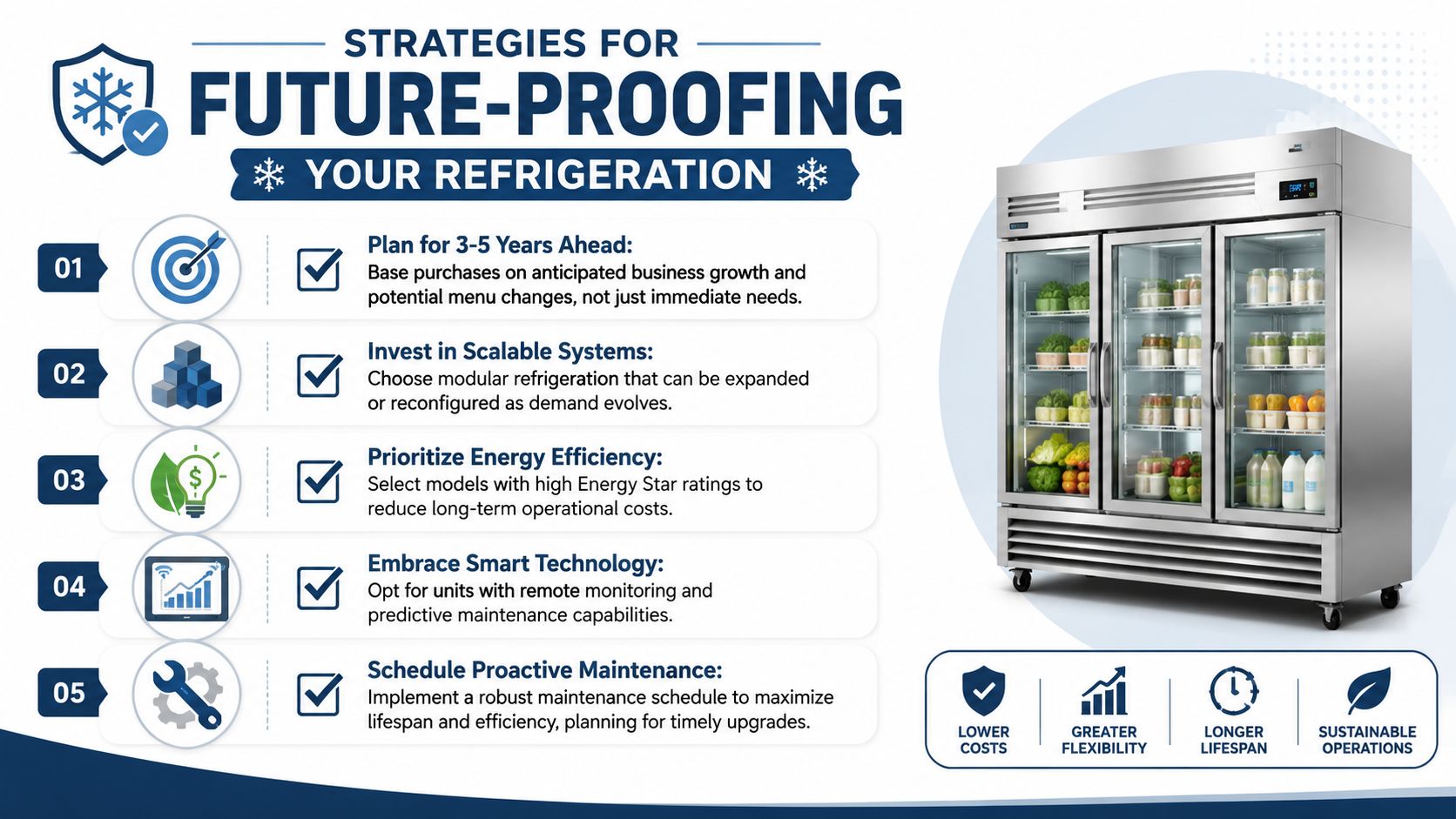
Plan for the business you are becoming
The right question is not how much stock fits today. The better question is what the kitchen will need to hold, access, portion, chill, and rotate six to twelve months from now.
In practice, I look at the growth drivers first:
- Is the menu expanding into new ingredient lines or more high-risk chilled items?
- Will more prep, portioning, or dessert work move on site?
- Is the business adding catering, events, or corporate delivery?
- Will takeaway, grab-and-go, or display stock keep growing?
- Are more staff likely to work the same section during prep or service?
Those answers shape refrigeration capacity more than cabinet size alone. A bigger upright may solve overflow in the short term, but it does not fix a station where two chefs are waiting on one underbench door during lunch prep. Refrigeration has to support workflow, access speed, stock rotation, and food safety at the same time.
Operators weighing up how to choose refrigeration based on business stage usually get better results when they match equipment to the next phase of service, not the last one.
Match the equipment style to the workflow
Growth often calls for a better mix of equipment, not just more volume.
A practical comparison looks like this:
| Refrigeration type | Best suited to | Common trade-off |
|---|---|---|
| Upright cabinets | Bulk ingredient and back-of-house storage | Good volume, less convenient at tight service stations |
| Underbench units | Line access, small kitchens, prep benches | Excellent workflow support, less total holding space |
| Display refrigeration | Front-of-house drinks, desserts, grab-and-go | Supports sales presentation, not ideal for main kitchen stock |
| Freezers and blast chilling support | Frozen lines, batch prep, cold chain control | Needs planning around menu and production style |
This is usually where layout matters more than operators expect. A site may have enough total cold storage on paper, yet still run short where the work happens. Bulk stock in the wrong location creates extra walking, extra door openings, and slower service. Splitting storage between back-of-house holding and point-of-use refrigeration often gives a cleaner result than adding one oversized cabinet.
Brands such as SKOPE and Atosa come into the conversation for that reason. The decision is usually about duty, footprint, access pattern, and staging future additions, rather than brand alone.
Planning rule: Ask how much refrigeration the workflow needs at prep, service, storage, and delivery times.
Build service and upkeep around actual use
A unit that worked well for a quieter menu can struggle once door openings increase, shelves are packed tighter, and product turnover speeds up. Growth changes the workload. Service planning needs to change with it.
The practical checks are straightforward:
- Clean condenser and airflow areas on a schedule that matches kitchen conditions
- Check door seals and closing action before small losses become temperature problems
- Review loading patterns so air can circulate properly
- Watch for repeat temperature drift during peak periods
- Confirm each cabinet is being used for the job it is suited to
This is less about age than operating conditions. I have seen newer units perform poorly because they were overloaded or placed in the wrong part of the kitchen, and older units keep up well because the workflow around them was planned properly.
Choose scalable options before pressure becomes constant
Some sites benefit from staged additions. Others are better off replacing a patchwork of mismatched cabinets with a setup that separates bulk storage, prep access, and service stock more cleanly.
That decision usually comes down to how the business is growing. If growth is coming from events, cabinet food, or expanded prep, modular additions can make sense. If the kitchen has already outgrown its layout, a larger reset is often cheaper than carrying on with workarounds that waste labour every day.
Many operators review equipment ranges, layout options, and growth-stage planning through one supplier conversation rather than piecing it together later. Simply Hospitality is one option for comparing refrigeration categories, brand collections, and related kitchen equipment in that process.
Understanding Your Buying and Finance Options
Buying refrigeration purely on purchase price is where many growth problems begin. An undersized unit can look sensible at the start, especially when cash flow is tight, but it often creates a more expensive problem later through workflow inefficiency, duplicate equipment, and earlier replacement.
Upfront cost versus ownership cost
In New Zealand, commercial refrigeration systems can consume up to 60% of a facility's total energy, and older units under growth-related strain can see a 25–30% drop in cooling performance, which brings replacement forward. That makes energy efficiency part of total cost of ownership, not an optional extra.
This is why many operators compare options based on more than cabinet size alone. Stainless construction, shelf format, temperature range, control visibility, and service suitability all matter. If the unit sits in a high-use production zone, durability and access can be more important than buying the cheapest available footprint.
Choosing the right format for the site
A venue with limited kitchen space may need underbench refrigeration close to the line. A larger production kitchen may benefit more from separate bulk storage and service refrigeration. The right mix depends on menu, staffing, available footprint, and how often stock is handled during a shift.
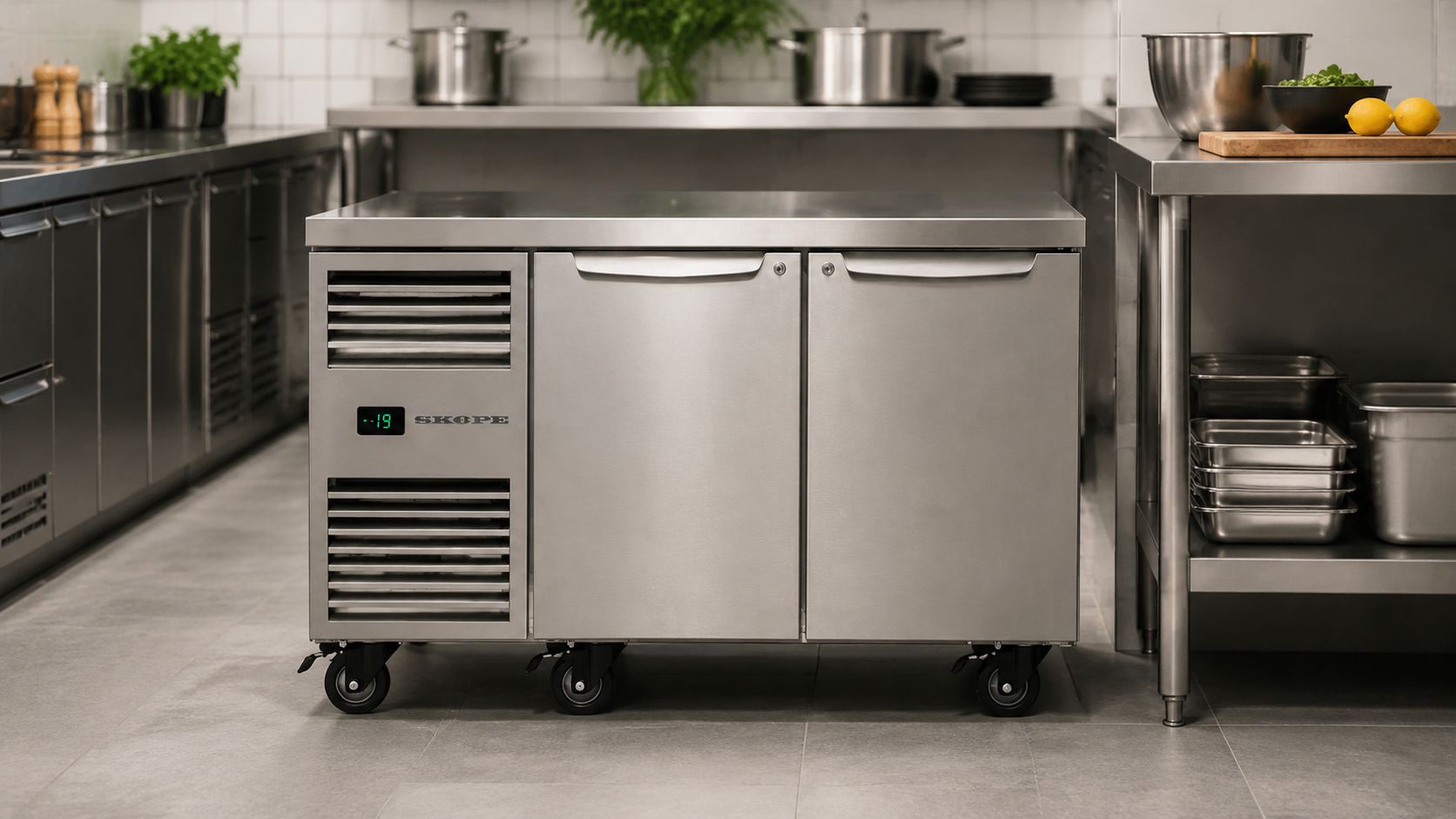
One example is the SKOPE ProSpec 2 Bay Solid Door Underbench Freezer GN 1/1, which is built for busy commercial kitchens with two solid swing doors, four GN 1/1 wire shelves, stainless steel construction, SKOPE-connect™, and a temperature range from -26°C to -12°C. Its listed energy consumption is 4.33 kWh/24h. For some kitchens, that style of unit suits line-level frozen storage better than relying on a larger remote freezer alone.
Operators working through these choices often benefit from reading how to choose refrigeration based on the stage the business is in.
A cheaper unit that the kitchen outgrows early isn't the lower-cost option. It's just the lower upfront invoice.
Finance can be a planning tool
Finance can help a venue buy equipment that fits the business properly rather than settling for something too small. That matters when the alternative is a rushed second purchase, compromised workflow, or trying to run growing trade through marginal cold storage.
The better buying question usually isn't “what's the least expensive fridge today?” It's “what refrigeration setup supports the kitchen properly without creating pressure again too soon?”
Plan for Growth Before You Have To
Refrigeration should be treated as part of operational planning, not as a last-minute equipment replacement. The kitchens that cope best with growth usually aren't the ones with the most cabinets. They're the ones that matched refrigeration to menu direction, stock movement, prep workflow, and likely future demand.
Many hospitality operators find that the actual issue isn't a broken fridge. It's that the business has become bigger and more complex than the original cold storage plan accounted for. Planning ahead, choosing scalable formats, and keeping maintenance aligned with actual workload gives the kitchen more room to operate calmly.
A useful next step is reviewing where trade is heading, then comparing that with the current refrigeration layout before the pressure becomes constant. That's the thinking behind planning equipment upgrades before they become urgent.
If the current setup is starting to feel tight, contact Simply Hospitality for help working through refrigeration options that suit the way the business operates now and where it's likely to grow next.