

Cake Tin NZ Guide: How to Choose the Right Tin
Most advice on a cake tin NZ search starts with diameter, but that's only the label. The cake that comes out of the oven is shaped by depth, shape, material, and recipe, and the wrong combination is what gives you domes, pale centres, rough edges, or a cake that won't release cleanly. For home bakers, that means choosing the tin that suits the cake. For cafés and bakeries, it means choosing a tin that also suits the oven, the batch size, and the cleaning routine.
In New Zealand kitchens, the practical pressure points are a bit more specific. Commercial baking equipment has to be selected, checked, cleaned, and prepared before use under NZQA commercial standards, and food-contact articles have to meet safety expectations under New Zealand regulations and MPI guidance (NZQA unit standard for commercial baking equipment, food-contact regulations, MPI food packaging guidance). That's why the right cake tin is as much an operations decision as a baking decision.
Why Diameter Alone Is the Wrong Place to Begin
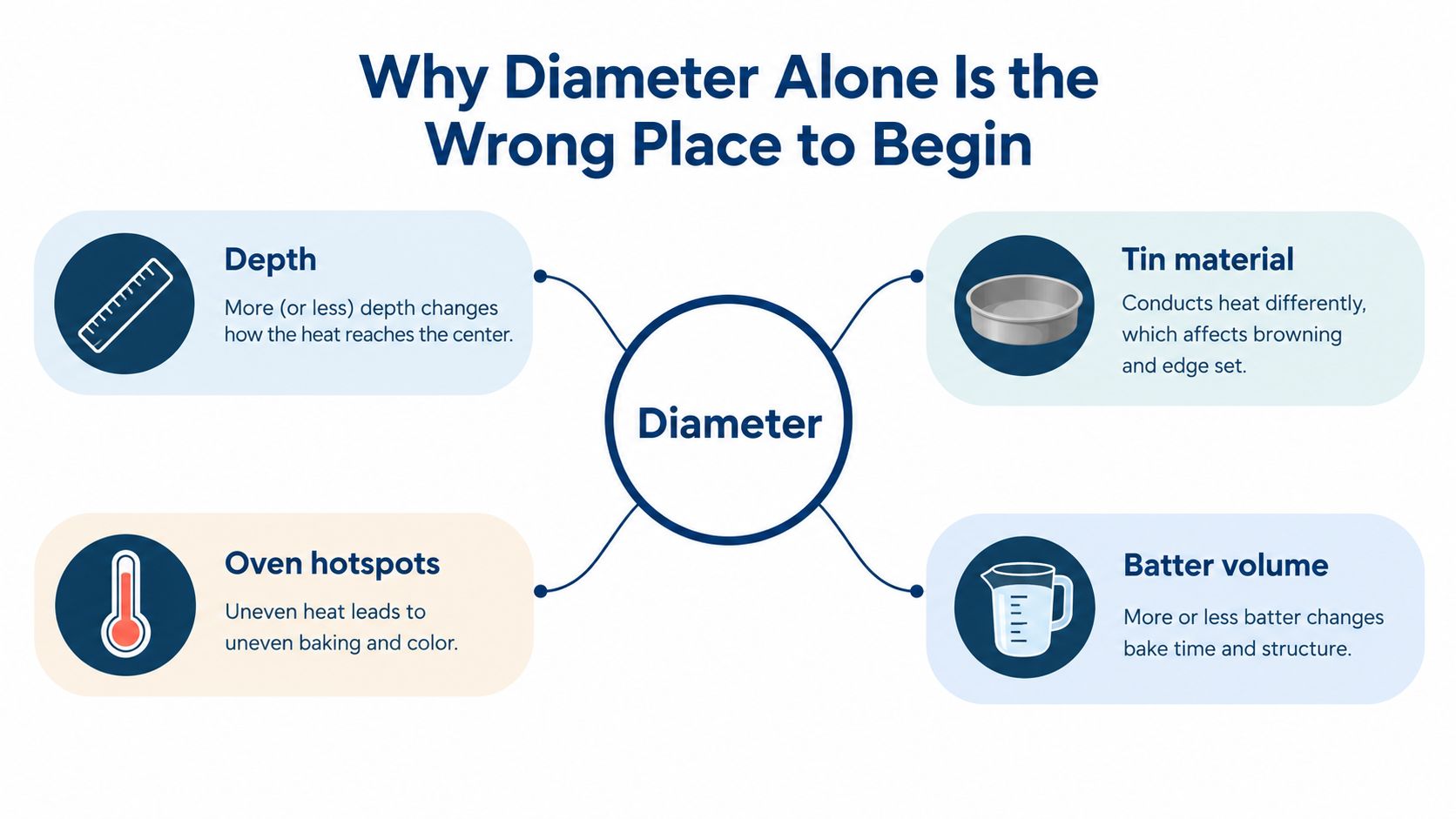
Diameter is easy to compare, but it doesn't tell the full story. Two tins with the same width can behave very differently if one is shallow and the other is deep, or if one is heavy metal and the other is a lighter coated tin. That is why a cake tin NZ buyer should start with the cake itself, not the number printed on the box.
The four drivers that actually matter
Depth changes how much batter sits in the tin and how far heat has to travel to reach the centre. A shallow tin suits a thinner sponge layer, while a deeper tin suits a loaf-style or fruit-heavy batter that needs a slower, more even bake.
Shape changes corner behaviour, slicing, and presentation. Round tins stack neatly for celebration cakes, while square and rectangular tins are often easier for slab cakes and tray bakes.
Material changes how quickly heat moves through the wall. That affects browning, release, and how forgiving the tin is on a busy production line.
Recipe decides whether the cake needs a tight, even crumb or a more open structure. A rich fruit cake, a delicate sponge, and a cheesecake all ask different things from the tin.
Practical rule: choose the cake first, then match the tin to the cake's depth, release needs, and oven behaviour.
The old habit of buying by diameter alone is especially risky when a venue is standardising products. New Zealand's baking history shows how equipment moved from home kitchens into larger, more standardised production, and that shift still shapes how tins get used today (Te Ara's baking history). A tin is never just a container, it's part of the bake system.
The Main Cake Tin Types and What Each One Is Best For
Not every tin belongs in every kitchen. The right mix depends on menu style, volume, and how often the tin has to move from prep bench to oven to wash area. A café that mostly turns out single slices doesn't need the same set-up as a bakery building tiered cakes or batch-baking tray items.
The common types NZ buyers actually use
| Tin Type | Best For | Typical NZ Use |
|---|---|---|
| Round cake tins | Layer cakes, celebration cakes, sponges | Birthday cakes, stacked cakes, home baking |
| Square cake tins | Tray cakes, brownies, slab cakes | Café slices, morning tea bakes, easy portioning |
| Rectangular cake tins | Sheet-style cakes, bar cakes | Lamington-style bases, bakery slabs |
| Loaf tins | Banana loaf, fruit loaf, sliced tea cakes | Counter cakes, sliced serve portions |
| Springform tins | Cheesecakes, tortes, delicate cakes | Desserts that shouldn't be inverted |
| Loose-base tins | Cakes that need easier release | Fruit cakes, dense bakes, some tortes |
| Bundt or ring tins | Decorative ring cakes | Feature cakes, plated desserts |
| Muffin and cupcake pans | Individual serves | Grab-and-go portions, kids' cakes, counters |
Round tins are the default for many celebration cakes because they slice and stack cleanly. Square and rectangular tins suit slab-style production because they make portioning straightforward and often fit well into tray workflows. Loaf tins are the sensible choice when the batter column needs a deeper, gentler bake.
Springform and loose-base tins have their place, but they're not interchangeable with standard fixed tins. The removable side is useful when inversion would damage the cake, yet the mechanism adds a join that must be treated with care. For small, repeated production runs, a fixed tin can be simpler and faster.
For bakers who also use flexible moulds for some products, the matching logic is similar. A useful comparison with other moulded bakeware is the silicone muffin tray article, especially when deciding between rigid tins and softer moulds.
Cake Tin Sizes, Depth and the Area Principle
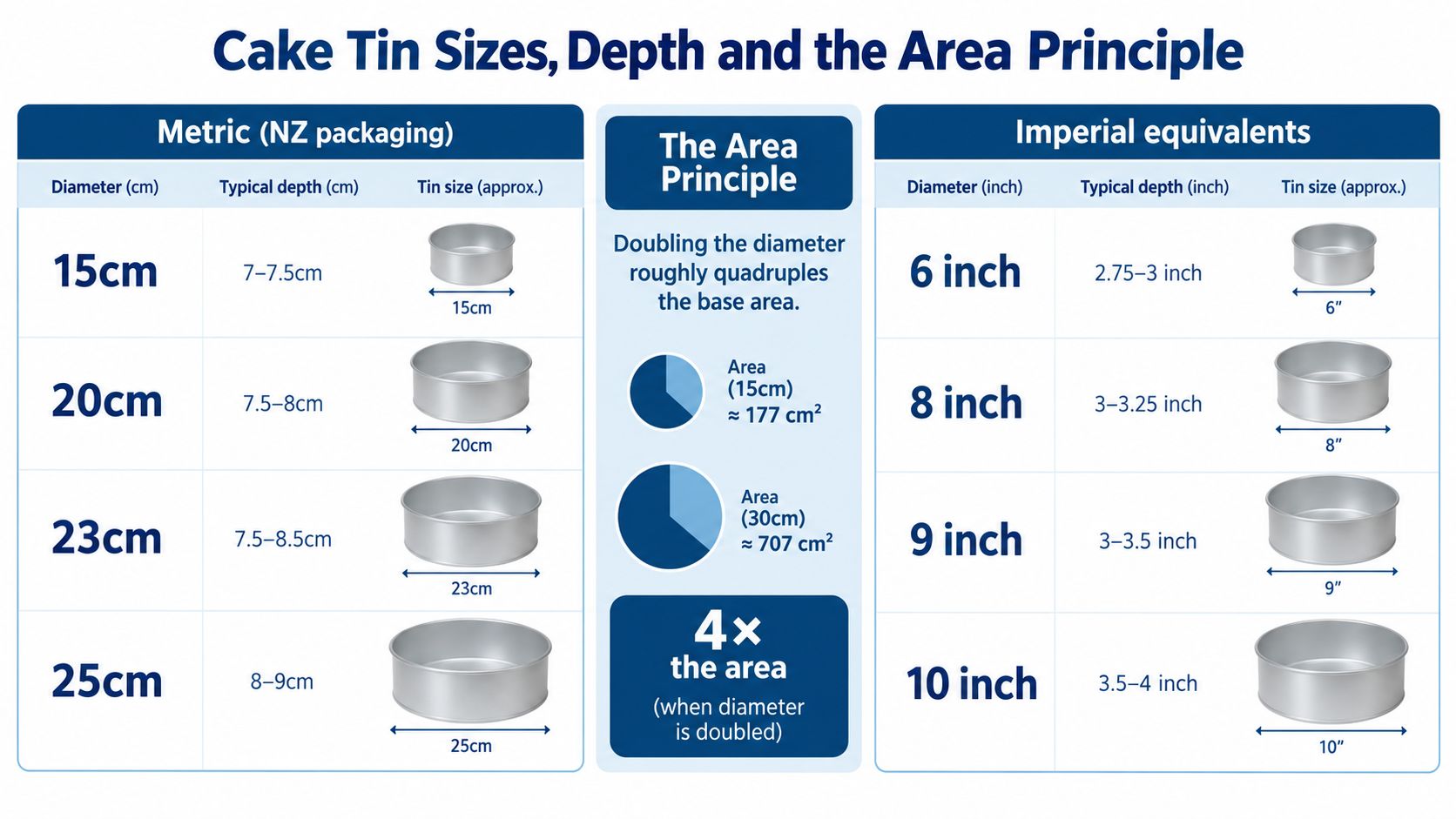
Size conversions are useful, but they're only the starting point. New Zealand packaging often mixes metric and imperial, so a 15 cm tin is roughly 6 inch, 20 cm is roughly 8 inch, 23 cm is roughly 9 inch, and 25 cm is roughly 10 inch. Those are approximate conversions, and actual manufacturer dimensions should always be checked.
Depth matters more than most people think
Two tins sold as the same diameter can still be very different in real use if one has taller walls. A deeper tin holds more batter and usually needs more care around centre bake-through, even when the width looks familiar. In commercial kitchens, that difference is enough to change whether a cake finishes evenly or needs repeat baking.
The simplest way to think about swaps is to compare the area of the base, not just the diameter. For round tins, a bigger diameter changes capacity faster than many recipes suggest. Going from 20 cm to 25 cm is not a small change in base area, it's a much larger jump than the raw diameter difference implies.
A practical conversion habit
Use the original recipe tin as the reference point, then ask three questions.
- Is the new tin wider or narrower? Wider tins spread batter thinner, so the cake bakes flatter.
- Is the new tin deeper? Deeper tins hold a thicker batter column, so the centre usually needs more attention.
- Does the recipe depend on height? Layer cakes, sponge stacks, and celebration cakes are especially sensitive to tin geometry.
A recipe written for one size can often move to a nearby size if the cake thickness stays similar, but the oven test should still lead the decision. A skewer, a light finger press, and the look of the centre matter more than a fixed minute adjustment. That's why tins and recipes have to be treated as a pair, not as separate purchases.
For operators who also need a practical baking dish for other kitchen work, the Pyrex Easy Grab® loaf dish 1.4 L is a useful example of how capacity, shape, and handling features all influence the end result.
Round vs Square and What Cake Tin Materials Actually Do
A round and a square tin with a similar label size don't hold the same amount of batter. A 20 cm square tin has more surface area than a 20 cm round tin, so the recipe conversion can't be treated as a straight swap. That is one of the main reasons recipe transfers go wrong when a baker changes shape but keeps the same batter quantity.
Shape changes both yield and finish
Round tins are familiar for celebration cakes because the profile is easy to stack and portion. Square tins are often better for café slices and tray-style service because the finished pieces cut more consistently. Rectangular tins are the workhorse shape for slab bakes where the final product will be portioned into bars or squares.
Materials behave differently in real kitchens
| Material | Heat Transfer | Weight | Release | Cleaning | Commercial Workload |
|---|---|---|---|---|---|
| Aluminium | Fast | Light | Usually needs preparation | Straightforward, but can mark | Good for frequent use, can warp if handled roughly |
| Aluminised steel | Even and stable | Moderate | Often good with proper prep | Durable under repeat use | Strong fit for commercial baking |
| Carbon steel | Responsive | Moderate | Depends on finish and care | Needs sensible handling | Suits busy kitchens that rotate tins often |
| Stainless steel | Slower | Heavier | Usually needs release prep | Durable, but not a release shortcut | Useful where toughness matters more than speed |
| Non-stick coated tins | Varies by base metal | Usually moderate | Easy when the coating is sound | Coating care matters | Handy for release-sensitive products |
| Silicone | Slow and flexible | Very light | Easy to unmould, but unstable | Simple to wash | Better for some individual items than heavy production |
For commercial kitchens, the right answer usually depends on the product and the rhythm of production. A tin that behaves well for a once-a-week home bake might be frustrating on a hot service line if it warps, sticks, or moves around on the rack. The material choice should be tied to the workload, not the packaging description.
Heavy-duty production work usually benefits from a stable metal tin with predictable release, not the lightest or flashiest option on the shelf.
One useful comparison point for material behaviour in bakeware is the why Emile Henry continues to inspire professional and home chefs article, especially where heat handling and durability matter in daily use.
Light vs Dark, Straight-Sided, Springform and Non-Stick Choices
Some of the most important buying decisions happen after shape and size are settled. Colour, wall profile, and release style all change how the cake finishes, especially in a commercial oven where consistency matters more than novelty.
Light and dark surfaces behave differently
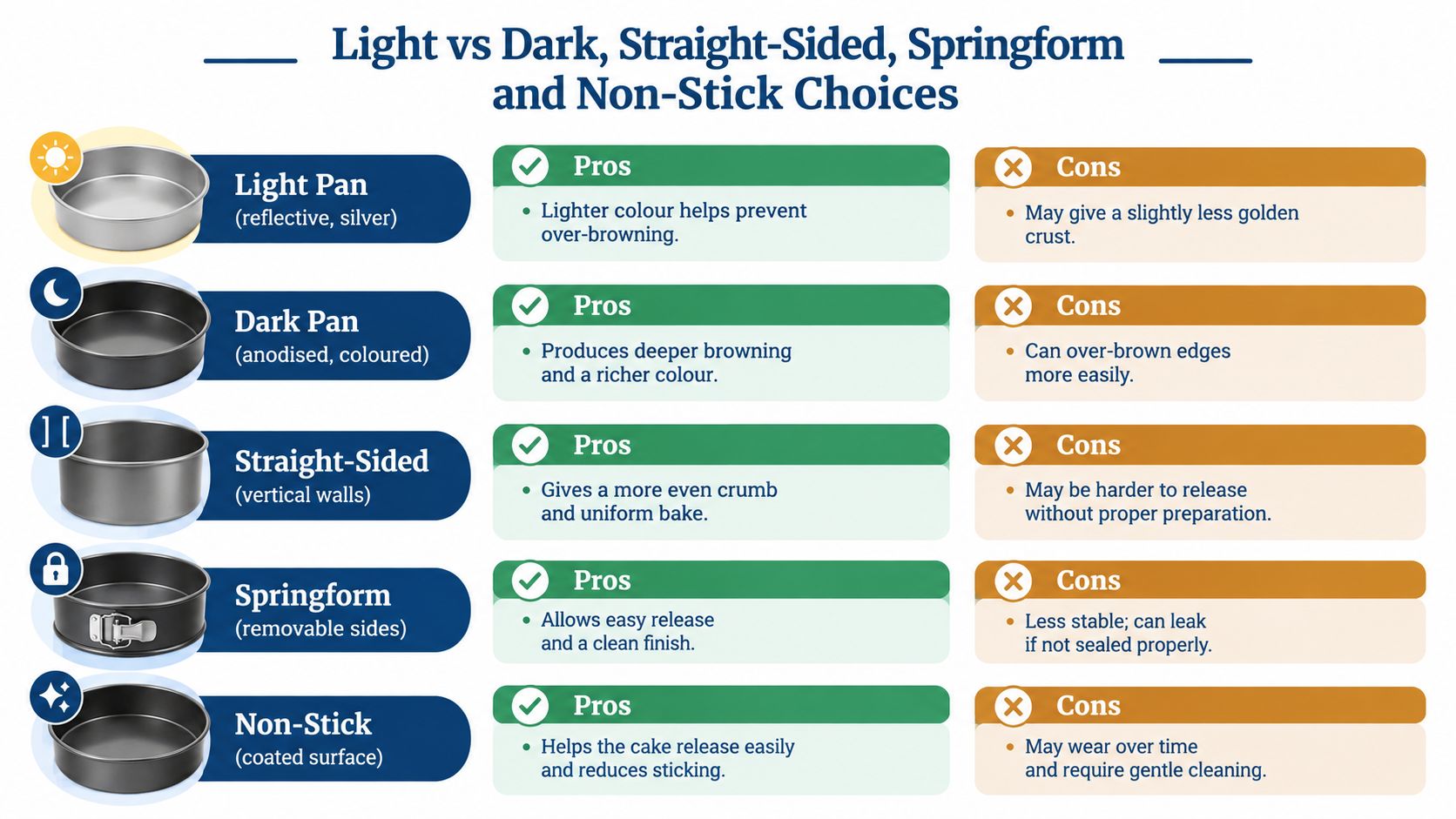
Light tins reflect more heat and usually give a paler finish. Dark tins absorb more heat and brown faster, which can be useful for richer cakes but less forgiving for delicate sponges. That means the same recipe can look and behave differently depending on the tin surface.
Straight-sided tins help with finish
Straight-sided tins are valuable when the cake has to look even and stack cleanly. Layer cakes, wedding cakes, and café celebration cakes often benefit from a straight edge because the finished height is easier to level and portion. Sloped sides are fine for many home bakes, but they're less useful when every cake needs the same profile.
Springform and loose-base tins solve a different problem. They're used where inversion would damage the cake, especially for cheesecakes and other delicate desserts. The trade-off is that the mechanism introduces joins, so it shouldn't be assumed to be leakproof with very thin mixtures.
Non-stick is helpful, but not magic
Non-stick can reduce release problems and make cleaning quicker when the coating is in good condition. Traditional tins, used with grease, lining paper, or flour, can be simpler and more durable in high-turnover kitchens. The better choice depends on how the tin will be handled, not just how it feels in the hand.
For bakeware that's likely to see repeated heat, note the care limits the manufacturer sets. Le Creuset NZ states its non-stick metal bakeware is oven safe to 240°C/Gas Mark 9, and its guidance also warns against misuse such as microwaving, grilling, or direct heat use. Those kinds of product-specific limits matter more than generic bakeware assumptions.
Commercial Bakery and Café Considerations for Cake Tins
A home baker can get away with one off-spec tin now and then. A café or bakery can't. Once a kitchen is producing the same cake every week, the tin becomes part of the production system, and standardisation starts to matter.
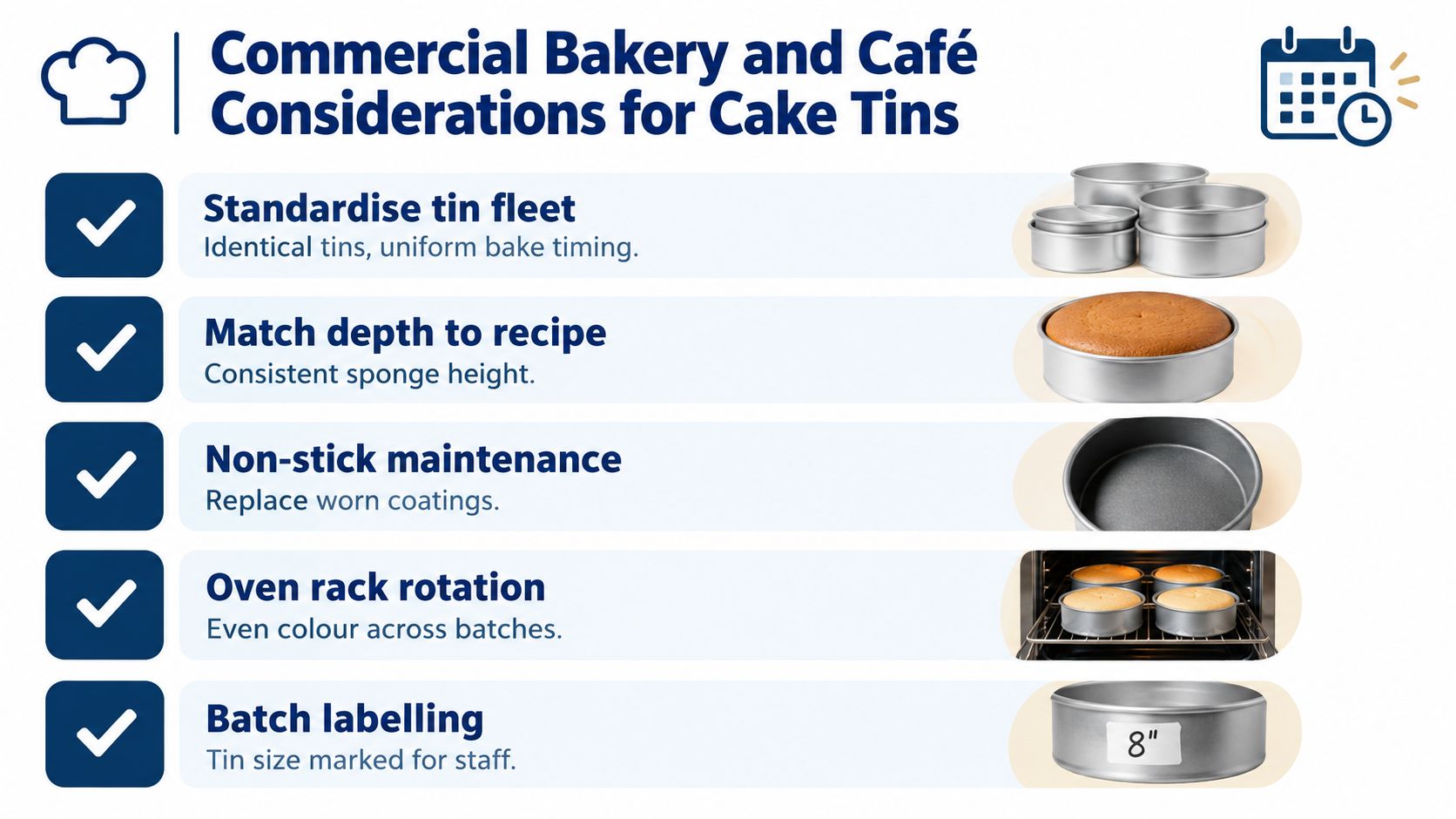
Standardising the tin fleet removes guesswork
When a team uses identical tins, the batter quantity, finished height, and bake behaviour stay more consistent. That helps with recipe control, display consistency, and portioning. It also makes handover between staff easier because the tin itself doesn't become another variable.
Oven fit and tray fit matter before purchase
A tin that sounds right on paper can be awkward in the oven if the rack clearance is tight or the airflow is poor. Internal oven dimensions, tray size, and shelf spacing all need checking before buying multiples. A tin that fits comfortably on one rack can crowd another setup and create uneven colour if the oven is loaded too tightly.
Cleaning also affects long-term ownership. Commercial wash routines, repeated handling, and metal utensils are hard on coatings, so a kitchen that runs the same cake often needs a replacement plan, not just a purchase order. That is where a cheap tin can become the expensive one, because inconsistency and downtime cost more than the sticker price.
For operators planning a broader kitchen set-up, the bakery equipment setup NZ article is a useful companion piece because it connects tins with the rest of the production flow. For customer-facing cafés, the coffee shop loyalty guide is also a relevant operational resource when dessert and repeat visits are part of the same service mix.
Cake Tin Buying Checklist and Getting the Right Fit
A good purchase decision starts with the menu, not the shelf label. The safest way to narrow the options is to force a few practical questions before committing to one tin range.
Ten questions to run through first
- What are you baking? A cheesecake, a sponge, a loaf, and a tray bake all want different tin behaviour.
- What tin size does the recipe specify? Match the recipe first, then decide whether a conversion is sensible.
- What depth is required? The same diameter can produce a very different cake height.
- Round, square, rectangular or specialty shape? Shape changes slicing, stacking, and presentation.
- Fixed, loose or springform base? Release needs should drive the base style.
- What material suits the application? Choose for heat transfer, release, weight, and repeat use.
- How many tins need to fit in the oven simultaneously? Oven loading can make a smaller tin more practical.
- Is this occasional or repeated commercial use? Production work usually needs tougher construction.
- How will the tins be cleaned and stored? Coatings, stacking, and washing all affect lifespan.
- Do you need identical replacements available later? Standardisation matters when a kitchen grows.
Straight-sided tins are useful for layered and celebration work, while springform suits cheesecakes and other delicate desserts. Loaf tins belong with banana loaves and similar sliced bakes, while heavier aluminium or aluminised tins are usually better suited to repeated production. Rolled or reinforced edges are also worth paying attention to, because they help the tin hold its shape under regular use.
The smartest purchase is the tin that matches the cake, the oven, and the weekly workload together.
For New Zealand buyers, the practical answer is usually a small, well-chosen tin range rather than a long list of shapes that only look versatile. If the menu needs standard round layers, square slab cakes, and one or two specialty tins, buy for those jobs and standardise the rest. That gives staff a clearer system and reduces avoidable guesswork on busy production days.
If a venue needs help matching cake tins to menu items, oven size, and weekly production volume, Simply Hospitality can help narrow the options without overbuying. Visit Simply Hospitality to browse bakeware and talk through the right tin shape, material, and size for the kitchen's actual workflow.