

Catering Equipment NZ: Essential Buyer's Guide
The pressure usually starts well before service. A date is locked in, the menu is set, the guest count is firm enough to matter, and the venue might be a hotel kitchen, a rural woolshed, a temporary marquee, or a remote marae where there's very little margin for freight delays or equipment failure. That's where buying catering equipment NZ businesses can rely on becomes less about catalogues and more about logistics.
For mobile and event catering, the wrong purchase rarely fails on paper. It fails when it's too heavy to move safely, too awkward to pack, too small for the service window, or too fragile for repeated transport. The right equipment should be as easy to transport as it is to use. It also needs to suit the way a catering business really operates, including travel time, setup pressure, limited power access, cleaning constraints, and the need to hold food safely once the rush starts.
Successful Catering Starts Before the First Meal is Served
A high-stakes event doesn't begin when the burners switch on. It begins when freight dates are confirmed, the vehicle load is planned, and every piece of gear is assigned a purpose.
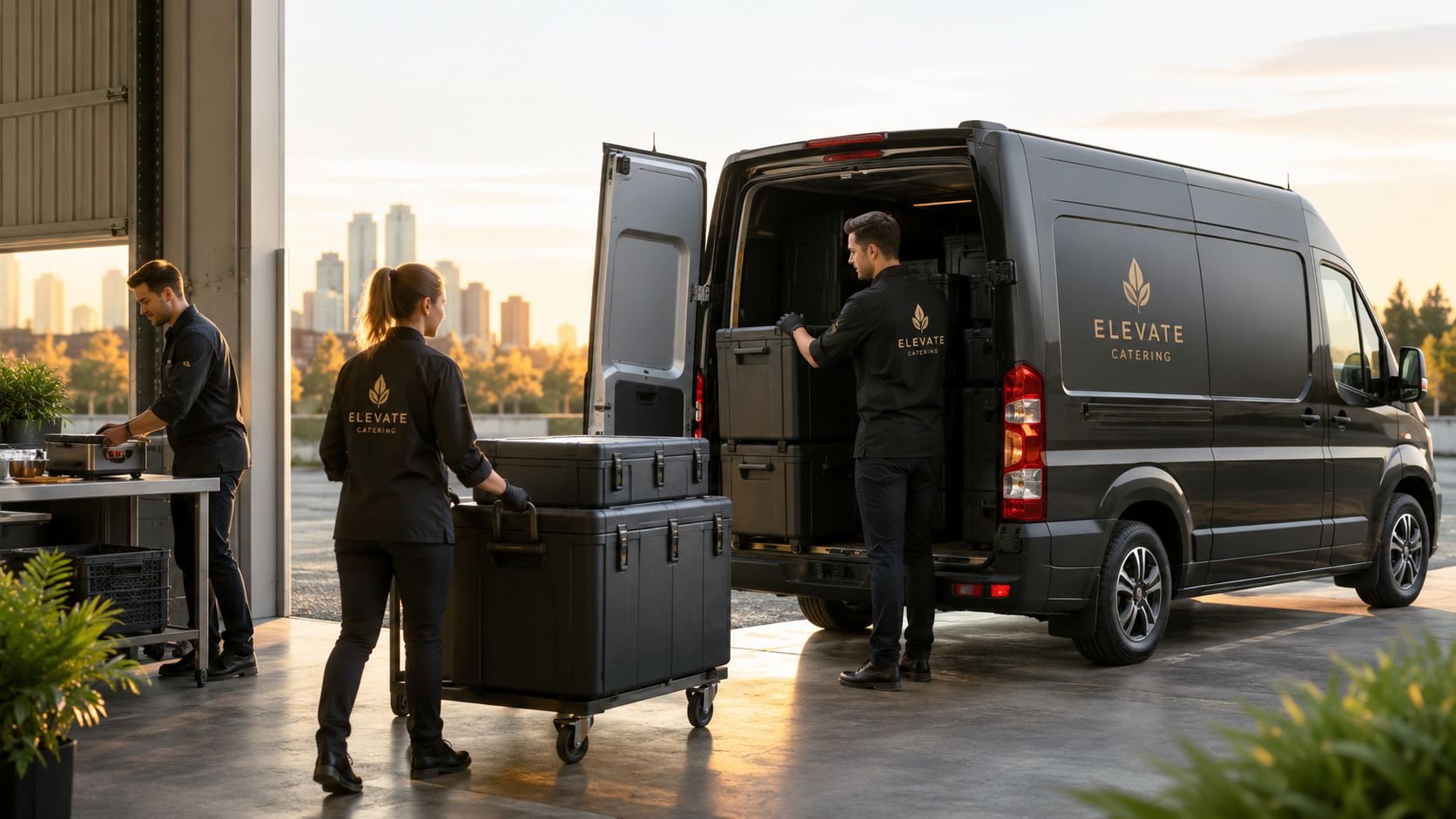
Some of the most challenging projects in New Zealand catering are remote marae events. Equipment often needs to arrive on site before a fixed event date, and replacement equipment may be difficult to source if something goes wrong. In that setting, reliability matters just as much as cooking performance.
Many catering businesses find that the biggest problems on event day aren't recipe issues. They're practical issues. A bain-marie turns up later than expected. A fridge arrives but doesn't fit the transport plan. A holding setup works well in a permanent kitchen but becomes awkward once it has to be unloaded, positioned, powered, cleaned, and packed again at the end of a long shift.
Logistics usually cause the real stress
Successful catering starts long before the food is served. The operators who stay calm on event day usually have three things sorted early:
- Freight timing: Equipment is booked to arrive with enough buffer, not at the last possible moment.
- Site reality: Power, access, bench space, and service flow are checked against the actual venue.
- Backup thinking: Critical items are chosen for dependability because the nearest replacement may be hours away.
Practical rule: If a piece of equipment is mission-critical for service, it also needs to be easy to move, easy to protect, and easy to set up under pressure.
One useful reference for planning repeatable service systems is planning equipment for consistent meal service. That matters even more when a catering team is moving between venues and working to a fixed service time.
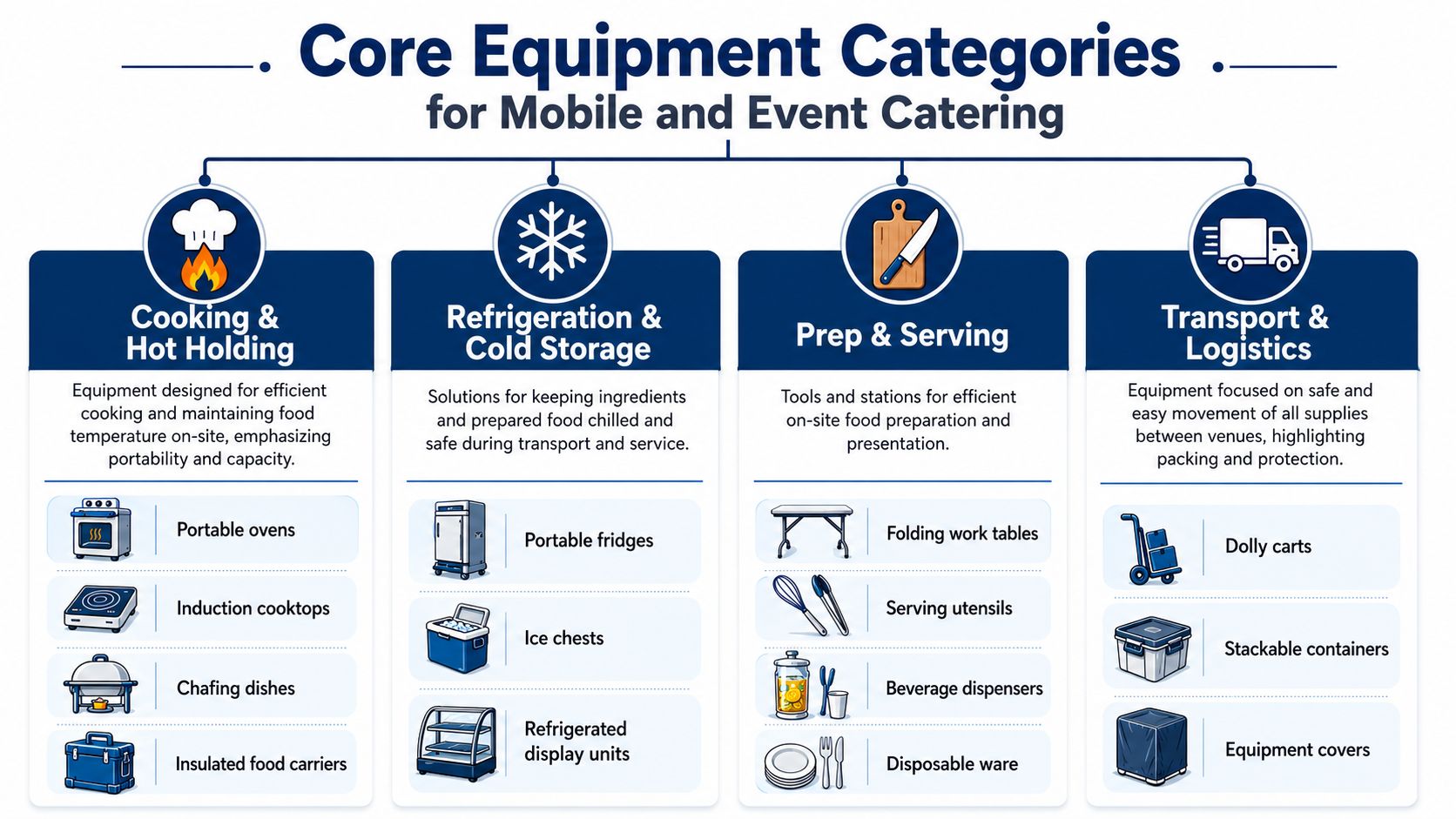
Core Equipment Categories for Mobile and Event Catering
Mobile catering equipment should be selected by function, but also by how well it handles transport, setup, and repeated use. That changes the buying decision.
Cooking and hot holding
Cooking equipment for events needs dependable output, but it also needs practical footprints and straightforward controls. Many operators choose compact gas burners, griddles, or ovens where venue power is uncertain. Others prefer electric units where the site has stable supply and the menu needs tighter temperature control.
Hot holding deserves equal attention. A common mistake seen in catering setups is putting too much focus on the cooking line and not enough on what happens after food is cooked. Bain-maries, insulated carriers, heated shelves, and transport-safe holding equipment often do more to protect service quality than chasing minor differences in headline specs.
Points worth checking:
- Weight and handling: Can two staff move it safely?
- Site suitability: Will it work in a marquee, hall, marae kitchen, or temporary prep area?
- Cleaning access: Can the team clean it properly at the venue and again after pack-down?
Refrigeration and cold storage
Refrigeration for catering has a different job from refrigeration in a fixed site. It must cope with movement, door openings, stock loading, and unpredictable site conditions.
Many operators start their shortlist by reviewing commercial fridge options for hospitality businesses because refrigeration capacity affects everything from prep volume to food safety during service. Under-counter units, upright fridges, and transport coolers all have their place. The right solution depends on menu complexity, travel time, and whether the event includes on-site prep or just finishing and service.
A refrigeration purchase should be assessed against:
| Consideration | Why it matters in mobile catering |
|---|---|
| Footprint | It must fit both the vehicle and the venue |
| Door design | Access affects speed during prep and service |
| Durability | Repeated loading and unloading put stress on hardware |
| Serviceability | Parts and support matter when downtime affects events |
Prep and support equipment
Portable stainless benches, gastronorm systems, food processors, storage tubs, and shelving are often overlooked because they aren't dramatic purchases. They're still critical. Setup efficiency comes from organised prep zones, not just powerful cooking appliances.
For caterers running fried food programmes, Blue Seal EF30 Filtamax - 20 Litre is one example of support equipment that fits a mobile workflow. It's a grease and oil filter with a 20-litre capacity per cycle, durable stainless steel construction, a reusable filter bag, and two fixed plus two swivel castors. Its mobile design matters because support gear also needs to move cleanly between work areas and venues.
Equipment categories make more sense when they're grouped by mobility, not just by what they cook or store.
Matching Equipment to Your Venue and Throughput
Choosing capacity is where many purchasing decisions go wrong. A business can buy sturdy equipment and still struggle if the setup is too small for the pace of service.
Start with the busiest part of service
A common mistake seen with event caterers is planning around average demand instead of peak demand. Equipment doesn't get tested by the calm part of service. It gets tested by the busiest stretch, when refrigeration is open more often, hot holding is under pressure, and staff need space to move without slowing each other down.
That's why venue type matters so much:
- Hotel or function centre: Power and water access are often easier, so larger electric equipment may suit the operation.
- Marquee wedding or paddock setup: Gas equipment, transport-ready benches, and self-contained systems often make more sense.
- Remote marae event: Reliability and freight timing become central because replacement options can be limited.
Scale by format, not by wishful thinking
Many catering businesses grow in stages. The safest way to scale usually isn't replacing everything at once. It's adding modular hot holding, more prep space, improved transport gear, and higher-capacity equipment where the service bottleneck sits.
For specialist concepts, the venue itself changes the equipment decision. A pizza-focused operator working fixed events may consider the Moretti Forni Neapolis Pizza Oven because it's an electric oven designed for Neapolitan pizza and can reach 510°C. It uses a baking chamber made of refractory bricks, maintains a consistent pre-set temperature during service, and includes software that manages power consumption. That kind of oven suits some venue formats well, but only if access, transport, and event style line up with the business model.
A useful way to think about venue fit is to compare how different event spaces shape service constraints. Even though it focuses on another market, this overview of compare Staten Island event spaces is a practical reminder that venue layout, access, and service style should influence equipment planning just as much as menu design.
Bigger isn't always the answer. Correctly sized equipment that fits the venue and the service window usually performs better than oversized gear that slows transport and setup.
Logistics Planning Transport Setup and Reliability
The best unit in the catalogue can still be the wrong purchase if it arrives damaged, takes too long to set up, or becomes a problem every time it's loaded into a van. For mobile catering, logistics isn't a side issue. It is part of equipment performance.
One of the biggest logistical challenges is freight planning for fixed-date events. That's especially true for remote marae catering, where equipment often has to be on site well ahead of service and there's very little flexibility if freight is delayed. In those situations, the cheapest option can become the most expensive one operationally if it creates risk.
Treat equipment as transport equipment
A simple rule works well here. If a unit travels regularly, it should be assessed as transport equipment as well as kitchen equipment.
That means asking questions such as:
- Can it be secured properly in transit
- Will handles, legs, doors, and control panels tolerate repeated movement
- Can it be stacked or protected without damaging other items
- Will it slow down load-in and pack-down
A common issue seen with mobile operations is damage caused by poor packing rather than poor manufacturing. Gastronorm pans travel uncovered. Smaller items are loose in crates. Heavier units are loaded where they can shift during transport. Those mistakes create spills, bent fittings, scratched surfaces, and lost setup time.
Setup speed affects service quality
Fast setup doesn't just save labour. It reduces stress and gives the team more time to test power, check temperatures, and organise the service line before guests arrive.
One simple tip is to build the vehicle load in reverse order of setup. The first equipment needed on site should be the easiest to access. The same thinking applies to insulated carriers, servingware, and mobile holding solutions. For delivered meals and temporary holding, products such as the CookTek Thermacube food delivery bag can fit into a transport plan where protection and heat retention during movement matter.
Reliability usually beats lower upfront cost
Many operators choose proven commercial brands because remote and event work puts extra strain on equipment. Repeated loading, uneven surfaces, temporary power setups, and long service windows all expose weaknesses quickly.
There's also a practical human factor. When a critical unit fails in a city venue, there may still be a path to solve the problem. When it fails at a distant site with a fixed start time, the consequences are much harder to absorb. That's why successful catering operations tend to buy for reliability, service access, and predictable setup rather than the lowest purchase price.
Secure items during transport, cover gastronorm pans, keep smaller tools in dedicated containers, and place heavier equipment where it can't move. A few extra minutes during packing often saves far more time on site.
New Zealand Regulatory and Hygiene Considerations
Professional catering in New Zealand sits on top of food safety obligations that don't disappear just because the kitchen is temporary or mobile.
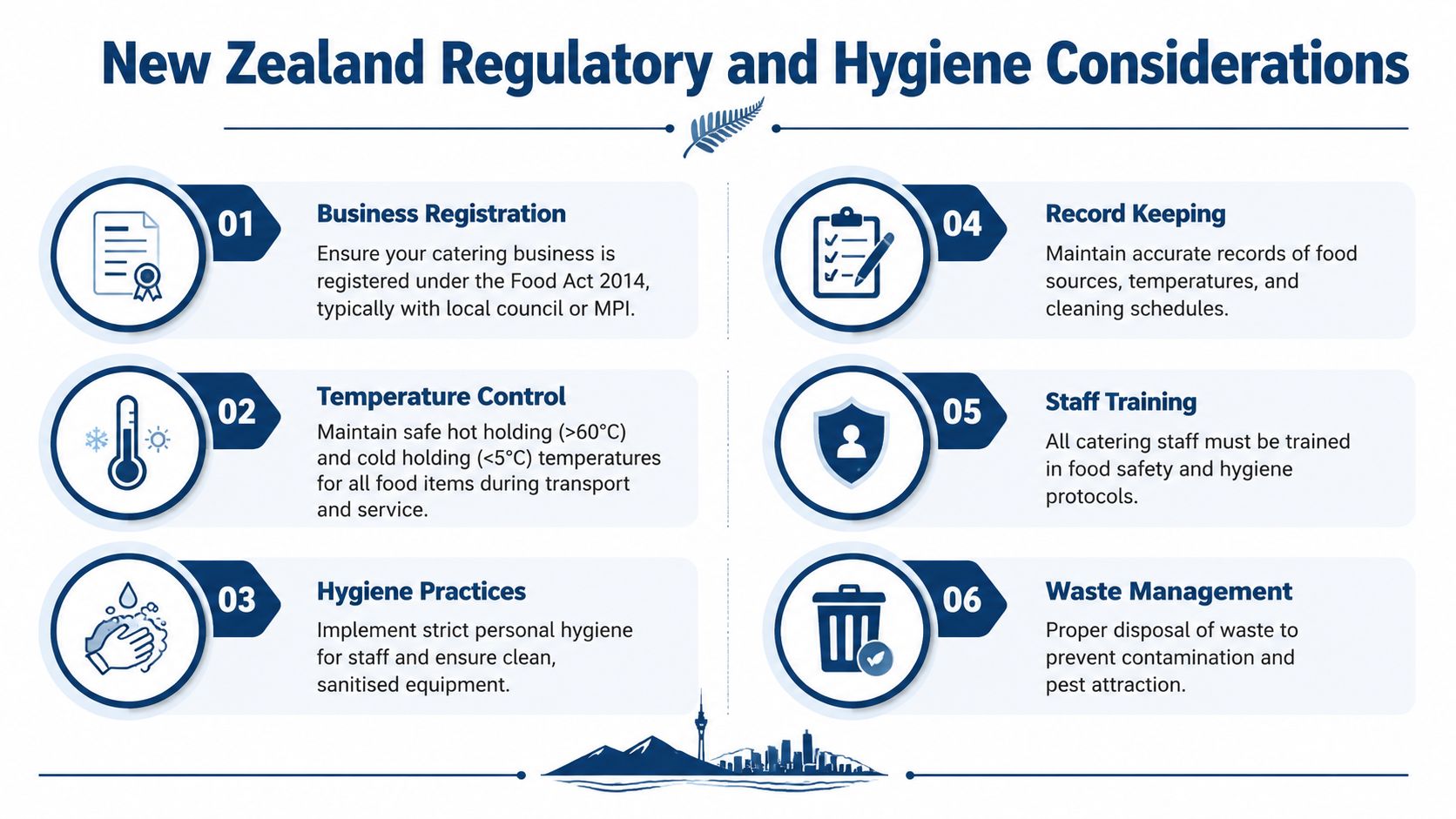
Most food and beverage businesses must register under the Food Act 2014 with MPI or the local council, and many operators choose to use MPI's pathway tool first so they don't apply under the wrong programme. The registration pathway is outlined by MPI for businesses starting a food business.
Capacity and cleaning are compliance issues
Under New Zealand's Food Regulations 2015, the operator must ensure equipment isn't used beyond its specific capacity or capability. That matters in real service conditions because overloading refrigeration or hot holding equipment can create food safety problems at the exact time the team is under the most pressure.
The physical layout matters too. The design and construction of food premises in New Zealand must provide adequate space for equipment to allow for effective cleaning, sanitising, and maintenance, as set out in Food Standards Code guidance for enforcement agencies. One consideration regularly discussed with customers is leaving enough unobstructed space between benches and appliances so staff can effectively clean around them.
Mobile and temporary setups need closer attention
Temporary or movable food premises can be caught out by details that seem minor until inspection day. For movable food premises in Christchurch, the council requires a minimum wall height of 2.40 metres and a minimum lighting level of 215 lux measured at bench height, according to the Christchurch City Council movable premises health and safety guidance. A common issue seen with event caterers is temporary structures that fall short on enclosure or lighting, which can delay approval.
For day-to-day hygiene practice, layout and equipment choice should support cleaning rather than fight it. This article on preventing cross-contamination in hospitality settings is a useful companion when reviewing prep flow, storage separation, and sanitation points in a mobile setup.
Food safety inspections don't only look at the food. They also look at whether the equipment is being used correctly, cleaned effectively, and arranged in a way that supports safe service.
Budgeting Financing and Total Cost of Ownership
Sticker price matters, but it's only one part of the decision. Catering equipment is used repeatedly, transported often, and expected to perform under pressure. That makes total cost of ownership a more useful budgeting tool than purchase price alone.
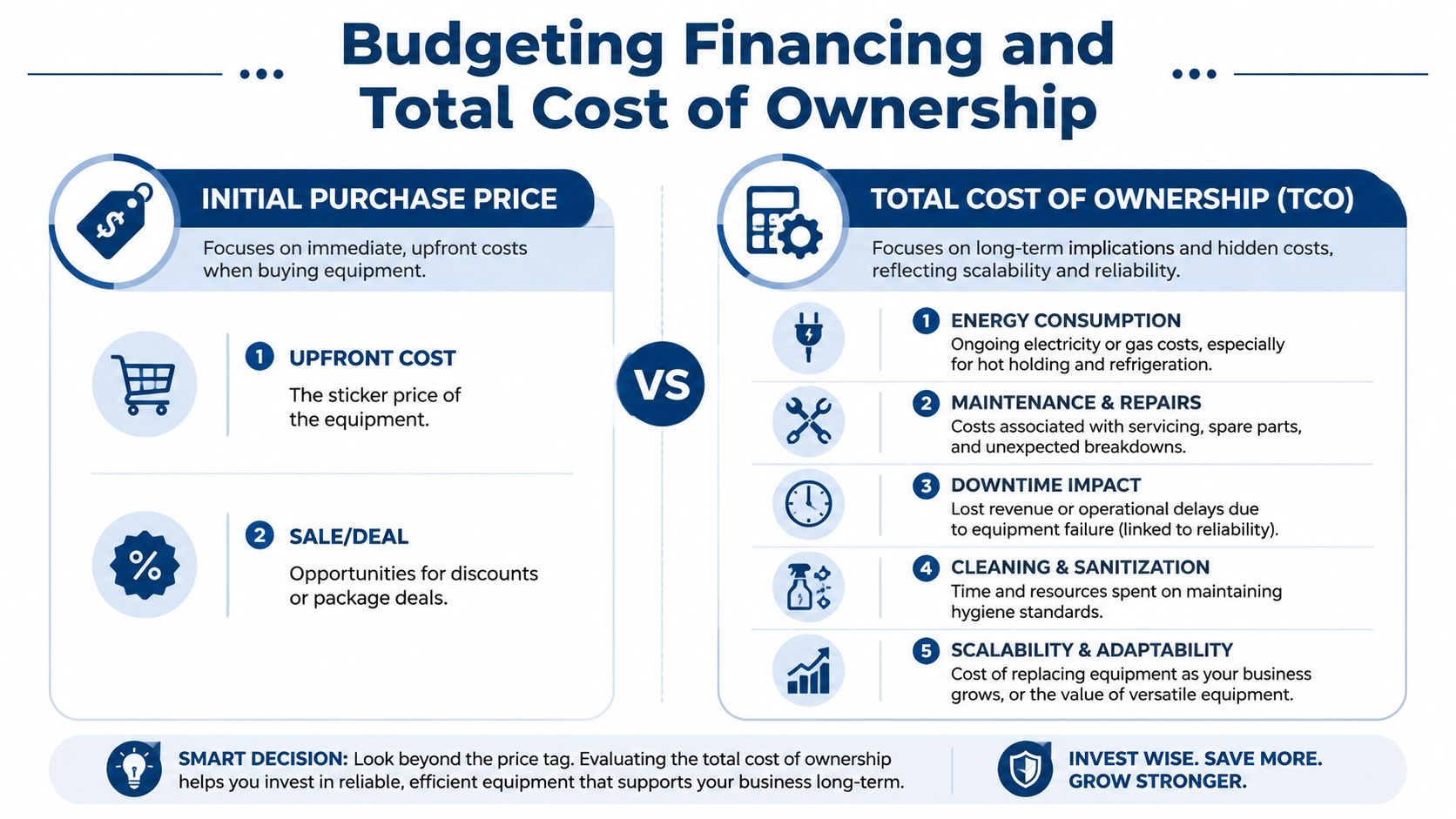
New Zealand commercial kitchen electricity costs have surged 22% since 2023, and modern energy-efficient technologies can deliver 30–40% savings, although adoption remains low. For buyers comparing older equipment with newer induction or electric alternatives, running cost now carries more weight than it did a few years ago.
What total cost really includes
The long-term cost of a unit usually includes more than energy use:
- Maintenance exposure: New Zealand conditions can be tough on equipment. A 2024 MBIE-related summary notes that commercial kitchen equipment in coastal and variable water conditions can face 15–20% higher annual maintenance costs than global averages.
- Downtime risk: If a key unit fails before an event, the operational impact can be worse than the repair bill.
- Cleaning time: Equipment that's awkward to clean often costs more in labour and consistency over time.
- Growth fit: Gear that can't scale with the business may need replacing sooner than expected.
Financing can improve the quality of the first purchase
Many operators don't need the cheapest option. They need the right option without putting too much strain on cash flow. That's where financing can help bridge the gap between what a business can buy today and what it can realistically rely on for the next stage of growth.
For operators comparing funding approaches, this overview of financing for restaurant equipment gives a useful external perspective on how businesses think about equipment funding structures. Closer to home, SilverChef finance through Simply Hospitality is one route some hospitality businesses consider when they want to spread costs while securing more suitable equipment upfront.
Certified used equipment can also be worth considering where condition, serviceability, and application are clear. It won't suit every category, but for some operations it can be a practical middle ground between a low-cost compromise and a major capital purchase.
Procurement Checklist for Catering Equipment
A good equipment decision should stand up to practical use. If a unit looks right on a product page but creates transport issues, cleaning issues, or service bottlenecks, it isn't the right fit.
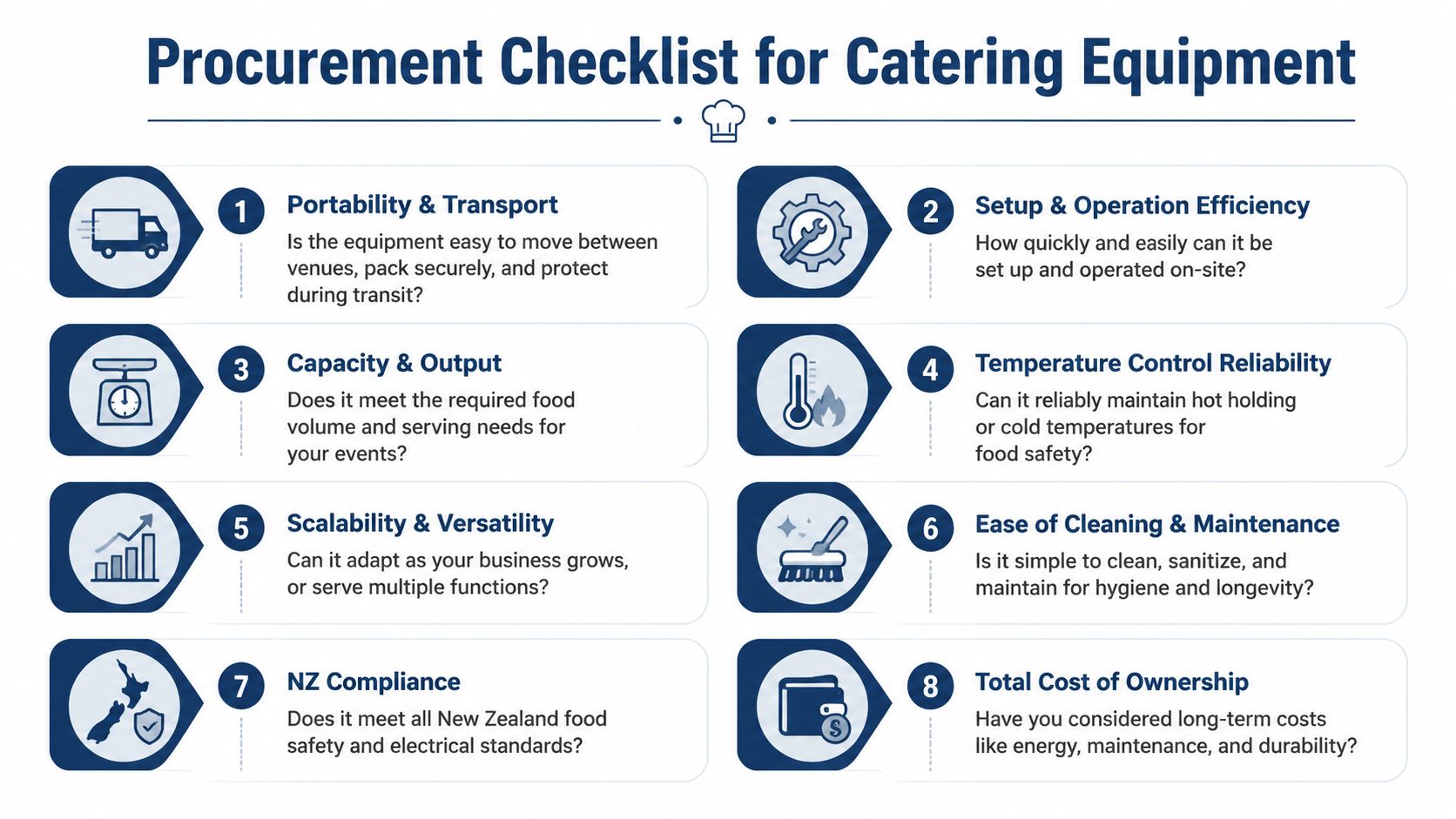
Use this checklist before approving the next purchase.
Questions worth answering before buying
- Portability and transport: Will it fit the vehicle, move safely, and travel without damage?
- Setup speed: Can staff unload, position, and start using it without wasting time on site?
- Capacity: Does it match both regular events and the busiest service window?
- Power and utilities: Does it suit the sites the business works in?
- Hot and cold holding: Can it support food safety through transport, holding, and service?
- Cleaning access: Are surfaces, corners, and surrounding spaces easy to sanitise properly?
- Service support: Are parts and technical support realistically available in New Zealand?
- Growth: Will it still be useful if the catering operation takes on larger or more complex work?
Procurement should also include supplier conversations
Price still matters, but so do lead times, freight handling, delivery timing, and what's included in the supply process. Operators negotiating larger orders or multi-item event setups may also find broader planning advice useful. This guide to expert event vendor negotiation strategies is a practical reference for asking better questions around timing, responsibilities, and service expectations.
The right purchase usually feels boring in the best possible way. It arrives when expected, sets up without drama, handles service properly, and goes back in the vehicle without damage.
Simply Hospitality works with New Zealand hospitality businesses on equipment choices that need to perform in real service conditions, not just in specifications. For help choosing catering equipment that suits transport, venue demands, food safety, and long-term ownership, contact Simply Hospitality.