

Chef Jackets NZ: Find Your Perfect Fit & Fabric
A lot of new venue owners will spend weeks comparing ovens, refrigeration, dishwashers, and smallwares, then leave uniforms until the last minute. That usually leads to rushed decisions based on price or appearance alone. In practice, chef jackets are operational gear. Staff wear them for long shifts, wash them constantly, and rely on them for comfort, protection, and a professional look during service.
Many operators spend considerable time selecting equipment but give little thought to uniforms. In reality, chef jackets are worn for hours every day, so choosing comfortable, durable apparel can contribute to staff satisfaction just as much as choosing the right kitchen equipment. For operators looking at chef jackets NZ wide, the better question isn't “What's the cheapest jacket?” It's “What will still work well after repeated laundering, busy services, and a full team rollout?”
A common issue seen across hospitality fit-outs is treating chef jackets as a finishing touch. They're closer to knives, aprons, and footwear in day-to-day importance. For broader context on putting together a practical kitchen uniform system, the article on chef uniforms in New Zealand is a useful starting point.
Beyond the Basics Why Chef Jackets Matter
Friday dinner service starts in 20 minutes. One cook is already sweating through a heavy jacket, another keeps tugging at tight sleeves on the pass, and the new hire has been given a size that never sat right. None of that shows up on the invoice, but it shows up in the shift.
A chef jacket has to earn its place every day. It needs to protect staff around heat, splashes, and constant movement, while still looking professional in front of customers, managers, and the rest of the team. For a new operator, that makes the purchase less about unit price and more about how the jacket performs across a full roster, repeated washing, and long services.
That cost adds up fast.
Cheap jackets often look acceptable on day one, then start causing avoidable friction. Staff get hotter, cuffs fray, whites lose their finish, and replacements get ordered earlier than planned. The result is higher spend over the year, more laundry frustration, and a uniform standard that slips at the same time.
Why operators feel the impact quickly
The first effects are usually operational, not cosmetic:
- Comfort problems: Heavy fabric, poor airflow, or restrictive cuts wear people down over a long shift.
- Laundry inefficiency: Fabrics that stain easily or lose shape after washing create more work and shorten usable life.
- Inconsistent presentation: Mixed jacket styles and poor fit make the kitchen look less organised, especially in open service.
- Replacement costs: Low upfront pricing can turn into frequent reorders across the team.
Practical rule: If staff notice the jacket halfway through service, it is affecting concentration, comfort, or movement.
Staff well-being matters here as much as appearance. A jacket that runs hot, binds at the shoulders, or feels heavy after a few hours can make a demanding kitchen feel harder than it needs to. In a tight labour market, small equipment and uniform decisions often influence whether people feel properly set up for the job.
The right jacket also depends on the type of operation. An open kitchen needs clean presentation and consistent branding. A production kitchen may care more about wash cycles, stain release, and reliable stock continuity. A useful starting point for building a practical uniform system is this guide to chef uniforms in New Zealand.
Good jacket buying is a whole-of-operation decision. Comfort, fit, laundering, durability, and appearance all affect the total cost of ownership. Operators who get that balance right usually spend less replacing gear, deal with fewer staff complaints, and keep a more professional standard on the floor.
Decoding Jacket Fabrics and Designs
The first mistake many operators make is assuming any jacket labelled “breathable” will perform well in a hot kitchen. That's not always what happens on the floor. Fabric blend, panel placement, sleeve length, and cut all matter more than the marketing language on the tag.
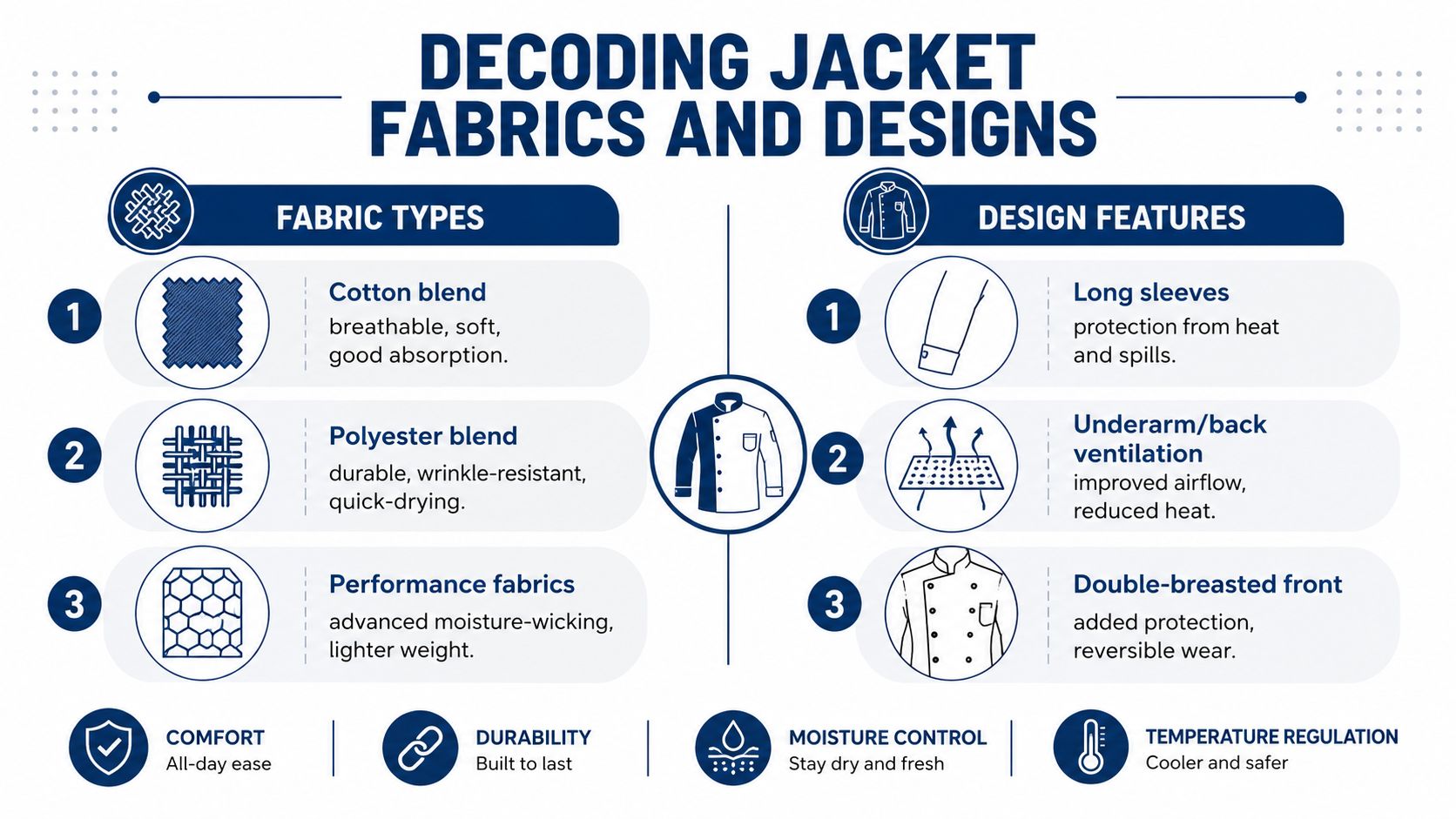
A useful way to think about chef jackets NZ operators buy regularly is by matching the jacket to the heat profile of the kitchen. A pastry section, a grill line, and an open kitchen with visible plating all place different demands on the garment.
Fabric choice matters more than labels
A 2025 global study found that 68% of kitchen staff in humid climates report overheating despite wearing “breathable” uniforms, which is a reminder that fabric choice matters beyond the label. In practical terms, many hospitality operators find that lightweight construction and ventilation panels help, but they don't turn a hot kitchen into a cool one.
Common fabric directions include:
| Fabric approach | Usually suits | Trade-off |
|---|---|---|
| Cotton blend | Teams wanting softness and comfort over long shifts | Can hold moisture more than some lighter technical fabrics |
| Polyester blend | High-turnover kitchens that need easy care and shape retention | Some blends can feel warmer in demanding conditions |
| Lightweight performance fabric | Busy kitchens where airflow and reduced bulk matter | Needs careful checking for laundering durability |
Long sleeves still have a place. They provide more coverage from splashes, oven contact, and hot pass work. Short-sleeve styles can make sense for very warm kitchens, especially where the priority is airflow and freedom of movement.
Design details that earn their keep
One feature regularly recommended is ventilation. Underarm mesh panels, back vents, and lighter side panels can improve airflow and make long services more manageable. They don't eliminate heat, but they can reduce how heavy a jacket feels during prep and service.
Other details worth checking include:
- Double-breasted fronts: Useful where appearance matters because the front can often be adjusted for a cleaner presentation during service.
- Closure type: Stud fasteners are often simpler for frequent wear and laundering than traditional buttons.
- Cuff design: Sleeves need to stay tidy without restricting movement at the wrist.
- Pocket placement: Handy in some roles, but pockets shouldn't add bulk where staff lean into benches or equipment.
A jacket should support movement quietly. If staff keep rolling sleeves, tugging shoulders, or unfastening the neck during service, the garment isn't doing its job.
Another practical point is cross-contamination control. Uniforms work as part of a larger hygiene system alongside aprons, footwear, handwashing, and workflow separation. The guide on preventing cross-contamination in hospitality settings is worth reviewing when setting uniform rules for prep and service teams.
For operators building a full kitchen uniform package, an apron often carries part of the load. The Whites Bib Apron Bottle Green offers full-length coverage in a durable poly-cotton construction, and the bottle-green colour helps conceal stains during service. That kind of layering can let operators choose a jacket for comfort and presentation, while the apron handles a share of the messier protection.
Getting the Right Fit for Your Whole Team
Sizing problems usually don't show up in the stockroom. They show up mid-service, when sleeves catch, shoulders pull, or a loose body gets in the way near benches and equipment. Fit affects comfort, movement, and how organised the team looks.

New Zealand chef jackets are typically available from XS to 4XL in both unisex and women's fitted styles, which gives operators enough range to fit diverse teams properly. That range is useful, but only if the operator orders with consistency instead of guessing.
A practical approach to team sizing
A good team rollout usually works best when the operator:
-
Chooses the style first
Pick the cut and sleeve format based on the kitchen's workflow before asking staff for sizes. -
Uses the brand's actual size chart
Jacket sizing varies. A medium in one line won't always match a medium in another. -
Checks movement, not just chest fit
Staff need to bend, plate, lift trays, and work benches comfortably. -
Decides where fitted styles matter
Some teams prefer a standard unisex jacket across the whole brigade. Others use a mix of unisex and women's fitted jackets for a better result.
What good fit looks like
A properly fitted jacket should allow free movement through the shoulders and arms, sit cleanly through the body, and avoid excess fabric around open flames, handles, or machinery.
A common consideration is consistency across visible roles. In open kitchens, a coordinated fit across the team lifts presentation immediately. It also signals that the operation is organised.
- Too tight: Restricts reach, increases discomfort, and tends to pull at seams.
- Too loose: Can look untidy and create avoidable safety issues.
- Too short in the body or sleeve: Often leads to constant adjusting during service.
Footwear and uniform fit often need to be considered together. If the venue is standardising kitchen uniforms, the article on non-slip shoes for hospitality teams is a practical companion read because comfort problems rarely come from one garment alone.
Laundering Durability and Long-Term Value
The cheapest jacket on day one isn't always the lowest-cost option over time. Operators usually feel the difference later, when fabric twists, seams fail, white jackets grey off quickly, or ironing requirements start eating into labour and admin time.
That's why total cost of ownership matters. A jacket has to survive stains, heat, regular washing, repeated drying, and daily wear without becoming uncomfortable or looking tired too early.
What durable construction looks like
Many hospitality operators find it useful to check for the basics first:
- Stable fabric blends: Easy-care materials usually reduce shrinkage and help maintain shape.
- Reinforced stitching: Stress points around underarms, plackets, and side seams do most of the work.
- Practical closures: Stud fasteners are often easier to replace and manage than fragile button setups.
- Colour and finish retention: A professional jacket needs to stay presentable after repeated laundering.
The right solution depends on who handles the laundry. Some venues wash uniforms in-house. Others use commercial providers. Either way, the garment should be chosen with that laundering reality in mind, not with ideal conditions in mind.
Operational reminder: A jacket that needs special treatment rarely gets special treatment in a busy kitchen.
Laundering decisions affect replacement cycles
Easy-care jackets tend to suit hospitality environments because they simplify rotation and reduce fuss. If the care process is too delicate, the team usually works around the garment rather than with it.
For operators comparing internal laundry against outsourced services, reading about Gold Coast wash and fold services can still be useful as a general reference point for how professional laundry providers structure convenience-focused garment care. The broader lesson applies locally as well. Uniform systems work better when washing, drying, storage, and redistribution are all considered together.
A common issue seen with new venues is ordering too few sets and then over-washing the same garments. For planning a more resilient system, the article on what to consider before buying commercial laundry equipment helps connect uniform purchasing with actual laundry capacity.
Where long-term value usually comes from
Long-term value usually sits in the middle of the market, not always at the cheapest or most premium end. Operators often get better outcomes when they choose jackets that are:
- comfortable enough for repeated wear
- simple to launder correctly
- durable enough for regular rotation
- consistent enough to reorder for new staff later
That approach keeps the focus on operations, not just unit price.
Customisation Branding and Professionalism
In a closed kitchen, branding may feel secondary. In an open kitchen, café pass, bakery counter, hotel buffet, or catering event, it becomes part of the guest experience. A clean, coordinated chef jacket reinforces the idea that the venue pays attention to detail.
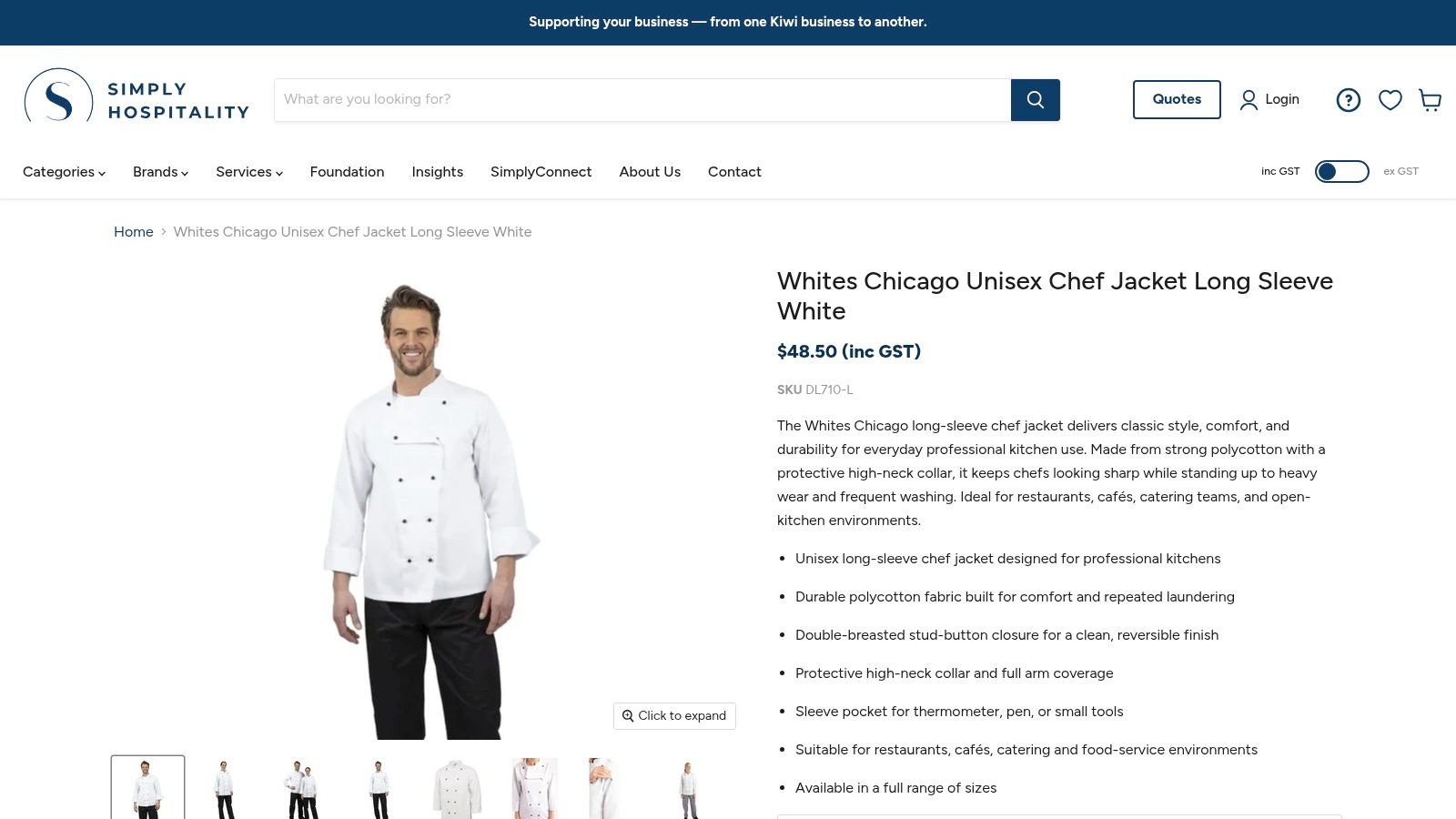
Many hospitality businesses choose embroidery, piping colours, or coordinated apron and jacket combinations to connect the kitchen team visually with the wider brand. That doesn't need to be flashy. A stitched logo on the chest or sleeve is often enough to make the uniform feel intentional instead of generic.
Open kitchens make presentation visible
When customers can see the team working, uniforms become part of service theatre. That includes the head chef, pass team, prep cooks moving through the space, and anyone stepping into view from the kitchen to the floor.
A common pattern looks like this:
- the venue keeps jackets in a classic colour for cleanliness and consistency
- the logo is added through embroidery rather than print
- front-of-house aprons or servicewear pick up the same brand colours
- the kitchen maintains one jacket style across the brigade for a unified look
Clean, consistent uniforms don't just support professionalism. They make the whole kitchen look more settled and deliberate.
Keep branding practical
Branding works best when it doesn't compromise laundering or comfort. Large stitched areas can add stiffness. Complex trims can make reordering harder. Unusual colour choices may also show stains more easily in busy service environments.
For operators exploring embroidered teamwear concepts more broadly, this guide on how to customise jackets for corporate teams is a useful reference for thinking through logo placement and consistency. The same practical thinking applies to chef jackets, even though kitchen use is more demanding than office wear.
Some operators also coordinate uniforms with wider venue planning. A visible kitchen, service line, or bakery counter should feel connected to the rest of the space. For businesses approaching uniforms as part of a larger fit-out decision, SACH hospitality design planning gives helpful context on how operational areas and presentation work together.
Your Chef Jacket Decision Checklist
A jacket decision usually gets tested on the second busy week, not on order day. That is when heat, stains, laundry delays, and sizing gaps start affecting service, staff comfort, and replacement spend.
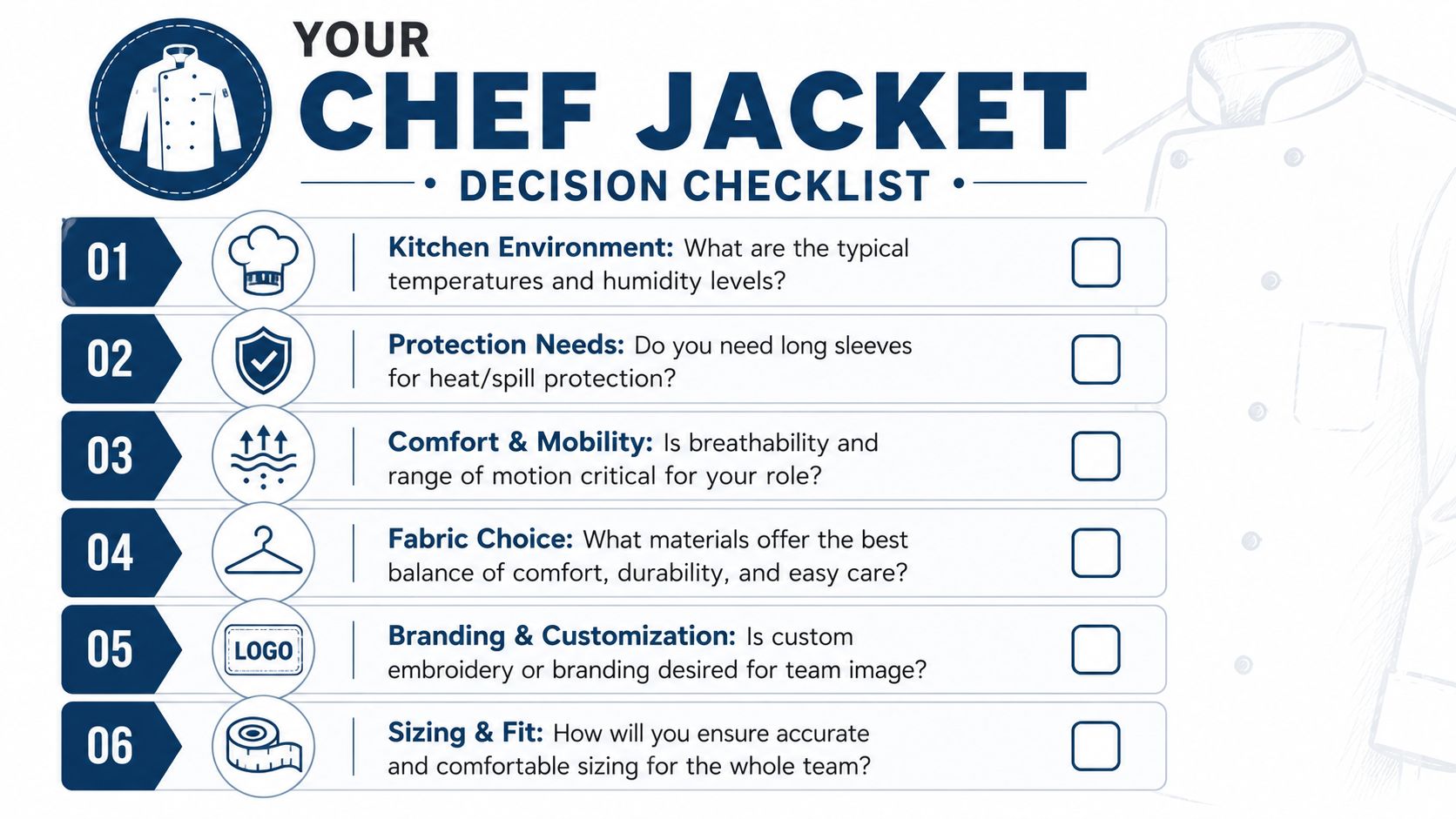
The better approach is to review jackets as part of kitchen operations. Look at working conditions, wash cycles, staffing changes, and how often the team needs a clean set ready to go. As noted earlier, professional kitchens rely on uniform rotation. That makes the primary question less about the ticket price of one jacket and more about what the range will cost to run over time.
Questions worth answering before ordering
-
What does service feel like in the hottest part of the kitchen?
Grill lines, bakery production, combi-heavy prep, and open passes place different demands on fabric weight, breathability, and sleeve choice. -
Which roles need coverage, and which need airflow?
A pastry team may want lighter jackets for long production hours. Staff working near splatter or open flame may need more protection. -
How will jackets be washed and turned around?
In-house laundering and commercial laundry services wear garments differently. Drying temperatures, wash frequency, and stain treatment all affect lifespan. -
How much staff movement do you expect over the next year?
New hires, seasonal staff, and trial shifts all make size availability and easy reordering more important. -
Are jackets part of the guest-facing experience?
In open kitchens, carveries, bakeries, and pass-facing roles, presentation matters because guests notice creasing, poor fit, and colour inconsistency.
A practical buying framework
A shortlist is easier to compare when each option is checked against operating cost, not just purchase cost.
| Checkpoint | What to look for |
|---|---|
| Kitchen conditions | Heat load, steam, pace of service, exposure to splatter |
| Fabric and construction | Comfort across a full shift, wash performance, stitching quality, closure durability |
| Team fit | Size range, cut options, ease of movement, consistency across the brigade |
| Appearance | Clean presentation, fit for customer-facing use, compatibility with venue branding |
| Rotation planning | Enough sets for hygiene, wash turnaround, sick-day cover, and new starters |
Reordering deserves close attention. If you choose an unusual style that changes every season, replacing two damaged jackets six months later can cost more than choosing a standard line from the start. The same applies to staff well-being. Jackets that trap heat, bind at the shoulders, or lose shape after repeated washing tend to get worn less willingly, and that usually shows up in morale, presentation, and replacement frequency.
Simply Hospitality is one option for operators who want to source chef jackets alongside broader kitchen, laundry, and front-of-house supplies in one place, especially when planning a full venue setup rather than treating uniforms as a separate purchase.
If the team needs help choosing chef jackets that balance comfort, durability, presentation, and practical reordering, Simply Hospitality can help assess the right option for the kitchen environment, workload, and branding needs of the business.