

Coffee Service Consumables Explained: A Practical NZ Guide
The rush usually exposes coffee consumables problems faster than any stocktake does. A barista reaches for lids and finds the wrong fit, the backup carton is for a different rim, takeaway cups are split across too many sizes, and service slows down over items that were supposed to be simple. That's why coffee service consumables explained properly isn't just about listing cups, napkins, and stirrers. It's about running them as one connected system.
Many hospitality businesses put most of their planning effort into espresso machines, grinders, and bench layout. Those matter. But the day-to-day friction often comes from the repeat-purchase items that move with every coffee sold. Cups, lids, sleeves, napkins, sweeteners, cup carriers, rubbish bags, and cleaning products all affect service speed, customer experience, storage pressure, waste handling, and the true cost per coffee.
Setting the Scene for Coffee Service Consumables
A common issue seen across cafés, offices, accommodation providers, and takeaway counters is that consumables are bought one line at a time instead of managed as a working set. Cups get reordered by size. Lids are ordered later. Napkins are substituted without thinking about dispenser fit. Sleeves are kept “just in case” even when double-wall cups are already doing the insulation job.
That approach usually holds until a busy morning exposes the gap.
When cheap items cause expensive disruption
The consumables bill for a single cup might look minor. The operational effect usually isn't. If the lid seal is unreliable, drinks need remaking. If staff have to stop and sort through mixed cartons under the counter, the queue grows. If bins fill with the wrong materials, cleanup takes longer and customers leave rubbish in the wrong place.
Practical rule: Coffee consumables should be reviewed the same way operators review equipment. By workflow, not by item.
That matters in New Zealand because the waste side is already more complicated than many venues expect. The Ministry for the Environment estimates New Zealanders use 295 million disposable coffee cups annually, with 1,288 tonnes entering kerbside rubbish and 851 tonnes contaminating recycling according to the Ministry for the Environment summary of plastic phase-out submissions.
What operators usually need to control
Most venues don't need more options. They need fewer moving parts and clearer rules.
- Cup range discipline helps stop over-ordering niche sizes that don't match the actual beverage menu.
- Matched lid control prevents stockouts where cups are on hand but the correct lids aren't.
- Accessory restraint cuts waste from automatic sleeves, extra napkins, and unused stirrers.
- Waste-stream planning avoids buying products that sound better on paper than they perform in local disposal systems.
Hospitality businesses often find that once those decisions are standardised, ordering becomes simpler and service becomes calmer. The same thinking sits behind broader hospitality supplies planning for NZ operators. The difference with coffee is volume. Small mistakes repeat all day.
Understanding Coffee Consumables versus Equipment
Espresso machines, grinders, brewers, blenders, and dishwashers are equipment. They're durable assets. They need servicing, cleaning, and eventually replacement, but they aren't supposed to disappear from stock every week.
Consumables are the items that move continuously through service and need regular replenishment. In coffee service, that usually includes takeaway cups, lids, sleeves, napkins, stirrers, sugar and sweetener portions, cup carriers, wipes, hand soap, rubbish bags, and some cleaning chemicals.
The easiest way to separate them
A simple test works well in practice.
| Type | Typical examples | Main management issue |
|---|---|---|
| Equipment | Espresso machine, grinder, crockery dishwasher, knock tube | Maintenance, uptime, cleaning, capital planning |
| Consumables | Cups, lids, napkins, stirrers, sweeteners, rubbish liners | Reordering, storage, waste, cost per serve |
Equipment failure stops production. Consumables failure does the same thing, just in a less obvious way. A venue can own a strong espresso setup and still struggle if it runs out of the right lid or uses a sleeve that doesn't suit the cup programme.
Why the distinction matters
Many operators budget equipment carefully but treat consumables as low-risk because each carton feels inexpensive. That's where stock clutter starts. Staff end up working around inconsistent cup formats, duplicate lid types, and cleaning products bought without a clear station plan.
A more reliable operating habit is to include consumables in the same routine as equipment reviews.
- During menu updates, check whether current cup sizes still match drink volumes.
- During supplier reviews, confirm product continuity and any format changes.
- During staff training, include cup-lid matching, waste sorting, and cleaning product use.
- During storage planning, treat cartons as operational stock, not spare clutter.
Coffee service runs on repeatable details. Consumables are part of that repeatability, not an afterthought.
Selecting Takeaway Cups and Matching Lids
Takeaway cups deserve more attention than they usually get. They're front-of-house packaging, thermal performance, brand presentation, and waste handling wrapped into one item. The right solution depends on the menu, the service model, and how tightly the operator wants to control stock complexity.
Start with the menu, not the catalogue
A common purchasing mistake is stocking more cup sizes than the drink menu actually needs. Operators are usually better served by mapping cups directly to what's sold most often.
A practical comparison looks like this:
| Consideration | What to check | Trade-off |
|---|---|---|
| Cup size | Match actual serve sizes for espresso-based drinks, tea, and specialty cold drinks | Too many sizes increase storage and picking mistakes |
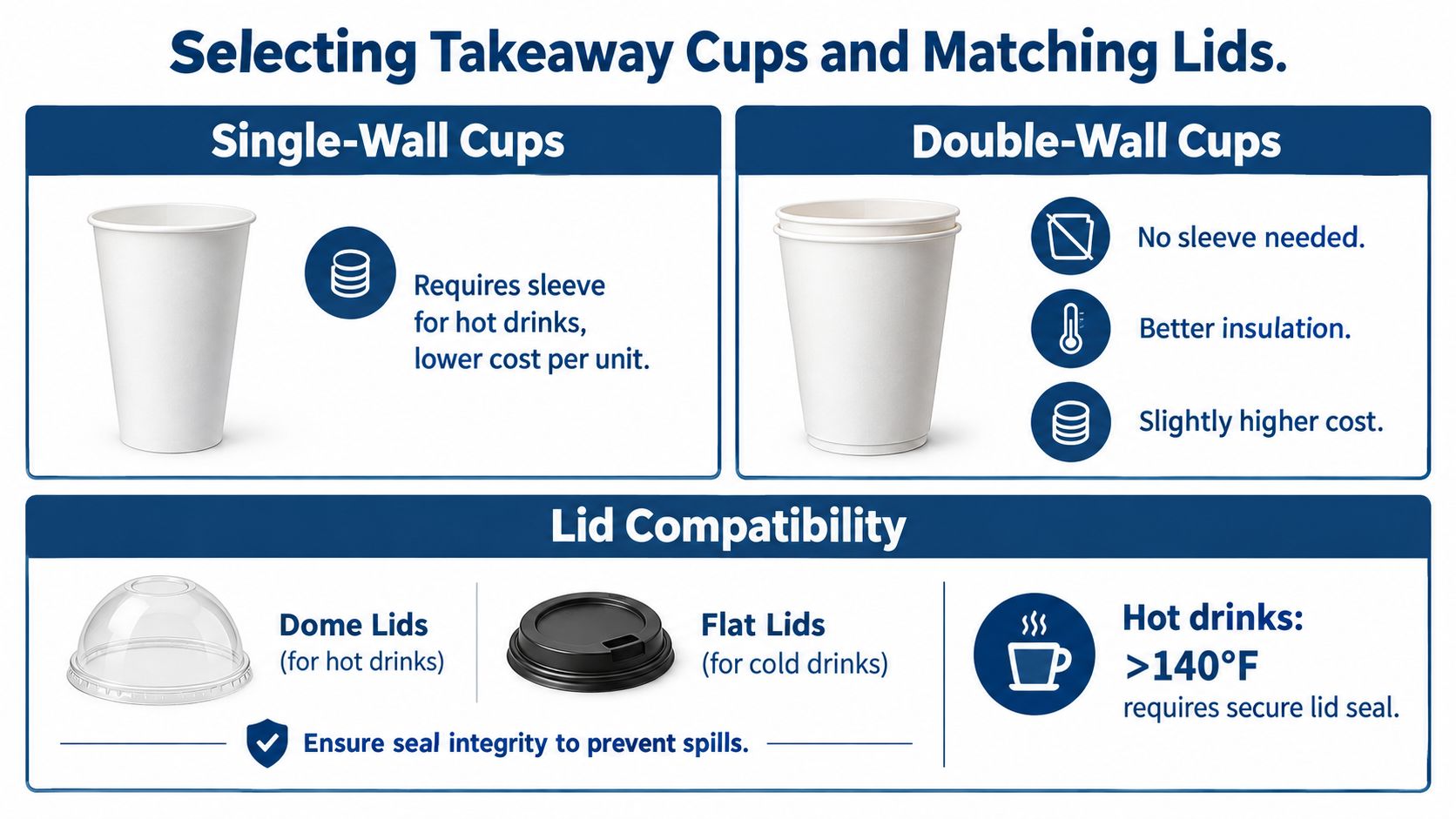
| Single-wall | Lower unit cost, often needs a sleeve for hotter drinks | More components to manage |
| Double-wall | Better hand insulation without a separate sleeve in many setups | Higher unit cost, bulkier cartons |
| Hot vs cold use | Don't assume one format suits both | Wrong format can affect drink presentation and customer comfort |
Many operators choose to reduce variation wherever possible. If two underused sizes can be removed without hurting service, that usually simplifies ordering, storage, and training.
Material claims need a reality check
The cup itself often looks like paper, but the construction is more complicated. Standard takeaway cups use paperboard with a polyethylene or PLA lining that bonds the layers, making cups and liners difficult to separate, which limits recycling options at many New Zealand facilities according to the Ministry for the Environment publication on reducing plastic impacts.
That has two practical consequences.
- A cup described casually as “paper” shouldn't automatically be treated as recyclable paper.
- Material choice should be assessed alongside local collection and disposal routes, not packaging language alone.
Operators looking at format options in more detail can compare common cup styles in this article on choosing takeaway coffee cups.
Lid fit is a stock-control issue, not just a packaging issue
Cup capacity doesn't tell anyone whether a lid fits. The critical point is the manufacturer's compatible series and rim size. Two cups that look similar can use different lids and create sealing problems if mixed.
That's why simplifying lid formats often helps more than adding “backup” options.
- Fewer matched series reduce picking errors at the pass.
- Cleaner storage makes it easier for new staff to follow the system.
- Lower mismatch risk helps avoid remakes and spills.
- Better reorder visibility keeps cups and lids aligned as paired stock.
A venue shouldn't monitor cup stock and lid stock separately if they're sold together at the counter. They function as one service unit.
Managing Napkins Stirrers Sleeves and Condiments
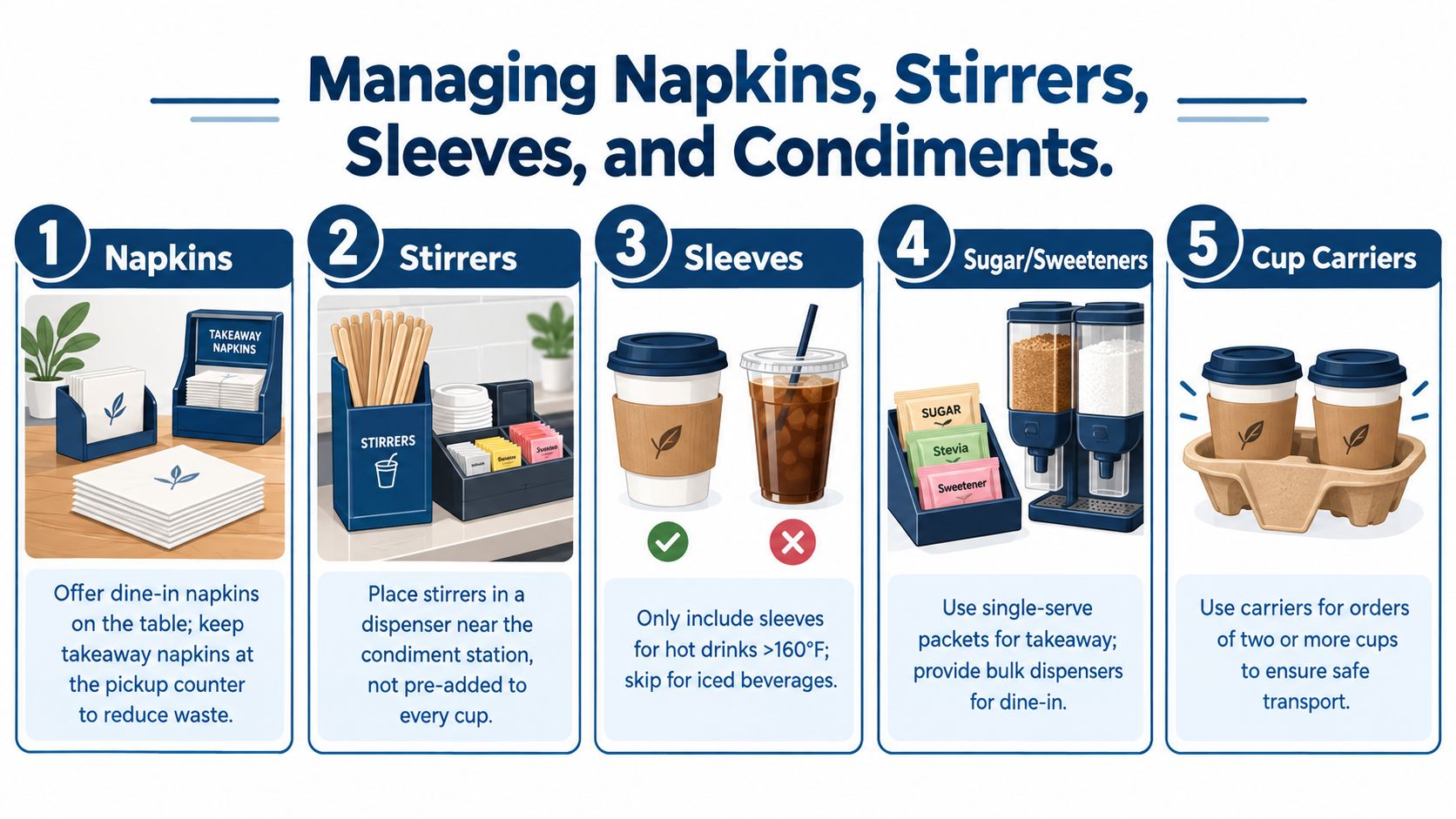
Accessories are where quiet overuse starts. Many coffee orders don't need a stirrer, sleeve, sugar, or multiple napkins, yet venues often hand them out by default because it feels faster. Over time that creates more cost, more clutter at the pickup point, and more waste in customer areas.
Decide what is automatic and what is optional
The strongest setups usually split accessories into three groups.
- Always supplied for items that protect service, such as a napkin where drips are common or a carrier for larger takeaway orders.
- Available on request for sleeves, stirrers, and sweeteners that some customers want and others don't.
- Self-service station items where traffic flow and staffing support it.
That approach works well for coffee bars, hotel breakfast stations, office coffee points, and event catering counters.
Match the accessory to the service model
A dine-in café may need table napkins and condiment presentation more than cup carriers. A takeaway kiosk may need the opposite. Caterers often need very small sampling formats as well, and for operators handling tastings or miniature beverage service, this overview of disposable 1 oz cups for caterers is a useful reference point for portion-controlled service items.
A few practical habits tend to work well:
- Keep stirrers at the condiment point instead of inserting one into every cup.
- Use sleeves selectively when the cup construction already provides enough insulation.
- Limit automatic napkin counts unless the product or service style clearly requires more.
- Separate takeaway and dine-in accessory stock so staff aren't pulling from the wrong area during rush periods.
Hospitality businesses often find that these small controls work better when they're tied to a wider packaging procedure. This article on what hospitality operators should know about food packaging is a good reference for setting those rules.
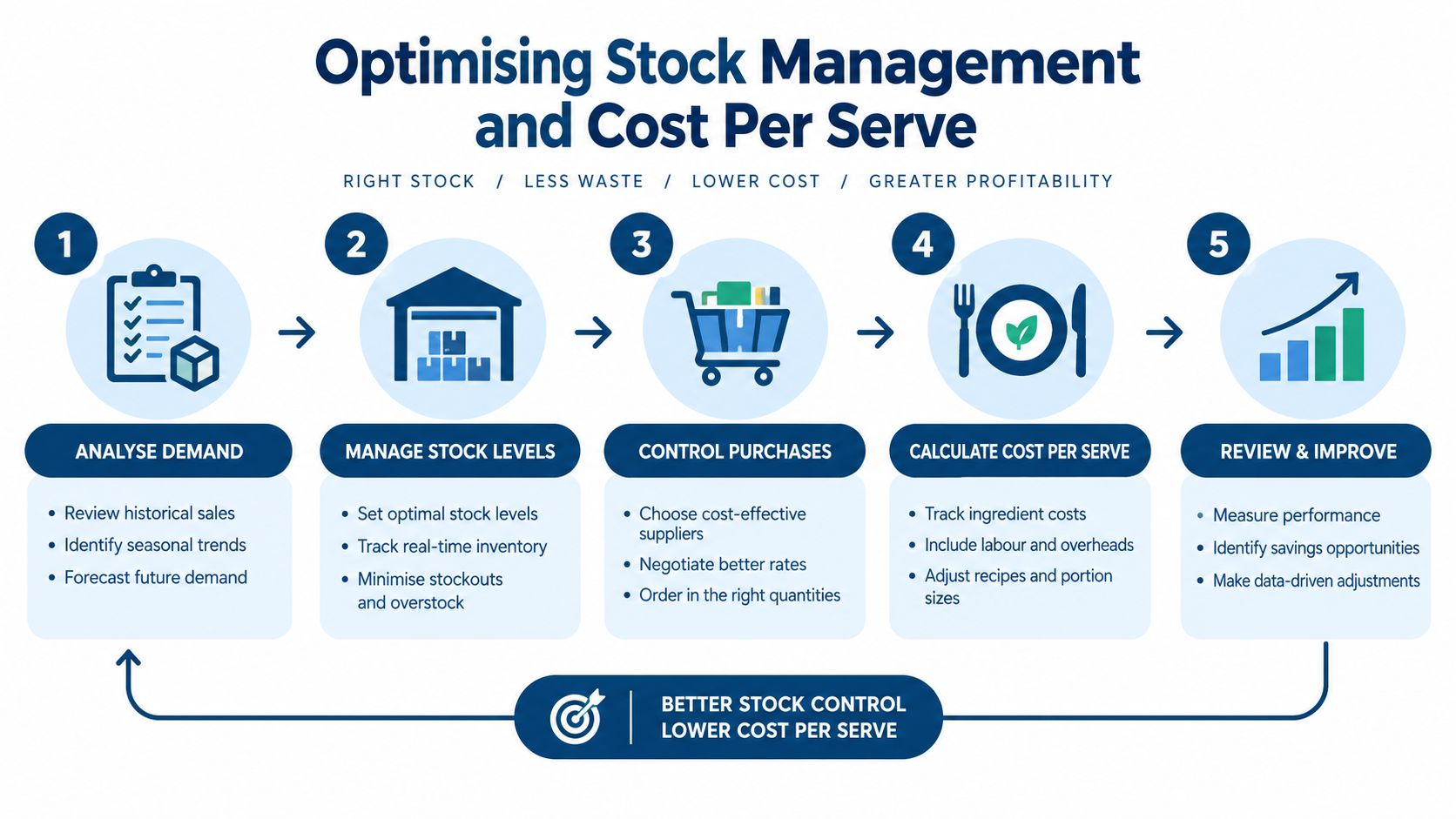
Optimising Stock Management and Cost Per Serve
A carton price on its own doesn't say much. Coffee consumables make more sense when the venue tracks them per serve. That's where hidden overspend usually shows up.
Build the per-serve calculation properly
For takeaway coffee, the useful working formula is:
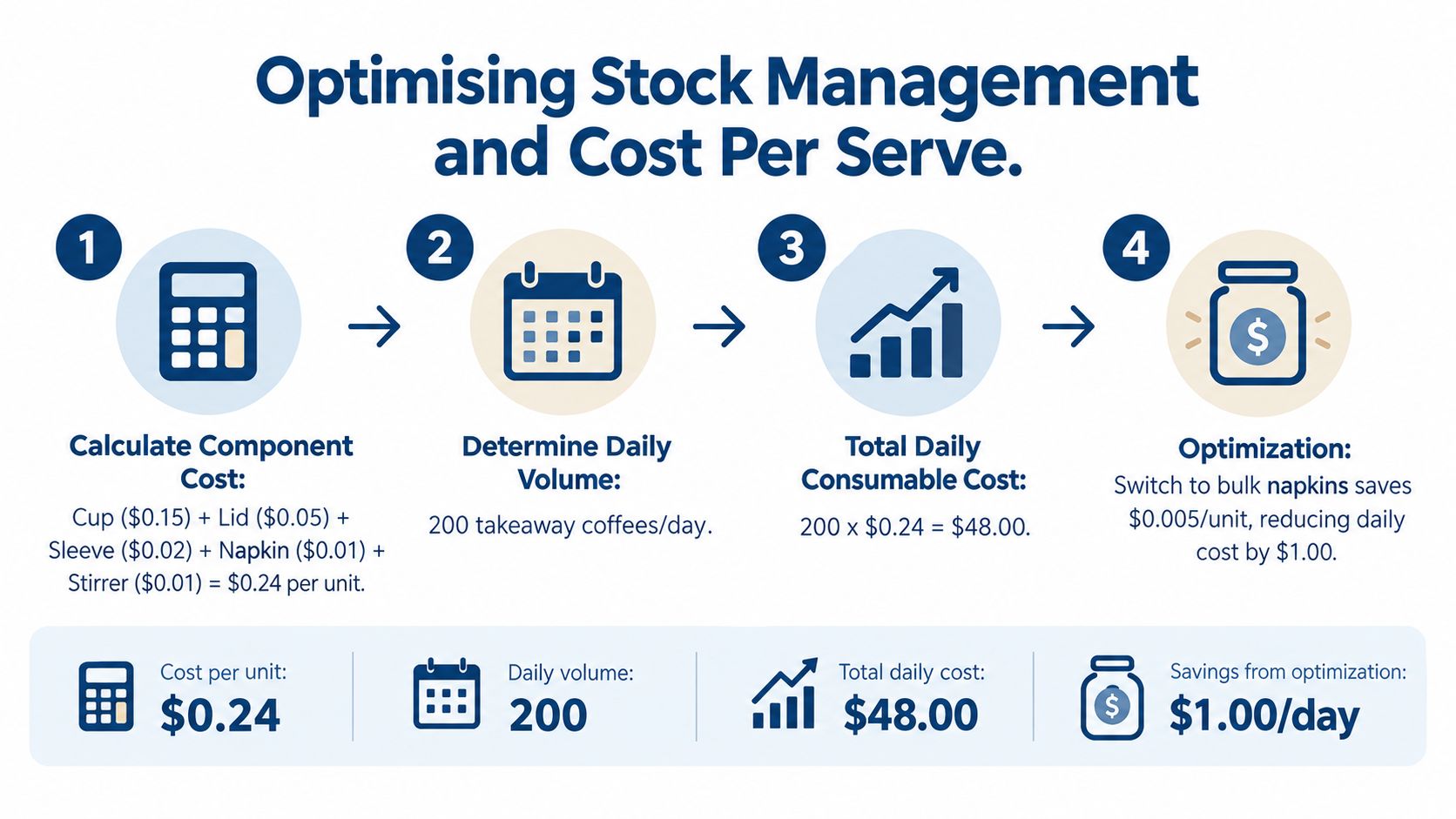
Cup + lid + napkin + stirrer or other supplied items = consumable cost per takeaway coffee
If sleeves, sugar portions, or cup carriers are commonly included, those should be counted too. The exact result depends on the venue's chosen products and service habits.
Use assumptions openly
A worked example only helps if it's treated as an assumption, not as a benchmark.
For example, an operator might calculate:
- Cup at the venue's buy price
- Lid at the matched buy price
- Napkin at the napkin cost issued per coffee
- Stirrer only if one is routinely supplied
That total can then be multiplied by the venue's realistic daily takeaway volume to estimate weekly, monthly, or annual purchasing impact. The purpose isn't to produce a universal answer. It's to expose whether “small” per-serve differences are being repeated at high frequency.
Working habit: Review consumable cost per coffee whenever cup formats, lid series, or standard accessory bundles change.
Operators that want a broader inventory discipline framework often find cash-flow focused guidance helpful alongside product planning. This Nexist SME cash flow guide offers a practical overview of inventory management thinking.
Reorder points should be simple enough to use
The most useful reorder formula is usually the plain one:
Average weekly use × supplier lead time + sensible safety stock = reorder point
That works especially well for cups and lids, but only if they're tracked together. A venue that reorders cups without checking the matching lids can still run out of service-ready stock.
A practical stock review should check:
| Stock factor | Why it matters |
|---|---|
| Matched inventory | Cups and lids should be counted as a pair |
| Carton size | Large cartons may save picking time but pressure storage |
| Lead time | Reorder too late and service becomes vulnerable |
| Seasonality | Cold drink demand, events, and holiday trade can change usage |
| Backup formats | Extra SKUs can create confusion if they aren't actively managed |
Storage pressure changes the decision
Storage space often decides whether a technically tidy stock plan works. Double-wall cups, sleeves, cup carriers, napkins, and rubbish liners all take room. If cartons are stacked in overflow spots, staff start substituting whatever's closest.
One consideration regularly discussed with customers is whether reducing the number of cup-and-lid combinations would free enough shelf and under-counter space to improve service. Often it does. Fewer active SKUs usually means faster visual stock checks and fewer emergency orders.
This is also where takeaway packaging planning becomes broader than coffee alone. Operators reviewing cup systems, accessory use, and waste handling together may find this piece on packaging considerations for takeaway businesses useful as part of the same decision process.
Navigating Sustainability Claims and Health Compliance
Packaging claims often sound clearer than they are. Recyclable, compostable, biodegradable, and reusable don't mean the same thing, and in coffee service those differences matter operationally.
Compostable doesn't mean recovered
One of the biggest mistakes in coffee consumables is assuming that a compostable item will be composted after use. That only works if the product is accepted by the local collection and processing route the venue is using.
A major issue in New Zealand is that only about 10 facilities accept compostable coffee cups, and some have raised concerns about residual plastic, as noted in the New Zealand guidance referenced on food packaging and related waste pathways. So the useful question isn't “Is this technically compostable?” It's “Can this exact cup be recovered through this venue's actual waste contractor and receiving facility?”
Terms that need to be separated
A practical way to think about claims is this:
- Recyclable means the item belongs in a real recycling stream accepted for that material and format.
- Compostable means the item is designed to break down under specific composting conditions, not that every local system accepts it.
- Biodegradable is often too vague to use as a disposal instruction on its own.
- Reusable removes the single-use packaging issue at source, but brings cleaning and handling requirements.
Many operators choose to standardise disposal wording on bin signage rather than relying on product claims printed on the cup.
Labels on packaging don't sort waste. Staff instructions and customer-facing disposal signage do.
For operators reviewing compostable ranges and how those claims translate into actual hospitality use, the article on using BioPak sustainable products in the New Zealand hospitality industry is a useful operational reference.
Food-contact compliance is part of the same decision
Sustainability choices still have to meet food-safety basics. Packaging that contacts beverages needs to be suitable for that purpose, perform under service conditions, and arrive clean and intact. That matters when switching to unfamiliar fibre products, alternative coatings, or imported formats.
It also matters for reusables. If a venue accepts customer-provided cups, staff need a clear process for visual acceptance, handling, and refusal where hygiene standards aren't met.
Cleaning expectations tie into this too. Operators looking at lower-toxicity cleaning approaches for customer areas may find examples in broader commercial discussions such as commercial green cleaning DFW, but any product used around food service still needs to be appropriate for the venue's own food-safe procedures and manufacturer guidance.
Cleaning and Hygiene Essentials for Coffee Stations
Coffee service creates a steady cleaning load. Benches get milk splash, sugar dust, coffee grounds, cup drips, and lid handling residue. Even a mostly takeaway operation still needs a disciplined hygiene setup around the machine, pickup point, and waste area.
What should normally be stocked
The exact list depends on the venue, but most coffee stations need:
- Food-safe surface cleaners for counters and service points
- Cloths or wipes assigned to the right tasks
- Hand hygiene products at accessible staff stations
- Rubbish bags suited to bin size and waste volume
- Dishwasher chemicals where reusable cups, crockery, or milk jugs are washed
- Machine-approved coffee equipment cleaners where espresso equipment manufacturers specify them
One practical option in this area is the packaging, hygiene, and waste-management range available through Simply Hospitality, including Matthews Packaging & Hygiene lines used for takeaway consumables, cleaning products, and bin-liner supply where those fit the venue's broader operating system.
Keep documentation and product purpose clear
MPI guidance says packaging that contacts food or beverages must be food grade, clean and intact, and operators should retain supplier assurances or documentation when changing to new fibre or compostable products according to the MPI packaging guidance document. That's a packaging requirement, but the same disciplined habit helps with cleaning products too. Staff should know what each product is for, where it's stored, and whether it's suitable around food-contact surfaces.
A common issue seen in coffee stations is multipurpose products being used without a clear procedure. The safer approach is to keep product roles simple, train staff on those roles, and follow coffee machine and chemical manufacturer instructions rather than improvising concentrations or cleaning intervals.
Bringing It All Together
Coffee service consumables work best when they're managed as one operating system. Cups, lids, napkins, sleeves, sweeteners, cleaning products, and rubbish handling all affect service speed, stock accuracy, waste outcomes, and cost per coffee. Standardising compatible formats, tightening accessory rules, checking real disposal routes, and setting practical reorder points usually does more for smooth coffee service than adding more product choices ever will.
Simply Hospitality supplies New Zealand hospitality businesses with coffee cups, takeaway packaging, napkins, cleaning and hygiene products, rubbish bags, and other everyday service essentials that need to work together in real venues. Operators who want help simplifying cup and lid formats, planning consumables by service model, or reviewing stock and waste systems can explore the range or get advice through Simply Hospitality.