

Commercial Dough Mixer NZ: Choose the Right Machine
Is the right commercial dough mixer chosen by the size of its bowl, or by the number of production cycles it removes from a bakery's day? For New Zealand bakeries, pizzerias and foodservice kitchens, that distinction matters. A mixer that accepts a larger practical batch can remove loading, mixing, unloading, cleaning and resetting work, while an oversized machine can be inefficient for everyday batches.
In New Zealand, commercial dough mixers are sold as production tools, not upgraded home appliances. Suppliers typically present spiral mixers as the better fit for pizza shops, restaurants and busy bakeries that make dough every day, while planetary mixers are aimed at kitchens that need to switch between dough, batters, creams and other prep. Price points vary widely, from 7L heavy-duty mixers at NZ$1,199.00 to 60L planetary mixers at NZ$13,399.00, with listed examples such as a 25L vertical mixer at NZ$2,395.00 and a 60L spiral mixer with a 64L bowl at NZ$3,999.00.
Why Bowl Capacity Alone Is the Wrong Starting Point
Is the right commercial dough mixer chosen by its bowl size, or by the production cycles it removes from a busy day? For New Zealand bakeries, pizzerias and foodservice kitchens, the second question gives a more useful starting point. A machine that handles a larger practical batch can remove loading, mixing, unloading, cleaning and resetting work. An oversized mixer, however, may be inefficient for smaller everyday batches.
The relevant measure is cycle reduction, not mixing speed alone. Staff still need to weigh ingredients, load the bowl, monitor the dough, remove it, divide or transfer it, clean contact surfaces and prepare the machine again. If a larger batch size suits the recipe and the team can handle the dough safely, one machine can remove entire repetitions of that workflow.
Practical rule: Calculate production cycles before comparing bowl dimensions.
A bakery producing 100kg of dough with a mixer handling 25kg per batch needs four batches. A machine handling 50kg batches needs two. The larger mixer has not merely improved a specification figure. It has removed two complete loading, unloading and resetting cycles, provided the recipe, staff workflow and usable capacity support those batch sizes.
The same planning principle applies to the surrounding operation. This guide to equipment for consistent meal service reinforces the need to assess preparation space, transfer points, power, cleaning access and the work that follows mixing. A mixer only reduces labour if the rest of the process can keep pace.
Maximum capacity is only half the decision
Operators also need to check the minimum useful batch size. A machine that suits peak production but performs poorly on normal batches can create waste, inconsistent mixing or unnecessary handling. Specify for the regular workload first, then confirm that the machine can accommodate occasional peaks.
A smaller bakery may need a compact mixer for steady dough production. A high-volume pizzeria may gain more from a floor-standing model that removes repeated cycles. The choice depends on actual kilograms produced, recipe variation, available labour and how often the business reaches peak capacity.
A production-led specification
Before comparing brands or features, record:
- Daily dough output: Include bread, pizza and other doughs made on the same equipment.
- Current batch count: Count complete cycles, not only motor-running time.
- Normal and peak batches: Keep everyday production efficient while allowing for busy periods.
- Staff handling: Check how much dough can be safely lifted, emptied and moved.
- Available space: Allow for delivery access, floor area, cleaning clearance and power connection.
A commercial dough mixer is core preparation equipment for bakeries, pizzerias, cafés and foodservice sites. Choose the model that removes work from the actual production pattern, rather than the one with the most impressive bowl.
Spiral Mixers vs Planetary Mixers for Dough Production
Which mixer fits the work your kitchen repeats every day? A spiral mixer is dedicated dough equipment, while a planetary mixer is a flexible preparation machine for dough, batters, creams, fillings and other tasks. The right choice depends less on the bowl label than on how many production cycles the machine can remove.
Spiral mixers use a spiral hook and rotating bowl together. That action suits repeated bread and pizza production, where dough is the main job and consistent results matter across batches. Planetary mixers keep the bowl stationary while the attachment moves through it, so staff can change between a dough hook, beater and whisk.
A pizzeria mixing 50kg of pizza dough daily will generally gain more from a spiral mixer. A café that occasionally makes bread dough alongside cake creams and batters may gain more from a planetary model. The trade-off is straightforward: spiral equipment prioritises dough throughput, while planetary equipment gives one machine a wider range of uses.
Where spiral mixers make sense
A dedicated spiral mixer usually suits:
- Bread-focused bakeries producing repeated dough batches.
- Pizzerias preparing pizza dough as a central daily task.
- Retail bakeries where batch consistency and production repetition matter more than attachment versatility.
- Commercial kitchens that already have separate equipment for batters, creams or general preparation.
For a bakery regularly producing around 50kg of dough, a spiral mixer would generally be considered before a planetary mixer when dough is the machine's primary purpose. Hydration, recipe, batch size, speed requirements and the manufacturer's operating guidance still need checking.
Where planetary mixers earn their place
Planetary mixers suit businesses that need one machine to perform several roles. A restaurant, café, caterer or institutional kitchen may mix pizza dough occasionally, then switch to cake batter, cream, fillings or other preparations. In that workflow, attachment versatility can matter more than dedicated dough throughput.
The practical question is whether the kitchen needs a flexible machine or equipment built around repetitive dough production. The practical comparison of spiral mixing and hand mixing can help assess the labour and repetition involved.
The New Zealand spiral mixer category reflects this distinction by presenting spiral mixers for pizza shops, restaurants and busy retail bakeries. Planetary models remain the more suitable route where the same machine must handle dough plus batters, creams and other preparations.
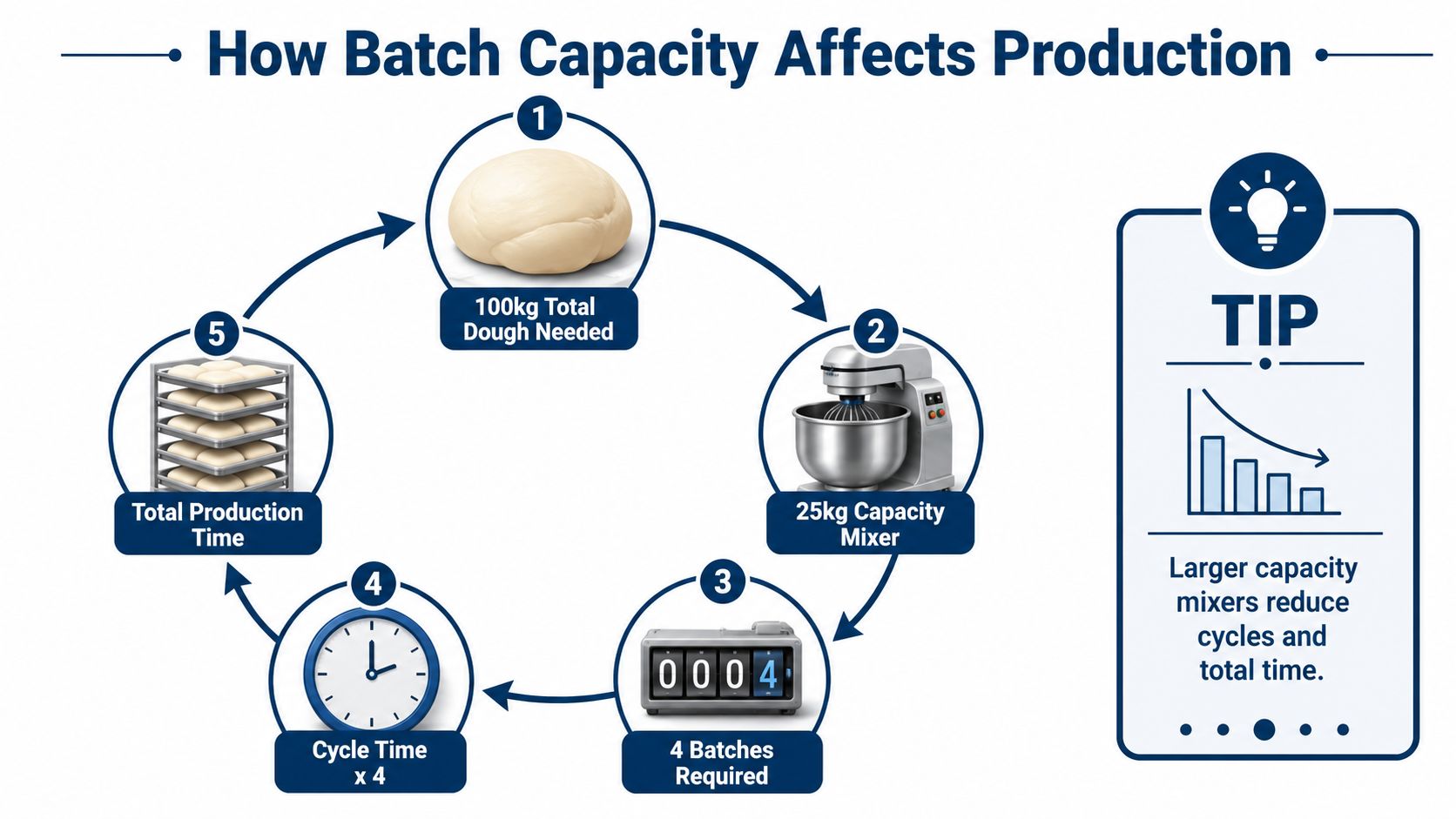
A mixer that removes complete batches from the daily schedule can be more valuable than one that only shortens mixing time. Assess the machine against the recipes it will run most often, then confirm it can manage less frequent tasks without creating awkward handling or cleaning work.
How Batch Capacity Affects Production Cycles
A pizzeria producing 60kg of dough faces a different working day with a 20kg-capacity mixer than with a 30kg-capacity mixer. Three 20kg cycles become two 30kg cycles. That removes one complete cycle, including the handling around it, before the dough reaches dividing or proofing.
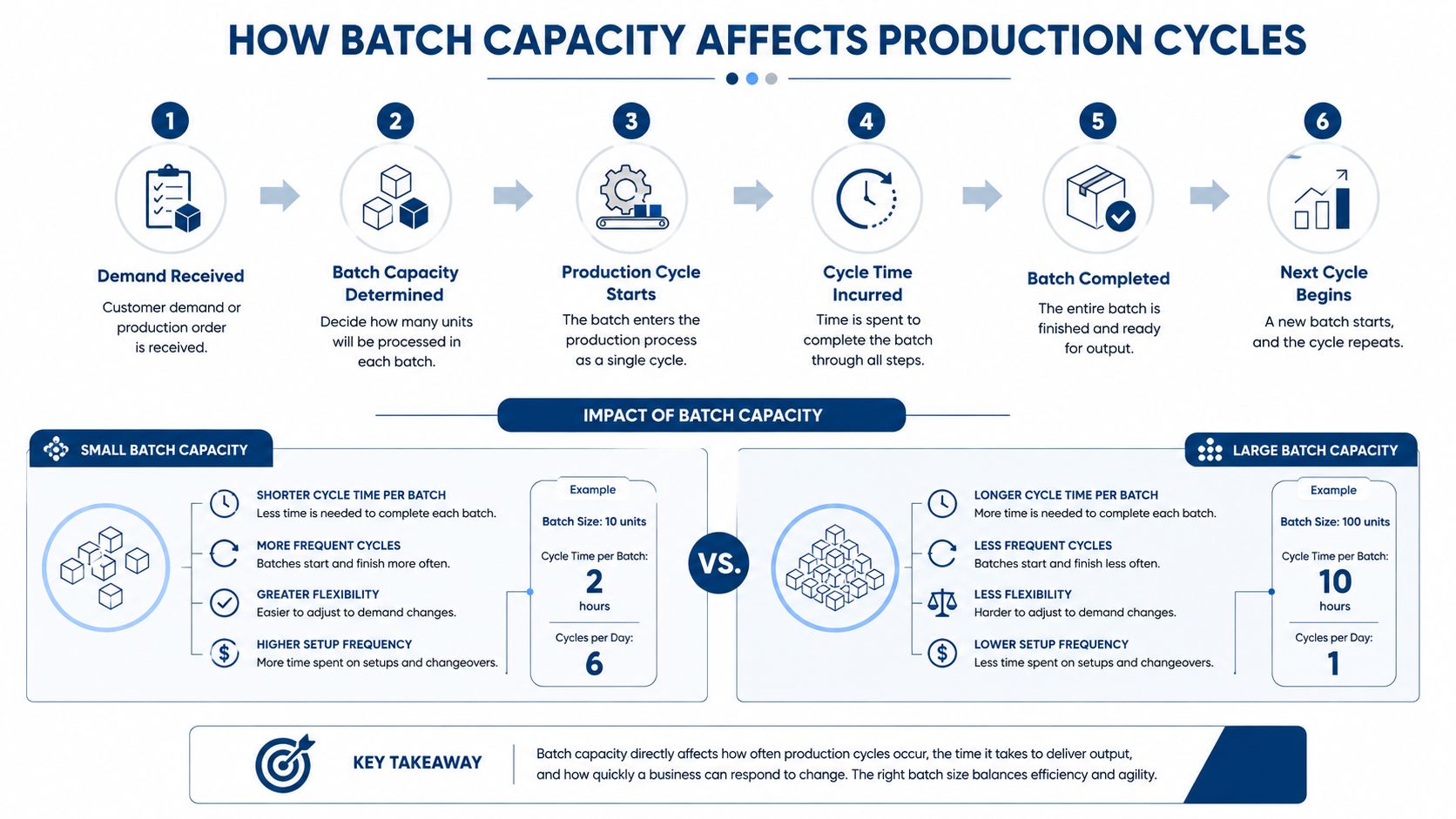
The gain is not limited to mixing time. Each extra cycle can occupy a staff member during ingredient preparation, dough removal and portioning. It can also force the team to pause another task, such as shaping bases, preparing toppings or loading the oven. A larger suitable batch may therefore free staff at the point in the day when several jobs compete for the same hands.
Cycle reduction must also fit the proofing schedule. If dough is mixed in separate smaller runs, the first batch may enter the retarder or proofing area well before the last. That can complicate timing, labelling and rotation. Two larger cycles may bring the dough closer together, making portioning and proofing easier to organise. The benefit disappears if the combined batch cannot be divided, stored or proofed without delay.
The meaningful capacity question is not “How much fits?” It's “How many complete cycles disappear?”
A larger mixer still needs to suit the recipes made most often. A 30kg batch may handle the pizzeria's main run, yet be awkward for a smaller dough requirement. Check the minimum useful batch, not only the maximum. At low loads, the dough must still contact the mixing tool properly, and staff need a safe, practical way to remove it.
Link capacity to the production calendar
Map mixer output against the actual production day:
- Record daily dough requirements separately from seasonal or event-driven peaks.
- Note when staff are available for weighing, dividing and transferring dough.
- Check whether the larger batch fits available benches, trays, proofing space and storage.
- Identify whether different recipes can share the machine without disrupting timing.
- Compare the mixer's cycle schedule with oven demand and service periods.
A mixer removes a cycle only when the rest of the kitchen can accept the dough. The same planning principle applies to whether a faster pizza oven can change restaurant operations. Specify capacity around the full chain, from ingredient handling through proofing and service, rather than treating the bowl as an isolated container.
Key Questions to Ask Before Choosing a Mixer
A clear specification brief prevents operators from buying for hypothetical production. Before comparing machines, the kitchen team should answer the following questions.
Start with the machine's primary job
Is dough the primary purpose of the mixer? If the answer is yes, and bread or pizza production is substantial and repetitive, a spiral mixer deserves serious consideration. If the same machine must handle batters, creams, fillings and general preparation, a planetary model may justify its place through versatility.
How many kilograms are produced each day? Count every dough type made on the machine. Separate pizza dough, bread dough and specialty recipes if their hydration or batch requirements differ.
How many separate batches does production currently require? This is often more useful than the bowl's advertised volume. Count loading, mixing, unloading and resetting as part of the cycle.
Specify normal production before peak production
What is the normal batch size? A machine should work effectively during the majority of production, not only during the busiest period.
What is the peak batch size? Peak requirements matter, but they shouldn't force the business into an oversized machine if peak demand is occasional and can be managed another way.
How much dough can staff safely handle? The mixer may accept a large batch, but the kitchen still needs a practical method for removing, dividing and moving it.
Match the mixer to the recipe
What hydration levels and dough types are involved? Hydration, flour, recipe structure, batch size, mixing speed and mixing time all affect the final dough. No bowl and hook combination guarantees a universally superior result.
Are different recipes mixed in one shift? A bakery may use one mixer for multiple doughs, while a pizzeria may need a machine dedicated to one recurring dough process.
Plan for the next stage of the business
Is the purchase for today's production or likely future growth? A modest capacity increase may be sensible when production is stable. A business expecting expansion should also check whether the chosen mixer can support the likely batch pattern without creating a new bottleneck.
The best brief is specific enough for suppliers to compare suitable equipment. It should include output, batch sizes, dough characteristics, available space, electrical supply and servicing expectations.
Motor Specifications and Power Requirements for NZ Kitchens
A commercial dough mixer needs a motor and drive system designed for high-load kneading, not general-purpose beating. Torque, speed settings, transmission design and the manufacturer's operating requirements all matter, but none should be read in isolation from the dough and workload.
One New Zealand listing for a 60L spiral mixer specifies 20A, 240V, 50Hz, a 25kg dry-ingredient capacity, a 64L bowl volume and 150/250 rpm speeds. Those details indicate equipment designed around heavy dough work, with a power requirement that needs to be planned before installation.
Power planning belongs in the fit-out
Many larger floor models may need a dedicated circuit, and heavier mixers may require hardwired installation. The exact requirement depends on the model, site and electrical advice, so the equipment specification should reach the electrician before delivery.
Operators should confirm:
- Supply requirements: Check voltage, frequency, current draw and connection method.
- Circuit allocation: Confirm whether the mixer needs a dedicated circuit.
- Placement: Allow room for loading, unloading, cleaning and service access.
- Floor conditions: A stable, level location helps the machine remain secure during operation.
- Delivery route: Measure doors, corridors and final access before ordering a large floor model.
Don't treat duty ratings as a guarantee
A duty rating can help describe intended commercial use, but it doesn't guarantee that a motor will never overheat or fail. Reliability depends on capacity, batch size, hydration, number of batches, operating method and maintenance.
A mixer regularly operated at or beyond its intended capacity is unlikely to offer the same long-term reliability as one correctly sized for the workload. The specification discussion should therefore include maximum dough capacity, minimum practical batch size, motor and drive system, expected batches per day, dough types, manufacturer instructions and local parts availability.
Energy use is one part of ownership planning, alongside installation and operating conditions. Operators can also review energy-efficient appliance planning when assessing the wider kitchen fit-out.
Domestic-style equipment shouldn't be treated as a direct substitute for commercial machinery. New Zealand standards distinguish household-and-similar food mixers from machines intended for commercial purposes, placing commercial dough mixers in a different safety context, as outlined by New Zealand's kitchen-machine standards information.
Cleaning, Maintenance and Safety Compliance
Cleaning is part of mixer selection, not a task added after purchase. New Zealand food regulations require food-premises equipment to achieve and maintain food safety and suitability, suit the volume processed, use materials that won't contaminate food, and be easy to clean and sanitise where needed, according to the relevant food-safety regulations.
The mixer should support a clear cleaning workflow. Operators need to know how the bowl, spiral hook, guards, attachment points and nearby surfaces will be cleaned between recipes and at the end of production. Areas that trap flour or dough can increase cleaning effort and make inspection more difficult.
Safety starts at the working zone
WorkSafe guidance identifies pinch-point risks during loading, unloading, cleaning, maintenance and repairs. Guards and interlocks need to suit the way staff use the mixer, not just the way it appears in a product photograph.
Staff should receive practical instruction on:
- Loading: Keep hands and loose clothing away from moving components.
- Unloading: Stop the machine and follow the manufacturer's procedure before removing dough.
- Cleaning: Isolate the equipment as required before reaching into the bowl or attachment area.
- Maintenance: Keep repairs and adjustments within the competence of authorised personnel.
- Dust control: Use cleaning methods that avoid unnecessarily spreading flour into the work area.
The proposed reduction in flour-dust exposure from 1 mg/m³ to 0.2 mg/m³ was paused after concern from commercial bakers, according to New Zealand bakery-industry guidance. That policy detail doesn't remove the need for good dust control. It highlights why mixer placement, ingredient handling, guarding and cleaning design deserve attention.
Service access affects downtime
Before purchase, ask which wear parts are available, who performs repairs, how service requests are handled and whether the machine can be safely accessed without dismantling half the kitchen. A lower purchase price can become less attractive if parts, technical support or cleaning access are difficult.
Cleaning products should match the equipment materials and the site's food-safety procedures. Commercial cleaning chemicals for New Zealand kitchens can help operators review the broader cleaning system alongside the mixer.
NZQA also requires commercial kitchen equipment, including mixers, to be assembled, used and disassembled according to manufacturer instructions and establishment requirements, as stated in the relevant kitchen-equipment unit standard.
Making the Right Decision for Your Business
The right commercial dough mixer NZ purchase balances cycle reduction, batch suitability, versatility, installation and long-term support. A bakery focused on repetitive bread production may favour a spiral mixer, while a restaurant needing dough, batters, creams and fillings may gain more from a planetary machine.
A useful decision framework is:
- Choose capacity from normal and peak batches, not bowl volume alone.
- Choose machine type from the primary job, not hypothetical future uses.
- Check minimum practical batches, so everyday production remains efficient.
- Confirm power, placement, cleaning and service requirements before ordering.
- Compare ownership support, including warranty, parts, servicing and finance options.
- Consider certified used equipment when its condition, history and support arrangements are clear.
The best machine removes unnecessary production cycles without creating new problems in handling, cleaning or downstream production. It should suit today's workflow while leaving a sensible path for future growth.
Hospitality supplies commercial kitchen equipment and related products for New Zealand hospitality businesses, with advice covering food preparation, installation, service requirements and broader kitchen planning. Visit Simply Hospitality to discuss the dough output, batch sizes and venue workflow before choosing a mixer.