


Commercial Kitchen Equipment Service Near Me Guide
A critical fridge, oven, dishwasher, or food preparation appliance can fail at the worst possible moment, often during service when staff need an answer immediately. Searching for commercial kitchen equipment service near me is a sensible starting point, but the fastest route to a safe resolution is usually more structured: identify the exact equipment, document the fault, make the area safe, complete only basic permitted checks, and contact the right qualified service provider.
Simply Hospitality supplies commercial hospitality equipment and doesn't operate its own equipment repair department or technician call-out service. For equipment purchased through Simply Hospitality, customers can contact the business where appropriate for help identifying the product, checking relevant warranty information, or finding the correct supplier pathway. Technical diagnosis and repair still need to be handled by an appropriately qualified provider.
Immediate Steps When Equipment Fails
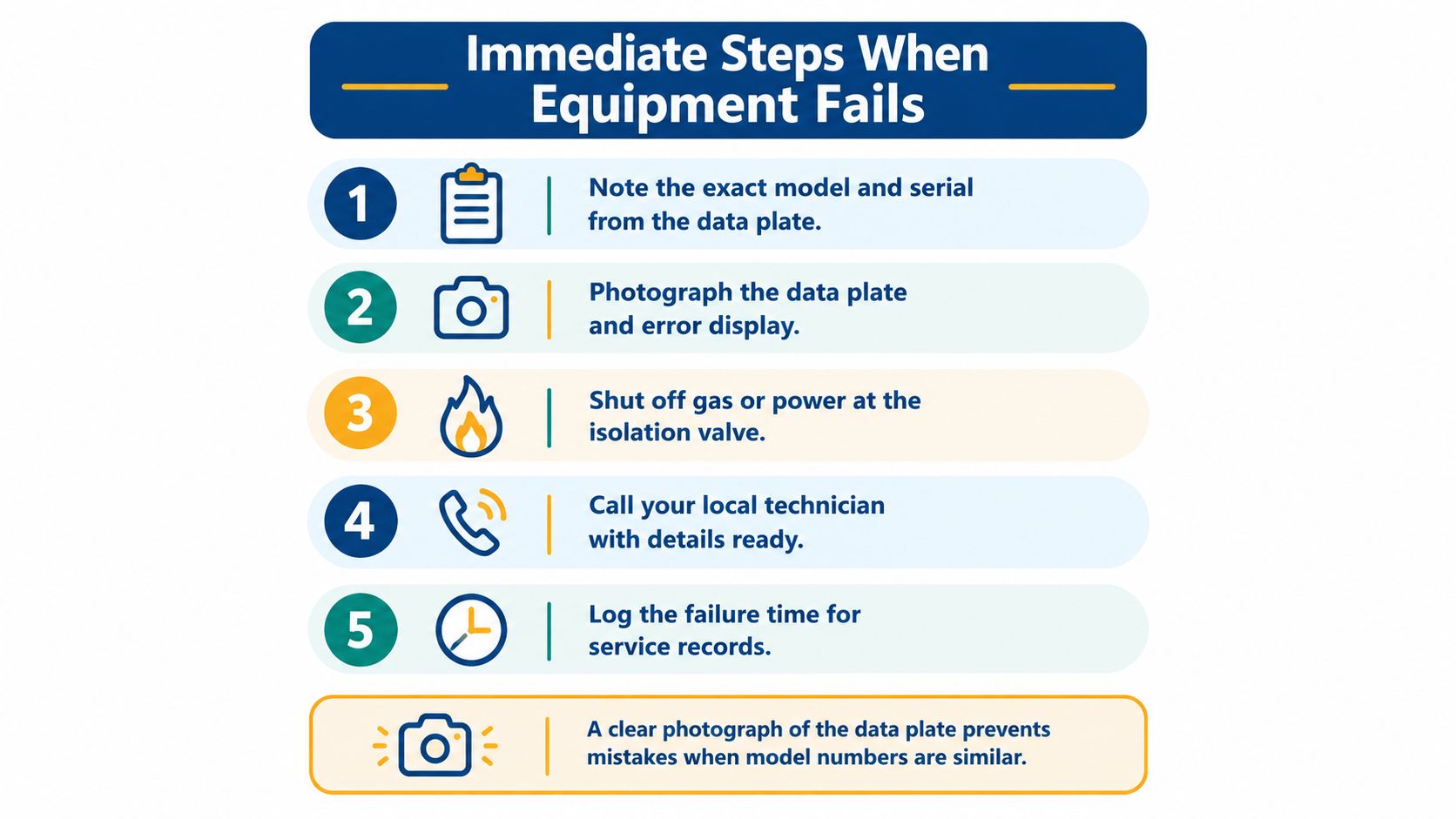
The first few minutes should be about accurate information and safety, not dismantling the machine. A clear equipment identification can help a service provider assess the job properly, while an unclear model number can send the wrong technician or parts request in the wrong direction.
Identify the equipment before making calls
Locate the data plate, usually found on the rear, side, door frame, control area, or inside an access compartment that staff can reach without removing panels. Record:
- Brand: For example, SKOPE, Atosa, Blue Seal, Cobra, Turbofan, Unox, Convotherm, Robot Coupe, or Fimar.
- Model: Copy the complete model designation, including letters and suffixes.
- Serial number: This can help distinguish similar models and support warranty checks.
- Error code: Record the exact code displayed, including letters, numbers, and punctuation.
- Symptoms: Note what the equipment is doing or not doing.
- Start time: Record when the issue began and whether it appeared suddenly or gradually.
- Recent events: Include cleaning, a power interruption, a change of settings, or unusual noise.
- Location and urgency: Give the business address and explain how the failure affects production.
A photograph of the data plate is often more accurate than typing the information. It can prevent mistakes when model numbers are similar, particularly where a single letter identifies a different electrical configuration or parts set.
Make the area safe
If equipment is smoking, sparking, leaking gas, overheating, flooding, or creating another immediate hazard, staff should stop using it and follow the venue's isolation and emergency procedures. Gas or power should only be isolated using accessible controls that staff are trained and authorised to operate.
Safe checks may include confirming that the equipment has power, checking whether an obvious external control has changed, or following a straightforward step in the manufacturer's troubleshooting guidance. These checks must remain non-invasive.
Staff shouldn't open electrical panels, bypass safety devices, alter wiring, work on gas systems, access refrigeration circuits, or dismantle technical components. Those tasks can create injury risks, damage the equipment, affect warranty arrangements, or leave the venue with a more complex fault.
Practical rule: A machine that appears simple from the outside may contain gas, electrical, refrigeration, pressure, heating, or chemical-dosing systems that require specialist work.
A useful fault report can move through the business without confusion, much like a structured dispatch process designed to eliminate HVAC scheduling chaos. For a broader route to trusted hospitality trades, operators can also review SimplyConnect and its trade connection service.
Matching the Fault to the Right Technical Discipline
“Commercial kitchen equipment service” isn't one technical category. The appropriate provider depends on the equipment type, brand, warranty position, venue location, and nature of the fault. A general handyman may be suitable for a limited non-technical task, but gas, electrical, refrigeration, and commercial warewashing faults require the right trade capability.
Match the appliance to the trade
Commercial refrigeration involves systems such as fridges, freezers, display units, blast chillers, and ice machines. SKOPE, Atosa, and other refrigeration equipment may require an appropriately qualified refrigeration technician, particularly where the fault involves the refrigeration circuit, pressure, refrigerant, compressor operation, or controls.
Gas cooking equipment includes ranges, fryers, grills, and other appliances using gas burners or gas controls. Blue Seal, Waldorf, Cobra, and similar equipment needs appropriately qualified technicians for gas-related work. A venue shouldn't treat flame problems, ignition faults, gas odours, or combustion concerns as ordinary appliance repairs.
Electric cooking equipment can involve heating elements, sensors, electronic controls, relays, fans, and software-related diagnosis. Turbofan, Unox, Convotherm, Merrychef, and comparable equipment may need a technician familiar with the particular control system and manufacturer's service pathway.
Commercial dishwashers combine electrical, plumbing, heating, drainage, water treatment, and chemical-dosing systems. A machine that fills but doesn't heat may need a different diagnosis from one that fails to drain or dispenses chemical incorrectly.
Food preparation equipment such as Robot Coupe and Fimar appliances has its own requirements around motors, switches, blades, guarding, drive components, and safe reassembly. A fault that appears to be a simple failure to start can involve an interlock or guarding system that must not be bypassed.
Check credentials and warranty status
Operators should ask whether the provider is appropriately qualified for the work, experienced with the relevant equipment type, able to access suitable parts, and authorised for warranty work where that matters. For portable appliances, businesses must arrange testing and tagging under AS/NZS 3760, with hospitality kitchens typically requiring intervals of 3 to 6 months rather than annually, as noted by Gasco's commercial servicing guidance.
Gas safety also deserves a separate question. Annual servicing helps accommodation providers and landlords stay aligned with gas safety expectations, but a routine service isn't automatically the same as every possible compliance inspection or sign-off.
Before authorising chargeable work on equipment under warranty, the operator should check the manufacturer's or supplier's process. Independent work may affect a claim, depending on the applicable terms. A supplier can help identify the product and relevant pathway, but it shouldn't be assumed to provide the technical repair itself.
Understanding Response Time Versus Resolution Time
A technician arriving quickly doesn't necessarily mean the equipment will be operating again quickly. Technician response time is not the same as equipment resolution time, and confusing the two can leave a venue without a contingency plan during a busy trading period.
The repair process may involve several stages:
- Fault reported: The operator provides the model, serial number, symptoms, error code, location, and operational impact.
- Equipment identified: The provider confirms the appliance and determines whether the job fits its technical capability.
- Initial diagnosis: Available information may indicate whether the issue is likely to need a site visit, a particular trade, or a part.
- Technician arranged: Availability depends on the provider, location, urgency, and equipment category.
- On-site diagnosis: The technician tests the equipment and confirms the fault.
- Parts decision: Some failures can be resolved immediately, while others require a specific component.
- Repair and testing: The equipment needs to be repaired, tested, and returned to safe operation.
Why location and parts matter
New Zealand's commercial kitchen equipment market is nationwide rather than limited to the main centres. The Commerce Commission has described equipment supply as about 80% of service value, with consumables and installation making up roughly 10% each, and cites Statistics NZ data showing accommodation and food services providers purchased NZ$11.225 billion of goods and services in 2022. These figures indicate the scale and national breadth of the operating environment, but they don't provide a universal repair response time. The Commerce Commission clearance document also reinforces why logistics and after-sales support matter alongside the initial purchase.
Regional venues may face different parts access and technician availability from businesses in major centres. Warranty approval can add another step, while an uncommon model may need a component sourced through a manufacturer or supplier.
When contacting a provider, the operator should ask what can be confirmed before attendance, what the call-out charge covers, whether the provider has worked on the brand, and what happens if parts are required. The venue can then decide whether to wait, activate backup production, adjust the menu, or begin replacement planning.
For refrigeration assets, routine care remains relevant even while a fault is being investigated. Practical guidance is available in commercial refrigeration maintenance advice, but safe food handling must take priority if the unit isn't maintaining required conditions.
Calculating the True Cost of Kitchen Downtime
The repair invoice is only one part of a breakdown. A failed appliance can restrict the menu, interrupt preparation, spoil stock, leave staff waiting, and create recovery work after the immediate fault is resolved.
A practical framework is:
Lost gross profit + spoiled stock + idle labour + emergency costs + recovery costs = approximate cost of downtime
Not every component applies to every incident. A small food preparation appliance with a workable backup may have limited commercial impact, while a refrigeration failure or dishwasher breakdown can affect several parts of the operation at once.
Start with the operational consequence
The urgency should reflect what the appliance does in the kitchen, not just how expensive it was. A failed oven with another suitable cooking method available presents a different problem from a failed appliance that prevents the venue from producing a major part of its menu.
Operators should record:
- Production blocked: Which menu items, prep tasks, or service periods are affected?
- Backup capacity: Can another appliance perform the same task safely and at the required volume?
- Stock exposure: Is food at risk because refrigeration, freezing, chilling, or holding conditions aren't being maintained?
- Labour impact: Are staff waiting, being reassigned, or unable to complete planned work?
- Customer impact: Will the venue need to alter the menu, delay orders, reduce covers, or close a service area?
- Recovery work: Will the team need extra cleaning, stock movement, supplier contact, or preparation after the fault?
A venue shouldn't keep using equipment that fails to maintain safe conditions just to avoid lost sales. Food businesses must maintain facilities and equipment so they can be cleaned and sanitised, function as intended, and prevent or manage contamination risk. They must also identify maintenance needs and record maintenance performed, as set out in New Zealand's food control requirements.
Use the calculation to choose the next action
The framework helps compare the cost of immediate service with the cost of waiting, but it doesn't replace technical or food-safety judgement. If the appliance is essential and the business has no safe backup, a qualified service provider should be contacted promptly while management activates a contingency plan.
The venue can then estimate whether to:
- move stock to another suitable refrigeration unit;
- use an alternative production method;
- make a temporary menu change;
- access equipment at another site;
- source a temporary or replacement appliance;
- postpone a low-impact repair until a planned service window.
The kitchen downtime cost guide is useful for turning a vague sense of urgency into an operational discussion. The calculation doesn't need false precision. Its value is in showing which failures threaten trade continuity and which can be managed without exposing staff, customers, or food to unnecessary risk.
Deciding Between Repair and Equipment Replacement
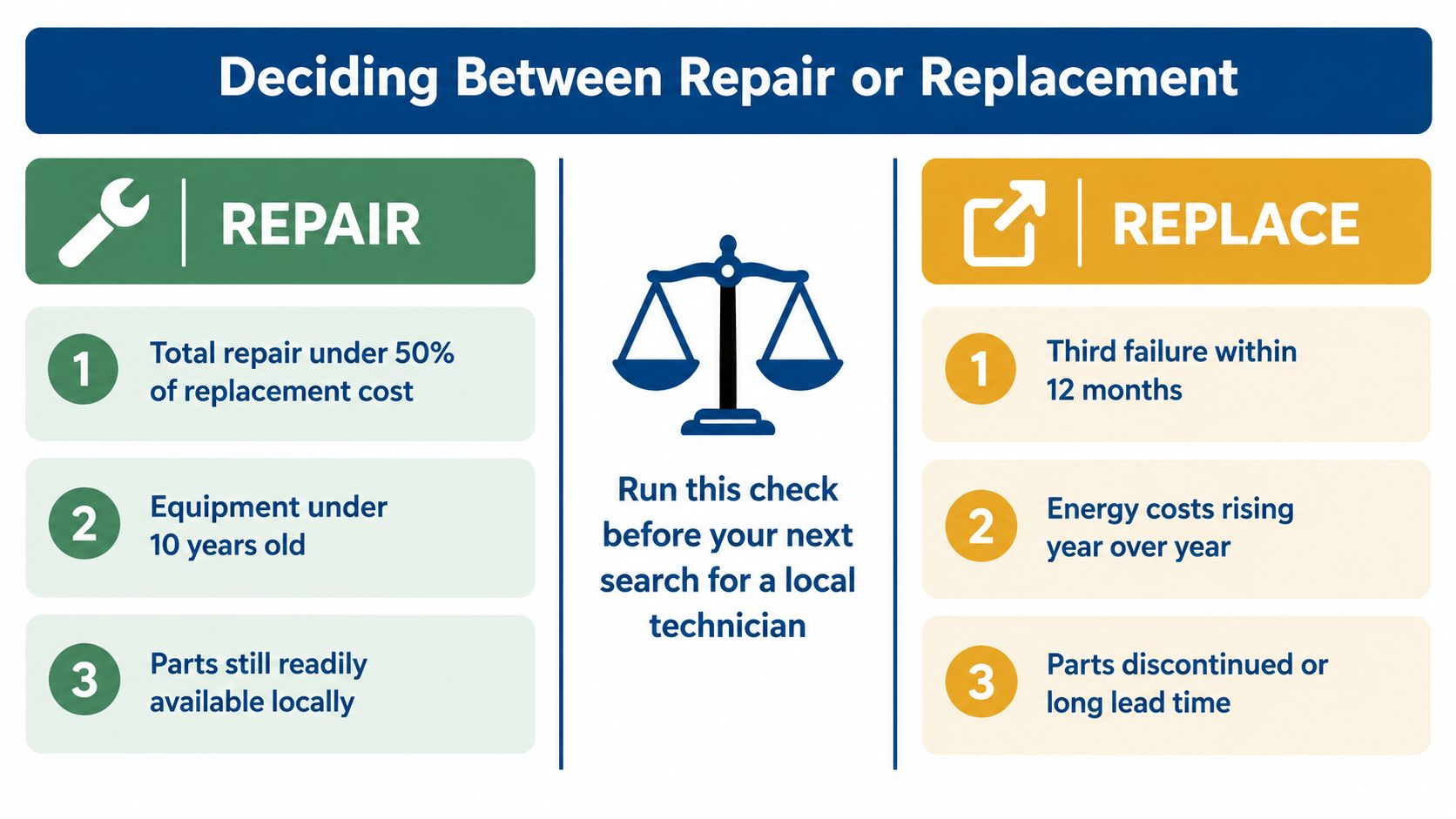
Repeated searches for commercial kitchen equipment service near me can indicate more than a difficult day. They may show that a particular appliance no longer fits the venue's capacity, workflow, reliability, or compliance needs.
There's no sound universal rule that says a machine should be replaced after a particular number of repairs. The decision should compare the remaining suitability of the current equipment with the full cost and disruption of a changeover.
Compare the two commercial positions
For the existing appliance, assess:
- Repair cost: What will the current repair involve, including diagnosis and parts?
- Recurring exposure: Is this a one-off fault or part of a pattern of failures?
- Downtime risk: How disruptive is another fault likely to be during service?
- Remaining suitability: Does the equipment still provide the capacity, controls, layout, and output the venue needs?
- Safety and compliance: Can it be maintained in a condition that supports safe operation and cleaning?
- Operating performance: Are worn seals, scaling, poor calibration, or inefficient operation creating avoidable costs?
For replacement, assess:
- Equipment cost: What is the purchase price of a suitable alternative?
- Installation and changeover: Will gas, electrical, ventilation, plumbing, drainage, or bench alterations be needed?
- Warranty: What support applies to the new equipment?
- Capacity and productivity: Will the replacement better match the menu and service pattern?
- Operational risk: Can the venue reduce dependence on an appliance that has become difficult to support?
- Contingency: Can the replacement be installed during a planned closure or quieter service window?
A repair can be sensible when the equipment remains suitable and the fault is isolated. Replacement becomes more compelling when repair exposure, downtime, poor fit, discontinued parts, or persistent safety concerns outweigh the disruption of installing something new.
Plan before the next failure
A replacement review should start while the current machine still operates. The operator can measure available space, confirm clearances, check utility requirements, assess extraction, and map how the change affects the cookline. That preparation turns an emergency purchase into a controlled equipment decision.
The equipment replacement planning guide can support that review. For a venue evaluating a heavy-duty gas cooking module, the Waldorf 800 Series RN8110G - 900mm Gas Target Top Static Oven Range combines a 900mm integrated floor model with a 45MJ/hr dual ring cast iron burner, a 2/1 GN gas static oven, flame failure protection, and a continuous pilot burner. Its concentrated centre-to-edge heat suits intensive pan work, but the gas connection, cookline layout, extraction, and installation requirements still need to be assessed by the relevant professionals.
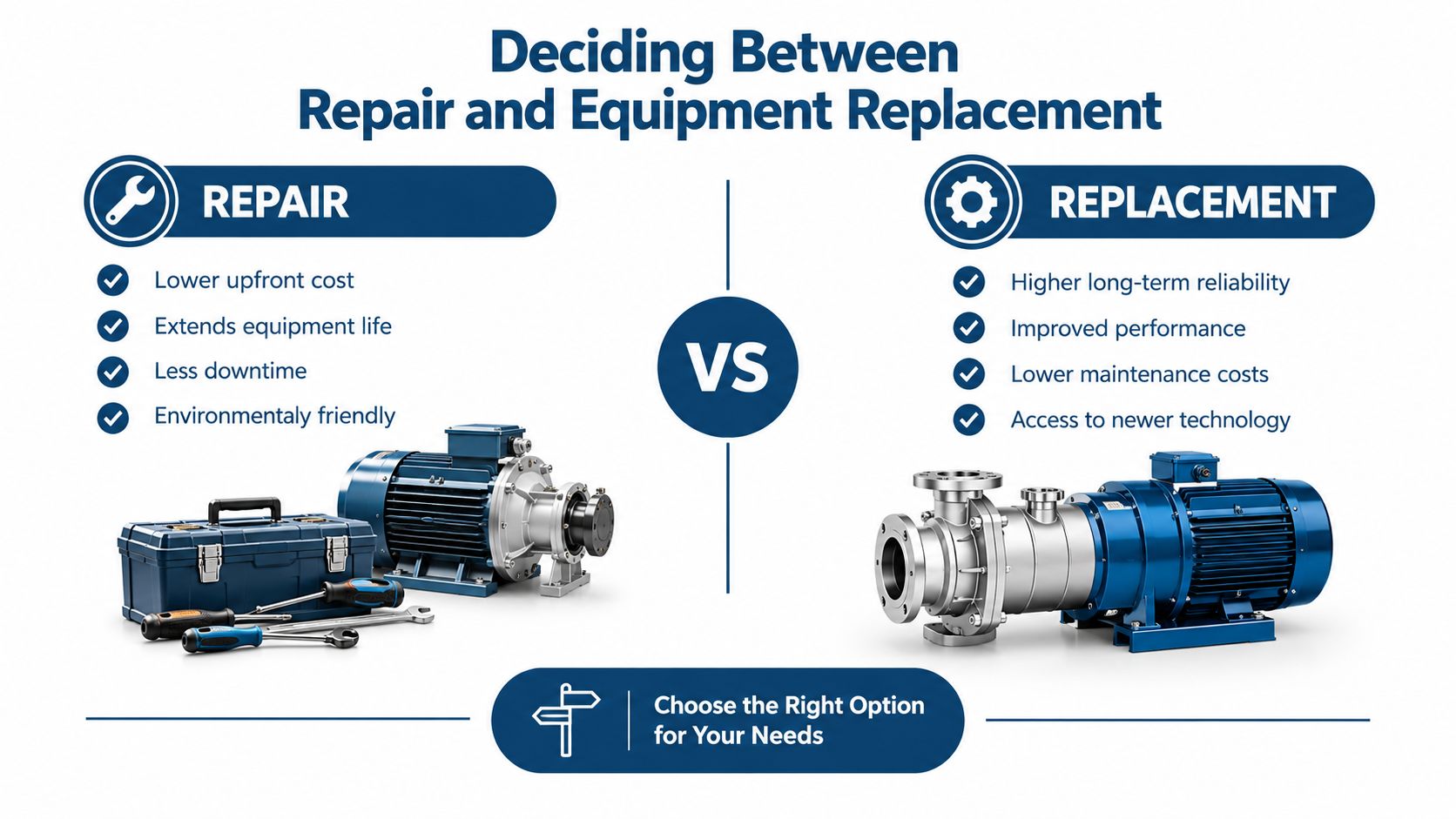
Replacement isn't automatically the more economical answer. It's the option to examine when the current asset repeatedly interrupts trade or no longer supports the way the kitchen operates.
Building a Documented Preventative Maintenance Plan
Preventative maintenance can reduce, but never eliminate, unexpected failures. The practical difference comes from separating operator cleaning and routine checks from qualified technical servicing, then recording both in a system staff can follow.
New Zealand food businesses must keep equipment in a state of repair that allows cleaning and sanitising, enables intended operation, and manages contamination risk. They also need to identify maintenance needs and record maintenance performed. MPI guidance calls for a written purpose and scope for repairs and maintenance, so a service arrangement should be organised rather than improvised, as outlined in MPI's repairs and maintenance guidance.
Give each asset a clear routine
A practical maintenance plan can assign responsibility by task:
- Daily operator work: Remove food residue, control grease, check visible damage, and report unusual sounds, leaks, temperatures, or error messages.
- Weekly cleaning: Complete deeper cleaning appropriate to the equipment and manufacturer's instructions.
- Scheduled technical work: Arrange qualified servicing according to the manufacturer's recommendations and the equipment's risk profile.
- Record keeping: Log the date, asset, issue, action taken, person or provider responsible, and any follow-up required.
One NZ maintenance methodology combines daily surface and grease control, weekly deep cleaning, and professional servicing at least twice a year for commercial cooking equipment. It also recommends cleaning refrigeration condenser coils every 3 to 6 months and arranging professional ventilation cleaning every 6 to 12 months, as described in commercial cooking equipment maintenance guidance. These are practical reference points, not substitutes for manufacturer instructions or a qualified technician's assessment.
Extraction systems need particular discipline. Staff can wipe the canopy and baffle filters daily, while regular professional cleaning and an annual inspection by an Independently Qualified Person support the compliance process. When systems are performing correctly, that person issues a Form 12A. Maintenance logs, before-and-after photographs, and cleaning certificates provide evidence of ongoing care. Leaving the work until just before an inspection creates avoidable risk.
Connect maintenance to food safety
A machine can continue running and still create a compliance problem. Damaged seals, cracked housings, degraded benching, and worn food-contact surfaces may be difficult to clean or sanitise. New Zealand food premises guidance requires surfaces and fittings to be smooth, impervious, free from cracks and crevices, easily cleanable and sanitised, and made from materials that won't contaminate or absorb food, as explained in food premises design and construction guidance.
The commercial dishwasher maintenance article can help operators build a more specific routine for warewashing equipment. A documented plan gives management a clearer basis for deciding whether to clean, service, repair, isolate, or replace an appliance before a small defect becomes a serious operational problem.
Simply Hospitality supplies commercial kitchen equipment, refrigeration, cooking equipment, dishwashing systems, food preparation equipment, and related hospitality essentials, while helping customers identify products and relevant warranty or supplier pathways. Visit Simply Hospitality with the equipment brand, model, serial number, fault details, and venue requirements ready, so the right purchasing or information pathway can be considered alongside qualified technical servicing.