

Convotherm vs Giorik: Which Combi Oven Is Right?
Friday service is approaching, the booking list is full, and the combi oven has become the bottleneck. Trays are waiting, the kitchen team is opening the door between batches, and a decision that looked simple at purchase time is now affecting timing, labour, consistency and cleaning. Convotherm vs Giorik isn't a choice between a universally superior brand and an inferior one. It's a choice between specific models, matched to a menu, workload, site and budget.
Both manufacturers offer professional cooking systems, but their ranges cover different capacities, controls, utilities and levels of automation. A compact café, a hotel banquet kitchen and an institutional kitchen shouldn't buy the same oven just because the brand is familiar.
Why the Right Combi Oven Matters for an NZ Kitchen
A combi oven earns its place by handling more than one cooking method in one cabinet. Convection supports roasting and baking, steam protects delicate food, and combination cooking helps operators manage moisture and browning during batch production. The value appears during service, when one correctly specified oven can support several parts of the menu without forcing staff to move food between separate appliances.
The wrong specification creates pressure in predictable ways. An undersized chamber produces queues at peak times. A model with controls that casual staff struggle to use can undermine recipe consistency. An oven requiring services unavailable at the site can turn delivery into an expensive fit-out problem.
New Zealand's foodservice market reached approximately US$9.82 billion in sales in 2024, underlining how much daily revenue depends on equipment that holds up under service pressure (USDA market report). That figure includes restaurants, cafés, hotels, institutional kitchens, caterers and other operators, each with different production patterns.
The oven should follow the workload
A high-volume hotel may need batch capacity, programmable cooking, rapid recovery and cleaning automation. A smaller café may care more about footprint, installation requirements and direct controls. A caterer may value repeatable programmes and flexible power options, while an aged-care kitchen may prioritise temperature verification, regeneration and staff training.
Practical rule: Choose the cooking workload first, then shortlist equivalent models from Convotherm and Giorik.
Energy also belongs in the initial decision. Commercial ovens and cooking elements accounted for 15% of energy consumed by New Zealand's Accommodation and Food Services sector in 2022, while refrigeration accounted for a further 22% (EECA food and beverage service sector guidance). An oven is therefore a long-term operating asset, not merely a purchase price on an equipment quote.
The strongest choice delivers the required cooking performance, capacity and workflow benefits without charging the business for features nobody uses. It also avoids compromising on capabilities the kitchen genuinely needs.
Where Convotherm and Giorik Sit in the NZ Market
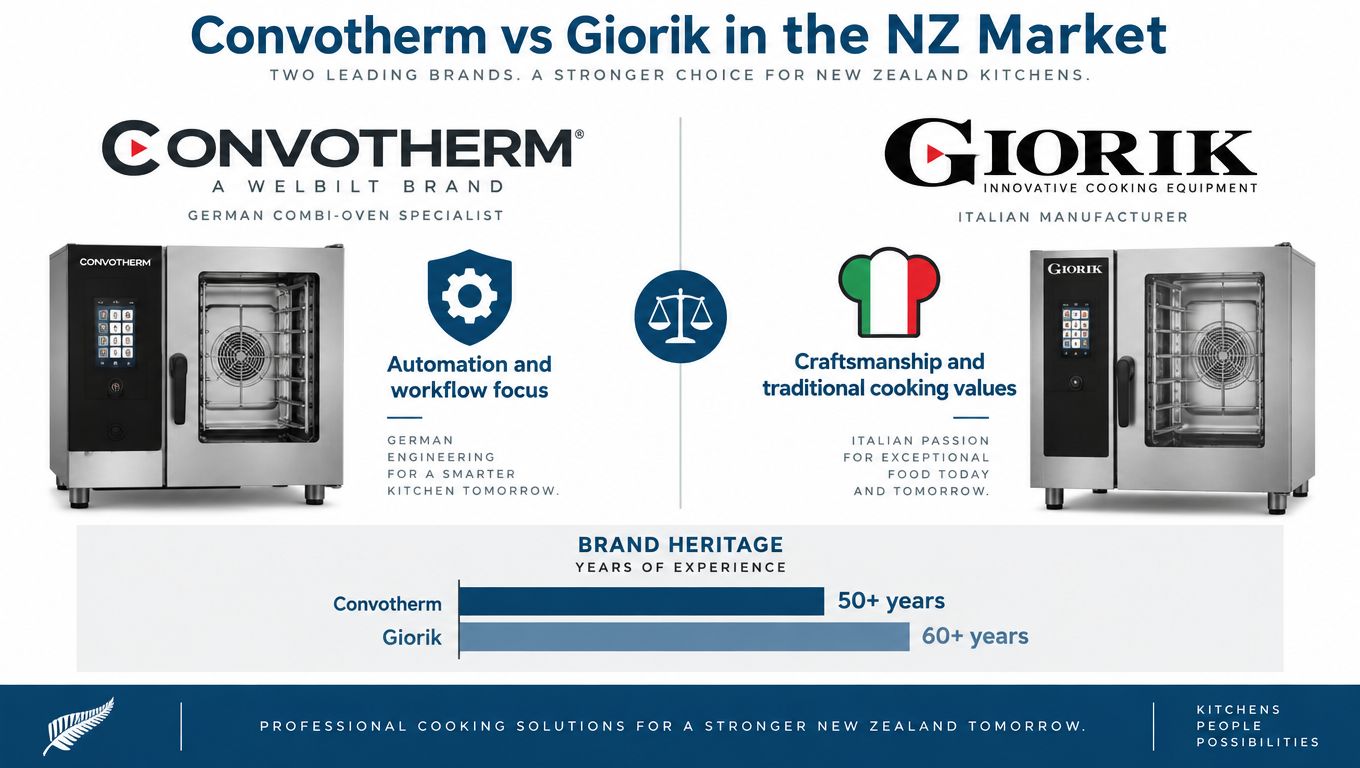
Convotherm is an established German commercial combi oven brand recognised for professional cooking technology, automation and kitchen workflow. Its relevant range includes maxx, maxx pro and mini models where available, giving operators different options for capacity, control style and intended workload.
Giorik is an Italian commercial cooking equipment manufacturer offering combi ovens and other professional kitchen equipment. Its locally listed New Zealand range spans compact and full-size electric, natural-gas and ULPG configurations in 6-, 10- and 20-tray formats, across 1/1 GN and 2/1 GN sizes, grouped into compact, full-size and modular series (Giorik commercial cooking equipment range).
Compare like with like
A compact Giorik and a premium Convotherm may sit in very different parts of the market. Comparing them as though their differences represent the entire brand would be misleading. The useful comparison pairs similar tray capacities, power sources, cooking functions and operating environments.
Giorik's capacity range gives buyers a clear sizing path. A 6 x 1/1 GN unit may suit a constrained kitchen, while 10 x 1/1 GN or 10 x 2/1 GN models support larger batch production. 20-tray configurations belong in production-focused kitchens where floor space, utilities and workflow can support them.
Convotherm should be assessed against the same operating envelope. Tray pitch, GN format, connected load, gas availability, door-opening space and peak recovery matter more than brand reputation alone. Current model availability and specification can change, so operators should confirm the exact configuration before signing off an order.
The commercial oven brands comparison can help frame the initial shortlist, but a final decision should come from current model documentation and a site review.
Model-for-Model Feature Comparison
The table below shows how an operator should structure a model-level comparison. Current model availability and detailed specifications must be confirmed before purchase, particularly for dimensions, electrical load, cleaning options, water requirements and warranty terms.
| Feature | Convotherm model | Giorik model | Why it matters |
|---|---|---|---|
| Model and range | maxx, maxx pro or mini, depending on the required configuration | MovAir, Kore or another currently listed Giorik configuration, subject to NZ availability | Range position affects capacity, controls, automation and intended workload |
| Tray capacity and format | Confirm the selected model's tray count, GN format and shelf spacing | Locally listed options include 6-, 10- and 20-tray configurations in 1/1 GN and 2/1 GN formats (Giorik range information) | Capacity must match batch size, loading density and kitchen space |
| Power requirements | Confirm electric or gas configuration, phase and connected load from the model specification | Electric, natural-gas and ULPG configurations are listed across the range (Giorik range information) | Utilities can determine whether installation is practical |
| Cooking modes | Verify convection, steam, combination cooking and any model-specific programmes | Verify the same functions on the selected Giorik model | Similar mode names don't guarantee identical control or humidity management |
| Controls | Compare manual controls, digital interface, recipes and multi-stage programming | Compare the selected model's interface and programmable functions | The interface affects training, consistency and service recovery |
| Cleaning system | Confirm whether automatic washing is standard, optional or unavailable on the selected model | Confirm the exact cleaning method, chemical requirements and manual access | Cleaning affects labour, water, chemical use and compliance |
| Water requirements | Confirm steam generation, filtration, drainage and treatment requirements | Confirm the same requirements for the chosen Giorik configuration | Water quality can influence maintenance and steam performance |
| Warranty and support | Confirm NZ warranty coverage, service process and parts arrangements | Confirm NZ warranty coverage, service process and parts arrangements | Support matters when the oven carries daily production |
| Intended application | Compact cafés through to higher-volume professional kitchens, depending on model | Compact, full-size and modular applications, depending on model | The correct match is determined by workload, not badge |
The Convotherm combi oven guide provides useful context for assessing Convotherm configurations. It shouldn't replace a current specification review.
Energy deserves a separate line in any quote. Buyers should request comparable data for convection, steam, combination, preheating, idle and cleaning cycles. Independent NZ-specific comparative benchmark data wasn't identified for these two brands, so claims of universal energy superiority should be rejected.
Cooking Technology and Day-to-Day Usability
The three core cooking modes serve different production jobs. Convection circulates dry heat for roasting, baking and browning. Steam supports vegetables, fish, rice, delicate proteins and reheating without the same drying effect as dry heat. Combination cooking brings heat and moisture together, which helps operators balance browning with moisture retention.
Humidity management becomes particularly important when several trays cook at once. Air circulation must distribute heat consistently without creating excessive browning on one shelf and undercooking on another. The relevant questions aren't whether an oven has a fan or a steam mode. Buyers should ask how the selected model controls temperature, humidity, airflow and recovery after the door opens.
Controls should suit the team
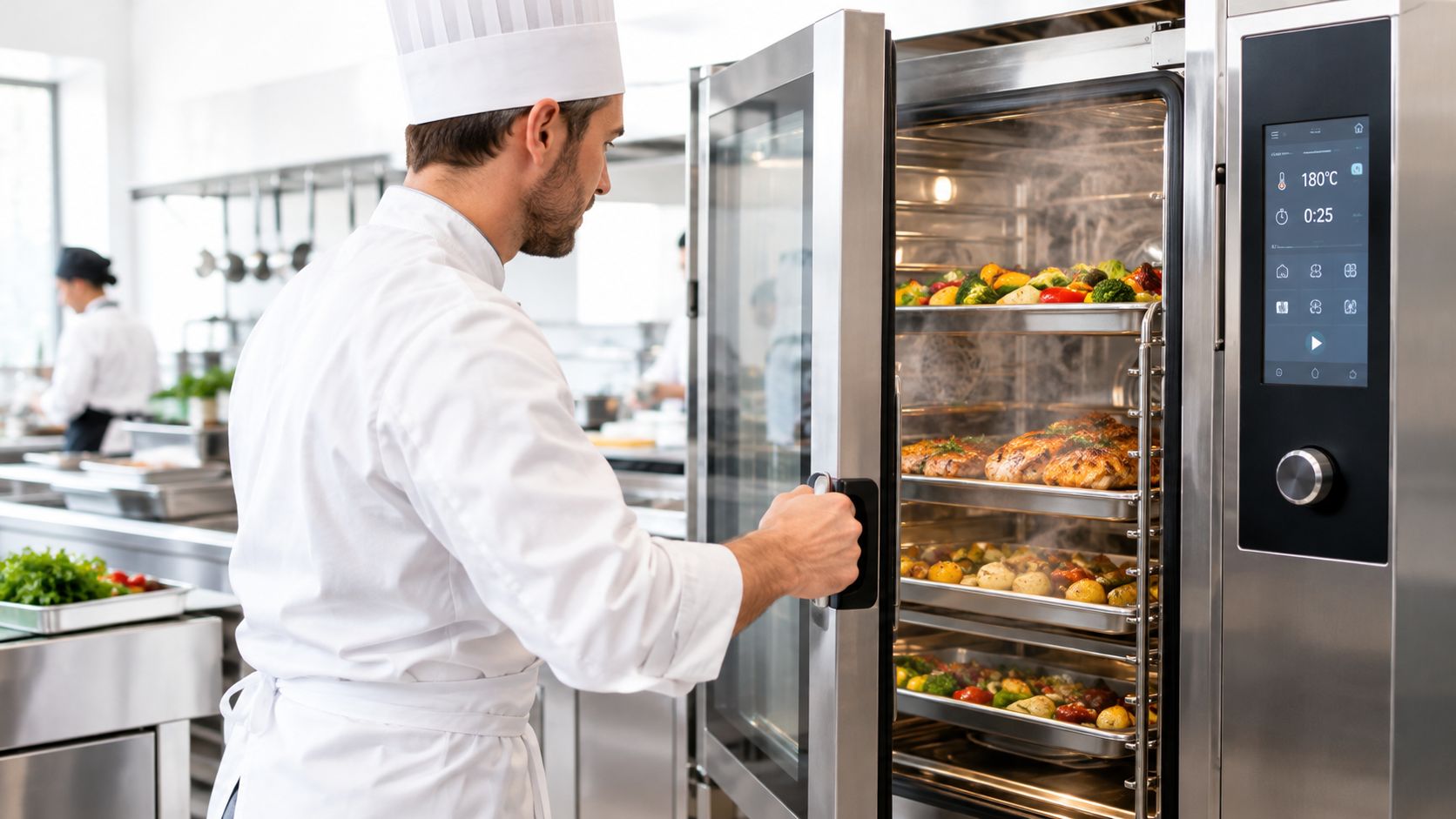
A digital interface with stored recipes and multi-stage programmes can help a mixed-experience team repeat established processes. Recipe locking can also reduce casual changes during a busy service. Manual controls, however, may suit chefs who prefer immediate adjustment and direct control over temperature, time and humidity.
More automation isn't automatically better. A complex interface can become a poor investment if the kitchen only uses basic convection and steam functions. A simpler model may be the better choice when a small team has experienced chefs who want to make decisions in real time.
Food safety depends on verified core temperatures, not just chamber temperature. Available NZ manufacturer documentation identifies 63°C for high-risk fish, 75°C for poultry and minced meat, and 85°C for reheating as operational internal-temperature targets (combination steam oven guidance). The venue's Food Control Plan and calibrated probe procedures still govern how staff verify food.
A useful trial asks staff to run representative dishes, record time to setpoint, observe recovery after a full load and check the finished product across several shelf positions. It should also record how quickly a new or relief operator can select the correct recipe and complete the cleaning procedure.
The article Can a Combi Oven Replace Three Pieces of Kitchen Equipment? offers a useful way to consider consolidation, but the operational gain depends on whether the selected model matches the menu.
Cleaning, Water Quality and Installation Realities
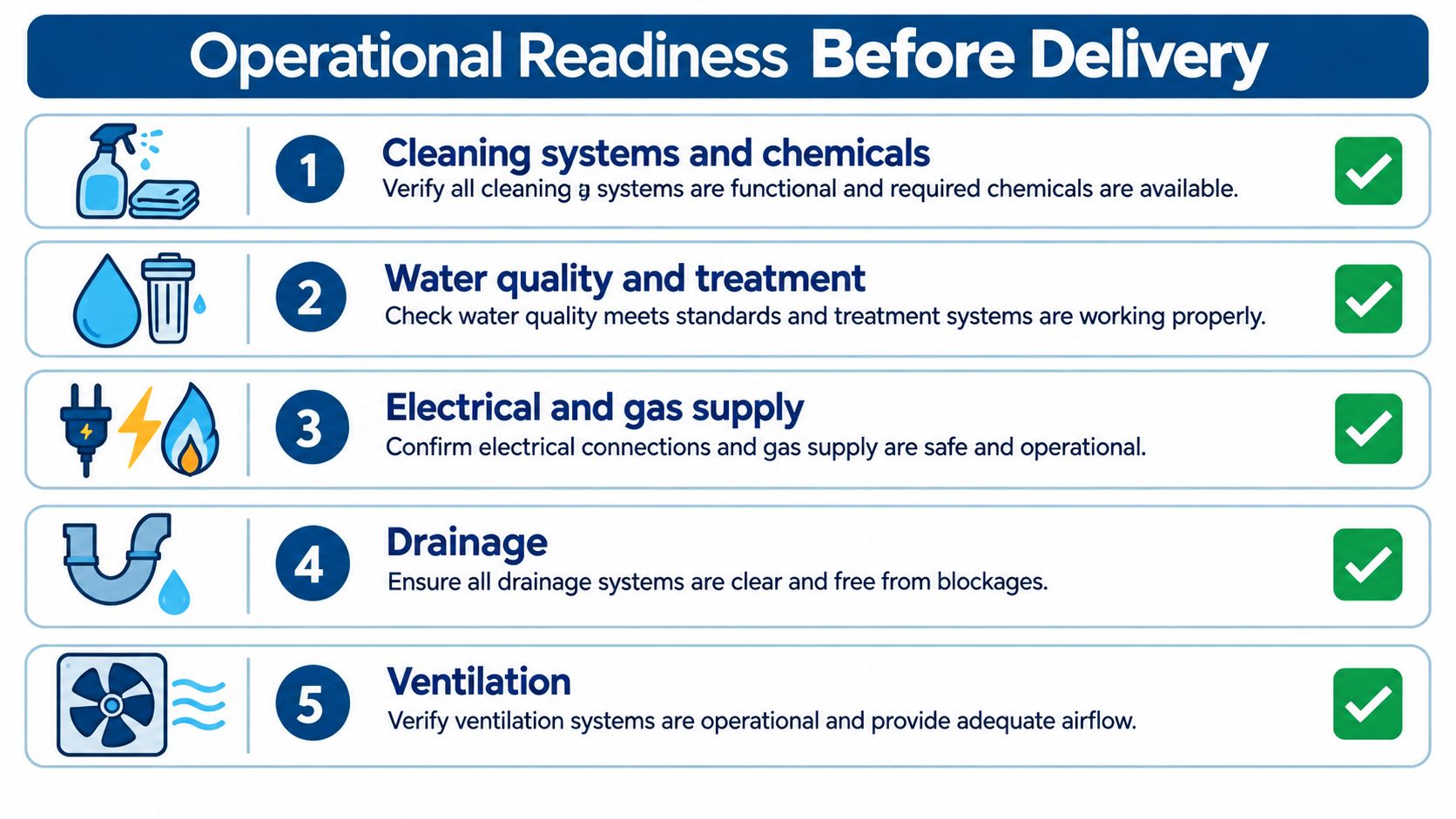
A combi oven needs more than a clear floor position. It needs the right electrical supply, water connection, drainage, ventilation, service access and door swing. Local planning guidance recommends checking dimensions, door-opening space, maintenance access, plumbing requirements and available electrical supply before delivery. Larger commercial combi ovens may require a suitable three-phase connection, verified by a qualified electrician (NZ combi oven planning guidance).
Cleaning is part of the specification
Automatic washing can reduce manual intervention, but it doesn't remove operator responsibility. Staff still need to select the correct cycle, use approved chemicals, check the cavity and complete any manual cleaning required by the manufacturer. Chemical dosing, cycle duration, water use and access to seals, corners, drains and removable parts vary by model.
NZ food-safety procedures require visible soil and food residue to be removed, equipment to be washed with hot water and detergent, rinsed where required, sanitised on food-contact surfaces and air-dried. Cleaning chemicals need suitable concentrations, clear labels and separation from food (MPI cleaning guidance).
Commercial-kitchen surfaces should be smooth, impervious, free from cracks and crevices, and easy to clean and sanitise. Fixed equipment also needs enough access underneath for cleaning, so the space around the oven matters as much as the stainless cabinet itself.
Water quality can change the ownership experience
Steam generation and automatic cleaning both place demands on water quality. Operators should confirm filtration or treatment requirements, drainage position and allowable water pressure with the manufacturer or installer. A water-treatment solution that suits one model may not suit another.
Electrical phase, gas classification, extraction design and drainage should be confirmed before the oven arrives. An oven that fits physically can still fail the site check if the switchboard, gas service or ventilation system isn't suitable. Guidance on reverse osmosis and water treatment illustrates why water quality deserves attention across commercial kitchen equipment, not only warewashing.
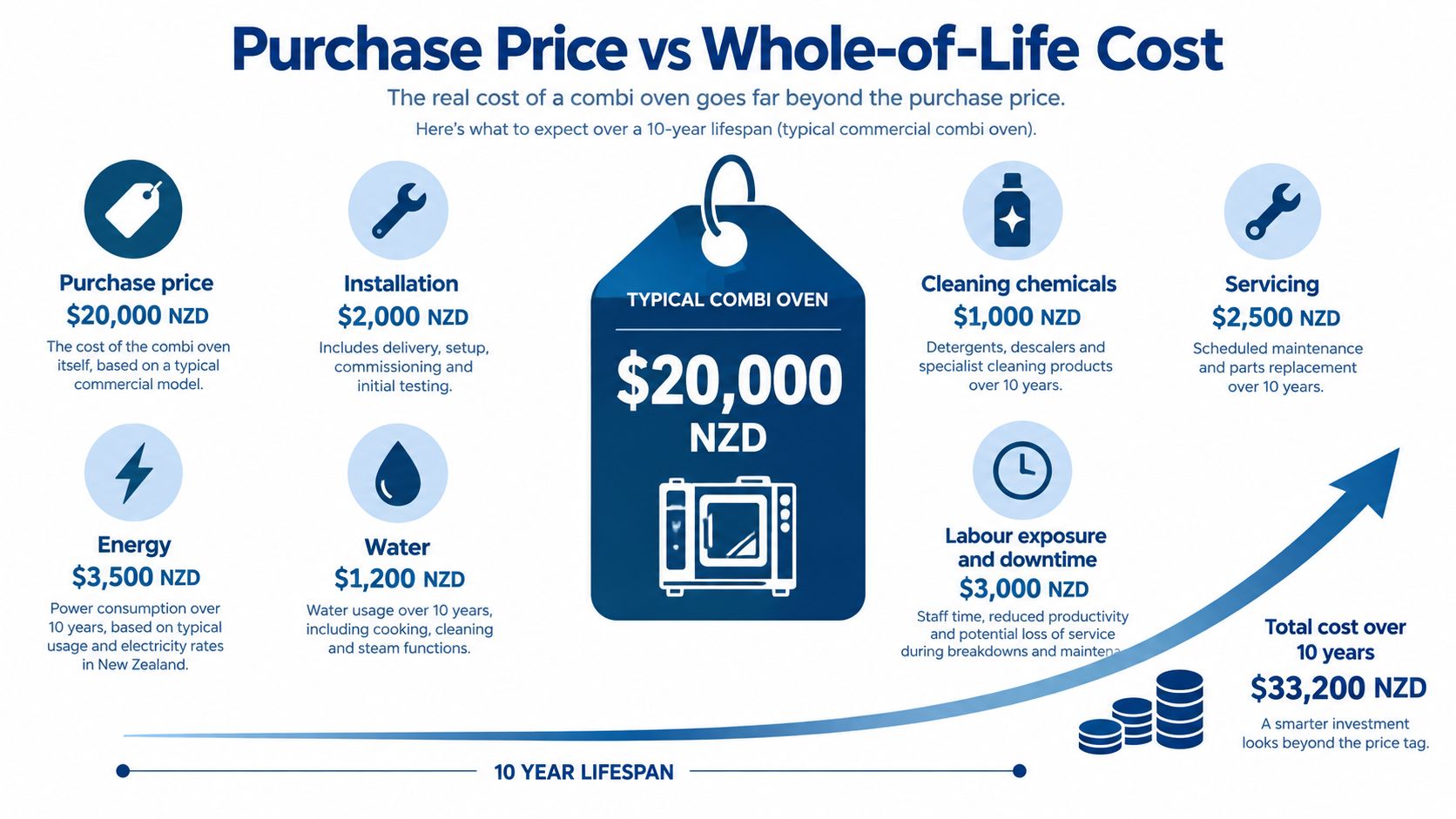
Purchase Price Versus Whole-of-Life Cost
The purchase quote is only the first line of a combi oven decision. A realistic calculation includes:
- Installation: Electrical work, gas fitting, drainage, water treatment, ventilation and commissioning.
- Utilities: Electricity or gas, plus water used for steam and cleaning.
- Consumables: Cleaning chemicals, filters and other approved maintenance items.
- Labour: Staff time for cleaning, programming, loading and checking.
- Service exposure: Preventive maintenance, parts and the cost of an unexpected outage.
Indicative NZ commercial figures place electricity at roughly NZ$0.12 to NZ$0.18 per kWh and reticulated gas at about NZ$0.05 to NZ$0.08 per kWh, with actual costs varying by region, supplier and consumption tier (MPI energy-cost reference). These figures shouldn't be turned into a universal winner because an oven's rated input isn't the same as its average load.
Compare actual operating patterns
A gas-capable unit may have a lower energy cost in some operating profiles. An electric unit may make more sense where gas, extraction or ventilation infrastructure isn't available. A high-volume kitchen should compare cost per cooked batch and annual cost at realistic utilisation, including preheating, idle periods, cooking and cleaning.
Connected load also matters. Peak-demand charges may apply, and a three-phase upgrade or extraction alteration can outweigh the price difference between two oven quotes. Smaller cafés, caterers, marae and aged-care kitchens should be especially careful because installation constraints can dominate the purchase decision.
Operators wanting better visibility across utilities can consider submetering programs from Axis Meter Solutions when measuring gas use separately from other kitchen loads. The point isn't to create a generic payback promise. It's to replace assumptions with the venue's own operating data.
A buying cheap versus buying once analysis is useful when comparing a lower-priced oven with a model that adds automation, capacity or serviceability. Those features only justify a higher price when the kitchen will use them.
Matching the Right Oven to Your Venue
Small cafés and restaurants should start with footprint, tray format and operating simplicity. A compact Giorik configuration or Convotherm mini model may be suitable where production is spread across the day rather than concentrated into one peak. The key test is whether the chamber can handle the busiest service without blocking other work.
High-volume restaurants need more than headline tray capacity. Convotherm maxx or maxx pro models and Giorik full-size configurations should be compared on shelf spacing, recovery, humidity control, recipe programming and cleaning access. A kitchen producing 100 meals over several hours has a different requirement from one producing 100 meals simultaneously, so peak timing matters more than the number alone.
Hotels and caterers often benefit from repeatability, batch cooking and regeneration. A 10-tray or 20-tray configuration may make sense where the production schedule supports it, but the oven must also fit the loading route, trolley arrangement, drainage and service access. Programmable multi-stage cooking is valuable when different operators need to reproduce the same result.
Institutional kitchens should prioritise temperature verification, simple loading procedures, standardised programmes and staff training. The 2026 Hospitality Summit report called for chefs, head waiters and restaurant managers to be added to the Green List because of sustained shortages in those roles (2026 Hospitality Summit report). An interface that a mixed-experience team can use safely may be more valuable than a longer feature list.
Bakeries and mixed-menu venues should test airflow, humidity adjustment, shelf consistency and the programmes used for bread, pastry, roasting, steaming and regeneration. The right Convotherm or Giorik model depends on which of those tasks dominate, not on whether the kitchen describes itself as a bakery or restaurant.
Hospitality can help operators compare current Convotherm combi ovens and Giorik combi ovens, but the useful conversation starts with the menu, service pattern and available utilities.
Questions to Ask Before You Buy
- What foods will the oven cook most frequently? Identify the balance of roasting, baking, steaming, regeneration and combination cooking.
- How many portions are needed during peak production? Separate average demand from the busiest service.
- Which tray format does the kitchen use? Confirm whether 1/1 GN or 2/1 GN fits existing pans and workflow.
- How important are automatic programmes? Decide whether recipe storage, multi-stage cooking and repeatability justify added complexity.
- What cleaning and water-treatment requirements apply? Confirm chemicals, filtration, drainage and manual-cleaning access.
- What electrical, gas and ventilation services are available? Check phase, connected load, gas supply, extraction and door clearance before delivery.
- What is the total installed and operating budget? Include utilities, cleaning, service and downtime exposure.
Hospitality supplies commercial combi ovens, Gastronorm pans and related kitchen equipment for NZ hospitality operators. Contact the team to compare equivalent Convotherm and Giorik models, check site requirements and select a configuration that fits the menu, workload and budget, then visit Simply Hospitality to start the discussion.