

Food Handling Glove Considerations: A Guide for NZ Kitchens
Gloves are often sold as the easy answer to food safety, but that advice is too simple for a busy café or restaurant. Food handling glove considerations come down to task, workflow, and discipline, because gloves can reduce direct contact and still spread contamination if staff keep the same pair on too long, switch jobs without changing them, or skip handwashing. In New Zealand kitchens, the key question is not which glove looks safest in the box, it's which glove best supports the way the team handles raw and ready-to-eat food across a shift.
Why Gloves Alone Do Not Guarantee Food Safety
A glove on a hand doesn't change the underlying hygiene risk if the hand is already dirty or the glove is reused across tasks. International food-safety guidance used by NZ operators says single-use gloves should be changed after handling raw meat, seafood, or poultry, before touching ready-to-eat food, after interruptions, when torn or dirty, and at least every four hours of continuous use. That four-hour point matters because it turns glove management into a visible control point, not a vague preference, and it aligns with the practical reality of a service shift in a café, aged-care kitchen, or catering line. Preventing cross-contamination in food handling
Practical rule: if the task changes, the gloves should change too.
The trap is false confidence. Staff often feel protected once gloves are on, then touch a fridge handle, a till, a bin lid, or raw protein before moving straight back to plated food. The glove then becomes the vehicle, not the barrier.
What actually reduces risk
The safest workflow is built around handwashing, task separation, and frequent glove replacement. That matches the older outbreak data showing glove-related contamination has appeared in both outbreak reviews and observational work, and it explains why gloves must sit inside a broader food safety routine rather than replace it.
For operators, the most useful way to judge a glove is to ask one simple question, which workflow does this glove support? A prep station cutting vegetables has different needs from a pass used for plating, and both differ again from cleaning or waste handling. If the team can't change gloves at the right points, then even a good glove will still fail the job.
Comparing Glove Materials for Kitchen Tasks
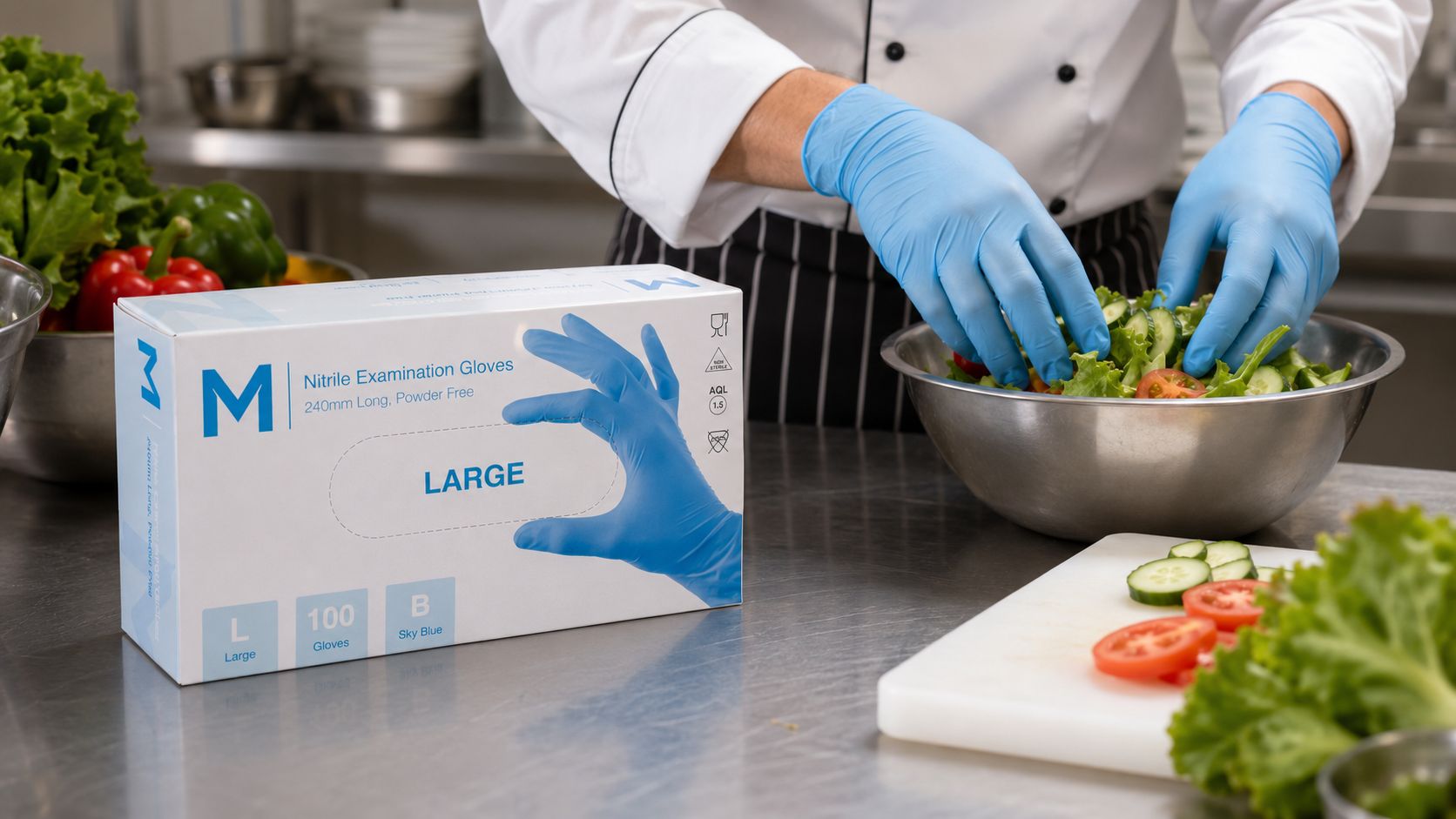
Material choice should follow the task, not habit. In foodservice, nitrile is usually the most practical default for prep work because it gives a better balance of durability, dexterity, and latex-free comfort, while vinyl often suits short, low-risk jobs where the team changes gloves very frequently. Latex can feel supple and responsive, but allergen concerns make it a poor fit for shared kitchen environments, and polyethylene suits very quick, low-contact tasks where the glove is more a hygiene cover than a true barrier. For a more detailed comparison of nitrile versus vinyl gloves, Hospitality's note on a detailed comparison of nitrile versus vinyl gloves is a useful companion read.
If a kitchen needs one glove to handle both food prep and light cleaning, nitrile is usually the safer starting point. The Matthews Nitrile Sky Blue Gloves 5.0g - 10x100 Pack is a practical example of a powder-free nitrile option with food-service relevance, especially where staff need snag, puncture, cut, and abrasion resistance in a blue glove that's easy to see in the kitchen.
| Glove Material Comparison for Hospitality Tasks | Best For | Durability | Dexterity | Allergen Risk | Typical Use |
|---|---|---|---|---|---|
| Nitrile | Food prep, raw protein handling, light cleaning | Strong | Good | Low, latex-free | Mixed kitchen tasks, higher-contact stations |
| Vinyl | Short, low-risk service tasks | Moderate to lower | Fair | Low, latex-free | Quick changeovers, light handling |
| Latex | Precision work where allergy risk is controlled | Good | Very good | Higher, due to latex exposure concerns | Limited-use environments with strict controls |
| Polyethylene | Very brief food contact tasks | Light | Basic | Low | Sandwich assembly, sampling, rapid service |
Unit price only tells part of the story. A glove that tears early or forces extra changes can cost more operationally than a sturdier glove used in the right place. In kitchens where staff move between raw and cooked tasks, that trade-off matters more than the material label on its own.
Matching material to task
- Nitrile: suited to prep benches, protein handling, and stations where dexterity and barrier confidence both matter.
- Vinyl: workable for low-risk, short-duration tasks where the team changes frequently and does not need extended wear.
- Latex: only worth considering where latex exposure is controlled and staff policies allow it.
- Polyethylene: useful for very brief food handling, but not a substitute for a more protective glove in busy production.
Key Selection Factors Beyond Material
Material gets the attention, but the result on the line usually depends more on fit, grip, and how often the team can change gloves during service. Comfort and durability should be considered together, because a glove that feels awkward gets removed too often or worn too long, and both habits raise contamination risk. For operators comparing options, a useful outside reference on material behaviour and filtration-style decision-making is how selective filtration works, because the same logic applies here. The right barrier has to let the task happen cleanly while blocking what should stay out.
What to check before buying
- Thickness: a thicker glove can help with demanding tasks, but extra thickness can reduce fingertip feel. For detailed prep work, too much bulk gets in the way.
- Textured grip: textured fingertips or palms help when staff are handling wet, oily, or chilled food. That grip matters more than many operators expect.
- Powder-free construction: powder-free gloves are the normal choice in food environments because loose powder adds another contamination concern.
- Correct sizing: gloves that are too tight fatigue hands and can split more easily, while loose gloves interfere with dexterity and control.
- Food-safe certification: selection should start with a glove that is clearly intended for food contact, not just general purpose use.
- Chemical resistance where needed: cleaning duties are different from sandwich assembly, so a glove that copes with food prep may still be wrong for chemical exposure.
One simple test: if staff can't pinch, fold, and plate naturally, the glove is probably wrong for the task.
Sizing deserves more attention than it usually gets. A glove that rides up, wrinkles at the fingertips, or leaves excess space around the palm can lead to clumsy handling and more unnecessary touching of surfaces. That is why glove selection should be matched to hand shape as well as the station.
For kitchens that also manage chemical handling, the guidance on commercial cleaning chemicals helps separate food-contact glove choices from cleaning-only options, which is where many mixed-use operations go wrong.
Cross-Contamination and Glove Change Discipline
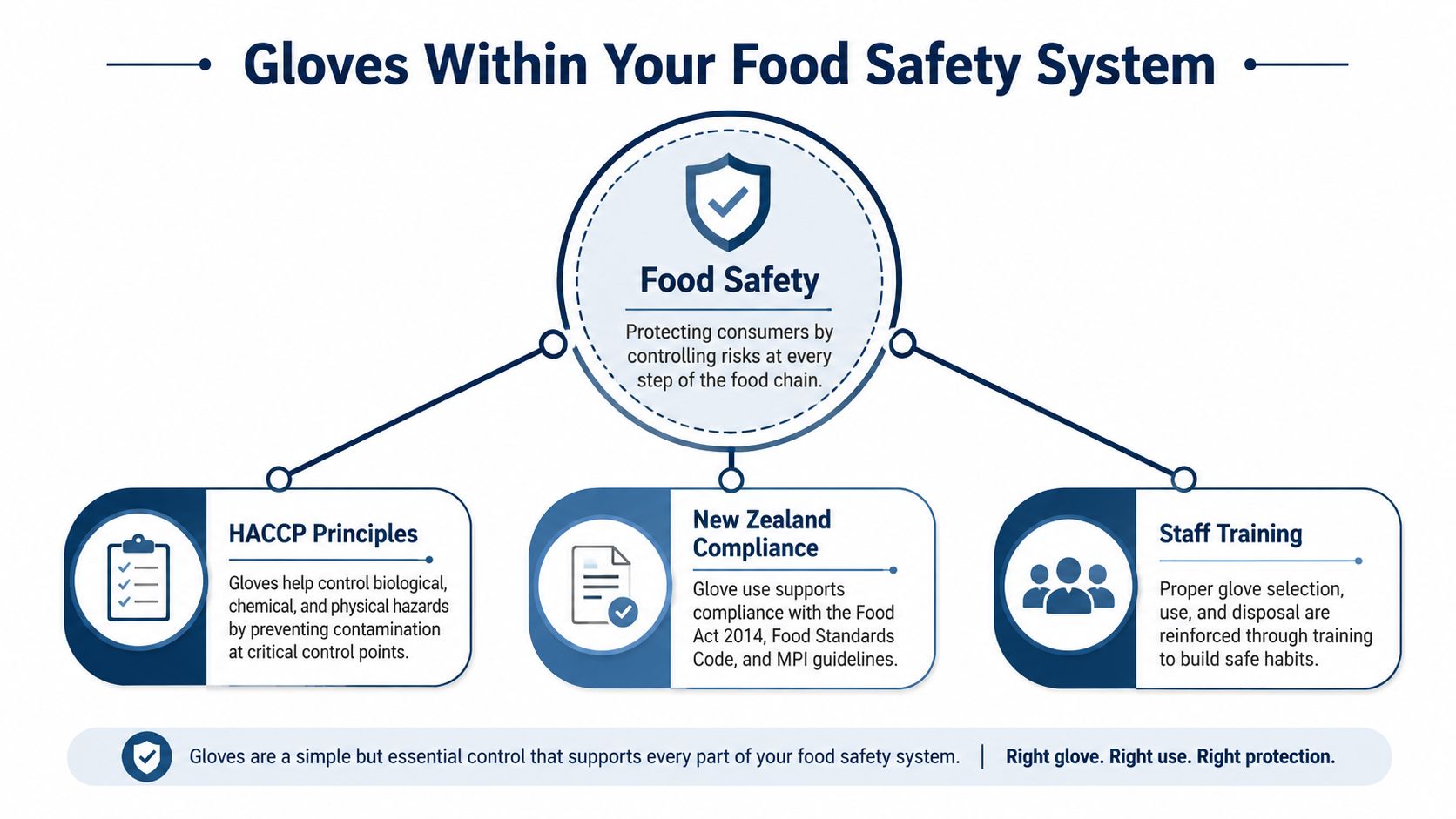
The biggest glove mistake in hospitality is not the material, it's the habit of wearing one pair across too many tasks. Outbreak research used by food-service operators links contaminated gloves or glove cross-contamination to about 16% of foodborne outbreaks in CDC Environmental Health Service analyses for 2006 to 2016, while earlier outbreak reviews found glove-related contamination in 1.6% of outbreaks compared with 8.8% linked to bare-hand contact. Observational work also found that when gloves were worn, appropriate handwashing happened in only 16% of work activities, compared with 30% when gloves were not worn. Those figures are a reminder that gloves can lower direct contact, but they don't automatically lower risk if the work pattern stays unsafe.
Where the change has to happen
Gloves should be changed:
- After raw food handling, especially meat, seafood, or poultry.
- Before touching ready-to-eat food.
- After interruptions, including phone calls, register work, or cleaning a spill.
- When torn, dirty, or contaminated by a non-food surface.
- At regular intervals during continuous use, with the four-hour limit treated as a hard control point.
That discipline matters because task-switching without changing gloves converts the glove into a contamination vector. The risk is even higher in high-turnover service lines where one person can move from prep to pass to cash handling without a clean break.
HACCP International's food-industry guidance is blunt on this point, disposable gloves are for one task at a time, and reusable gloves must be washed and sanitised before food handling. In practice, that means gloves need to sit inside a workflow that already includes handwashing and surface hygiene, not stand in for them.
The layout of the kitchen also affects compliance. A cramped station makes glove changes harder because staff have less room to separate raw and ready-to-eat work, which is why glove discipline and restaurant kitchen layout ideas often belong in the same planning conversation.
Gloves protect food only when the team treats them as disposable, task-specific tools.
Integrating Gloves Into Your Food Safety System
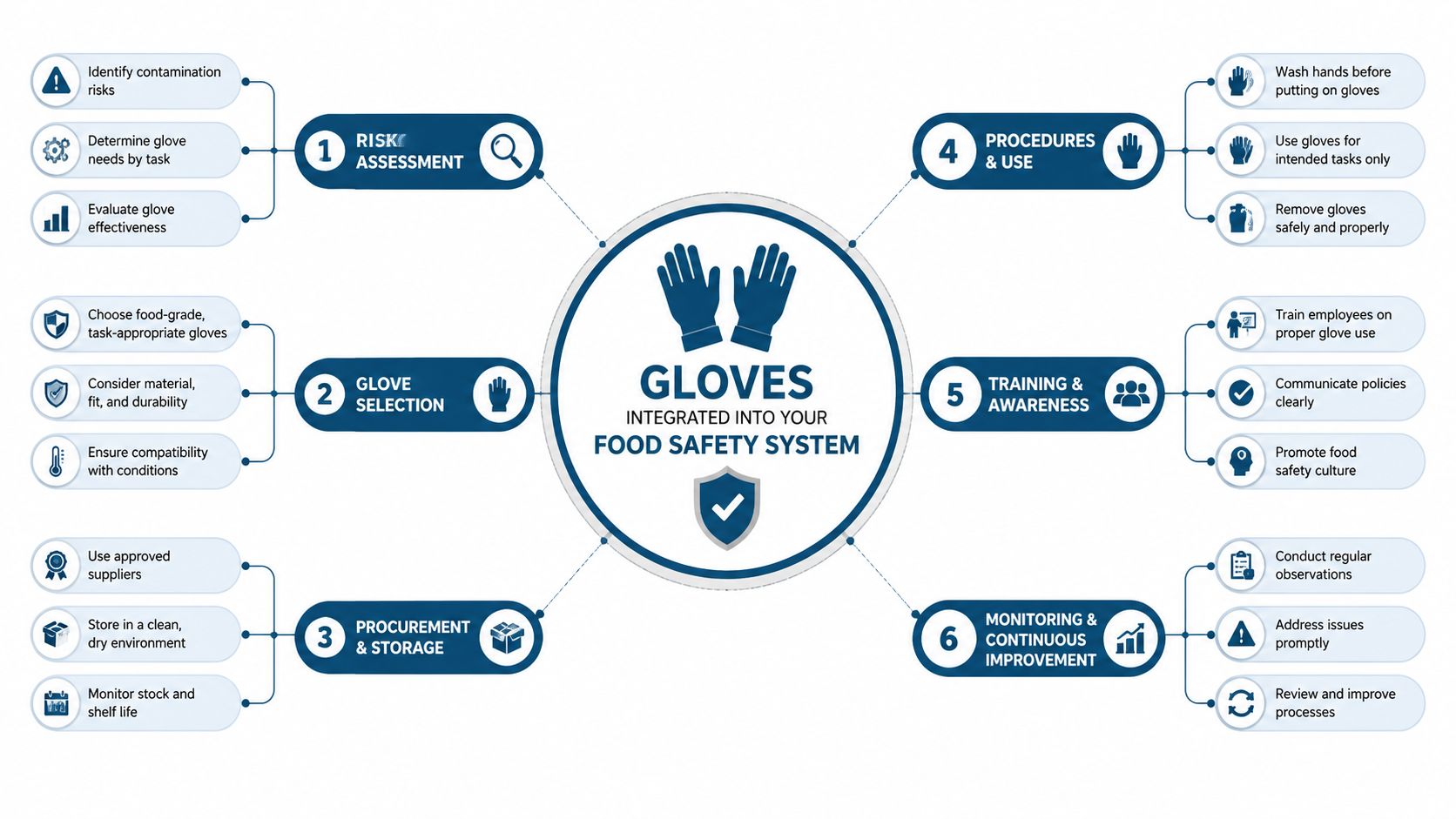
Gloves only protect food when they are built into the food safety system, not treated as a separate purchase. In New Zealand, food handling gloves are regulated as food contact materials, so their safety sits under the Food Act framework and the Australia New Zealand Food Standards Code rather than under generic PPE thinking. The glove choice, the handwashing rule, and the change trigger all need to work together in the same procedure.
Build the policy around visual control
Blue gloves are popular in foodservice because the colour stands out clearly against food and work surfaces, which helps HACCP-style visual checks. That visual separation becomes more useful when the kitchen also colour-codes stations or tasks, such as raw prep on one side and ready-to-eat assembly on the other. A practical glove policy should sit beside handwashing rules, bench sanitation, and cleaning schedules, not in a drawer somewhere.
Skin comfort matters just as much. Long shifts in the wrong material can cause irritation, sweating, or discomfort, and that often leads to more glove removal or clumsy handling. Fit matters too, especially for staff who wear gloves through repeated prep cycles or who have sensitivity concerns.
A sensible system usually covers the following:
- Task separation: raw, cooked, and cleaning duties do not share the same glove pair.
- Colour visibility: blue gloves make breaches easier to spot.
- Skin comfort: the glove has to be wearable for the duration of the job.
- Policy consistency: handwashing and glove changing need to be trained together.
- Auditability: supervisors should be able to see whether the glove system is being followed.
For operators managing chilled storage and prep flow, cold chain management practices sit naturally alongside glove policy, because both shape how safely food moves through the kitchen.
The main point is straightforward. Disposable gloves are one part of a broader food safety system. If the system is weak, better gloves will not fix it.
Task-Specific Glove Choices by Venue Type
A café, a restaurant kitchen, and an aged-care servery all handle gloves differently because their workflows are different. In cafés, gloves are often used for brief ready-to-eat handling, sandwich assembly, and pastry service, then removed as soon as staff move to money handling or cleaning. In restaurants, the same person might move from raw protein prep to plating, which makes glove change discipline more important than glove comfort alone.
How the setting changes the choice
In a hotel buffet or catering line, glove turnover can be high because staff are plating, replenishing, and clearing in quick cycles. A glove that's easy to change and easy to see can help here, but only if the team has enough stock and a clear change routine. In aged care or institutional kitchens, consistency matters even more, because the same staff member may cycle through meal prep, tray assembly, and cleanup in one shift.
The venue type shapes the glove rule:
- Cafés: prioritise quick changeovers, ready-to-eat safety, and good dexterity for small items.
- Restaurants: prioritise separation between raw prep and service tasks.
- Hotels and buffets: prioritise visibility, consistency, and enough stock to keep changes realistic.
- Aged care and institutional kitchens: prioritise compliance, comfort, and simple task segregation.
- Catering: prioritise transport of safe practices from prep kitchen to service site.
The hidden issue is that a glove can feel useful while still increasing contamination risk if the workflow is mixed. A bartender who handles garnish, then cash, then glassware, then a sandwich, needs a system that makes glove changes normal rather than optional.
One consideration regularly discussed with customers is whether the glove is supporting the staff or slowing them down. In our experience, the right glove depends on the task, but it also depends on whether the team can keep changing it at the points that matter.
Cost, Storage and Supplier Considerations
Glove buying decisions often go wrong because the focus stays on the box price instead of the cost of use. Cost per use is often more important than cost per box, especially in kitchens where gloves are changed frequently or where a poor fit drives waste. A cheaper glove that tears early, feels awkward, or encourages unsafe reuse can end up costing more in interruptions and overconsumption.
Storage matters too. Gloves should be kept in a clean, dry place away from heat and sunlight so the material stays in good condition. If boxes are left near steam, dishwashers, or sunlit storage areas, the operator is shortening the life of the stock before a single glove is worn.
What a good supply partner should provide
- Consistent availability: kitchens need a glove that can be reordered without changing the fit or feel every time.
- Food-contact clarity: the product should be clearly suitable for food handling.
- Task-specific advice: the supplier should be able to discuss prep, cleaning, and service use separately.
- Practical range: a venue should be able to choose between lighter, more dexterous gloves and sturdier options where needed.
Hospitality carries disposable glove options alongside other food-service consumables, so operators can match glove choice to the task rather than forcing one product into every station. The better question is not which glove is cheapest, it's which glove helps the team work safely, change frequently, and keep the workflow moving.
If your kitchen needs help choosing between nitrile, vinyl, or a more task-specific glove setup, Hospitality can talk through the practical trade-offs with you. Visit Simply Hospitality to find food handling glove options that suit your workflow, your staff, and the way your venue runs.