

Nitrile vs Vinyl Gloves: A Practical Guide for Hospitality
Busy kitchens, handwashing sinks, cleaning cupboards and service trays all pull from the same glove box, and that's where the wrong choice starts to cost time. A glove that tears during salad prep, feels awkward on the wrist during dishwashing, or annoys staff enough that they keep adjusting it is more than a supply issue, it becomes a workflow problem. For practical guidance on broader protective gear habits, personal protective equipment tips are a useful reminder that gloves only work when they're fitted and used properly.
The question with nitrile vs vinyl gloves is not which material is “better” in the abstract. It's which glove suits the task, the shift length, the food being handled, and the team's skin-health reality. A café doing quick assembly, a marae kitchen running long prep, and an aged-care kitchen managing frequent glove changes won't always need the same glove on every station.
| Factor | Nitrile Gloves | Vinyl Gloves |
|---|---|---|
| Typical strength in use | Better for repeated handling and tougher tasks | Better for lighter, short-duration work |
| Fit and feel | Snugger, more elastic | Looser, less elastic |
| Barrier integrity | Stronger when barrier performance matters | More limited for wear and strain |
| Best fit in hospitality | Food prep, cleaning, raw handling, longer wear | Fast assembly, low-risk tasks, frequent changes |
| Cost profile | Higher upfront cost | Lower upfront cost |
For operators who also review hygiene routines, the related guide on how to prevent cross-contamination is worth reading alongside glove purchasing decisions. Gloves are only one part of the control system, but they're often the part staff notice first when a station gets busy.
Why Glove Choice Matters More Than You Think
The wrong glove decision often happens at the busiest point, mid-service. Someone reaches for the nearest box, pulls on a pair, and keeps moving because lunch rush has started, the dishwasher is backing up, or cleaning needs to be finished before the next seating. That is usually when glove choice starts affecting food safety, comfort, and interruptions on the floor.
In hospitality, gloves are more than a purchase line. They affect how often staff stop to replace torn gloves, whether the pair stays comfortable enough for the full task, and how confidently a team can move between prep, cleaning, and service without questioning the barrier on their hands. The difference shows up in real work, not just on a spec sheet.
Practical rule: if a glove is likely to be worn through repetitive handling, choose the option that holds up better in use, not the cheapest box on the shelf.
That is why this comparison matters for cafés, restaurants, hotels, aged-care kitchens, and institutional foodservice. A glove that suits sandwich assembly may be a poor fit for meat prep or chemical cleaning, while a tougher glove may be unnecessary for a low-risk station where gloves are changed often. The right choice depends on the task, how long the glove stays on, and what the team is handling.
Operators who also think about staff training often find glove selection sits alongside broader PPE habits, especially where teams rotate across prep, cleaning, and service. If a glove makes hands sweaty, awkward, or slow to move in, staff are less likely to wear it correctly. That can undo the benefit of having gloves on at all.
The most useful way to think about nitrile vs vinyl gloves is as a station-by-station decision. One material suits the spots where durability and barrier integrity matter. The other still has a place where cost, short contact time, and frequent change-outs are the priority.
For teams reviewing hygiene routines, the related guide on how to prevent cross-contamination is worth reading alongside glove purchasing decisions. Gloves are only one part of the control system, but they are often the part staff notice first when a station gets busy.
For a wider reminder on correct fit and use, personal protective equipment tips are a useful reference when teams are moving between prep, cleaning, and service.
How Nitrile and Vinyl Gloves Are Made
Nitrile in plain terms
Nitrile is a synthetic rubber, and that matters because the material behaves more like a flexible barrier than a loose film. It stretches, then returns to shape better than vinyl, which is why it tends to feel more secure around the fingers and palm during repetitive prep. In practical terms, that extra elasticity helps during repetitive gripping, turning, pinching and wiping.
The material also tends to suit longer wear better because it keeps its structure under movement. For operators who spend time portioning, trimming, cleaning surfaces or handling fatty foods, that shape retention is one reason nitrile often feels less fragile in hand. For a useful supplier view on a common nitrile option, Matthews Nitrile Sky Blue Gloves 5.0g - 10x100 Pack is a powder-free nitrile glove described as offering snag, puncture, cut and abrasion resistance, with a longer shelf life and greater durability than latex.
One simple way to judge fit: if staff can close their hand, twist a tray, and keep decent feel at the fingertips, the glove is doing its job. If the material bunches or drifts, the station is probably asking too much of a light glove.
For teams also reviewing broader waste and purchasing choices, the guide to using Biopak sustainable products in the New Zealand hospitality industry is useful context. Glove selection sits in the same practical space, where operators weigh performance, supply habits and what staff will keep wearing through a shift.
Vinyl in plain terms
Vinyl is a PVC-based glove, so it behaves more like a light protective film than a stretchy rubber barrier. It's usually easier on upfront spend and often feels fine for tasks that are short, dry and low risk, especially when gloves are changed regularly. That makes it a practical choice for some fast-moving front-line tasks.
The trade-off is that vinyl is less elastic and more prone to deforming under repeated movement. In a real kitchen, that means a glove can start to feel loose, awkward or stressed if it's worn too long or asked to do too much. For operators comparing glove bins between stations, that's the point where vinyl's lower purchase price stops being the whole story.
Both materials can be supplied powder-free, and both are latex-free, which is why many workplaces consider them for general food service and cleaning. The deciding factor is still the work itself, because the material's behaviour under strain is what staff feel first.
Barrier Performance and Real-World Failure Rates
A café or aged-care kitchen can get through a shift with the wrong glove only until the work turns wet, fast, or repetitive. At that point, barrier performance stops being a theory and becomes a practical issue for the station, the staff member, and the task in front of them.
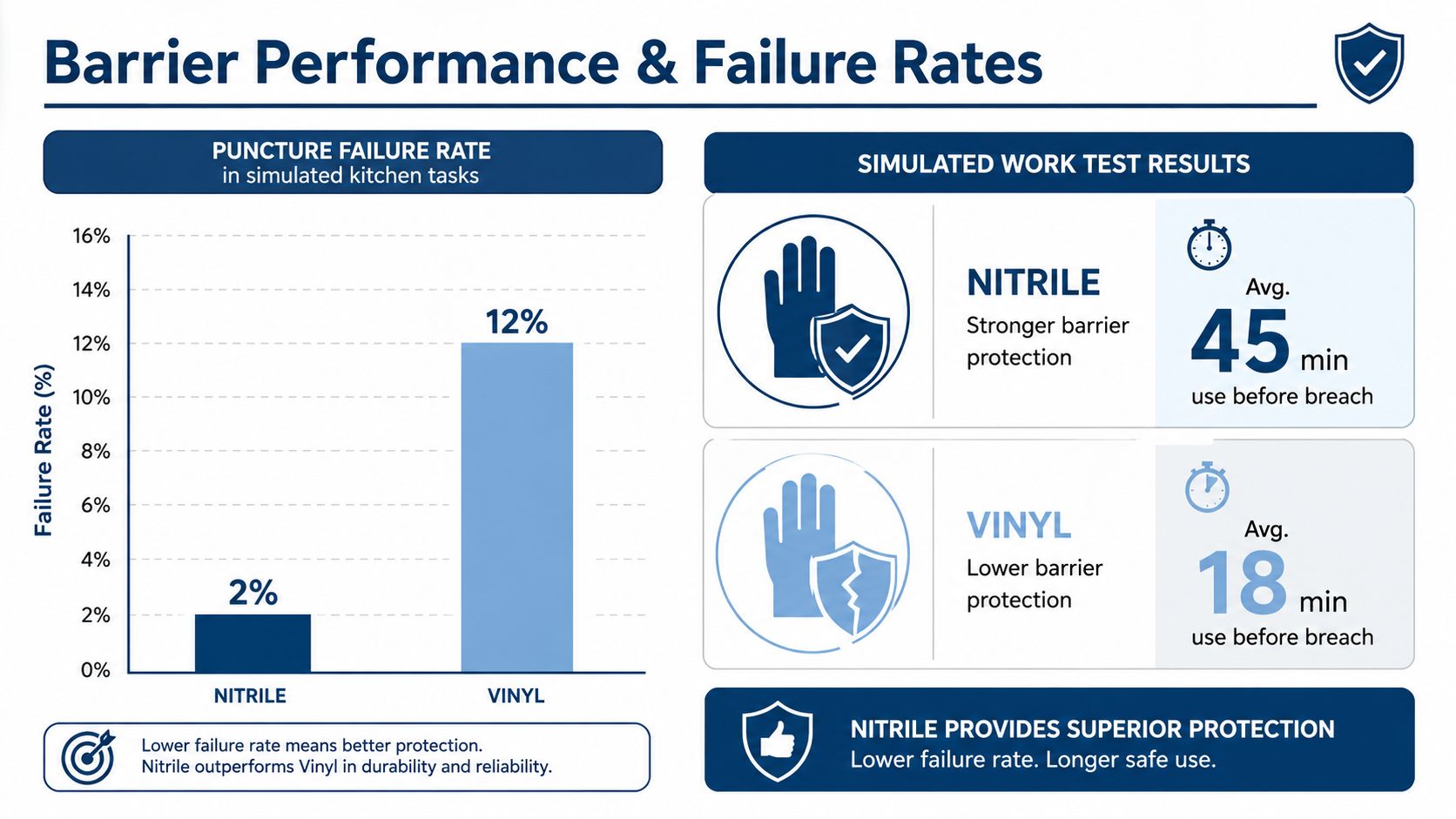
The strongest evidence in this comparison comes from controlled barrier-testing work used in infection-control and food-handling discussions. Under simulated use, vinyl failed 12% to 61% of the time, while nitrile failed only 1% to 3% of the time (PubMed study). That gap matters when a team is moving between chopping, plating, washing and restocking all day.
Another controlled study reported that, under movement exposure, nitrile's breakthrough time was about 3.5 times longer than latex and 10 times longer than vinyl. In a hospitality setting, movement matters because hands do not stay still. Staff flex, grip, wipe, twist, carry and pull throughout the shift, and that is exactly the kind of handling that stresses glove material.
What those numbers mean in a kitchen
Repeated handling is the key test. Food prep, dishwashing, cleaner switching, and glove changes all create the sort of use that raises leak and tear risk. A glove that looks fine when first donned can still develop micro-punctures or weaken with flexing, especially if the task involves wet surfaces, fatty foods or sharper packaging edges.
Food-safety commentary also notes that vinyl gloves can be up to three times more likely to spread bacteria than quality nitrile gloves in food-handling conditions, and that vinyl's polymer structure can create micro-punctures within only a few hand flexes or food-handling tasks (Food Safety article). That is the sort of issue staff will not always notice until they are already moving from one station to another.
Where vinyl still has a place
Vinyl is not useless, and that matters in a real purchasing decision. For short, low-risk tasks where gloves are changed frequently, the lower-cost option can still make sense. That may include light assembly or brief food-contact tasks where the glove does not need to endure much strain.
Where barrier integrity is the priority, the evidence leans clearly toward nitrile. In foodservice, the question is rarely whether a glove can be worn for a minute. It is whether it will still hold together after the tenth refill, the third bench wipe and a few quick glove changes.
For operators weighing whether a cheaper glove really saves money, the answer often depends on how often it has to be replaced, which is why buying once can cost less over a busy service than reissuing failed gloves across multiple stations.
Matching Gloves to Hospitality Tasks and Stations
A good glove order starts with stations, not brand loyalty. The same venue can need two glove types on the same day, because what works at the sandwich bench won't always work in the dish room or on the raw protein station. That's why a practical buying list should follow workflow.
High-contact kitchen tasks
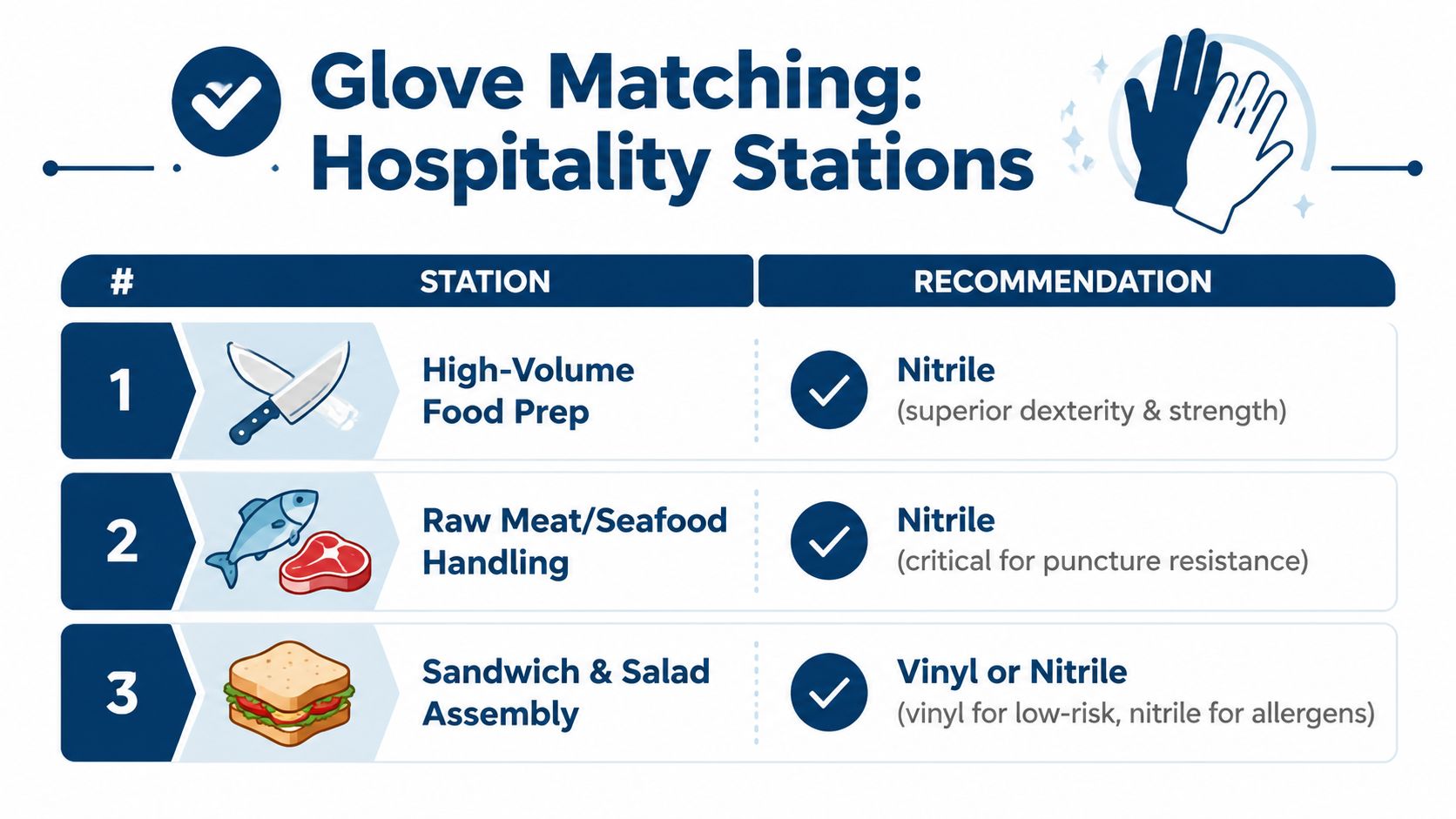
For high-volume food prep, nitrile usually earns the stronger place because the glove needs to cope with repeated motion, stretching, oil, and general wear. That includes chopping, portioning, trimming, moving between benches and handling ingredients that leave residue on the glove surface. The stronger fit also helps staff keep their grip when speed matters.
For raw meat and seafood handling, nitrile is the safer default. Puncture resistance matters more here because bones, sharp packaging edges and cold, wet product all raise the chance of damage. Food-handling guidance also notes nitrile's better performance with fatty foods and repeated strain, which makes it a better fit for these stations (Reflexx food handling guidance).
Lower-risk, high-turnover stations
For sandwich and salad assembly, vinyl can still be a sensible option if the work is light, brief and gloves are changed often. Nitrile remains the better choice where the task goes longer, the surface is damp, or the team needs a more secure fit. One internal overview on choosing disposable gloves can help teams map glove type to the level of handling in each station.
Dishwashing and chemical cleaning are a different story. Here, nitrile is usually the better call because cleaning work adds exposure to detergents, wet surfaces and sharper waste. Vinyl is more likely to become cumbersome under that kind of use.
Teams often get the best result when one glove is reserved for prep and another for short-contact service tasks. That keeps the box choice simple for staff, but still matches the glove to the job.
Accommodation housekeeping, laundry handling and aged-care or healthcare food service also tend to favour nitrile where the glove needs to stay on longer or cope with more varied handling. Vinyl can still be useful for very short, low-risk tasks, but it's a weaker fit when the station involves repeated flexing, spills or frequent cross-over between tasks.
One consideration we regularly discuss with customers is change discipline. Regardless of material, gloves should be changed whenever they're contaminated or damaged. A durable glove that stays on too long is still the wrong glove for the job.
Cost Per Box Versus Cost Per Use
A buying decision often starts with the box price, and that makes sense. Procurement teams, duty managers and owner-operators all watch spend closely, especially when gloves are used every day across several parts of a venue. The catch is that a cheaper glove can end up costing more once you count replacements, tears and the time lost when staff have to stop and reset.
Industry comparisons note that vinyl can cost 30% to 50% less per box than nitrile at scale (INTCO glove comparison). Another comparison puts nitrile at 20% to 40% more expensive per glove than vinyl (BasicMedical comparison). That price gap is real, but it still does not tell you which glove costs less in practice.
The hidden cost sits in the workflow
A glove that tears mid-task costs more than a replacement glove. It interrupts service, slows prep and can force staff to wash hands, dry off and start again. In a busy kitchen or aged-care food service area, that interruption can matter more than the saving on the box.
The cleaner measure is cost per use, not just cost per box. If a glove needs replacing more often because it fails under movement, the lower purchase price gets eaten by higher consumption and more handling time. Buying cheap vs buying once when equipment actually saves money applies the same logic many operators already use for equipment, and gloves deserve the same scrutiny.
| Factor | Nitrile Gloves | Vinyl Gloves |
|---|---|---|
| Upfront box cost | Higher | Lower |
| Durability in use | Stronger | Lighter duty |
| Tear sensitivity | Better resistance | More likely to fail under strain |
| Change frequency | Often lower for demanding tasks | Often higher for short tasks |
| Best value situation | Longer wear, higher-risk stations | Short contact, low-risk work |
Buying smarter, not just cheaper
Trialling both gloves on different stations usually gives a clearer answer than comparing catalogue prices alone. Track how many gloves a shift uses, where tears happen and whether staff complain about fit or grip. Sizes matter too, because poor fit increases waste and makes gloves more likely to come off early.
That is the point where a cheaper glove stops looking cheap. If a venue is replacing more gloves, stopping more often and handling more contamination risk, cost per use becomes the better measure.
For operators who want a practical purchasing filter, Nursing Assessment Australia's guide reinforces the same buying habit used in other care settings, choose the item that holds up in the job, then check whether the box price still makes sense after real use.
Skin Sensitivities, Comfort and Staff Compliance
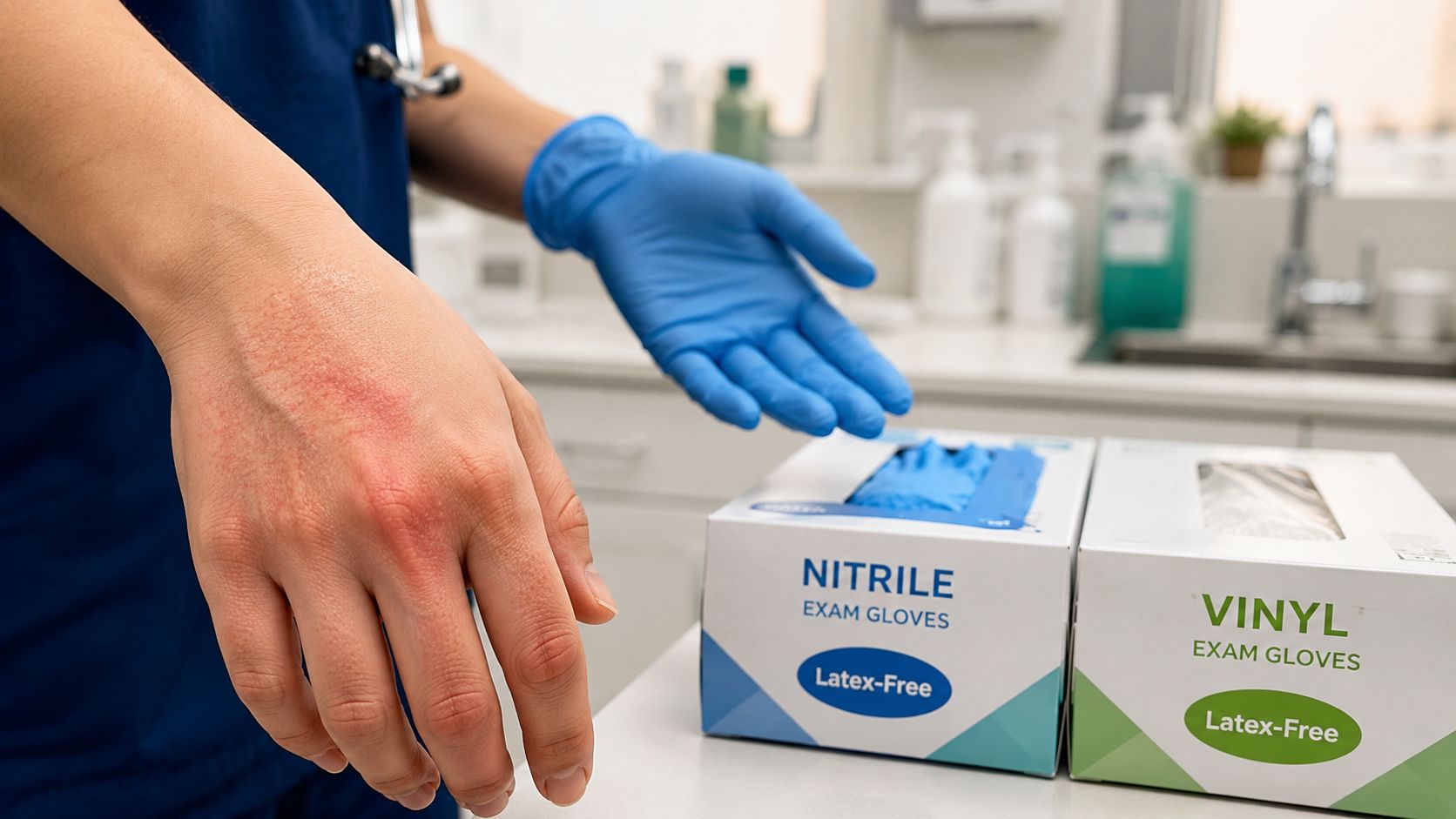
In a busy kitchen or care setting, the glove that looks cheapest on paper can become the one staff avoid wearing. Nitrile and vinyl are both latex-free, so they suit workplaces trying to avoid natural rubber latex issues, but latex-free does not mean irritation-free. Nitrile can still contribute to contact dermatitis for some users during long wear, and any glove worn for extended periods can cause skin complaints if fit, humidity and hand care are not handled properly.
What staff actually feel on shift
Comfort shapes whether gloves stay on, get changed when they should and support good hand hygiene. A glove that pinches, sweats or slips at the cuff gets adjusted, touched or pulled off more often, and that creates unnecessary contamination risk. In long prep runs, comfort is part of compliance, not a nice extra.
Vinyl can make sense for short, low-risk tasks because it may be easier on skin when the job does not call for a stronger barrier. Nitrile is usually the better general choice where gloves need to stay on longer, but sizing still has to be right. A glove that is too tight can tire the hands quickly, while one that is too loose reduces dexterity and encourages staff to fidget with it.
Practical habits that help
- Match the size to the user: A proper fit improves control and cuts down on excess glove movement during prep.
- Rotate glove types where appropriate: Short, low-risk jobs may suit vinyl, while longer or tougher tasks often suit nitrile.
- Treat hand care as part of PPE: Good washing, drying and skin care routines support glove compliance over a full shift.
- Replace gloves early when needed: If a glove is contaminated or damaged, it is finished, no matter the material.
The practical link is simple. When hands feel managed, staff are more likely to wear gloves correctly and keep up the hand-washing rhythm food safety depends on. That matters in cafés, hotels, care kitchens and accommodation settings where the same people often move between several tasks.
For operators reviewing the wider comfort picture, even something as basic as an anti-fatigue mat can improve how staff experience long service periods, which can help them stay focused on correct hygiene habits.
A Practical Decision Framework for Your Venue
The cleanest approach is to stock gloves by task, not by habit. Use nitrile as the default for demanding food prep, raw handling, cleaning and longer wear. Keep vinyl for short, low-risk tasks where cost matters and gloves are changed frequently.
If a venue runs several stations, stocking both can be the most practical option. That lets the prep team use the stronger glove where barrier integrity matters, while keeping a lower-cost option on lighter stations that don't need the same durability.
A few habits should sit above the material choice:
- Change gloves immediately if they're torn, contaminated or clearly stressed.
- Review sizes regularly so staff aren't compensating for poor fit.
- Reassess the glove mix when menus, cleaning chemicals or workflows change.
- Keep food-safety expectations clear so staff know gloves support hygiene, they don't replace hand washing.
For operators who want another operational angle on protection and absorbency in care-related settings, it is a useful reminder that barrier products only work when they match the care task.
Hospitality can help match nitrile and vinyl gloves to the station, task length and hygiene standard in your venue, whether that's a café, aged-care kitchen or accommodation operation. If the glove choice needs to balance comfort, compliance and cost per use, visit Simply Hospitality and ask for practical advice on the right disposable glove setup for your team.