

Commercial Hot Plates NZ: A Smart Investment
A lot of operators start looking at commercial hot plates when the kitchen plan is already tight. The food truck fit-out is nearly full. The café bench is short on prep space. The market stall has power limits and a menu that still needs to move fast. In that situation, the right hot plate isn't a stopgap. It's often the difference between a workable service line and a frustrating one.
For many hot plates NZ buyers, the decision comes down to four things. Power supply, footprint, cooking surface, and workflow. Food trucks, pop-up kitchens, market stalls and smaller cafés rely on compact equipment because every centimetre of workspace has to earn its place. A hot plate can handle breakfast service, overflow cooking, finishing, holding a pan station, or act as the main cooking appliance when there's no room for a larger range.
Why a Commercial Hot Plate is a Smart Investment
A commercial hot plate makes sense when space is limited but the menu still needs flexibility. That's why they're so common in smaller hospitality setups. Operators use them for eggs, sauces, sauté work, stir-fries, reheats, side dishes, and backup cooking when the main line is under pressure.
Flexibility matters more than size
A hot plate earns its keep because it can solve different problems at different stages of a business.
- Start-up phase: A food truck or pop-up may use a hot plate as a main cooking station.
- Growth phase: A café may add one to cover busy breakfast periods or lunch rush prep.
- Overflow use: A larger kitchen may use one for events, temporary menus, or extra production during peak periods.
Practical rule: Buy for the actual job the unit will do most days, not the emergency scenario it might cover twice a year.
Small footprint, real output
Many operators assume a compact cooking appliance will always mean compromise. That's not always true. The smarter approach is to match the unit to the menu and service pattern. A tight menu with well-organised prep can run very efficiently on a modest footprint.
Hospitality businesses often find the long-term value comes from choosing durable commercial equipment once, rather than replacing under-specced units later. That same thinking applies to hot plates, and it's closely aligned with the advice in buying cheap vs buying once when equipment actually saves money.
Where they work best
Commercial hot plates are especially useful in venues such as:
- Food trucks and trailers where the line needs to stay compact
- Market stalls where portability matters
- Small cafés with limited bench depth
- Temporary kitchens for events and catering
- Prep or support stations inside larger venues
The right solution depends on how the venue cooks, not just how much bench space is available. A hot plate is a smart investment when it improves production without creating power, cleaning, or workflow problems somewhere else.
Types of Commercial Hot Plates and Their Differences
Not all hot plates behave the same in service. Two units can look similar on paper and still feel completely different during a busy shift. The main trade-offs are heat response, cleaning time, durability, control style, and whether the unit suits the cookware and power available on site.
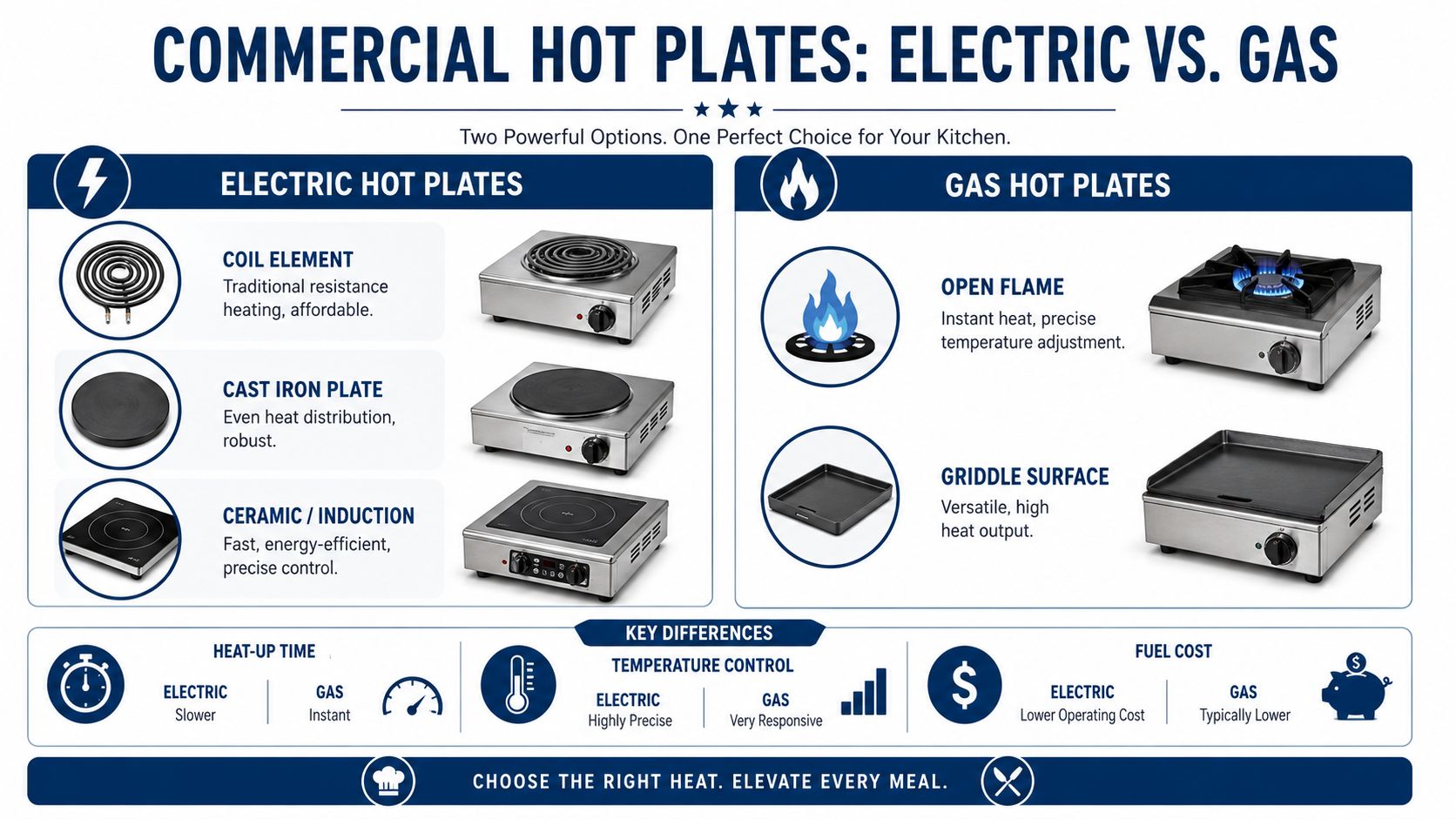
Electric coil, cast iron, ceramic and induction
Electric hot plates cover a wide range of formats.
Coil units are usually the simplest. They can be suitable for lighter-duty use, but they tend to be less pleasant to clean and don't always suit operators who need a more solid commercial feel.
Cast iron plate models are popular because they're durable and familiar. Commercial cast iron plates are valued for thermal stability, and a 1500W single plate can deliver a secondary output of 750W, which helps reduce preheat lag and energy waste compared with lower-wattage models. For operators doing batch cooking or repeated pan work, that kind of stable platform is often more useful than chasing flashy features.
Ceramic units are easier to wipe down and often feel cleaner in tighter front-facing or semi-open kitchens. They can also be a good fit where appearance matters as much as output.
Induction is different again. It heats the cookware rather than the surface, which can be a strong option for speed, cleaner operation, and tighter control, but only if the cookware is compatible. Many operators weighing that option alongside traditional hot plates will find portable induction cooktop considerations useful when comparing setups.
Many operators still prefer rotary knob controls over touch controls because they're quicker to adjust during service and easier to use with wet hands or gloves.
Gas hot plates
Gas appeals to operators who want immediate heat adjustment and independence from some electrical limitations. That can make sense in mobile or outdoor applications, but gas brings extra compliance checks, ventilation requirements, and installation considerations.
It can also be messier around the unit. Burners, trivets and surrounding surfaces generally take more effort to keep clean than a flat electric top.
Choosing by kitchen style
A useful way to compare them is by day-to-day use rather than by catalogue category.
| Type | What operators usually like | Common trade-off |
|---|---|---|
| Coil electric | Simplicity and basic portability | Slower cleaning and less refined control feel |
| Cast iron electric | Durability and stable cooking surface | Heavier unit and slower cool-down |
| Ceramic electric | Easier wipe-down and neat presentation | Surface care matters more |
| Induction | Fast response and cleaner working area | Needs compatible cookware |
| Gas | Instant adjustment and strong heat feel | More cleaning and tighter compliance requirements |
Some kitchens need a hot plate because the main cooking line is constrained. Others use one alongside specialist equipment. A pizzeria, for example, may pair pan-based finishing work with a deck oven such as the Moretti Forni Amalfi Single Deck Pizza Oven on Stand, which is handcrafted and designed for even heat distribution across the cooking surface. In that type of setup, the hot plate supports sauces, toppings, or side production rather than replacing the core oven.
Matching a Hot Plate to Your Menu and Throughput
The wrong hot plate choice usually starts with the wrong question. Operators often ask which model has the highest wattage. The better question is which model suits the menu, the rush pattern, and the available bench space.
A breakfast menu needs something different from a late-night burger setup. Stir-fry service puts different pressure on a cooking surface than warming sauces or running a pan for cabinet top-ups. Throughput isn't only about heat. It's also about whether staff can work cleanly, turn pans efficiently, and keep service moving without bottlenecks.
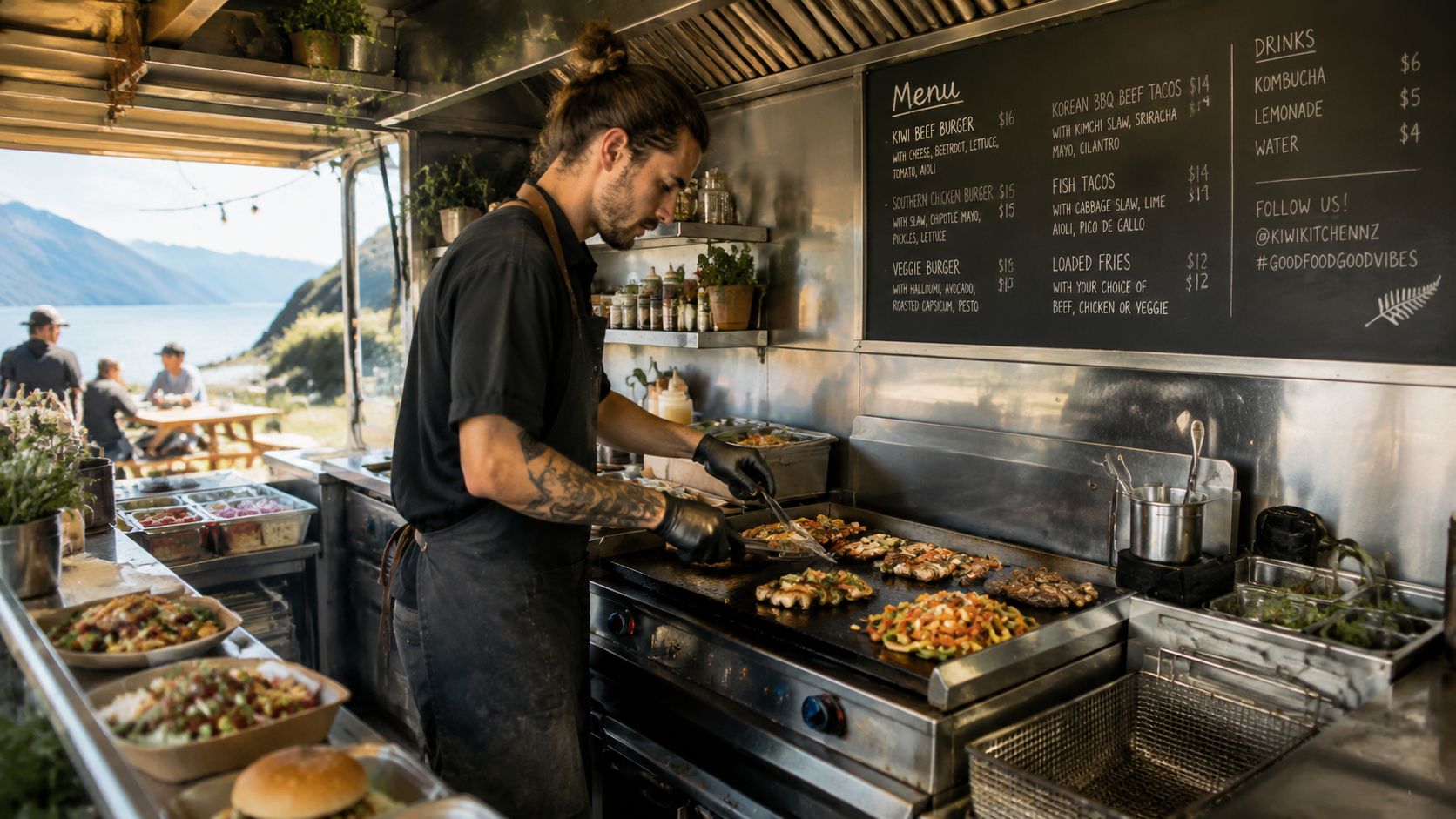
Food trucks and compact kitchens
Food trucks are one of the most common examples. Bench space is tight, movement is restricted, and every item has to contribute to production. In those environments, Simply Hospitality regularly supplies 300 mm, 400 mm and 600 mm commercial hot plates because those sizes give operators a strong balance of cooking capacity and compact footprint.
That size range works well because it lets operators preserve room for prep, refrigeration access, plating, and underbench storage. Many operators find that going larger on paper can slow service if the unit crowds the line or blocks other tasks.
Menu-first buying works better
A useful way to think about sizing is to map the hot plate against the jobs it will do in the busiest hour.
- Breakfast-focused menu: Eggs, bacon pans, beans, sauces, toasted sandwich finishing
- Lunch café menu: Reheats, grilled fillings, sides, sauté pans
- Food truck burger menu: Onion pans, sauce heating, egg station, secondary pan work
- Asian casual menu: Noodles, stir-fries, sauce pans, rapid pan turnover
Operators planning equipment around regular service patterns often benefit from planning equipment for consistent meal service, especially when the kitchen has to produce repeatable output from a very compact line.
A common consideration is whether one larger unit is better than two smaller cooking zones. In tight kitchens, two independent zones often give staff more control over service flow.
What doesn't work well
A few buying mistakes show up repeatedly.
- Oversizing the unit: The footprint steals prep room and creates line congestion.
- Undersizing the surface: Staff end up queueing pans and losing service speed.
- Ignoring the menu: A unit suited to sauces won't necessarily suit fast pan turnover.
- Buying on appearance alone: A neat looking top doesn't help if it doesn't fit the work pattern.
The right solution depends on what's being cooked, how many portions need to move during peak periods, and how much clear working room remains once the unit is in place.
Understanding Power Sizing and Installation Needs
A common issue seen in smaller venues is buying a hot plate that the site can't reliably support. That's especially common in pop-up kitchens, older cafés, temporary stalls, and mobile setups where several appliances may be sharing a limited electrical load.
Power sizing sounds technical, but the practical question is simple. Can the venue run the hot plate during real service, at the same time as everything else that needs to be on?
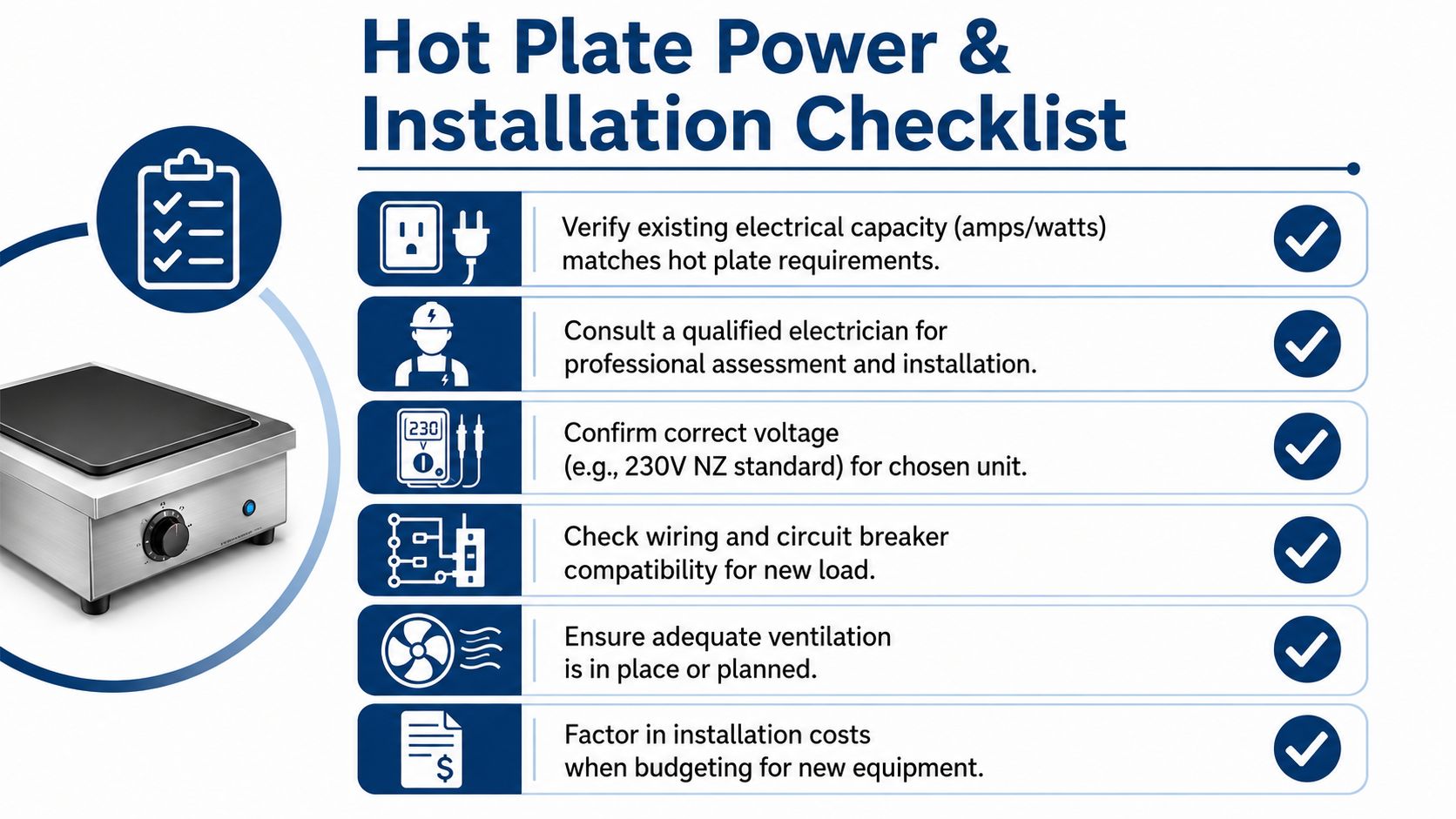
What wattage means in practice
High-output electric hot plates in New Zealand typically operate at 220 to 240V. A dual ceramic plate unit with 1200W per plate, or 2400W total, can reduce preheat times by up to 35% compared with lower-wattage models, according to high-output electric hot plate data. That can matter in busy service because shorter preheat and faster recovery help the station get into production sooner.
That said, more power isn't automatically the right answer. A small operator using a standard outlet may get more reliable day-to-day performance from a unit that matches the site's available supply, rather than the most powerful model available.
Questions to settle before buying
Many pop-up kitchens choose a practical middle ground. They want enough output for continuous service, but they also need a unit that will run reliably from the power they have access to.
Check these points early:
- Existing supply: Confirm what electrical capacity is available at the exact installation point.
- Other equipment on the circuit: Fridges, microwaves, fryers, kettles and coffee gear all matter.
- Duty pattern: Occasional pan heating is different from continuous lunch rush cooking.
- Plug-in or electrician-installed: Some units may need professional installation rather than simple plug-in use.
Operators adding heat-producing equipment should also review extraction and airflow. Commercial kitchen exhaust hood planning is often part of the same decision, especially in compact kitchens where one new appliance can change the whole heat load of the line.
Don't choose a hot plate in isolation. Choose it as part of the full kitchen load.
Bench, cable and access realities
Installation isn't only about watts and voltage. Bench placement matters just as much.
A hot plate needs enough surrounding room for safe use, pan movement, cleaning access, and workflow. If the cable route is awkward, the bench is unstable, or the unit blocks other stations, the cooking line will feel compromised even if the electrical side is technically correct.
A smaller, well-matched unit often outperforms a larger one in real service because staff can move around it properly. That's why matching the hot plate to the menu, expected volume and available supply usually produces a better result, as opposed to chasing the highest-powered model.
Safety Compliance and Maintenance in NZ Kitchens
A hot plate has to fit the compliance environment as well as the menu. In New Zealand kitchens, that means checking electrical suitability, ventilation, food-safe cleaning routines, and, for gas units, legal certification.
Ignoring those basics usually creates trouble in the same places. Inspections, breakdowns, unsafe work habits, and harder cleaning at the end of service.
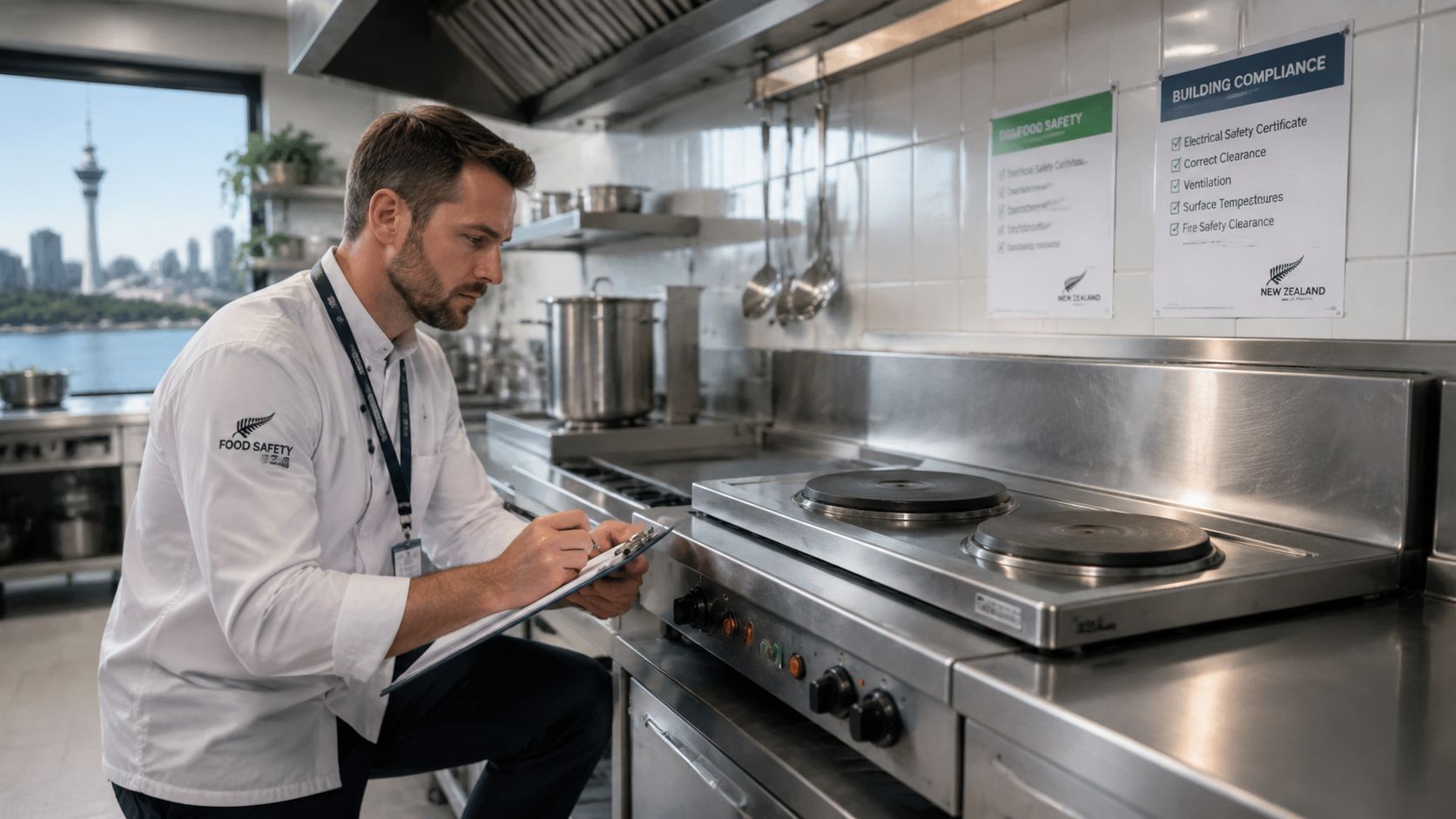
Gas checks and ventilation
For gas hot plates, one rule is imperative. All gas appliances sold in New Zealand must be certified for LPG compliance under the Gas (Safety and Measurement) Regulations 2010 and display a safety compliance label with the flame logo, as outlined in New Zealand gas appliance certification requirements. If that isn't clear at the point of purchase, the operator should stop and verify it before installation.
Ventilation also matters. Commercial kitchen extraction in New Zealand must comply with AS/NZS 1668.1, and kitchen operators need regular cleaning routines for baffle filters and canopy surfaces, plus professional extraction cleaning and annual inspection requirements, as described in commercial kitchen compliance guidance.
Portable units and temporary sites
Mobile operators often assume any portable hot plate is automatically acceptable for temporary food service. However, it can be less straightforward. Existing guidance for temporary sites isn't always clear on whether portable coil, ceramic, or cast iron units meet inspection expectations in every situation, particularly under Food Act requirements for mobile trading. That means operators should check local council and licence expectations before relying on a portable setup for regular service.
Waikato District Council's food premises guidance also notes that all sink units must have a continuous supply of piped hot water at a minimum of 63°C while the premises is in use, which can affect how temporary and mobile kitchens are set up. That requirement is outlined in food premises basic setting-up requirements.
Daily maintenance that actually helps
Cleaning routines don't need to be complicated, but they do need to be consistent.
- Wipe-down after service: Remove grease, spills and food debris before they bake on.
- Check controls and surfaces: Rotary knobs, edges and seams collect residue quickly.
- Inspect leads and plugs: Damage here should be dealt with immediately.
- Keep ventilation routine disciplined: Heat and grease around a hot plate affect the wider kitchen.
For operators reviewing staff procedures, this external guide on expert advice on workplace electrical safety is a useful practical reference alongside site-specific compliance advice.
A hot plate that's easy to clean gets cleaned more consistently. That matters just as much as output in a busy kitchen.
A Checklist for Choosing Your Next Commercial Hot Plate
A good buying decision usually comes from asking the right questions before comparing models. Operators don't need the biggest unit or the most features. They need the unit that fits the kitchen, the menu, and the service pattern without creating unnecessary constraints.
Questions worth answering first
-
What will it cook most often
Eggs, pans, sauces, noodles, burger toppings, finishing work, or backup production all place different demands on the surface. -
What does peak service look like
The busiest hour matters more than the quiet parts of the day. -
How much bench space can the venue spare?
Include pan handles, staff movement, and access for cleaning. The unit footprint is only part of the space it uses. -
What power is available at the exact install point
Many problems start when buyers assume a nearby outlet will be enough. -
Will the unit stay in one place or move regularly
Portability changes the priorities around weight, cleaning, storage and setup time.
Shortlist with practical trade-offs in mind
Before buying, it helps to write a brief list of must-haves and nice-to-haves.
| Must-have | Why it matters |
|---|---|
| Suitable power requirement | Prevents service interruptions and installation surprises |
| Enough cooking area | Supports the menu without crowding the line |
| Commercial-grade build | Better suited to repeated daily use |
| Simple controls | Faster adjustment during rush periods |
| Cleanable design | Reduces end-of-day labour and hygiene issues |
A common mistake is focusing on one specification while ignoring the rest of the operating picture. Larger isn't always better. Higher wattage isn't always better. Cheaper isn't always cheaper once replacement and workflow problems are factored in. That broader buying mindset is covered well in the biggest equipment buying mistakes we see.
Final buying lens
The best commercial hot plate for hot plates NZ searches is usually the one that supports the menu cleanly, fits the bench properly, and runs reliably on the available supply. That's what makes it useful over time.
If a venue is deciding between several formats, a clear brief will usually narrow the options quickly. Menu, throughput, space, portability, controls, cleaning and installation should all be settled before the order goes in.
If your business is weighing up commercial hot plates, bench cooking equipment, or a wider fit-out decision, Simply Hospitality can help assess the menu, space and power constraints before you buy, so the equipment suits the way the kitchen operates.