

How to Clean Stainless Steel Without Damaging It
A bench wiped after service can look clean under kitchen lights, then show streaks, water marks, and a faint rainbow sheen the next morning. That's the usual moment operators start searching how to clean stainless steel, often after a stronger chemical has made things worse. The reliable answer is simpler. Remove soil first, wash gently, rinse, dry properly, and sanitise food-contact surfaces separately where required.
The Basic Stainless Steel Cleaning Method
Learning how to clean stainless steel starts with a plain fact. Stainless steel is durable, but it's not maintenance-free, and its protective passive layer can be damaged by harsh abrasion or unsuitable chemicals. For most benches, sinks, appliances, and prep surfaces, mild detergent, warm water, a soft cloth, and thorough drying handle everyday soil without harming the finish.
Begin by removing loose food, grease, and debris so the cloth isn't pushing grit across the surface. Wash with warm water and a suitable mild detergent, moving in the direction of the visible grain on brushed finishes. Pay extra attention to joints, corners, handles, seams, and other places where residue collects and a quick wipe misses.
Rinse with clean water where the product label requires it, because detergent left behind dries into streaks and can attract more soil. Dry with a clean microfibre cloth rather than letting water sit. That drying step reduces water spots and stops moisture pooling around welds, taps, and upstands.
Cleaning Is Not Sanitising
Cleaning and sanitising do different jobs. Cleaning removes grease and organic material, while sanitising is a separate step for food-contact surfaces and only works properly after that soil is gone. New Zealand building guidance identifies stainless steel as suitable for food-preparation surfaces because it can be maintained in a hygienic condition, as set out in the Ministry of Business, Innovation and Employment food preparation guidance.
Where a sanitising spray is used, it needs to be labelled for food-preparation areas and left for its stated contact time. Wiping it off immediately defeats the purpose. The Ministry for Primary Industries, or MPI, advises cleaning equipment and utensils with hot water and detergent and cleaning work surfaces as you go to minimise cross-contamination.
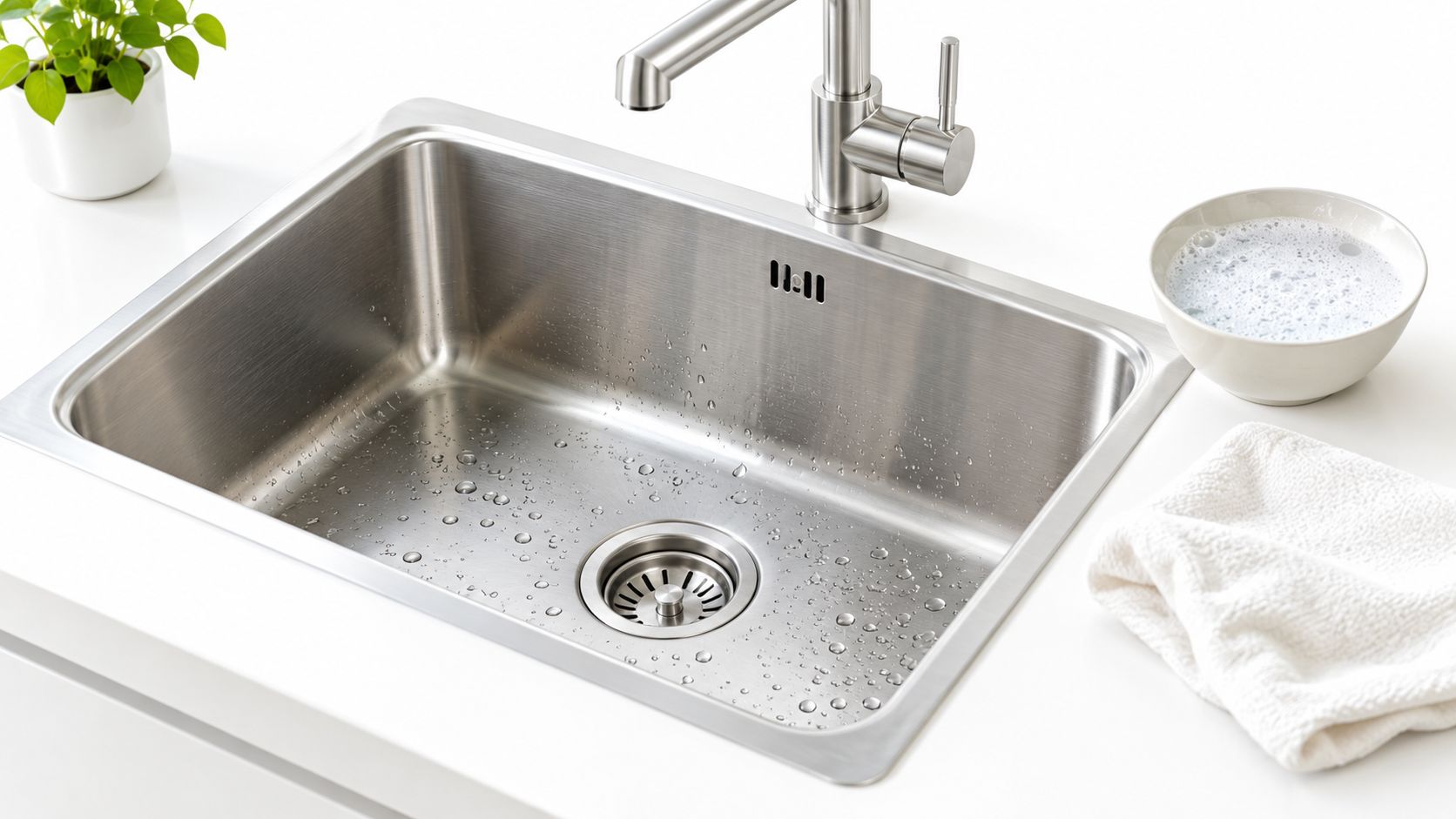
A short kit covers most venues and homes:
- Microfibre cloths: Use clean cloths for washing and separate dry cloths for finishing.
- Non-abrasive sponges or pads: Choose pads approved for stainless steel, not general scourers.
- Mild food-grade detergent: Match dilution to the label rather than guessing.
- Food-area sanitiser where required: Keep it distinct from cleaners and polishes.
Manufacturer instructions always take priority over general advice, especially for coated, polished, or specialist finishes. Readers comparing finishing products can also check a separate stainless steel cleaner and polish guide for context on how cleaners and polishes differ, while still checking food-contact suitability on the label.
Wash gently, rinse properly, and dry every time. That habit prevents more problems than periodic aggressive scrubbing ever fixes.
Removing Common Stains, Grease and Fingerprints
Most marks don't need a stronger chemical. They need the right method for that type of soil. Fingerprints are mostly skin oil, grease is cooking residue, and white spots are usually mineral deposits left after water evaporates. Treating all three the same way wastes time and can damage the finish.
Matching the Method to the Mark
Fingerprints and smudges usually lift with mild detergent, warm water, and a clean microfibre cloth. A compatible stainless steel cleaner can help on non-food-contact exteriors such as fridge doors, provided the label suits the finish. Buff lightly with the grain and don't leave excess product sitting on the surface.
Cooking grease needs a detergent or degreaser formulated for kitchen soil, plus dwell time. MPI operational guidance allows detergent adequate time before scrubbing, rinsing, and draining, with separate steps for scale where needed, as described in the MPI wet-cleaning sequence guidance. That sequence includes rinsing with cold or warm water at up to 60°C to help prevent protein coagulation on heavily soiled equipment. A separate commercial grease removal guide offers useful background on breaking down built-up kitchen grease, although food-contact areas still need food-appropriate products.
Water spots respond first to washing and complete drying. Persistent mineral build-up may need a suitable mineral-deposit remover used exactly as directed. Stuck-on food softens with warm water and time, which is safer than chipping at it with metal tools. Tea and coffee staining around sinks and beverage stations usually needs gentle detergent cleaning first, then a compatible product only if the mark remains.
Discolouration needs diagnosis before treatment. Heat tint, dried chemical residue, and early corrosion can look similar at a glance, but they don't share the same fix. Polishing over corrosion hides a surface problem that will keep trapping soil.
Stain Diagnosis and Treatment Guide
| Problem | Recommended approach | What to avoid |
|---|---|---|
| Fingerprints | Mild detergent and microfibre, wiped with the grain | Dirty cloths that redeposit oil |
| Grease and cooking oil | Food-appropriate detergent or degreaser with dwell time | Undiluted concentrate left to dry |
| Water spots | Wash, rinse, dry fully; mineral remover if needed | Abrasive powders |
| Stubborn food residue | Warm soak, then non-abrasive pad | Metal scrapers and steel wool |
| Tea and coffee marks | Gentle detergent first, then compatible cleaner | Chloride-heavy products |
| Discolouration | Identify heat, residue, chemical, or corrosion cause first | Sanding before diagnosis |
Cloth choice matters more than many operators expect, because a saturated cloth spreads grease in a thin film. Practical guidance on selecting and rotating cloths is covered in this overview of dish cloth options for hospitality use.
What Not to Use on Stainless Steel Surfaces
Stainless steel protects itself through a thin, chromium-rich passive film. Damage that film and the surface becomes vulnerable to staining, pitting, and rust-like marks. The frustrating part is that the damage often appears weeks after the cleaning mistake, so staff rarely connect the two events.
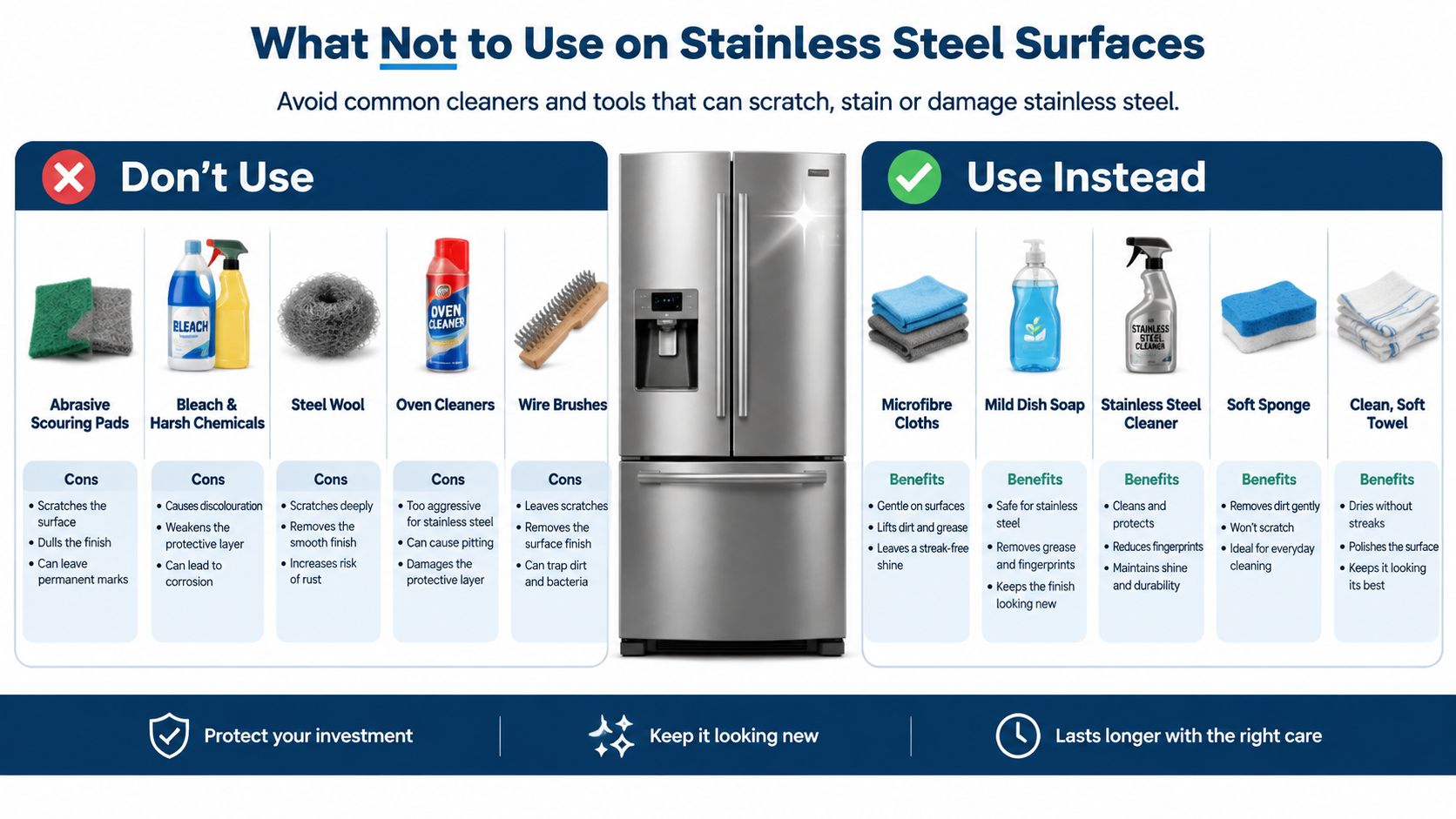
Steel wool and harsh scouring pads scratch the finish and can leave tiny fragments of ordinary steel embedded in the surface. Those fragments rust and create orange speckling that looks like the stainless itself is failing. Scratches also hold soil, making every future clean harder.
Chloride-containing products, including some bleach formulations where they're unsuitable, can break down the passive film and cause localised pitting. Salt residue does similar work over time, particularly around sinks, dish areas, and coastal venues. Strong acids, caustic chemicals not approved for the surface, and abrasive powders create the same pattern of chemical attack plus surface roughening.
Habits That Cause Quiet Damage
- Leaving chemicals to dry: Concentrated residue keeps reacting with the surface long after cleaning ends.
- Using dirty cloths: Contaminated cloths transfer oil, grit, and old chemical across an otherwise clean bench.
- Scrubbing across the grain: Cross-grain marks show badly on brushed finishes and are difficult to blend out.
- Improvising dilution: Stronger mixes don't clean faster if contact time and rinsing are wrong.
Never mix cleaning chemicals. The combination can create safety risks for staff and unpredictable reactions on metal. WorkSafe NZ chemical safety expectations and product safety data sheets should guide storage, labelling, and handling in commercial settings.
Household remedies deserve caution rather than blanket trust. Vinegar, baking soda, and similar kitchen staples aren't universally suitable for every grade and finish, and a remedy that suits a domestic pan may not suit a polished commercial fridge door. Safer product selection starts with understanding commercial cleaning chemicals and their intended uses.
MPI guidance for meat-contact equipment notes that food-contact surfaces should be inert to the product and to cleaning materials, and that corroded or pitted surfaces become harder to clean, as explained in the MPI equipment materials guidance. Protecting smoothness is therefore a hygiene issue, not just an appearance issue.
Cleaning Stainless Steel Commercial Kitchen Equipment
A commercial kitchen doesn't have one stainless surface. It has benches, sinks, fridge doors, oven panels, dishwasher skins, and shelving, each collecting different soil. Applying one routine to all of them is where venues either under-clean food-contact areas or over-treat decorative exteriors.
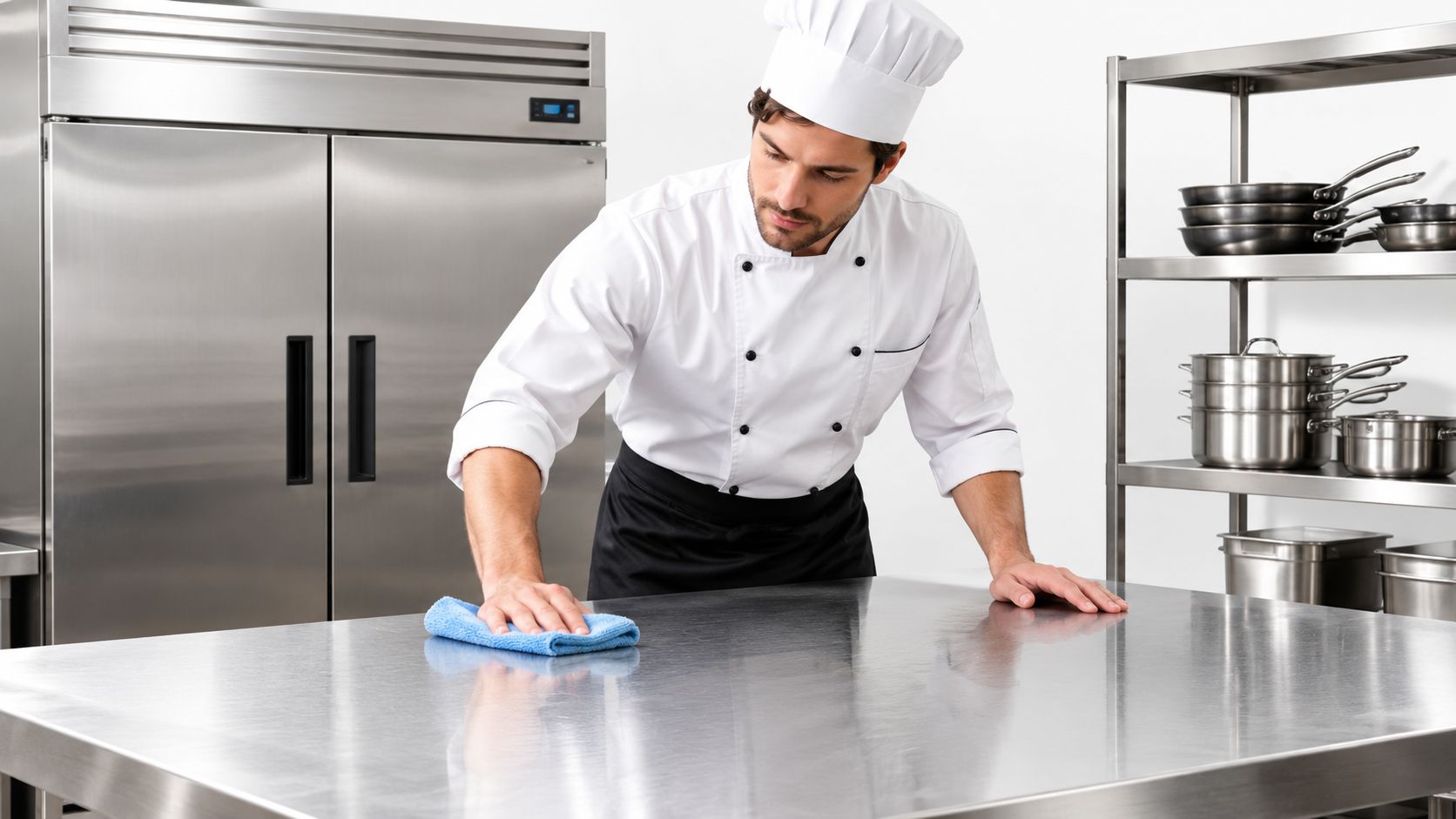
Stainless steel benches need grease and food residue removed first, then appropriate food-contact sanitising where required. MPI states sanitising is effective only after thorough cleaning because soil and organic matter can shield microorganisms, as set out in the MPI cleaning and sanitising guidance. Operators should record the chemical name, dilution, contact time, responsible person, and verification method in the site Good Operating Practice procedure. Any claim about microbial reduction should come from the sanitiser manufacturer's test data for the exact conditions used on site, not from general marketing language.
Commercial sinks collect food residue, detergent film, and mineral deposits around taps and waste outlets. Wash all surfaces, rinse thoroughly, and dry edges where water sits. A separate descaling step suits mineral build-up better than scrubbing harder with a general detergent.
Appliances and Storage Surfaces
Refrigeration exteriors from brands such as SKOPE and Atosa mainly need fingerprints, splashes, and handle soil removed from accessible stainless panels. Cleaning shouldn't interfere with seals, ventilation areas, or condenser maintenance requirements in the manual. Handles deserve daily attention because they're touched constantly during service.
Ovens and cooking equipment from ranges such as Waldorf and Blue Seal need exterior grease removed with products the manufacturer approves for that finish. Internal oven cleaning follows model-specific instructions and shouldn't be improvised with general stainless cleaners. Heat, baked-on oil, and control panels each change what's appropriate.
Dishwashers and glasswashers from Classeq and Winterhalter have accessible doors and outer panels that can be wiped down, but internal wash systems, dosing, and descaling follow specialist procedures. Treating the exterior like a bench is fine. Treating the interior the same way isn't.
Shelving and storage racks need routine washing and drying so flour dust, oil mist, and spills don't harden into residue. Undersides and rear rails are commonly missed until a deep clean exposes the build-up. Venues planning that work can use a structured kitchen deep cleaning checklist to assign those less visible areas instead of relying on memory.
Finish quality affects all of this. Smooth welds, cleanable joins, and accessible corners reduce the effort needed to keep any of these surfaces hygienic.
Treating Rust Spots and Corrosion on Stainless Steel
The name misleads people. Stainless steel resists corrosion better than ordinary steel, but it can still develop rust-like staining, tea staining, and pitting. Assuming it can't corrode leads operators to polish over early damage or scrub aggressively, which usually makes the affected area rougher.
Common causes include contamination from ordinary steel tools or pads, chloride exposure from salt and unsuitable chemicals, moisture pooling in joints, and residue left to dry on the surface. Coastal conditions sharpen the risk in New Zealand. BRANZ identifies sea-salt chlorides as the main pollutant affecting corrosion in New Zealand, and buildings in severe marine environments require more frequent washing to remove salt deposits, as noted in the BRANZ metal corrosion fact sheet.
Surface Staining Versus Real Damage
Superficial staining sits on the surface and often follows contact with a carbon steel scourer, wet utensils, or salty residue. It may respond to thorough washing and a manufacturer-approved stainless steel restoration product used on a small test area first. Keep the work gentle, follow the grain, rinse completely, and dry.
Pitting feels rough or forms small holes, and that's actual surface loss rather than a removable mark. Scrubbing won't restore metal that's gone. Pitted food-contact areas can also trap residue, so specialist assessment, professional treatment, or replacement may be the honest answer.
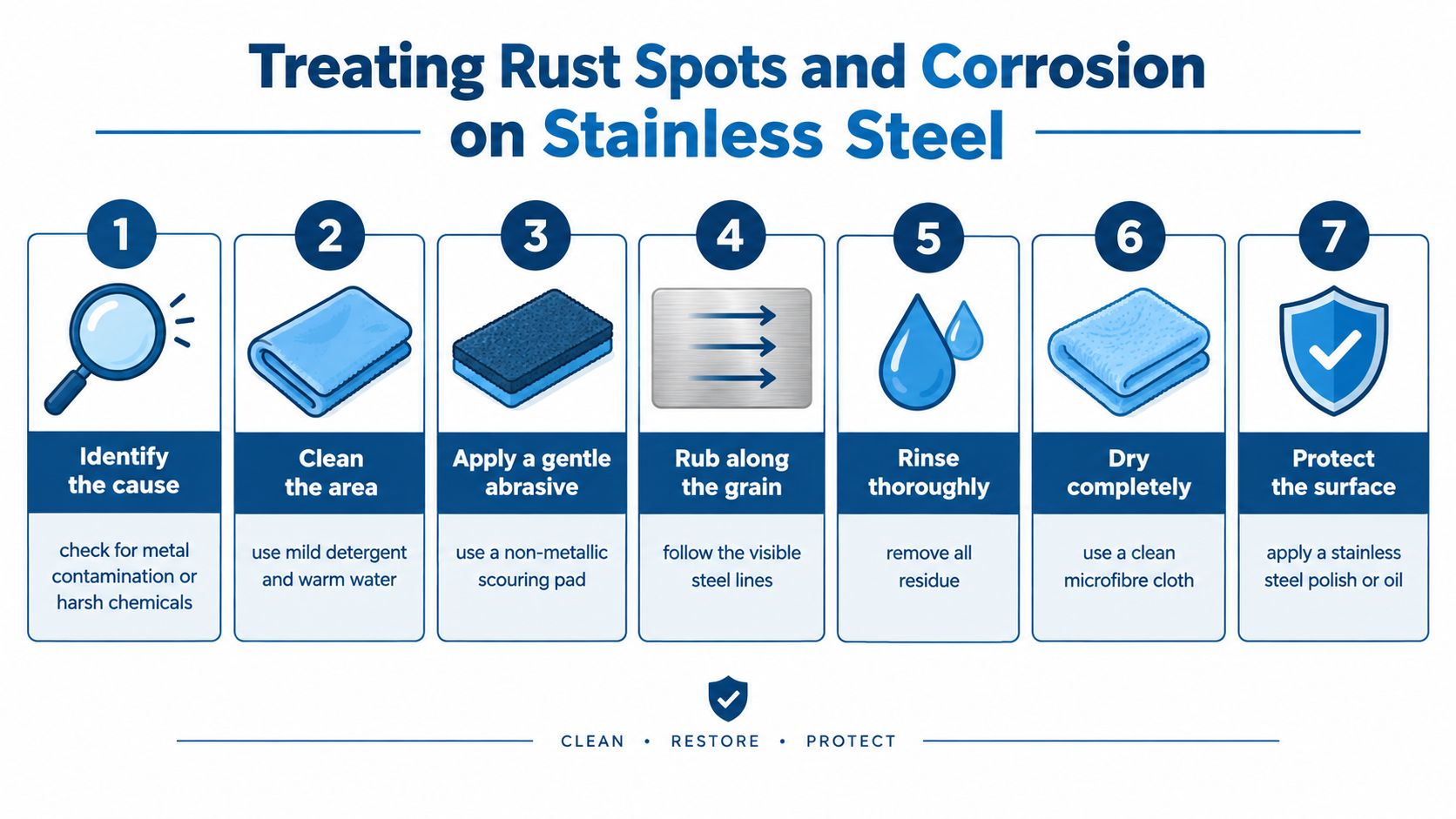
Coastal venues, and kitchens with doors opening to outdoor service areas, benefit from a preventive routine rather than cosmetic polishing. Wash salt film off frequently with clean water and mild detergent, rinse, and dry so residue doesn't concentrate as it evaporates. Inspect welds, joins, undersides, splash zones, and areas near dishwashers, where warm moisture and chlorides combine.
Practical rule: A shiny surface can still hide chloride attack underneath. Polish improves appearance, but salt removal and drying prevent corrosion.
Household remedies aren't universally safe across grades and finishes, and aggressive sanding can permanently change a brushed or polished surface. Confirm suitability with the manufacturer before attempting restoration beyond gentle cleaning. Repeat staining in the same spot usually signals an ongoing cause, such as a leaking chemical dispenser, a steel utensil stored wet on the bench, or salt tracking indoors, and fixing that cause matters more than repeated treatment.
Why Stainless Steel Grades and Finishes Matter for Cleaning
Grade numbers sound technical, but they translate into a practical question. How much chloride exposure, chemical contact, and moisture will the surface handle before maintenance becomes difficult? Grade, environment, and cleaning habits work together, so no grade excuses poor care.
Grade 304 is the common workhorse for commercial benches, sinks, and food equipment. MPI requirements for dairy premises generally specify austenitic stainless steel grade 304 or better for product-contact surfaces, finished to a surface roughness of no more than 1 micrometre (Ra ≤ 1 µm), as detailed in the MPI dairy premises requirements. That smoothness matters because rough, pitted, or creviced surfaces give food residue and microorganisms more places to lodge.
Grade 316 offers higher resistance in chloride-heavy environments, which makes it relevant for severe marine exposure and some aggressive processing settings. It still needs salt and residue removed regularly. Higher corrosion resistance changes the margin for error, not the need for cleaning.
Finish Changes Technique
- Brushed stainless steel: Clean with the visible grain so marks blend into the existing lines.
- Polished stainless steel: Shows streaks and fingerprints readily, so rinsing and dry buffing matter more.
- Satin finishes: Sit between brushed and polished in reflectivity and still need non-abrasive care.
- Other commercial finishes: Follow the fabricator or equipment manual, because texture changes product suitability.
Fabrication quality shapes long-term hygiene as much as grade does. MPI dairy specifications require welds and joints to have corrosion resistance equivalent to the parent metal and to be smooth, without crevices, pits, or oxidation. Seals must also resist cleaning and disinfecting agents at normal concentrations and temperatures. Documented procedures must explain how product-contact surfaces are effectively cleaned and sanitised before production.
That dairy benchmark is stricter than a café bench needs, but the principle transfers. Cleanable joins, smooth weld finishing, and corners that a cloth can reach reduce daily labour and hygiene risk. Buyers comparing fabrication quality can read more about stainless steel benches for New Zealand commercial kitchens and the related Stainless Steel Fabrication NZ guidance before specifying new fit-out work.
For meat-contact equipment, MPI identifies stainless steel from the 300 series or better as the preferred material. Whatever the grade, cleaning methods need chemical compatibility with that surface. Preserving the original smooth finish protects cleanability across the equipment's service life far better than restoring shine after damage.
How Often Stainless Steel Should Be Cleaned
A café bench gets wiped fifty times a day. The same style of bench in a seasonal camp kitchen might sit untouched for months. Both need a schedule, just different ones, because frequency should reflect use, visible contamination, food-contact risk, and the food safety system governing the premises.
New Zealand guidance does set a clear baseline. Food-contact surfaces and equipment should be cleaned on every day they're used, with cleaning as you go recommended, as stated in the MPI food safety guidance on daily cleaning.
Clean as you go means running the full sequence between tasks on prep benches, especially when moving between different foods. Remove debris, wash with hot water and detergent, rinse where required, sanitise according to the label, and allow the surface to drain or air-dry. Repeated lightly, that routine stops soil baking into a film that later tempts staff toward harsh pads.
Daily cleaning suits prep benches, sinks, splashbacks, fridge handles, and other frequently touched surfaces. Weekly attention can suit shelving, appliance exteriors, and less-used areas, adjusted for actual soil rather than the calendar. Periodic deep cleaning covers undersides, rear legs, hard-to-access joins, accumulated grease, and mineral deposits, and a kitchen deep cleaning checklist helps venues schedule that work deliberately rather than reactively.
Idle equipment needs attention too. Benches, sinks, and preparation tables unused for several days or across seasons should be cleaned before reuse to remove settled dust and dirt. A quick visual wipe before opening falls short of that standard, particularly for seasonal venues, marae kitchens used for events, and school or camp facilities that sit closed between terms.
Cleaning Frequency by Surface
| Surface | Typical cleaning needs | Key considerations |
|---|---|---|
| Food prep benches | Clean as you go and daily | Sanitise after cleaning where required |
| Sinks and splash zones | Daily, plus descaling as needed | Dry edges to limit mineral and salt residue |
| Fridge and oven exteriors | Daily handles, weekly panels | Follow model-specific manufacturer guidance |
| Shelving and storage | Weekly, adjusted for soil | Include undersides and rear rails |
| Idle or seasonal equipment | Clean before reuse | Remove settled dust and inspect for corrosion |
| Hard-to-access areas | Periodic deep cleaning | Schedule rather than waiting for visible build-up |
These are general recommendations, not universal regulatory schedules. Venues operating under a food control plan or national programme should align frequency with their documented procedures. Building that rhythm into rosters is easier with a planned cleaning programme for café and hospitality operations.
Choosing Products for the Job
Product selection works best when each item has one clear job. Cleaners remove soil, sanitisers are applied after cleaning on appropriate food-contact surfaces, and polishes improve appearance on suitable non-food-contact areas. Confusing those roles is a common issue in hospitality businesses, particularly when a polish is sprayed on a prep bench because it looks streak-free.
- Mild general-purpose detergents: The default for routine washing of benches, sinks, and exteriors.
- Commercial kitchen degreasers: Suited to cooking oil and heavy grease, diluted and rinsed as directed.
- Stainless steel surface cleaners: Useful for fingerprints on compatible exteriors, subject to finish guidance.
- Mineral-deposit removers: Reserved for scale and water marks rather than everyday soil.
- Food-contact sanitisers: Selected for food-area use, with label contact time followed exactly.
- Microfibre cloths and non-abrasive pads: Replaced or laundered before they start redistributing soil.
Stainless steel polish isn't automatically suitable for food-contact surfaces. Where an anti-rust film or surface treatment is approved for food-contact use, MPI maintenance compound guidance expects the minimum effective amount and wiping or adequate draining so no transferable residue remains. Check surface compatibility, intended use, dilution, contact time, rinsing, food-contact suitability, and safety precautions on the label and safety data sheet. Dilution rates and contact times come from the label, never from guesswork.
Relevant ranges stocked through Simply Hospitality include Matthews Packaging & Hygiene cleaning products, commercial cleaning chemicals, stainless steel cleaners and degreasers, cleaning cloths and accessories, and stainless steel benches and sinks. Match each product to the specific surface and task before ordering.
Stronger isn't automatically better. Excess chemical strength can damage stainless surfaces and create wastewater problems without improving hygiene if the wash, sanitise, and dry sequence is skipped.
Greasy Wash Water and Local Council Rules
Wastewater is the part many cleaning guides ignore. Greasy wash water shouldn't be treated as harmless just because the bench looks clean. Palmerston North guidance requires commercial food premises to reduce fats, oils, and grease entering sewers, use correctly sized grease-removal systems, screen sinks, avoid pouring oil down drains, and use detergents with a working pH of 6–10, as summarised in the MPI guidance covering cleaning and wastewater considerations. Other councils require trade-waste consent and controls on pretreatment, so venues should follow local consent and grease-trap requirements.
The practical habit is straightforward. Scrape and wipe grease into appropriate waste before wet cleaning, collect solids, use correct dilution, and keep concentrated chemicals and oily sludge out of stormwater. Chemicals also need storage away from food, and cleaning tools need to be clean themselves.
Frequent light cleaning usually beats sporadic heavy cleaning for both hygiene and surface life. Soil removed early needs gentler chemistry, less scrubbing, and less water. The safest general approach remains mild detergent, a soft cloth, thorough rinsing, careful drying, and more targeted treatment only where the stain, grade, finish, and manufacturer instructions justify it.
For help matching detergents, degreasers, food-contact sanitisers, cloths, and stainless equipment to a venue's actual workload and finish types, contact the team at Simply Hospitality. A short conversation about the surfaces, soil, and cleaning routine involved usually prevents the expensive mistake of buying a stronger chemical when a gentler, better-matched system would do the job.