

Cleaning Programmes for Cafés: A Practical Guide
The café is full, orders are moving quickly, and the cleaning list says only “clean kitchen before close”. That instruction is too vague to guide a busy team. Cleaning programmes for cafés work better when they identify what needs cleaning, how it must be cleaned, how often the task occurs, who owns it, and how completion is verified.
A practical programme supports food safety without creating pointless paperwork. It separates service tasks from end-of-day work, assigns deeper cleaning to quieter periods, and turns routine cleaning into an opportunity to spot damaged seals, blocked filters, leaks, grease accumulation, and other equipment problems before they disrupt service.
Designing a Practical Café Cleaning Framework
A café cleaning programme should begin with the venue's actual workflow, not a generic checklist. Map each zone, including food preparation, cooking, coffee service, warewashing, refrigeration, storage, floors, waste, and customer touchpoints. Each area carries different contamination risks, surfaces, traffic patterns, and equipment demands.
Build every task around five decisions:
- What needs cleaning: Identify the exact bench, appliance, handle, sink, shelf, floor area, or food-contact surface.
- How it's cleaned: Specify the method, approved chemical, equipment, dilution, contact instructions, rinsing requirement, and drying method.
- How often: Set the timing, such as during service, after use, at close, weekly, or during a scheduled periodic clean.
- Who is responsible: Assign the task to a role or shift rather than “the team”.
- How completion is verified: Use a sign-off, manager check, corrective action, or relevant food-safety record.
“Clean coffee station” remains too open to interpretation. List the steam wand, group head, drip tray, grinder exterior, bench, handles, and milk-contact equipment. Mark which items require attention after each use and which belong to closing duties.
Practical rule: If two staff members could interpret a checklist item differently, the item needs more detail.
Build the programme around workflow
Cleaning duties must fit around production without compromising food safety. Food-preparation benches and other food-contact surfaces need attention between tasks, particularly after handling raw, cooked, ready-to-eat, or allergen-containing foods. Coffee and beverage stations need frequent checks because milk, grounds, water, and customer contact create separate cleaning demands.
The physical layout affects whether staff can complete those tasks properly. A venue with one sink for preparation and warewashing needs a defined sequence so dirty equipment, chemicals, and clean utensils do not compete for the same space. NZ guidance requires suitable facilities and appliances for cleaning and sanitising, including a cleaner's sink for filling and emptying buckets and rinsing mops, plus sufficient hand-wash basins with warm running water. MPI's food safety guidance also covers reliable water supply, pressure, and temperature as part of cleaning capability.
Use separate cloths, labelled equipment, controlled chemical storage, and a clear flow from dirty work to clean work. These controls reduce cross-contamination and make tasks easier to complete during a busy shift.
For a new fit-out, review kitchen layout ideas that save time during service before fixing equipment and sink positions. For outsourced work, Pine Country hospitality cleaning resources can help separate routine staff duties from specialist cleaning scopes.
Cleaning Versus Sanitising in NZ Food Safety
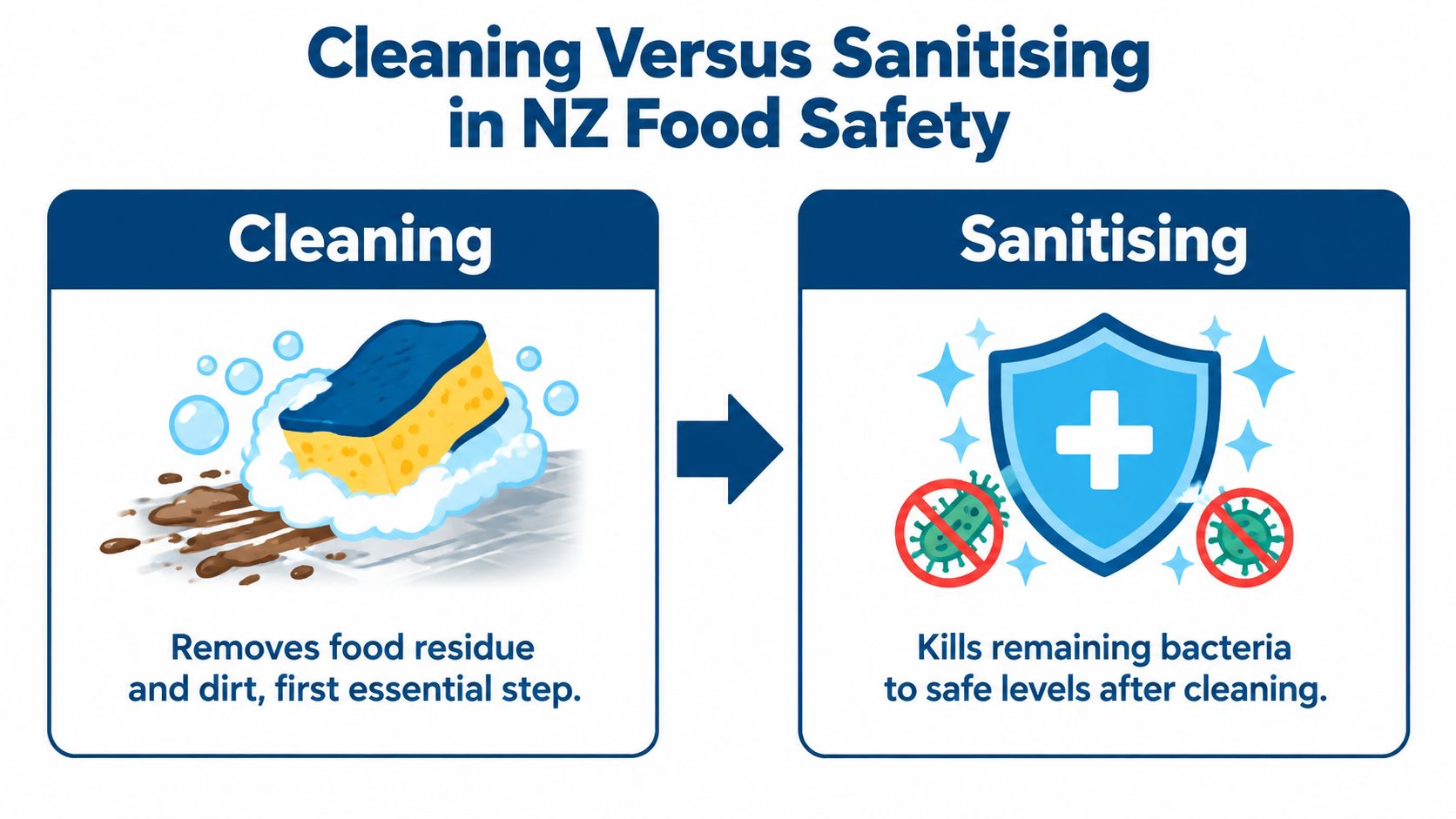
A bench can look clean and still be unsafe for food preparation. Cleaning removes food residue, grease, dirt, and other visible soil. Sanitising follows cleaning and reduces microorganisms to safer levels. Applying sanitiser to a greasy surface can limit contact with the bench and leave the intended control incomplete.
New Zealand food safety requirements treat cleaning and sanitising as operational controls. Businesses need procedures for facilities, equipment, and the premises that keep food safe and suitable under the Food Act framework. For the regulatory context, see food safety regulations in NZ.
A workable sequence is:
- Remove loose material: Clear food, coffee grounds, crumbs, and other debris.
- Clean: Choose a detergent or cleaning chemical suited to the soil and surface.
- Rinse where required: Remove loosened residue and chemical remains according to the product instructions.
- Sanitise: Apply an approved food-contact sanitiser as directed on its label.
- Allow the required contact: Keep the surface wet for the product's stated application time.
- Dry or air-dry correctly: Prevent recontamination by avoiding unsuitable cloths.
This sequence should sit inside a zone-based programme. A coffee bench, preparation surface, dishwashing area, and floor do not carry the same risks, so the chemical, tool, and timing may differ. Cleaning also gives staff a practical inspection point: residue around seals, damaged surfaces, loose fittings, or standing water can indicate an equipment or layout problem.
Food-contact and allergen control
Food-contact surfaces and equipment must be cleaned every day they're used, according to MPI food service and retail guidance. Staff may need to clean between products or tasks, particularly when switching between allergen-containing and allergen-free preparation.
Wiping and rinsing alone do not provide reliable allergen control. Use separate equipment or an effective cleaning process before preparing food that must be allergen-free, and change towels after each task. Food-grade chemicals must be used according to their label instructions.
New Zealand's earlier food hygiene rules also treated cleaning as a control around food handling. The Food Hygiene Regulations 1974 required tea towels, dish cloths, and dish mops used in an eatinghouse to be washed in warm detergent water and then immersed in boiling water for not less than 5 minutes at least once daily. They restricted ordinary wet floor cleaning during food handling unless a suction cleaner or another dustless method was used, and required protective clothing for workers. These measures show why cleaning schedules should protect food from contamination, rather than serve as cosmetic housekeeping.
For a plain-language comparison, operators can read the sterilization blog VirusFAQ.com.
The same principle applies to specialist food-handling accessories. The Inox Macel One-Point Fixed Meat Hook - 160 x 6mm is a stainless-steel, one-point fixed hook for controlled handling in food-processing environments, with a manufacturer-listed maximum load of 70kg. Its smooth form supports repeatable cleaning, but the tool still needs a defined cleaning and sanitising method suited to its use.
Structuring Tasks by Frequency and Zone
Universal task times don't work across cafés. Venue size, equipment, menu, staffing, service pattern, and seasonal workload all change the labour involved. A sound programme divides work by frequency and risk, then gives every task a named owner.
During service and after use
During-service tasks protect the areas that can affect food safety and customer experience immediately:
- Preparation benches: Clear debris, clean, and sanitise food-contact surfaces between tasks and whenever contamination occurs.
- Coffee stations: Keep steam wands, group areas, portafilters, drip trays, milk equipment, and surrounding benches under control throughout service.
- Spills: Clean spills promptly so staff and customers aren't exposed to avoidable slip hazards.
- Sinks and warewashing: Keep basins, taps, splash zones, and surrounding areas clear enough for the next task.
- Touchpoints: Monitor handles, switches, fridge pulls, taps, and other frequently touched surfaces.
After-use cleaning should happen when a piece of equipment or utensil leaves a task, rather than allowing residue to harden until closing. Cloths should be changed after each task or replaced with disposable cloths, and cleaning equipment should be stored away from food, as outlined in MPI's National Programme guidance.
End of day
The close-down list should cover:
- Benches, food-contact surfaces, and preparation areas.
- Cooking equipment, cleaned according to manufacturer instructions.
- Sinks, dishwasher surfaces, and surrounding splash areas.
- Floors, swept and cleaned using a method that suits the service environment.
- Waste containers and waste areas.
- Frequently touched surfaces.
- Coffee equipment and beverage work areas.
Floors shouldn't be left as an afterthought. WorkSafe guidance for cafés and restaurants emphasises immediate spill response and cleaning floors outside normal working hours where appropriate. End-of-day clean-up planning can help operators arrange tasks so staff aren't forced to choose between safe cleaning and getting home.
Weekly and periodic work
Weekly cleaning should reach areas that daily routines miss:
- Move accessible equipment and clean beneath or behind it.
- Clean shelving and storage areas.
- Inspect refrigeration seals and accessible filters.
- Deep-clean suitable cooking equipment.
- Check less visible areas for grease and food accumulation.
- Examine waste storage and hard-to-reach corners.
Periodic deep cleaning can include drains, walls, ceilings, extraction components, difficult-to-access equipment surfaces, and specialist work outside normal staff capability. A useful regular cleaning scope can help operators separate routine tasks from work requiring a specialist contractor.
Selecting the Right Chemicals and Equipment
The strongest chemical isn't automatically the right one. Selection should begin with the soil, the surface, and the food-contact requirement. Coffee oils, milk residue, baked-on grease, scale, general dirt, and organic waste need different approaches, while stainless steel, plastic, rubber seals, glass, flooring, and painted surfaces may react differently to the same product.
Matthews cleaning and hygiene products are relevant where a café needs professional products for dishwashing, surface cleaning, warewashing, and other commercial applications. Hospitality supplies the Matthews range alongside cleaning and hygiene options, but the product choice should follow the application rather than the brand alone.
A practical selection check includes:
- Identify the residue: Coffee oils and milk deposits aren't treated in exactly the same way as cooking grease.
- Confirm surface compatibility: Check whether the chemical is suitable for stainless steel, plastic, rubber, glass, flooring, or equipment finishes.
- Check food-contact requirements: Follow the product's instructions for rinsing, sanitising, and safe return to food preparation.
- Follow dilution and application directions: Staff shouldn't guess concentration or assume that more product improves performance.
- Use appropriate protective equipment: Gloves, eye protection, ventilation, and handling controls depend on the chemical and its label.
- Store chemicals away from food: Keep containers identified, secured, and separated from ingredients, packaging, and clean equipment.
Homemade mixtures have no place in a commercial food environment. Combining products can create dangerous reactions, unknown concentrations, surface damage, or residues that staff can't reliably control. The Simply Hospitality article on effective cleaning chemicals in NZ hospitality provides a useful starting point for matching professional products to hospitality applications.
Commercial warewashing also needs its own control. Dishwasher detergent, rinse aid, and related products should be compatible with the machine and used according to the chemical and equipment instructions. A café shouldn't judge chemical performance only by whether dishes look clear. Persistent film, poor drying, odour, or changing wash results should trigger an equipment and chemical review.
Using Cleaning as Routine Equipment Inspection
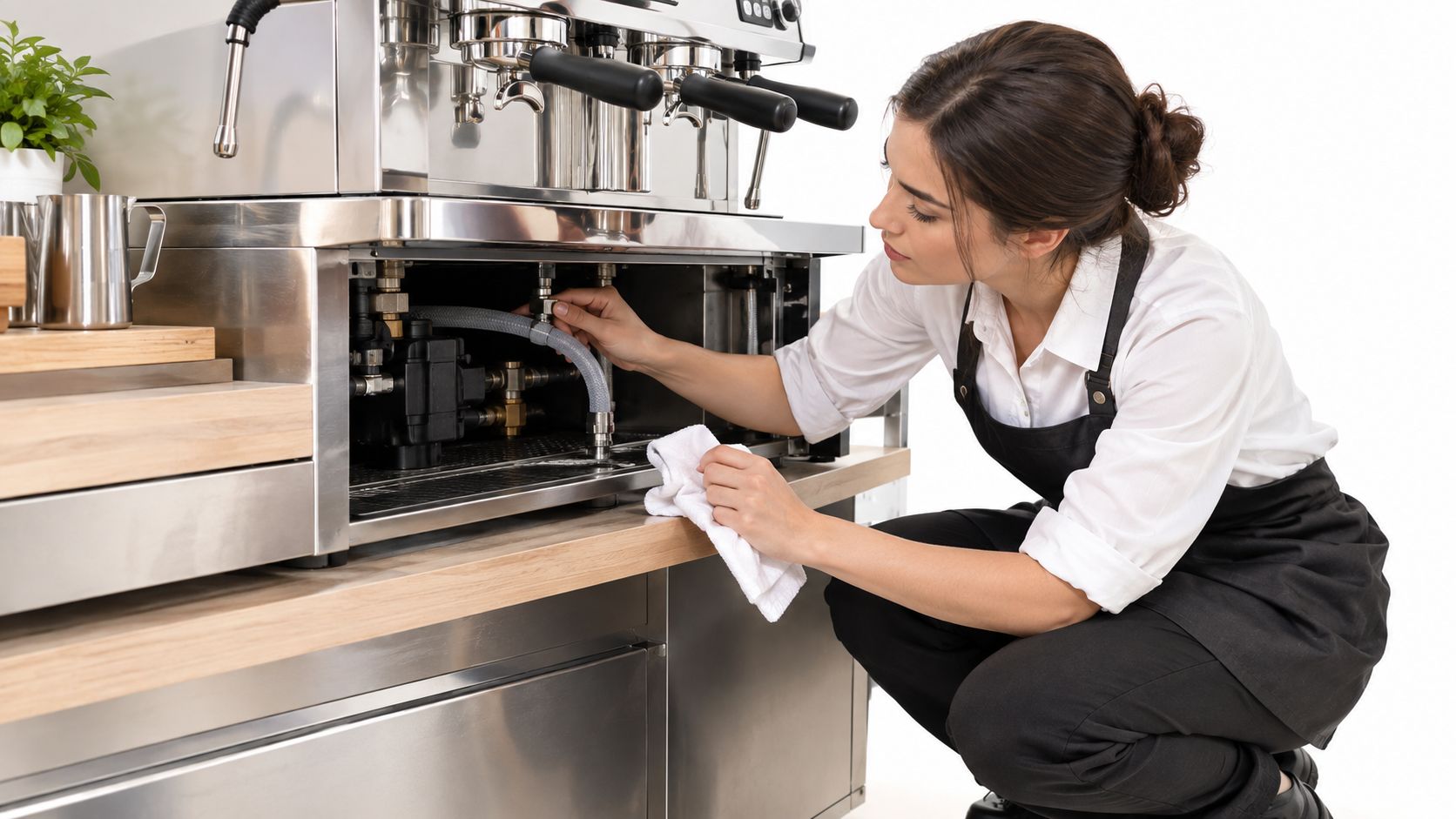
A cleaning programme can function as a basic inspection round without becoming a maintenance manual. Staff see equipment more closely when they remove trays, wipe seals, clear filters, and clean behind accessible units. That regular access helps them notice changes that might otherwise remain hidden.
The programme should include a simple reporting instruction: clean the area, record the issue, protect food safety, and escalate anything that needs repair. Staff shouldn't dismantle equipment beyond their training or manufacturer instructions, but they should know what to report.
Common observations include:
- Damaged or loose refrigerator seals.
- Food accumulating behind equipment.
- Blocked dishwasher filters.
- Unusual grease build-up.
- Leaks around sinks, hoses, or appliances.
- Deteriorating dishwasher results.
- Cooking equipment that no longer performs consistently.
- Pest activity or evidence of access.
- Damaged food-storage containers.
- Blocked or deteriorating accessible filters.
Operational insight: A missed cleaning area is often also a missed inspection area.
Give staff a reporting path
A schedule works best when it distinguishes between a task that can be corrected immediately and a fault requiring management action. A staff member can remove loose food from beneath accessible equipment, for example, but a damaged seal, electrical concern, leak, or recurring dishwasher fault should be reported rather than improvised around.
Coffee equipment deserves particular attention because milk residue and coffee oils can affect hygiene, appearance, and operation. Cleaning the steam wand, group area, portafilter, drip tray, grinder exterior, and nearby bench gives staff a natural opportunity to identify blocked outlets, damaged components, unusual residue, or changes in performance.
The same approach applies to refrigeration. Cleaning shelves and inspecting seals can reveal poor closure, food leakage, or storage containers that no longer protect contents. Operators considering additional oversight can review information about commercial refrigeration monitoring systems, while keeping the cleaning schedule focused on the physical checks staff can complete safely.
Verification and Continuous Improvement
A completed box doesn't prove that a task was done properly. Staff may sign a retrospective checklist from memory, or a task may be technically completed but fail to address the actual problem. Verification should test whether the programme is practical, understood, and effective for the café's real workflow.
A manager or shift leader can verify completion through short walk-throughs, direct observation, and review of recurring issues. The check shouldn't focus only on whether names and ticks appear. It should look at whether food-contact surfaces are clean, cleaning equipment is stored correctly, chemicals are controlled, waste areas are managed, and problem areas have received the right method rather than a quick wipe.
Use records to change the programme
Useful controls include:
- Assigned responsibility: Each task has a person or role attached to it.
- Completion records: Staff record work when it occurs, not retrospectively.
- Manager verification: A responsible supervisor checks selected areas and follows up exceptions.
- Corrective actions: The record states what happened when a task wasn't completed or a fault was found.
- Recurring-issue monitoring: Repeated grease, food accumulation, pest activity, or poor dishwasher results prompts a schedule review.
- Relevant food-safety records: Cleaning records support the café's documented food-control procedures.
The schedule should change when the evidence says it needs to change. If a high-touch area is repeatedly missed during service, the task may need a different owner or a clearer location on the list. If a weekly clean repeatedly finds food behind a machine, the venue may need a more suitable equipment layout, access plan, or periodic deep-clean arrangement.
A checklist is only useful when it changes staff behaviour and helps management correct recurring problems.
Cleaning programmes for cafés should remain proportionate. More cleaning isn't automatically better if the method damages equipment, wastes chemical, or removes staff from higher-risk tasks. The better programme directs attention to food-contact surfaces, allergen controls, high-touch areas, spills, waste, and equipment zones where residue or poor access creates a genuine operational concern.
For advice on matching café cleaning chemicals, warewashing supplies, storage, and related commercial equipment to a venue's layout and workload, contact Simply Hospitality through its hospitality equipment and cleaning range. The team can help operators compare suitable options, check application requirements, and build a practical purchasing plan around the cleaning programme already in place.