

Kitchen Wash Basin Stainless Steel: A Complete Guide
The largest item the team will wash should drive the basin choice, not the size of the plates or the empty space on the bench. A basin that looks generous on paper can still be the wrong fit if it won't take stock pots, roasting trays, or GN pans without awkward angles and constant splashing.
That is why kitchen wash basin stainless steel selection starts with the job, then the geometry, then the finish. In busy commercial kitchens, the wrong basin turns into daily friction fast, while the right one disappears into the workflow and just keeps working.
Why the Largest Item in the Sink Should Drive the Whole Decision
A commercial stainless basin should be judged by the biggest thing it needs to handle, not by how neat it looks in a quote. That sounds obvious, yet it's the mistake that causes the most regret on fit-outs. A sink can appear wide enough for plates, then frustrate staff the first time a stock pot has to be tipped in at an angle or a full GN pan catches on the rim.
Practical rule: size the basin around the item that creates the most trouble at peak service, not the item that is easiest to wash.
What actually goes wrong on service day
In a real kitchen, the problem is rarely the first wash. It's the second and third, when dirty items start stacking up and the bowl becomes a bottleneck. If the basin is too shallow, water splashes back. If it's too short, trays don't sit flat. If it's too narrow, the operator ends up washing one corner at a time, which slows everything down.
The question that matters first is direct. What is the largest item we're going to wash in this sink? If the answer is a stock pot, a roasting tray, or a GN pan, the specification has to reflect that from the start. That one decision affects bowl depth, overall unit length, whether drainer space is needed, and whether a single bowl will do the job at all. For operators planning around large cookware, big cooking pots are the benchmark, not dinner plates.
Why this framing changes the quote
Once the largest item is identified, the rest of the buying conversation becomes much sharper. The sink is no longer being sold as a generic stainless fixture. It becomes a working tool with a clear task, whether that task is handwashing, utility washing, or heavier pot-wash duty.
That matters because commercial kitchens don't get to waste space. A basin that is slightly too small can still be installed, but staff will feel the compromise every day. A basin that is correctly sized for the heaviest item usually feels easier to clean, easier to drain, and easier to use under pressure.
The Three Sink Roles Every Commercial Kitchen Should Separate
Commercial kitchens work better when sink roles are split out clearly. A handwash basin, a potwash sink, and a prep or utility sink each have a different job, and trying to make one basin cover all three usually means at least one task is done badly. That is the point where workflow slows and hygiene discipline becomes harder to maintain.
Handwashing is not pot washing
New Zealand food-premises expectations favour proper handwashing facilities with hygienic, easy-to-clean construction. In practice, that means a dedicated basin that stays clear, stays accessible, and doesn't get pulled into food prep or dish duties. A separate handwash point makes the workflow cleaner and reduces the temptation for staff to use the wrong sink in a rush.
A potwash basin has a different burden altogether. It handles heat, detergent, heavy utensils, and a lot of physical movement. That's where a stainless bowl earns its keep, but it also needs enough room around it for lifting, rinsing, and setting items down without blocking other tasks.
A utility or prep sink sits somewhere between the two. It can help with produce washing, utensil rinse-down, or general back-of-house use, but only if it's positioned so it doesn't cross paths with handwashing and pot washing at the wrong moments. The key is separation, not just volume.
The three roles in a real layout
- Handwash basin: Keep it dedicated. This is the basin staff should reach for without thinking, and it should stay physically separate from food and pot washing.
- Potwash sink: Build it for load and movement. Heavy cookware needs a bowl that suits the biggest item, plus surrounding space to manage wet items safely.
- Prep or utility basin: Use it to relieve pressure. A separate utility point keeps the main wash area from becoming overloaded during service.
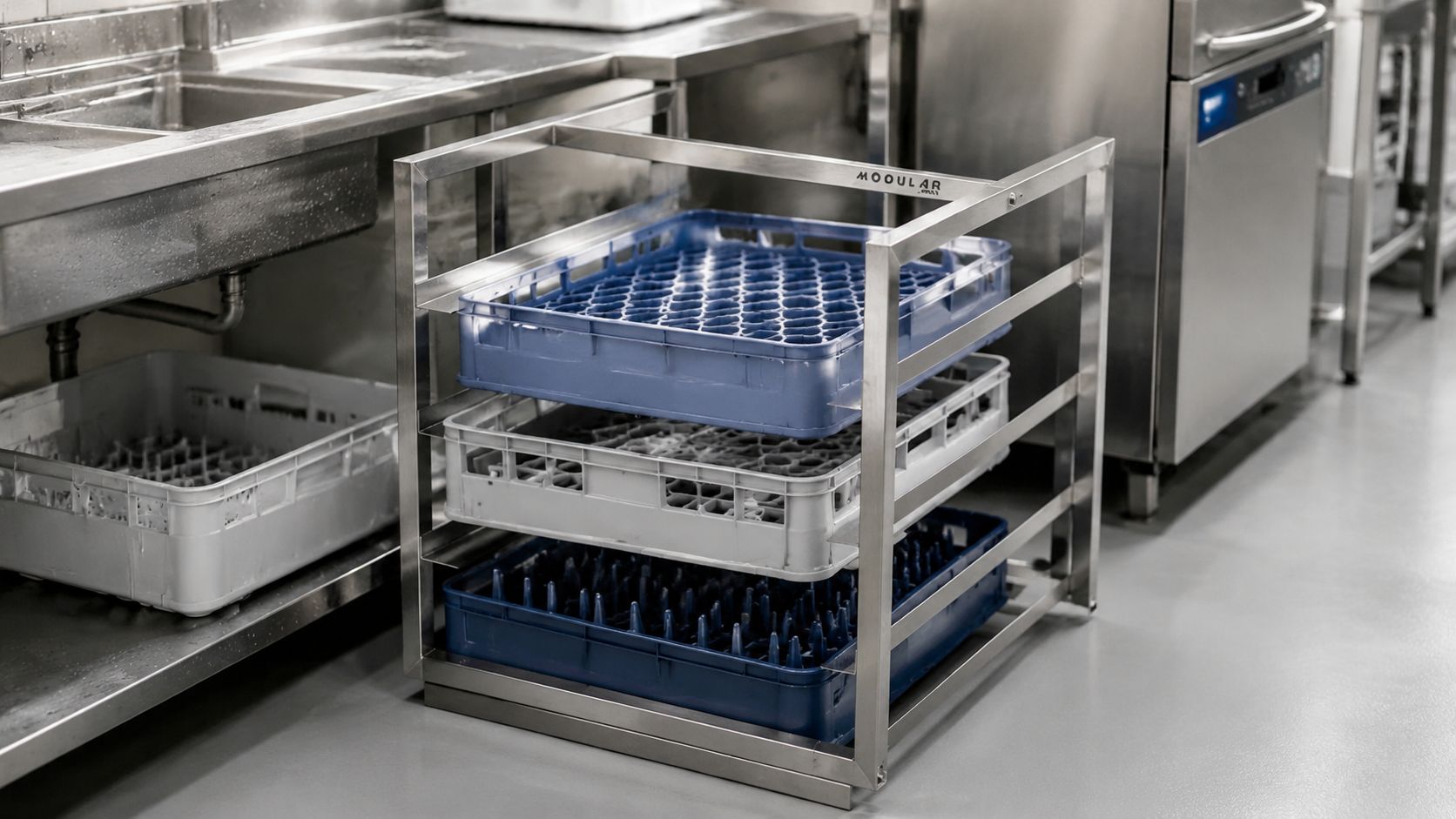
For kitchens that need organised wash-up areas, a product such as the Modular Stainless Dishwasher Basket Cassette can help keep spare or sorted baskets close to the machine without cluttering benches or floors. The same logic applies when planning the sink zone. Every piece should have a defined place.
A useful fit-out habit is to look at the whole sink run the way a build planner would, not as one isolated fixture. The guide to opening a restaurant in Jacksonville is aimed at a different market, but the planning principle still holds, sink choice is part of the room layout, not a last-minute plumbing decision.
For workflow planning, the same applies to kitchens in New Zealand. The how to design a kitchen that saves time on every service article aligns with what experienced operators already know, the less backtracking around the sink, the smoother the service.
Stainless Steel Grades, Gauge and Finish Explained in Plain Terms
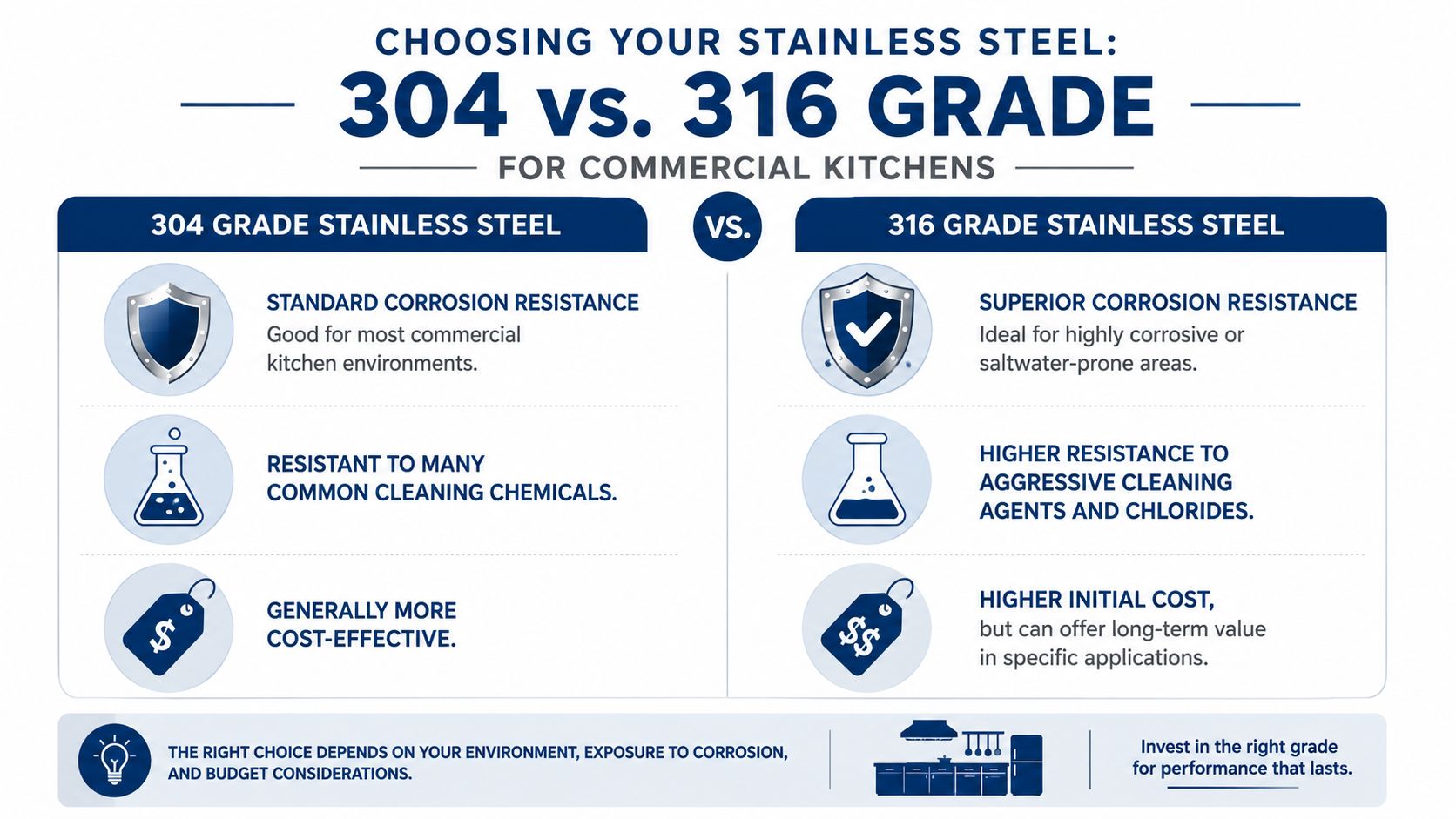
304-grade stainless is the practical starting point for most commercial kitchen basins. It gives a solid balance of corrosion resistance, durability, and cleanability, which is why it appears so often in food-service settings. The decision becomes more specific when the sink sits near coastal air, faces aggressive cleaning routines, or carries heavy daily use, because grade and maintenance discipline start to matter more.
Grade is about environment, not bragging rights
For most hospitality venues, 304 stainless steel is the sensible standard. It handles repeated cleaning, resists corrosion well, and keeps the basin easy to maintain. 316 stainless steel gives stronger corrosion resistance, which matters more where chloride exposure or harsh conditions are a real concern, rather than as a default upgrade for every kitchen.
Grade should match the site, not the quote. It comes down to environment, chemical exposure, and how hard the basin will be worked every day. A good supplier should talk that through with the operator instead of pushing the highest grade across the board.
Gauge and thickness tell you how the basin will behave
Commercial basins commonly land around 1.0 to 1.6 mm thick in the NZ market, and 18-gauge, roughly 1.2 mm, is a familiar benchmark in that range. Thinner material around 0.8 to 0.9 mm exists, but it behaves more like light-duty gear. It flexes more, rings more, and is more likely to suffer around tap holes and waste connections over time. A common purchasing reference also notes 16-gauge as the thicker, more durable choice and 18-gauge as the lighter, lower-cost alternative, which matches the pattern operators see on quotes.
A satin finish is worth asking for when the basin will see frequent use. It does not stop wear, but it helps mask scratches and keeps the unit looking cleaner for longer under repeated chemical cleaning.
Thickness still has to match the task
A handwash basin does not need the same build as a potwash bowl, and that is where many quotes blur the line. One source on wash basin selection notes typical thickness in the 0.8 mm to 1.2 mm range and warns that thinner material reduces service life and strength. That is useful, because the right basin is the one that matches the workload, not the one with the biggest-sounding spec.
The stainless steel benches NZ discussion matters here because the basin should be chosen alongside the surrounding bench construction. On a commercial run, the sink, bench, and splashback have to work as one surface, not as separate purchases stitched together later.
For a coordinated sink-and-bench layout, a Modular Stainless Double Bowl Sink Bench is a straightforward option when the process needs separation, such as wash and rinse or two preparation tasks. It is not the answer for every site, but it does give two bowls and a stable bench area in one integrated stainless unit.
Sizing Bowls, Depths and Configurations Around Real Workflows
Bowl geometry changes how a kitchen feels in service. A shallow basin may look tidy, but it can be awkward for larger cookware and messy when water is moving fast. A deeper bowl can help with volume, yet if it's too deep for the staff using it, the ergonomic penalty shows up at the end of every shift.
Start with the item, then measure the bowl
A small handwash basin and a potwash basin are not the same conversation. A compact unit around 400 x 400 mm with a bowl roughly 340 x 365 x 155 mm and a 32 mm waste outlet is suited to controlled handwashing and utility use. That's very different from a deeper, larger bowl designed to accept bigger pans and allow more room for rinsing and draining.
The practical rule is simple. Bowl depth should suit the largest item without forcing staff to reach uncomfortably far into the sink. A basin that is deep enough to handle a large pot can still be poor if it creates strain at the wrist, shoulder, or lower back during repeated use.
What single and double bowls actually do
Single bowls suit bigger uninterrupted tasks. They're easier for stock pots, trays, and larger utensils because there's no centre divider stealing internal space. Double bowls make sense when the work distinctly separates into two stages, or when two people need to use the sink area without getting in each other's way.
Useful test: if two bowls won't both be fully used during peak periods, one larger bowl is often the cleaner choice.
A deeper bowl isn't always better either. If staff can't comfortably reach the bottom, the basin becomes harder to scrub and rinse properly. That's why bowl depth has to be balanced with the staff doing the work, not just the item being washed. Good buying decisions stem from this understanding, because the sink has to serve the person as much as the cookware.
Common configurations and what they suit
| Configuration | Typical use | Notes |
|---|---|---|
| Single bowl | Handwash or larger potwash duty | Keeps the internal space clear for bigger items |
| Double bowl | Wash and rinse separation, or two prep tasks | Useful when the process genuinely needs two stages |
| Bowl with integrated drainer | Heavy wash-up or drying workflow | Gives wet items a place to move through the process |
| Compact utility basin | Staff wash points or light prep | Best when the task is controlled and not bulky |
For operators comparing layouts, the butler sink NZ discussion is useful because it shows how bowl shape influences day-to-day use, not just appearance.
Drainers, Splashbacks and Falls as Workflow Tools
Drainers are not decorative extras. They control the pace of the sink area by giving dirty and clean items somewhere to move during washing, rinsing, and drying. If the drainer is too small, the whole station clogs up. If it's too large, it swallows bench space that staff need for prep or loading.
The drainer has to match service volume
A well-sized drainer creates breathing room around the bowl. That matters during peak periods, when dishes, trays, and utensils need to move through the wash area in a steady sequence. An undersized drainer creates congestion because clean items don't have a safe landing zone, and dirty items start to pile up around the bowl itself.
Water should move back to the bowl, not pool where staff are trying to work.
Integrated stainless splashbacks and drainers help because they reduce the number of joins between surfaces. Fewer joins means fewer places for soil to collect, and less fiddly cleaning at the end of service. The same logic applies to rounded or accessible internal corners, which are easier to wipe down than tight seams.
Falls do more work than many buyers realise
Correct falls direct water back towards the basin instead of leaving it on the bench. That helps keep the wash zone cleaner and reduces the annoyance of constantly wiping down wet edges. It also matters for staff ergonomics, because people move faster and more safely when they're not stepping around puddles or reaching across wet surfaces.
The trap many operators fall into is asking only whether the sink is large enough. The better question is whether the surrounding surfaces help the sink do its job. Drainer space, splashback height, and falls are part of the workflow, not afterthoughts.
A basin area that washes well but dries badly still wastes time. End-of-service cleaning gets harder when water sits in the wrong places or joins catch grime. Good stainless design keeps the system simple enough that staff can clean it quickly without cutting corners.
Standard Units, Modular Setups and Custom Stainless Fabrication
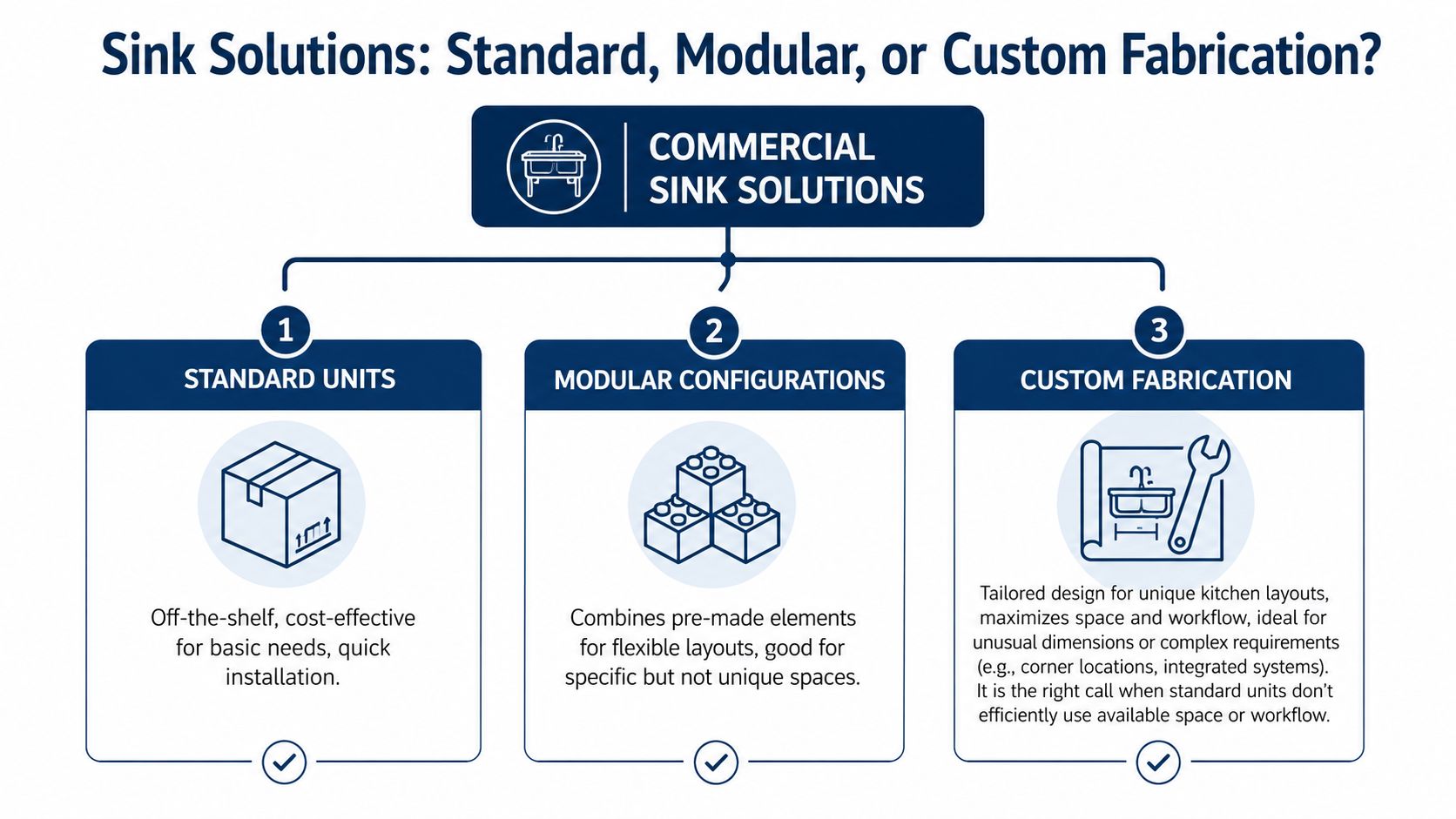
Standard units suit straightforward spaces and predictable workloads. Modular setups work better when the kitchen needs more control over layout, while custom stainless fabrication becomes valuable when the room shape, workflow, or access points don't suit a stock sink at all. The right option depends on how much the sink has to do, and how neatly it fits the space around it.
Standard units when the layout is simple
A standard stainless basin is the right call when the task is clear and the room has room for it. These are the quickest to specify, easiest to install, and usually the least disruptive option for a basic fit-out. They suit many back-of-house spaces where the job is handwashing, utility use, or general potwashing in a predictable line.
Modular setups when the process needs separation
Modular units make sense when the sink area has to do more than one thing, but the space still allows a planned arrangement. Two bowls, a drainer, and a splashback can be combined into a coordinated run so staff aren't improvising with tubs or portable containers. The result is usually a cleaner workflow and a less cluttered bench.
Custom fabrication when the room calls the shots
Custom stainless fabrication earns its place in corner locations, narrow prep areas, and irregular back-of-house layouts where a standard unit wastes space. In those situations, the sink, bench, splashback, and storage can be designed as one system instead of being forced into separate parts that never quite align.
That approach matters in compact commercial kitchens, where every section of stainless needs a purpose. It also gives operators more control over the room's working lines, which is often more useful than buying the biggest off-the-shelf sink available.
A simple way to think about it is this, if the kitchen is standard, buy standard. If the process is specific, choose modular. If the room is awkward, bring in a fabricator and make the stainless fit the space rather than the other way round.
Installation, Plumbing, Cleaning and Ongoing Maintenance
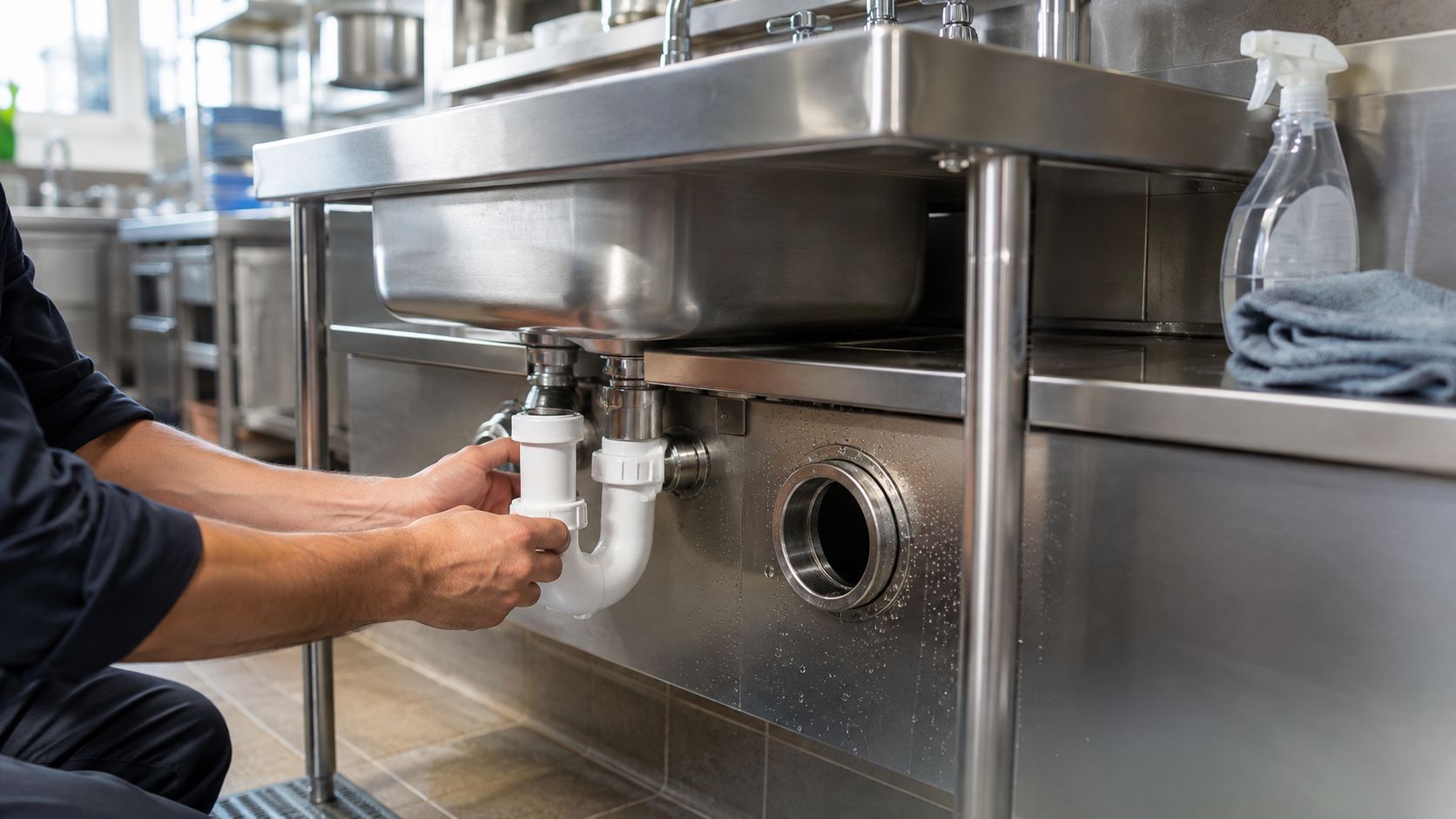
A basin isn't finished when it arrives. It still needs the right waste outlet, trap access, clearance for cleaning, and a maintenance routine that matches the chemicals used in the kitchen. These details affect hygiene and usability just as much as the bowl itself.
Plumbing details need to be planned early
Waste outlet size matters because it affects drainage speed and how easily the basin clears during busy service. Trap access matters too, because maintenance is simpler when the plumbing can be reached without pulling the whole unit apart. Wall-hung or easy-access basins also help keep the floor clear for cleaning, which is a practical hygiene advantage in commercial kitchens.
The installation should also be checked against the room's workflow. A basin that blocks a door, interrupts a wash line, or makes floor cleaning awkward will create problems long after the fit-out is finished. That's why installation and layout should be discussed together, not in separate conversations.
Cleaning products can shorten service life
Stainless is durable, but it isn't invincible. Abrasive cleaners, bleach left sitting on the surface, and wet metal items left in contact with the bowl all increase the chance of wear and corrosion over time. Operator training matters here, because the wrong chemical habits can undo a carefully chosen specification.
For a practical maintenance reference, the step-by-step drain snake tutorial is useful background when a blockage starts slowing the wash area down. It's general plumbing advice, but the principle is familiar enough to anyone responsible for a busy sink, keep the waste clear and the workflow stays easier.
Noise can matter too, especially where the wash area sits near customers or in a smaller back-of-house space. Sound-deadening treatments are worth discussing with a fabricator if the basin is going to take a lot of heavy pot movement, but any performance claim should come from the product or fabricator specification, not guesswork.
The commercial kitchen installation article also sits alongside this topic well, because a sink works best when the plumbing, benching, and cleaning access are all thought through at the same time.
Working With Suppliers and the Questions Worth Asking Before You Buy
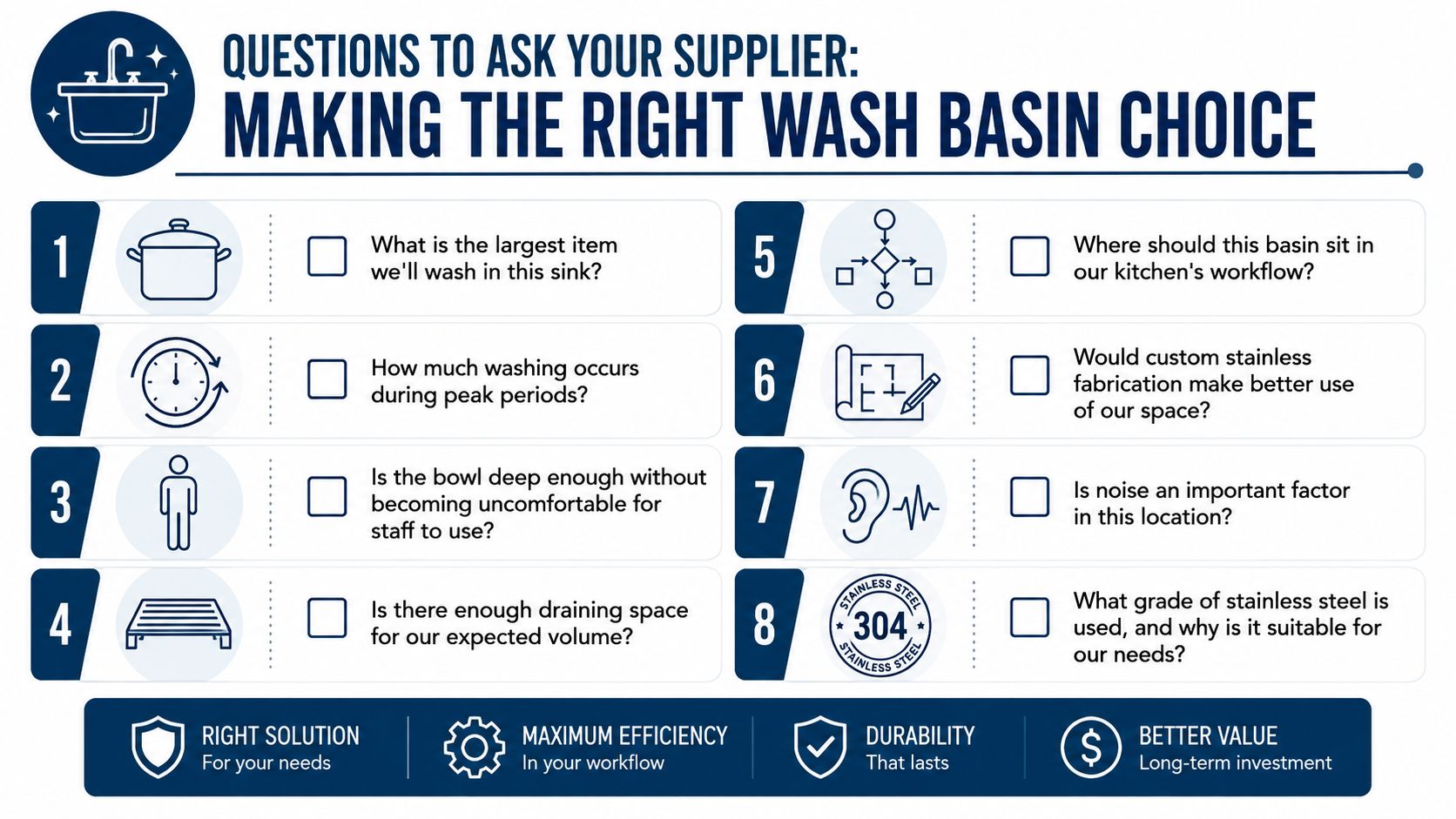
The strongest quote conversations are the ones that begin with the job, not the product name. Operators usually make better decisions when they bring clear questions about workload, space, and workflow rather than asking for “the best stainless sink” and hoping the rest sorts itself out.
Questions that separate a good quote from a poor fit
- What is the largest item we'll wash in this sink? This should come first, because the basin has to fit the item that causes the biggest workflow problem.
- How much washing happens during peak periods? A basin that copes well off-peak can still fail when service ramps up.
- Is the bowl deep enough without becoming uncomfortable for staff to use? Depth only helps if staff can still work safely and repeatedly.
- Is there enough draining space? Dirty and clean items need somewhere to move through the process.
- Where should this basin sit in the workflow? Good placement can save steps every service.
- Would custom stainless fabrication make better use of the space? This matters in tight or irregular layouts.
- Is noise important in this location? The answer can change the sink build or the surrounding installation.
A quote should also confirm 304-grade stainless steel where that suits the job, along with gauge, finish, waste arrangement, and any drainer or splashback details that affect cleaning. The point isn't to chase the heaviest specification. It's to match construction to the work the basin will do every day.
For kitchens where standard options don't fit cleanly, Hospitality can help source a stainless basin setup that suits the venue and can work alongside specialist fabricators when custom work is the smarter move. That approach keeps the sink, benching, splashbacks, and storage aligned with the way staff work.
If you're planning a new fit-out or replacing a basin that's no longer keeping up, Simply Hospitality can help you narrow the options around the job your kitchen really needs to do. Talk through the largest item you wash, the workflow around the sink, and whether standard or custom stainless will work better, then build the right configuration from there.