

Margarita Glass NZ How to Choose the Right Capacity
The most common mistake with a margarita glass in NZ hospitality is choosing the shape first. That sounds backwards because the classic bowl-and-stem silhouette is so familiar, but it causes real service problems. When the recipe is small and the glass is oversized, the drink looks underfilled. When the glass is too tight for the garnish, salt rim and ice, staff start compensating with inconsistent pours.
A margarita doesn't need one compulsory glass. It needs a glass that suits the actual drink being served, the venue's pace, and the way the bar team handles glassware from service through to storage. That matters in cocktail bars, restaurant bars, hotels, pubs, caterers, and event venues just as much as it does for home users trying to buy once and buy sensibly.
Many operators get better results from a simple sequence. Recipe first. Finished drink volume second. Glass capacity third. That keeps presentation intentional without forcing bartenders to stretch portions just to make a large bowl look full. It also stops operators buying a style that looks great on a shelf but becomes awkward once ice, garnish, glasswashing and replacement costs come into play.
New Zealand buyers also sit inside a long-established imported glassware market rather than a deep local manufacturing base. New Zealand recorded 147 glass-and-glass-product manufacturing enterprises in 2023 and 141 in 2025, which is one reason hospitality operators often depend on imported ranges and consistent replenishment rather than niche local production, as shown in Figure NZ's glass manufacturing and trade view.
For operators wanting broader cocktail context beyond margaritas alone, the wider Cocktail Glass NZ article is a useful companion. The narrower question here is more practical. Which margarita glass makes the drink look right, works in service, and doesn't create unnecessary cost later?
Introduction Why the Margarita Comes Before the Glass
The traditional margarita glass isn't automatically the right answer. In plenty of venues, it isn't even the most practical answer. A frozen serve, a Tommy's style on ice, and a tighter premium spec served up don't ask the same thing from the glass, so forcing them all into one format usually creates avoidable compromises.
Recipe shape matters more than glass shape
A margarita can be served in a classic margarita glass, a coupe, a rocks glass, or another stemmed cocktail glass. The better choice depends on what lands in front of the guest and how the bar needs to operate behind the scenes. Salted rims, garnish size, dilution, ice, and finished volume all change what “right” looks like.
Practical rule: Choose the margarita before choosing the margarita glass.
That's especially important in commercial settings where one glass decision affects ordering, shelf space, rack loading, wash throughput and breakage exposure for months, not just one service.
What tends to go wrong in real venues
A common issue seen with margarita glass NZ searches is that many buying decisions start with appearance only. That often leads to three predictable problems:
- Oversized bowls: The cocktail is correctly portioned, but the guest reads it as short because the glass looks half empty.
- Tight capacity: Ice, garnish, or foam sits too high, making service messy and inconsistent.
- Wrong venue fit: A delicate stemmed option may suit a premium cocktail list but create unnecessary replacement headaches in a busy pub or mobile event setting.
Hospitality businesses often find that a drink looking intentional matters more than whether it matches a textbook silhouette. A compact, balanced margarita in the right coupe can look more premium than a standard serve lost inside a large decorative bowl.
The commercial lens
Bars and restaurants usually care about four things at once:
- Presentation
- Pour consistency
- Handling practicality
- Replacement continuity
That's why glass choice shouldn't be separated from service reality. The right solution depends on the drink and the business model, not on tradition alone.
Which Glass Suits a Margarita in NZ Hospitality
Different margarita styles suit different glass formats. That sounds obvious, but many venues still try to standardise around one shape and then work around its limitations.
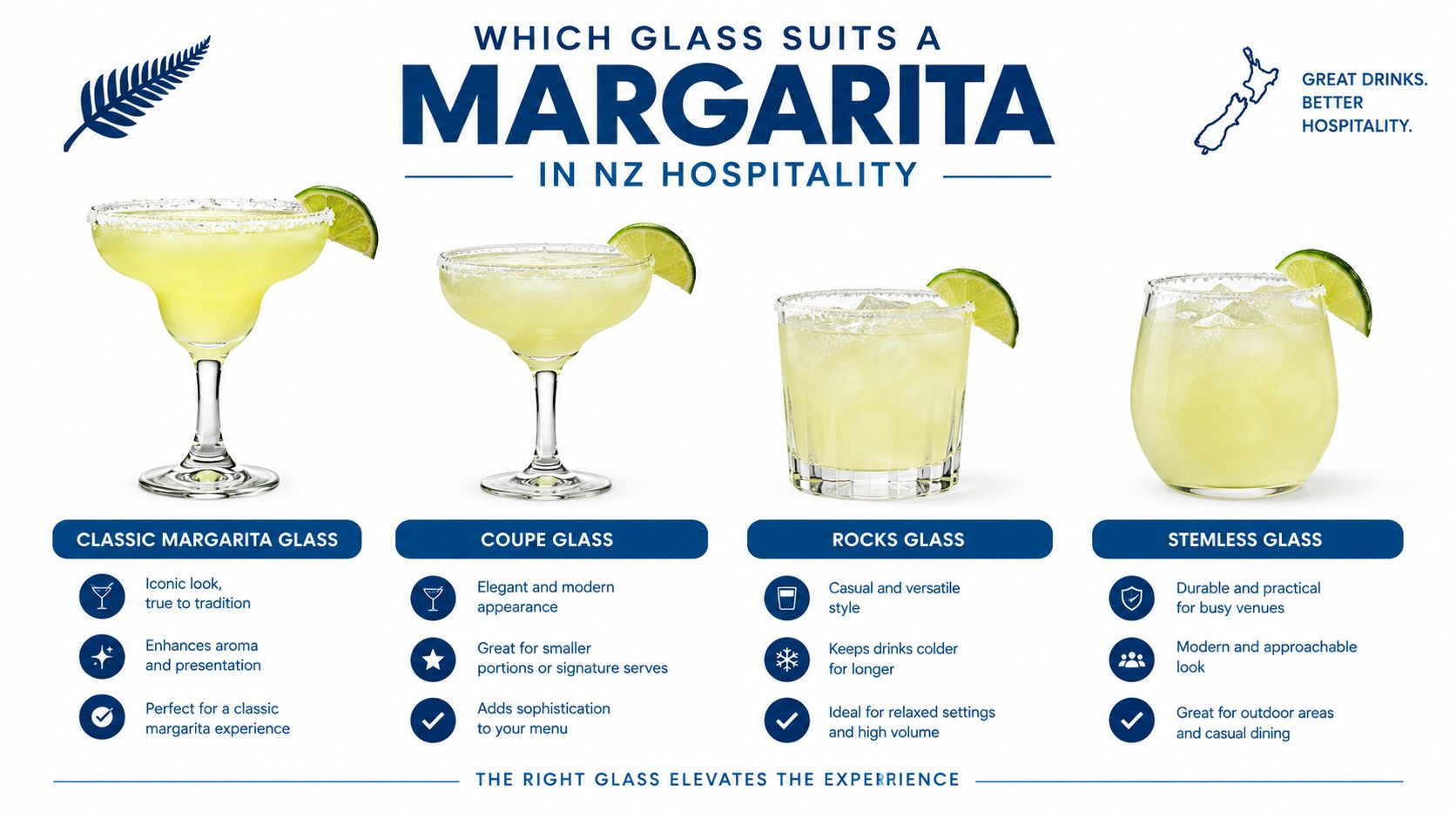
Operators comparing wider front-of-house options often also review broader bar glassware ranges for hospitality service before locking in one style.
Traditional margarita glasses
This shape still has a place. It gives the drink immediate visual recognition and a broad rim that can suit salted presentation well. It can also work nicely for frozen or more theatrical serves where the venue wants a classic cocktail cue on the table.
What doesn't always work is the day-to-day handling. The wider bowl profile can take more storage room, and the silhouette can be less forgiving in fast clearing and rack loading if the venue is busy.
Coupes
A coupe often suits a tighter, more refined margarita spec. It looks deliberate, feels premium, and can be easier to integrate into a cocktail programme that already uses coupes for other drinks.
Many operators choose coupes when they want:
- Cleaner visual lines for premium service
- Simpler multi-use stockholding across several cocktails
- Less visual bulk on shelves and back bars
The trade-off is rim space. If the garnish and salt presentation are heavy-handed, the drink can start looking crowded.
Rocks or old fashioned glasses
For margaritas served over ice, a rocks glass is often the most commercially sensible choice. It's stable on the bar, easier to carry, easier to clear, and often better aligned with high-volume service.
This option usually suits:
- venues doing strong turnover
- pubs or restaurants where cocktails sit alongside general beverage service
- event operations where transport and stacking matter
It gives away some of the classic margarita silhouette, but it often wins on workflow.
Other stemmed cocktail glasses
This is the middle ground. A stemmed cocktail glass can give a margarita enough lift and occasion without the larger footprint of a traditional margarita bowl. That's where brands such as Pasabahce, Ocean, Stölzle, Schott Zwiesel and Luigi Bormioli come into the conversation. They give venues options across different presentation levels and replacement budgets.
A premium cocktail bar may reasonably accept a more refined, less forgiving glass. A high-volume venue usually shouldn't.
One irrelevant but useful reminder about language around glass is that not every safety-glass product belongs in a hospitality glassware discussion. For example, Soehnle Bathroom Scales Style Sense Compact 300 Slate uses a safety-glass platform, but that's a bathroom scale product rather than service glassware. The distinction matters because “glass” covers very different use cases.
Matching Glass Capacity to Your Recipe and Ice
Capacity is where practical buying decisions get better fast. A glass can be beautiful and still be wrong for the pour.
New Zealand hospitality listings commonly place margarita glasses in roughly the 240 ml to 296 ml class, with examples around 16.0 to 16.9 cm high and about 10.3 to 11.0 cm mouth diameter for those formats. Another NZ listing shows a 455 ml margarita glass at 18.5 cm high and 12.2 cm diameter, according to the NZ glassware size summary and listings context. A separate hospitality training reference lists a margarita glass at 270 mL, or 9 US fluid ounces, in the bartender bar measurements guide.
The sequence that avoids underfilled drinks
Use this order:
- Build the recipe
- Measure finished drink volume
- Add for ice, garnish and rim allowance
- Choose the glass capacity
That's the discipline that stops teams from enlarging serves to make a glass look fuller.
Glassware should fit the recipe. The recipe shouldn't be stretched to flatter the glass.
Ice changes the answer
Ice isn't a small detail. A margarita served up and a margarita served on ice may start from a similar recipe, but they need different practical capacity once service is factored in.
A few examples of what operators often find:
- Straight-up margarita: Can suit a tighter capacity if there's no ice load taking space.
- Margarita on ice: Needs allowance for cubes or crushed ice, plus movement during carry.
- Frozen serve: Often needs more visual and physical room because texture and head height matter.
- Large garnish or heavy rim: Needs extra working room so the drink doesn't look crowded.
Capacity classes and what they do in service
| Capacity Class | Typical Dimensions | Best Use Case |
|---|---|---|
| 240 ml to 296 ml | Around 16.0 to 16.9 cm high and 10.3 to 11.0 cm mouth diameter in NZ listings | Tighter portion control, denser rack loading, cleaner service for standard cocktail volumes |
| 270 mL | Training reference size point for margarita service | Useful benchmark for comparing recipe fit and standard cocktail presentation |
| 455 ml | Around 18.5 cm high and 12.2 cm diameter in an NZ listing | Premium serves, larger visual impact, more room for garnish or frozen presentations |
One consideration regularly discussed with customers is that a wider rim doesn't just affect looks. It changes salt application, the guest's first sip, and the amount of shelf and rack space each unit consumes.
Matching format to actual use
A smaller margarita glass can make a standard spec look polished and proportionate. A larger one can suit a premium or more dramatic serve, but it usually asks more from staff in handling and storage.
Where a margarita-specific shape suits the list, Ocean Madison Margarita 345ml is one example of a defined capacity format. In other venues, coupes and tumbler-style options make more sense because they align better with the rest of the cocktail programme.
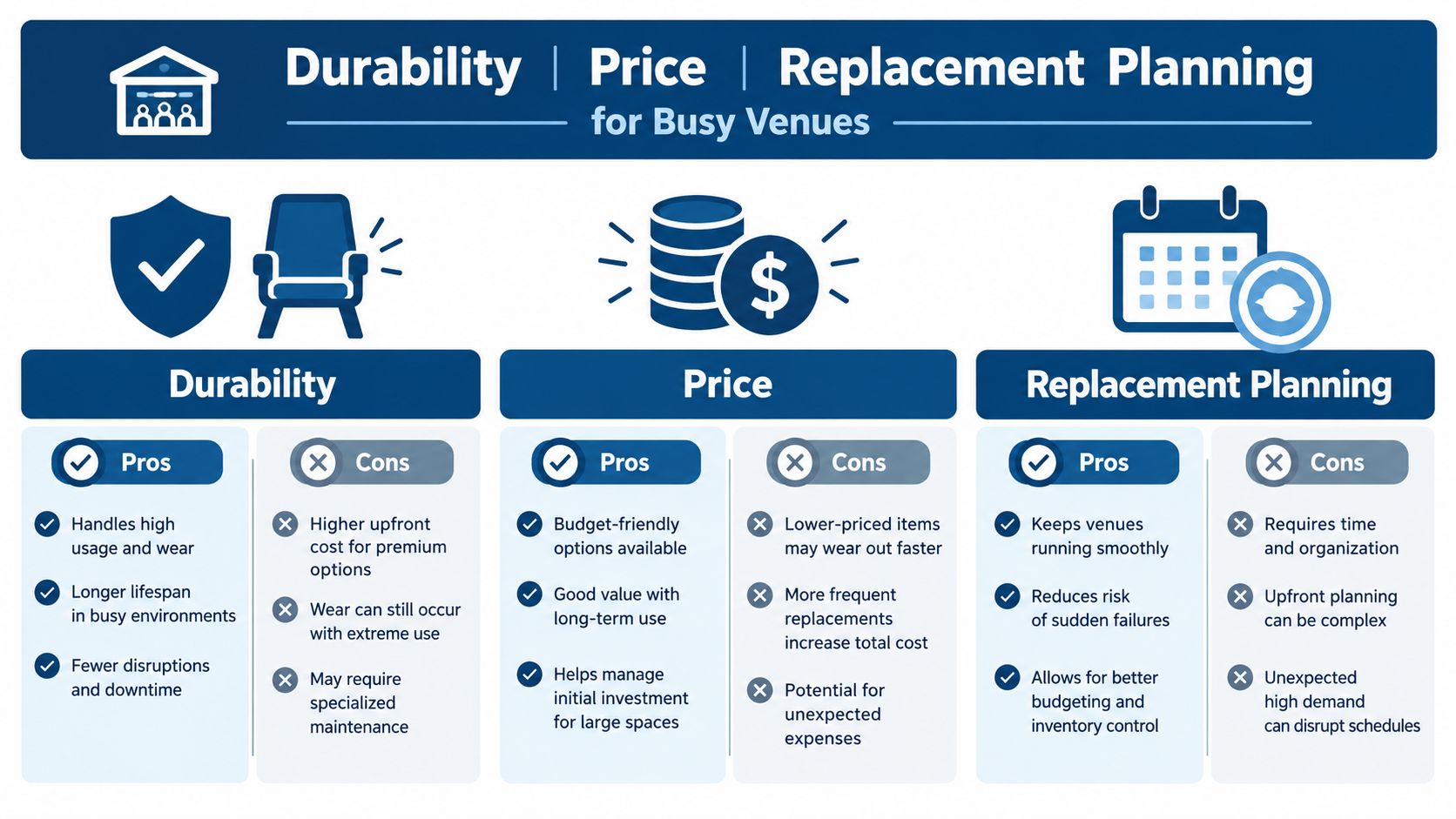
Durability Price and Replacement Planning for Busy Venues
The prettiest margarita glass isn't always the cheapest to own. In busy venues, whole-of-life cost usually matters more than shelf appeal.
New Zealand's broader glass-and-glassware import market was worth US$272 million in 2023 and US$246.55 million in 2024, with China supplying 37% of 2023 imports at about US$102 million, followed by Australia at 11.1% and Malaysia at 9.5%, according to New Zealand glass and glassware import data. For hospitality operators, that means availability and pricing are tied to imported supply chains, freight conditions and supplier depth.
What premium venues often accept
A premium cocktail bar may choose a finer rim, a more refined stem, or a glass with stronger visual character. That can be the right decision if the drink price, service style and guest expectation support it.
The compromise is usually operational:
- More careful handling required
- Higher exposure to stem or rim damage
- Greater pressure to source matching replacements consistently
What high-volume venues usually prioritise
Pubs, large restaurants, function spaces and mobile bars often place more weight on practicality. Stability, stack-friendly handling, easier replacement and less fragile formats usually matter more than visual theatre alone.
Commercial reality: Replacement availability matters almost as much as the first purchase.
A common issue seen in event work is that an elegant glass performs well in a fixed bar but becomes uneconomic once transport, bumping, off-site washing and variable staff handling enter the picture.
Buy, hire, or switch material
For some operators, standard purchase is right. For others, hire or alternate materials make more sense.
NZ listings show margarita glasses at around NZ$1.04+GST per hire unit, while retail supply listings show standard margarita glasses from about NZ$6.55 ex GST to NZ$9.05 ex GST, as noted in the NZ hospitality glassware comparison context. That doesn't give a universal answer, but it frames the core question. Is the venue better off buying, repeatedly replacing, hiring, or using a more hire-proof alternative such as polycarbonate for some events?
Many operators choose:
- Purchased glass for permanent bars with predictable wash and storage systems
- Hire stock for one-off events or peak functions
- More durable alternatives for outdoor, transport-heavy or high-risk service
For wider thinking on ownership cost across venue types, the commercial glassware NZ article is a useful companion.
Salted Rims and Consistent Presentation in Service
A salted rim is one of the easiest ways to make a margarita look deliberate, and one of the easiest ways to make it look messy if the team isn't consistent.
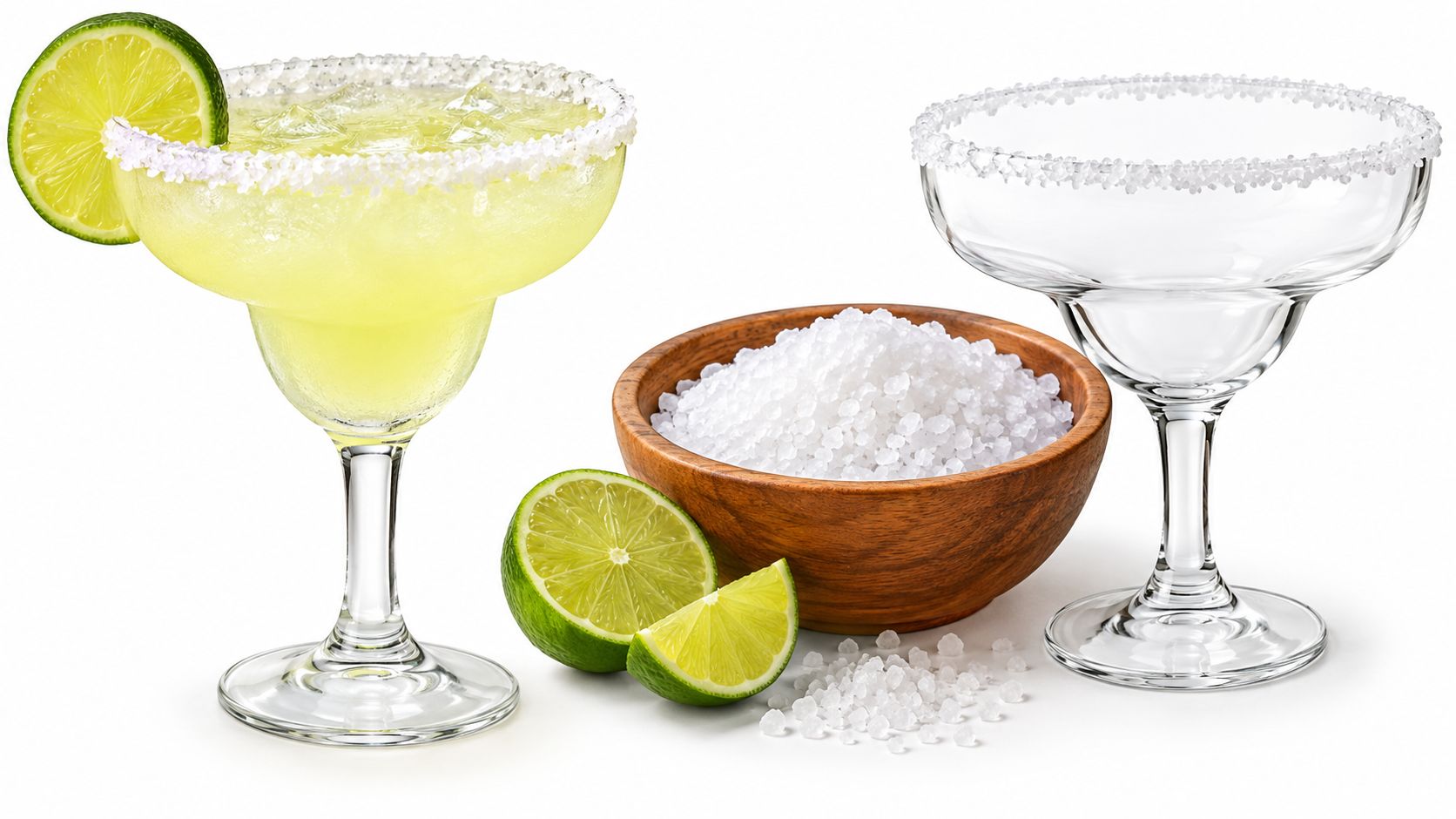
The glass shape changes the rim result
A broad traditional margarita rim gives staff more room to work, but it also makes uneven application more obvious. A tighter coupe can look sharper, though there's less margin for error. Rocks glasses are often the most forgiving for speed, especially when drinks are built for ice and quick pass service.
Mouth diameter matters because it affects:
- How visible the salt band is
- How much garnish space remains
- How likely staff are to knock or smudge the rim during service
Consistency beats creativity in busy service
Hospitality businesses often find that one standard method gives the cleanest result. It doesn't need to prescribe one “correct” margarita recipe. It just needs every bartender to produce the same visual outcome.
Useful habits include:
- Prepare away from the wash zone: Water, spray and residual moisture make rims patchy.
- Use a controlled application: Too much moisture drags salt down the bowl or outside wall.
- Train one standard finish: Full rim, half rim, or another consistent house style.
- Handle by stem or base where possible: The rim is the most visible part of the glass and one of the most vulnerable.
A neat rim supports perceived value because it tells the guest the drink was assembled with intent. A sloppy rim does the opposite, even if the recipe is sound.
Keep the garnish in proportion
Large lime wheels and heavy garnish can overwhelm smaller capacity glassware. The better result usually comes from balancing garnish size with bowl width so the drink remains tidy and easy to carry.
A margarita should look composed at pickup, in transit, and on the table. If the rim sheds, smears, or catches on every tray pass, the process needs tightening.
The Complete Glassware Workflow From Service to Storage
Breakage isn't just about thin glass or thick glass. It's a workflow issue.
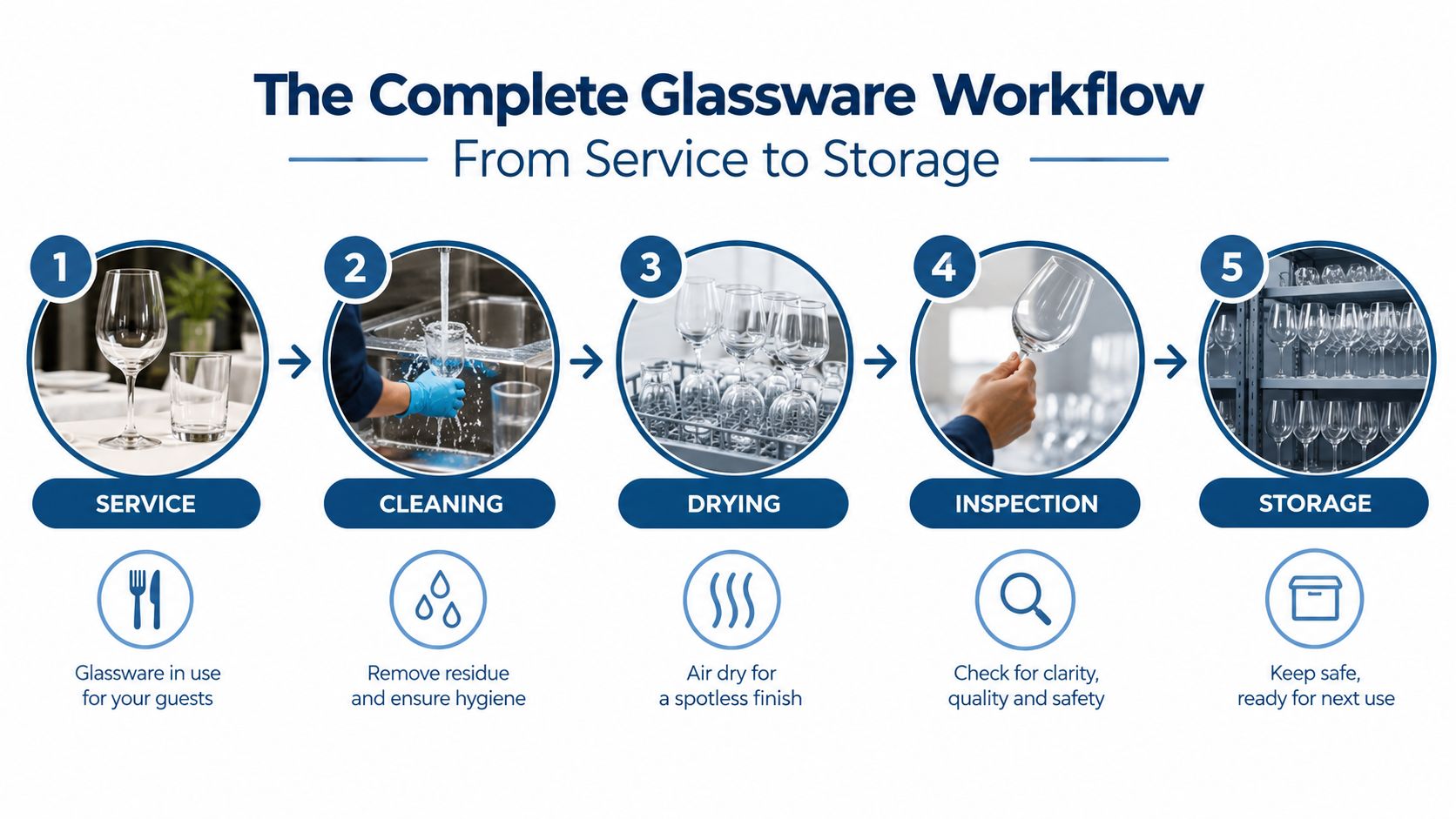
Venues that look only at purchase price usually miss where the losses happen. The pressure points are service, clearing, rack loading, glasswashing, unloading and storage. Operators dealing with cloudy results as well as breakage often also compare handling practices with guidance on what causes spotty glassware.
Service and clearing
The first damage often happens before the wash area. Staff knocking rims together while clearing trays or overloading tubs can shorten glass life quickly, especially with stemware and wider-rim cocktail glasses.
One simple tip is to separate incompatible shapes during clearing. A margarita bowl shouldn't be jammed against heavier tumblers if the team wants rims to stay clean and intact.
Rack loading and washing
Appropriate racks matter because crowding increases contact points. Glasses should sit securely without rubbing or striking each other during wash cycles and unloading.
A practical handling guide advises operators to remove damaged or abraded glasses from service because damaged glass can break in the dishwasher. The same guidance says to let glasses reach room temperature before and after washing to reduce thermal shock, which is especially relevant for stemware and cocktail glasses.
Breakage response and storage discipline
When breakage does happen, teams need a routine rather than improvisation. NZ beverage-processing guidance says broken items should be removed from the processing and storage environment, the affected area should be isolated, fragments should be swept up with brush and shovel, and the incident should be recorded on a Glass Breakage Report, as outlined in the New Zealand glass handling and foreign matter procedure.
A clean system usually looks like this:
- Service: Staff carry and place glasses without crowding trays.
- Clearing: Similar shapes are grouped carefully, not stacked carelessly.
- Rack loading: Each glass sits in the right rack position for its bowl and stem profile.
- Unloading: Staff avoid striking rims together while moving stock back to shelves.
- Storage: Shelves support quick access without forcing glasses into tight contact.
There's also a compliance edge in some fit-outs. If glass is part of fixed joinery, a mounted display, or another building-related installation, venues need to treat it as a safety glazing issue rather than ordinary loose glassware. NZ guidance notes that AS/NZS 2208 sets test requirements for classification of safety glazing materials for use in buildings, and a WGANZ technical bulletin notes AS/NZS 2208:2023 is mandatory in NZ for safety glass compliance under the Building Code, as summarised in the NZ standards pathway for safety glazing.
Choosing the Right Margarita Glass for Your Venue
Start with the spec of the drink, not the shape on the shelf. Margarita glass decisions usually go wrong when the buying team falls for a photo, then discovers the serve looks small, the rim is cramped, or the glass slows the pass on a busy Friday.
A simple filter works better than chasing a “proper” margarita look. Check the finished serve volume first, then the ice format, then garnish and rim space, and only after that the handling and storage pressure your venue can live with.
If your finished margarita lands around 180 to 220ml served up, a glass in the 240 to 296ml range usually gives enough headspace for a clean pour and a proper salted rim. If you're serving on ice, running a wetter spec, or building frozen drinks with a garnish that needs room, step up to 345ml or more. That one decision prevents a lot of common problems, from messy rims to drinks that look underpoured.
Service style still matters. A coupe can suit a tighter, cleaner spec in a restaurant. A rocks glass often makes more sense in a high-volume pub where speed, stacking discipline and replacement cost matter every week. A classic margarita bowl can still earn its place, but only if the venue can handle the extra care in washing, racking and carrying.
For operators planning branded functions, wedding bars or one-off activations, this article on personalized margarita glasses for events is worth a look because event glassware often serves presentation first and repeat service second.
The best buy is the glass that fits the recipe, moves cleanly through service, and can be replaced without disrupting the rest of the set.
Hospitality supplies commercial glassware and front-of-house ranges used across bars, restaurants, hotels, caterers and event venues, including recognised hospitality brands that suit different service styles and budgets. For help narrowing down the right margarita format, capacity and replacement approach for a specific venue, visit Simply Hospitality and compare the options with a commercial workflow in mind.