

Silicone Baking Mats: A 2026 Guide for NZ Kitchens
Is a silicone baking mat automatically a better choice than baking paper? Not necessarily. For a home baker, it may provide a convenient reusable surface. For a commercial kitchen, the decision depends on the recipe, tray dimensions, oven temperature, cleaning workflow, food-contact documentation and the mat's condition over time.
Silicone baking mats are reusable liners for compatible baking trays and sheets. They can support biscuits, cookies, pastry, dough work and confectionery, but they won't produce identical results across every product or replace every liner in a bakery. The practical approach is to match the mat to the task, test the result, and assess the full operating cost rather than relying on the words “non-stick”, “food grade” or “reusable”.
What Makes Silicone Baking Mats Different
A silicone baking mat sits between the food and a compatible tray. Its purpose is to provide a repeatable surface that can be used again after cleaning, rather than discarded after one baking cycle. Depending on the product, the construction may use silicone alone or silicone reinforced with another material, such as fibreglass mesh. Buyers should rely on the manufacturer's material specification rather than assuming every mat has the same structure.
The common assumption is that switching from baking paper to silicone is an automatic upgrade. In practice, a bakery producing biscuits may value consistent tray preparation, while a pastry kitchen may prefer a surface that suits delicate dough. A café making occasional cookies may prioritise quick handling and flexible sizing over a reusable system that needs washing and storage.
Practical rule: A mat is only useful when its dimensions, surface behaviour and temperature rating match the work it will actually perform.
Typical applications include:
- Biscuits and cookies: A reusable surface can support repeatable tray preparation, but spreading and base colour still need testing.
- Pastry and dough: Some mats can double as work surfaces for rolling or shaping, subject to the manufacturer's instructions.
- Confectionery: A non-stick surface may help with suitable sticky preparations, although sugar residues can increase cleaning effort.
- Bread and general preparation: A mat may be useful for selected dough or baked-food processes, but it isn't a universal substitute for every tray liner.
- Roasted or baked foods: Use only where the product documentation confirms the application and temperature conditions.
Printed circles, measurements or spacing guides can help with consistency, but those features belong only to products that include them. A mat with guides may suit portion-controlled pastry work, while a plain sheet may be more practical for varied production.
The same principle applies to other silicone bakeware. A practical look at silicone muffin trays shows why shape, support and intended use matter as much as the silicone label itself. For hospitality businesses, the relevant question isn't whether silicone sounds convenient. It's whether the specific product fits the kitchen's recipes, trays, ovens and cleaning system.
Silicone Baking Mats versus Baking Paper
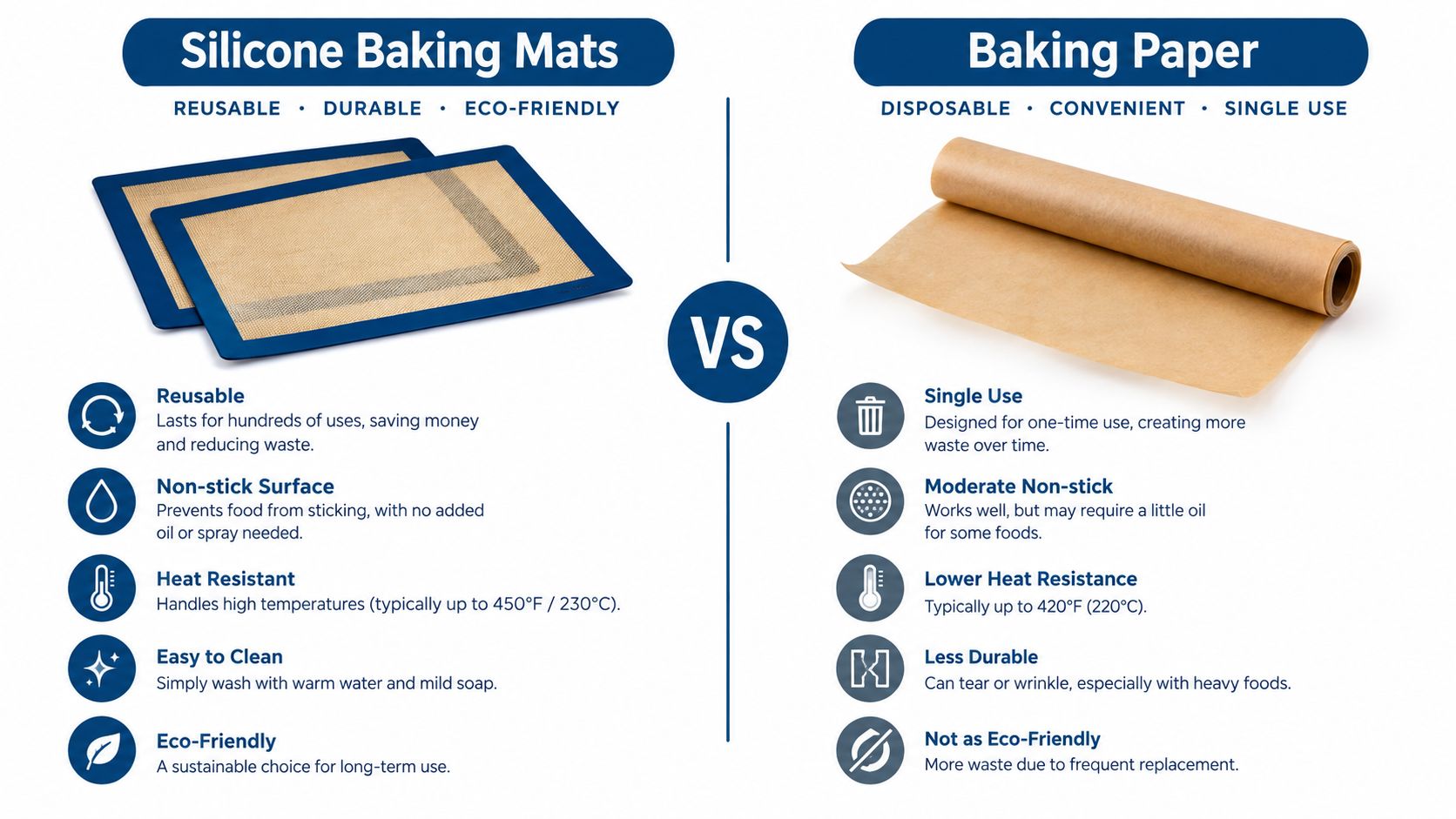
Silicone mats and baking paper solve similar problems, but they behave differently in a working kitchen. Silicone can be washed and reused where appropriate, offering a stable surface for repeated production. Baking paper is disposable, flexible and easy to cut, which can be valuable when trays vary or when a liner needs to be shaped around a particular product.
Neither option is automatically cheaper or more environmentally responsible. A reusable mat requires cleaning, drying, storage and eventual replacement. Baking paper creates a consumable waste stream, but it may reduce warewashing and can be more practical for short runs, irregular tray sizes or products that bake better on paper.
Where silicone can work well
A mat is often useful when a kitchen has repeatable tray sizes and a product that releases reliably from silicone. It can reduce the need to replace a liner after every suitable batch, protect trays from some baked-on residue, and provide a consistent preparation surface.
For home baking, the convenience is straightforward. A mat can remain flat on a tray, be washed after use and stored ready for the next batch. For commercial production, the benefit is more conditional because every cycle adds handling through the wash-up area.
Where baking paper remains practical
Baking paper has useful flexibility. Staff can trim it to fit different trays, use it for shaped pans and discard it after a messy or high-risk preparation. It may also be preferable when a recipe needs a particular level of browning, crispness or release that the silicone trial doesn't deliver.
A mat won't automatically improve a recipe. The surface beneath food can influence spreading, browning, base texture, heat transfer and release, especially with cookies and delicate pastry. A bakery changing liners should test existing recipes before converting every tray.
The better purchasing question is:
Which liner produces the required result with the least disruption to this product's workflow?
That question includes more than waste. A venue should consider recipe consistency, staff handling, wash-up capacity, drying space, tray compatibility and the condition of the mat. A broader look at baking equipment choices in New Zealand can help place liners within the wider tray, oven and production setup.
New Zealand's hospitality sector also needs to keep the waste discussion realistic. Research recorded 24,375 tonnes of food waste annually across cafés and restaurants, based on 2017/18 research, with bakery products representing 26% of food wasted in that sector. The source also recorded that 56% of bakery waste, about 3,556 tonnes, was unsold food such as sandwiches and pies. This sector research shows why a liner can support a better process, but can't solve overproduction or unsold stock.
Key Specifications to Check Before Buying
The most expensive mistake is buying a mat that fits the product description but not the kitchen. Specification checks should happen before the purchase, not after staff discover that the sheet curls, leaves an exposed tray edge or cannot tolerate the oven cycle.
Start with the tray
Measure the tray's internal usable area, then compare it with the mat's listed dimensions. The working sequence is:
Tray internal dimensions → silicone mat dimensions → usable baking area
Don't assume that “half-size” or “full-size” means the same thing across manufacturers. In a commercial bakery, check the relationship between the mat, existing bakery trays, GN trays and oven racks where those systems share equipment.
A mat that is too large may fold or press against the oven walls. One that is too small can expose the tray surface and change product spacing. Consistent tray and liner dimensions make oven loading easier, but they don't guarantee identical results.
Treat temperature as a product specification
Temperature ratings vary between products sold in New Zealand. Examples include mats rated to 220°C, 230°C and 250°C, so the printed specification must control operating practice rather than a generic assumption about silicone. New Zealand product guidance also notes that independent evidence and universal certification for silicone quality aren't consistent across the market.
Exceeding a mat's stated limit, placing it beneath a grill or exposing it to a burner or flame can accelerate degradation. Possible signs include distortion, odour and loss of non-stick performance, with potential migration concerns if the material breaks down.
For commercial ovens:
- Use a rigid tray beneath the mat so the flexible liner remains supported.
- Check the actual oven setpoint through the kitchen's normal calibration process.
- Avoid grills, salamanders, direct radiant heat and flames unless the manufacturer specifically permits the application.
- Compare the rating with the whole recipe process, not just the usual oven display.
Some NZ guidance describes standard baking ranges as often about 160°C to 220°C, but a kitchen must still follow the mat's own documented limit and intended use.
Check construction and surface behaviour
Ask what the mat is made from, whether reinforcement is used, and whether the supplier provides a food-contact declaration. Don't treat “food grade” as a complete compliance record. The relevant evidence may include material identification, applicable testing, temperature limits and instructions for repeated use.
Surface performance also changes with the product. Sugar-rich mixtures, fatty doughs, high heat, residue and wear can all affect release. A manufacturer may recommend preparation or light greasing for selected foods, so staff should follow that direction rather than assuming a mat never needs additional preparation.
For readers comparing silicone sheets with shaped bakeware, a separate cake ring guide can help clarify how a liner interacts with ring-based baking. Product shape and support matter just as much as the non-stick surface.
Before ordering, retain the specification that covers:
- Dimensions and usable area
- Material and reinforcement
- Temperature range
- Oven restrictions
- Cleaning method
- Storage instructions
- Food-contact documentation
- Visible wear and replacement criteria
A related discussion of silicone mould selection in New Zealand reinforces the same purchasing discipline. Silicone products aren't interchangeable just because they share a material name.
Understanding Total Cost of Ownership
Reusable mats are often discussed as a cost-saving alternative to baking paper, but a purchase price alone can't answer that question. A commercial kitchen should compare the complete operating systems.
The basic framework is:
Reusable mat purchase cost + cleaning labour and water + replacement frequency
versus
Baking paper cost per sheet × sheets used
The calculation should use the venue's own production pattern. A bakery lining many trays every day may have a strong reason to test reusable mats. A café with irregular baking, mixed tray sizes or limited wash-up capacity may find that paper remains easier to manage.
Include the costs that are easy to miss
Cleaning is not free. Staff need to remove grease and residue, wash the mat, rinse it, dry it and store it without damage. Depending on the product, the mat may or may not be suitable for a dishwasher, so the supplier's care instructions should determine the process.
Replacement also belongs in the model. A cut, swollen, sticky or badly worn mat may need to leave service even if it still looks usable from a distance. A kitchen that buys reusable liners but has no inspection or replacement process may postpone the cost rather than remove it.
Baking paper has a different operational profile. Staff can cut it to fit, use it briefly and discard it, but each sheet adds consumable use and handling. Paper may also reduce the load on the wash-up area, which can matter during busy production periods.
Measure the workflow before changing it
A venue can record:
- Sheets used per shift: Count the baking-paper liners currently consumed.
- Cleaning time: Record the labour needed to wash, rinse and dry reusable mats.
- Rejected mats: Track damage, odour, sticking or surface deterioration.
- Recipe results: Note failed release, browning changes, spreading and base texture.
- Storage demand: Check whether clean mats can remain flat and accessible.
New Zealand's national food-loss and waste baseline warns that hospitality and institutional data is incomplete, including limited information for hospitals, aged care, cafés and restaurants. The national baseline report therefore supports measuring the individual venue rather than applying a generic saving figure.
Silicone also has an end-of-life limitation in New Zealand. It isn't accepted through standard kerbside recycling systems, and specialist programmes are limited. New Zealand disposal guidance means procurement teams should consider the local disposal route before purchasing large quantities.
A useful purchasing discussion should therefore include the wider equipment decision, not just the liner. Guidance on buying once versus buying cheaply is relevant because a durable item only performs well financially when the kitchen can use, clean and retire it appropriately.
Cleaning, Maintenance, and Food Safety
A silicone baking mat becomes a food-contact surface during use. In New Zealand, MPI guidance requires food-contact materials to be smooth, crack-free, impervious, durable and readily cleanable, and they must not release toxic or tainting substances during routine use. Silicone can be an acceptable material category when it meets those performance requirements, but the material name alone doesn't establish suitability.
Build cleaning around the manufacturer's instructions
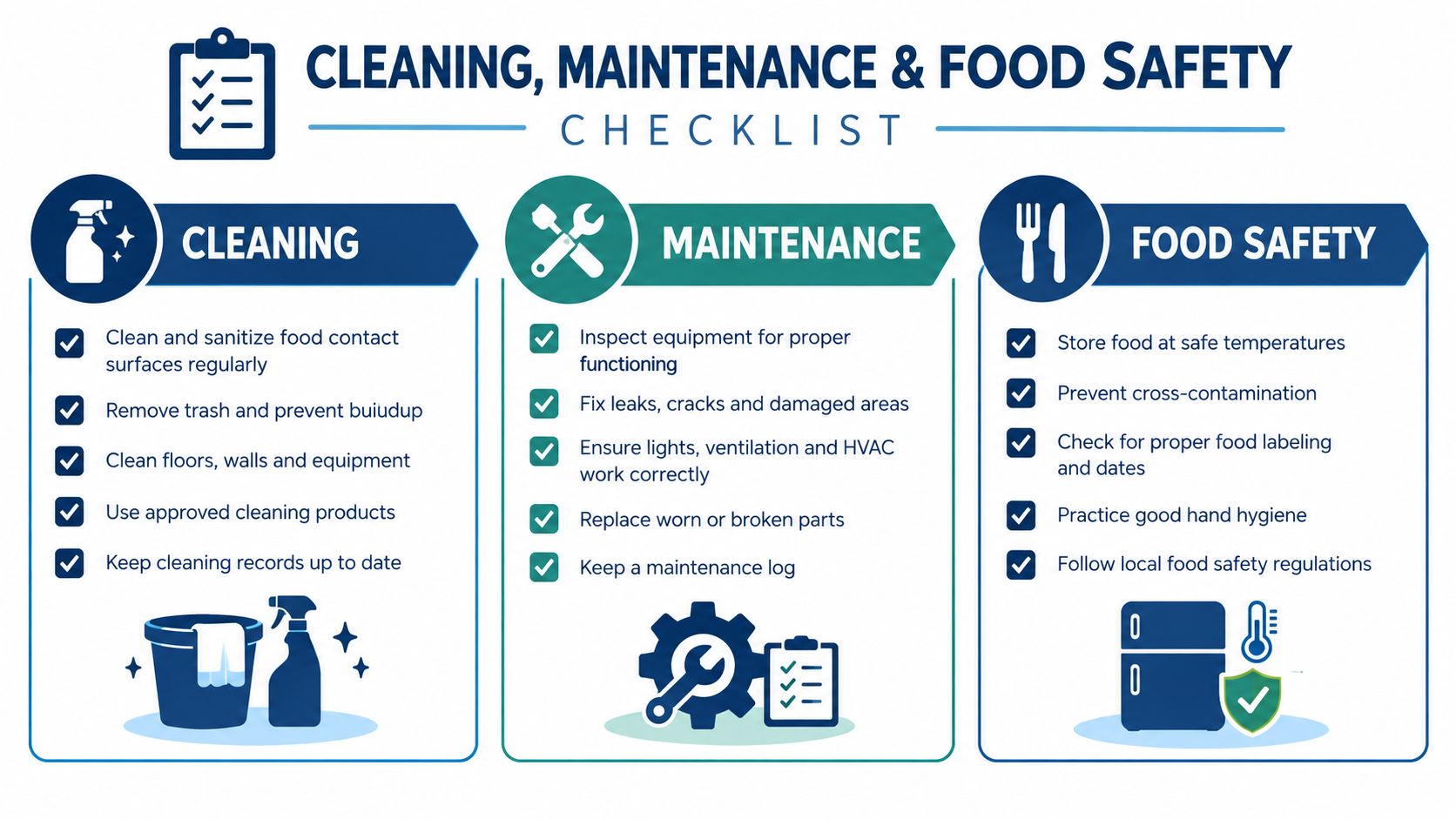
The product's care guidance should control detergent choice, water temperature, dishwasher use and drying. A kitchen shouldn't assume that every silicone mat is dishwasher-safe.
A practical routine normally includes:
- Clean after use: Remove grease, crumbs and baked residue before it hardens.
- Rinse thoroughly: Cleaning residues must not remain on the food-contact surface.
- Dry completely: Moisture trapped during storage can undermine hygiene and create handling problems.
- Store as approved: Keep the mat flat or use the manufacturer's permitted storage method.
- Protect the surface: Keep sharp utensils, blades, abrasive scrapers and cutting operations away from the mat.
Folding or creasing may damage reinforced products, while excessive heat can accelerate wear. Staff should avoid using the mat as a cutting board, even when the surface appears resilient.
Inspection rule: A mat with cuts, swelling, sticky residues, cracks or surface degradation should be removed from service, not assigned to a lower-risk product.
Food-contact claims require evidence
A label saying “food grade” isn't equivalent to a supplier declaration or applicable food-contact testing. Buyers should ask whether the documentation covers the intended foods, temperatures, cleaning conditions and repeated commercial use.
MPI identifies chemical migration from food-contact materials as an active food-safety research area, including work examining packaging chemicals migrating into New Zealand foods. MPI's food-safety research information explains why commercial operators should assess documentation rather than rely on appearance or a general non-stick claim.
Operators should also distinguish direct food-contact suitability from incidental-contact approvals. An approval for a lubricant used around food equipment doesn't automatically establish that a silicone mat is suitable as a food-contact surface.
New Zealand guidance also requires food-contact materials to suit the food type, storage conditions and intended shelf life. MPI's food packaging guidance states that materials must not react with or contaminate food and that migrating chemicals must remain within safe limits under the Australia New Zealand Food Standards Code.
Keep the relevant supplier declaration with the purchasing record. That supports due diligence and gives managers a clear basis for removing products when documentation, condition or intended use changes.
Making the Right Choice for Your Kitchen
The right liner depends on the product and the process, not on whether silicone appears more modern. A home baker may value a washable surface for regular cookies. A bakery may benefit from standardised mats on standardised trays. A hotel, caterer, school, hospital, aged-care kitchen or marae may need to prioritise cleaning controls, storage space and documented food-contact suitability.
Test before converting production
A liner change can alter the result beneath the food. Before a commercial kitchen changes every tray, it should run a controlled comparison using the same recipe, dough weight, tray, oven programme and spacing.
Record:
- Spreading: Does the product retain the expected shape?
- Browning: Is the base colour acceptable for the specification?
- Texture: Does the underside remain crisp, tender or soft as intended?
- Release: Does the product lift cleanly without tearing?
- Workflow: Can staff clean, dry and return the mat to service without delaying production?
This test matters most for cookies, delicate pastry and products where the base finish affects presentation. A reusable mat that reduces paper use but creates inconsistent product may be the wrong operational choice.
Match the venue to the liner
Home baking often suits a mat when the baker uses compatible trays, has room to dry it and wants a repeatable non-stick surface. Baking paper remains useful for shaped pans, unusual tray sizes and quick clean-up.
Low-volume cafés should compare the time spent washing mats with the number of sheets used. A mat may work well for a small, repeatable cookie programme, while paper may be simpler for occasional specials.
Bakeries should consider standardisation. The sequence of same tray, same liner, same product spacing and repeatable oven loading can reduce unnecessary process variation. It won't guarantee identical baking results, but it can make training and production control easier.
Hotels, caterers and event kitchens may need flexible liners because menus and tray sizes change. Paper can be easier to cut and dispose of between tasks, while mats require a clear return-to-service process.
Institutional kitchens should place particular emphasis on records, cleaning compatibility, inspection and replacement triggers. High-throughput use can accelerate wear, and a damaged surface can retain soil or cleaning residues.
Use this purchasing checklist
- What is being baked? Cookies, pastry, bread, confectionery and roasted foods may need different surfaces.
- What are the tray dimensions? Measure the internal usable area, not just the nominal tray name.
- What temperature will the mat experience? Include preheating, baking and any radiant heat exposure.
- Is the product rated for the oven and application? Check convection, deck and other high-temperature processes.
- How does the recipe bake on silicone versus paper? Test spreading, browning, texture and release.
- How frequently will the mat be used? Regular use may justify standardisation, but only if cleaning capacity exists.
- How will it be cleaned? Confirm detergent, rinsing, drying and dishwasher instructions.
- How will it be stored without damage? Plan flat or manufacturer-approved storage.
- Are material and food-contact claims verified? Retain supplier documentation and intended-use information.
- Which option makes operational sense? Compare reusable silicone with baking paper for this specific product, not for the kitchen in general.
A silicone baking mat is a useful tool when the recipe, tray, oven and cleaning system support it. It isn't indestructible, universally non-stick or automatically more sustainable. New Zealand operators should also plan for end of life because routine kerbside recycling doesn't currently accept silicone, and disposal options can be limited.
The strongest decision usually comes from a small trial followed by a measured rollout. Standardise the tray and mat where the result is reliable, keep baking paper for applications where flexibility or product performance matters, and review mats regularly for food-contact condition.
Simply Hospitality supplies commercial bakeware, trays, ovens, food-preparation equipment and hospitality essentials for New Zealand kitchens. Visit Simply Hospitality for help matching silicone baking mats and related baking equipment to tray sizes, oven processes, cleaning requirements and venue workload.