

SKOPE vs Atosa Refrigeration: A Practical NZ Comparison
A café manager has a fridge that's full before the weekend rush, a bar needs a reliable drinks display, and a restaurant is weighing a lower purchase price against years of electricity, servicing and potential downtime. That's where SKOPE vs Atosa refrigeration becomes a practical cabinet decision, not a simple brand vote.
Both brands have legitimate roles in New Zealand hospitality. SKOPE is a long-established New Zealand commercial refrigeration brand, while Atosa is an international manufacturer with a broad commercial range available in New Zealand. The right choice depends on the exact cabinet, the kitchen environment, the workload, monitoring requirements and the support arrangements behind the sale.
Setting Up the Real Comparison
The first mistake is comparing a premium SKOPE cabinet with an unrelated Atosa unit, then treating the result as a brand verdict. A proper assessment compares an upright fridge with an upright fridge, an underbench unit with an underbench unit, and a preparation cabinet with a preparation cabinet where the specifications align.
The decision should be built around five questions:
- What job must the cabinet perform? Ingredient storage, drinks display, frozen storage and preparation refrigeration place different demands on equipment.
- Where will it operate? A cabinet beside a fryer or oven needs a different ambient rating and ventilation plan from one in a cool storage area.
- What evidence is available? The exact model's GEMS registration, total energy consumption, climate class, refrigerant and temperature range matter more than a badge on the door.
- How important is monitoring? A venue with valuable stock or limited out-of-hours supervision may place greater value on compatible connected monitoring.
- Who will support it? Warranty coverage, labour, freight, parts and technician access can matter more than a headline warranty period.
Operators assessing several suppliers can also use a structured compare sourcing solutions approach to record equivalent specifications rather than relying on catalogue impressions. That same discipline helps a growing venue avoid buying a cabinet that suits its current stage but not its actual service pattern, as discussed in this guide to choosing refrigeration based on your business stage.
Practical rule: The exact model should win the comparison, not the brand name.
There's no universal winner. SKOPE may justify additional investment when a particular configuration, monitoring option or support arrangement solves a real operational problem. Atosa may be the more sensible choice when the required commercial specification is available at a competitive purchase price and advanced features aren't needed.
Where SKOPE and Atosa Sit in a NZ Kitchen
The comparison usually starts with the kitchen task. SKOPE covers upright storage, display refrigeration, bar refrigeration and underbench applications, while Atosa offers a broad commercial range that includes upright refrigeration, freezers, underbench units and preparation refrigeration available through Simply Hospitality.
That gives operators several useful like-for-like routes:
- Upright storage: Compare solid-door fridge with solid-door fridge, or freezer with freezer. Look at shelf layout, door arrangement, ambient rating and usable capacity.
- Display refrigeration: A glass-door display is suited to drinks, grab-and-go products and front-of-house visibility. The relevant comparison is visibility, access, lighting, energy data and temperature performance.
- Underbench refrigeration: Footprint and access matter as much as litres. The unit must fit beneath the bench while leaving enough room for staff to work safely.
- Preparation refrigeration: Pizza, sandwich and salad operations need usable ingredient access, work-surface design and compatibility with the pans or containers used during service.
- Bar refrigeration: Door configuration, internal layout, bottle access and customer-facing presentation should be assessed together.
The relevant product categories include SKOPE Upright Fridges, SKOPE Underbench Fridges, SKOPE Display Fridges, SKOPE Bar Fridges, Atosa Upright Freezers, Atosa Underbench Fridges and Atosa Preparation Fridges. The product category should be selected before the brand is judged. A useful background perspective on SKOPE's local popularity is available in why SKOPE remains a popular choice for New Zealand hospitality.
SKOPE vs Atosa at a Glance
| Range | Typical positioning | Monitoring options | Cabinet configurations | Energy information | Warranty/support | Price positioning |
|---|---|---|---|---|---|---|
| SKOPE | Varies by model and application | SKOPE Connect available on compatible models, varies by model | Upright, underbench, display and bar configurations, varies by model | Model-specific GEMS and published consumption data available for selected products | Warranty and support vary by model, registration may be required | Varies by model |
| Atosa | Broad commercial range with competitive entry options | Monitoring availability varies by model | Upright, freezer, underbench and preparation configurations, varies by model | Exact model GEMS and test data should be requested | Warranty periods and conditions vary by model | Often attractive at entry level, exact pricing varies by model |
The table is a starting point, not a substitute for a specification sheet. Capacity, climate class and service terms can change materially between cabinets carrying the same brand.
Build Quality and Daily Usability
A commercial fridge is handled repeatedly during every service. The useful comparison is therefore practical: does the door suit the workflow, can the shelves be removed and cleaned, is the controller easy to read, and can staff access stock without blocking another station?
Construction details vary by model. Stainless interiors and exteriors can simplify cleaning, but the finish alone doesn't determine whether a cabinet suits a particular kitchen. Operators should verify shelf material, shelf spacing, removable gaskets, castors or adjustable feet, lock provision, internal lighting and condenser access on the exact SKOPE and Atosa cabinet.
Features staff notice first
A self-closing door is valuable where staff move quickly and don't always have a free hand. A lock may matter for a bar, school, accommodation venue or shared kitchen. Internal LED lighting can improve product visibility, while solid doors usually suit back-of-house storage where presentation isn't the priority.
Preparation refrigeration needs a different check. The worktop, pan layout and usable access must match the ingredients used during service. GN compatibility, where specified, can simplify standardised preparation, but the operator still needs to confirm the actual pan depth and arrangement rather than assuming every preparation cabinet has the same layout.
The most useful cabinet is the one staff can load, clean and access without disrupting the kitchen.
Door swing and clearance also affect installation. A double-door upright may offer more capacity, but a tight corridor, narrow service lane or busy pass can make a different configuration more practical. Castors can help cleaning access, although the floor, final positioning and manufacturer installation requirements still need checking.
A common issue seen in hospitality kitchens is buying by advertised litres alone. Internal shelving, compressor space, door thickness and racking layout determine how much stock can be organised and retrieved. The Atosa refrigeration guide for hospitality operators is useful context, but the final decision should remain tied to the exact product specification.
Reading Energy Efficiency the Right Way
Energy comparison starts with compliance. EECA states that refrigerated cabinets sold or hired in New Zealand must meet Minimum Energy Performance Standards, or MEPS, covering display cabinets, drinks cabinets and professional refrigerated storage cabinets used for food or beverage storage. The framework uses the Energy Efficiency Index, which compares typical annual energy consumption with a reference consumption for the product type and configuration. EECA's refrigerated cabinet requirements set the relevant thresholds at:
- Below 130 EEI for refrigerated drinks cabinets and scooping or ice-cream cabinets.
- Below 115 EEI for heavy-duty refrigerated storage cabinets.
- Below 95 EEI for light- or normal-duty refrigerated storage cabinets.
These thresholds don't rank SKOPE against Atosa. They establish whether the exact cabinet is eligible for sale and provide a baseline for a proper comparison.
SKOPE's New Zealand display-refrigeration information lists model-specific consumption figures including 2.1, 2.81, 4.48, 4.98, 5.74 and 8.17 kWh per 24 hours. The published examples use NZ$0.30 per kWh, producing estimated annual running costs of about NZ$230 for a 2.1 kWh-per-day unit and about NZ$894 for an 8.17 kWh-per-day unit. These figures come from SKOPE's display refrigeration brochure, and they're examples of model-level data, not a brand comparison.
The difference between those examples is 6.07 kWh per day, or approximately 2,216 kWh per year, with a stated tariff difference of about NZ$665 per year. That illustration shows why cabinet size and purchase price alone can mislead. It doesn't show that SKOPE is more efficient than Atosa, because the products, configurations and test conditions aren't a matched comparison.
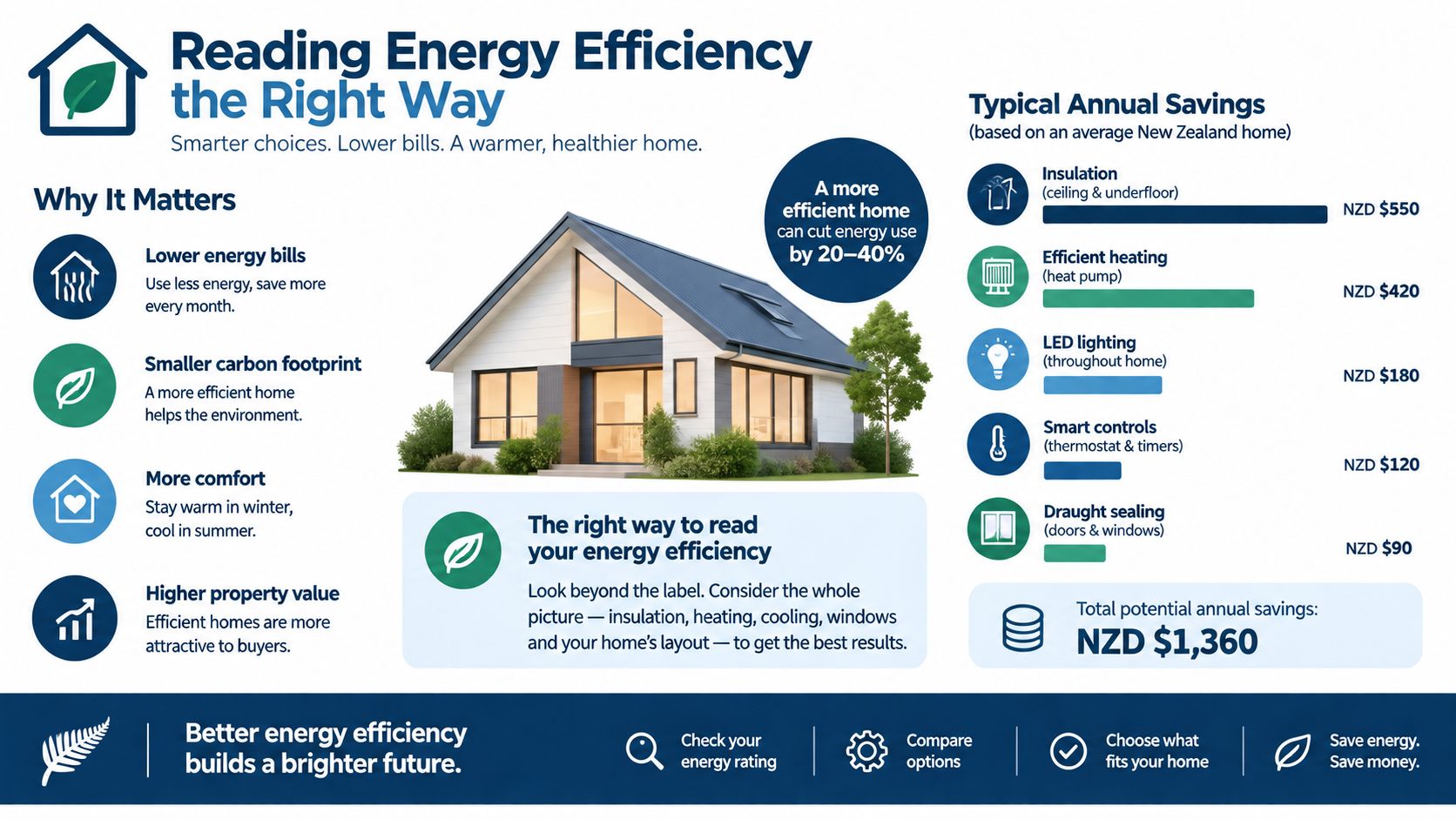
Refrigeration deserves this attention because it represented 22% of energy consumed by New Zealand's accommodation and food-services sector in 2022, according to EECA's food and beverage service sector analysis. EECA identified refrigeration as the largest kitchen energy-use category, ahead of commercial ovens and cooking elements at 15%.
Before shortlisting either brand, request:
- The exact GEMS total energy consumption, not a brand-level efficiency statement.
- The cabinet category and duty classification used for the test.
- The annual kWh figure and test conditions.
- The operating temperature and ambient rating.
- The model's New Zealand compliance status.
The Simply Hospitality guide to energy-efficient appliances supports the broader procurement principle. Running cost should sit alongside purchase price, warranty, service access, downtime exposure and food-loss risk.
Temperature Performance and Operating Environment
A fridge beside a fryer, oven or hot pass works harder than the same cabinet in a ventilated storage area. Frequent door openings, warm product loading, grease and restricted airflow can all affect compressor run time and temperature stability. The correct comparison is the model's declared operating environment, not the brand's general reputation.
Selected SKOPE ActiveCore units provide a documented high-ambient reference. They're designed to maintain performance at 40°C ambient, use R290 natural refrigerant and target Climate Class 5 conditions of 40°C and 40% relative humidity, according to the New Zealand comparison data available for the range. That's relevant to hot commercial kitchens, but the operator still needs to check the exact cabinet and installation clearances.
Atosa specifications also need to be read model by model. One listed Atosa specification describes a 40°C working ambient, with R404A in the freezer and R134A in the refrigerator. That doesn't make every Atosa cabinet equivalent, and it doesn't create a universal SKOPE advantage. It establishes the type of information that should be requested before purchase.
Refrigerant and temperature examples
A listed SKOPE SC112N-A display refrigerator uses R600a, contains 40 grams of refrigerant, operates from 0°C to 5°C, and has a stated maximum ambient temperature of 25°C. Its listed GEMS consumption is 3.03 kWh per 24 hours, with an estimated annual running cost of NZ$332 at NZ$0.30 per kWh, as documented in the SC112N-A product specification.
A current SKOPE ReFlex listing specifies 30°C maximum ambient, R600a, 1.30 kWh per 24 hours and an estimated annual running cost of NZ$143 at the same tariff. Those figures aren't directly comparable with the SC112N-A or the listed Atosa cabinet because the products differ in size, configuration and application.
Atosa search specifications identify R290, propane, in several commercial units. EECA recommends replacing high-global-warming-potential refrigerants with lower-GWP gases such as propane, carbon dioxide or ammonia. The practical check is straightforward:
- Ambient rating: Confirm it suits the actual kitchen location.
- Climate class: Check whether a high-ambient declaration is provided.
- Temperature range: Match the range to the food and beverage task.
- Refrigerant: Record the exact gas and charge.
- Defrost and ventilation: Confirm the system and installation requirements.
SKOPE Connect and Monitoring Where It Matters
SKOPE Connect is relevant when staff need more than a local temperature display. On compatible SKOPE refrigeration, connected functionality can support remote temperature monitoring and alerts, helping authorised users identify temperature changes without standing beside the cabinet. Availability depends on the particular model, so a buyer should confirm compatibility before treating connectivity as part of the specification.
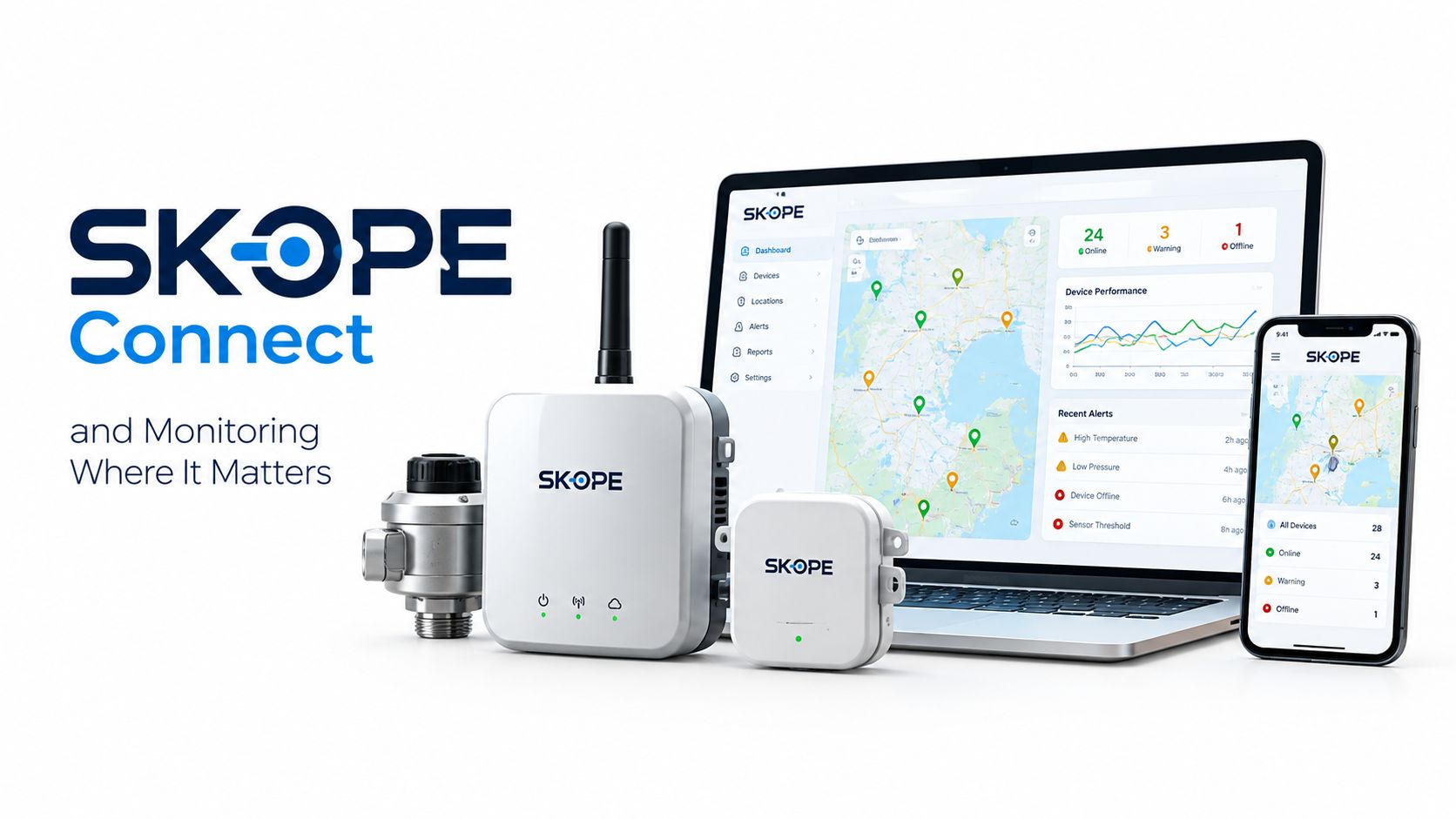
Monitoring is most meaningful where a refrigeration failure could expose a venue to significant stock loss, where managers oversee several sites, or where the premises aren't continuously staffed. A hotel, caterer, institutional kitchen or large restaurant may value an alert that prompts an early inspection.
For a small venue with one cabinet and consistent staff temperature checks, the added capability may not justify the extra complexity or cost. Monitoring doesn't prevent a compressor failure, correct poor loading or replace routine temperature checks and food-safety procedures.
Atosa's monitoring position is less developed in the New Zealand comparison data available for this article. If remote monitoring is a hard requirement, a compatible SKOPE model may be the more direct route. If it isn't, the decision should return to temperature performance, energy evidence, physical fit and support.
The commercial refrigeration monitoring guide helps operators assess whether connected equipment addresses a real control problem rather than becoming an unused feature.
Warranty, Service and Spare Parts in NZ
Warranty headlines need to be separated into parts, labour, compressor coverage and registration. A longer compressor term doesn't necessarily mean the operator receives full labour and freight coverage for every fault.
The listed SKOPE SC112N-A carries a one-year parts-and-labour warranty, and registration must be completed within four weeks of the invoice date, according to the available product information. Another SKOPE specification for the HB80-2 identifies a New Zealand freephone support number and describes an 80-litre countertop chiller with a 1°C to 4°C operating range, R600a refrigerant and no plumbing requirement. These details apply to the referenced products, not automatically to every SKOPE cabinet.
Atosa warranty information varies by model. Examples in the available product information provide two years for refrigerated components with an additional three years for a sealed compressor, while another Atosa listing provides two years for components and two additional years for the compressor. The exact New Zealand warranty document should be requested before the order is placed. The Atosa warranty reference demonstrates why the model number matters.
Questions that should be answered in writing
- Labour: Is labour included for the full covered period, or only under specific conditions?
- Freight: Who pays transport for a heavy cabinet or replacement part?
- Compressor: Is the compressor term separate from the cabinet and labour coverage?
- Registration: Does the warranty require registration, and what is the deadline?
- Parts: Are common controls, gaskets, shelves and refrigeration components available in New Zealand?
- Service: Who handles the claim, and which technicians cover the venue's region?
- Exclusions: Are installation, cleaning neglect, voltage issues or relocation excluded?
A warranty is only useful if the operator can activate it quickly. Businesses outside the main centres should ask about technician coverage and parts logistics before selecting a cabinet. The best brand-level assumption is no assumption at all. The written terms for the exact model should decide.
Choosing the Right Cabinet for Your Venue
The right answer changes with the kitchen. A café focused on drinks and prepared food has different priorities from a restaurant storing bulk ingredients, while a marae, school or aged-care kitchen may place greater weight on access control, straightforward cleaning and service continuity.
Cafés and casual dining
A café usually needs a combination of underbench access, display refrigeration and preparation storage. SKOPE may be attractive where a particular display or underbench configuration fits the front-of-house workflow, where connected monitoring is useful, or where the documented operating conditions suit the proposed location.
Atosa can be a sensible choice when the required underbench or preparation specification is available at a competitive purchase price and the business doesn't need connected features. The decision should focus on door clearance, usable shelving, pan arrangement, temperature range and the space available beneath the bench.
Restaurants and production kitchens
Restaurants should compare solid-door uprights by duty, climate class, shelf layout, door configuration and condenser access. A cabinet beside cooking equipment needs an ambient rating that matches the location. A model designed for a cooler area shouldn't be installed beside a fryer just because its litre capacity fits the plan.
SKOPE may justify a higher investment where a specific high-ambient configuration, monitoring option or support arrangement reduces operational exposure. Atosa may offer strong value where the cabinet meets the temperature, energy and workload requirements without features the kitchen won't use.
Bars and beverage service
Bars need to separate display from storage. A glass-door drinks cabinet may support visibility and fast access, while an underbench or back-bar unit may work better when staff need compact bottle storage without customer-facing presentation.
The relevant SKOPE or Atosa comparison should record internal layout, door style, lighting, temperature range, energy consumption and maximum ambient. Nominal volume doesn't show whether bottles, cans, garnish containers and kegs can be organised efficiently.
Hotels and institutional kitchens
Hotels, schools, hospitals, aged-care facilities and marae often need predictable access, clear ownership of temperature checks and practical service arrangements. A connected SKOPE cabinet may be useful where managers oversee several storage points or where an alert can trigger a prompt response. Atosa may suit a site with defined staff checks and a straightforward equipment specification.
Neither option removes the need for disciplined loading, cleaning, temperature recording and condenser maintenance. Equipment selection and operating procedure have to work together.
The buying checklist
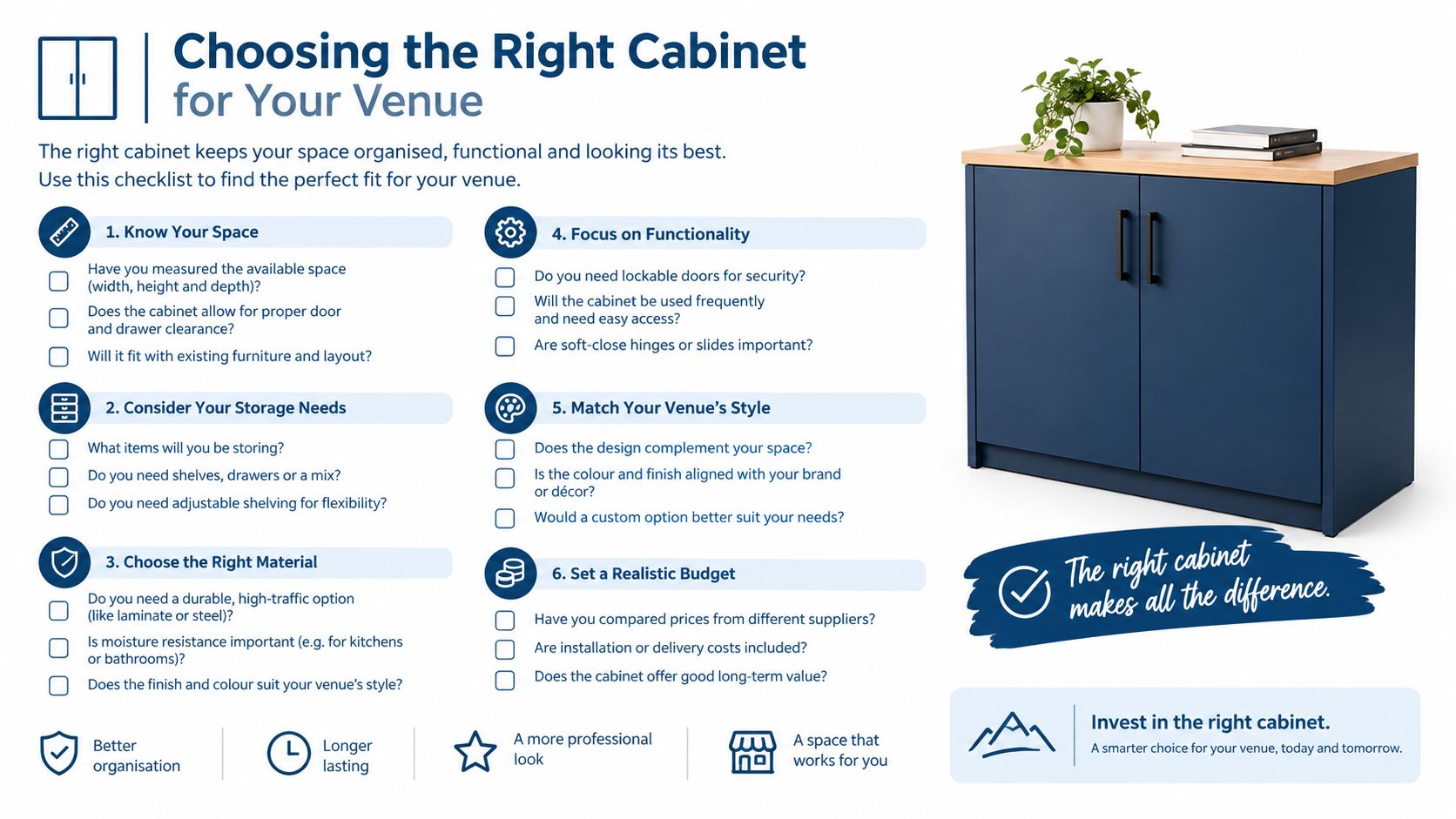
Before approving a SKOPE or Atosa cabinet, the operator should confirm:
- Application: Is it an upright, underbench, display, bar or preparation cabinet?
- Capacity: Does the internal layout suit the stock, not just the advertised litre figure?
- Dimensions: Will it fit through the delivery route and into the final position?
- Ambient performance: Is the declared ambient rating suitable for the kitchen?
- Climate class: Is the classification provided and appropriate?
- Energy: What is the exact GEMS total energy consumption?
- Refrigerant: Which gas and charge does the model use?
- Temperature: What range and pack-temperature class are stated?
- Warranty: Are parts, labour, compressor, freight and registration terms clear?
- Support: Who handles service and parts in the venue's region?
- Monitoring: Is SKOPE Connect compatible, and does the business need it?
Frequently asked questions
Is SKOPE automatically better because it's a New Zealand brand?
No. Local brand history doesn't replace model-level evidence. The cabinet's compliance, energy result, ambient rating, configuration and support terms should determine the decision.
Is Atosa only suitable for budget operations?
No. Atosa offers a broad commercial range. It can be appropriate when the exact cabinet provides the required temperature performance, construction, capacity and support without advanced features the venue doesn't need. It is value over budget.
Should operators compare litres first?
No. Usable storage depends on shelf spacing, door configuration, internal dimensions, pan compatibility and how staff load the cabinet. A smaller cabinet with a better layout may serve the workflow more effectively.
When does SKOPE Connect justify attention?
It deserves consideration where remote temperature visibility and alerts support a genuine monitoring requirement. It shouldn't be treated as a substitute for staff checks, maintenance or food-safety procedures.
Simply Hospitality can help hospitality businesses compare SKOPE and Atosa cabinets by application, dimensions, energy data, climate requirements, warranty terms and support needs. Visit Simply Hospitality to review the relevant refrigeration ranges and request practical advice for the venue's workload.