


Why Award Appliances Offer Outstanding Value for New Zealand Hospitality
A cheap oven can look clever on paper and turn into a headache by the next service. A venue saves a little on the invoice, then loses time, confidence and continuity when the appliance cannot keep up with the way the kitchen runs. That is why Why Award Appliances Offer Outstanding Value for New Zealand Hospitality is not really a price story, it is a workload story.
New Zealand hospitality is still a serious business base, with hospitality sales reaching NZ$15.7 billion for the year ended March 2024 and restaurants and cafés alone generating NZ$7.8 billion (Restaurant Association of New Zealand report). In that sort of environment, the right appliance is the one that fits the venue's real duty level, not the fanciest badge on the front. Award can be excellent value when the task is light to moderate and the buyer is honest about what the machine will face.
When the Cheap Appliance Costs Twice
A small function room buys the lowest-price oven it can find. It looks fine for tray warming and the odd platter, then gets pushed through a busy weekend with back-to-back use, uneven recovery and a staff member who has never used that exact control layout before. By the time the venue has paid for a replacement and a temporary workaround, the “bargain” has stopped being a bargain.
That mistake happens because too many buyers compare sticker price only. Real value is purchase price + installation + functionality + workload suitability + warranty + operating requirements, all measured against how the venue runs in practice. When one of those pieces is wrong, the whole purchase can turn sour.
Practical rule: if the appliance will be asked to work outside its intended duty level, it is already overpriced.
The better move is to match the appliance to the task, then decide whether a lighter-duty option is enough. That is where Award often makes sense for New Zealand hospitality, because the brand can sit comfortably in the middle ground, where not every site needs heavy commercial build, but domestic gear would be too fragile. The point is not to defend Award on brand loyalty, it is to judge whether the duty level lines up with the workload.
For operators who want a wider buying framework, the article on buying cheap versus buying once gives a useful companion view. The lesson is the same either way, a lower upfront number is only valuable if the appliance stays serviceable under the pressure it will really face.
Where Award Appliances Actually Fit in a Hospitality Setting
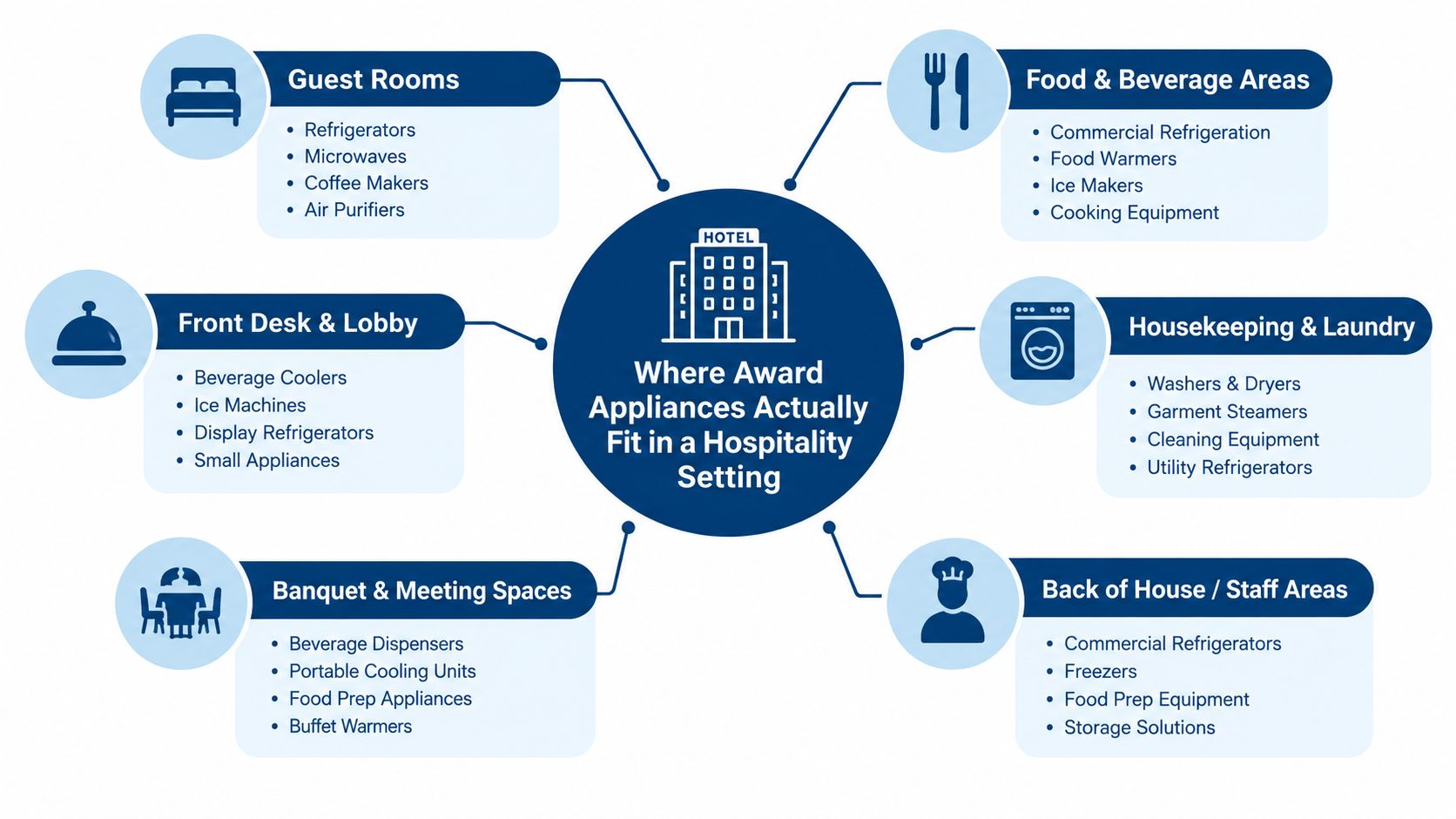
Award works best where the workload is intermittent, predictable or shared by people who are not trained chefs. That includes staff kitchens, small accommodation properties, community facilities, churches, sports clubs, meeting rooms, function spaces and lower-volume hospitality operations. It can also suit selected low-demand zones inside larger venues, where the task is limited and the appliance is not carrying the main service load.
Semi-commercial means context, not a universal label
The problem with the word semi-commercial is that people use it as if it were a fixed technical category. It isn't. The only sensible approach is to check the individual model's intended application, controls, clearances and warranty before assuming it belongs in a hospitality setting.
A proper commercial oven, dishwasher or combi unit is built for continuous, high-volume service, and that extra capacity costs money. In a lighter-demand site, that cost is often wasted. If the venue only needs occasional cooking, warming, chilling or washing, Award can be a practical middle ground because the buyer is paying for the capability required, not for a machine that will spend most of its life underused.
For operators comparing venue types and equipment tiers, the article on commercial versus semi-commercial appliances for workplace environments is worth reading alongside this one. A good local directory can also help when a buyer needs nearby service options, and find local business recommendations is a simple starting point for that search.
Where to draw the line
- Light, shared use: Award can make sense where the appliance supports occasional meal prep, reheating or limited service periods.
- Continuous service: fully commercial gear is the smarter call when failure stops service.
- Mixed facilities: one room or station may suit Award, while another needs stronger commercial construction.
A common mistake is treating the whole venue as one equipment category. The smarter approach is to look at each machine separately and ask what it will do, how often it will do it, and who will use it.
The Real Value Equation for Award Appliances
Award's value comes from fitting the job without overbuying the job. That usually starts with an accessible purchase price, but price only matters if the appliance also suits the site, the users and the daily rhythm of the business. In workplaces and community venues, straightforward controls can matter as much as fancy features because staff turnover, casual users and shared spaces create more opportunity for mistakes.
What you are really paying for
A good value appliance should answer four practical questions.
- Will it fit the space? Conventional dimensions can be useful in smaller kitchens and awkward fit-outs.
- Will people use it correctly? Familiar appliance formats can reduce training friction.
- Will it do the job without overspec? Buying capacity that never gets used is just wasted capital.
- Will it install cleanly? Some lighter-duty models may be easier to accommodate than heavy commercial alternatives, but every model still needs the right electrical, plumbing or ventilation setup.
That is the same logic used in any total cost discussion, including the broader idea of total cost of ownership described in the context of true cost of Meraki Wi-Fi. The label on the front matters less than the full cost of getting dependable use from the product over time.
Value is not the cheapest line item. Value is the appliance that stays useful after installation, training, cleaning and day-to-day use are counted properly.
Why range breadth matters
For operators with mixed needs, a broad product family can simplify buying. A venue may not want every item in the kitchen to be the same tier, but it may want a familiar look, matching control logic and a consistent approach to maintenance. That can make Award appealing where the work is light enough for it, while other appliances in the same site are specified differently.
Readers who want the category distinctions spelled out clearly should also refer to Domestic vs Semi-Commercial vs Commercial Equipment. The key point is simple, the value test changes once the appliance is expected to support business use, not just occasional household-style use.
A Workload Self-Check Before You Choose a Brand
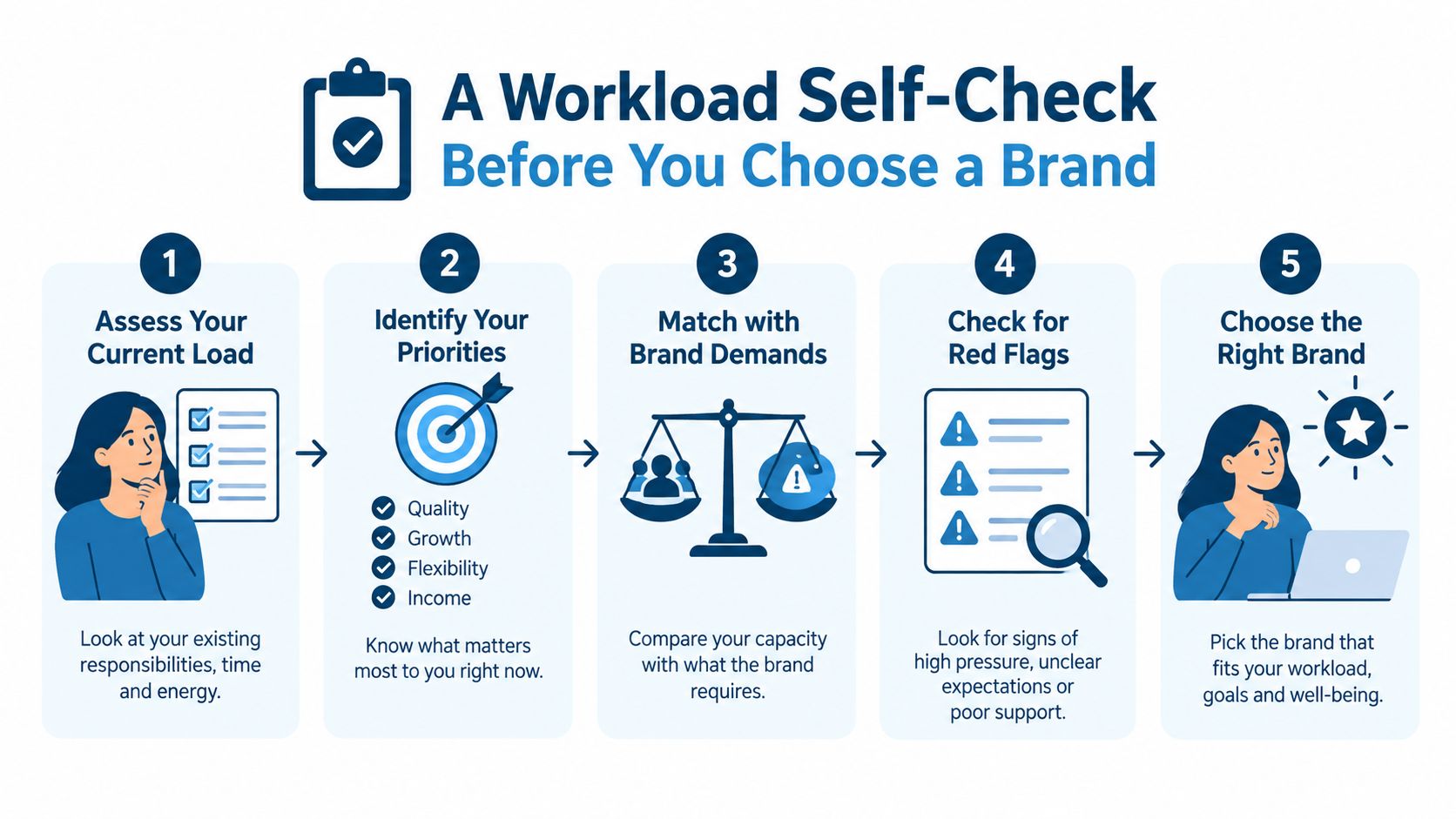
The right question is not, “Is this an Award appliance?” The right question is, “What will this machine be asked to do on the busiest day, at the busiest time?” A workplace oven used now and then has a completely different duty profile from a restaurant oven running through lunch and dinner with little recovery time between rounds.
Run the check in order
- Users and covers at peak. Who is using the machine, and how many people or meals depend on it at the busiest point?
- Busiest period of the week. A quiet weekday can mislead buyers into under-specifying equipment.
- Consecutive use. Ask how long the appliance must run without a proper break.
- Required output. Think in terms of trays, meals, loads or cycles, not just "enough".
- Duty level. The answer to the first four points tells the buyer whether light, semi-commercial or full commercial capacity is the sensible call.
That approach stops the common mistake of buying for the quiet day and hoping the busy day will somehow work out. It also prevents the opposite error, paying for a heavy-duty machine that will never be pushed near its design limits.
Simple test: if service failure would immediately stop trade, step up. If the appliance is supportive rather than mission-critical, Award may be enough.
A site can absolutely mix tiers. A workplace might use an Award oven for occasional staff food, then choose a tougher fridge or dishwasher because that machine carries heavier duty. That is the point, specify each appliance independently.
For a deeper explanation of the practical differences in those tiers, the article on what we've learned from helping hospitality businesses choose equipment gives a useful decision-making lens. The best purchases usually come from workload honesty, not from brand habit.
Award Products Worth Considering for the Right Job
Award has value when the model fits the site. Product-by-product selection matters more than general praise. A small function room does not need the same oven as a full restaurant kitchen, and a staff kitchen does not need the same washer as a high-turnover dining room.
Good-fit product types
- Ovens: sensible where cooking volume is modest, timing is predictable and users need familiar controls.
- Cooktops: useful in staff kitchens, small accommodation setups or light prep areas where output demand stays controlled.
- Dishwashers: worth considering only where cycle demand, recovery and hygiene requirements line up with the model's intended use.
- Rangehoods: relevant when the cooking setup is light to moderate and the installation can support the unit properly.
Each class is a candidate, not a promise. The key check is the workload the appliance will face, the installation conditions at the site and the warranty wording for the exact model.
Hospitality's Award line covers ovens, cooktops, dishwashers and rangehoods, so a small accommodation property can build a light-duty package without moving straight into heavier commercial construction. That suits smaller motels, apartments and shared-use facilities where the gear needs to be practical, familiar and easy on the building services.
| Award product class | Workload it suits | Where to verify fit |
|---|---|---|
| Ovens | Occasional cooking, warming and light service | Product page, intended use and warranty wording |
| Cooktops | Small-volume prep and shared kitchens | Electrical requirements, dimensions and controls |
| Dishwashers | Controlled load cycles in lower-demand sites | Water, drainage, cycle needs and service access |
| Rangehoods | Light to moderate cooking extraction | Site ventilation, clearances and install requirements |
For buyers comparing specific lines, the Award Appliances collection and the broader commercial range should be checked side by side. The aim is simple, choose the appliance that matches the job, not the badge on the front. That is how you avoid paying for capacity that will sit idle, and it is how you spot when stepping up to fully commercial gear is the smarter move.
Award vs Fully Commercial Equipment on the Tasks That Matter
The buying decision changes the moment the appliance is expected to carry service, not just sit in the kitchen. Award makes sense when the job is light, the usage is predictable, and the operator wants a lower buy-in with straightforward controls. Fully commercial gear such as Blue Seal, Waldorf and Turbofan earns its keep when the machine has to recover fast, handle repeated use, and keep performing after heavy cleaning and hard shifts.
Different tools for different jobs
A good example is service rate. An Award oven that only has to recover between two platters an hour is a fair, economical choice. Put that same oven into a 60-cover lunch service and the recovery gap shows up immediately, in slower output and more pressure on staff. That is the point where a fully commercial oven stops looking expensive and starts looking sensible.
This is why value is about workload, not brand loyalty. A machine that is doing support duty can justify a lighter build. A machine that sits on the critical path of trade cannot.
For operators still sorting the categories, the difference between domestic, semi-commercial and commercial equipment is worth reading once, because it gives the right frame before anyone compares labels or price tags. After that, the core question is straightforward: how hard will this unit be pushed in your venue?
Use that question to decide where Award fits and where it does not:
- Low-frequency service: Award can be good value.
- Continuous service: step up to fully commercial.
- Delay would interrupt trade: choose the tougher build.
- Support or backup duty: Award is often enough.
That is the cleanest way to buy. Pay for the capacity the task demands, and no more.
The Warranty Catch Every Operator Should Check First
A cheap appliance can look like solid value until the warranty is read properly. Award's manual states a standard 24-month warranty from the purchase date, plus an extra 12 months of parts-only cover after online registration. It also says that commercial purposes, or use outside a residential dwelling, reduce the warranty period to three months (Award appliance manual).
For a café, motel, function room, or staff kitchen, that wording changes the buying decision. If the unit is going into a working hospitality site, the operator needs to confirm the exact model, the intended use, and the support path before treating the price as good value. For support pathways, see our promise, trusted brands and full support. The warranty document still matters most.
What to verify before placing the order
- Intended use: confirm the specific model suits the actual environment.
- Registration requirement: check whether online registration is needed for the extended cover.
- Service pathway: know who handles support if the appliance needs attention.
- Downtime exposure: factor in the cost of interruption, not just repair.
The operator should never assume every Award product carries the same cover. The wording can shift by model and by use case, and that matters more than the sticker price.
Bottom line: if the venue is not a residential dwelling, read the warranty twice before counting the appliance as good value.
That one check saves grief. It turns a tempting purchase into a decision based on the actual duty level, which is how hospitality buyers should judge value.
Putting It Together and Getting the Right Advice
The right checklist is simple. Match the appliance to the workload, specify each item on its own merits, confirm the intended use and warranty in writing, then check the site's electrical, plumbing, ventilation, drainage and dimension requirements against the actual model. After that, confirm the service pathway for the region the venue operates in.
Outstanding value is not about choosing the cheapest appliance or the heaviest commercial one. It is about buying the machine that can do the job safely, consistently and without wasting capital on capacity that will never be used.
If the venue is looking at Award Appliances, or comparing them with broader commercial options, Simply Hospitality can help narrow the field to the models that fit the workload. For practical advice and the right mix of products, visit Simply Hospitality and talk through the exact site, duty level and support needs before buying.