

Why Cobra Continues to Be a Favourite in New Zealand Commercial Kitchens
Choosing cooking equipment is rarely about headline features. For most New Zealand operators, it's about whether the unit will handle breakfast rushes, lunch peaks, prep pressure, and repeated daily use without slowing the kitchen down. That's a big part of why Cobra continues to be a favourite in New Zealand commercial kitchens. The brand has built its place through straightforward operation, durable commercial construction, familiar layouts, and support that makes sense for local hospitality businesses.
For cafés, restaurants, clubs, and takeaway shops, Cobra tends to appeal for practical reasons rather than flashy ones. Many operators want equipment that staff can learn quickly, clean properly, and rely on through busy service. That preference lines up closely with how reliable equipment protects your busiest trading days, especially when a single failure can affect the whole menu.
The Enduring Appeal of No-Nonsense Commercial Cooking Equipment
A lot of equipment buying mistakes start with the wrong question. Operators compare feature lists, control panels, and brochure language, then end up overlooking the bigger issue. Can the equipment keep up every day without becoming a distraction?
That's where Cobra has stayed relevant. Its appeal comes from doing the fundamentals well. The controls are generally simple to understand, the layouts are familiar to kitchen teams, and the design approach suits businesses that need dependable cooking equipment rather than extra complexity.
Practical rule: In busy kitchens, straightforward equipment often beats feature-heavy equipment that slows training, cleaning, or service.
Many hospitality operators find that the best equipment isn't always the most advanced on paper. It's the equipment that fits the kitchen, suits the team, and keeps working under pressure. Cobra has earned that reputation by focusing on durable gas cooktops, fryers, griddles, and ovens that are built for everyday commercial use.
That matters most in venues where speed of understanding is almost as important as output. If a chef, duty manager, or new staff member can walk up to a unit and use it with confidence, service usually runs more smoothly.
A common consideration is whether a brand still makes sense once the venue grows. Cobra often does, because it sits in a practical middle ground. It offers a proven balance of durability, ease of use, and long-term value, which is why both new businesses and established kitchens continue to choose it.
Engineered for the Demands of Kiwi Kitchens
A Friday lunch rush is usually where equipment proves its value. The grill is full, one staff member is still new, space is tight, and nobody has time to work around fussy controls or slow recovery. That day-to-day pressure is a big part of why Cobra continues to suit New Zealand kitchens.
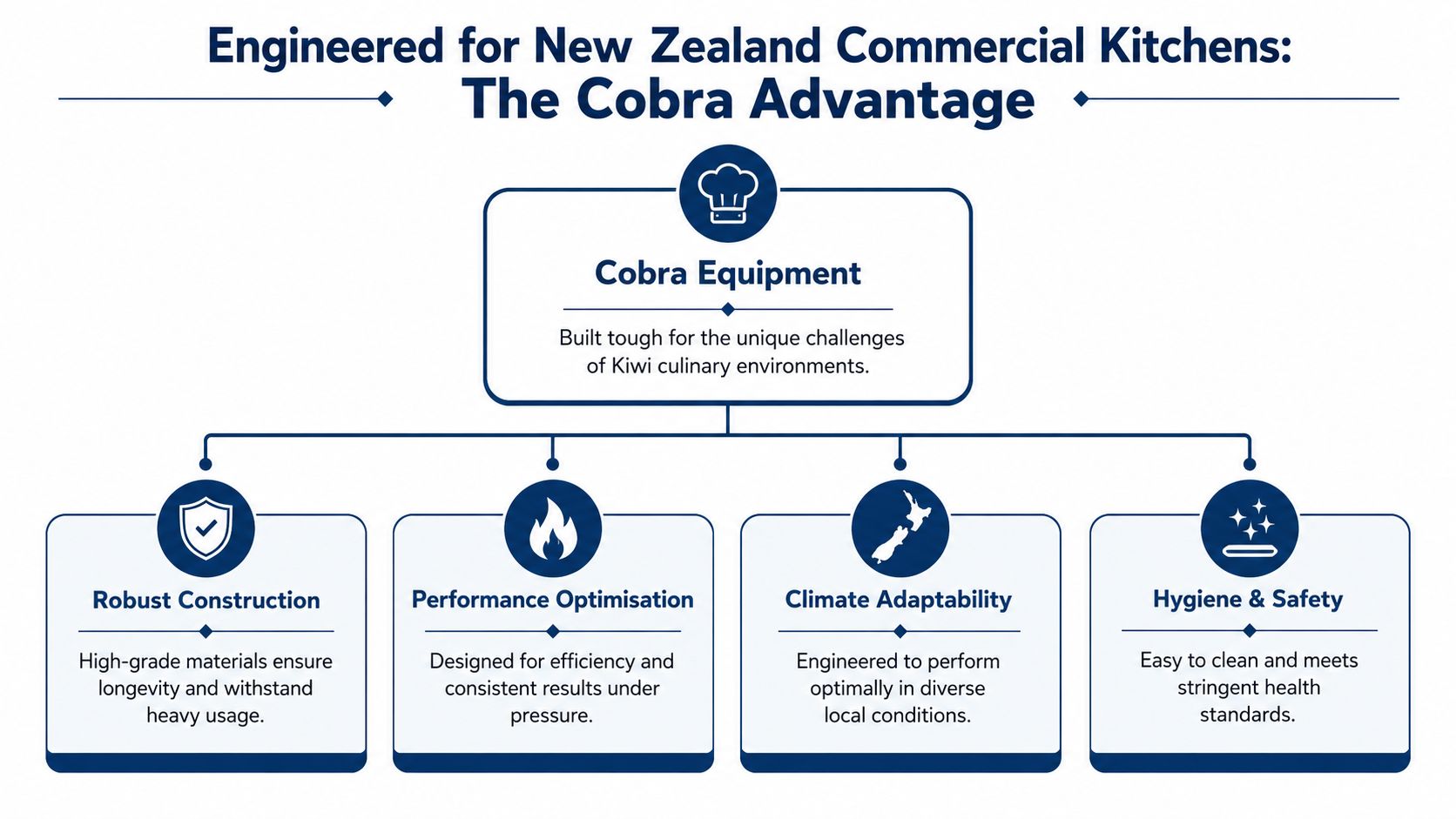
Built around real kitchen pressure
From a supplier's perspective, the appeal is practical. Operators are rarely asking for the unit with the longest feature list. They want equipment that fits the site, makes sense to the team, and keeps service moving without creating extra training or maintenance headaches.
Kiwi kitchens put particular pressure on gear. Floor space is often limited. Staffing can change quickly. One unit may need to cover prep, service, and clean-down with very little margin for error. Equipment that feels familiar from day one usually settles into the kitchen faster and causes fewer interruptions.
That helps explain why Cobra remains a common choice for core cooking lines. Operators tend to value:
- Clear controls that staff can learn quickly without long handovers
- Gas and electric formats to suit different premises and service styles
- Construction intended for repeated commercial use
- A practical finish that works in both open kitchens and back-of-house setups
I often see the same trade-off come up during fit-outs. A more complex unit can look impressive in a showroom, but if it slows training, cleaning, or fault-finding, the extra functions lose their appeal quickly.
Staff attention belongs on tickets, timing, and consistency. The equipment should support that, not compete with it.
Durability over novelty
Cobra tends to suit operators who prefer equipment that is direct and predictable during a real trading day. That matters more than brochure features once the kitchen is busy and the same tasks need to be repeated across every shift.
This is one reason Cobra is common in cafés, takeaway shops, clubs, and restaurant kitchens. In those settings, the question is rarely which unit has the most to talk about. It is whether the equipment can handle steady production, stay straightforward to operate, and remain practical to service over time.
Menu type still matters. A pizza-focused venue may be better served by a specialist unit such as the Moretti Forni Amalfi Single Deck Pizza Oven on Stand. For many other kitchens, the priority is getting the core line right first. That usually means choosing a dependable cooktop, fryer, griddle, or oven around the menu, volume, and available space. If you are weighing those basics up, this guide to choosing a gas range and oven setup for a commercial kitchen is a useful starting point.
From a supplier's side, that is the actual reason Cobra keeps coming up. It is built for the equipment decisions owners have to live with every day, not just the ones that look good on a spec sheet.
The Cobra Range Popular Models and Their Roles
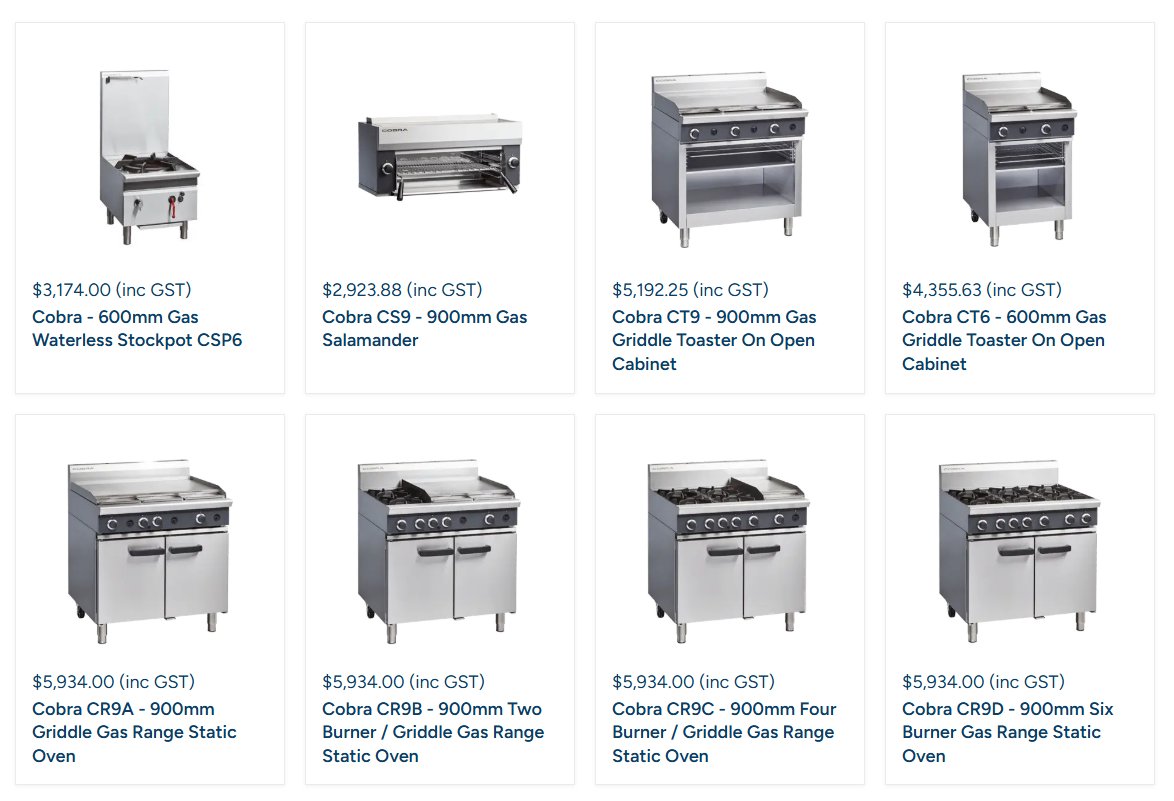
Cobra's reputation makes more sense when the range is viewed as a set of kitchen workhorses rather than as a single flagship product. The most common choices are usually the pieces that carry everyday production. Cooktops, griddles, fryers, and ovens.
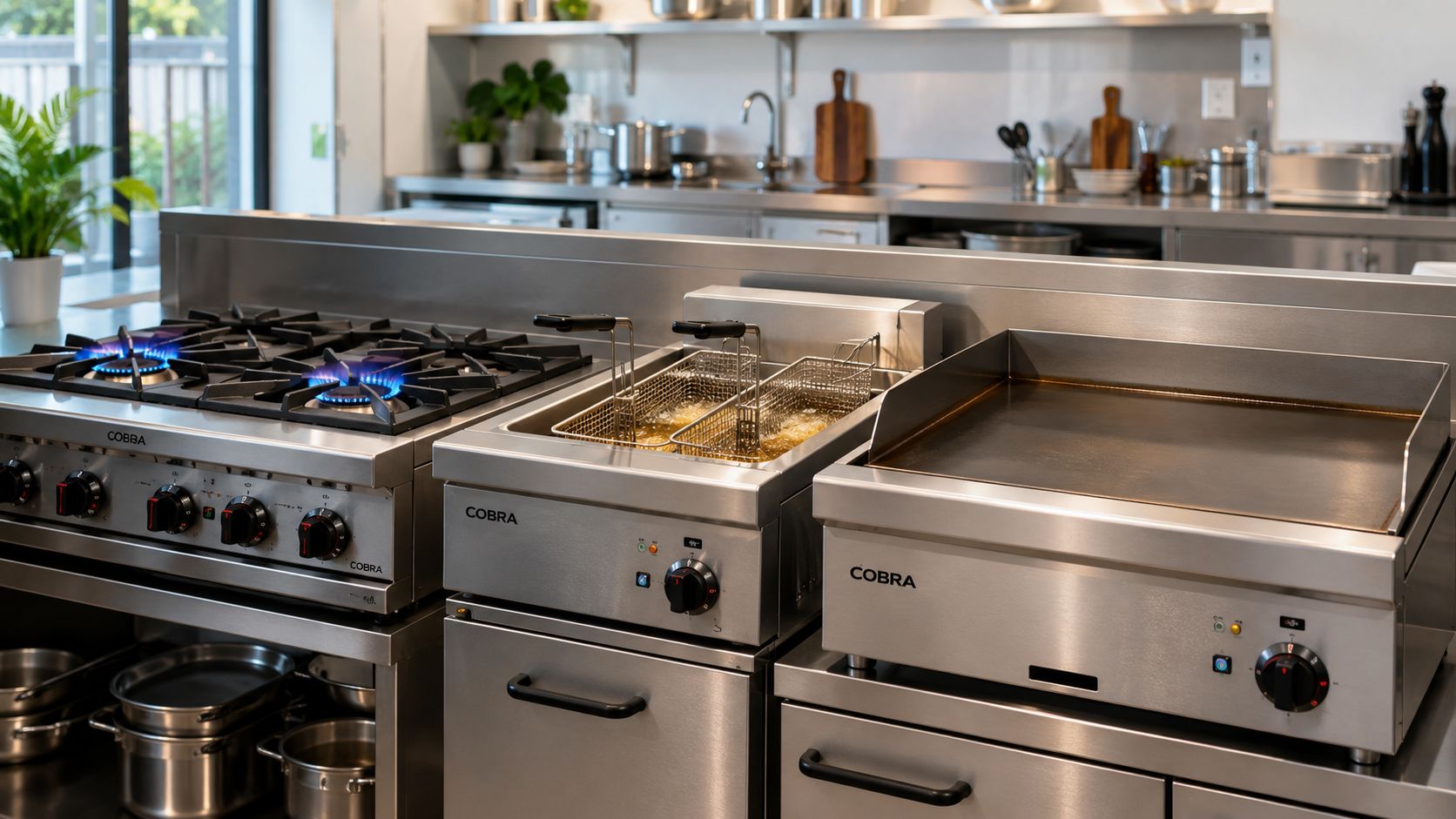
Gas cooktops for line cooking
Many operators choose Cobra gas cooktops when they need flexible, all-day production. These units suit restaurants, clubs, and takeaway kitchens where different pans are moving constantly and the menu changes across service periods.
A gas cooktop usually makes sense when the kitchen needs to:
- Boil, sauté, simmer, and finish across multiple dishes at once
- Train staff quickly on a familiar cooking format
- Keep the main line simple without relying on touchscreen controls
For new venues, a common mistake is underestimating how much of the menu still comes back to the cooktop. It often becomes the busiest part of the line, so ease of use matters.
Griddles for fast, repeatable menu items
Cobra griddles are popular in breakfast service, burger operations, and compact cafés. They fit well where the menu depends on repeatable flat-surface cooking and the team needs a unit that's direct to operate.
A griddle is often the right fit when the venue is serving:
| Venue type | Typical role for a griddle |
|---|---|
| Café | Breakfast proteins, eggs, sandwiches |
| Takeaway shop | Burgers, filled rolls, quick-turn proteins |
| Club or bar kitchen | Lunch and dinner service with simple line execution |
One simple tip is to match plate size to actual service flow, not ambition. Oversizing a griddle can create cleaning and space problems. Undersizing it can create ticket bottlenecks.
Fryers and ovens for volume and consistency
Cobra fryers remain a common choice because frying is often one of the highest-pressure parts of service. In fish and chip shops, casual dining kitchens, and pubs, operators usually want a fryer that is easy to use, easy to clean properly, and familiar to technicians and staff.
Cobra ovens also tend to suit kitchens that want dependable cooking without unnecessary complication. For some venues, though, a standard commercial oven isn't the right answer. Businesses with more specialised production may need to compare broader cooking formats, such as combi ovens vs convection ovens and what's best for the menu.
The most useful equipment is often the unit that the whole team understands on day one and still trusts years later.
The Value of Local Service and Parts Availability
Friday lunch service is not the time to find out how hard a brand is to support. A fryer fault or oven issue can turn into lost menu items, staff stress, refunds, and a kitchen that starts working around the equipment instead of with it.
Downtime is an operations problem, not just a repair job
Owners often focus on output, plate size, burner count, or recovery time when comparing equipment. In practice, support matters just as much once the kitchen is busy. If a cooktop fails, prep backs up. If a fryer goes down, key menu lines may need to come off. If an oven is out, production slows and service flow changes straight away.
From a supplier's perspective, this is one of the clearest reasons Cobra keeps getting chosen in New Zealand. The equipment is familiar, the support path is usually straightforward, and parts access tends to make more sense locally than it does with some lesser-known imported brands.
Imported equipment can still be a good fit. The trade-off is service complexity. If a unit needs a part that is not held locally, or a technician has to spend extra time identifying an unfamiliar system, a simple fault can become several days of disruption.
Why technician familiarity matters
A brand that local technicians already know is easier to live with. Fault-finding is faster. Parts identification is simpler. Conversations between the chef, owner, service agent, and supplier are usually clearer because everyone is working from a familiar platform.
That familiarity also helps when a site is replacing older equipment with like-for-like units. Staff do not need to relearn basic operation, and service history is easier to follow.
For kitchen owners, the day-to-day benefits are practical:
- Less time lost explaining the unit or chasing the right part
- Fewer delays caused by uncommon components or unclear model history
- Easier servicing through technicians who already know the range
- Better continuity when expanding, replacing, or standardising equipment across sites
This is also why we tell customers to assess support before they place an order, not after a breakdown. A useful reference is trusted brands and full support for hospitality equipment. It reflects the reality that buying the unit is only one part of the decision. Keeping it working through real service conditions is the other part.
The wider maintenance point is well understood across equipment-heavy industries too. Reducing service interruptions starts with addressing unplanned downtime and costs, then choosing equipment that can be supported in the market where you operate.
Beyond the Price Tag Understanding Total Cost of Ownership
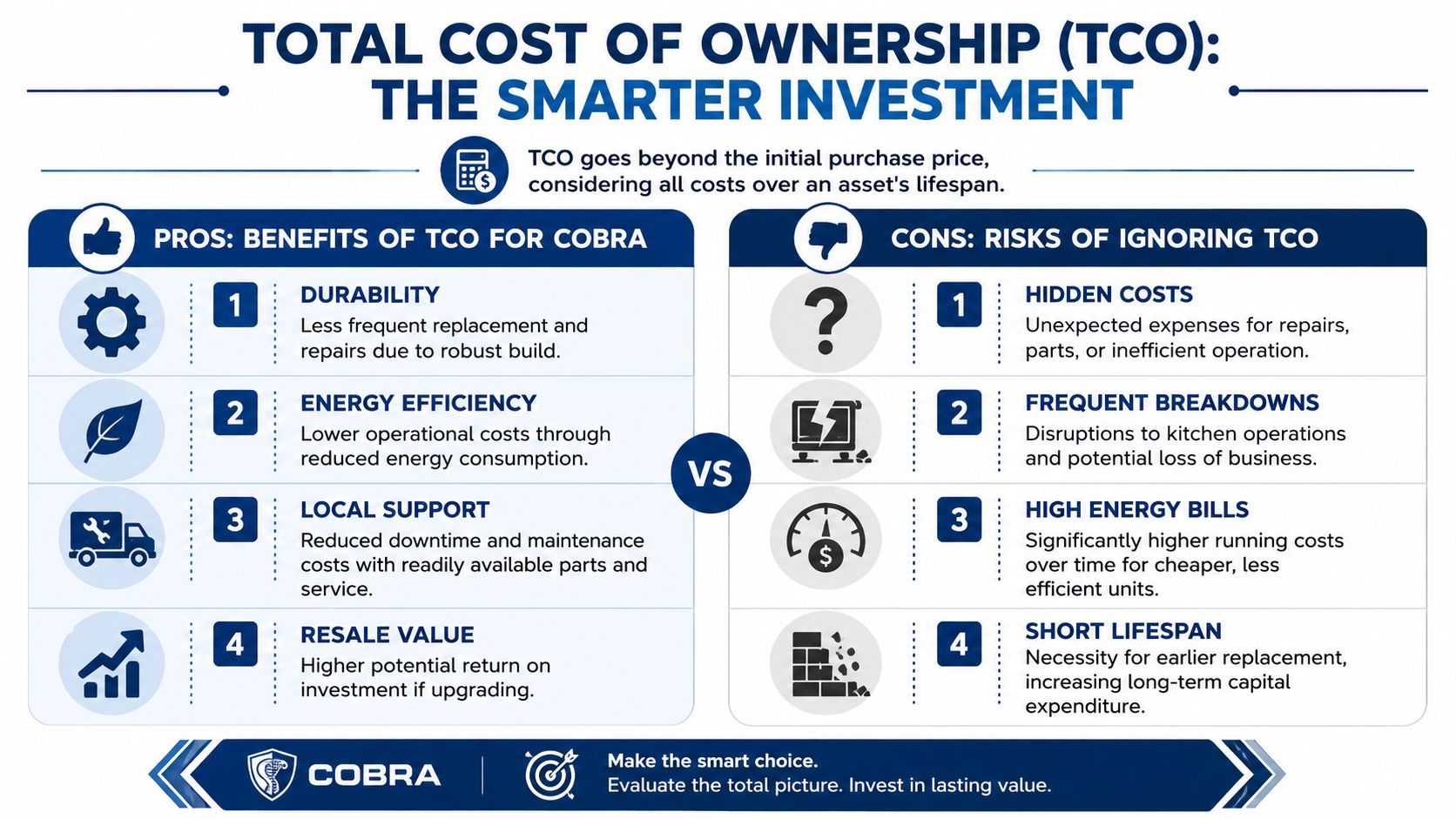
The cheapest purchase price can become the most expensive decision in the kitchen. That usually happens when operators compare units as if the invoice is the whole cost. It isn't.
What total cost actually means
Total cost of ownership is the broader view. It includes how the equipment fits the operation over time, how easy it is to maintain, how disruptive breakdowns are, and how often the kitchen ends up paying for poor buying decisions in labour or downtime.
One consideration regularly discussed with customers is that dependable equipment often protects margins in quiet ways. It helps the team work faster, keeps training simpler, and reduces the chance of service disruption. Those benefits don't always appear neatly on a quote, but they still affect the business.
A practical way to think about it is this:
| Looking only at price | Looking at total cost of ownership |
|---|---|
| Lower upfront spend | Broader long-term view |
| Easy to compare quickly | Harder, but more realistic |
| Can ignore service realities | Includes downtime and support |
| Often suits short-term thinking | Better for operational planning |
Why Cobra often lands well on value
Cobra tends to appeal because it sits in a useful middle ground. It's not chosen for gimmicks. It's chosen because many operators want a brand that offers a practical mix of durability, familiar operation, serviceability, and support.
That doesn't mean every kitchen should buy Cobra by default. The right solution depends on the menu, site services, production style, and available space. It does mean operators should look beyond spec sheets and ask harder questions about long-term ownership.
Key takeaway: A reliable unit doesn't just save on repairs. It also protects workflow, staffing confidence, and menu continuity.
For a broader maintenance perspective, this resource on addressing unplanned downtime and costs is useful because it frames the business impact of reactive equipment management. The same principle applies when comparing commercial kitchen equipment. Buying decisions should also be weighed against buying cheap vs buying once when equipment actually saves money.
Practical Tips for Choosing and Maintaining Your Cobra Equipment
Choosing the right Cobra unit starts with the menu and the site, not the catalogue page. A breakfast café may need griddle space first. A takeaway shop may prioritise fryers. A restaurant line may need a cooktop and oven combination that supports prep and service across multiple dayparts.
A few practical checks help:
- Match the unit to the menu. Don't buy extra capacity that won't be used.
- Check gas and electric services early. This can narrow the right options fast.
- Review kitchen flow. Equipment should support plating, pass access, and cleaning routes.
- Think about staff turnover. Simpler controls usually make handover easier.
- Plan maintenance from day one. Daily cleaning and scheduled servicing protect long-term use.
For supply, quotes, and range comparisons, Simply Hospitality is one New Zealand option for hospitality businesses sourcing commercial kitchen equipment and related fit-out categories.
Maintenance is usually less about complexity and more about consistency. Keep surfaces clean, follow servicing recommendations, and deal with small issues before they affect service. Cobra equipment is built for commercial use, but no brand performs well if cleaning slips or installation is poor.
If the kitchen is being planned, expanded, or upgraded, Simply Hospitality can help narrow down the right Cobra setup for the menu, workflow, and site requirements. A practical conversation early on usually saves time, avoids mismatched equipment, and helps operators choose a solution that works well for the long term.