

Why Roband Sandwich Presses Continue to Lead the Market
A lot of café owners start in the same place. The current sandwich press still works most days, cheaper alternatives look tempting online, and the difference on the invoice doesn't seem huge until service gets busy and the machine becomes one of the most used pieces of equipment on the bench.
That's where the question behind Why Roband Sandwich Presses Continue to Lead the Market becomes practical rather than theoretical. In busy breakfast and lunch trade, operators usually aren't buying a sandwich press for bragging rights or for a minor speed advantage. They're buying for consistency, staff confidence, straightforward cleaning, and fewer interruptions during service.
Many café owners continue choosing Roband because they've used it before in another venue and already know what they're getting. That matters. A sandwich press that staff trust, understand, and can operate confidently from day one often delivers more day-to-day value than a cheaper unit that looks similar on paper.
Built for the Realities of a Commercial Kitchen
A commercial sandwich press has a hard life. It's opened and closed repeatedly, left running through service, splashed with sauces and butter, and expected to keep producing the same result from the first docket to the last. Equipment that feels acceptable in a showroom can feel very different after weeks of constant use.
That's one of the reasons Roband has built such a strong reputation with hospitality operators in Australia and New Zealand. One of Roband's greatest strengths is that the equipment feels built for continuous commercial use rather than occasional light duty.
Why physical build still matters
A common issue seen across lower-cost equipment is that the weak points aren't the headline specs. They're the parts staff touch all day. Hinges loosen. Handles feel less stable. Plates become harder to clean properly. The unit may still heat, but it becomes less pleasant and less reliable to use.
Roband presses are widely trusted because the design makes sense for real kitchens:
- Heavy-duty construction: The unit needs to cope with repeated opening and closing through breakfast and lunch service.
- Simple controls: Staff don't need to fight the machine to get a reliable result.
- Commercial feel on the bench: Weight and solidity often signal whether a machine is made for sustained use or for lighter turnover.
Hospitality businesses often find that reliability problems show up at the worst time. Not during setup. During the rush.
Practical rule: If a sandwich press is critical to the menu, build quality matters more than a small saving at purchase.
Plate design affects more than cooking
Roband's cast-aluminium heating plates often incorporate micro-rib channels designed to reduce thermal fatigue and adhesive build-up from dairy-rich spreads and sauces, which supports easier cleaning and longer service life.
That detail matters because a sandwich press doesn't just cook. It also has to recover quickly for the next order and clean down without turning into a labour issue at the end of the shift.
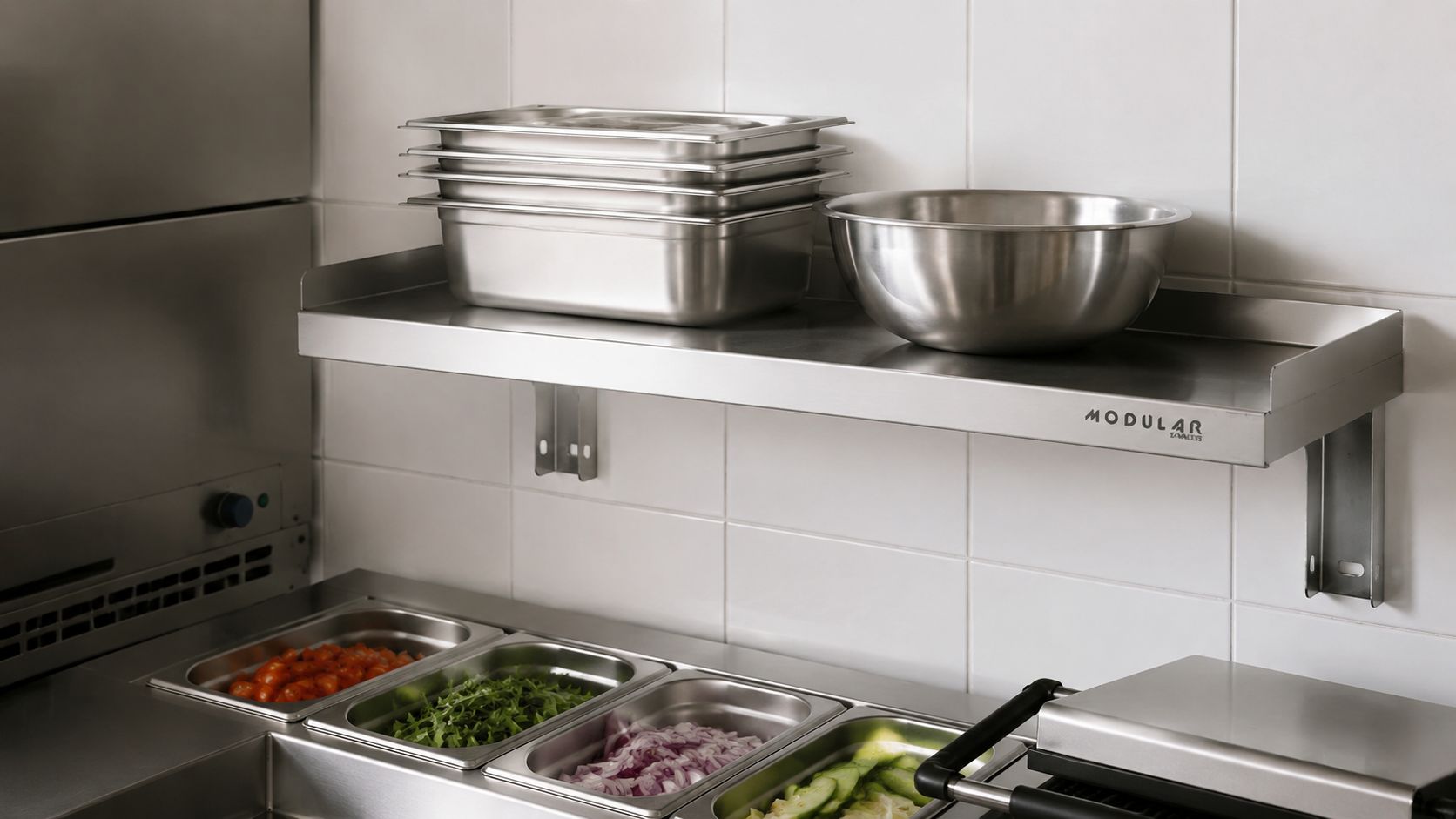
In kitchens where benchtop workflow is tight, surrounding setup matters too. Something as simple as a nearby storage shelf for wraps, trays, liners, or backup service items can help keep the press station organised. A Modular Stainless Solid Wall Shelf is available in widths from 600 to 1800 mm and uses a 1.2 mm thick stainless steel top with L shaped wall brackets and 3M high bond adhesive for shelf-to-bracket assembly. In practical terms, that kind of bench support can keep a toastie station cleaner and faster to work from.
For operators reviewing the broader flow around hot equipment, kitchen layouts that save time during service are often just as important as the machine itself.
The Secret to a Perfect Toastie Is Consistent Heat
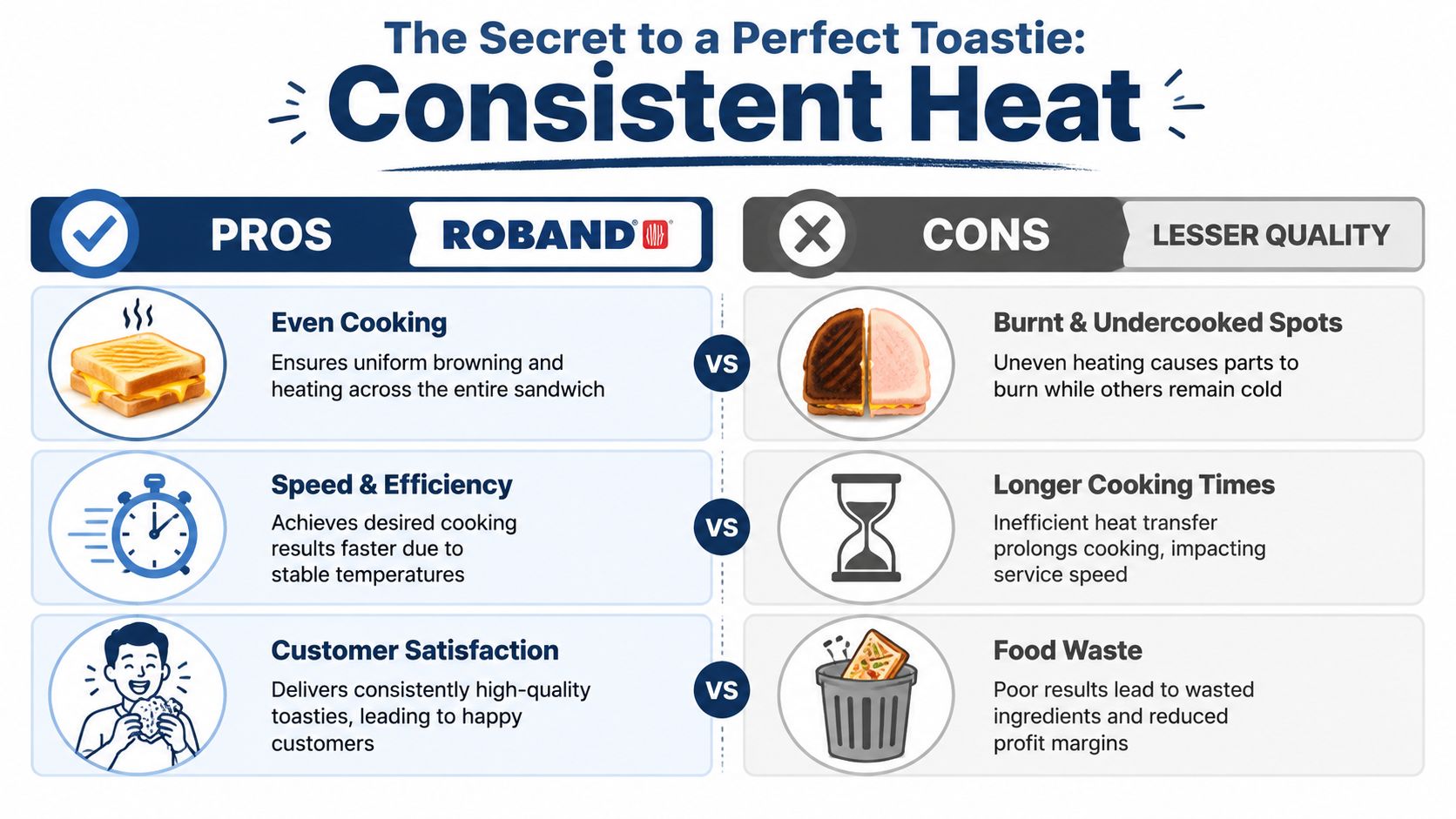
The feature chefs and café owners most often call out isn't a flashy add-on. It's the quality of the cooking plates and the consistency of the heat across the cooking surface.
That's the difference between a toastie that colours evenly and one that ends up too dark in one area and pale at the edge. In service, uneven heat creates rework, hesitation, and inconsistent output across different staff members.
What consistent heat looks like in practice
Higher-end commercial sandwich presses often use more precise temperature control systems that can hold thermal stability within a very narrow range, such as ±1°C, which helps prevent cold spots and improves operator efficiency according to this commercial sandwich press buying guide.
For an operator, that technical point translates into practical outcomes:
- More predictable browning: Staff can repeat the same result more easily.
- Better temperature recovery: The press is less likely to feel erratic after consecutive orders.
- Less second-guessing: Team members don't need to keep adjusting process to compensate for the machine.
A common consideration is that many cheaper presses seem acceptable when they're cooking one item at a time. Problems often show up only when the unit is used continuously through a lunch rush.
Why plate quality matters more than headline specs
Cast-aluminium plates are a major part of why certain presses perform more consistently. They help distribute heat more evenly across the surface, which is what operators notice during service. Not abstract engineering claims, just repeatable results.
This is especially important for menus that include a mix of:
- Classic toasties
- Panini-style sandwiches
- Wraps
- Filled breads with cheese-heavy centres
If the plate temperature isn't stable, those products expose the weakness quickly. Bread can mark before the filling is properly heated. One staff member leaves items on too long to compensate, while another pulls them early. Consistency drops.
When a sandwich press behaves the same way every shift, staff stop managing the equipment and start focusing on service.
For operators comparing equipment types more broadly, commercial hot plate considerations in New Zealand can also help clarify why stable heat delivery matters so much in benchtop cooking equipment.
What doesn't work well
The wrong buying logic usually sounds like this: the press only needs to get hot. In reality, that's not enough for commercial use.
What tends to cause frustration is:
| Issue | Operational result |
|---|---|
| Uneven plate heat | Inconsistent product and avoidable remakes |
| Weak temperature control | More guesswork between staff members |
| Slow heat recovery | Bottlenecks during peak ordering periods |
Reliability is often worth more than a minor difference in advertised cooking speed. A press that produces the same result all day usually contributes more to customer satisfaction than one that looks cheaper at the start.
Calculating the True Cost of Ownership
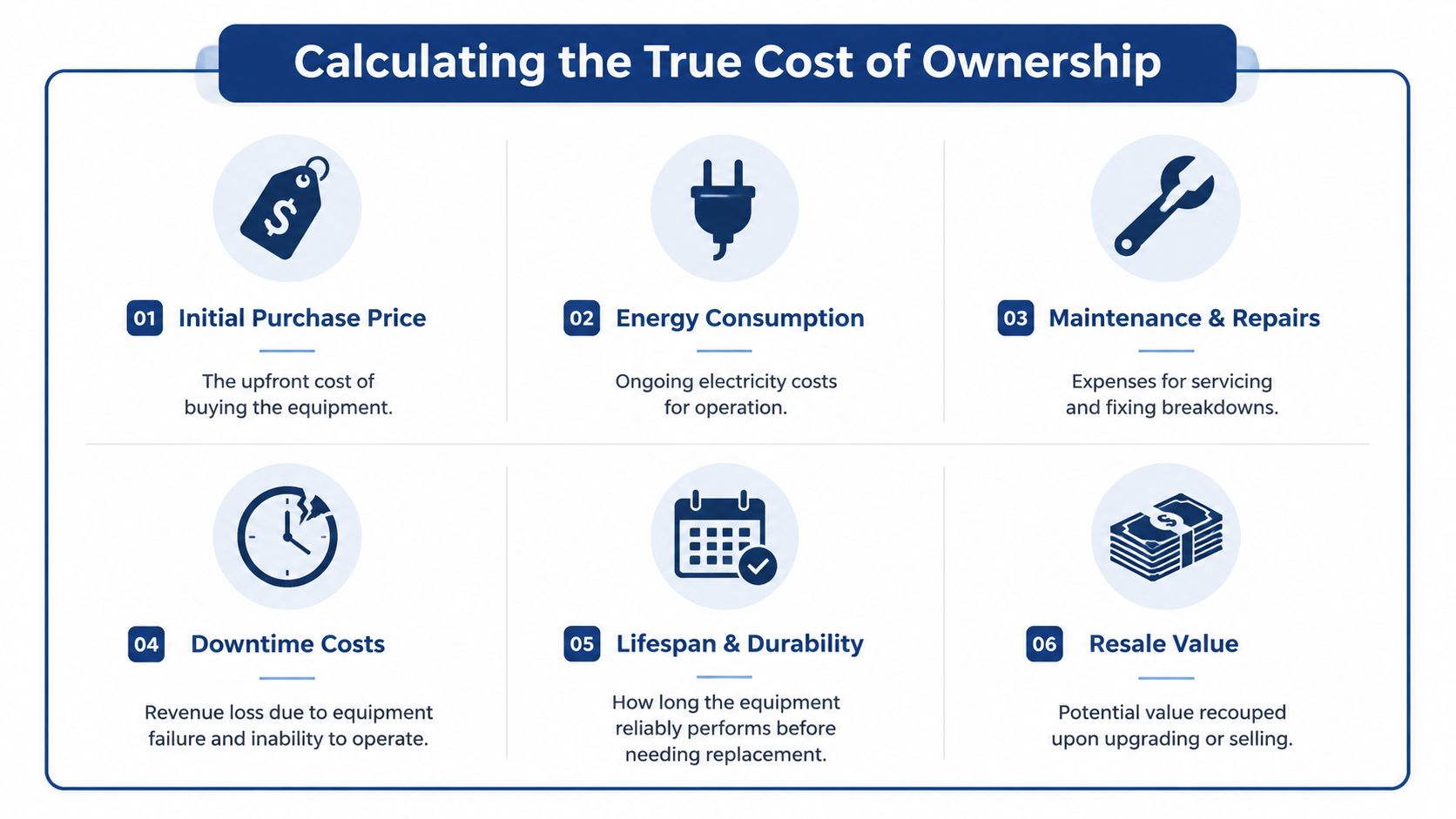
The invoice price is only one part of the buying decision. The more useful question is what the press costs to own once it's sitting on the bench every day.
That's where many operators change their view. A cheaper machine can look sensible right up until it causes a breakdown during service, produces inconsistent food, or becomes hard enough to clean that staff start avoiding it.
The costs operators usually feel later
Unplanned costs rarely appear as a single dramatic failure. More often, they show up as operational drag.
Examples include:
- Downtime during service: The menu slows down or staff need to improvise.
- Inconsistent output: More remakes, hesitation, and product waste.
- Repair interruptions: Time spent chasing service, parts, or temporary workarounds.
- Training friction: Staff need more supervision because the equipment behaves unpredictably.
Many operators replace a Roband with another Roband because they've already lived through this comparison. They know dependable daily performance is usually where the value sits.
Operational view: A sandwich press earns its keep by staying boring. It should turn on, heat properly, clean down, and keep working.
Serviceability matters in New Zealand
One consideration regularly discussed with customers is support after the sale. The value of strong after-sales service can't be overstated. Brands with a dedicated local office and phone support give operators a practical safety net because access to service and parts affects equipment retention and total cost of ownership, as outlined in this equipment support reference document.
That matters more than many buyers expect. When a press is part of the core menu, waiting on answers, parts, or servicing can become more expensive than the original saving on the purchase price.
A simple ownership checklist helps frame the decision:
| Ownership factor | What to ask |
|---|---|
| Purchase price | Is the saving meaningful over the life of the equipment? |
| Reliability | Can the unit handle daily breakfast and lunch demand? |
| Cleaning | Will staff keep it clean properly at the end of a hard shift? |
| Support | Is service and parts access realistic for a NZ operator? |
For a broader look at this thinking, buying cheap versus buying once is a useful lens for any core piece of kitchen equipment.
Why the cheapest option often isn't the lowest cost
Hospitality businesses don't run on purchase price alone. They run on continuity.
If a sandwich press is used constantly, value comes from stable operation, simple staff use, and fewer service headaches. That's why Roband is often treated as a long-term reliability purchase rather than a short-term price decision.
The Hidden Value of Staff Familiarity
One often-overlooked advantage is how many hospitality staff already know the brand. Chefs, baristas, deli staff, and front counter teams often arrive having used a Roband press somewhere else.
That kind of familiarity has real operational value, even if it doesn't appear on a specification sheet.
Familiar equipment helps teams settle faster
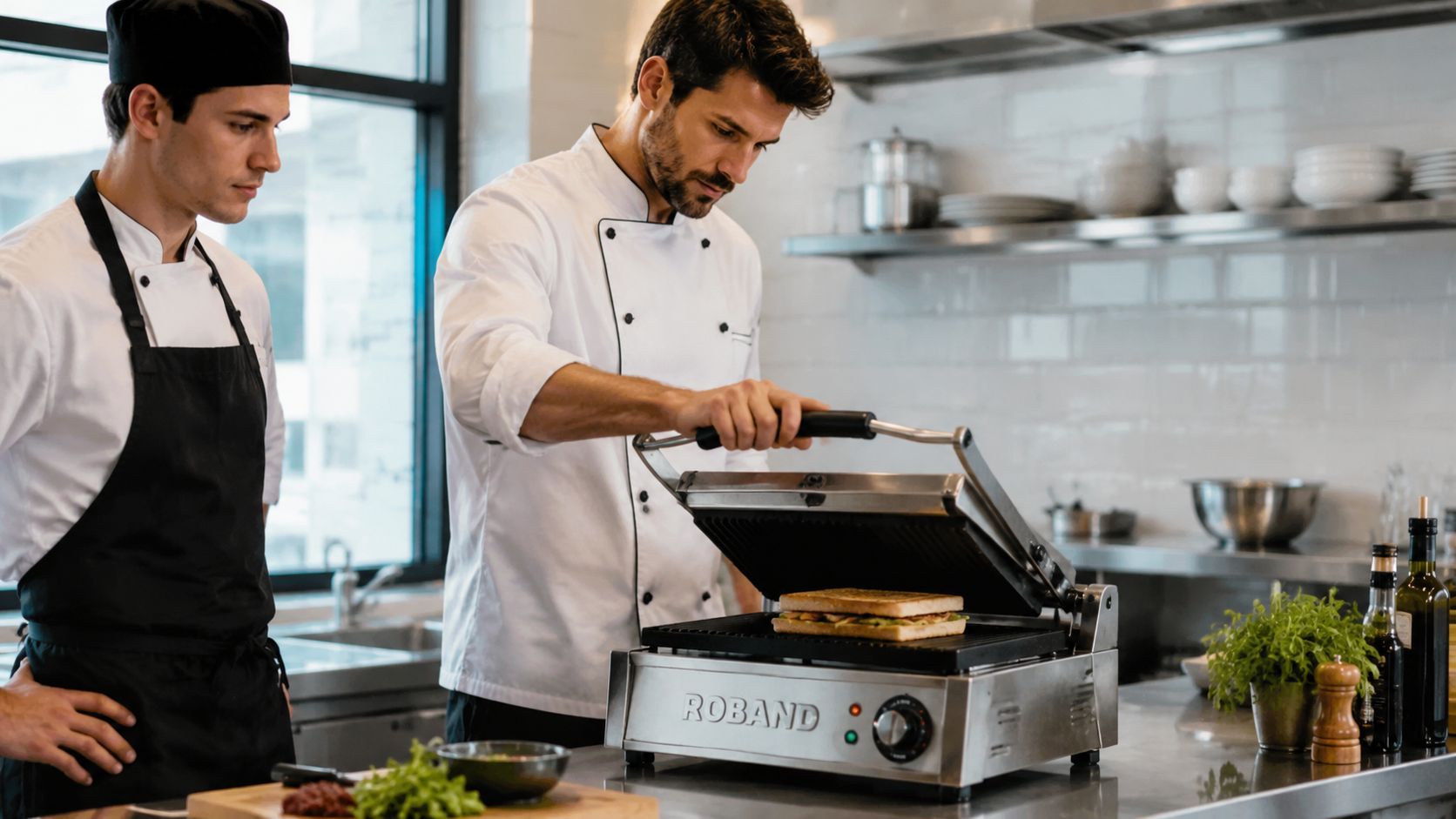
When staff already understand the controls, plate behaviour, and general handling of a press, onboarding tends to be smoother. They're less likely to overcompensate, less likely to misuse the machine, and more likely to produce a consistent result from the first shift.
Familiar equipment helps new staff become productive more quickly.
That matters in environments where:
- Casual staffing changes are common
- Supervisors can't spend excessive time retraining on basic equipment
- Consistency needs to hold across different team members
Many café owners continue choosing Roband because the brand is already part of the industry's shared experience. It's often the machine staff trust before they even start.
Confidence is part of efficiency
Staff confidence doesn't sound like a return on investment until a venue opens with a new team, a busy weekend roster, or a less experienced kitchen hand on the sandwich station. Then it becomes very clear.
A machine that feels familiar usually supports:
- fewer avoidable handling mistakes
- steadier output across shifts
- less supervision on repetitive menu items
Equipment staff already know can remove friction that owners otherwise pay for in slower service and extra oversight.
This is especially relevant for operators trying to increase output without adding unnecessary complexity. Scaling a menu without adding staff often depends on reducing training burden as much as improving equipment choice.
Why trust carries over from venue to venue
Many operators choose Roband because they've successfully used it in previous cafés, restaurants, or delis. That history creates trust. Not because the brand promises miracles, but because staff know the press can usually do the job without drama.
In a high-turnover industry, that's a meaningful advantage. A well-known commercial brand can make a kitchen feel more settled from day one.
Choosing the Right Roband Model for Your Menu
Roband's reputation doesn't remove the need to choose the right model. The right solution depends on menu, volume, and how the sandwich station fits into the rest of the bench.
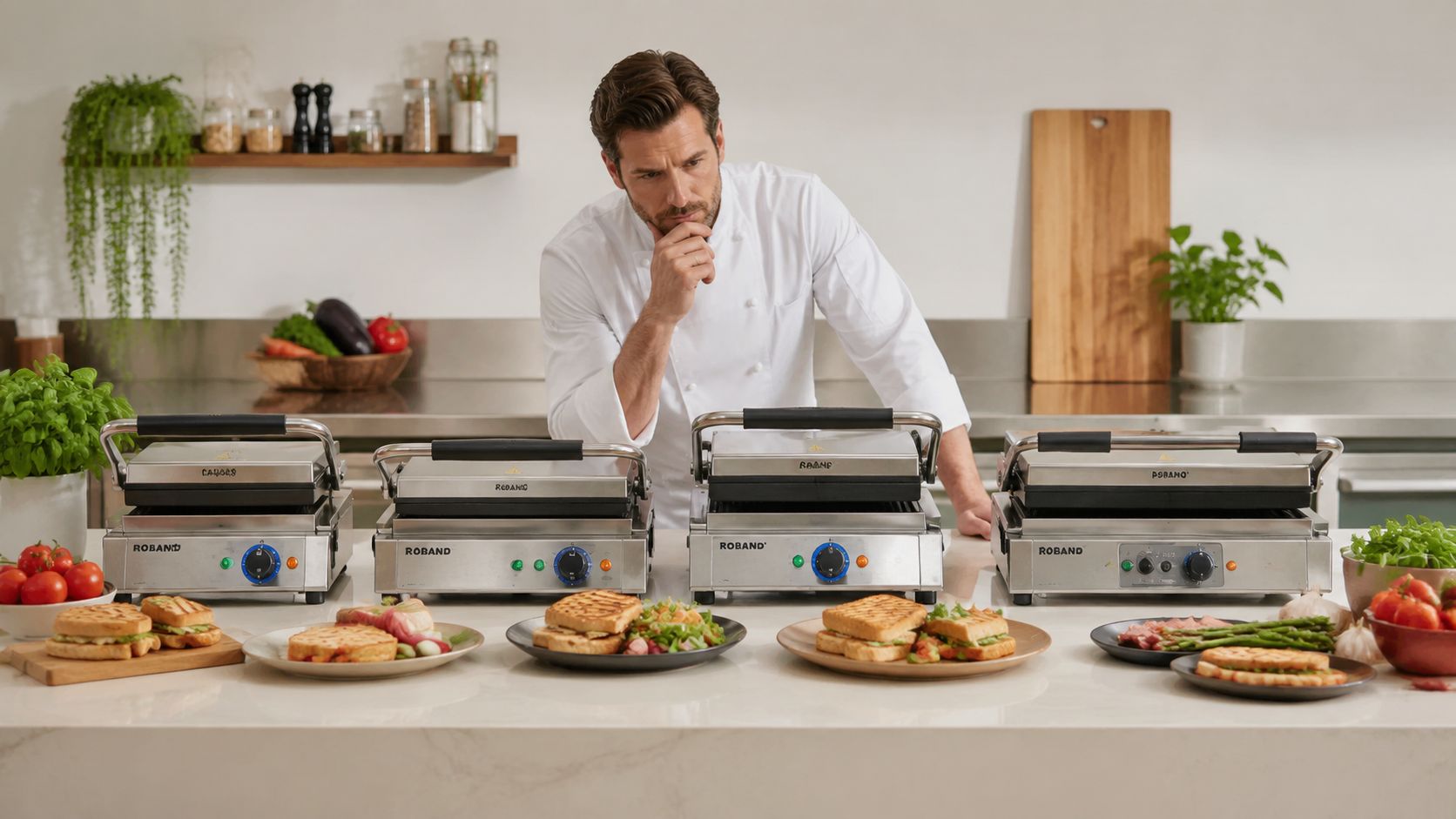
Match the plate style to the food
A simple way to narrow the choice is to start with the menu.
- Ribbed plates suit operators who want grill-mark presentation on panini-style sandwiches.
- Smooth plates are often better where the menu includes toasties, wraps, and other items that benefit from a flatter, more even contact surface.
- Mixed menu operations should think carefully about which product drives the most orders, not just what looks best in photos.
Size for service, not for quiet periods
Under-sizing creates pressure during rush periods. Over-sizing can waste bench space in compact sites.
A common way to approach it is to ask:
- What's the peak volume during breakfast and lunch?
- Is the press dedicated to sandwiches, or does it support other menu items too?
- How much bench room is available around plating, packing, and service?
Operators also often compare presses with other compact cooking options before deciding. For venues reviewing broader benchtop cooking capacity, how benchtop ovens fit different service models can help clarify where a press makes the most sense.
The reason Roband remains a trusted choice isn't that every model suits every venue. It's that the range is usually selected for dependable service, ease of use, and long-term day-to-day practicality rather than a short-term bargain.
If your venue is weighing up sandwich press options, Simply Hospitality can help assess the practical fit for your menu, workflow, and service demands. A well-chosen press should support consistency, staff confidence, and reliable daily output, not just look good on a quote.