

Why Stanley Rogers Cutlery Continues to Set the Table
What makes a cutlery range remain relevant when restaurant styles, service models and customer expectations keep changing? The answer isn't heritage alone. In commercial hospitality, a range has to look right in the guest's hand, perform through repeated service and warewashing, and remain practical to replace when pieces go missing.
Stanley Rogers continues to attract attention across Australia and New Zealand because it sits at that intersection of table presentation, material specification and operational continuity. Its history gives the name recognition, but its ongoing relevance depends on whether individual ranges still suit contemporary tables and the repetitive realities behind the scenes.
What Keeps a Cutlery Range Relevant
A cutlery range has two jobs. The first happens at the table: the fork needs to feel balanced, the spoon needs a useful bowl, and the knife needs to work comfortably with the food being served. Weight, proportions and finish all contribute to how the setting feels without making claims about revenue or guest behaviour that cutlery alone can't support.
The second job happens after the plate is cleared. Pieces move through service, sorting, washing, storage and resetting, often with contact against crockery, other utensils and dishwasher baskets. Food acids, salt and repeated wash cycles can corrode stainless steel when residue remains on the surface, which makes prompt rinsing and cleaning part of the ownership decision, not an afterthought, as explained in New Zealand tableware care guidance.
The dual-job test
Many purchasing decisions focus on the first impression of a new set. That matters, but a range that feels excellent on its first service still needs to retain an acceptable appearance and function after repeated commercial handling. Operators should therefore assess:
- Table performance: How does the piece feel, balance and work with the menu?
- Back-of-house resilience: Is the material appropriate for the washing and handling routine?
- Continuity: Can individual pieces be replenished without replacing an entire setting?
- Whole-of-life value: Does the purchase make sense once losses, replacements and presentation requirements are included?
Practical rule: A range earns its place when it performs at the table and remains manageable behind the pass.
That test explains why some patterns stay in use while more fashionable options disappear. Longevity gets a brand recognised. Continuing to produce ranges that work on contemporary tables is what keeps it relevant.
Stanley Rogers Through the Decades
Could a cutlery range with decades of history still meet the demands of a busy New Zealand venue? Stanley Rogers began in 1930, when Stanley Rogers opened a small retail store on Elizabeth Street in Melbourne. The business first developed its trade by sharpening knives and repairing cutlery, then expanded into premium dining and kitchenware. It later acquired a cutlery factory in Sheffield, England, a city associated with steel and cutlery production, as recorded in the Stanley Rogers catalogue history.
That background gives the brand a 95-plus-year heritage as of 2026, but heritage alone does not justify a hospitality purchase. A venue needs forks, knives and spoons that suit the table, withstand service and warewashing, and remain available when losses or wear reduce the stock count. The buying test is practical: performance during service, survival behind the scenes, replacement access and whole-of-life value.
Manufacturing arrangements and product availability can change, so operators should confirm the current specification for the exact range. That matters when replacing older stock. A new piece may look similar in a catalogue yet differ in construction, finish or production route, creating mixed settings or an unplanned tabletop replacement.
Continuity matters in service
A familiar pattern helps when a venue needs to replace a small quantity of teaspoons, forks or knives without changing every place setting. The benefit is range continuity, not nostalgia. If replacement pieces are visibly different, staff may need to mix settings, remove usable stock or approve a larger purchase than the original maintenance problem required.
Stanley Rogers remains visible through New Zealand retail and hospitality-adjacent channels. A local marketplace lists 199 kitchen-related items, while a New Zealand cutlery retailer lists 73 Stanley Rogers products in its brand assortment. These listings suggest breadth and local availability, but they do not prove commercial wear rates or confirm that every older pattern remains in production. Buyers comparing ranges can also review quality cutlery options featuring Tablekraft and Stanley Rogers.
For event planners coordinating a complete occasion setting, this guide to Stanley Park wedding rentals is a useful aside on how tableware fits within a wider hire and styling plan. Restaurants, hotels and caterers face the same coordination issue. Heritage may start the conversation, but reliable service performance and replacement continuity determine whether a range earns its place.
What 18/10 Stainless Steel Actually Means
The numbers in 18/10 stainless steel describe the approximate alloy composition, 18% chromium and 10% nickel. Chromium supports the passive oxide layer that helps resist staining and corrosion. Nickel stabilises the austenitic structure, contributing to toughness, appearance retention and a brighter polish.
New Zealand hospitality buying guidance describes 18/10 as the premium commercial grade for cafés, restaurants and hotels. The same guidance places 18/8 close in functional performance, while 18/0 is generally more suited to budget applications or knife blades because it offers less corrosion resistance. These are useful buying distinctions, but they don't mean every Stanley Rogers item uses the same specification.
Material is the starting point
Operators should read the specification for the exact product or range. Stanley Rogers states that its 18/10 stainless steel products carry a 50-year guarantee, while its 18/0 stainless steel cutlery carries a 25-year guarantee, with the New Zealand Consumer Guarantees Act 1993 applying to New Zealand customers. The guarantee is not a promise that a venue can ignore cleaning, handling or replacement planning.
The Stanley Rogers Baguette soup spoon in 18/10 stainless steel is an example of why the individual product page matters. It identifies the material rather than leaving the buyer to infer that all pieces across a brand have identical construction.
| Property | 18/10 Stainless | 18/0 Stainless |
|---|---|---|
| Chromium content | 18% | 18% |
| Nickel content | 10% | None specified in the designation |
| Corrosion resistance | Generally stronger resistance when properly cared for | Generally lower resistance |
| Typical positioning | Premium commercial tableware | Budget or selected knife-blade applications |
| Buying caution | Still requires correct rinsing, washing and storage | Material alone doesn't determine suitability |
Two forks can both be labelled 18/10 and still feel different. Gauge, temper, shaping and finishing affect weight, balance and hand feel. A polished piece can also show fingerprints differently from a satin finish, while a coating introduces another surface consideration during washing.
The practical conclusion is simple. 18/10 is a strong starting point for many hospitality settings, not the whole purchasing decision. Intended use, design, finish, care instructions and replacement access still need to be checked.
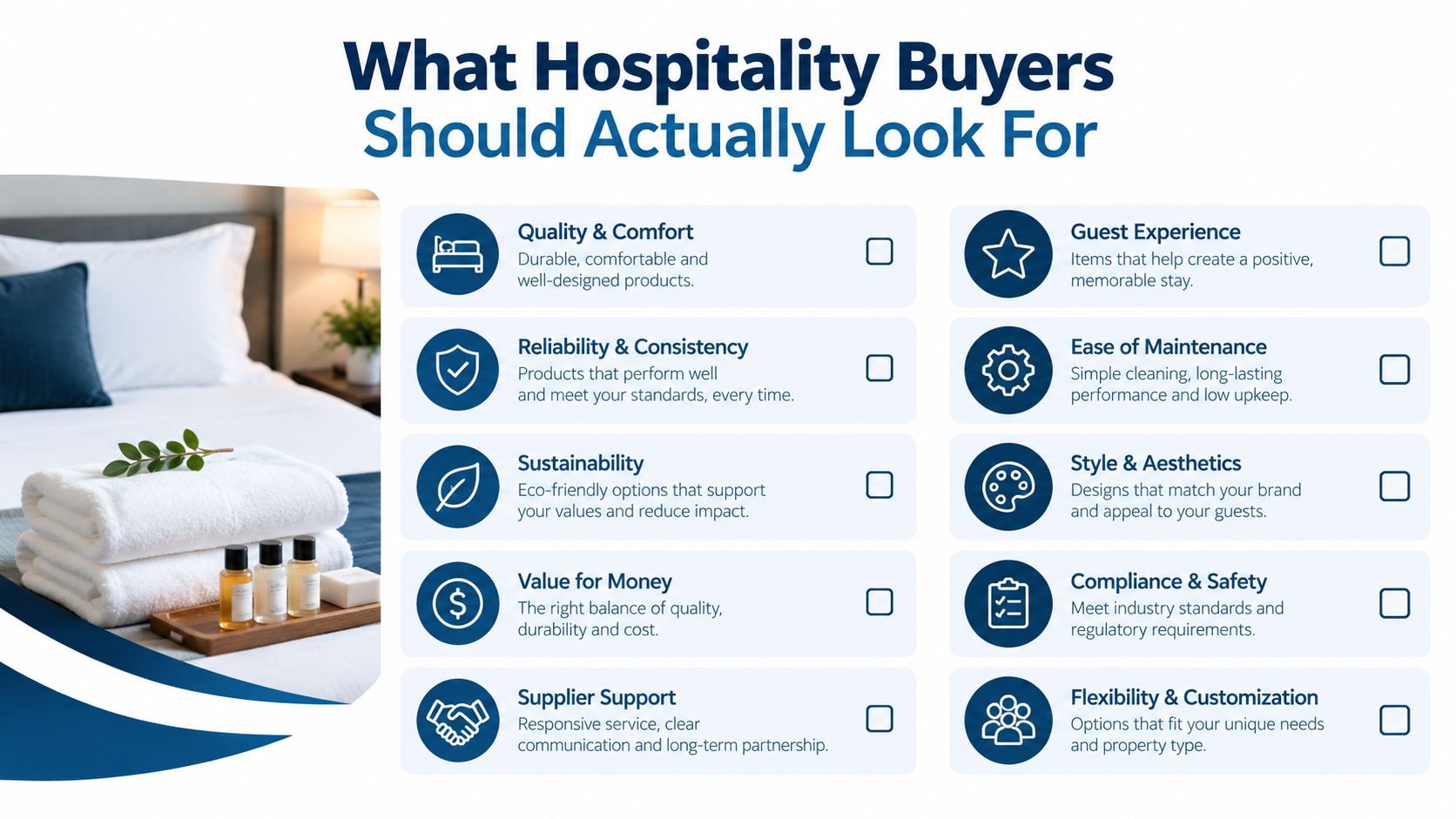
What Hospitality Buyers Should Actually Look For
A brochure can make a range look suitable. A working venue needs more specific answers. The following criteria help operators compare Stanley Rogers with any other shortlist without relying on heritage or appearance alone.
Start with the material specification
Check whether the exact pieces are 18/10, 18/8 or 18/0. Don't treat a brand-level assumption as a product specification, particularly when a range includes different constructions or knife types.
Inspect the finish
Mirror finishes can create a bright, formal presentation but may make fingerprints and water marks more visible. Satin finishes tend to create a quieter look and can sit comfortably in casual or contemporary settings. PVD or coloured coatings may suit a concept, but the operator should confirm the manufacturer's care requirements and consider how surface wear would affect a mixed replacement.
Hold the piece
Weight and balance are subjective, yet they matter. A heavy knife may feel appropriate beside substantial crockery, while a lighter piece may better suit a café serving smaller plates. The handle should sit naturally in the hand, and the fork shouldn't feel front-heavy when lifted.
Match shape to service
Tine length, bowl depth and knife proportions affect the eating experience. A soup spoon needs a practical bowl, a dessert spoon should suit the portions being served, and a steak knife needs a blade appropriate to the menu. Range breadth matters because a dining room rarely relies only on dinner forks and knives.
- Core pieces: Table forks, table knives, dessert spoons and teaspoons.
- Menu-led pieces: Soup spoons, steak knives, fish knives or cake forks where the menu requires them.
- Service-specific pieces: Butter knives, serving utensils or specialist pieces for functions and shared dining.
Check replacement access
A range is easier to manage when operators can source the required pieces without purchasing complete boxed sets. Trade Me listings show Stanley Rogers products in both new and used condition across New Zealand, indicating active local circulation, but availability and condition vary. Operators should confirm current stock and compatibility before committing to a large tabletop.
For broader equipment selection principles, lessons from helping hospitality businesses choose equipment provide a useful reminder to assess the workflow around a product, not just its specification.
Guest expectations also cover the physical details of a venue, so operators may find SEYANTE's guide to guest expectations useful when considering how cutlery fits the wider dining experience. The criteria don't point to one universal winner. They make a shortlist easier to judge clearly.
Value Is Whole-of-Life, Not Just the Cheapest Piece
The lowest per-piece price is easy to compare. The harder question is what the range costs to keep in service. A practical assessment combines:
Purchase price + expected service life + replacement availability + losses + presentation requirements = practical whole-of-life value
That formula shouldn't be dressed up as a guaranteed saving. Public New Zealand retail information doesn't provide restaurant durability testing, replacement-rate data or verified lifecycle costs for Stanley Rogers in commercial settings. Operators should therefore record their own losses, breakages and replacement orders rather than rely on an assumed lifespan.
The trade-off behind the price list
A cheaper 18/0 range may be entirely appropriate for a high-volume operation, a casual service model or an event setting where presentation requirements are modest. An 18/10 range may be more suitable when the venue wants a particular hand feel, a more polished finish or a consistent premium table setting.
| Cost line | Budget 18/0 | Specified 18/10 |
|---|---|---|
| Initial purchase | Often lower, depending on design and supplier | Often higher, depending on design and range |
| Corrosion considerations | Requires careful care and may be less forgiving | Still requires prompt rinsing and correct washing |
| Replacement planning | Check whether individual pieces remain available | Check whether individual pieces remain available |
| Presentation | Depends on finish and design, not material alone | Depends on finish and design, not material alone |
| Labour and losses | Record actual venue experience | Record actual venue experience |
This comparison deliberately avoids invented dollar amounts or replacement percentages. The correct result depends on the venue's menu, service intensity, washing process, loss controls and expectations for the table.
The comparison between buying cheaply and buying once is relevant beyond kitchen equipment. The same buying discipline applies here. Premium cutlery isn't automatically better value, and budget cutlery isn't automatically false economy. The appropriate level is the one that matches the operation and remains supportable when pieces need replacing.
Stocking a Venue Without Buying Too Much or Too Little
A venue's opening cutlery order should begin with service flow, not a carton count. The useful starting formula is:
Seats × expected table turns × washing turnaround × practical operating buffer
That isn't a universal multiplier. A café with rapid clearing and a reliable dishwasher may carry a different stock position from a hotel restaurant with polished service, room service demand and slower resetting.
Count each piece separately
Operators should map the actual menu and service style before placing the order:
- Table forks and knives: The core pieces for most covers.
- Dessert spoons and teaspoons: Frequently used in cafés, hotels and all-day dining.
- Side knives and butter knives: Often overlooked until breakfast and bread service expose the gap.
- Soup spoons: Necessary when soups, broths or plated desserts require them.
- Steak knives: Relevant only where the menu and service style justify them.
- Long-tail pieces: Cake forks, fish knives and other specialist items should be based on bookings and menu requirements.
A venue with 100 seats shouldn't assume that exactly 100 dinner forks will cover service. Pieces may be in use, waiting to be cleared, inside the dishwasher, in storage or already allocated to the next setting at the same time.
Build a stock routine
The first count should happen before opening, then at a frequency that suits the venue's loss pattern. Cutlery can be accidentally discarded with food waste, misplaced during clearing, damaged in handling or disappear over time. A regular count identifies the constraining piece before a busy booking does.
Count by piece, not by set. A surplus of knives doesn't compensate for a shortage of teaspoons.
Set a reorder threshold for each essential item. That threshold should reflect supplier availability, delivery timing, expected bookings and the venue's tolerance for mixed pieces. Operators can use the catering equipment checklist to connect tabletop planning with the wider opening or fit-out list.
Inventory control also affects cash. The essentials for restaurant profitability include disciplined stock management, and cutlery belongs in that same routine even though each individual piece appears inexpensive. Buying too little creates service pressure. Buying too much ties up budget in specialist items that may move slowly.

Coordinating the Whole Tabletop
Cutlery works as part of a system:
Crockery + cutlery + glassware + napery and presentation = complete table setting
A premium fork beside unsuitable crockery doesn't automatically create a premium table. The pieces need to share a visual language and support the restaurant concept.
Consider a substantial polished knife beside a heavy ceramic plate. That combination can feel deliberate and grounded. The same knife beside very fine porcelain may look oversized, while a narrow lightweight fork can appear lost against a broad, heavily textured plate. These are practical sample-testing questions, not rules that apply to every venue.
Finish changes the conversation
Mirror, satin and textured finishes reflect light differently. A mirror surface can work with clear, refined glassware and crisp napery, while satin may sit more naturally in a relaxed dining room with textured ceramics and informal presentation. Fingerprints, water marks and visible scratches also read differently against each finish, so the cleaning routine should be considered alongside the visual effect.
Colour matters in subtle ways. Stainless steel can appear cooler beside bright white porcelain and less stark beside warmer-toned crockery. A napkin's texture, a placemat's weave and the clarity of the glassware all affect how reflective cutlery is perceived across the table.
Hospitality's wider range of crockery and glassware includes options from brands such as Bonna, Pasabahçe and Zwiesel. The point isn't to assemble a brand catalogue. It is to assess the tabletop together, especially when a venue is refreshing several categories at once.
Test against existing pieces
Operators should bring an existing plate, bowl and glass when reviewing samples. Place the candidate fork beside the actual crockery, check the handle proportions against the plate, and assess whether the finish suits the venue's napery and lighting.
That small exercise can expose a mismatch before a full order arrives. It also helps teams choose whether Stanley Rogers should blend into the setting or provide a deliberate point of contrast.
Bringing It All Together
Stanley Rogers earns continued consideration because it combines recognisable design, documented material options, established range presence and replacement potential. Its history from a Melbourne retail store opened in 1930 provides useful context, but it isn't enough to justify a purchase. The exact product specification, finish, shape and current availability still decide suitability.
The dual-job test remains the clearest way to assess the range. At the table, cutlery should feel balanced, suit the menu and complement the crockery. Behind the scenes, it needs a care routine that manages residue, dishwasher loading, drying and storage without asking the team to make unsupported assumptions about rust resistance or service life.
A practical decision summary
Before selecting a range, hospitality buyers should confirm:
- Material: Check the exact product specification rather than generalising across the brand.
- Finish: Decide whether polished, satin or another finish suits both the table and cleaning routine.
- Ergonomics: Handle samples and test the relationship between weight, balance and menu.
- Range breadth: List every piece required for the actual service, including long-tail items.
- Continuity: Confirm how replacement pieces can be sourced and matched.
- Stock level: Calculate requirements from seats, turns, washing turnaround and operating buffer.
- Care: Follow the manufacturer's instructions, including prompt rinsing, non-abrasive cleaning, suitable dishwasher spacing and gentle drying.
Stanley Rogers isn't the only credible option, and it won't be right for every venue. A budget range may suit a different operating model, while another premium range may better match a specific design concept. The strongest decision comes from comparing like with like and recording the trade-offs clearly.
The brand's continuing relevance is best understood through that combination of design, practicality and continuity. Longevity gets a name recognised, but good commercial cutlery must still work in the hand, survive the washroom routine and remain replaceable when the stock count changes.
Simply Hospitality can help hospitality businesses compare Stanley Rogers ranges with other commercial cutlery options, coordinate the selection with crockery and glassware, and plan quantities around service and washing turnaround. Visit Simply Hospitality to review current tabletop products or contact the team for practical range advice and pricing for a specific venue.