

Why Tablekraft Remains a Trusted Choice for Hospitality Tableware
A plate can look exactly right when it leaves the pass, then create problems before it reaches the table again. Staff carry it, clear it, scrape it, load it into a commercial dishwasher, stack it, store it and retrieve it for the next service. Why Tablekraft remains a trusted choice for hospitality tableware comes down to that complete cycle: the range must support presentation in front of the customer and practical work behind the scenes.
For restaurants, cafés, hotels, caterers and institutional kitchens, tableware is an operating decision, not merely a styling decision. The right pieces suit the menu, fit the storage available, tolerate the cleaning process and remain replaceable when service takes its toll.
The Dual Reality of Hospitality Tableware
A busy dinner service makes the distinction clear. A chef needs a plate with enough usable surface for the dish, a waiter needs to carry it confidently, a customer expects an attractive presentation and the dishwashing team needs to process it without creating a bottleneck. If the plate fails any one of those tests, its appearance alone won't protect the operation from unnecessary work.
Tablekraft has an established presence in the Australasian hospitality market. A New Zealand brand profile describes the brand as having adorned restaurant and residential tables for five decades, while another New Zealand hospitality supplier describes Tablekraft as having over 30 years of experience and a reputation for value, quality and design (Tablekraft's New Zealand brand profile). The differing descriptions reflect how brand history is presented across local supplier material, but both point to a long commercial presence familiar to hospitality buyers.
That continuity matters because venues need more than an attractive launch setting. They need a tableware programme that can be understood by staff, coordinated across courses and reviewed when pieces leave circulation. A broad range can help an operator establish a consistent design language without forcing every dish into the same plate shape.
Practical rule: Judge a plate at the pass, on the table and beside the dishwasher. A decision made in only one of those places is incomplete.
Tableware also sits within a recognised hospitality workflow. NZQA unit standard 19769 treats table setting as a core service function, including cutlery, glassware, condiments and table accessories (NZQA table-laying requirements). That makes coordination more than a visual preference. Staff need to know where pieces belong, which cutlery suits each course and how the setting supports the service style.
The food is the focus. Good tableware gives it the right platform. Operators assessing a venue's presentation may also review related commercial details, such as real-time wine pricing, because the table works as one customer-facing system rather than a collection of unrelated products.
Designing Tableware for the Menu and the Customer
Empty-plate appeal can mislead buyers. A wide plate may look generous in a showroom but leave little practical room once a broad rim reduces the usable plating area. A deep bowl may suit ramen, soup or sauced pasta, while a shallow coupe may better support a composed entrée or a shared dish intended for easy access.
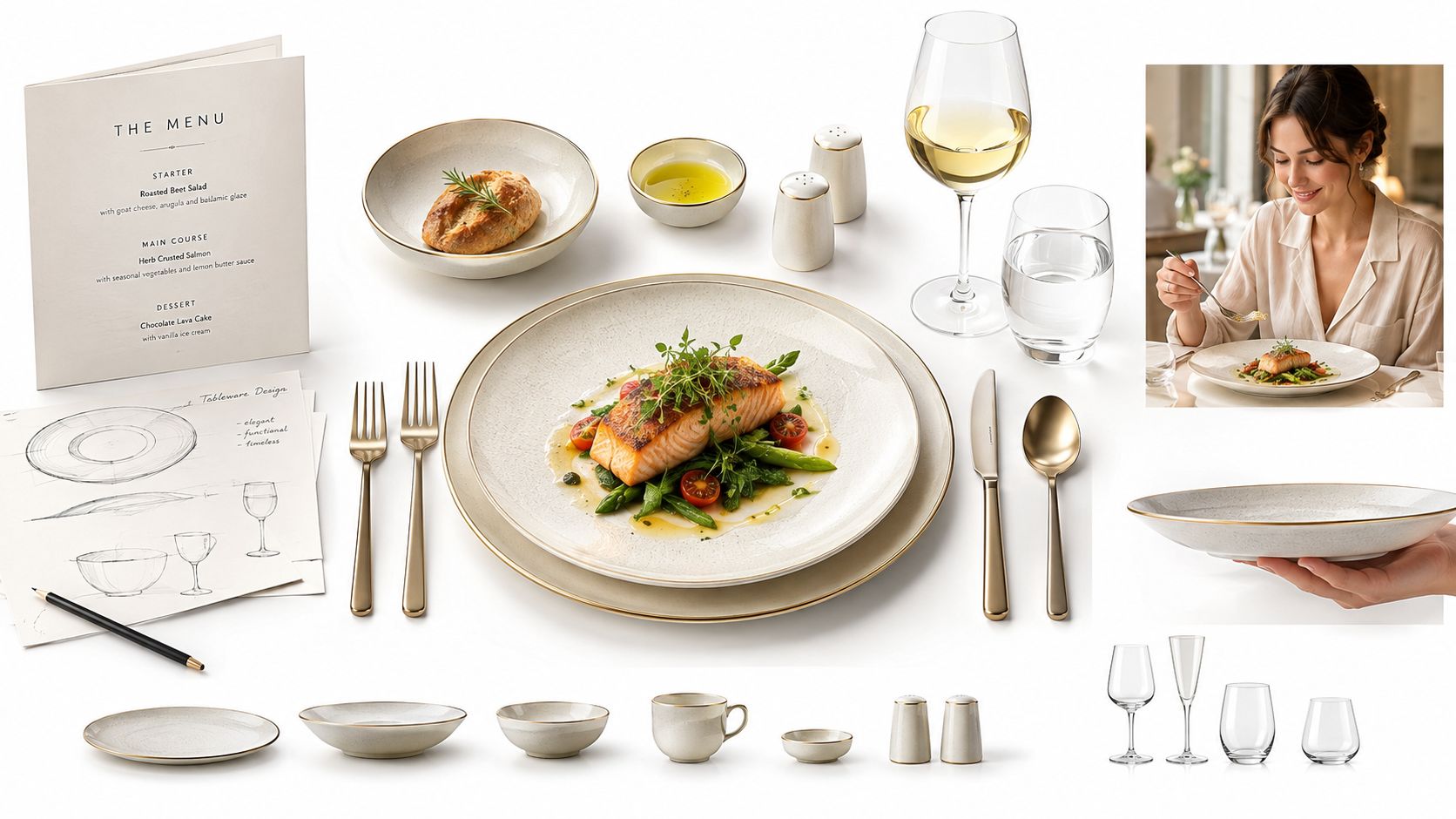
The practical sequence is straightforward:
Menu → portion → plating style → appropriate plate or bowl → complete table setting
Start with the food being served, not the catalogue photograph.
Crockery decisions that affect service
Operators should test the pieces against actual menu portions and sauces. A useful review includes:
- Plate diameter: The stated diameter doesn't reveal the usable centre. Measure the area that will carry the food.
- Rim design: A broad or raised rim can frame the dish, but it may reduce plating space and affect how staff carry or clear the piece.
- Bowl depth and capacity: Deep bowls contain liquid and sauces, while wider forms may present noodles, salads or shared sides more effectively.
- Colour and finish: A neutral finish can support varied menus. A stronger colour or reactive-looking surface may suit a defined concept but can restrict future menu changes.
- Stackability and weight: Pieces need to fit shelves and be manageable for staff, particularly during peak clearing and reset periods.
- Replacement availability: A range is easier to manage when individual pieces can be checked and reordered instead of replacing an entire setting.
A practical guide to choosing crockery for New Zealand hospitality can support the early comparison, but the final test should involve the venue's own dishes.
Cutlery should feel intentional
Cutlery affects handling as much as appearance. Stainless-steel specification, weight, balance, handle profile and finish all influence how a setting feels in the customer's hand. A numerical grade such as 18/10 or 18/0 can describe the steel composition, but it doesn't determine overall quality on its own. Manufacturing, thickness, finish, balance and suitability for the intended service still matter.
The same principle applies to design. A refined handle may suit a premium dining room, while a simpler profile may be easier to replace and coordinate across a café or accommodation operation. Cutlery should complement the crockery rather than compete with it.
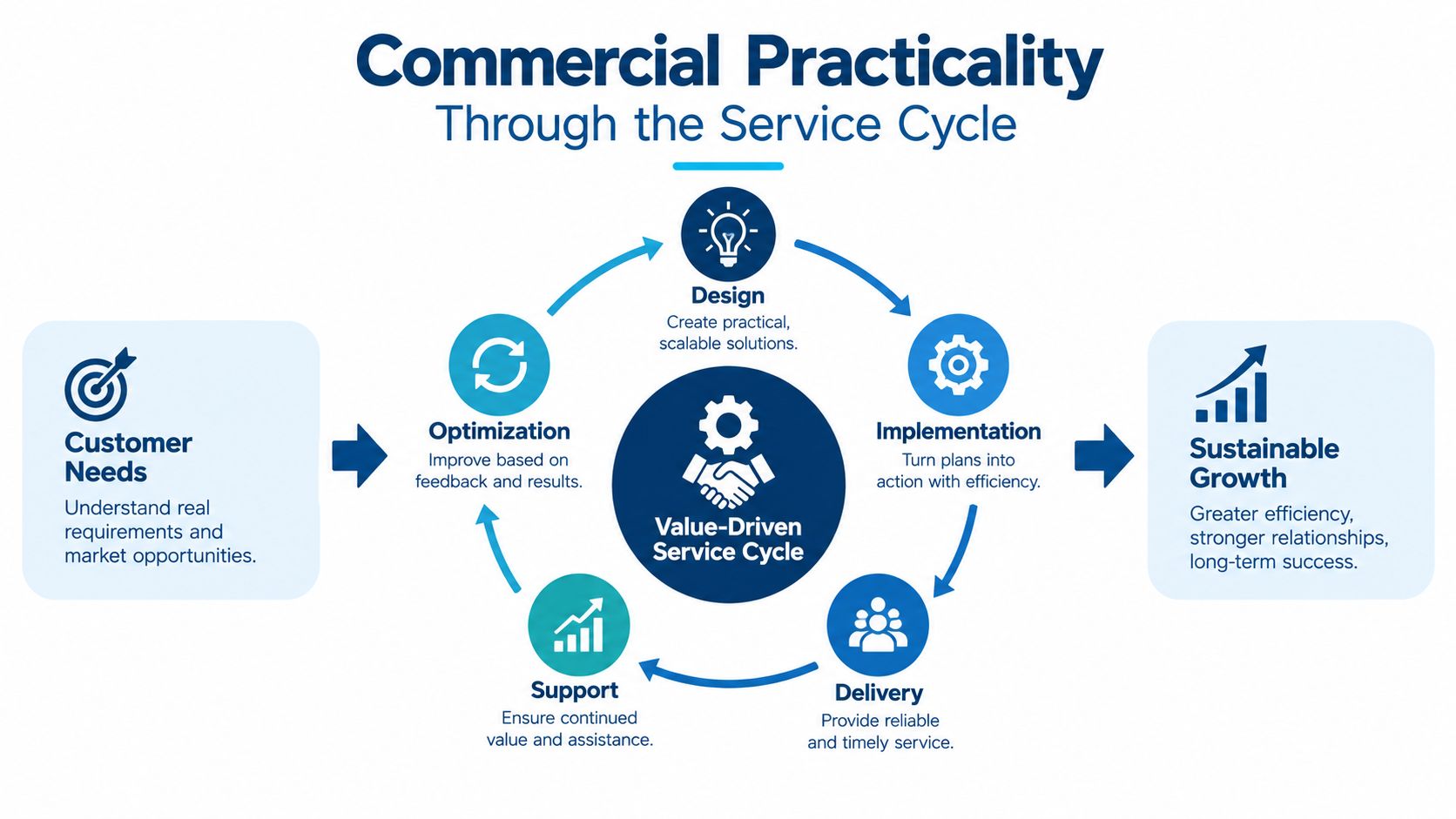
Commercial Practicality Through the Service Cycle
Tableware follows a repeated physical route:
Plating → service → customer → clearing → scraping → warewashing → stacking and storage → service again
Every transition creates a handling requirement. A broad rim may give staff a secure grip, but it may also occupy more shelf space. A heavy plate can feel substantial to the customer, yet increase carrying effort when several pieces are cleared together. A bowl that doesn't nest securely can consume valuable storage space and become unstable when stacked.
Review the back-of-house reality
A buying team should inspect the route rather than rely on photographs. Place sample pieces in the actual pass, carry them through the service path, load them into the warewashing racks and stack them on the shelves where they will live.
Important checks include:
- Shelf dimensions: Confirm that the largest pieces fit without overhanging or blocking adjacent stock.
- Stack height: Work out how many pieces can be stored safely while keeping the stack stable and accessible.
- Weight: Consider the combined load of a stack, not only the weight of one plate.
- Racking and loading: Check whether the shape sits securely in the available dishwasher racks.
- Retrieval distance: A beautiful range becomes less practical if staff must cross the kitchen repeatedly to collect common pieces.
- Shape variety: Adding several plate and bowl forms can improve presentation, but it also increases sorting and storage demands.
A common mistake is buying several visually distinct shapes before checking whether the kitchen can store and process them efficiently. The range may look coherent in a design board while creating a more complicated reset routine in practice.
Warewashing deserves separate attention. The venue should confirm the product's care instructions, use appropriate racks and avoid overloading pieces against one another. Operators comparing equipment should also understand the operational difference between a glasswasher and a commercial dishwasher, particularly where glassware and crockery share a constrained wash area.
A tableware choice that saves space, handles predictably and returns quickly to service can be more useful than one chosen only for visual impact.
Navigating Compliance and Sustainability in New Zealand
A plate can look sustainable at purchase and still create waste if it chips quickly, cannot be cleaned reliably, or does not suit the venue's service pattern. New Zealand's single-use plastics phase-out therefore makes serviceware part of procurement and compliance planning. Ministry for the Environment guidance states that single-use plastic plates, bowls, trays and platters are banned, and directs businesses towards reusable ceramic or metal options where compliant serviceware is required (Ministry for the Environment plastics guidance).
Reusable does not mean universally suitable. Assess breakage, storage, transport, event handling, cleaning capacity and compatibility with hot food or other intended uses. Ceramic and metal may suit dine-in service, room service and many events, while other operations need a carefully assessed combination of reusable and compliant alternatives. The right choice is the one staff can handle repeatedly without creating avoidable losses or cleaning problems.
Food-contact equipment and containers must be non-toxic, durable, easy to clean and suitable for adequate cleaning and disinfection, according to New Zealand food business guidance. MPI's food safety toolkit reinforces the need to clean and sanitise utensils and surfaces, separate cooked, raw and allergen foods, and control cooking and storage temperatures.
Compliance is part of the buying specification
For ceramic tableware, AS/NZS 4371:1996 sets performance requirements that include public-health-related limits for lead and cadmium release (AS/NZS 4371:1996). New Zealand food safety rules also prohibit selling enamelware or ceramicware intended for food use when it fails the prescribed leach test (New Zealand food safety regulations).
Commercial dishwashing tests these requirements in daily service. Plates, crockery, cutlery and glasses must tolerate repeated washing and sanitation without finishes, surfaces or construction becoming unsuitable for use. Operators should confirm the equipment and product instructions, including required wash and rinse conditions, rather than assume every finish behaves identically. A supplier should be able to provide care guidance and relevant compliance information before the order is placed.
Sustainability procurement also includes packaging, replacement patterns and supply-chain decisions. Teams assessing the wider environmental impact can review sustainable supply chain best practices and this guide to using BioPak sustainable products in the New Zealand hospitality industry. For a venue, sustainability is strongest when tableware survives clearing, warewashing and storage, can be cleaned properly, and remains useful instead of being discarded because it does not fit the operation.
Calculating the True Cost of Tableware Ownership
The lowest price per piece isn't automatically the lowest-cost tableware programme. A cheaper plate may become difficult to replace, fail to fit existing racks or storage, or force the venue to mix mismatched pieces after breakages and losses. An expensive range doesn't create value only because it costs more either.
The useful calculation is:
Initial purchase + replacement requirements + practical durability + handling + storage + suitability for the operation = whole-of-life value
That calculation should include what happens after the opening order. Crockery and cutlery can be broken, chipped, lost, accidentally discarded or removed from circulation because a setting no longer looks consistent. The operational cost includes staff time spent sorting mismatched pieces, adjusting menus to available formats and finding emergency replacements.
Availability supports resilience
New Zealand's tableware category is connected to imported supply. Independent market coverage notes strong growth in the country's tableware import market in 2024 and identifies cheap imported products as a continuing challenge (New Zealand tableware market coverage). The Commerce Commission's hospitality supply material also describes a national commercial kitchen equipment market in which products are commonly distributed from warehouses and distribution centres, with major suppliers covering crockery, glassware, kitchenware and tabletop items (Commerce Commission hospitality supply material).
For operators, the practical question isn't whether a range has a familiar name. It's whether current availability, piece-level replacement and supply continuity can be checked before the venue commits to a full table setting. No range should be treated as guaranteed to remain available indefinitely.
Many operators compare two options:
| Lower upfront price | Established range |
|---|---|
| May reduce initial purchasing cost | May offer a clearer design system |
| Can create replacement uncertainty | Can make piece-level continuity easier to assess |
| May vary in weight, finish or sizing | Can support more consistent settings |
| May suit a limited or temporary use | May be appropriate for a longer operating plan |
The right choice depends on the venue's service model, budget, storage and replacement expectations. A café with a simple menu may need fewer formats than a hotel with room service, conferences and multiple dining outlets. A practical assessment of broken crockery costs can help operators include labour and disruption, not only the invoice price of a replacement plate.
Exploring Current Tablekraft Ranges and Coordinated Tabletops
A coordinated tabletop begins with the menu and ends with the customer's complete setting:
Food → crockery → cutlery → glassware → overall presentation
Tablekraft's relevance lies in the ability to assess crockery, cutlery and serving pieces as parts of one programme rather than selecting every item independently. That can help a venue create a consistent table while still using different forms for entrées, mains, desserts, sides and shared dishes.
Current stock and specifications should always be checked before committing to a range. Availability can change, and operators shouldn't assume that every historical Tablekraft line remains active or that every piece is held at all times.
Compare by function, not by colour alone
A practical review of current Tablekraft products should identify the actual material, finish, dimensions and available pieces for each selected range. Useful categories may include:
- Crockery: Review plate and bowl formats for plating area, depth, stacking and the venue's service style.
- Cutlery: Compare steel specification, weight, balance, handle profile and finish alongside the chosen crockery.
- Servingware: Check whether platters, bowls or other serving pieces support shared dishes without introducing awkward storage requirements.
- Tabletop coordination: Confirm that the selected pieces work with the venue's glassware, linens and service accessories.
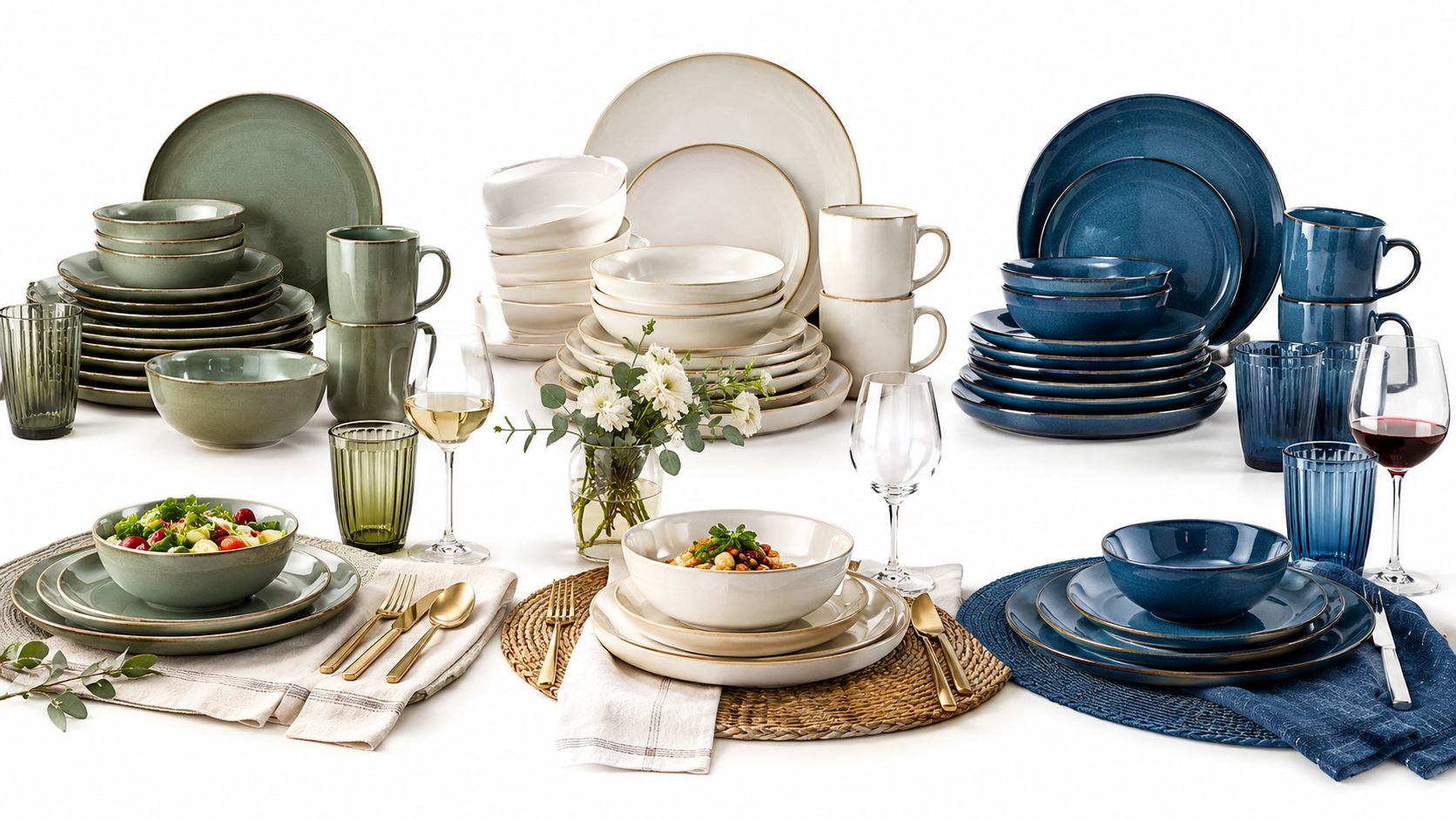
The comparison should stay grounded in application. A white ceramic plate may give a flexible platform for changing menus, while a coloured or textured finish can reinforce a particular venue identity. A broad coupe may suit modern plating, but a traditional rimmed plate may make more sense for a menu with sauces and sides that need separation.
Cutlery can either unify or unsettle the result. A heavy, polished profile paired with delicate crockery sends a different signal from a lighter, simpler setting. Operators can review commercial cutlery options featuring Tablekraft while checking how the handles sit with the chosen plates, bowls and glassware.
Glassware should complete the setting without turning the tabletop into a brand catalogue. A few carefully selected pieces from ranges such as Pasabahçe, Ocean, Stölzle or Luigi Bormioli may support wine, water and beverage service, but the correct choice depends on the menu, storage and washing system.
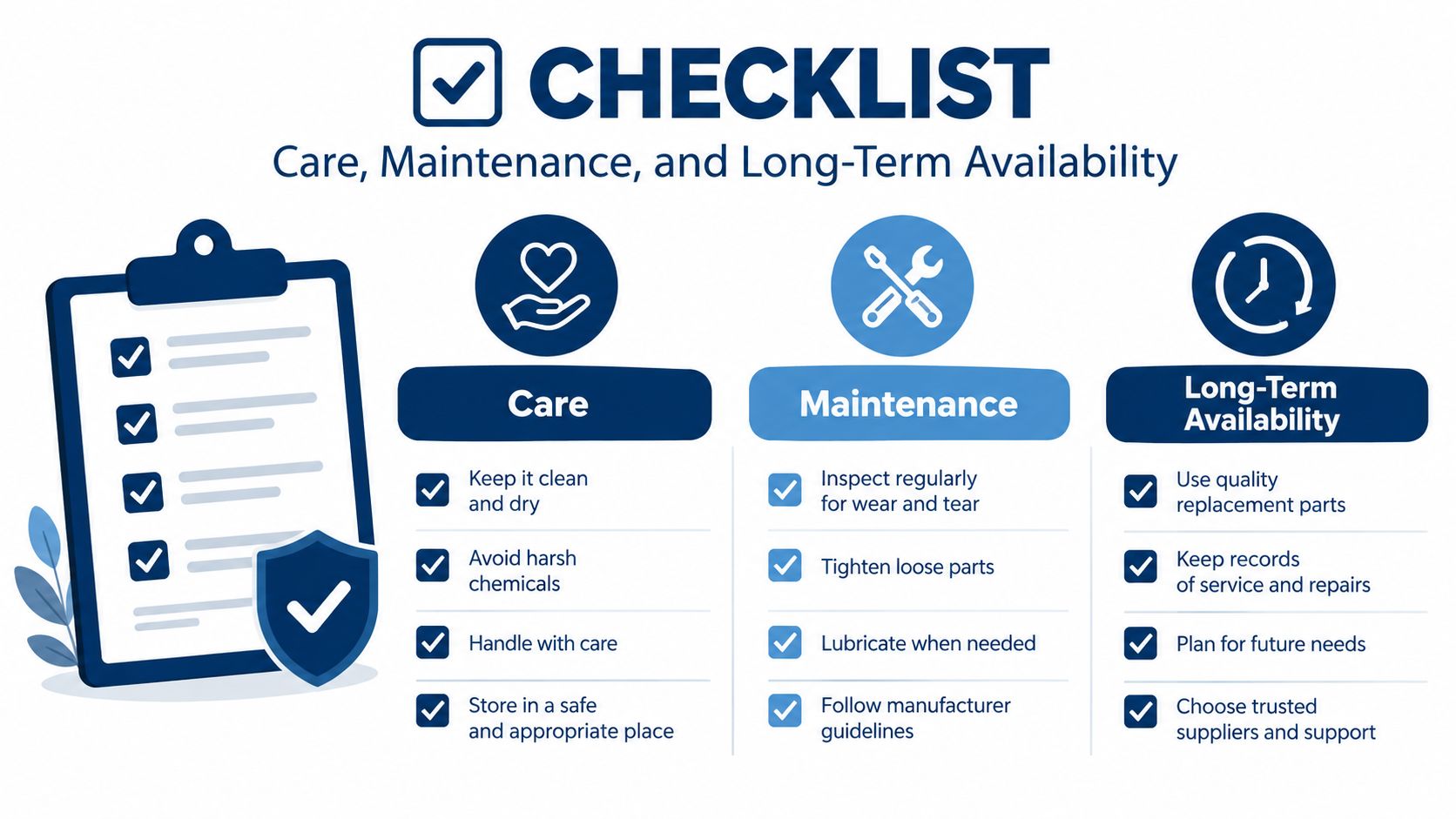
Care, Maintenance, and Long-Term Availability
A busy service exposes tableware to repeated clearing, loading, washing, drying and stacking. Care starts before the dishwasher. Staff should scrape food waste promptly, rinse pieces where the operating procedure requires it and remove damaged items from service. Trapped food, unsuitable loading and rough handling place avoidable stress on finishes, rims and edges.
Use the manufacturer's instructions for each Tablekraft product. Check commercial dishwasher suitability, load pieces correctly, select appropriate chemicals and avoid practices warned against for the relevant material or finish. Ceramic, stainless steel, glassware and specialised finishes may require different routines, so one cleaning method should not be applied across the entire tabletop without checking product guidance.
A workable maintenance routine
A clear routine gives staff practical decisions during a busy shift:
- Inspect at clearing: Remove chipped, cracked or damaged pieces from circulation.
- Scrape before loading: Keep solid food out of the wash system and reduce avoidable blockages.
- Load securely: Stop pieces knocking together and avoid overfilling racks.
- Use approved processes: Follow the dishwasher, detergent and Tablekraft instructions rather than increasing chemical strength without advice.
- Dry before stacking: Store pieces to prevent trapped moisture and unstable piles.
- Review stock regularly: Record recurring losses, damaged formats and pieces becoming difficult to replace.
New Zealand food-hygiene guidance requires food-contact items to support effective cleaning and disinfection. Commercial dishwashers must also support high-temperature sanitation processes, so the venue needs suitable tableware and a warewashing system that uses it correctly.
Plan quantities around the full service cycle
There is no universal formula such as three plates per seat. Assess:
Seats + table turns + peak covers + warewashing turnaround + breakage and loss + operating buffer
At any point, a plate may be on a table, waiting for collection, in the wash area, in storage or at the pass. The required quantity depends on how quickly that cycle moves and how much flexibility the venue needs during its busiest period.
Hospitality supplies commercial tableware alongside glassware, storage, and warewashing equipment, so operators can assess crockery, cutlery, and wash capacity as one purchasing decision rather than three separate orders. Record when each format enters service and set a review point at six months, so replacement stock can be ordered before a shortage appears mid-season.
Simply Hospitality can help hospitality operators compare Tablekraft crockery and cutlery with suitable glassware, storage and warewashing requirements. Discuss the menu, service cycle, available space and replacement needs before committing to a complete tabletop programme.