

Moretti Forni vs Woodfired Pizza Ovens: Which Suits Your Venue?
A lot of venue owners arrive at the same point. They know they want great pizza, they know the oven will shape the menu and service style, and they're trying to work out whether the right answer is old-school wood fire or a modern Moretti Forni setup. That decision affects far more than the flavour profile. It changes staffing, workflow, training, consistency, installation planning, and how easy the pizza section is to run on a wet Wednesday as well as a packed Saturday night.
That's why Moretti Forni vs woodfired pizza ovens is really a question about how the business wants to operate. In New Zealand, a 2024 NZHA survey found that 74% of venue operators prioritised consistent bake quality and energy efficiency when buying cooking equipment, which says a lot about where operators are putting their attention now (choosing a pizza oven for a restaurant, bar or food truck).
| Consideration | Wood-fired oven | Moretti Forni oven |
|---|---|---|
| Service style | Hands-on, craft-led, operator dependent | Process-led, repeatable, easier to standardise |
| Staffing | Usually needs a confident fire manager | Easier to train across a broader team |
| Heat control | Managed by experience and live fire adjustment | Managed through controls and programmed settings |
| Consistency | Can be excellent, but depends heavily on operator skill | Designed for stable, repeatable output |
| Guest experience | Strong theatre and heritage appeal | Premium product with less operational friction |
| Best fit | Venues built around craft, theatre, and slower-paced service | Venues prioritising precision, throughput, and easier day-to-day management |
Choosing a Pizza Oven Is Choosing an Operating Model
A pizza oven isn't just a cooking appliance. It becomes part of the kitchen system. It determines who can run the section, how quickly new staff can be trained, how stable service feels under pressure, and whether the pizza offer depends on one standout operator or can be delivered by a well-drilled team.
That's where many buying decisions go wrong. Operators compare fuel types and cooking styles, but skip the bigger question. What sort of operation is this oven supposed to support every day?
Two very different operating models
Wood-fired ovens suit venues that want cooking to remain a craft process. The oven becomes part of the performance. Staff manage live flame, work around heat zones, and make constant adjustments during service. For some venues, that's exactly the point.
Moretti Forni suits a different operating model. It gives operators a way to aim for premium pizza quality while reducing the variables that come with fire management. Many hospitality businesses choose that path because they want a pizza section that feels controlled, scalable, and easier to hand over between shifts.
Practical rule: Choose the oven that matches the team and service model already in place, not the one that only works when the strongest operator is on shift.
What matters more than romance
Wood-fired cooking still has real appeal. NZHA found that 32% of Kiwi diners are drawn to wood-fired ovens for authentic taste, but only 12% of venue owners consider them the primary oven for daily operations because of maintenance and smoke-emission challenges in urban areas. That gap matters. Diners may love the idea, but operators still have to run the kitchen.
A common issue seen across hospitality fit-outs is buying around atmosphere first and service reality second. The better buying question is this:
- Who will run it daily when the senior pizza chef is off
- How repeatable the product needs to be across lunch, dinner, and weekend peaks
- Whether the oven supports growth if pizza volume increases
- How much complexity the team can realistically absorb without slowing the rest of the kitchen
For many venues, the oven decision ends up being less about tradition versus technology and more about precision versus theatre. Both can work. The right solution depends on what the venue needs the pizza section to do.
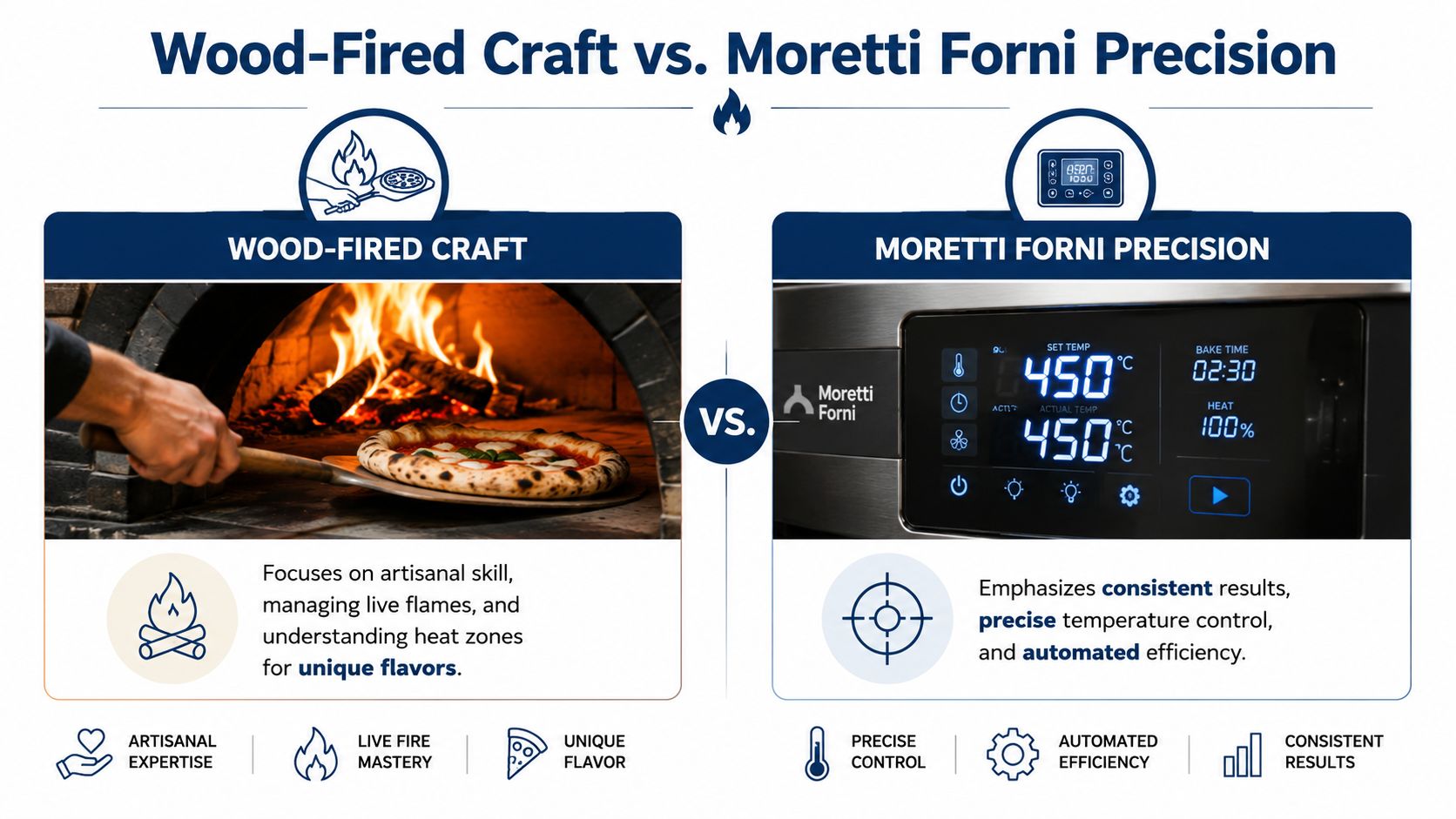
Wood-Fired Craft vs Moretti Forni Precision
A wood-fired oven and a Moretti Forni oven can both produce serious pizza. The main difference is the system behind the result.
Wood-fired centres the operator
With wood-fired cooking, the oven behaves like an instrument. A skilled pizzaiolo reads the fire, watches the deck, manages hot and cooler zones, rotates by feel, and keeps adjusting through service. That can produce excellent results, but it puts a lot of responsibility onto one person's judgement.
That's why wood-fired cooking often works best when the venue is built around craft and presentation. Fine dining concepts and destination restaurants sometimes accept the added complexity because the oven itself is part of the experience.
Moretti Forni centres the process
Moretti Forni takes a different path. The goal is repeatability. Once the oven is configured properly, the team works to a stable system rather than chasing a moving target.
Many operators choose Moretti Forni because they want premium pizza quality without the extra operational load that comes with traditional wood-fired cooking. That's especially relevant in kitchens where staff rotate, service periods are busy, and consistency matters as much as flavour.
One example in this category is the Moretti Forni Electric Double Deck Oven - PD. Its iDeck design, double-deck layout, and user-friendly controls make it a practical fit for professional kitchens that want precise temperature control and space-efficient production across more than one product line. That matters in venues where the oven may be used for artisan bread, pizza, and other baked items across the trading day.
A strong pizza section shouldn't depend on one person rescuing it every service.
What works for which venue
The choice becomes clearer when viewed through staffing and service pressure.
- Choose wood-fired when the venue wants visible theatre, accepts a more hands-on cooking style, and has the skill depth to manage a live fire properly.
- Choose Moretti Forni when the venue wants a premium result with a more controlled workflow and easier day-to-day operation.
- Be cautious with wood-fired when staff turnover is high or the menu already puts pressure on the kitchen.
- Be cautious with electric precision ovens when the venue's entire identity depends on the sensory theatre of flame, smoke, and manual craft.
For operators weighing those trade-offs, why we recommend Moretti Forni pizza ovens for hospitality businesses gives a useful first-party view of where these ovens fit operationally.
Performance Heat and Final Pizza Quality
One of the most persistent myths in this category is that electric ovens can't deliver authentic high-heat pizza. In practice, the better modern units are built specifically to challenge that assumption.
Heat is only part of the story
Top-tier electric ovens like Moretti Forni's S-series reach 500°C within 90 seconds and hold that temperature with ±5°C variance, while wood ovens can fluctuate by ±15°C (why Valoriani stands out for commercial woodfired pizza ovens). That difference shows up in the finished pizza. It affects how evenly the base colours, how reliably the rim lifts, and how much guesswork the operator needs to apply during a rush.
Wood-fired ovens can absolutely produce a beautiful result. The challenge is that the result often depends on constant management of a live system. Some venues want exactly that. Others want the same crust, same finish, and same bake from the first docket to the last.
Stability changes the final product
Many pizza operators focus on maximum heat, but service quality usually comes back to stable heat. A hot oven with uneven recovery creates inconsistency. Bases colour differently. Toppings finish at different rates. Staff start compensating rather than following a clean process.
Moretti Forni's specialist electric platforms are designed around this problem. The Neapolis model, for example, is built for Neapolitan pizza and is capable of reaching 510°C, with a baking chamber made entirely of refractory bricks and heating elements embedded in the ceiling and floor bricks. That gives operators the high-heat characteristics they're usually chasing, but in a more controlled format.
Where wood still has a clear edge
Wood-fired still brings something electric ovens don't replicate in exactly the same way. There's a live-fire aroma and visual character that some venues and diners still value highly.
That said, performance in a commercial kitchen isn't judged by a single ideal pizza. It's judged by what the oven does over a full service. The practical comparison often looks like this:
- Wood-fired strength is flavour theatre and craft-led cooking
- Moretti Forni strength is repeatable premium output under pressure
- Wood-fired weakness is wider variation across the shift
- Moretti Forni weakness is that it won't replace the emotional pull of a visible flame for venues built around that theatre
For operators asking whether electric can produce serious pizza, the answer is yes. The better question is whether the venue values controlled consistency more than fire-led variation.
Operational Demands Staff Workflow and Throughput
The biggest difference between these oven types usually appears once service starts. Not in a showroom. Not during menu testing. During a live shift, with orders stacking up and the rest of the kitchen already under strain.
What wood-fired asks from the team
A wood-fired oven doesn't just cook pizza. It demands attention before service, during service, and after close. Someone has to manage the fire, monitor heat movement, add fuel, clean ash, and keep the oven operating in a useful temperature range.
That has staffing consequences.
- Training takes longer because staff must learn fire behaviour, not just oven controls
- Shift planning gets tighter because not every cook can run the section confidently
- Handovers can be rougher when one operator's approach differs from another's
- Service risk rises if the venue relies too heavily on one experienced person
What Moretti Forni changes
Moretti Forni doesn't remove the need for training, but it changes the type of training required. The team learns settings, bake profiles, loading patterns, and product timing rather than live-fire management. That's a simpler operational model for many venues.
EECA's 2023 NZ commercial kitchen audit found that venues using advanced electric systems like Moretti Forni reduced labour hours by 25% and energy costs by 18% compared with traditional fuel methods (woodfired vs gas pizza ovens for hospitality businesses). Those numbers matter because they reflect what operators often feel in practice. A more controlled oven system usually means a calmer section.
Operational insight: When the oven is easier to run, managers can train more broadly across the roster instead of protecting one specialist station.
Real venue examples
The patterns are consistent across different venue types.
A Coromandel venue moved to a Moretti Forni conveyor oven because ease of operation mattered as much as output. The operational benefits were strong enough that the venue later expanded from one oven to two. With a challenge around staffing, their choice of this unit meant they required less skill to operate and allowed them to operate longer hours more consistently. That says a lot about what happens when equipment supports service rather than creating extra friction.
A Hawke's Bay pub and a Christchurch club are useful examples on the other end of the market. In venues like these, pizza often needs to be reliable, fast, and manageable across mixed teams. That's exactly where programmable, repeatable ovens tend to make more sense than a live-fire setup that needs constant supervision.
A common consideration is whether the pizza section is meant to be a craft station or a production station. Plenty of venues want both. In reality, one usually matters more.
Installation Running Costs and Compliance
The oven invoice is only one part of ownership. Installation, extraction, fuel handling, compliance, and daily practicality often make a bigger difference over time than operators expect.
Start with site reality
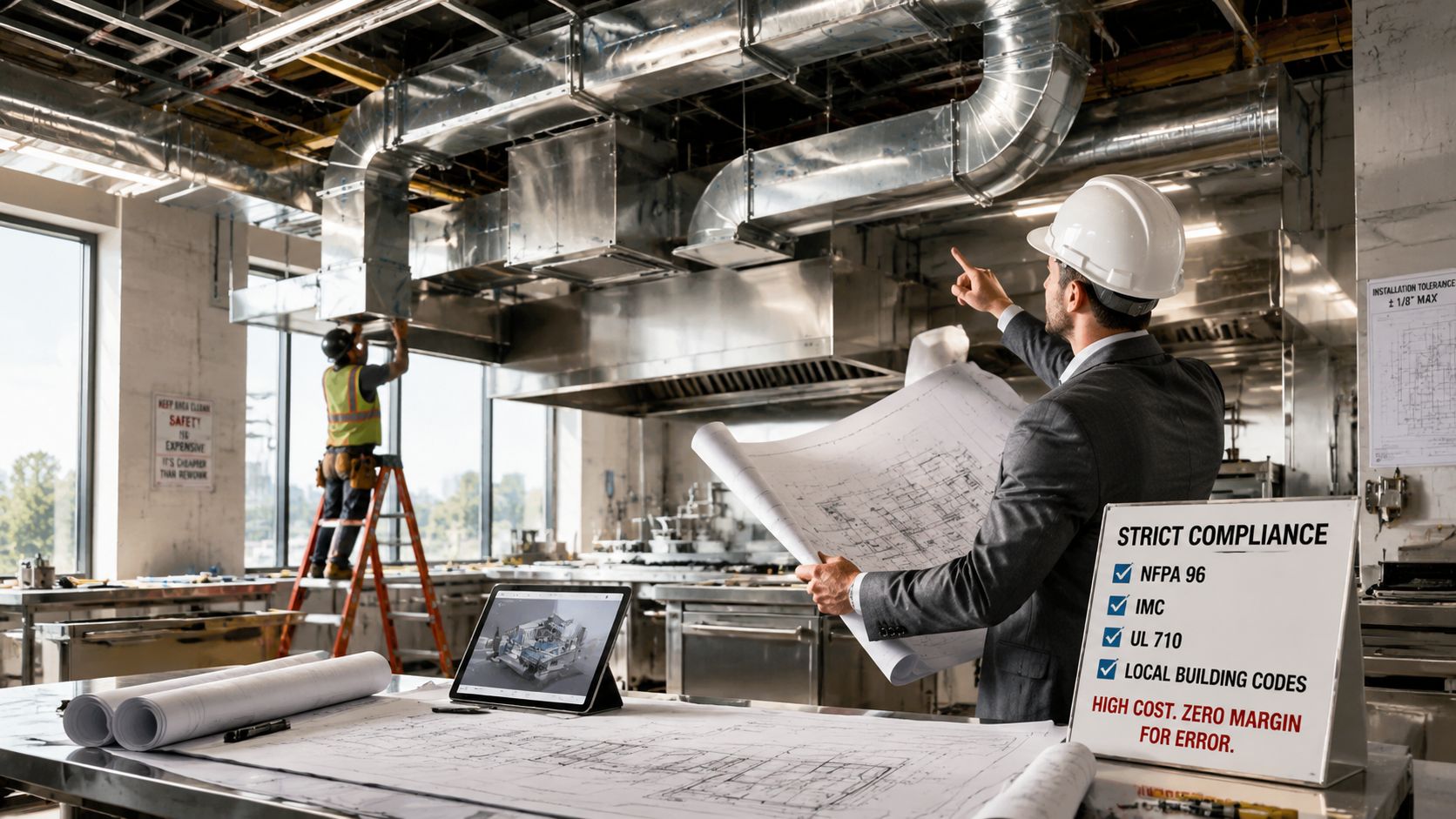
Wood-fired ovens usually ask more from the building. Operators need to think about flue design, fireproofing, wood storage, ash handling, and local rules around smoke emissions. Those issues can be manageable, but they need to be planned early, especially in urban locations.
Electric ovens are often simpler to integrate into a modern kitchen layout. That doesn't mean installation is casual. Power supply, extraction, weight, access, and kitchen flow still matter. It does mean the conversation is usually more predictable.
For any fit-out involving cooking equipment and ventilation, commercial kitchen exhaust hood planning should be part of the early discussion rather than an afterthought.
Running cost thinking needs to be broader
Many operators start by asking which oven is cheaper to run. That's understandable, but it's not enough on its own. Running cost isn't just fuel. It includes labour, startup time, flexibility through the trading day, and what happens when the kitchen is under pressure.
Several verified data points help frame the difference:
- Wood-fired ovens can take up to 45 minutes to reach baking temperature and consume 30% more energy per bake than electric systems in the NZ hospitality context.
- EECA technical specifications show Moretti Forni electric ovens use 12 to 15 kWh per hour at 500°C, while wood-fired ovens require 3 to 5 kg of hardwood per hour, equivalent to roughly 18 to 25 kWh thermal energy.
- EECA also notes that this can translate to 20 to 30% lower operational costs for Moretti units in NZ venues with commercial gas or electric access.
Compliance and ownership pressure
Wood-fired ovens can make perfect sense for a venue whose concept is built around them. But they introduce more moving parts into ownership. Fuel supply has to be consistent. Storage has to stay dry and organised. Smoke and emissions can become a planning issue rather than just a cooking issue.
That pressure becomes more obvious in remote and damp environments. The New Zealand Fire Service's 2024 Rural Commercial Kitchen Safety Audit reported a 40 to 60% higher operational failure rate for wood-fired ovens in rural venues due to inconsistent wood sourcing and moisture content. The same audit found 72% of rural NZ venues with wood-fired ovens experienced delays exceeding 2 hours during peak service due to wood shortages, while electric venues maintained 98% uptime.
For many operators, that's the actual total cost of ownership. Not just what heats the oven, but how much management the oven keeps demanding after installation.
Which Oven Suits Your NZ Venue?
The right answer depends on the venue type, the roster, the menu, and how central pizza is to the business. The same oven that works beautifully in one concept can become a daily frustration in another.
Venues where Moretti Forni often fits better
A Hawke's Bay pub usually needs a pizza offer that can hold up under fast service, changing teams, and mixed demand across the rest of the kitchen. In that environment, repeatability matters more than ritual. The oven has to help the team get through a rush cleanly.
A Christchurch club has a similar logic. Clubs often need dependable output, straightforward training, and less operator variability across different shifts. An oven that can be learned by a broader team is often the safer operational choice.
A West Coast bakery is another practical example. Bakeries and café-bakeries often need more versatility from the oven rather than a single-purpose showpiece. Precise temperature control and a predictable bake profile can be more useful than live-fire theatre, especially when the oven supports more than one part of the menu.
An East Auckland restaurant chose a Moretti Forni Neapolis because the venue wanted dome-oven character and strong production capability, but on an electric platform that offered easier consistency across service. That's a common pattern. The decision wasn't only about speed. It was about stable radiant heat across the chamber and a result the kitchen could repeat.
The Neapolis has been adopted nationwide, which shows how broadly that format can work in New Zealand settings where scalability and low-emission cooking matter.
Venues where wood-fired can still be the right call
A fine dining Italian restaurant may still decide that wood-fired is worth the extra effort. If the venue's identity is built around visible flame, artisanal technique, and a slower, more curated guest experience, the operational complexity may be a deliberate part of the brand.
Wood-fired also remains popular in rural and tourist-facing venues. Verified MPI data notes that 41% of operators in the South Island and 33% in the North Island still prefer wood-fired ovens for their heritage appeal. That preference is understandable when the atmosphere is central to the experience.
Some venues sell pizza. Others sell the performance of pizza being made. Those aren't the same operating brief.
The rural and regional question
A Coromandel venue that expanded from one Moretti Forni conveyor oven to two is a good example of how venue context shapes the decision. In tourist areas, rushes can be sharp and staffing can be mixed. Ease of operation becomes a real business advantage, not a minor convenience.
One factor often discussed with customers is whether a wood-fired oven is helping the venue in regional conditions. In damp climates, wood moisture can drag oven temperatures down to 300°C, while electric units hold a stable 500°C. For rural operators, the romantic option can sometimes be the less reliable one.
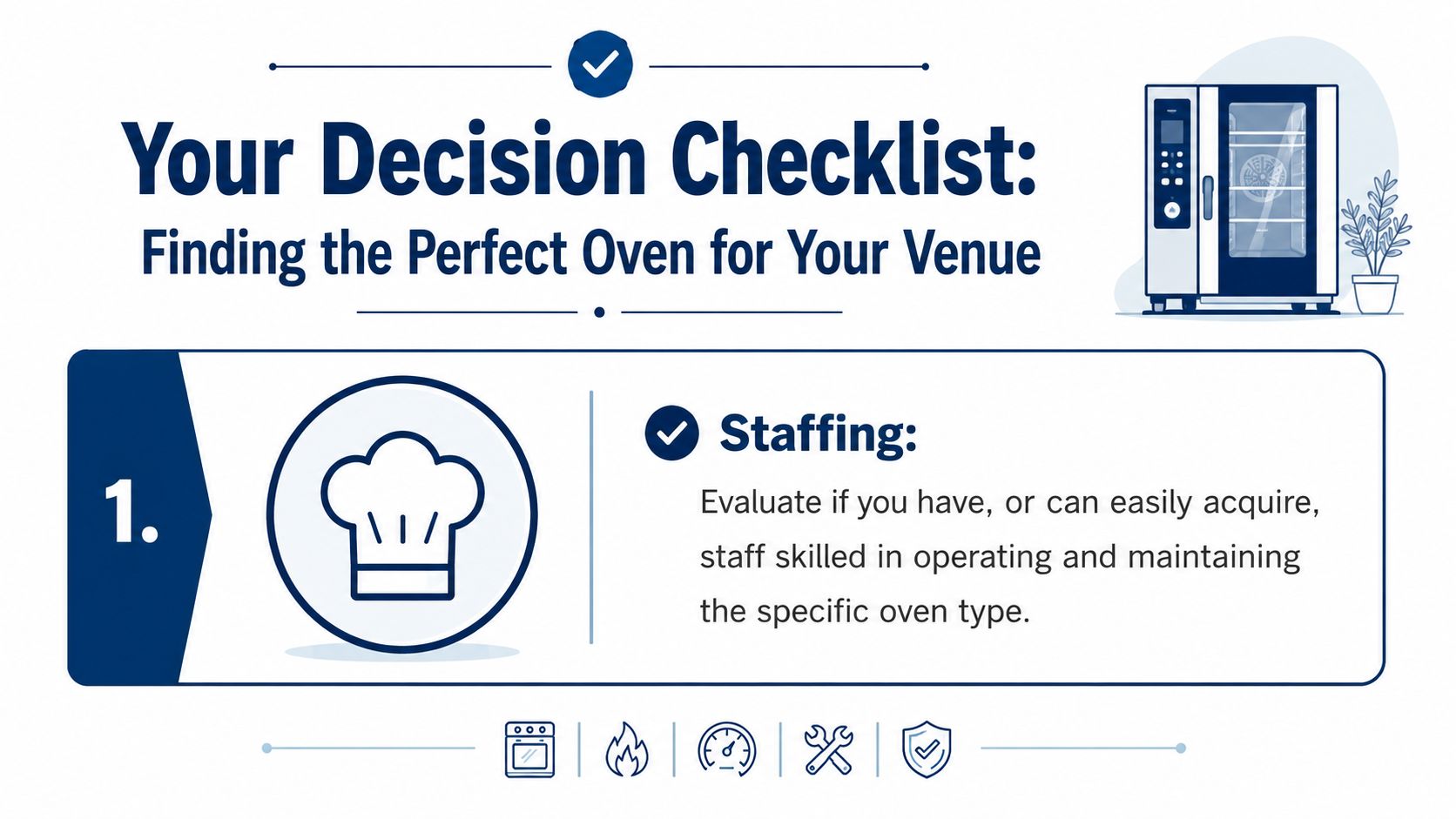
Your Decision Checklist
Most operators don't need another debate about tradition versus technology. They need a clear way to decide what will work in their kitchen, with their team, under their service conditions.
Questions worth answering honestly
-
Staff capability
Does the venue have, or can it reliably retain, people who are comfortable managing a live fire through a full service? If not, a more programmable oven format may be the better fit. -
Consistency expectations
Is the brand promise built around every pizza landing the same way each time? Many pizza operators find this question cuts through a lot of noise very quickly. -
Peak-period pressure
The right solution depends on what happens during the busiest trading window, not the average one. An oven can feel perfect in testing and still create bottlenecks on Friday night.
Operational checks that are easy to miss
-
Menu flexibility
If the oven needs to support breads, finishing work, or other baked items, controllability matters more. -
Heat management
Wood-fired requires active heat management all shift. Moretti Forni changes that into a settings and process conversation. -
Training load
A common issue seen with wood-fired setups is that training becomes person-specific. One operator gets great results. The next operator struggles to match them. -
Site constraints
Urban venues, enclosed sites, and buildings with tighter ventilation constraints need a realistic look at extraction and emissions planning.
Bottom line: The best pizza oven is the one that supports the venue's business model without creating avoidable friction for the team.
A simple way to decide
Wood-fired usually suits venues that are intentionally building around craft, theatre, and the visible ritual of fire. The extra labour and oversight are part of the offer.
Moretti Forni usually suits venues that want premium pizza quality with less day-to-day complexity, cleaner workflow, easier staff training, and more predictable output. That's why many operators choose it across pubs, clubs, bakeries, restaurants, marae, and institutional settings.
If the decision still feels close, the safest question is this. Is the venue trying to build a fire-led performance, or a precision-led pizza operation?
If your team is weighing up wood-fired against Moretti Forni, Simply Hospitality can help assess the practical fit for your venue, menu, staffing model, and installation requirements so the oven supports how the business runs.