

Choosing the Right Electric Salt and Pepper Grinder
A service team is halfway through dinner, a chef is stirring a pan, or a guest is trying to season a plate without wrestling with a stiff mill. An electric salt and pepper grinder can remove that friction, but the motor isn't the deciding factor on its own. The mechanism, ingredient compatibility, power system, capacity, cleaning routine and expected workload determine whether the grinder remains convenient after the novelty wears off.
For home cooks, the main benefit is simple one-handed seasoning. For restaurants, cafés, hotels and institutions, the decision is more operational. A grinder may sit on a shared table, move through a busy pass, or be used repeatedly across a service. The right model needs to suit that environment, not just look attractive in a product photograph.
Electric versus manual grinders for hospitality use
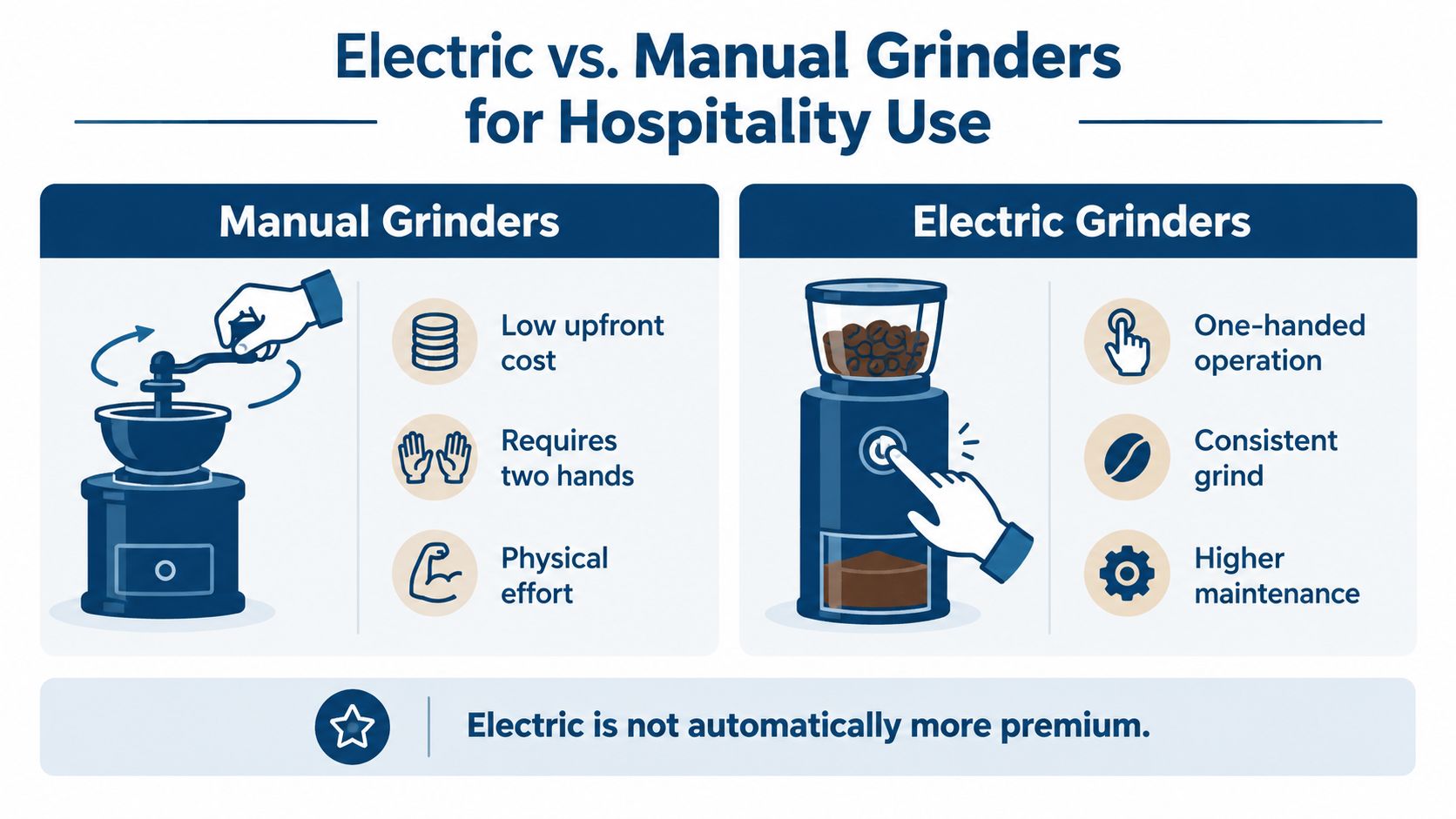
During a busy service, a chef may need to season while stirring, plate with one hand occupied, or finish a dish at the table. An electric model removes the twisting motion through one-handed operation, which can improve speed and accessibility for staff or guests. The benefit is operational only when the grinder fits the task and remains ready to use.
Manual mills have fewer powered components. They need no batteries, charging points or charging routine, which reduces checks during service. They also avoid motor faults and internal charging parts. A motor adds a maintenance burden, not an upgrade in hygiene or commercial suitability. Shared equipment still needs cleaning, refilling and sensible handling, whatever powers the mechanism.
Match the grinder to the task
A cook at the stove may value button activation because putting down a utensil interrupts the workflow. A guest may find the same control easier at a restaurant table. Operators must still account for battery status, cleaning and refilling, especially when several units are in circulation.
For bulk production, use a faster and more controlled seasoning method. A small table grinder suits finishing, plating, private dining and front-of-house presentation, where controlled portions and table convenience matter more than output volume.
Practical rule: choose electric for a genuine workflow benefit, not simply because the product has a motor.
The wider equipment decision can affect food quality and consistency, as explained in this practical guide to equipment decisions. Apply the same test to a grinder. If it creates extra battery checks, awkward refills, hygiene concerns or unreliable operation, it adds work rather than convenience.
Where manual still makes sense
Manual mills suit low-frequency use, simple table settings and venues seeking fewer powered devices. They eliminate disposable batteries and charging components, while keeping operation familiar for staff. Choose according to usage frequency, operator needs and whether one-handed control improves the workflow enough to justify the added maintenance.
Understanding grinding mechanisms and material compatibility
The grinding mechanism deserves more attention than motor power. Salt and pepper place different demands on internal components, so a mill suitable for one ingredient isn't automatically suitable for the other.
Salt can be corrosive. A grinder intended for salt should use a mechanism or material that the manufacturer specifies as suitable for salt, rather than relying on an assumption that any ceramic, metal or plastic component will cope. Pepper mills commonly use mechanisms designed to crack and grind peppercorns, which doesn't mean the same mechanism can process salt safely.
Check the intended ingredient first
Before purchasing, identify whether the unit is designed for:
- Salt only, including the type of salt and crystal size accepted.
- Pepper only, including the size and dryness of peppercorns.
- Separate salt and pepper use, with mechanisms appropriate to each ingredient.
- Other dry ingredients, only where the manufacturer expressly permits them.
A common mistake is filling a pepper grinder with rock salt because the hopper appears large enough. That can lead to corrosion, inconsistent output, clogging or premature failure. The same caution applies to herbs, spice blends and other dried products. Hardness, size and moisture vary, and an electric grinder shouldn't be treated as a general-purpose spice machine without clear manufacturer guidance.
Ceramic and metal systems
Ceramic and metal grinding systems are both found in current products, but neither is universally superior. The useful questions are whether the system is suitable for the intended ingredient, whether it offers the required adjustment, how it is constructed and how the manufacturer says it should be maintained.
For example, a product described as having a ceramic gear may be appropriate for a particular salt and pepper application, but the operator still needs to follow the product instructions. A relevant example is the Chef Inox salt and pepper mill with ceramic gear. Its specification should be checked before selecting it for a specific ingredient or service environment.
Ingredient rule: never use a grinder for salt, pepper or another spice unless its manufacturer identifies that ingredient as suitable.
Adjustment also matters. A grinder may use a dial, knob or another adjustment system, and the location affects how easy it is to change the output during service. Fine seasoning during cooking and coarser pepper for finishing are different requirements. Operators should test the actual output rather than assuming that an adjustable mechanism will deliver the desired result consistently.
Battery versus rechargeable power systems for venues
A grinder that works well at one table can become a daily nuisance across a busy venue. Once units are spread across dining rooms, rooms, counters or service areas, staff must track which ones are ready, where spare batteries are stored, and which grinders need cleaning or charging.
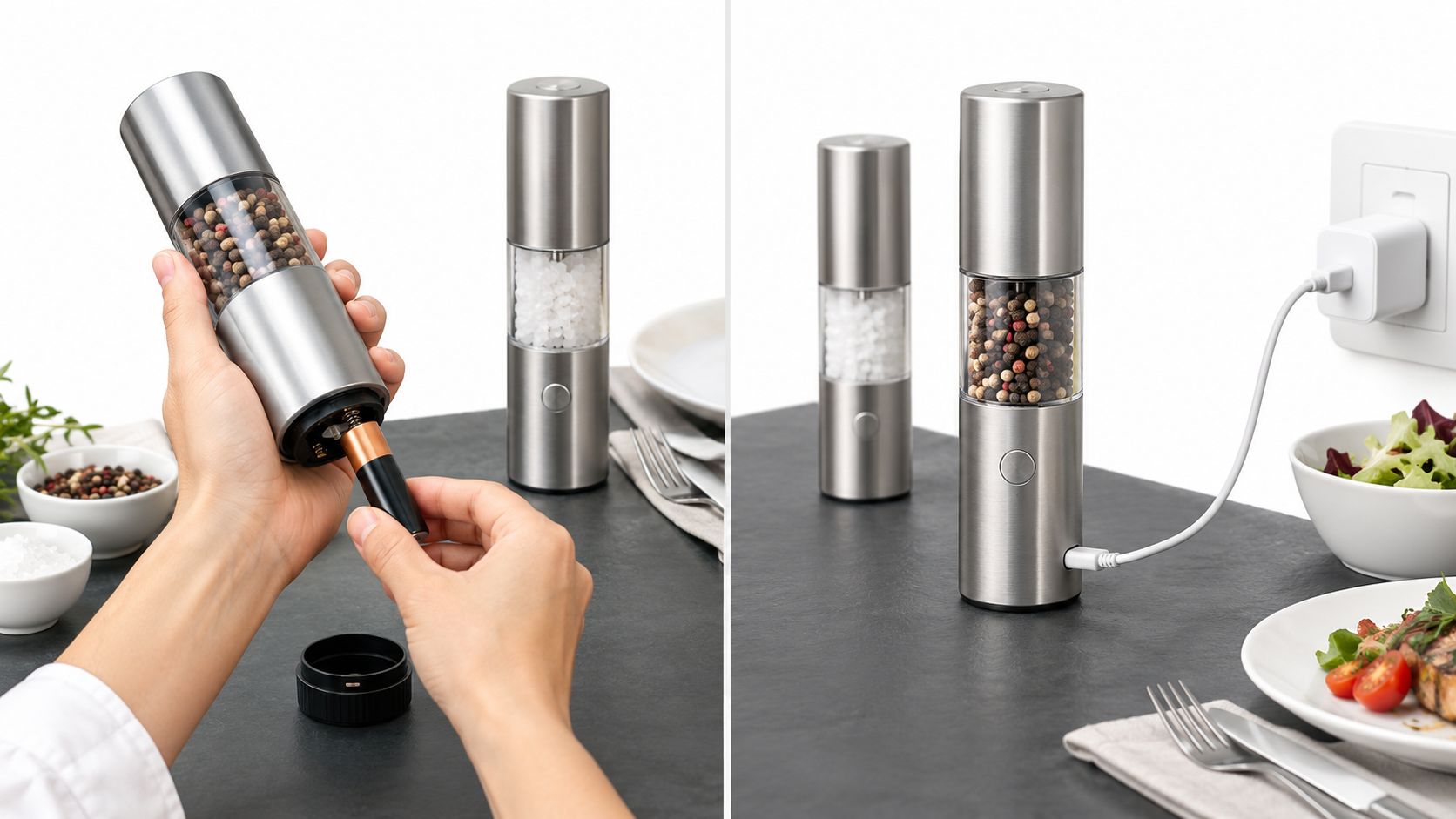
Battery-operated models allow quick recovery. Staff can replace depleted cells and return a grinder to service without waiting for a charging cycle. The trade-off is a continuing supply of the correct batteries, plus safe storage and disposal. Rechargeable models reduce disposable battery handling, but they depend on a charging point and contain an internal battery that will eventually affect servicing or replacement decisions.
Count the management workload
The purchase price of one grinder gives an incomplete picture. Assess the number of units, service frequency, who checks them, and what happens when one fails during service.
Capacity × frequency of use × number of grinders = practical refill and maintenance workload
That workload covers charging or battery replacement, cleaning, inspection and removing faulty units from circulation. Salt residue and moisture can also increase cleaning attention, particularly where grinders are handled frequently or stored near wet prep areas. A charging base or paired set can keep equipment together when the specification includes one, but staff still need a routine and a defined location for returning charged units to service.
Grinder-level energy draw is negligible. The management workload, rather than the wattage, is what costs a venue staff time. For a broader look at commercial running costs, see this guide to energy-efficient appliances.
Consider the full operating cost
Electricity prices were 12.2 percent higher over the year to December 2025, while restaurant meals and ready-to-eat food prices rose 2.4 percent over the same period, according to Stats NZ's selected price indexes. These are national indicators, not grinder-specific calculations. Record the purchase price, battery or charging requirements, cleaning time, downtime, replacement needs and expected service life before standardising a model across the venue.
A rechargeable grinder suits a venue with an organised charging point and staff ownership of the charging routine. A battery-operated model may work better when units are distributed widely and quick replacement matters. Choose the power system that matches the actual workflow, not the one that sounds most convenient at purchase.
Capacity, visibility and table presentation considerations
A larger hopper reduces the need for frequent refilling, but it can also make the grinder heavier and bulkier. That matters at a restaurant table, where guests need to lift and control the unit comfortably, and at a pass, where staff may handle it repeatedly.
Capacity should be assessed against actual use rather than maximised by default. Operators shouldn't fill a mill with excessive product merely to avoid a refill. Following the manufacturer's loading guidance helps protect the mechanism and keeps the ingredient fresh.
Make refilling visible
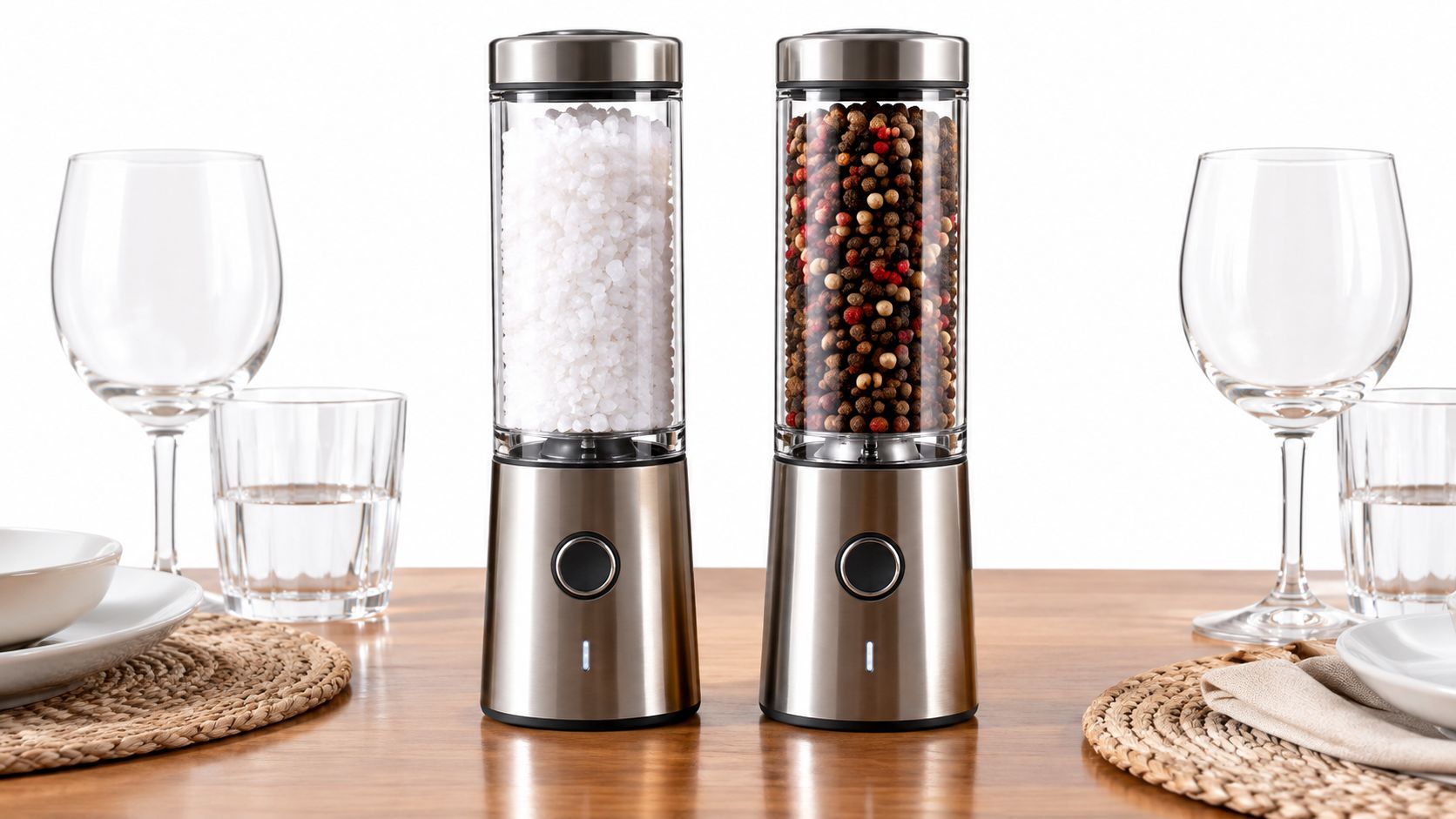
Transparent chambers and viewing windows can reduce avoidable interruptions. Staff can see when a grinder is running low, identify whether it contains salt or pepper, and check a paired set without opening the unit.
Visibility is especially useful when salt and pepper grinders have similar finishes. Clear identification can help prevent the wrong ingredient being loaded into a mechanism that isn't designed for it. Where the body isn't transparent, colour, labels or a defined storage position can provide the same operational control.
Built-in lights are a convenience feature rather than a performance advantage. They may help users see approximately where seasoning lands in a lower-light dining environment, but they won't compensate for an unsuitable mechanism, poor cleaning process or unreliable power supply.
Treat appearance as part of service
A customer-facing grinder contributes to the table setting. Its finish should sit comfortably alongside the venue's cutlery, crockery and glassware. Stainless steel may suit a contemporary setting, while wood or a simpler finish may work better with a more traditional tabletop.
A premium-looking electric grinder isn't automatically the right choice. Weight, grip, activation method and ease of cleaning may matter more than visual impact. The relationship between mill design and the wider table setting is explored in this discussion of contemporary table presentation.
For paired sets, the useful features are clear salt and pepper identification, separate ingredient-appropriate mechanisms, matching appearance and, where specified, shared charging equipment. The number required depends on how many tables, rooms or service points need them. A single attractive set may suit a home or private dining room, while a larger venue needs a replacement and refill process as well as a consistent appearance.
Cleaning, hygiene and commercial suitability in New Zealand
An electric grinder at a shared table becomes a frequently handled food-contact item. Touch-free grinding only changes how the seasoning is dispensed. The housing, controls and base still collect fingerprints, food residue and moisture, while an electronic unit may be harder to sanitise than a washable manual implement.
New Zealand food safety regulations require cleaning and sanitising utensils after use, alongside hand hygiene and safe food-handling practices. Shared table grinders, buffet units and equipment handled by many customers therefore need a defined cleaning procedure, not an occasional wipe when the finish looks marked.

Use a controlled cleaning process
Check the manufacturer's instructions before selecting chemicals or deciding whether components can be removed. A workable venue procedure should cover:
- External surfaces: wipe the housing with a suitable cloth and approved cleaning method.
- Electronic areas: keep moisture away from the motor, controls, charging connection and battery compartment.
- Grinding mechanism: keep it appropriately dry where required, and clear residue using the approved method.
- Food chamber: stop cleaning chemicals, loose battery components and foreign material entering the reservoir.
- Cross-contact: keep salt and pepper separate. Do not refill one grinder with another product without emptying and cleaning it according to instructions.
Do not immerse an electric grinder or place it in a dishwasher unless the manufacturer expressly permits that method. Routine soaking and dismantling can damage seals, electronics or calibration. The right process depends on the design, food-control procedures, service traffic and manufacturer's directions.
Salt absorbs humidity and can bridge or clog mechanisms, particularly in damp kitchens and coastal accommodation environments. Inconsistent grinding should prompt staff to inspect the contents and mechanism, follow the approved cleaning process, and remove or replace the unit if the problem continues. Corrosion or residue around the mechanism is a service issue, not just a cosmetic defect.
Apply a New Zealand intake check
For New Zealand commercial kitchens, each electric grinder should pass a four-stage acceptance procedure before deployment:
- Confirm electrical details. The rating plate should state 230 V, 50 Hz, and the appliance should have an approved New Zealand plug.
- Inspect the unit. Check the cable, plug, housing, battery compartment and grinding mechanism for damage or moisture ingress.
- Test operation. Run the grinder unloaded, then with the intended salt or pepper. Check for abnormal noise, overheating, intermittent operation and motor stalling.
- Record and isolate faults. Remove the unit from service if it trips protection, gives an electric shock, develops exposed wiring or repeatedly malfunctions.
New Zealand electrical rules require electrical products offered for sale or supply to be electrically safe. WorkSafe's electrical equipment guidance advises checking the correct New Zealand voltage and plug and having faulty appliances repaired by a qualified person. Treat any failure in voltage, plug, physical condition or operation as a rejection at intake.
An overseas CE marking or a USB charging lead does not establish New Zealand suitability. Suppliers still need to confirm that the product suits New Zealand's 230 V, 50 Hz supply and provides English safety instructions where required.
Food safety also covers food that could cause physical harm to someone who later consumes it. Treat the grinder as food-contact equipment, protect its reservoir from contamination, empty and clean it at intervals set by venue procedures, and inspect for fragments or corrosion. Where shared handling creates an unacceptable risk, a manual grinder or single-use sachet may be the safer operational choice. The New Zealand food-safety framework supports this equipment-focused approach.
Selection checklist for buying the right grinder
The strongest purchase decisions start with the workload, not the motor. A grinder for occasional home cooking has different requirements from one placed on every restaurant table, used in hotel rooms or handled during front-of-house finishing.
Use the following checklist before selecting a model or paired set.
- Salt, pepper or both? Decide which ingredients the venue will dispense. A paired set is useful only when each mill has an appropriate mechanism and staff can identify the contents clearly.
- Is the mechanism suitable? Check the manufacturer's intended use, particularly for salt. Don't assume that a pepper mechanism can handle salt, or that a mill labelled for salt can process every type of crystal.
- Do you need adjustable grind size? Fine output may suit cooking, while a coarser setting may suit freshly ground pepper at the table. Check whether adjustment uses a dial, knob or another system, and test the result rather than relying on the label.
- Battery-powered or rechargeable? Replaceable batteries support quick recovery from an empty power source. Rechargeable units reduce disposable battery replacement but need charging access and a storage routine.
- How often will it be used? Occasional home use, table service, private dining and repeated plating each create different demands. A high-volume production kitchen may be better served by another seasoning method.
- How often will it need refilling? Balance hopper size against weight, handling and product freshness. A larger capacity isn't useful if the grinder becomes awkward for guests or staff.
- One-handed or gravity operation? Push-button activation can suit cooking and tableside use. Gravity activation may appear convenient, but accidental activation and storage orientation need consideration.
- Cooking or table service? Cooking prioritises access and control. Table service also requires appearance, quiet handling, simple identification and a cleaning process that staff can follow consistently.
- Is it easy to clean and maintain? Check removable food-contact parts, protection against moisture ingress, a sealed battery compartment, compatible cleaning products and the replacement process when grinding becomes inconsistent.
- Does it suit the table setting? Compare the finish with cutlery, crockery and glassware. A straightforward manual mill may suit one venue better than an electric model, while an electric set may improve access and workflow in another.
Salt products also need clear identification during refilling. Under New Zealand's adopted food standards, salt sold as “salt” must contain at least 970 g/kg sodium chloride on a dry basis, excluding permitted additives, and relevant salt products require sodium and potassium information per 100 g. The Food Standards Code compilation.pdf) is relevant where a venue uses iodised salt, reduced-sodium mixtures or salt substitutes. Keeping the original packaging or product specification available and avoiding mixed refills helps maintain product identity.
Portion control deserves equal attention. New Zealand adults consume roughly 3,000 mg of sodium daily, above the WHO upper limit of 2,000 mg, while research reviewed 5,246 fast-food products and found that only about one-third provided sodium information, with ten of 28 major chains supplying none, as reported by the University of Auckland. A fine or coarse setting isn't a dose control system. Venues should test the amount dispensed per activation, assess consistency over repeated presses, offer lower-sodium alternatives where appropriate and give staff clear service guidance.
An electric salt and pepper grinder works best when its convenience matches the actual workflow. Mechanism suitability, ingredient control, power management, cleaning and workload matter more than a long feature list.
Simply Hospitality can help hospitality businesses compare salt and pepper mills, tabletop accessories and related front-of-house equipment against their service requirements. Visit Simply Hospitality to discuss the right electric or manual solution for a home, café, restaurant, accommodation venue or institutional setting.