


Foodservice Considerations for Aged Care Facilities
More than 70% of residents consumed insufficient protein in a New Zealand residential aged-care study reported by New Zealand Doctor. That finding reframes the main foodservice considerations for aged care facilities: a balanced menu isn't enough if residents don't receive, enjoy and eat the meals intended for them. Effective planning connects individual nutrition, safe production, suitable equipment and respectful service, while keeping clinical decisions with qualified healthcare professionals.
Why Aged Care Meals Need a Different Plan
A restaurant generally works around customer orders and defined service periods. A residential aged-care kitchen must provide dependable meals, snacks and drinks every day for residents with different appetites, preferences, allergies, cultural needs and levels of independence.
Meals also provide routine, social contact and enjoyment. A technically correct meal can still disappoint if it arrives late, looks unappealing or requires utensils the resident can't comfortably handle.
Residential care shouldn't be treated as interchangeable with independent retirement living, where residents may cook or choose café meals. Rest-home and hospital-level care require closer coordination between foodservice and care teams, while short-stay hospital catering operates around a different pattern of admissions and departures.
Set clear responsibilities
| Planning area | What changes in aged care | Who owns the decision |
|---|---|---|
| Nutrition and hydration | Smaller appetites may require nutrient-dense meals and snacks | Dietitian assesses needs; kitchen produces meals |
| Texture | Prescribed textures or drink thicknesses must follow the resident through service | Speech-language therapist or clinical lead prescribes; kitchen follows |
| Choice and culture | Cycle menus must accommodate personal, cultural and religious preferences | Foodservice manager with residents and whānau |
| Allergens | An incorrect plate creates a safety risk | Kitchen lead under the applicable food control plan |
| Service pattern | Meals, supper and snacks may serve dining rooms and bedrooms | Foodservice and care teams together |
| Food safety | Vulnerable residents require documented controls | Operator under the Food Act 2014 and applicable plan |
| Layout and equipment | Capacity must reflect resident numbers, dietary complexity and delivery routes | Management and kitchen; designer for substantial refits |
| Cost | Waste, labour and downtime need managing without cutting prescribed diets | Procurement and foodservice manager |
Capacity planning also needs a longer view. Stats NZ reported approximately 874,000 people aged 65 and over in 2024, with that population projected to reach 1.44–1.55 million by 2051.
That doesn't justify buying oversized equipment immediately. It supports allowing sensible expansion space for refrigeration, warewashing, dining and distribution.
Start with the operation: How many residents will be served, which diets must be produced, and how will meals travel from the pass to each resident?
Nutrition Choice and Menu Planning
In a Christchurch study of 54 residents, reported by the University of Otago, kitchens plated about 90% of planned nutrients while residents consumed roughly 70%. A compliant cycle menu on paper can still underfeed the people it was written for.
Appetite, illness, fatigue and assistance needs all change what a resident eats on any given day. Individual assessment belongs with a dietitian or relevant healthcare professional, including decisions about specialised support, supplements and clinical targets.
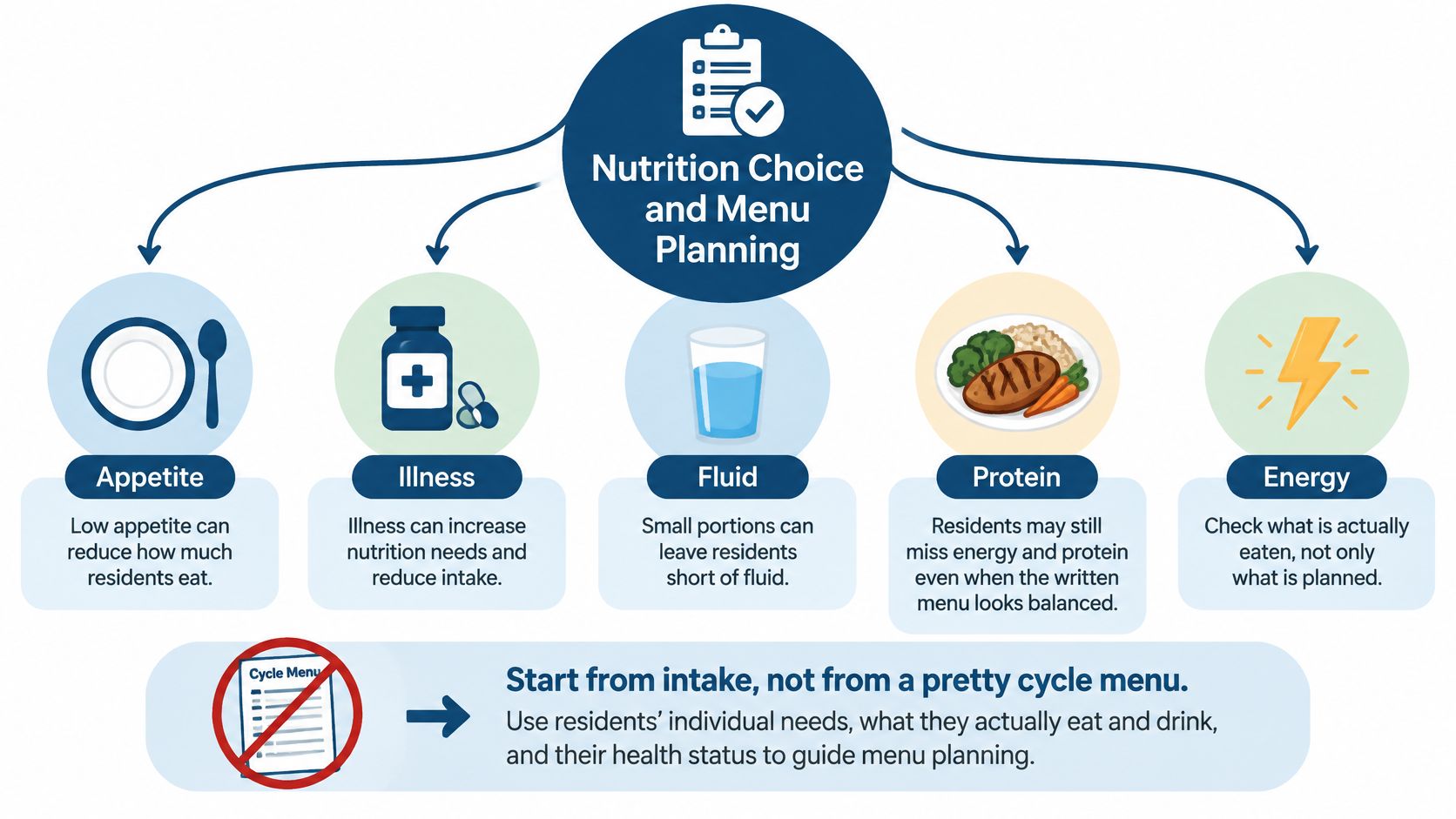
Make smaller meals nutritionally purposeful
A small-appetite meal is a different recipe, rather than a standard plate with less meat on it. The kitchen needs approved recipes that hold useful protein and energy inside portions residents can realistically finish.
Depending on the assessed diet, options might include enriched mince, eggs, dairy-based snacks, legumes and fortified desserts. The dietitian guides suitability, while the chef establishes recipes, yields and practical production methods that work at service speed.
Choice still matters at every service. A rotating menu should provide realistic alternatives for cultural and religious preferences, allergies, intolerances and disliked foods, rather than relying on an unsuitable substitute assembled at the pass.
- Plan snacks deliberately: Include appropriate between-meal options in purchasing and production, rather than treating them as leftovers.
- Provide suitable drinks: Coordinate hydration opportunities and any prescribed drink requirements with care staff.
- Offer manageable portions: Allow residents to choose an appropriate serving without automatically reducing nutrient-rich components.
- Document substitutions: Keep alternatives consistent with the resident's assessed requirements.
Check the menu-to-mouth gap
A useful kitchen audit follows the recipe through to consumption: planned portion, plated portion, returned food and care-team intake records. Returned-plate weights help identify patterns, though they need context, including whether someone received assistance or declined a particular component.
Take a roast lunch as a worked example. If plates come back with the sliced beef untouched while residents finish the shepherd's pie, the menu itself may be fine and the problem may sit in how long the beef was held, how thickly it was sliced or whether it stayed moist under gravy. That single observation points the fix at preparation and holding before anyone rewrites the cycle.
Production decisions then support the approved menu: smaller batches where practical, protected chilled space for labelled snacks, and recipes that retain their intended nutritional contribution after texture modification. Kitchen teams supply the production evidence, and the dietitian or relevant clinician interprets it and owns the clinical response.
Texture Modified Meals That Stay Appealing
Texture modification is a production system, not an extra blending step. New Zealand research using interRAI information covering 35,460 residents found that approximately one-third were on texture-modified diets, with feeding assistance more common among that group than among residents receiving regular diets, according to the study published in the Australasian Journal on Ageing.
Some residents require altered food textures or drink consistencies because of swallowing difficulties. Appropriately qualified healthcare professionals determine those requirements, with speech-language therapists responsible for swallowing assessment within their scope.
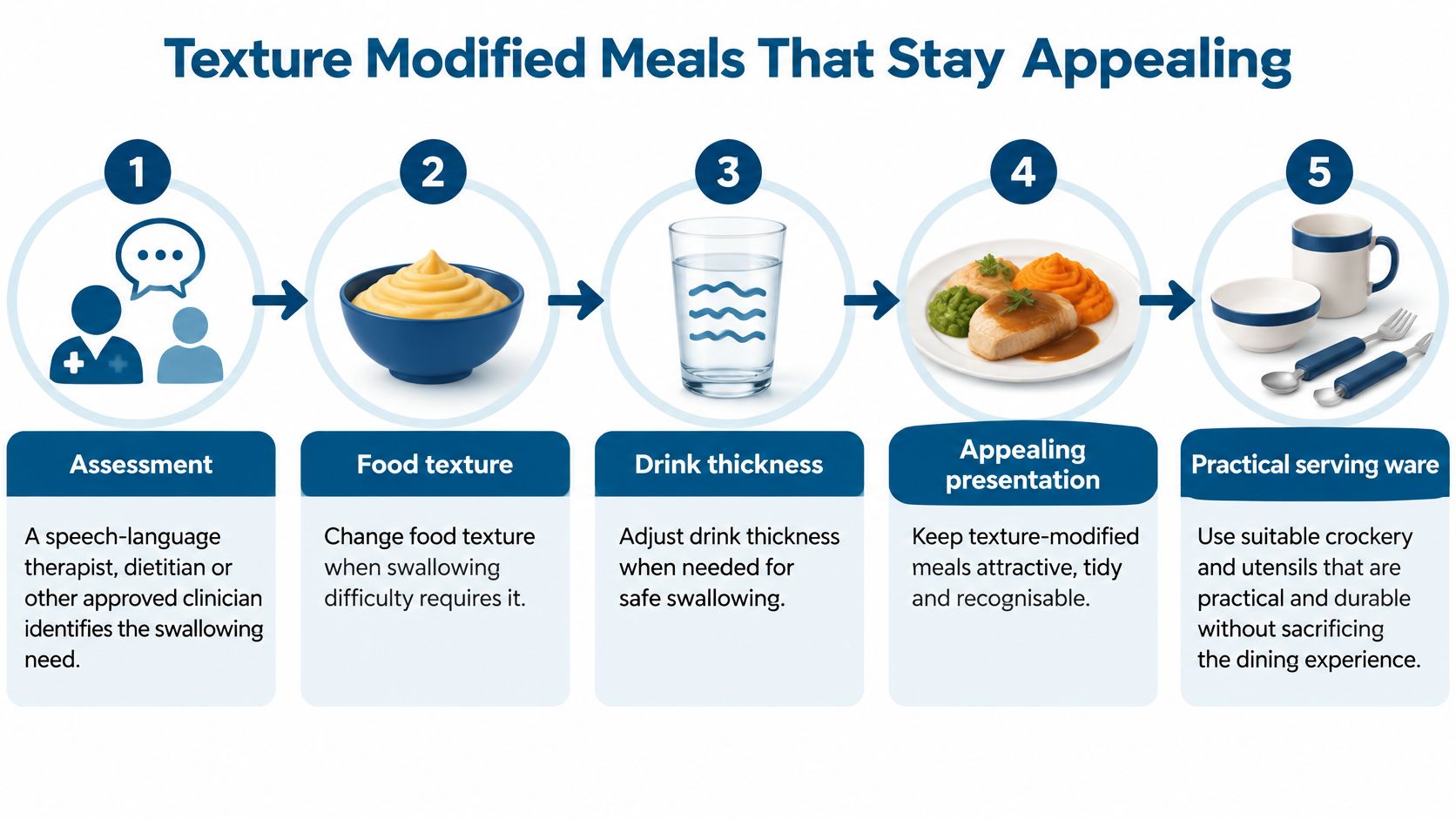
Standardise the method, then verify the result
The International Dysphagia Diet Standardisation Initiative, or IDDSI, provides a shared framework for describing food textures and drink thicknesses. A blender or processor doesn't establish compliance with a prescribed level, and blending alone doesn't make food safe for someone with swallowing difficulties.
Each menu item needs a written method covering ingredients, processing, portioning and the facility's prescribed verification checks. Staff should also check the meal under its actual serving conditions, because reheating and holding can alter moisture and consistency.
Robot Coupe commercial food processors can support repetitive preparation once recipes and methods are established. Selection should consider batch size, bowl access, dismantling and cleaning between dietary requirements, rather than motor specifications alone.
The discussion of whether a premium commercial blender is worth the extra money provides useful purchasing context, but appliance selection remains separate from clinical assessment and texture verification.
Protect appearance and meal identity
Recognisable portions, contrasting colours and separated components can make modified meals more inviting. Moulds may help where the recipe and prescribed texture allow, but appearance mustn't compromise the required result.
Separate utensils and clean preparation surfaces help prevent allergen cross-contact and unintended mixing between meal requirements. A labelled tray is only useful if staff confirm it against the current care instructions.
A meal can meet a texture requirement yet still fail on nutritional density, appearance or the practical time available for assistance.
The shift handover should cover:
- Recipe and equipment setting: Use the approved method, not an improvised adjustment.
- Verification and presentation: Complete prescribed checks and assess taste and appearance.
- Tray identification: Confirm resident, diet, texture and allergens.
- Care-team handover: Communicate relevant service and assistance requirements.
Food Safety Controls for Vulnerable Residents
Food safety needs dependable controls at the point of work. Many residents are more vulnerable to foodborne illness, and aged-care menus commonly include ready-to-eat foods and meals prepared for later reheating.
Under the Food Act 2014, businesses are responsible for safe and suitable food; MPI's aged residential-care Food Control Plan information describes a specific planning pathway. MPI's My Food Rules should be used to help establish the relevant requirements for the facility's activities.
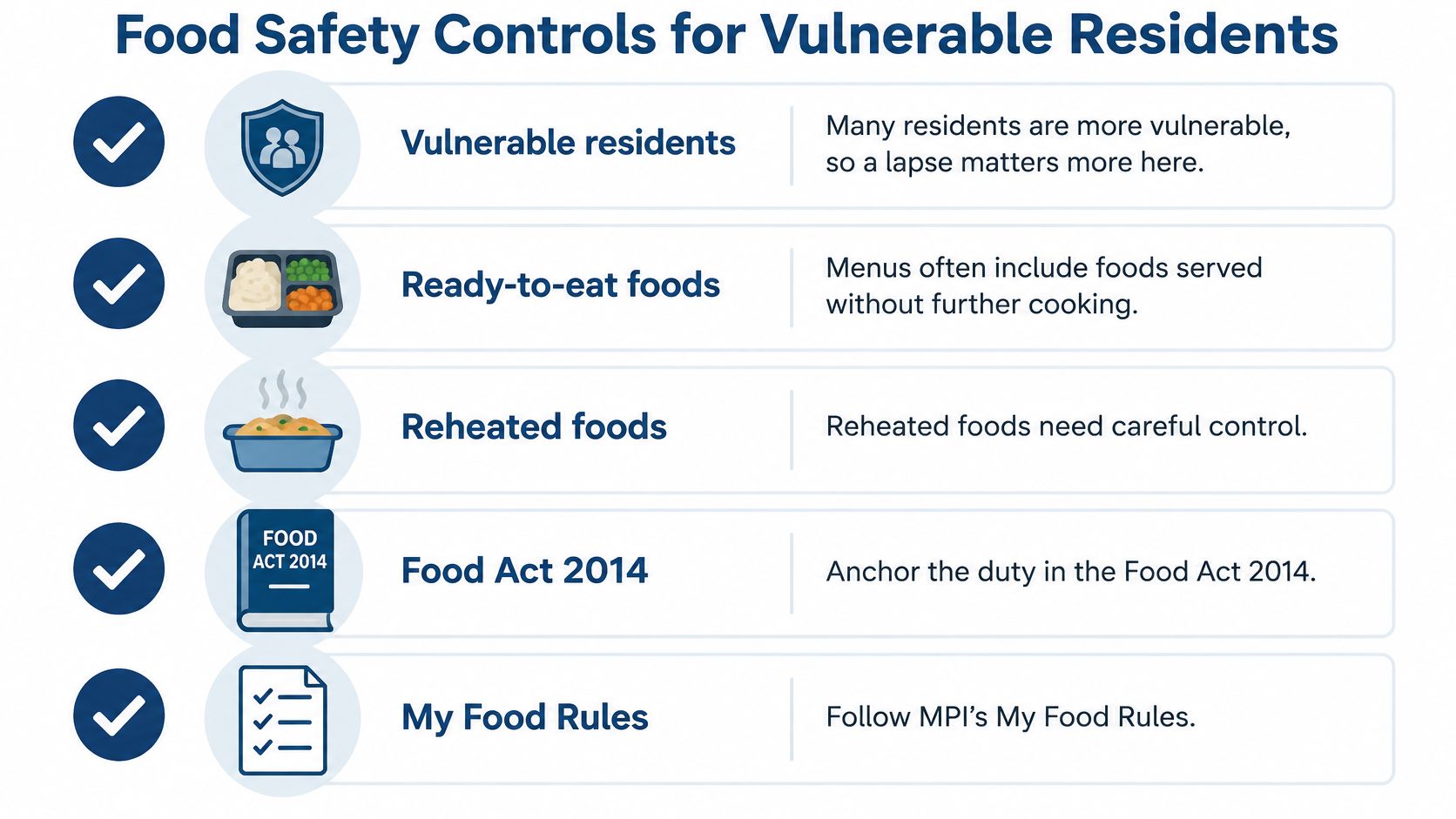
Match the plan to the operation
Not every facility operates under identical arrangements. Off-site manufacture, transport and other activities may change the applicable pathway; MPI's custom Food Control Plan guidance explains the need to identify operation-specific hazards and have custom plans evaluated and registered where applicable.
Map controls from receiving through storage, preparation, cooking, cooling, reheating and dispatch. Keep raw food separate from ready-to-eat food, identify allergens clearly, and retain batch identification when meals will be regenerated later.
Published MPI temperature guidance identifies 5°C–60°C as the danger zone, specifies cooking potentially hazardous food to at least 75°C, chilling it below 5°C, and hot holding above 60°C; its staged cooling specification is to 21°C within two hours, then below 5°C within a further four hours. Apply the approved site's controls and corrective actions rather than treating a general summary as a substitute for its plan.
Make recording possible during service
Calibrated probes, shallow cooling pans and suitable chilling equipment turn written controls into workable tasks. High-volume batch cooking may justify blast-chilling capacity, but buying the machine doesn't remove the need to check food temperatures.
- Record usable details: Food, batch, time, core temperature, responsible staff member and corrective action.
- Control staff hygiene: Provide accessible handwashing facilities and clear illness-reporting procedures.
- Clean processing equipment thoroughly: Dismantle food-contact parts and follow cleaning and sanitising instructions.
- Protect dispatch: Check transport equipment, identification and holding arrangements before trays leave.
Warewashing also needs a dependable process, not merely an impressive feature list. The article on reliability versus features in aged-care warewashing addresses that purchasing distinction.
Hospitality doesn't certify food control plans or accredit aged-care facilities. Those responsibilities remain with the appropriate regulatory and professional parties.
Kitchen Layout for Reliable Meal Delivery
A rest home plating directly into a nearby dining room can run a short route from pass to table. A larger facility using satellite serveries or regenerating meals closer to residents needs a different arrangement, and the layout has to suit whichever method the kitchen runs.
Map the route food travels: receiving to storage, preparation, cooking, texture finishing, plating and dispatch. Then map dirty crockery and waste separately. The modified and fortified meals that carry most of a resident's nutrition still have to survive that route looking and tasting like food, so every extra metre and every waiting point matters. A long walk between oven, pass and trolley adds handling, complicates timing and creates more opportunities for meal identification errors.
Remove crossings and unnecessary movement
| Kitchen area | Operational consideration | Potential improvement |
|---|---|---|
| Receiving and storage | Dietary stock and allergens share limited coolroom space | Separate designated ingredients and label shelves clearly |
| Preparation | Regular and modified meals share benches | Provide a cleanable finishing bench with dedicated small equipment |
| Cooking and regeneration | Batch timing doesn't match service | Schedule capacity around the longest delivery run |
| Plating | Staff select special diets from memory | Provide a marshalling bench with written tray tickets |
| Distribution | Distance complicates temperature control | Assess holding or regeneration nearer remote service points |
| Warewashing | Dirty lunch crockery returns during afternoon preparation | Provide a dirty entry away from clean plating |
| Waste | Leftovers disappear without useful records | Establish a simple plate-waste check at dish return |
| Staff movement | Cooks repeatedly cross the kitchen for diet supplies | Keep high-use labels, probes and appropriate supplies near plating |
Bench height, trolley access and door clearances deserve attention before cabinetry is fixed. A trolley that fits in the kitchen but can't turn comfortably into the corridor is the wrong trolley. Check the final electrical or gas supply, cut-out, ventilation and clearances against the model document before ordering cabinetry.
Gastronorm pans and compatible holding equipment can simplify transfers, provided the selected sizes match the oven, refrigeration and trolley system. Leave a deliberate space for checking and marshalling special diets, rather than squeezing that task beside the dishwasher.
Size the busiest part of the service
Peak meal demand, dietary complexity and production method should establish capacity. Equipment footprint comes later.
The roster also needs to reflect the busiest service, including breakfast clearance, special-diet checks and preparation for lunch. Assign a trained person on each shift to coordinate texture and allergen checks, with time allowed at the pass. Where that check happens determines whether it takes seconds or becomes a bottleneck staff work around under pressure.
Layout test: Staff should be able to receive dirty dishes without crossing the space where checked meals are waiting for dispatch.
For substantial redesigns or new facility fit-outs, Hospitality offers design services from SACH. That service covers kitchen planning, working alongside the clinical and food safety requirements the facility's own professionals set.
The movement and zoning questions in restaurant kitchen layout ideas are a useful starting frame, though residential-care service patterns should determine the final arrangement.
Equipment That Fits Aged Care Production
No facility needs every equipment category. The menu, resident numbers, available infrastructure and production method decide what earns space in the kitchen.
Assess the whole service first, then buy the capacity it needs. A larger oven won't resolve a congested plating bench, and additional refrigeration won't help if staff can't identify or access the correct dietary stock.
Compare equipment by its actual job
| Equipment category | Aged care application | Key purchasing consideration |
|---|---|---|
| Commercial refrigeration, including SKOPE and Atosa | Raw food, snacks, special diets and chilled holding | Designated storage, accessible monitoring and cleaning access |
| Combi ovens, including Convotherm, Unox and Blue Seal | Batch cooking, steaming and suitable regeneration | Actual peak tray load, cleaning requirements and training |
| Robot Coupe food processors | Repetitive preparation and approved texture processes | Repeatable results and straightforward cleaning between diets |
| Vitamix commercial blenders | Purees, sauces and texture-modified components | Consistent results at prescribed textures and easy cleaning |
| Classeq, Winterhalter and Rhima dishwashers | Crockery and utensil turnaround | Return pattern, cycle suitability and dirty-to-clean movement |
| Stainless benches, shelving and trolleys | Preparation, pan holding and tray marshalling | Working height, mobility, cleanability and space at the pass |
Refrigeration selection should account for shelf geometry, door opening and recovery during busy access periods, alongside external dimensions. Frozen storage needs enough usable organisation to keep special-diet items from disappearing behind bulk stock.
For combi ovens, compare the planned tray arrangement with the actual menu. Steaming vegetables, cooking a main and regenerating plated food run as separate jobs within the same service schedule, so check that the oven's programming and capacity handle each one.
Texture-modified food lives or dies on repeatability. A processor or blender that produces the same result across shifts and operators protects the prescribed texture far better than a recipe card alone, so favour machines staff can set, run and clean the same way every time.
Check ownership requirements before ordering
Cleaning effort is part of labour planning. Ask staff how they will remove processor components, clean oven interiors, reach refrigerator seals and load dishwasher racks safely during a real shift.
Chef Inox kitchenware, including suitable GN pans, can support preparation and service, provided compatibility is checked across the equipment system. Small differences in pan arrangement create extra transfers and washing. These pans hold up well when washed with mild detergent and fully dried before storage; abrasive cleaners shorten their working life.
- Services: Confirm electrical or gas supply, drainage and ventilation requirements.
- Installation: Check cut-outs, clearances and access against the model document before ordering cabinetry.
- Support: Establish regional servicing arrangements and the route for reporting faults.
- Training: Include relief staff and different shifts, not only the chef present at installation.
A domestic appliance shouldn't be assumed suitable for repeated institutional use. Compare the intended duty, cleaning requirements and support arrangements alongside purchase price.
The related discussion of equipment considerations for healthcare foodservice covers more detail on matching equipment to a care environment.
Buy for the busiest service you run. The quiet days take care of themselves.
Service Presentation and Resident Dignity
A lunch tray leaves the pass for a resident's room. The recipe may be correct, but the meal still needs the right identification, suitable transport, appropriate utensils and a timely handover.
The Health Quality & Safety Commission's nutrition and hydration care guidance directs staff to check the prescribed diet, follow dietitian and speech-language-therapy care plans, provide suitable positioning and utensils, and monitor intake. Final delivery is part of care.
Follow the meal to the resident
At dispatch, staff should confirm the resident's name, current diet, texture requirements, allergens and relevant assistance instructions. Establish a service window appropriate to the site's food safety controls, then check the route against both the earliest and the latest recipient. A tray that sits while other rooms are served arrives cooler and drier than the one plated first.
Use suitable covered transport and avoid leaving trays unattended in corridors. Hot holding should preserve moisture as well as temperature, while chilled desserts and snacks need appropriate protection until service.
- Handling: Select crockery that feels stable and manageable for the intended resident.
- Utensils: Provide prescribed or preferred adaptive items rather than a house-wide assumption.
- Presentation: Keep components tidy, recognisable and respectfully plated, including modified meals.
- Confirmation: Make sure each room-delivered tray reaches the correct resident.
Keep durability compatible with enjoyment
Chef Inox serviceware can support practical dining and handling applications. Selection should balance weight, stackability, replacement availability and cleaning against the appearance of a pleasant meal. A plate that stacks tightly and survives the dishwasher still needs to carry food that looks like food.
Residents don't share identical physical or cognitive needs. Some value independent dining, some need discreet assistance, and others prefer a quieter setting. Lighting, background noise and time allowed to eat deserve the same practical attention as the plate.
Care staff provide required eating assistance and escalate concerns through clinical channels. Kitchen staff should treat returned plates and intake notes as production feedback. A texture-modified main coming back untouched may need more sauce, a tighter hold time or a smaller portion, and that adjustment happens in the kitchen.
Manage Cost Without Cutting Care
Food cost must never override prescribed diets, safe handling or resident dignity. Cost control should target avoidable waste and disruption: returned food, preventable downtime, inconsistent portions and rushed dispatch.
Cutting unrequested desserts can be waste reduction. Removing a prescribed fortified snack is a clinical and service decision, so treat it separately from kitchen savings.
Put a safeguard beside every improvement
| Cost pressure | Possible operational improvement | Quality safeguard |
|---|---|---|
| Ingredient spend | Plan overlapping ingredients across the cycle menu | Retain prescribed fortified items |
| Portion variation | Use consistent scoops or weights for key components | Preserve the intended nutritional contribution |
| Food waste | Record returned food before changing production | Allow additional servings where appropriate |
| Labour | Schedule batch work and simplify dispatch | Keep checked, labelled special-diet plates |
| Equipment downtime | Plan preventative servicing | Treat failed refrigeration as a food-safety concern |
| Water and energy | Use appropriate dishwasher loads and realistic production quantities | Maintain required cleaning and temperature controls |
| Training gaps | Standardise texture, allergen and cooling methods | Record unsafe shortcuts as incidents, not savings |
| Low meal satisfaction | Ask residents about uneaten food and adjust approved recipes | Protect meaningful choice and dignity |
Measure expenditure separately from smoother work
Track plate waste, resident meal comments, equipment downtime and actual cost per meal. Define cost per meal consistently by stating whether ingredients, labour, consumables and equipment costs are included.
A tidier pass may release staff time while payroll stays the same. Count that as service capacity unless rostering or agency spend changes.
Preventative maintenance and staff training belong in ownership budgets. The comparison of purchase price and lifetime reliability helps separate a low invoice from the cost of breakdowns, spoiled stock and emergency callouts.
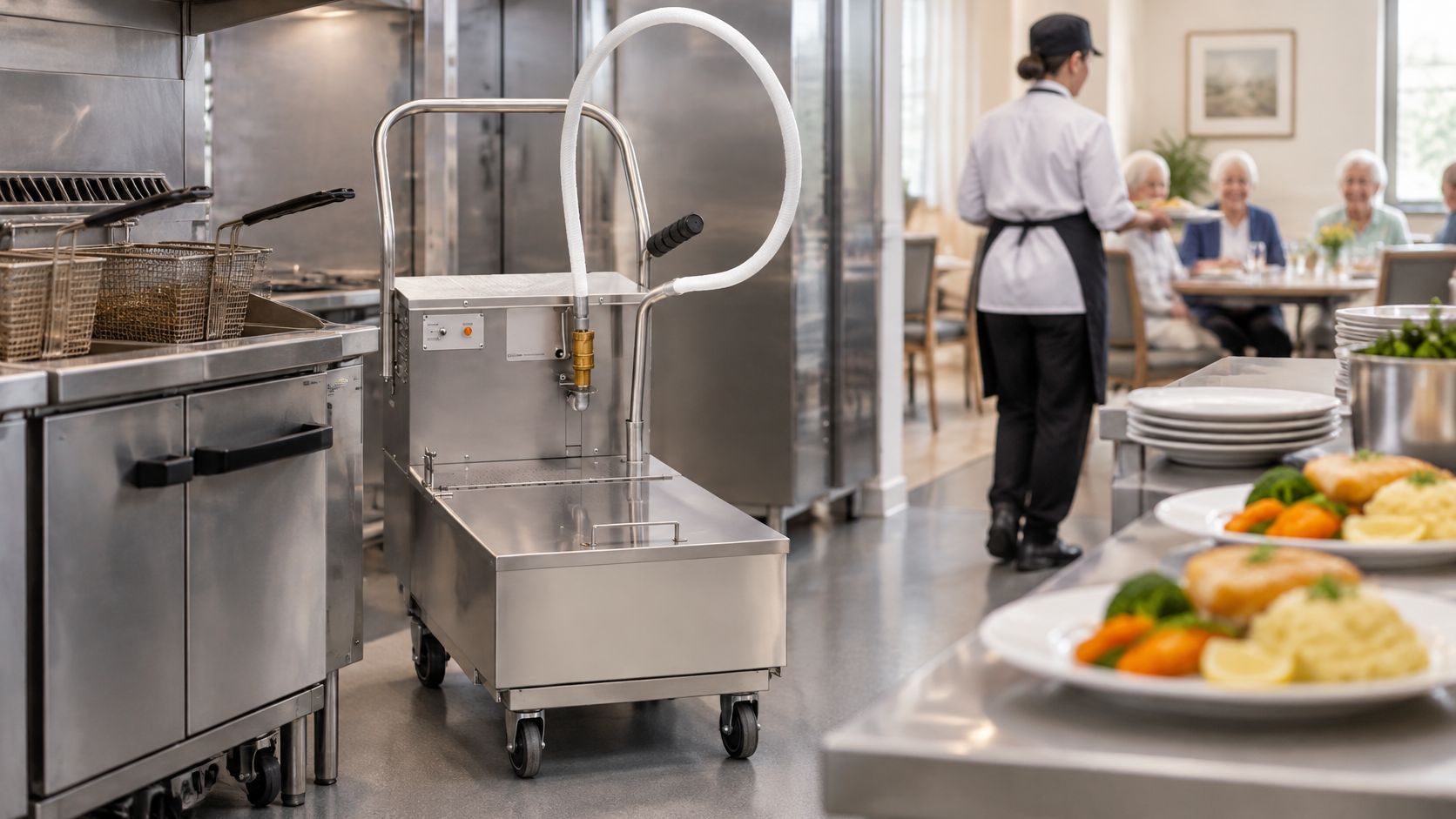
For kitchens that operate fryers, the Frymax EOF-25 25L Electric Oil Filter Machine provides a dedicated process for removing crumbs and sediment from oil away from the cooking tank. Its value depends on menu and maintenance workload.
The supplier offers equipment finance through SilverChef Finance and lists SKOPE Funding, Certified Used, Service Request and Warranty Claim among its services. Use finance to spread cost over time, then judge each machine on volume, reliability and cleaning burden.
The business supplies commercial kitchen equipment, tableware and hygiene consumables for a range of aged-care environments. Facility managers and foodservice teams can visit Simply Hospitality with resident numbers, dietary complexity, service methods and existing infrastructure details to discuss equipment suited to their operation.