

How to Choose your Plates and Bowls for Busy Hospitality Venues
The best plates and bowls aren't chosen by appearance alone. They need to hold the portions a venue serves, fit its dishwasher racks and storage, and remain replaceable in the same design after breakage. A practical buying decision starts with the menu and the working environment, then compares shape, material, finish and cost.
What Decides a Good Plate or Bowl
A plate or bowl is right for a venue when it holds the intended portion without spills, fits the racks and shelves already in use, and has a clear replacement path. Appearance matters, but it's a final filter after those operating requirements are met.
A household set might go through the dishwasher a few times a week. A café, hotel or caterer may send the same pieces through repeated service, washing and storage every day. Commercial tableware needs to suit that workload, not just look good on the table.
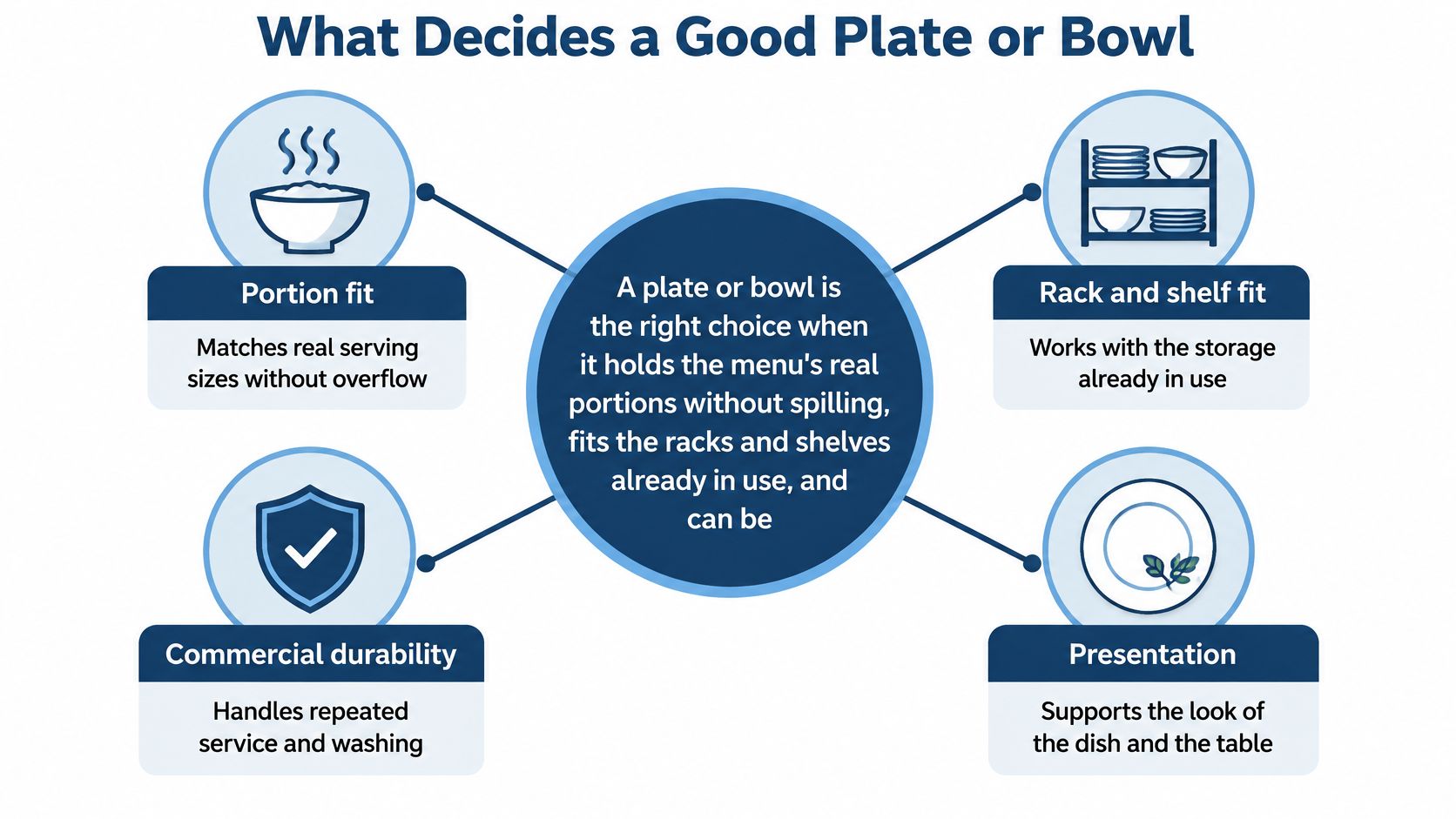
A common purchasing mistake is to select a piece from a photograph, then discover it sits poorly in the rack or can't be matched when one breaks. Judge each item with the food it will carry, and check how it handles in the venue's wash-up and storage areas.
The sections ahead compare plate and bowl shapes, materials, menu fit, commercial service demands and ownership costs. The final checklist turns those decisions into practical checks before an order is placed.
Plate Shapes and Where Each One Works
Choose a plate for the job it needs to do, rather than for a style label. Each shape affects plating space, the way a portion looks, and how staff grip and carry it.
| Plate type | Common applications | Key considerations |
|---|---|---|
| Dinner plate | Mains and general covers | Check well size, not diameter alone |
| Side plate | Bread, cake, small dishes | Keep a stack that matches the dinner range |
| Entrée plate | Starters and smaller portions | Avoid a plate that makes a modest serve look lost |
| Coupe plate | Modern plating with little rim | Sauce can travel; stacking may differ from rimmed plates |
| Rimmed plate | Defined border and easier grip | Rim reduces usable food area |
| Deep or pasta plate | Sauced and looser dishes | Depth must hold liquid without looking like a bowl |
| Serving platter | Shared dishes and presentation | Weight, length and pass clearance matter |
Dinner plates suit main meals, while side plates handle bread, cake and smaller accompaniments. Entrée plates provide another size for starters or lighter portions. A defined rim can give staff a useful grip, but it also takes up space that could otherwise hold food.
Coupe plates have a continuous curve and little or no pronounced rim. That profile can give a dish an open look, but sauce may travel towards the edge. Deep plates and pasta plates are better suited to looser dishes, while platters are for shared food and need to clear the pass and remain manageable to carry.
Compare the usable well, not just diameter
A stated diameter doesn't tell a buyer how much food the plate will hold comfortably. A wide rim can leave a smaller central well than expected; the profile, curve and depth matter too.
For example, a main with a generous sauce may sit more securely in a deep plate than on a broad, shallow coupe. For a composed starter, the reverse may suit the plating better. Before ordering a full set, plate the dish on two candidate shapes and compare the usable food area and handling.
Hospitality's dinner and side plate collections include coordinated commercial ranges such as Bonna and Tablekraft. For operators also reviewing flatware choices, this guide to quality cutlery options provides a related reference point.
Bowl Styles and the Sizing That Matters
A bowl's capacity, opening and depth work together. A narrow, deep bowl might hold enough soup but be awkward to eat from, while a broad, shallow bowl can make a reasonable serving look sparse.
| Bowl type | Typical uses | Important sizing considerations |
|---|---|---|
| Cereal and breakfast bowl | Breakfast, yoghurt, smaller meals | Modest capacity and a stable foot |
| Soup bowl | Soups and brothy dishes | Depth that holds liquid without a wide spill lip |
| Pasta bowl | Pasta and sauced dishes | Wide opening plus enough depth |
| Rice bowl | Rice, sides, individual portions | Compact capacity so a side does not look like a main |
| Salad bowl | Individual or shared salads | Opening wide enough to toss or serve |
| Serving bowl | Buffets, shared dishes, table service | Volume, weight and how it sits on the pass |
| Ramekin or small bowl | Sauces, condiments, small portions | Footprint on the plate and rack |
Cereal and breakfast bowls need room for a typical breakfast without becoming cumbersome. Soup bowls should contain liquid securely, while pasta bowls need an opening that allows food to be served and eaten comfortably. Rice bowls are usually intended for individual portions or sides, so an oversized shape can make a modest serving feel out of proportion.
Salad bowls range from individual vessels to larger sharing pieces. Serving bowls need to suit both the amount of food and the way staff lift and place them. Ramekins and small bowls have their own practical checks: they need to fit neatly on plates and sit securely in the wash-up rack.
Match depth to the dish
A very deep bowl can hide a small portion and make food harder to reach. It can also take up more rack and shelf space than the dish warrants. Conversely, a wide, shallow vessel may spread a sauced dish too thinly for a tidy presentation.
A common mismatch is one bowl being used for soup, pasta and salad even though its proportions suit only one of those jobs. A venue will often get more useful service from a short set of well-chosen sizes than from many decorative one-offs.
Hospitality groups soup, cereal and pasta bowls for operators comparing these different uses. Compare the actual opening and depth with the menu dish, rather than choosing on capacity or appearance alone.
Porcelain, Stoneware and Other Tableware Materials
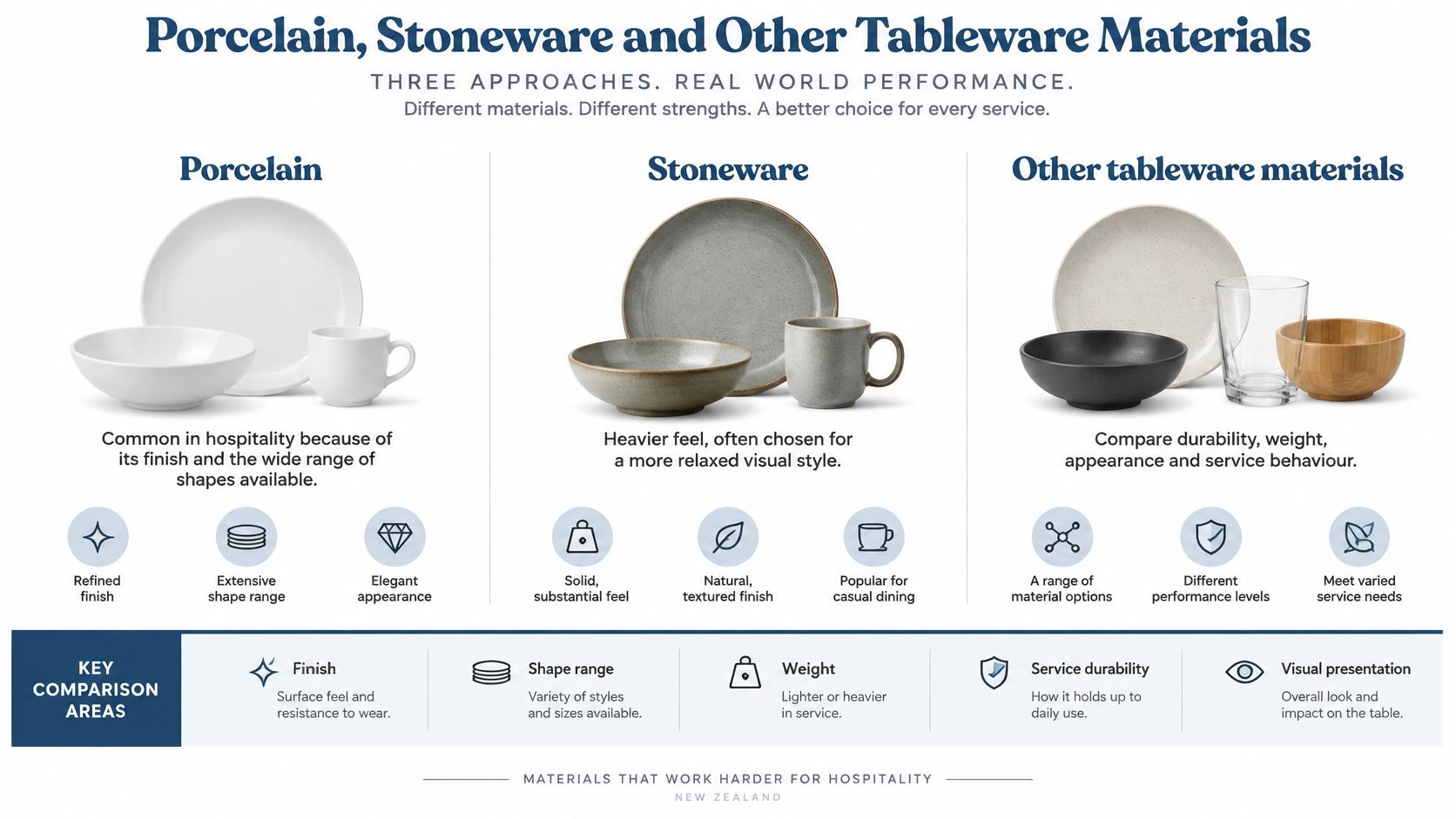
Material names are a starting point, not a durability guarantee. Construction, glaze, manufacturing and the product's stated use all affect how a piece behaves in service.
| Material | Advantages | Limitations | Suitable applications |
|---|---|---|---|
| Porcelain | Wide design range and a familiar hospitality finish | Performance varies by body and glaze | Dining rooms where the specific piece is rated for the wash |
| Vitrified porcelain | Dense, low-absorption body suited to repeated washing when specified | Still chips if mishandled; not automatic from the name | High-frequency cafés, restaurants and hotels |
| Stoneware | Colour and texture for casual presentation | Heavier or more variable; dishwasher suitability must be confirmed | Casual dining where the product is commercially rated |
| Bone china | Refined look and often lighter weight | Depends on the product; may not suit rough handling | Finer dining with controlled handling |
| Melamine | Light and useful in selected service | Food-contact and temperature limits | Cold or specified uses, not a blanket hot-food or oven choice |
Porcelain is common in hospitality because it offers a familiar finish and a broad choice of shapes. Fully vitrified porcelain has a dense, low-absorption body that can suit repeated commercial dishwashing, stacking and temperature changes, but operators should confirm that the exact piece is rated for commercial warewashing. No material name makes a plate immune to chips.
Stoneware can provide colour and texture for casual dining, but products differ in weight and construction. Bone china can offer a refined appearance and relatively light handling, depending on the item; that doesn't mean every product suits rough, high-frequency service. Melamine is light and may suit selected uses, but its food-contact and temperature limits need checking before it's used for a dish.
Confirm use limits for the exact product
A sample run through the venue's own dishwasher can help assess handling, fit and visible wear before a larger commitment. The supplier's specifications should still guide decisions about dishwasher, microwave and oven use.
New Zealand prohibited the sale or manufacture of single-use plastic plates, bowls, platters and cutlery from 1 July 2023. The Ministry for the Environment explains that this includes single-use items made from conventional, recyclable, degradable or compostable plastics, with some fibre-based products and certain lidded takeaway containers treated differently under the rules (Ministry for the Environment's update on waste policies). For a product marketed as compostable or plant-based, check its material and intended disposal pathway rather than assuming the label alone answers compliance or sustainability questions.
For more context on serviceware choices, see this article on sustainable products in New Zealand hospitality.
Match Plates and Bowls to the Menu
A café with cabinet food often needs versatile side plates and smaller bowls. A restaurant serving pasta and shared dishes may need deep plates for sauced meals and larger serving bowls for the table. A hotel breakfast service benefits from bowls suited to cereal and yoghurt, alongside plates that staff can clear and wash efficiently.
| Menu application | Suitable tableware | Main consideration |
|---|---|---|
| Café cabinet food | Side plates and smaller bowls | Versatility across cakes, savouries and light meals |
| Pasta and shared dining | Deep plates and serving bowls | Sauce containment and easy passing |
| Hotel breakfast | Cereal bowls and general-purpose plates | Quick clearing and practical rack fit |
| Buffet service | Serving bowls and platters | Staff lifting, replenishment and pass space |
| Fine dining | Entrée plates and considered serving pieces | The usable well and how the portion sits |
| Casual dining | General-purpose plates and bowls | Handling and replacement across frequent service |
Colour, texture and shape can support presentation, but no design guarantees a better customer response. A dark well can give a pale sauce clear contrast; a busy pattern can compete with detailed food. The plate should complement the dish rather than make plating harder.
Trial presentation and portion fit
Tableware can affect how portions are perceived, so a larger plate isn't automatically a better choice. A generous-looking plate may encourage a larger serve or make a modest portion appear poor value. For operators refining dessert presentation at home, this dessert plating guide for home chefs offers visual ideas without replacing a practical test with the actual menu.
New Plymouth District Council reports that an average New Zealand café or restaurant generates about 2.8 tonnes of food waste annually, with plate waste representing 33%; the figures do not establish that a particular plate shape will reduce waste (New Plymouth District Council's business composting guidance). A venue can test the question directly by weighing plate waste by menu item, portion, vessel and service period before changing the range.
Hospitality's Bonna contemporary table presentation article is a related resource when considering how a coordinated range supports a menu's visual style.
What Commercial Service Actually Demands
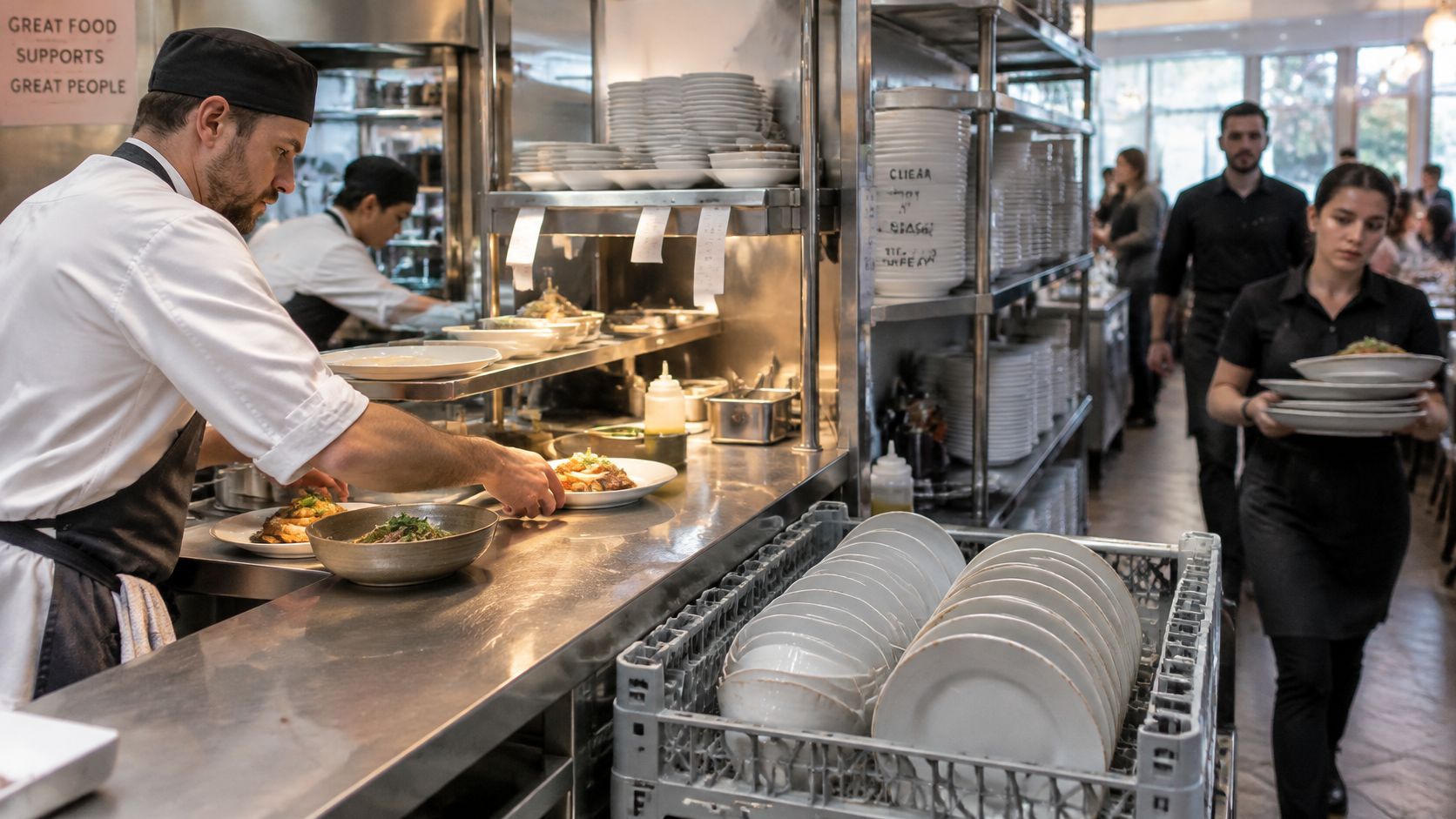
Commercial crockery has to work at the pass, in the dishwasher and on the storage shelf. A piece that looks right but jams in a rack, wedges in a stack or is tiring to carry can slow the team down.
Check the item, not just the material
Read the manufacturer's instructions for the exact item's dishwasher, microwave and oven use. Different rims, feet and profiles affect how pieces stack and sit in a rack. A coupe plate and a wide-rim plate from different ranges may not share the same stacking pattern or rack fit.
Fully vitrified porcelain is worth considering where frequent washing is a priority, provided the specific product is rated for commercial use. Avoid overcrowding racks, which can lead to pieces striking each other during washing or unloading. Inspect rims and surfaces, and remove damaged crockery rather than returning it to circulation.
A coordinated range can make replenishment simpler than a mix of decorative pieces that can't be matched after a break. Bonna and Tablekraft offer commercial ranges, but each shape and replacement item still needs to be checked against the venue's requirements.
Food-contact suitability is a separate check from appearance. New Zealand's Food (Safety) Regulations 2002 require food-contact articles not to transfer specified toxic substances into food and to resist vinegar. Ceramicware and enamelware sold for food use must meet the Schedule 1 testing requirements. Decorative ceramics shouldn't be treated as suitable for service without appropriate food-use documentation.
Treat surface damage as a hygiene issue
The Ministry for Primary Industries' guidance describes food-contact materials as impervious, non-absorbent, cleanable and free from defects such as pits and cracks (MPI food-contact equipment guidance). A chipped rim, crack, crazed glaze or rough damaged area can be difficult to clean properly. Set an inspection standard for these defects and remove affected pieces promptly.
Weight also matters in everyday handling. A heavier bowl may suit a particular presentation, but repeated lifting and carrying should be tested by the staff who will use it. Likewise, confirm that the stack is stable on the actual shelf and that the items fit the venue's dishwasher racks without forcing them into place.
For operators reviewing wash-up equipment alongside tableware, Hospitality's commercial dishwasher information provides a related reference.
The Cost Beyond the First Invoice
Purchase price is only one part of tableware cost. Pack quantities, replacement availability, breakage, sorting, storage and the labour involved in handling awkward shapes all affect what a range costs to keep in service.
Stats NZ reported food and beverage services profitability of 14.9% in 2023, down from 20.5% in 2022 (Stats NZ's Tourism Satellite Account). That context makes it sensible to assess crockery as an operating purchase, not just a styling decision. It doesn't tell an individual venue what a plate should cost or how long it will last.
Hypothetical replacement comparison
The following figures are assumptions for illustration only, not manufacturer performance results. If Range A costs an assumed $4 per dinner plate and the venue assumes it will replace 80 of 200 plates in a year, annual replacement expense is 80 × $4 = $320.
If Range B costs an assumed $7 per plate and the venue assumes it will replace 30 of 200 plates in a year, annual replacement expense is 30 × $7 = $210. The assumed opening purchase of 200 plates would be $800 for Range A and $1,400 for Range B. Under those assumptions, Range B has a lower annual replacement expense, but the opening purchase costs more; the comparison changes if the replacement assumptions don't hold.
The calculation is:
Price per piece × assumed number of replacements = assumed replacement expense.
A cheaper plate can cost more to replace when the venue's replacement requirement is higher. A premium plate isn't automatically tougher, so the assumptions should be updated using the venue's own purchasing and breakage records.
Plan the working quantity
Estimate the opening quantity from the number of covers, the rack cycles available during service and an allowance for expected breakage. Treat that allowance as an estimate to check against actual use, not a guaranteed performance rate.
The guide to broken crockery costs can help frame the wider purchasing calculation. Include whether matching spares are available, how the pieces stack, and whether menu changes could make a design less useful before settling on the range.
Order Samples Before Committing in NZ
Use a sample to test the decisions that a product image can't settle. Plate the actual dishes, place each piece in the dishwasher rack and stack it on the shelf where it will be stored.
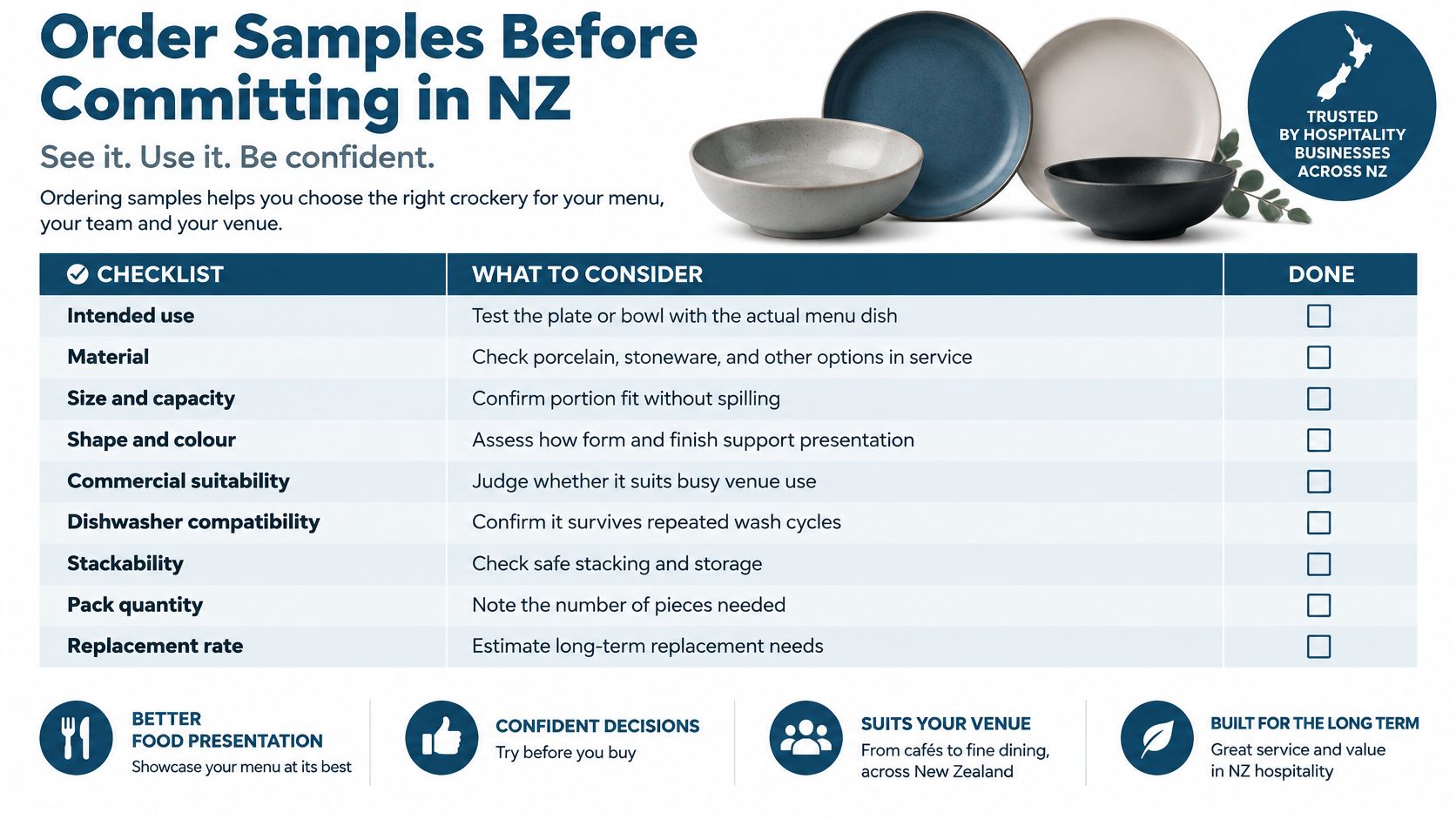
| Consideration | What to check | Why it matters |
|---|---|---|
| Intended application | Menu, venue and service style | Stops buying pieces the menu never uses |
| Material | Body and stated use of that item | Names alone don't prove durability |
| Size and capacity | Well, opening and depth | Diameter can mislead |
| Shape | Rim, coupe or deep profile | Changes plating space and handling |
| Colour and finish | How real dishes look on it | Pattern can help or fight the food |
| Commercial suitability | Food-use tableware, not decorative ceramic | Food-contact and daily handling |
| Dishwasher compatibility | Maker guidance for that piece | Domestic crockery may not cope |
| Stackability | Stack height and rack fit | Storage and wash-up speed |
| Pack quantities | How spares are sold | Avoids odd gaps in the set |
| Replacement availability | Same item still stocked | A one-off can't be matched |
| Budget | Opening cost and assumed replacements | Unit price isn't the whole cost |
Build a coordinated working range
A useful range doesn't need every piece to share an identical pattern. Dinner plates, side plates, pasta bowls and serving pieces can coordinate through colour, finish or foot style while retaining shapes suited to their jobs.
Hospitality groups collections by venue type, including Fine Dining, Cafe, Casual Dining and Accommodation. Its site also brings together plates and bowls, serving pieces and commercial crockery, helping buyers compare options around a service style. Related guidance on Commercial Crockery NZ and choosing tableware for a hospitality venue can support the decision without replacing product-level checks.
Order samples before committing to a full range, especially when rack fit, storage or matching replacements could affect daily use. A sample is useful only if the team tests it with real dishes and in the actual working spaces.
Hospitality offers commercial tableware ranges and practical advice for matching plates and bowls to a venue's menu, handling and wash-up setup. Visit Simply Hospitality or contact the team to discuss a tableware range that suits your business.