

Portable Blender NZ: How to Choose the Right One
The popular advice is to buy the smallest rechargeable blender available. That works for a single protein drink, but it can be a costly mistake for a café, bar, food truck or caterer. A search for portable blender NZ can return products designed for a gym bag alongside compact mains-powered machines and commercial blenders intended for repeated service. These categories aren't interchangeable.
The right choice starts with four questions: what needs blending, how much must be produced, where will the machine operate, and does portability matter more than performance? A portable blender describes where equipment can go, not how much work it can reliably do.
What “Portable Blender NZ” Actually Means
A buyer comparing portable blenders in New Zealand may be looking at a small rechargeable cup, a lightweight countertop unit or a commercial machine that can be moved between workstations. The word “portable” covers power source, footprint, weight, intended environment and duty, not just whether a machine fits in a cupboard.
Rechargeable personal blenders are genuinely cordless. They suit individual smoothies, protein drinks and occasional use away from a power outlet. A compact mains-powered blender is less mobile during service, but it can offer more consistent performance because it draws power continuously. A commercial blender may still be moved between a bar, prep bench or event station, although its portability comes from a manageable footprint rather than battery operation.
That distinction matters when a buyer compares a low-cost personal gadget with a commercial machine. A small cup can be convenient without being suitable for repeated frozen drinks, thick purées or a busy beverage station. Conversely, a commercial blender can be unnecessary for a guest who wants to blend one soft-fruit smoothie at a desk.
Practical rule: The best portable blender isn't necessarily the smallest blender. It's the smallest practical machine that can reliably handle the job.
Portability usually involves a compromise. Battery operation removes the cable, but it also makes battery condition, charging and workload limits part of daily planning. A lighter body can be easier to carry, while a larger jug and stronger motor may be more useful during production. A compact design can save bench space, but it won't automatically provide the durability or cooling needed for repeated hospitality use.
Before comparing models, operators should separate personal mobility from workstation mobility. Guidance on the differences between domestic, semi-commercial and commercial equipment is useful when the intended workload isn't clear, particularly for businesses setting up a new prep area or beverage service (understand the differences between domestic, semi-commercial and commercial equipment).
New Zealand buyers should also consider the supply context. Grand View Research places blenders and food processors within the broader ANZ small kitchen appliance category, valued at USD 616.6 million in 2024, with projected revenue of USD 883.9 million by 2030 and a projected 6.2% CAGR from 2025 to 2030 (Grand View Research category information). That doesn't identify one universally suitable portable machine. It does show why buyers are choosing among products aimed at very different environments.
The Three Categories Behind the Keyword
Three product classes sit behind most searches for a portable blender. Each has a sensible place, but the workload signals are different.
Rechargeable personal blenders
These are small, battery-powered units built around individual serves and maximum portability. New Zealand listings include models with USB-C charging, handled lids and compact vessels. A NutriBullet Portable Blender listing describes 15 or more blending cycles per full charge (NutriBullet Portable Blender specifications), while a Brabantia model lists a 450ml maximum capacity, a 7.4V USB-C lithium-ion rechargeable motor base and 15 to 20 blends on a full charge (Brabantia Portable Blender specifications).
They suit occasional smoothies, protein drinks, soft fruit, dressings and personal use. They aren't the natural starting point for a café producing frozen drinks repeatedly, or for a prep kitchen making thick purées under pressure. Ingredient limitations, charging arrangements and cleaning between serves matter more than the convenience of carrying the unit.
Compact mains-powered blenders
These units remain relatively easy to move and store, but they use mains electricity. That removes the battery ceiling and generally makes them more appropriate for a small prep station, food truck or mobile catering setup with reliable access to power.
A compact mains-powered blender can be a sensible middle ground where the operator needs to move the appliance between locations but still expects more consistent production than a personal unit provides. The exact application still depends on the manufacturer's instructions, vessel design, controls, cooling and suitability for commercial use.
Commercial blenders
Commercial models such as Vitamix Commercial and Hamilton Beach Commercial are designed around hospitality workloads. They may sacrifice cordless operation and some carrying convenience in return for greater capacity, stronger construction, programmable controls or sound-management options.
The relevant signals include repeated blends, frozen ingredients, cocktail service, staff handling, cleaning between batches and access to replacement parts. A commercial blender isn't automatically right for every venue, but a café or bar should assess this category before assuming a rechargeable unit can replace it.
| Category | Power source | Typical capacity | Best fit | Limit |
|---|---|---|---|---|
| Rechargeable personal portable blender | Battery, commonly USB-C rechargeable | Compact, personal serving size | Individual smoothies, protein drinks, occasional use | Limited by charge, ingredient type and personal-duty design |
| Compact mains-powered blender | Mains electricity | Small to medium countertop vessel | Mobile prep stations, small cafés and food trucks with power access | Requires a power outlet and still needs application checks |
| Commercial blender | Mains electricity | Commercial jug or vessel | Repeated service, frozen drinks, sauces, purées and hospitality prep | Heavier, less cordless and usually more space-demanding |
The category should be selected by serves, ingredients and repetition, not by the word portable on a product listing.
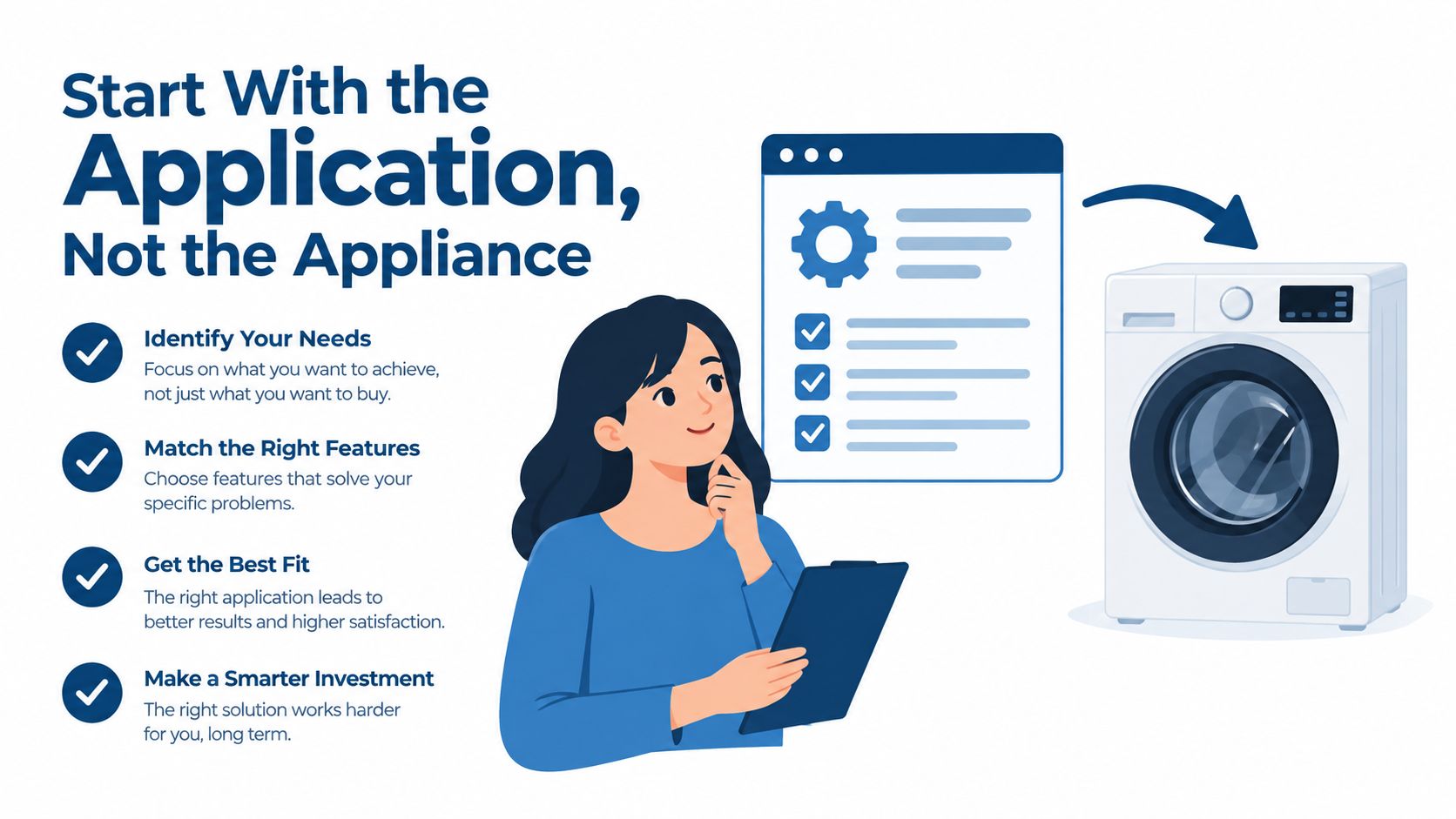
Start With the Application, Not the Appliance
The buying process should begin with a written application brief. A supplier can recommend a useful machine only after the operator identifies what goes into the vessel, how often it runs and where staff will use it.
Ingredients set the performance requirement
Soft fruit and liquid protein drinks place different demands on a blender than ice, frozen fruit, fibrous greens, nuts or thick purées. Sauces and dressings may need controlled blending rather than maximum speed. Hot preparations introduce additional safety and vessel considerations, so the manufacturer's instructions must be followed.
The brief should record whether the menu includes:
- Smoothies: Identify fresh fruit, frozen fruit, ice and liquid ratios.
- Protein drinks: Confirm whether the unit handles powders and the intended liquid volume.
- Sauces and dressings: Check whether small quantities circulate properly around the blade.
- Purées: Consider thickness, batch size and whether a commercial prep machine is more appropriate.
- Cocktails: Confirm that the manufacturer specifically supports the required frozen or iced ingredients.
- Events and demonstrations: Prioritise transport, setup, cleaning and access to power.
Output determines capacity
Use the simple planning equation:
Required serves × serving volume = required finished production
If smoothies are approximately 400ml and a venue needs 20 during a peak period, the requirement is roughly 8 litres of finished product. That doesn't mean an operator should blend one large 8-litre batch, because the menu, vessel and machine may require smaller batches. It does mean a personal cup is unlikely to be the right production tool for that particular peak.
The next questions are whether production is individual or batched, how quickly staff need to reload the machine, and whether the blender must also support prep work. Advice on equipment selection for smoothie and juice operations can help operators turn those questions into a practical equipment brief (choosing equipment for smoothie and juice operations).
Location changes the answer
A hotel breakfast room, open café counter, cocktail bar and off-site demonstration each create different constraints. Operators should note outlet access, staff movement, customer proximity, available bench space, noise tolerance and cleaning facilities.
The final brief should state:
- Ingredients and temperature.
- Finished serve size.
- Peak serves and production pattern.
- Battery requirement, if any.
- Noise and customer-facing restrictions.
- Cleaning method and turnaround expectation.
- Personal, occasional, semi-commercial or commercial duty.
That brief is more useful than a shortlist built around the cheapest compact blender.
Battery Power Versus Mains Power in Hospitality Settings
Battery-powered equipment gives staff genuine freedom from a power outlet. That can be valuable for room service, bar-table preparation, event sampling, demonstrations and temporary beverage stations. It also introduces a set of operating questions that a corded machine avoids.
The operator needs to confirm the number of blends per charge, charging time, whether the machine can operate while charging, the effect of battery condition over time and the maximum recommended workload. One New Zealand listing for the Ninja Blast Max identifies a lithium-ion battery marked UN3481, a three-hour battery life and a three-hour charge time (Ninja Blast Max product specifications). Those figures are useful for planning, but they don't turn the unit into a continuous production machine.
A personal battery blender may work well when staff make one drink at a time and can clean or recharge away from the main rush. It becomes less attractive when the unit must process frozen ingredients repeatedly, serve several staff members or remain available at a fixed beverage station throughout service.
Mains power adds cabling and placement constraints, but it removes the need to plan service around remaining charge. For cafés, bars and hotels, that often makes a commercial Hamilton Beach or Vitamix unit the more appropriate baseline when repeated production matters.
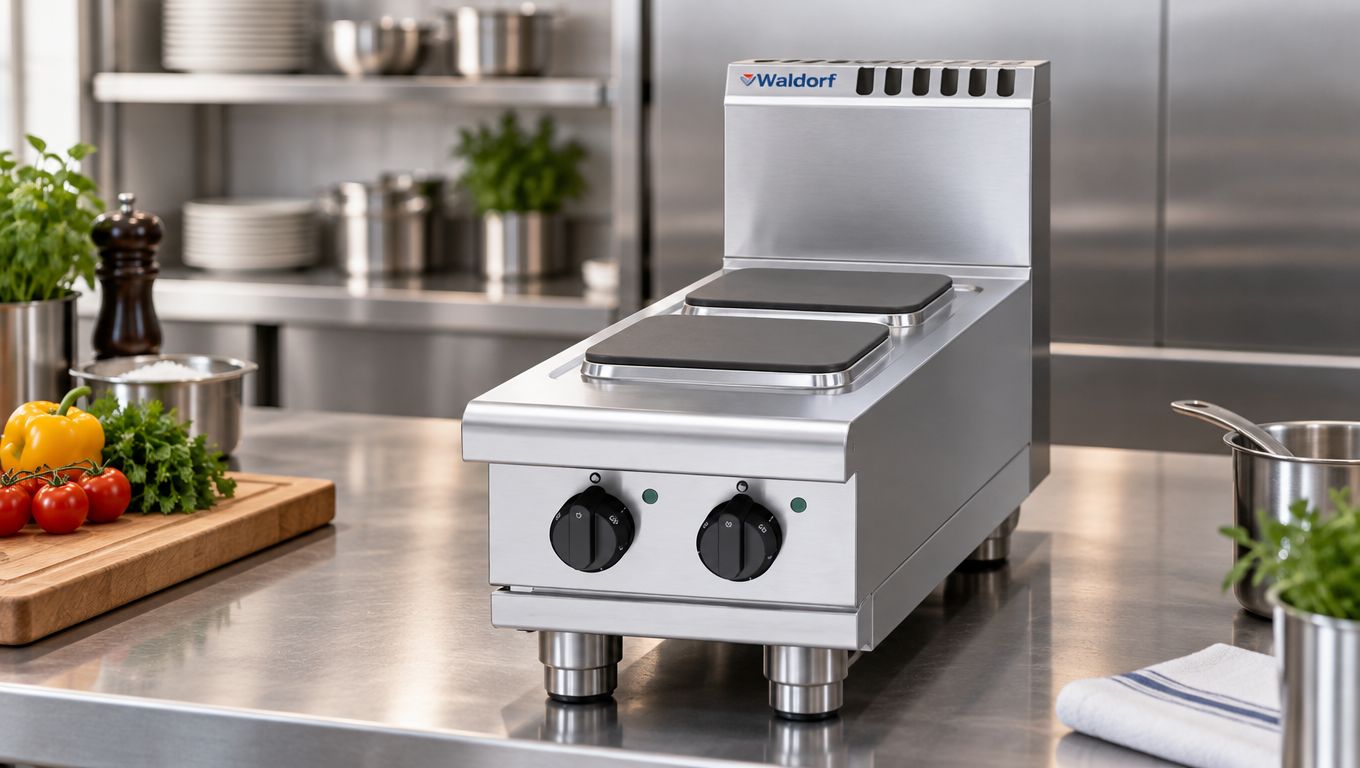
A portable appliance also needs to fit the wider bench plan. The Waldorf 800 Series RN8200SE-B - 300mm Electric Cooktop With Sealed Hobs - Bench Model is a separate heavy-duty, two-zone electric cooktop designed as one bench-mounted module in a coordinated cookline. Its placement illustrates the same planning principle: mobility and footprint should be considered alongside the complete workstation, not as isolated product features.
| Criterion | Battery-powered personal | Mains-powered commercial |
|---|---|---|
| Mobility | Works away from an outlet | Limited to the power and bench layout |
| Production planning | Depends on charge and recharge access | Depends mainly on machine capacity and workflow |
| Peak service | Better for occasional or dispersed use | Better suited to repeated production |
| Ingredients | Must follow the product's stated limitations | More options may be available, subject to manufacturer guidance |
| Charging | Requires charging time and battery management | No battery turnaround requirement |
| Ownership | Battery condition becomes part of maintenance | Motor, vessel, blade and service parts remain the main concerns |
| Noise and placement | Compact, but still needs a suitable work area | Requires deliberate counter placement and customer-facing noise review |
Battery freedom pays for itself operationally only when the venue genuinely needs it. If the machine stays on one bench all day, a cable may be a minor inconvenience compared with a battery becoming the bottleneck.
Capacity, Ice, Frozen Ingredients and Noise
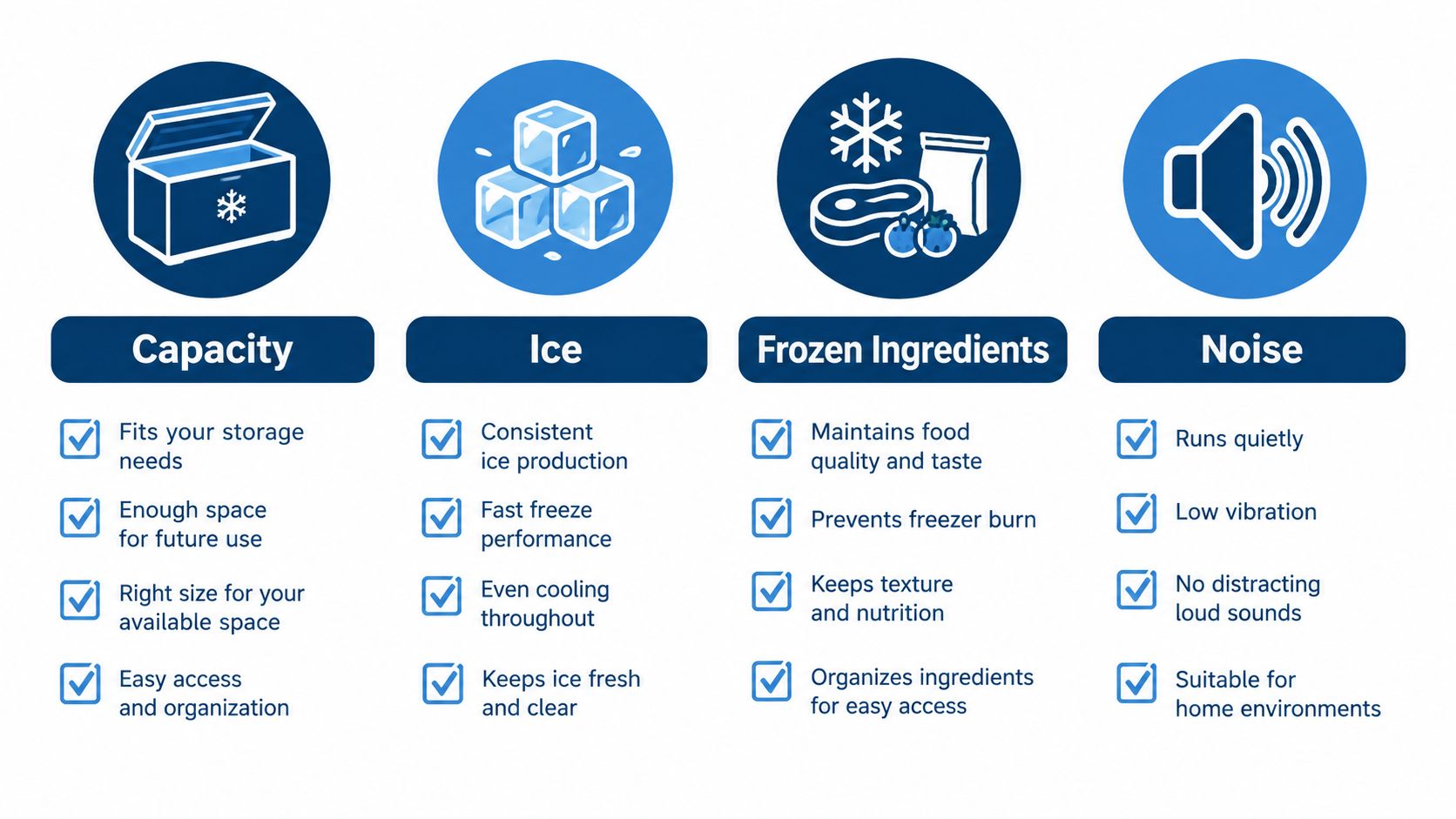
A jug's stated capacity isn't the same as practical production capacity. Staff need headspace for ingredients to circulate, and the usable amount depends on the mixture, blade position and the manufacturer's instructions. A vessel that appears suitable by volume may still be awkward if a thick mixture doesn't move through the blade.
The same caution applies to ice and frozen ingredients. A portable blender shouldn't be described as an ice crusher unless the manufacturer specifically supports that use. Frozen fruit, ice and dense mixtures can demand more from the motor and blade assembly than liquid-based drinks, so the product's application guidance should be checked before the menu is built around those ingredients.
Performance needs a menu test
A useful test is to list the hardest regular preparation, not the easiest one. A soft protein drink may tell very little about whether a unit can produce a consistent frozen cocktail, thick smoothie or smooth purée during service.
Operators should ask:
- Does the manufacturer support the intended frozen or iced ingredients?
- Is the vessel shaped for the expected batch size?
- Does the blade assembly suit the mixture?
- Are programmes or controls available for repeatable results?
- Is the machine intended for personal, occasional or commercial use?
- Can staff safely reload and clean it at the required pace?
The commercial blender guidance for New Zealand operators is useful when capacity, frozen ingredients and service conditions need to be assessed together rather than as separate specifications.
Noise is part of service design
Noise matters at an open café counter, hotel breakfast service, accommodation reception or bar top. A machine can technically perform well and still be unsuitable if its sound interrupts customer conversations or demonstrations.
Published sound data or a manufacturer-specified sound enclosure should be treated as product information, not replaced with a general promise that a machine is quiet. If no verified figure exists, the operator should request a demonstration or discuss placement, operating times and whether a barrier can separate the blender from guests.
Capacity and sound should be considered together. A larger machine may reduce the number of batches, while a smaller machine may create more repeated starts. Neither outcome is automatically better. The practical choice depends on the menu, counter layout and acceptable customer experience.
When the Workload Outgrows a Personal Portable Blender
A personal portable blender has probably outgrown its role when staff need to interrupt service to recharge it, wait for a long blend, restart a stalled mixture or work around a vessel that is too small. Motor cut-outs, inconsistent texture and a growing cleaning queue are operational signals, not reasons to blame the operator.
The question isn't whether the personal unit can blend something. It usually can. The question is whether it can do the job repeatedly, safely and predictably at the required rate.
Match the replacement to the task
Hamilton Beach Commercial and Vitamix Commercial products are alternatives when the workload requires a mains-powered workhorse. The relevant comparison should cover:
- Throughput: How many blends must be completed during the busiest service period?
- Vessel size: Does the jug support the required batch without creating poor circulation?
- Controls: Would programmes or repeatable settings help different staff achieve consistent results?
- Application: Is the machine intended for smoothies, frozen cocktails, soups, sauces, purées or a mixture of these?
- Service access: Can the operator obtain suitable jugs, blades and other replacement parts?
A Hamilton Beach Tempest may suit a venue that needs a commercial countertop unit for beverage service, while a Vitamix Commercial model may be considered where the menu demands a different combination of controls, vessel design or sound management. The correct choice comes from the workload and manufacturer specification, not from assuming one brand fits every application.
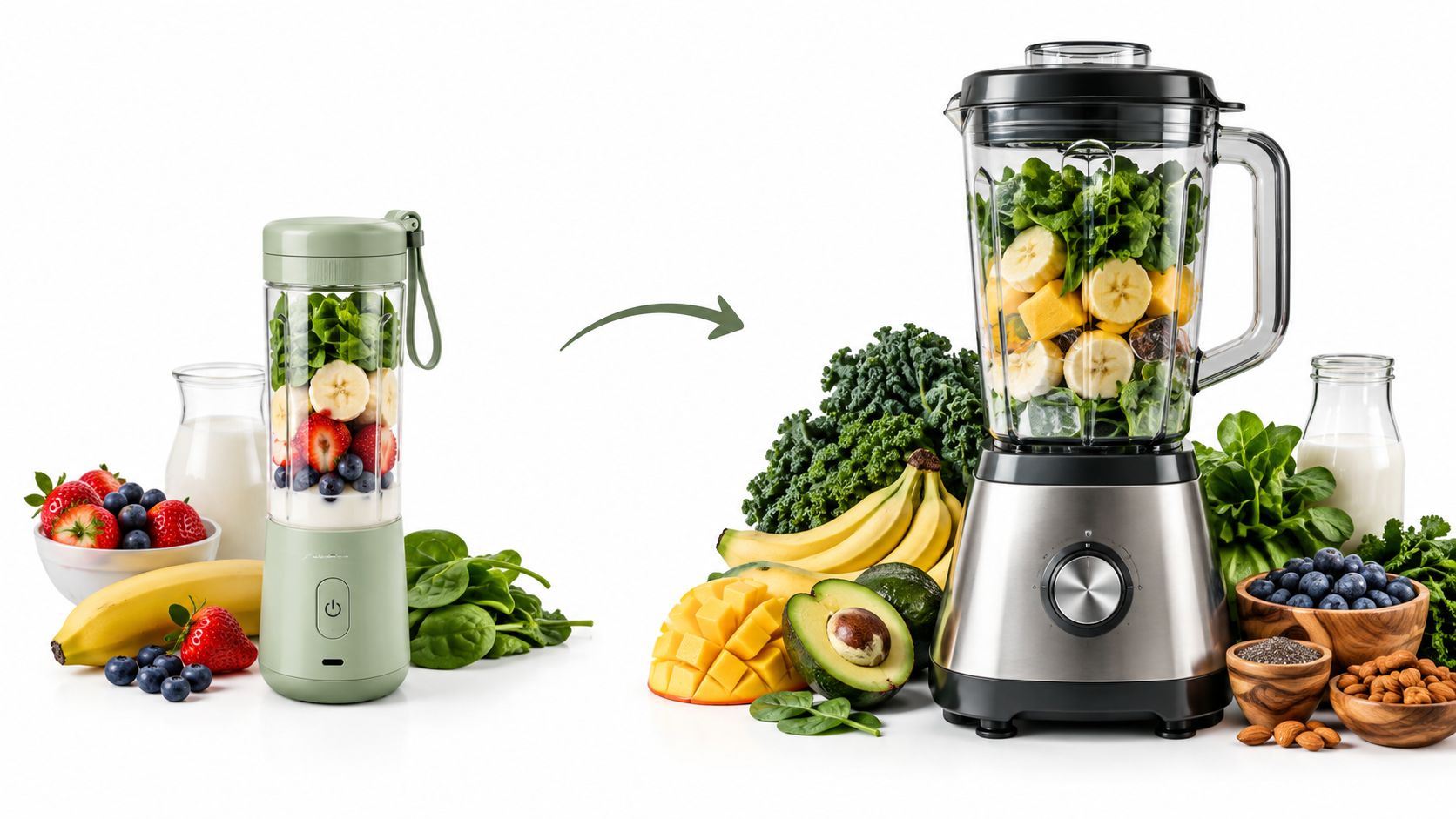
Portability can change meaning
For a café, portability may mean moving the blender from a prep bench to a bar during a layout change. For a caterer, it may mean transporting a commercial unit to an event where power and cleaning facilities have been planned. For a home user, it may mean carrying a cup in a bag.
Those are different requirements. Someone researching compact equipment for travel may also find practical ideas in HYDAWAY gear for your next trip, but a travel-friendly personal appliance shouldn't be treated as a substitute for commercial food-preparation equipment.
Operators should review the warning signs before buying another small unit. Guidance on signs a kitchen has outgrown its equipment can help frame the decision around workflow, staff time and production pressure rather than the apparent convenience of a compact appliance.
Cleaning, Hygiene, Duty Cycles and Battery Safety in NZ
Portable equipment still needs a cleaning system. The relevant workflow is blend, pour, rinse or clean, reload, blend again, not just the manufacturer's advertised blend time.
Personal rechargeable units often combine a small vessel, lid, blade assembly and motor base. Staff must follow the product instructions for disassembly, washing and drying, and keep the motor base away from water. Compact mains and commercial machines may use removable pitchers, gaskets or components designed for a more structured cleaning routine. Dishwasher suitability can't be assumed, so the manual should decide whether a component is hand-washed, sanitised or dishwasher-safe.
Build cleaning into production
A venue should decide in advance:
- Between serves: Whether a rinse is sufficient for the same recipe or a full clean is required.
- Between recipes: How allergens, dairy, nuts and strong flavours will be controlled.
- At close: Which components are removed, washed, sanitised and dried.
- During service: Where dirty parts can be held without contaminating clean equipment.
- For food safety: How staff will follow the venue's documented hygiene procedures.
New Zealand operators can use food safety regulations and guidance for hospitality businesses as part of the broader cleaning and handling plan.
Duty and batteries need equal attention
A personal blender intended for occasional use shouldn't be pushed into back-to-back commercial service. Exceeding the manufacturer's stated application can increase heat, interruptions and premature wear, even if the unit appears to work during the first few shifts. Commercial equipment should still be operated within its specified workload and cleaning requirements.
Lithium-ion batteries add another practical responsibility. NZ Post guidance indicates that appliances containing lithium-ion batteries can face parcel limits and packaging requirements, while lithium batteries by themselves are prohibited in mail (NZ Post restricted items guidance). Operators sending a cordless blender to a workplace, accommodation site or event should check packaging and carrier rules before dispatch. The same check applies before taking equipment to an off-site event or flying with it.
Choosing the Right Portable Blender for Your Venue
A useful decision starts with the application and ends with the ownership plan. There isn't one universal best portable blender for New Zealand. There is a suitable category for a particular menu, volume, location and level of repetition.
Use the workload progression
What are you blending? Start with the hardest regular ingredient. Soft fruit and liquid drinks may suit a personal unit, while ice, frozen fruit, fibrous ingredients or thick purées may require a different class of equipment.
How much is needed per serve? Record the actual finished volume, not just the vessel's advertised capacity. Individual drinks, several small batches and larger jug production create different workflows.
How many serves arrive at peak? Separate occasional use from the busiest service period. One blend, repeated blends and peak-hour production are three different buying situations.
Are frozen or iced ingredients involved? Require explicit manufacturer support. Don't rely on a product title or a casual claim that a machine “crushes ice”.
Is battery power necessary? Choose cordless equipment when staff need to work away from a power outlet or move between dispersed service points. If the unit will remain on one counter, mains power may be the more practical option.
What noise constraints apply? Check the service environment, customer proximity and any published sound information. A front-of-house café may need a different setup from a back-of-house prep room.
How will staff clean it? Confirm disassembly, dishwasher suitability, sanitising procedures and the time required between recipes. Cleaning is part of production capacity.
Is the duty personal or commercial? Low-volume personal use can justify rechargeable equipment. A café, bar, food truck, caterer or hotel producing repeated drinks should assess commercial options, including Hamilton Beach Commercial, Vitamix Commercial and relevant Fimar equipment, through the manufacturer's application specifications.
Simply Hospitality supplies commercial kitchen equipment and related food-preparation categories, so a hospitality buyer can compare commercial blenders, Hamilton Beach Commercial Blenders, Vitamix products, Fimar products, food processors and blender equipment, smoothie and beverage equipment, and wider commercial food-preparation equipment against the actual workload.
A final shortlist should include more than motor power and jug size. It should confirm commercial-use conditions, cleaning instructions, battery handling where relevant, replacement parts, service arrangements and the way the machine fits into the venue's counter and storage plan. Operators should also ask whether the blender can handle the hardest menu item without creating a queue, excessive noise or an impractical cleaning burden.
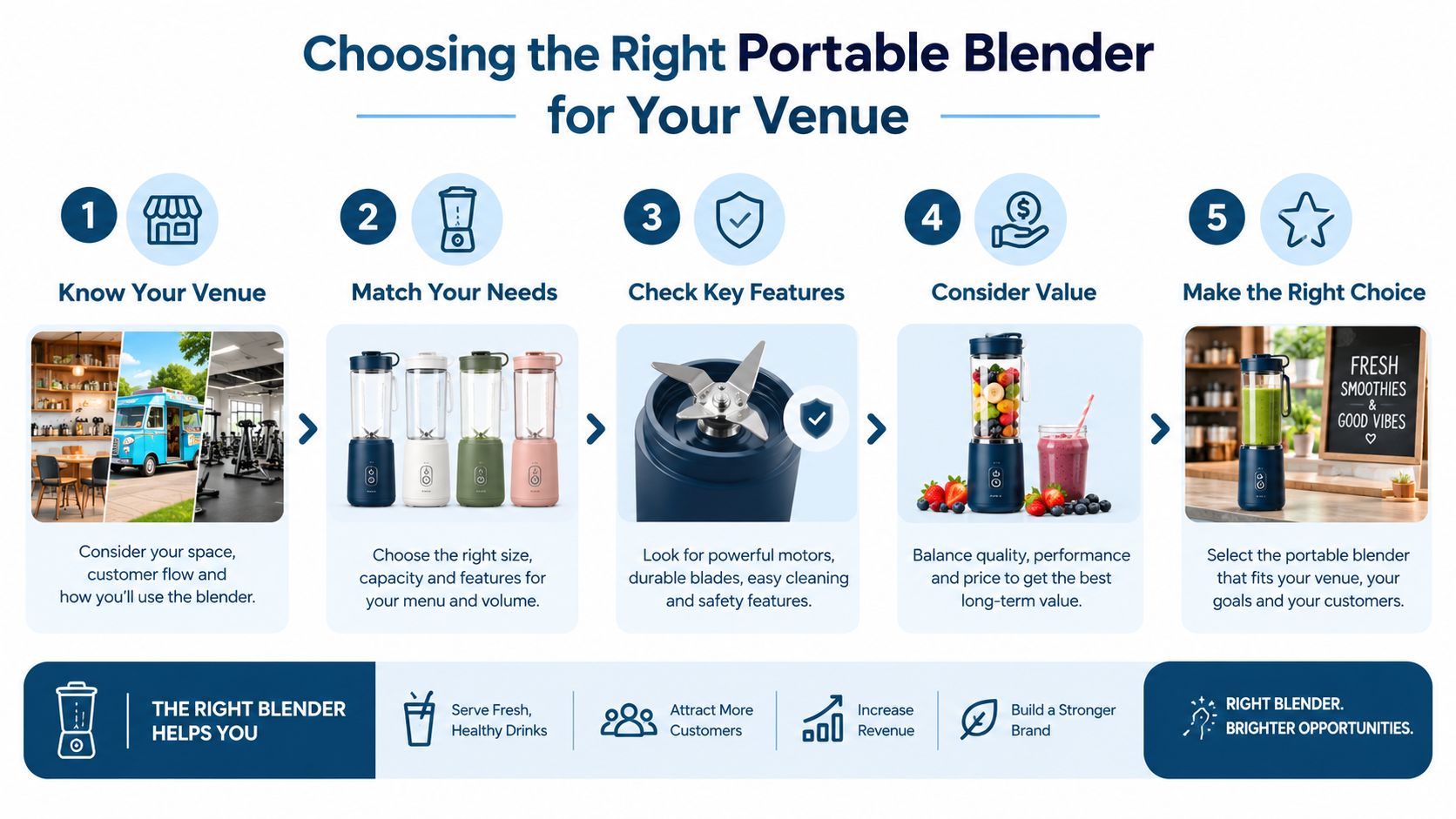
For personal use, a rechargeable portable blender may be exactly right. For hospitality use, portability should usually be considered after production requirements have been established. The most reliable purchase is the machine that completes the required work consistently, fits the service environment and can be cleaned and maintained without disrupting the operation.
Hospitality can assist operators in comparing rechargeable, compact mains-powered and commercial blending options against their menu, peak output, cleaning process and venue layout. Visit Simply Hospitality to discuss a workload-based shortlist before buying a portable blender that may not match the job.