

Reusable Ice Cubes: When They Work and When They Don't
Reusable ice cubes get sold on cooling power, which is the wrong reason to buy them. Their real job is dilution control: chilling a drink while adding no water to it. On raw cooling, conventional ice still has the edge.
The true cost sits elsewhere. Every cube that leaves the freezer has to come back, be washed to a food-contact standard and be refrozen, so cleaning labour, freezer space and food-safety procedure matter more than the purchase price. Cooling rules for potentially hazardous food still apply in the venue, and a steel or stone cube is no substitute for proper temperature control.
For a home whisky or a signature serve where dilution ruins the balance, they earn their place. For a busy bar turning out cocktails, soft drinks and iced coffee, I would keep conventional ice as the default.
What Reusable Ice Cubes Do to a Drink
Reusable ice cubes are units chilled or frozen before use, then used again rather than melting into the drink. They work more like a cold pack in a chilly bin than a block of ice in a glass: they draw heat from the liquid, but don't add water as they warm.
That distinction affects cooling. Melting ice absorbs substantial heat while changing from solid to liquid. A reusable cube absorbs heat by warming up, so its cooling slows as its temperature approaches the drink's. It won't keep the drink cold indefinitely, and a cube that has warmed in service won't deliver the same cooling as one taken straight from the freezer.
Performance depends on how fully the units are frozen, their mass and material, how many are used, the drink's volume and starting temperature, and how closely the cubes contact the liquid. A small cube in a large, warm drink has limited effect. For comparable quantities, conventional ice often provides stronger or longer-lasting cooling.
The main advantage is dilution control, not superior cooling.
Reusable cubes may be useful when a drink's concentration needs to stay unchanged. They're reusable if they remain intact and are cleaned correctly, and they can be convenient for occasional drinks at home. Products come in different materials, shapes and sizes; in some applications, they may also reduce the need to prepare conventional ice.
They're primarily beverage accessories, not general food refrigeration equipment. Reusable cubes may support short-duration chilling of sealed containers, cocktail shakers, garnish vessels or transport bins, but they don't establish that food has stayed at a safe temperature. MPI's food cooling guidance calls for potentially hazardous food to reach 5°C or below within the specified cooling stages. It also recommends using ice packs or frozen water bottles in chilly bins and moving food to refrigeration promptly. For any chilled food, check the actual temperature with a calibrated thermometer.
Comparing Steel, Plastic, Silicone and Stone Cubes
| Material | Advantages | Limitations | Best applications |
|---|---|---|---|
| Stainless steel | Rigid, durable, easy to wash, doesn't absorb odours | Heavier; seams and sealed medium need checking | Spirits, premium presentation, repeated service use |
| Plastic | Lightweight, available in many shapes and colours | Seams and fill can degrade; cracks may be hard to spot | Home use, casual bar service, sealed drinkware |
| Silicone | Flexible, releases easily and suits unusual shapes | Joins can trap residue; construction and cooling medium differ by product | Home cocktails, occasional use, shaped drinks |
| Natural stone | Solid, with no sealed parts to leak; traditional feel | Dense, slow to chill, takes freezer space and may damage fragile glassware | Spirits and whisky, home presentation |
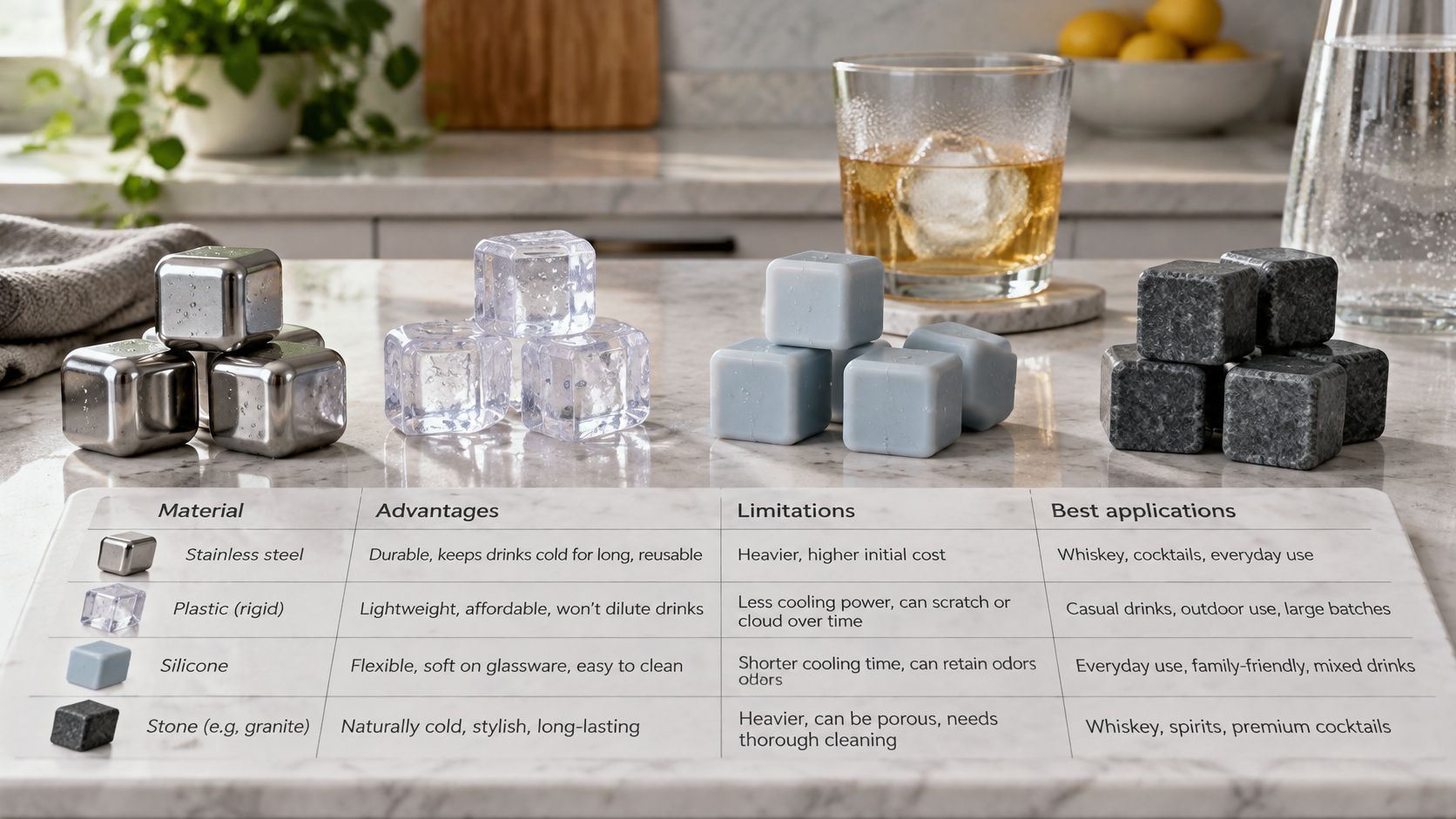
No material guarantees the same cooling performance across every product. Mass, starting temperature and design matter, so products made from the same material can behave differently. Before buying, check the stated food-contact material, what any cube is filled with, and whether the maker specifies that it's intended for direct contact with beverages.
For home use, lightweight plastic or flexible silicone may be practical if the construction is sound and cleaning is straightforward. In a bar, rigid stainless steel may be easier to inspect and wash, but the sealed joints still need regular checks. Natural stone has no sealed filling to leak and is often chosen for spirits, though its weight makes it a poor match for delicate glassware. For advice on handling and using stones with a pour, preparing whiskey stones for your pour offers a focused reference.
The best choice is the one that fits the drinkware and cleaning routine. A cube that is difficult to retrieve, wash or inspect can create more work than its no-dilution benefit is worth.
Reusable Cubes Versus Traditional Ice Side by Side
| Factor | Reusable ice cubes | Traditional ice |
|---|---|---|
| Drink dilution | None | Adds water as it melts, which can be intended |
| Convenience | Must be frozen ahead and managed as stock | Available on demand if produced or supplied |
| Hygiene | Depends on cleaning, sanitising and drying after every use | Depends on water quality and ice-handling procedures |
| Cleaning requirements | Every unit must be washed and sanitised | Machines, bins and scoops need cleaning |
| Reusability | Designed for repeated use if undamaged | Single use, melts into the drink |
| Freezer storage | Needs dedicated freezer space | Needs bin or storage space; production capacity varies |
| Initial purchase cost | Upfront cost of cubes and packs | Equipment or supply costs depend on production method |
| Suitability for hospitality service | Specialised drinks and limited volumes | Cocktails, soft drinks, iced coffee and high-volume service |
Two factors often settle the choice: what the drink needs from the ice, and what the venue can manage between services. Traditional ice suits drinks that need substantial cooling or an established ice texture. Reusable cubes can preserve concentration, but every unit adds a cleaning, drying, inspection and storage task.
Dilution isn't always a flaw in cocktail service. As ice melts, the water can soften spirits, open aromas and balance sharpness. In those recipes, ice is an ingredient as well as a coolant. Reusable cubes aren't a like-for-like substitute for crushed ice or conventional cocktail ice: crushed ice has more surface area, so it cools and dilutes a drink faster.
The cost comparison also needs to reflect the operating method. Reusable cubes have an upfront purchase cost, plus cleaning time and replacement if units are lost or damaged. Conventional ice has costs tied to production or supply, storage and staff handling. The practical choice depends on each venue's workflow, not on purchase price alone. This comparison of bagged ice and owning an ice machine can help frame the broader supply decision.
Which Drinks Suit Reusable Ice Cubes
A reusable cube in a whisky tumbler can keep the drink cool without adding meltwater. That is a useful trade-off when the guest wants to preserve the spirit's concentration, but it is less helpful when a drink needs fast, substantial cooling.
| Beverage | Suitability | Main consideration |
|---|---|---|
| Whisky and spirits | A good fit when the guest wants some chill without added water | Use cubes intended for beverage contact and chill them fully |
| Wine | May provide modest cooling without changing concentration | A chilled bottle or glass is more reliable when the wine needs to reach serving temperature |
| Soft drinks | Useful when avoiding dilution matters | Cooling is slower, especially in a large or warm drink |
| Cocktails | May suit drinks served without ice after mixing | Drinks mixed with ice may rely on its cooling and controlled dilution |
| Cold beverages at home | Practical for occasional use | Wash and refreeze between uses, and store in a clean container |
Glass shape matters too. A cube should sit comfortably in a rocks glass without crowding the pour; a coupe is generally used for a drink served without ice. The bar glassware guide can help match the vessel to how the drink is served.
Cocktails need a recipe-led decision. Some are shaken or stirred with ice, then served without it. Others depend on ice in the glass or on meltwater to balance the drink. Reusable cubes preserve concentration, but they do not replace conventional ice where the recipe needs active chilling and dilution.
For pitchers, event service and iced coffee, consider the volume and cooling time before choosing reusable cubes. If the priority is keeping a drink cold quickly, conventional ice is usually the more practical option. If avoiding added water matters more, reusable cubes may fit, provided the service volume and handling routine make them workable.
Keeping Reusable Cubes Clean and Food Safe
The main hygiene cost of reusable cubes is the work between services: inspect, wash, sanitise, dry and store each unit correctly. Before buying, check the manufacturer's material specification and confirm whether the cubes are intended for direct contact with drinks. Stainless steel, plastic, silicone and stone alone do not confirm food-contact suitability.
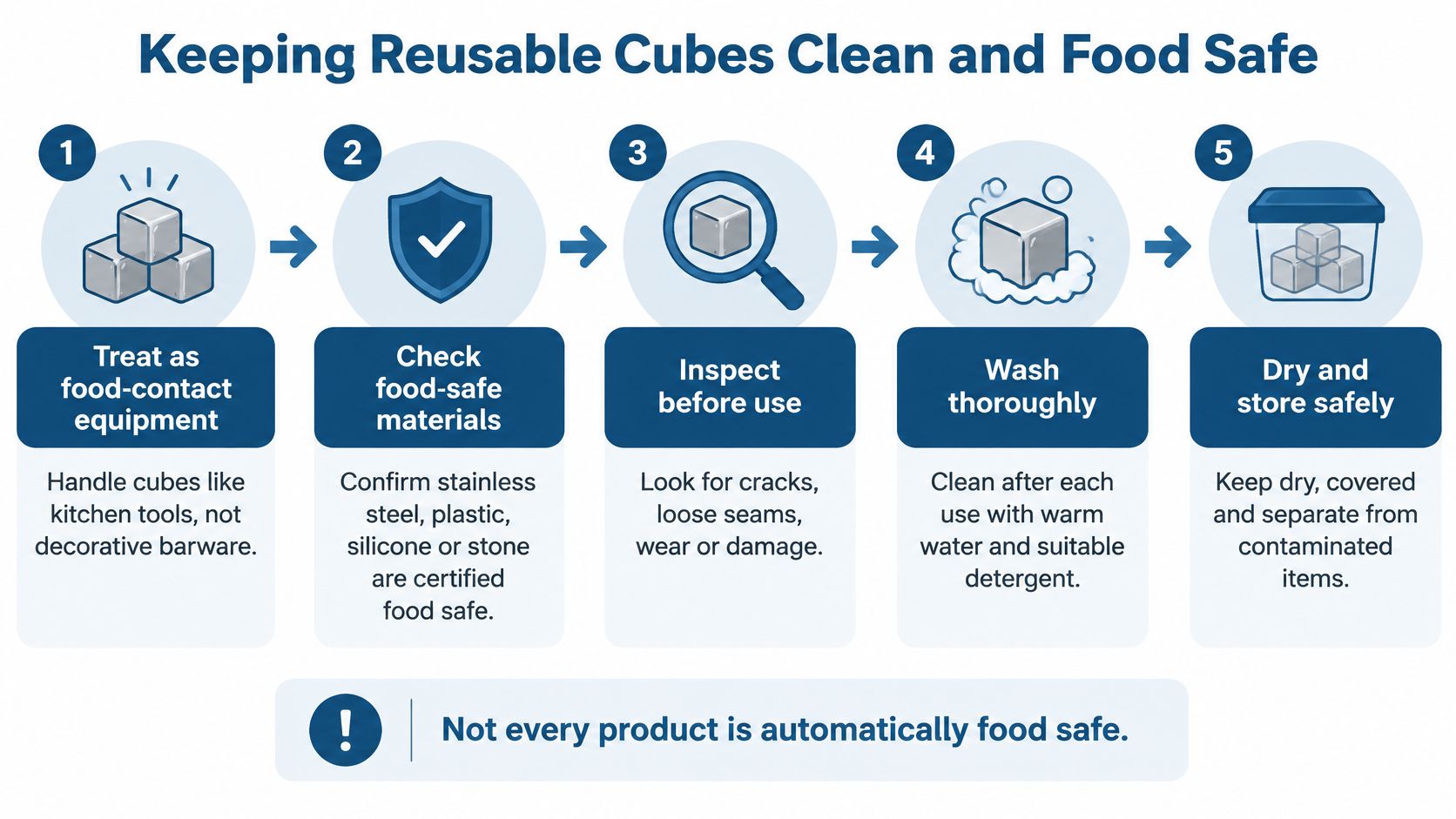
A venue procedure should set out each step:
- Remove damaged units. Discard cubes that are cracked, leaking, visibly contaminated or difficult to clean. Cracks can trap residue, and leaks can release the filling.
- Wash thoroughly. Use detergent, taking care around seams, joints and fill points where residue can collect.
- Sanitise. Use a food-grade sanitiser according to its label and your food safety procedure.
- Air-dry completely. Dry cubes fully before storage to limit moisture around joints and on surfaces.
- Store and handle hygienically. Keep clean cubes in a covered, dedicated freezer container. Use clean tongs or a scoop, and keep the container away from raw-food storage.
New Zealand food safety guidance covers cleaning and sanitising food-contact equipment and hygienic storage. The MPI Food Control Plan also addresses ice-handling utensils and containers. Use cubes in drinks only when the manufacturer specifies they are suitable for direct food contact. Otherwise, keep them outside the drink, such as around sealed drinkware or in an ice well.
Record the cleaning and storage steps in the venue's food control procedures. Simply Hospitality's guide to New Zealand food safety regulations explains how service items fit within wider hygiene practices.
Running Reusable Cubes in a Bar or Restaurant
The cubes themselves are the cheap part. Whether they pay off in a venue depends on everything around them: the labour of collecting, washing, sanitising, drying, inspecting and restocking each unit, the freezer shelf they occupy, and the share that go missing or get damaged every month.
Dilution control is the main job of a reusable cube. It holds a chilled drink at temperature without adding water, which is why it earns a place in spirit service and in drinks where meltwater would wreck the recipe. It will not pull a warm drink down fast, and it will not match machine ice for volume cooling. The strongest use cases:
- Specialised drinks where added water is undesirable.
- Premium spirit service where presentation and a gentle chill matter.
- Limited-volume applications that don't depend on fast, high-volume cooling.
- Repeat use where staff can hold a consistent hygiene routine.
Run the cost per service before ordering. Divide the pack price by the number of uses a unit realistically survives before loss or damage. Add labour by timing one full wash, sanitise and dry cycle, multiplying the staff minutes by weekly cycles and the hourly rate of whoever does it, then spreading that across the drinks served. Add the freezer room: clean cubes need a dedicated covered container, and that shelf space has a value during a heavy prep week. I would commit only once those figures, plus the replacement rate, beat the per-serve cost of machine ice.
Cubes are hardest to run exactly when the venue is busiest. Someone has to retrieve them from tables and finished glassware, pull out cracked or leaking units, and count stock between services, all while the bar is calling for speed.
New Zealand's plastic phase-out guidance for businesses covers specified single-use items, so check whether it touches your planned purchase, then decide on service grounds either way.
Machine ice still carries volume service. The ITV GALA MDP150 A produces a standard cube format and the ITV ICE QUEEN IQ1100 produces granular ice; both fill roles reusable cubes cannot, and neither is made redundant by them. Before sizing any equipment, what running out of ice really costs a hospitality business sets out the operational risk of getting that decision wrong.
A themed drinks list can borrow presentation ideas from tropical bar inspiration for San Diego visitors, then run the service on whichever chilling method the venue's own workflow supports.
Choosing Reusable Ice Cubes for Your Venue
A set of cubes that survives a year of weekend drinks at home can split at the seams within months of nightly washing and freezer cycling in a working bar. The checklist below weighs whether the cube fits the task and whether staff can run it reliably alongside everything else the freezer and dish pit already handle.
| Consideration | What to check | Why it matters |
|---|---|---|
| Material | Stated material and any sealed cooling medium | Determines cleaning, durability and suitability |
| Food-contact suitability | An explicit statement that the product is intended for beverage contact | Not every product in these materials is suitable |
| Cooling performance | Manufacturer guidance on freezing, mass and use | Avoids unsupported claims about cooling duration |
| Size and shape | Fit with glasses, shakers or ice wells | Poor fit reduces contact and cooling |
| Quantity per pack | Enough units to surround a drink or serve a batch | Determines pack cost per service once replacements and washing labour are counted |
| Cleaning requirements | Washing temperature, sanitiser compatibility and seam access | Drives labour and hygiene workload |
| Durability | Seam construction, impact resistance and repeat-use guidance | Home-grade products may not withstand commercial handling |
| Freezer storage | Footprint and space required | Cubes need dedicated freezer room |
| Beverage compatibility | Suitability for spirits, soft drinks or cocktails | Some drinks still need traditional ice |
| Purchase price | Price per unit and per pack | Compare with replacement and cleaning time, not price alone |
| Intended frequency of use | Daily service or occasional home use | Determines whether durability and a formal cleaning system are worthwhile |
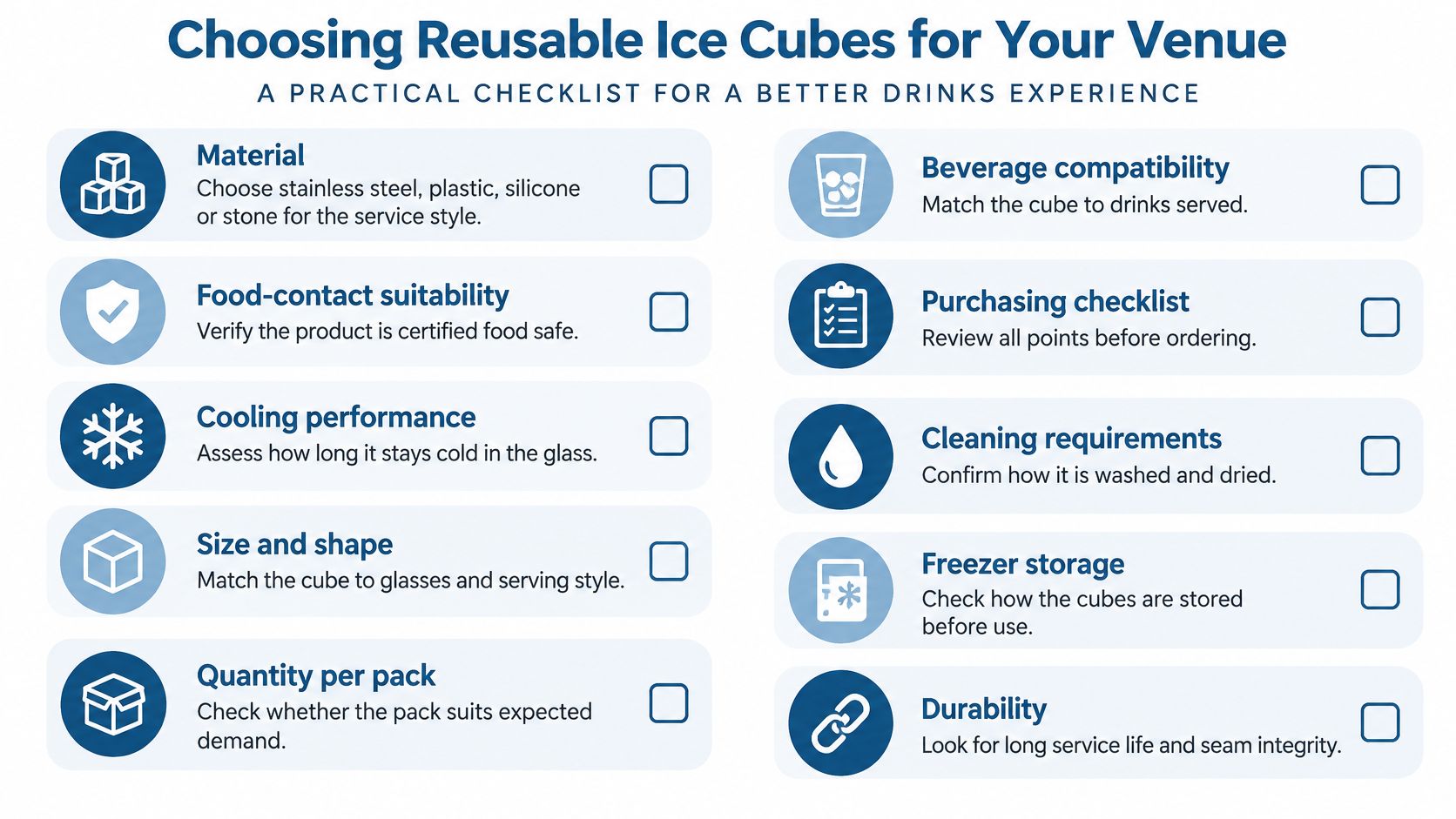
Price on its own settles very little. A cheap pack replaced twice as often costs more than a sturdier set, and every cube adds washing, sanitising and dedicated freezer space to each service it touches. I would weigh the pack price against likely replacement rate and cleaning time, then set that figure against the number of services where an undiluted drink matters: spirit pours, tasting flights and slow-sipped serves.
Manufacturer instructions should set freezing and cleaning practice. Treat claims about how long a cube stays cold, or how many cycles it survives, with caution unless the maker states them plainly for the product.
A craft distillery weighing spirits production at a different scale has separate supply questions, and bulk alcohol inputs for craft distilleries covers that part of the operation. For a hospitality venue, the decision stays narrower: whether the cubes suit the drinks, the glassware, the service volume and the hygiene routine already in place. For a fuller comparison against conventional production, the ice makers guide for New Zealand venues sets out the machine formats a reusable set would sit alongside.
Reusable ice cubes make sense when avoiding dilution matters more than maximum cooling performance. For most busy hospitality environments, they're a specialised beverage accessory, not a complete substitute for traditional ice. If the venue sends out only a few undiluted pours each week, the washing and freezer overhead usually outweighs the benefit; if the menu is built around spirit-forward serves, the routine earns its place.
Hospitality supplies New Zealand hospitality businesses with commercial ice machines, barware and glassware, alongside advice on matching equipment to service needs. For help deciding whether reusable cubes, conventional ice production or a combination suits the business, contact the team.