


Best Commercial Toilet Bowl Cleaners: A 2026 Guide
The most popular advice about commercial toilet bowl cleaners is often the least useful: choose the strongest product available. A high-acid formula can be the wrong answer for routine organic soil, while a correctly selected lower-harshness cleaner may protect staff, surfaces, plumbing and wastewater systems more effectively. For restaurants, cafés, hotels, bars, accommodation businesses, schools, offices and other high-traffic facilities, the practical choice starts with the deposit, not the bottle's chemical strength.
Why Stronger Isn't Always Better
A toilet bowl cleaner has one job, but commercial toilets present different cleaning problems. A bowl may have routine organic soil, visible staining, mineral scale, persistent odour or a surface defect that keeps attracting deposits. Treating every condition with the most aggressive chemistry creates unnecessary risk and can leave the actual cause unresolved.
New Zealand Safety Data Sheets show how wide the safety range can be. Some formulations are mildly acidic and specifically avoid strong acids, while others contain phosphoric acid at approximately 19 to 21% and are classified as strongly corrosive. A New Zealand toilet bowl cleaner SDS also illustrates why operators need to assess worker handling, ventilation, surface compatibility and spill response before choosing a product.
Match the chemistry to the deposit
A cleaner designed for mineral scale isn't automatically effective against organic soil. Likewise, a product intended for routine soil may struggle with heavy limescale, no matter how much staff apply.
Many operators initially compare bottle price, pack size or the perceived strength of a formula. That overlooks the factors that determine the practical result:
- Application method: The product may need a particular sequence, brush action or surface preparation.
- Contact time: A cleaner can't work as intended if staff rinse it away immediately.
- Safety controls: PPE, ventilation, storage and spill procedures affect labour and risk.
- Surface suitability: Acidic chemistry can damage metals, grout, porous tiles or nearby finishes.
- Repeat use: A product that removes the deposit while preserving the fixture may be more useful over its working life.
Practical rule: Stronger chemistry isn't automatically better cleaning. Correct product selection, contact time and procedure matter more than choosing the most aggressive formulation.
Operators looking for broader guidance on lower-harshness options can review eco-friendly cleaning products in New Zealand, but environmental language should always be checked against current manufacturer documentation. A commercial venue still needs a product that matches its actual soil load, surfaces and hygiene programme.
Understanding Different Cleaner Formulations
Toilet bowl cleaners are formulated for different tasks, so active chemistry should be treated as a selection factor rather than a universal ranking system. Acidic products are generally aimed at mineral deposits, scale and hard-water staining. They can be useful where that is the actual problem, but the label and SDS determine whether the product is suitable for the bowl, surrounding fittings and intended method.
Some New Zealand commercial formulations use phosphoric acid, while others avoid strong acids and focus on a milder cleaning profile. That difference matters in hotels, schools, aged care, accommodation and public facilities where several staff members may handle the same product and where repeated application can affect fixtures.
A practical formulation comparison
| Formulation type | Usually suited to | Main caution |
|---|---|---|
| Acidic scale remover | Mineral deposits, limescale and hard-water staining | Check corrosion warnings, ventilation, PPE and surface compatibility |
| Surfactant-based cleaner | Routine organic soil and general bowl maintenance | May not remove established mineral scale |
| Enzymatic cleaner | Organic matter and recurring odour associated with it | Follow the manufacturer's directions and confirm plumbing or septic suitability |
| Disinfectant formulation | Situations where microbial control is specifically required by the hygiene programme | Cleaning and disinfection are different tasks, and label directions must be followed |
| Lower-harshness formulation | Maintenance cleaning where infrastructure preservation is important | A gentler product may require better routine control of deposits |
Bleach and chlorine products shouldn't be treated as interchangeable with acid cleaners. Mixing incompatible chemicals can generate dangerous gases, so staff must never combine products unless the manufacturer explicitly directs that combination.
For background on how professional products differ, a facility cleaning chemical source provides useful general context, but the purchasing decision should still rest on the New Zealand product label and SDS. Operators can also consult Understanding Commercial Cleaning Chemicals when reviewing the role of formulation, hazard information and intended application.
Matching Cleaners to Cleaning Problems
The first question should be simple: what type of deposit is present? Staff should inspect the bowl before selecting a product, because a yellow ring, unpleasant odour and dull mineral crust require different responses.
Routine organic soil usually calls for a non-abrasive or enzymatic approach intended for regular maintenance. Visible yellow or brown staining may indicate mineral deposits, although the appearance alone doesn't prove the cause. Heavy scale needs a product specifically intended for mineral dissolution, while persistent odour may require attention to organic residue, surrounding surfaces, drainage or ventilation rather than extra fragrance.
Cleaning Problem to Cleaner Type Matrix
| Observed condition | Likely deposit type | Recommended cleaner type | Key considerations |
|---|---|---|---|
| Fresh routine soil | Organic residue | Non-abrasive or routine bowl cleaner | Use the label method and clean surrounding touchpoints as part of the washroom programme |
| Yellow, brown or chalky marks | Mineral deposit or scale | Suitable acidic scale cleaner | Confirm that the product is designed for the surface and observe its stated contact time |
| Recurring odour | Organic matter, drainage or ventilation issue | Enzymatic or appropriate odour-control product where labelled | Find the source instead of masking it with fragrance |
| Heavy crust around the waterline | Established scale | Product specifically intended for mineral deposits | More product isn't a substitute for correct application |
| Marks that remain after suitable cleaning | Deposit or damaged surface not yet identified | Pause and investigate | Check the surface, method, contact time and cause of recurrence |
A common issue seen across commercial washrooms is repeated use of a general-purpose cleaner on scale. Staff then assume the solution is stronger chemistry, when the more useful step is identifying the deposit and changing to a product designed for it.
The manufacturer's intended application remains decisive. A product that works on one deposit may be unsuitable for another, and the bowl surface, plumbing arrangement and surrounding materials all influence the final choice.
Safety Requirements and Handling Protocols
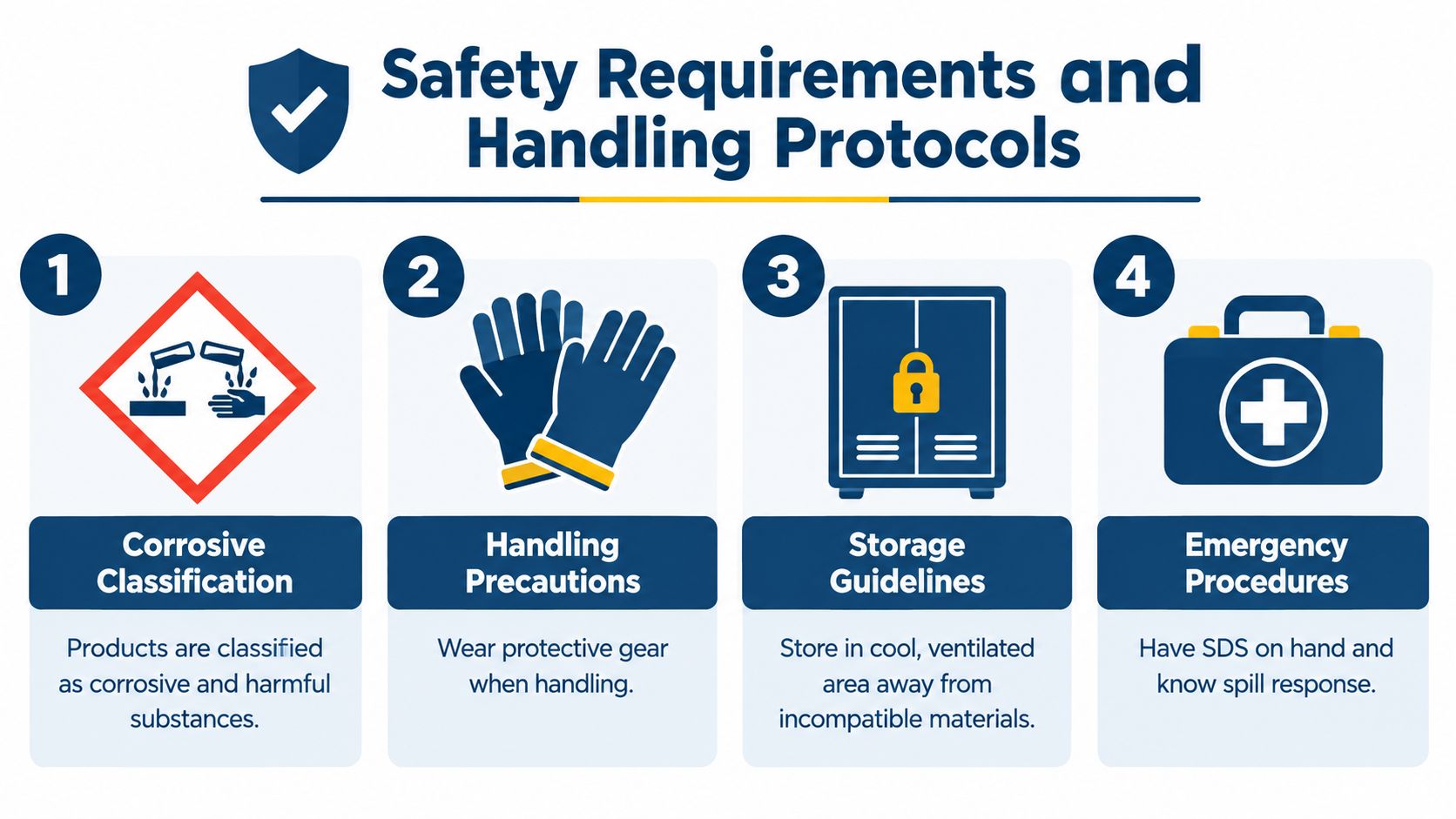
Commercial toilet bowl cleaners need controlled handling because many are classified as corrosive or harmful. One New Zealand SDS lists classifications including 6.1D oral, 6.1E dermal, 8.1A, 8.2C, 8.3A, 9.1D and 9.3C, with warnings covering severe skin burns, serious eye damage, aquatic harm and corrosion of metals. The Envirochem SDS shows why a product's hazard profile must be part of procurement and staff training.
Controls staff should follow
- Read the current label and SDS: Check dilution, contact time, PPE, surfaces, storage, first aid, disposal and spill response for the exact product.
- Wear suitable PPE: Chemical-resistant gloves and eye protection are common requirements, while ventilation and any additional protection depend on the product and workplace assessment.
- Never mix chemicals: Acids, bleach, chlorine products and other incompatible chemicals can create dangerous gases or toxic vapours. Products should remain separate unless the manufacturer explicitly directs otherwise.
- Store deliberately: Keep containers closed in a cool, dry, ventilated location away from incompatible materials, food, utensils and unauthorised access.
- Prepare for incidents: Staff need access to the SDS, first-aid provisions and a clear spill procedure before an incident occurs.
There is no universal dilution ratio or dwell time for toilet bowl cleaners. A stronger concentration applied for longer may increase damage without improving the result, while insufficient contact time may leave the deposit behind.
Spill instructions also vary. One New Zealand commercial SDS states that small spills under 100 litres should be contained away from drainage, diluted with water, neutralised where appropriate and then removed, with disposal through town wastewater systems only where authorised for industrial use. The K5 toilet bowl cleaner SDS should be read for that product's specific requirements, not treated as a universal procedure.
For staff PPE selection, operators can also refer to choosing disposable gloves, while ensuring the chemical SDS remains the controlling document.
Plumbing, Septic and Surface Compatibility
Chemical strength is a poor starting point for compatibility. First identify the deposit, then check whether the product suits the bowl, surrounding surfaces, plumbing and wastewater system. This matters for New Zealand accommodation, community and hospitality sites, particularly those operating on septic systems rather than town wastewater.
Matthews' range includes products with different application profiles, so selection should follow the cleaning problem and the installation. Product documentation may identify septic-tank suitability, free rinsing or stainless-steel compatibility, while an SDS may warn of corrosion to metals or harm to aquatic environments. Those details matter in bathrooms containing stainless fixtures, aged plumbing, grout, porous tiles, lacquered surfaces or nearby stone.
Inspect the installation before choosing a cleaner
Start with the wastewater arrangement. Confirm whether the venue uses town wastewater or septic, then check current label and SDS information for that product. A claim of septic suitability still needs to match the intended use and disposal method.
Inspect the bowl, hinges, flush components, stainless fittings, grout, tiles and splash-prone surfaces. Older pipes, worn sealants and damaged finishes may withstand less aggressive maintenance than modern, intact installations. Rinsing and disposal must follow the product instructions, especially where drainage, metals or aquatic environments could be affected.
Application control is part of compatibility. A product that performs safely only with careful dilution, placement and rinsing may be a poor fit if different shifts cannot repeat that method reliably. Specialist cleaning supplies should therefore be assessed against the manufacturer's instructions, the venue's wastewater arrangement and every surface staff clean. Specialist cleaning supplies are not interchangeable just because they serve the same bathroom.
The wider maintenance plan also matters. Facility managers may coordinate chemical choices with plumbing work, including services such as Boerne water heater repair. The practical rule is simple: understand the building before committing to a cleaner.
A lower-harshness product can suit routine maintenance where preserving fixtures matters more than aggressive one-off descaling. It still needs to match the deposit and the installation.
Building a Commercial Cleaning Programme
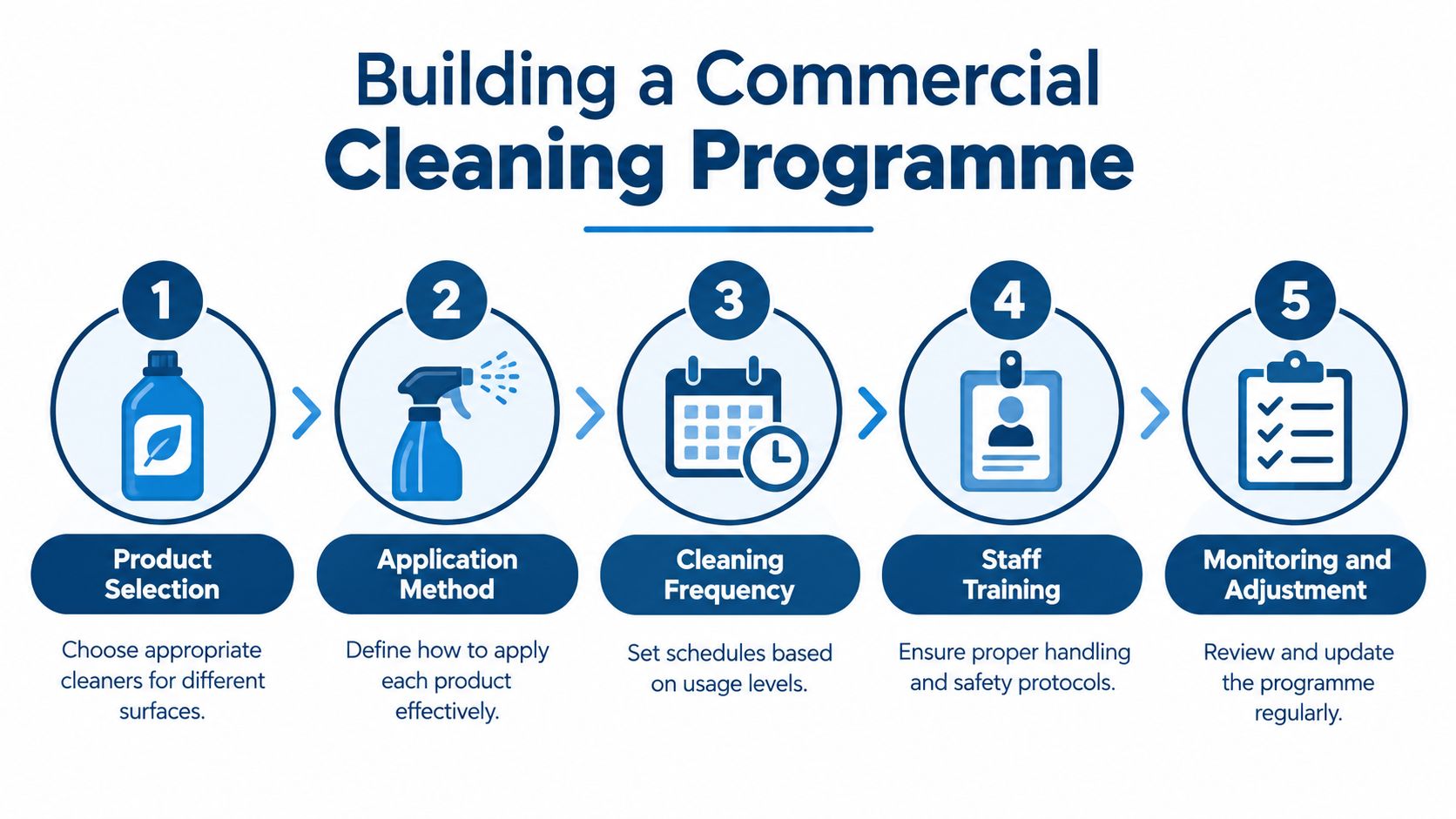
A clean toilet programme starts with the deposit and the site's workload, not the strongest available chemical. Set the routine around six decisions:
What → product → method → frequency → responsible person → verification
This keeps toilet bowl cleaners connected to actual cleaning problems and makes the method repeatable across shifts.
Set the routine around the venue
A busy restaurant, stadium or event venue may need inspections and spot cleaning during service, followed by scheduled full cleaning. A quieter office or staff toilet can use a different frequency, based on observed deposits, odour, traffic and site requirements.
Write the programme so staff can apply it without guessing. Record:
- What needs attention: Bowl, seat, lid, flush button, cubicle fittings, basins, touchpoints, floors and replenishment points.
- Which product applies: Assign toilet bowl cleaners to the deposit and surface. Keep approved products labelled and separate.
- How the task is performed: State the application method, PPE, contact time, rinsing and disposal requirements.
- Who owns the task: Assign the role or shift, then define handover arrangements when staff change.
- How quality is checked: Use inspection records and supervisor checks. Record corrective action when staining, odour, stock or surface condition worsens.
The Cleaning Programmes for Cafés guidance reinforces the same operating principle: toilet cleaning belongs within the complete washroom programme, rather than being treated as an isolated bowl task.
Application tools also affect consistency. Matthews Industrial Bottles use strong HDPE plastic and an adjustable nozzle with spray options from stream to fine mist. The listed range includes seven variants, so select a bottle that suits the approved solution and the venue's labelling system. A clear label, repeatable method and recorded check matter more than giving every shift the same cleaner.
Procurement Considerations and Total Cost
A cheaper bottle can cost more in practice if it needs extra applications, longer scrubbing or frequent corrective work. For commercial sites, assess total cost through:
Purchase price, product used per task, staff time, cleaning frequency and results.
The right calculation depends on the actual deposit and operating conditions. A Matthews toilet bowl cleaner may be suitable for one washroom's mineral scale but unnecessary for another site dealing mainly with organic soil. Match the product to the problem before comparing pack prices.
Approval should cover the product, the process and the site:
- Documentation: Obtain the current label and SDS. Confirm that staff can follow the application, PPE, contact-time, rinsing and disposal requirements.
- Usage: Check the stated quantity for the intended task. A larger bottle does not automatically provide better value.
- Packaging: Match pack size to consumption, storage space and product turnover. Containers must remain labelled, controlled and accessible.
- Supply: Confirm specifications and availability so the venue can maintain the same approved method.
- Compatibility: Exclude products that conflict with the bowl, surrounding surfaces, plumbing, wastewater system or septic arrangement.
- Environmental claims: Accept terms such as eco-certified, biodegradable, environmentally preferable or NZ-made only when current manufacturer documentation or recognised certification supports them.
Concentrates can reduce cost when the label supports accurate dilution and staff measure it consistently. Their value depends on the purchase price, dilution rate and quantity used, not the word “concentrated” on the packaging. Bulk packs may suit high-use venues, while smaller packs can reduce storage, training and turnover problems.
For New Zealand operators, Matthews toilet and washroom products stocked by a hospitality supplier can be compared with other professional options using these same checks. Choose on deposit suitability, documented instructions, safe handling and repeatable results. Brand name or country of manufacture alone does not confirm performance. A product that works reliably with the site's actual staining problem usually costs less than a stronger cleaner used indiscriminately.
Troubleshooting Persistent Staining Issues
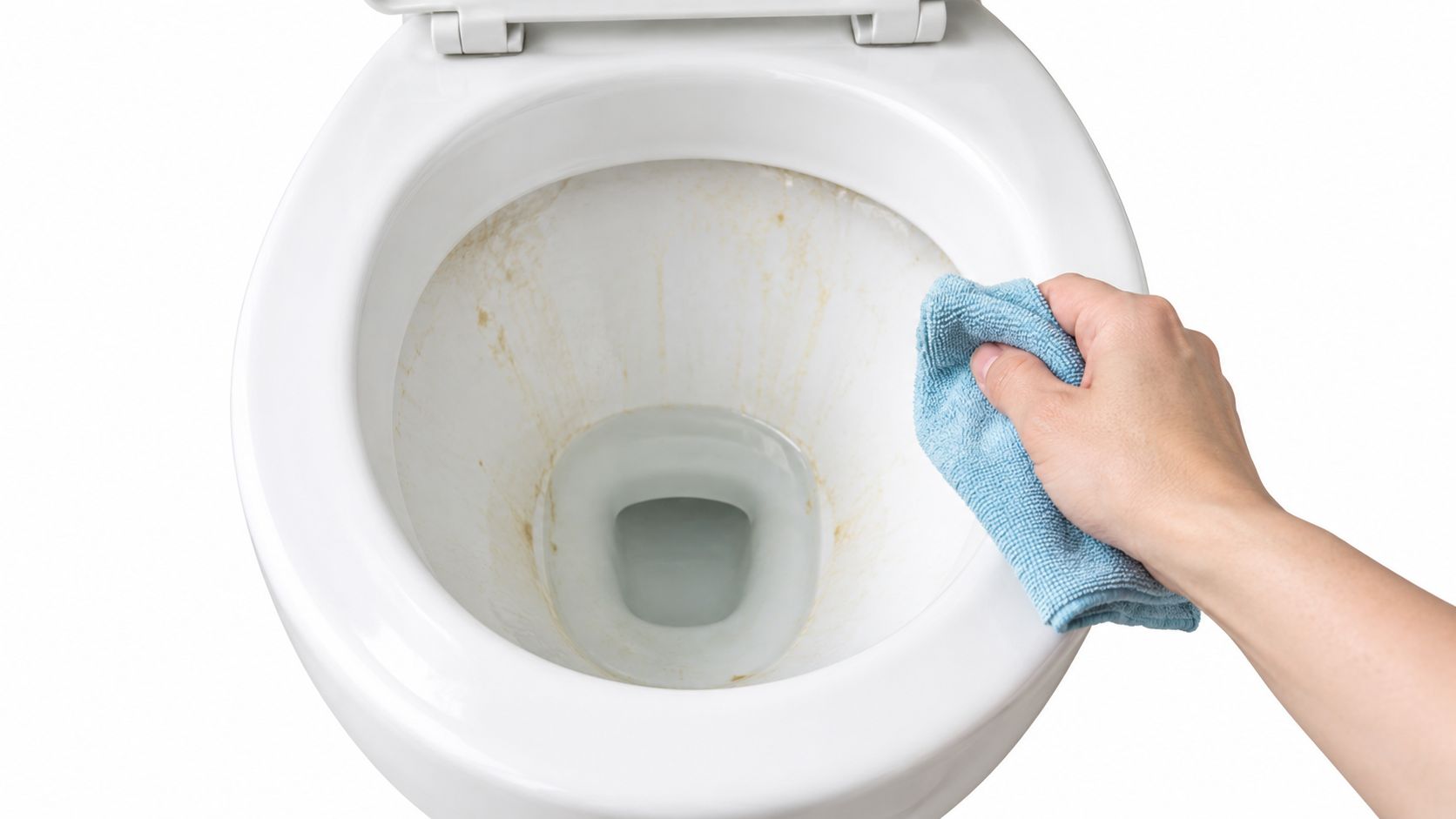
Persistent staining calls for diagnosis before stronger chemistry. If normal cleaning isn't removing a mark, the deposit may have been misidentified, the current product may not suit it, the required contact time may not have been followed, or the porcelain, sealant or glaze may have become damaged.
Use a controlled troubleshooting sequence
- Identify the likely deposit: Consider routine organic soil, mineral scale, rust-like staining, another deposit or permanent surface damage.
- Check the product's intended use: Confirm that the current toilet bowl cleaner is formulated for that type of deposit.
- Verify the method: Review the label and SDS for application, contact time, PPE, rinsing and surface restrictions.
- Inspect the fixture: A damaged or worn surface may retain deposits even when staff use an appropriate cleaner.
- Find the recurring cause: Look for water-quality issues, poor flushing, drainage concerns, ventilation problems, splash patterns or gaps in the cleaning programme.
- Change the programme where needed: Recurring scale may require a suitable maintenance product and revised inspection approach, while recurring organic soil may require better routine cleaning or an appropriate enzymatic option.
Using more of the wrong chemical isn't necessarily better cleaning. It can increase exposure, damage fixtures and leave staff with the same mark to remove.
The best toilet bowl cleaner isn't necessarily the strongest chemical on the shelf. Commercial results come from identifying what needs to be removed, choosing a product designed for that job, following the manufacturer's directions and cleaning often enough for the venue's actual traffic.
The company supplies commercial cleaning chemicals, washroom products and practical hospitality equipment for restaurants, cafés, accommodation businesses, offices and high-traffic facilities. Visit Simply Hospitality to review suitable cleaning options or contact the team for help matching a toilet bowl cleaner to the deposit, surfaces, wastewater setup and cleaning programme.